
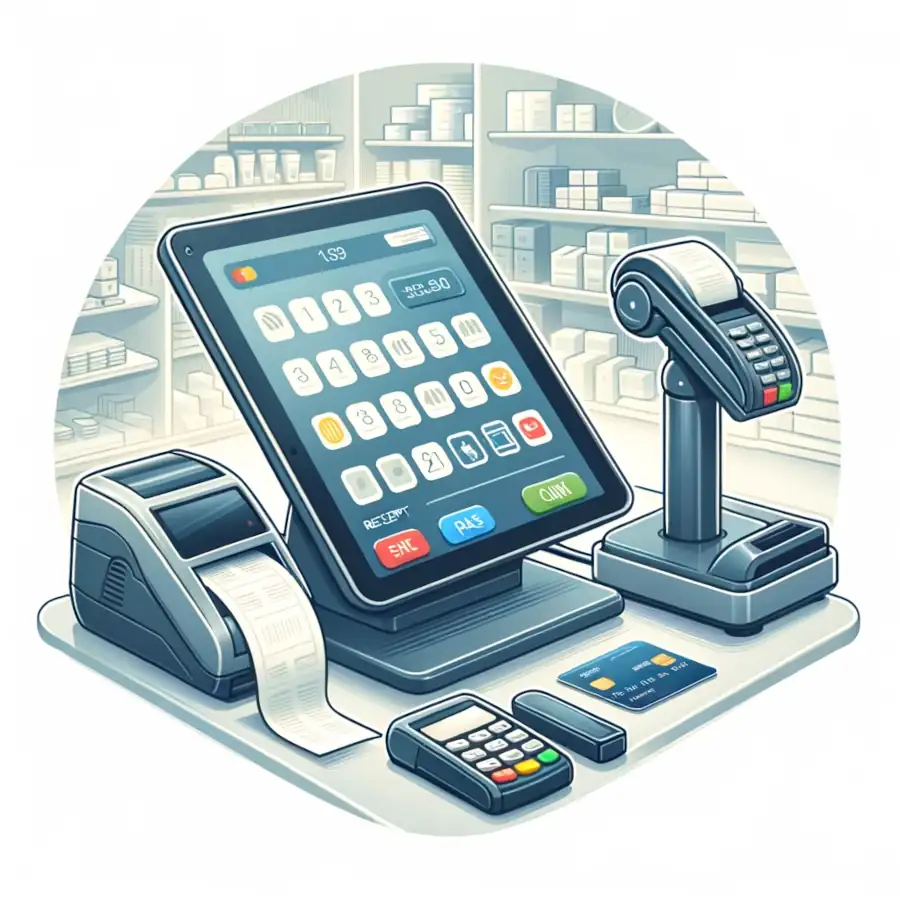
Merchant Account Point of Sale (POS) System Explained:
A Point of Sale (POS) system serves as the central component in the transaction process between a business and its customers, managing sales, payment processing, and operational data in real time. These systems have evolved beyond mere cash registers to become comprehensive business management tools that offer robust functionality, including inventory tracking, customer management, and sales reporting. For any business that sells goods or services, whether it operates offline, online, or through hybrid modes, having an efficient POS system is imperative for handling daily transactions smoothly and improving overall business efficiency.
Types of POS Systems
POS systems vary widely in their design and functionality, accommodating the diverse needs of different business types. Traditional, on-premise systems typically involve substantial upfront hardware investments and provide robust, local network-based solutions. On the other hand, cloud-based POS systems offer greater flexibility and scalability, storing data online and allowing access from any internet-connected device, which is ideal for businesses with multiple locations or those seeking lower initial costs. Mobile POS systems have also gained popularity, especially among small businesses and those operating in non-traditional environments, as they utilize smartphones or tablets to process transactions anywhere. Each type of system offers distinct advantages and limitations, making the choice highly dependent on specific business requirements and operational contexts.
Cost Implications For Business Owners To Consider
The financial implications of adopting a new POS system can be considerable, and business owners must carefully evaluate both direct and indirect costs. The initial expense often includes the purchase of hardware and software, setup, and training for employees. Ongoing costs may encompass monthly or annual software subscription fees, maintenance, and potential upgrades. It is also wise to account for transaction fees associated with payment processing through the chosen merchant account. By understanding these financial requirements, business owners can better plan their budgets and assess the return on investment from their POS system, ensuring it aligns with their operational and financial objectives.