In this review of PayPal, we will take a close look at this major player in e-commerce and payment processing, focusing on its suitability for small business owners and new businesses needing to process credit card payments. We'll cover the platform's range of services, including rates and fees, contract terms, and user-friendly features like its point-of-sale system and mobile payment options. We also address common complaints and industry ratings to give you a balanced view of what to expect as a PayPal user.
We'll discuss the challenges businesses may face, such as fund holds and the necessity of transferring money from PayPal accounts to bank accounts. Additionally, we'll compare PayPal with its competitor and subsidiary, Venmo, highlighting the differences in their services, costs, and user experiences.
We will examine PayPal's business accounts, e-commerce solutions, and the unique PayPal Credit service, offering insights into their benefits and limitations. Security measures and international money transfer capabilities are also covered to understand how PayPal protects user data and facilitates global transactions.
We'll look at PayPal's customer support options, legal challenges, and employee reviews to provide a well-rounded perspective on its operation and reputation in the industry. This review aims to give you all the information you need to decide if PayPal is the right choice for your business payment needs.
About PayPal
This PayPal review is intended primarily for small business owners who accept credit card payments on a regular basis and for any new businesses that will need to accept credit cards. Due to this focus, the content of this review will cover the factors that are most important to established business owners who are interested in using PayPal for the purpose of accepting credit card payments from their customers.
PayPal originated as a subsidiary of eBay, primarily facilitating payments between buyers and sellers on eBay auctions. In mid-2015, PayPal separated from eBay to become an independent company. It is one of the most accessible electronic payment methods, allowing anyone with an email address to send and receive payments. Additionally, PayPal’s merchant services enable businesses of all sizes to accept credit card payments.
PayPal Products and Services
Credit Card Processing
Unlike traditional credit card processors, PayPal does not use typical credit card processing equipment. Instead, it offers services such as shopping cart integration, “buy now” buttons, and donation buttons aimed at online merchants. PayPal also provides a virtual terminal with an optional credit card reader that connects via USB to most computers, allowing merchants to manually enter credit card data.
Point-Of-Sale (POS)
PayPal offers an all-in-one POS solution called Zettle, which supports in-person chip, swipe, and contactless payments. Zettle focuses on small handheld POS devices but also offers larger register-style POS and inventory management equipment. The device can operate via customers’ smartphones and USB devices, integrating with PayPal merchant accounts as well as Apple Pay, Samsung Pay, and Android Pay. The advertised rate for Zettle is 2.29% + $0.09 per transaction, with additional costs for extra equipment.
Account Structure
A key difference between PayPal and traditional merchant accounts is the need for business owners to manually transfer funds from their PayPal accounts to their bank accounts. Most merchant account providers automatically transfer funds to merchants' bank accounts within 48 hours of a business day's close. PayPal also offers payment options by check and a debit card for purchases or ATM withdrawals. Businesses preferring automatic transfers might consider alternatives to PayPal.
Business Accounts
PayPal business accounts enable companies to accept payments online, in-person, or via mobile devices. Features include generating and sending invoices, accepting credit and debit cards, and enabling touch-free payments.
E-commerce Solutions
PayPal provides e-commerce solutions to streamline online transactions. Businesses can integrate PayPal's payment processing into their websites or apps, allowing secure customer payments with a few clicks.
Mobile Payments
PayPal's mobile payment option, through the PayPal app, allows users to send and receive payments, check account activity, and donate to charities.
PayPal Credit
PayPal Credit offers a “buy now, pay later” option, providing customers with payment flexibility while ensuring businesses receive payment upfront.
International Money Transfers
PayPal facilitates international money transfers, enabling users to send money across borders quickly and securely.
Security Measures Implemented
PayPal prioritizes security with advanced measures, including data encryption and fraud prevention tools.
Location & Ownership
Daniel Schulman is the CEO of PayPal, which is headquartered at 2211 North First Street, San Jose, California 95131.
PayPal Competitors and Comparisons
PayPal vs Venmo
PayPal and Venmo, while technically the same company, are competing as an alternative option for small businesses to take payments online and in person. Many clients aren’t aware that PayPal actually owns Venmo when making this decision.
It’s also important to note that both PayPal and Venmo were not originally designed to be the primary payment processing service for most merchant accounts. Originally Paypal was the payment backbone for the online auction giant eBay before it split off in 2015. Venmo was created to transfer funds between family, friends, and other trusted individuals. Paypal acquired Venmo as part of its purchase of startup Braintree in 2013 for $800 million.
However, they have seen an uptick in use in recent years from smaller businesses that do not wish to maintain an account with one of the larger payment processors. This shift has been embraced by both brands, and we’ve seen a recent introduction of new products and services aimed at appeasing their growing number of clients who use the services as their primary form of payment service provider. Venmo in particular has changed its platform to begin allowing businesses to create profiles and provide transactions with more transparency and security. There are some key differences between the two brands when it comes to payment processing.
Credit & Debit Processing
While we remind our readers that neither service was initially designed to handle large volumes of transactions, both allow this in one form or another. Both companies offer electronic invoicing services, QR scanning, keyed-in transactions, and account-to-account transfers, but PayPal has a lot more to offer in terms of physical POS systems and virtual terminal options when it comes to taking cards. Venmo does not seem to have some of the consumer protections in place for chargebacks and consumer disputes, as indicated by the numerous warnings to only deal with trusted accounts and individuals.
Venmo allows clients to accept credit card payments but will charge an additional 3%. PayPal charges the same fee outside of account-to-account transfers. Venmo does not have a credit card scanner currently, and transactions must be made through the app. PayPal has several tiers of physical POS systems with card and chip readers depending on your needs, something Venmo can’t currently offer.
Paypal also issues debit cards tied to their accounts, which Venmo plans to offer in the future, according to their site.
Cost
Neither brand charges a monthly fee or early termination fee, making them both very attractive to businesses that make few or sparse transactions. While it can be difficult to gauge Venmo and Paypal’s direct cost difference on services Venmo doesn’t offer, we can look at QR-based transaction fees and costs. QR codes are most likely going to be the primary payment method for Venmo users, considering their lack of physical card readers. Venmo charges 1.9% + $0.10 per QR transaction, whereas Paypal is slightly more expensive at 2.29% + $0.09 per transaction. This percent difference comes with a lot of consumer protections on PayPal’s end. PayPal does offer several optional monthly services, such as added fraud protection for additional costs.
Pros & Cons
One of the biggest drawbacks to both services is the inability to automatically transfer funds to your bank. This might be the main distinguishing feature from a normal credit card processing company. While both companies make it easy for users to transfer funds to their bank in a few clicks, there is usually a delay of 1-3 days before the funds are released. PayPal in particular has received large amounts of complaints related to this delay, and it’s also where funds can get frozen for one reason or another.
While Venmo can typically take 1 to 3 business days to transfer money to a bank account for free, the company also has an instant transfer option. It allows merchants and other users to instantaneously transfer funds. However, a 1% fee is attached to these transfers, with a minimum of $0.25 and a maximum of $10. PayPal offers a similar service for 1% with no fee ceiling. These very small nuances can mean the difference of hundreds of dollars over the lifetime of using PayPal versus Venmo.
Both services offer a large amount of flexibility, and that seems to be the main attraction for businesses. While PayPal boasts one of the largest payment networks out there, Venmo can really shine as a low-maintenance and highly mobile payment platform. It’s also more accessible to users, allowing them to simply download the app to pay. While PayPal technically matches all these services on paper, the end-users and mobile market seem to prefer Venmo. We think there’s room for both services depending on a client's needs; however, it will be interesting to watch the two brands trying to stay off of each other’s toes as Venmo steadily approaches merchant account territory.
We invite our readers to check out our Venmo review for more in-depth information.
PayPal Customer Reviews
Here's What Their Clients Say
Customer Reviews Summary
Total Online Complaints
8000+
Live Customer Support
Yes
Most Common Complaint
Fund-Holds
Recent Lawsuits
Yes
Millions of Users, Thousands of PayPal Complaints
The grade for this section is difficult to assign because of PayPal’s unique position in the credit card processing industry. Unlike traditional merchant accounts, virtually anyone can sign up for a PayPal account, and PayPal has over 100 million users. As one can imagine, there are thousands of negative Paypal reviews. The two types of negative PayPal reviews that are most common among actual business owners are of sudden account freezes that disable the merchant’s ability to accept further transactions and withdraw money, and poor experiences with customer service. If you have your own PayPal review to make, please do so in the comments below.
Moderate Risk of Fund-Holds
Business owners who complain of fund-holds often report difficulty in getting explanations as to why the hold was established. They also state that the money was held for long periods of time. Holds are a common practice in the credit card processing industry and are often used on “high-risk” businesses who would be better served by high-risk processing specialists. Many businesses do not transfer their PayPal funds on a daily basis, so days’ or weeks’ worth of sales can get locked up during an account freeze. However, holds and account freezes are never a problem for most clients, even though there are quite a few reported cases online.
PayPal gives this notice when logging on to accounts with held funds.
PayPal Lawsuits
In 2017, PayPal was sued in the matter of Zepeda v. PayPal Inc., a class-action lawsuit that alleged the company had improperly handled disputed transactions, placed holds, reserves or limitations on customers’ accounts without notice, and closed merchant accounts without notice. The company agreed to pay a sum of over $4 million to plaintiffs who were part of the class action.
2021 saw a flurry of legal activity concerning PayPal. It began in February 2021, when the company announced that it was under investigation by the Securities and Exchange Commission and the Consumer Financial Protection Bureau.
According to Bloomberg, “The SEC is investigating whether the swipe fees paid to the banks that issue PayPal’s debit cards are consistent with Federal Reserve guidelines, the San Jose, California-based company said Thursday in a quarterly regulatory filing. The agency is also investigating how PayPal reports marketing fees earned from its branded-card program. […] Separately, PayPal said it received a civil investigative demand from the CFPB in connection to the marketing and use of PayPal Credit in connection with merchants that provide educational services. The regulator asked PayPal to produce documents, written reports and answers to written questions. The company said it is cooperating.” Following the announcement of this investigation, PayPal Inc. stock dropped significantly. This led to a bevy of class-action suits being announced against the company. With such heavy legal action underway against one of the world’s largest and most well-known payment processors, these cases are sure to set standards for the industry going forward.
PayPal was also sued in June 2021 by World Series of Poker champion Chris Moneymaker in another class-action suit regarding seized funds from fantasy sports leagues.
An ongoing lawsuit regarding fund-holds and frozen accounts was brought against PayPal in 2022.
A further class-action suit was filed against PayPal in 2023 regarding a data break of 35,000 peoples’ accounts.
PayPal Customer Support Options
PayPal offers several options for resolving customer service problems, including a phone helpline. The basic support line is open to all account types and appears to suffer from periodic long wait times and poor service. Businesses can get higher levels of customer support by paying either $159 per month for “13X7 Enhanced” support, or $495 per month for “24X7 Premium” support.
PayPal Customer Service Numbers
(888) 221-1161 – Toll Free General Customer Service
(402) 935-7733 – Report Unauthorized Transactions
(888) 914-8072 – Español
(402) 935-2050 – For customers calling from outside the US
Other Support Options
Live chat support
PayPal earns a “C” in this section because of the sheer volume of negative PayPal reviews filed online, but the company does a decent job of providing many customer service options and maintaining a small proportion of complaints in comparison to its user base.
Note: We have adjusted this company’s BBB rating according to our own standards. To better understand why we adjust BBB ratings, please see our Rating Criteria.
More Than 33,000 Better Business Bureau Complaints
As of this review, PayPal is accredited with the Better Business Bureau and maintains an “A” rating despite having 33,516 complaints filed in the last 36 months. This continues a trend of a large uptick in reviews. Only 33,516 of these 11,487 complaints were resolved by the company to the satisfaction of the merchant. The remaining 22,029 were resolved to the dissatisfaction of the client or received no final response.
What Merchants Say
The company had also previously received 2,182 informal PayPal reviews, with the vast majority being negative. Again, this is a massive uptick from the 1,551 when we last reviewed the company. However, all reviews have been removed with no explanation as of this review. One previous review from a client related to held funds and a poor customer service experience:
Worst outcome ever. Have been using ****** for transaction with a distributor of mine. I have had done numerous transactions with him over the last month. At least 4 of the transaction were 4 digits. Even single one of those transactions was flagged and held. Even after the first few cleared no problem. I’m not about to loose my largest clients and probably my business because of this….. the first time I understood. The second I was frustrated, the third I was mad and now I’m just done. And the support staff is of no help. My distributor can not even ca them and tell them to release it. Beyond ridiculous
At the time of a previous update, the BBB had posted a note regarding a February 2018 settlement between PayPal and the FTC:
“The Federal Trade Commission has reached a settlement with PayPal, Inc. over allegations that the company told users of its Venmo peer-to-peer payment service that money credited to their Venmo balances could be transferred to external bank accounts without adequately disclosing that the transactions were still subject to review and that funds could be frozen or removed.
In its complaint, the FTC also charges that Venmo misled consumers about the extent to which they could control the privacy of their transactions. In addition, Venmo misrepresented the extent to which consumers’ financial accounts were protected by “bank grade security systems,” and violated the Gramm-Leach-Bliley Act’s Safeguards and Privacy Rules, the complaint alleges.”
Although we consider Venmo one of the best mobile apps for sending money, it is clear that it faces some of the same criticisms as its parent company.
A “C” Performance So Far
The BBB justifies its rating by citing the length of time PayPal has been in business, the complaint volume versus PayPal’s size, the company’s response to complaints, the rate of resolution of those complaints, and the fact that the BBB has sufficient background information on PayPal. Based on PayPal’s complaint count, resolution ratio, and size, we are adjusting this section’s rating to a “C” for the purposes of this review.
In this section, we’ll focus solely on PayPal fees, rates, and contract terms for accepting credit card payments. We won’t cover personal accounts or evaluate PayPal’s value as an eBay payment method.
This account type doesn’t permit business owners to manually enter credit card data on their computers but enables customers to purchase products via credit card through a business’s website. Clients with a PayPal Here account can accept credit cards directly through the mobile app. For those seeking a simple way to accept online payments, PayPal offers this basic setup with several advantages over traditional merchant accounts.
Basic Pricing
PayPal Standard entails no setup cost, monthly fee, time commitment, PCI Compliance fee, or cancellation fee. Businesses can easily accept payments through their websites using buttons like “buy now,” “add to cart,” and “donate,” as well as recurring payments from other PayPal users ($10 monthly fee). Although this account is compatible with most popular shopping carts, a disadvantage is that customers must leave the merchant’s website and be redirected to PayPal to complete the transaction, potentially reducing conversion rates and confusing customers. Despite no monthly fees, PayPal’s credit card acceptance involves a higher-than-average processing rate. As of now, PayPal Payments Standard charges 2.7% plus $0.30 for all domestic in-store transactions, 2.9% plus $0.30 for all domestic online transactions, 4.2% plus $0.30 on all international in-store transactions, and 4.4% plus $0.30 on all international online transactions. Registered 501(c)(3) nonprofit corporations receive a discounted rate from PayPal of 2.2% plus $0.30 per transaction domestically and 3.7% plus $0.30 for international transactions.
Transferring from PayPal Merchant Accounts to Bank Accounts
Transfers from PayPal to bank accounts are deposited on the next business day. Businesses using PayPal can also transfer their balances to a bank account instantly, with transfer limits of $50,000 per transaction, $100,000 per day, $250,000 per week, and $500,000 per month. Each instant transfer incurs a 1% fee, capped at $10.
The next tier up from the standard account enables businesses to keep the entire checkout process on their own site. Similar to PayPal Payments Standard, businesses can’t manually enter credit card data but receive all the same features with full control over the user experience during online sales. PayPal Payments Advanced has the same rates as PayPal Payments Standard but incurs a $5 monthly fee. PayPal also offers additional services for data handling, PCI compliance, and customer support, though these come with extra costs.
Professional Setup (aka: PayPal Payments Pro)
PayPal Payments Pro includes all features of PayPal Payments Standard and PayPal Payments Advanced, with two additional features. The first feature allows for custom design and self-hosting of the checkout page, primarily beneficial for high-volume e-commerce retailers and web developers seeking full control over the checkout process. Business owners interested in this feature can also explore using one of the top merchant accounts for web developers.
A Virtual Terminal Option
With the second extra feature of the Pro account, PayPal offers a virtual terminal for businesses needing to manually enter credit card data for face-to-face, mail, or telephone orders. Business owners interested in this service must undergo an additional application process, even if they already have a PayPal account. Approval for a virtual terminal account typically takes about 48 hours. The cost for this service is relatively high compared to the best virtual terminals and merchant account providers, with a $30 per month fee for PayPal Payments Pro clients, plus the following fees:
2.9% plus $0.30 per domestic transaction through their websites
3.9 plus a fixed fee per international transaction through their websites
3.1% plus $0.30 per domestic transaction through the virtual terminal
4.4% plus a fixed fee per international transaction through the virtual terminal
3.5% per American Express transaction
Volume discounts may also be available on an individual basis. PayPal also has a “micropayment” fee of 5% + $0.05 for transactions under $10.
Virtual Terminal Swiped vs. Keyed
Although PayPal’s virtual terminal clients can use an optional credit card reader that plugs into nearly any computer, the processing rates seem to be the same for swiped and keyed transactions through PayPal’s virtual terminal. This is unusual because nearly all other merchant account providers offer lower processing fees for swiping a credit card through a reader.
PayPal scores well in this section because the company does not use independent sales agents or misleading sales tactics. The company clearly outlines its pricing on its website and does not alter its fees for each individual seller. In many ways, PayPal has become a household name and stands out in a crowded field of e-commerce payment processing options. The company’s policies and pricing are transparent and easily understandable for anyone who takes the time to read them.
Our PayPal Review Summary
Our Final Thoughts
PayPal is a recognized provider of credit card processing and merchant services, mirroring traditional processors but with a distinct digital-first approach. Despite its widespread use, customer reviews often cite poor support and unclear communication of policies. Nonetheless, PayPal remains a popular choice for its ease of use and the convenience it offers for accepting electronic payments, particularly appealing to very small businesses and newcomers to the marketplace.
While PayPal’s setup process is straightforward and quick, attracting less experienced business owners, it can also lead to misunderstandings about the service’s suitability for their specific needs. This ease of entry is a double-edged sword, as it often results in complaints from those who do not fully grasp the financial implications. In terms of cost, PayPal aligns with many traditional merchant setups but is generally more expensive than those using the Interchange Pass-through pricing model. It is essential for business owners to carefully evaluate PayPal in the context of other payment processing options to ensure it meets their business and financial requirements effectively.
If you found this article helpful, please share it!
In the late 2000s, as a broke college student struggling to make ends meet, I was contacted by a merchant services company after uploading my resume to a job listings website. This company promised substantial commissions and ongoing residual income for simply persuading businesses to accept credit card payments. It seemed straightforward enough—after all, what business doesn’t need to process credit card payments? Following a phone interview with a persuasive “sales director,” I found myself embarking on what I believed would be an easy job that would significantly boost my bank account with reliable monthly income and large sales commissions. However, the lessons I learned would profoundly change my life in ways I could never have imagined.
After completing my sales training, I hit the ground running, eager to make sales. This broke college student was determined to improve his financial situation! My first attempt at a cold call, with no prior appointment, ended with a burly man in his 50s yelling at me to leave, claiming he had been “totally robbed” by someone like me before. As I hastily exited, puzzled and intimidated by his reaction, I couldn’t help but wonder what he meant. Throughout the day, I encountered similar hostility from other business owners, all expressing disdain for the industry I had been so excited to join that morning. Confused and curious, I decided to shift my approach from selling to listening.
I quickly uncovered that the merchant services sector was riddled with unethical practices, including hidden fees, deceptive marketing, fine-print traps, and much more. It dawned on me that I had nearly been tricked by a dubious company into selling overpriced services under contracts with long-term commitments, all without being fully aware of what I was promoting. Outraged, I resigned from that company but learned that there were indeed ethical credit card processing companies that treated their clients fairly. Over the next four years, I worked for one such company, assisting hundreds of businesses in securing cost-effective processing solutions. Yet, I also met many more who had been misled and trapped in onerous service agreements. Determined to help people steer clear of these unscrupulous providers, I launched this website in my spare time, dedicating myself to researching and sharing my findings on every merchant account provider I could investigate.
Gradually, more and more business owners began to discover my articles. As word spread, search engines started to rank my content highly, amplifying its reach. My efforts were making a difference! Eventually, the website garnered enough traffic to enable me to leave my job and focus on it full-time, a journey that has now spanned over a decade. This path has not been without its challenges; unscrupulous company owners have tried to intimidate and sue me into silence on several occasions. Yet, I have stood firm against each threat. Here I am, continuing to publish reviews and articles, hoping to safeguard others from the pitfalls of the credit card processing industry.
If you believe in my mission and wish to contribute, please share my articles on your websites and social media. Thank you for visiting!
Testimonials & Complaints
How Did PayPal Treat You?
1162 User Reviews
Cody Beard
I was using PayPal for about two months, then one day out of the blue someone asked me 800 dollars and i declined . The account went into the negative stating I owed someone who Ive never met , let alone know their name , or who they are that amount of money. I called Paypal customer service and spoke with a woman who kept demanding that I pay the $800.00 . There were no previous transactions on the account for that amount . The only amount was for rent to my landlord. She continued to tell me that they will need to see all my bsnk statements for the last four months to see if any transaction was conducted in the amount of 800.00. Not even a day adter three more individuals on Paypal sending requrats of me owing them money . One was for $150, another was for 370, and the third wad for 200. I dont know who these guys are but in the comments they say ” you owe me or else” ” you stole from from me” , and you need to pay or else!” I told the customer service that this is badgery and false , but she kept calm saying well you need to pay the money . Blows my mind that even cusyomer service is in on the fraud and they get paid a share of what is collected. Im done with Paypal and have started to warn others that you can be schemed if your debit card is attached to your PayPal. Sadiest part of the wwhole thing is ive been trying to reach someone who will help and to me dealing with this and now more for over a month , I finally standing up for myself snd hopefully others. No one should be schemed snd lied about tractions that never happened and trying to threat and ruin the well beings of hard working people
!
Sandy flynn
I’ve had PayPal for years, since 2001…
Well went to use it the other night, (twice) and it was declined. So I called PayPal the next day and told them my card was declined twice. And she told me yes as of sept 12th all banking and cards have been removed from PayPals accounts. WHAT???
I was so Mad. .
I’m like wait, I have most of my bills tied to my PayPal account and they get auto deducted each month so now there all going to be Declined. I’m done with PayPal. I Willmever use this card again.
soundoftext
I’m glad to see that PayPal is being scrutinized more closely. I’ve had some negative experiences with them in the past.
Gennaro N Luce
PayPal MC Credit Card is bad.
Made early payment, Held funds for 14 days, did not apply to card as payment and froze remaining credit because of my early payment. I filed a formal complaint with my State’s Attorney General.
Had I know PayPal moved their corporate headquarters to Beijing, China and is using/enforcing communism rule to control my freedom to pay my bill early, I would have never opened this credit card account.
Canceling both PayPal Credit Card and payment services. I recommend we all send a message!
Wayne
Yes he is such a confusing site you try to cancel I spent three or four hours trying to figure that out. At times I’ll send a payment three times because she hasnt’ received and you look at your transfer on your phone and it still says pay now so you pay again they don’t tell you if anybody picked it up it just say received but then I’ll check my bank account online and the money has been taken out three times sometimes she received once sometimes nothing at Western Union they send you a message and tell you if the person picked it up I’ve been ripped for thousands and thousands from PayPal and I don’t know how to get the money back the one lady in the states she said if it says complete nothing you can do about it she said you got to talk to the recipient and get them the phone PayPal and put it in there complaint so the recipient couldn’t get through on the phone and sent a message about the money she’s not receiving she never heard from them again I have sent messages and talk to people with no answers all they have to tell me is if the money was picked up they must know that and if the money wasn’t picked up and shouldn’t be taken out of my bank happened hundreds of times last couple years what can I do I can’t afford a lawyer I asked him to investigate it and refund my money never heard back
wayne Darrell smith
I have been using PayPal for a couple years now man have I ever got ripped off. I live in Canada and I help out a poor family out in the Philippines yeah absolutely no money you don’t get nothing free there no medical woman I mostly help has three babies and she has leukemia even when I go to the hospital they won’t let you go go out unless you pay first how do you pay if you got no money they beg on the streets for food so I transferred money to her all the time it’s usually an emergency so when I transfer money and it doesn’t seem to go through there’s no way of knowing you don’t tell you if it was picked up it takes over an hour and she still hasn’t got it from the store where she picks it up I send it again sometimes I’ll do it three or four times the same amount of money. But afterwards I noticed even if she didn’t get the money the money was coming out of my bank account using my Visa debit never got a refund must be tens of thousands of dollars I’ve lost they don’t tell you nothing they just take it and the only way I can tell is I look up my my banking record it’s hard as hell and confusing to try to cancel cancel transfer I’ve tried to get help they don’t tell you nothing seems okay I want to know how I get all that money back tens of thousands of dollars I don’t know what to do and still goes on if the woman doesn’t receive the money they still say receive if she doesn’t get the money it still comes out of my bank I’m getting ripped off and get a lawyer but I can’t afford that right now
Tori
Just received card statement. Over $450 of bogus transactions. Come to find out it was through PayPal. I have no account and never had one. So their solution was for me to give them my card information. Talk about scammers. That’s my two cents. Good luck
Ivette
PayPal should not be in business, this company is a fraud. If you purchase something and pay via PayPal and if you return what you purchased to the merchant, PayPal is keeping your refund, merchant refunds the money to them and in turn they have to return it to you (bad news; they are not giving back your money, they keep it) you cannot speak to a human being, they make it impossible. You chat with an agent in India, he comes back saying they already refunded your money, you don’t have the money in your account, they ask you to send a letter to their offices in Nebraska, asking for a proof that they refunded your money….this is ridiculous, they have access to your account and they can clearly see they have not refunded your money to your account. They are ripping people off, nobody is stopping them.
John
PayPal recently changed their site and all stored banking information was removed. I have tried to link my bank account for the last 2 months but I receive a message saying they are unable to link my bank at this time. I called customer support and the girl answered and said thank you for calling Amazon. So, PayPal and Amazon are both using the same Indian call center for customer service. After being verified thru the automated system, I am asked for my email address and phone number by the foreign service rep. I told them they should have it on their screen since I had already been verified thru the system. They said they do not see the information. I have asked to be transferred to the American customer service and when they do, the line is usually disconnected after sitting on hold for a few minutes. Sometimes, the rep will say they have no way of transferring my call to the American customer service department. I called another customer service number that is listed as the American service center but have been on hold for 10 minutes.
Joshua
Joes
I agree with that and hope that the class action lawsuit can be made against them because I am out over a couple thousand dollars now and have just now found that out on another card that I had to H&R Block where I have about 100 different transactions anywhere from 400 to the lowest of $15 about 100 times so I agree and hope we can get a
Mr.DavidDewayneRobinson
PayPal.
Transferring from PayPal Merchert Account to Bank Accounts..How can I Deport to a can Visa NetSpend card account. I have a rounting and account number.
Scot
I have now received two emails from Pay Pal saying that I have bought things and will be charged within 24 hours if not cancel order. The first order was for guns at an armory. I do not own guns and have no license. The 2nd scam email was for a $379.99 gaming system that I did not purchase. I talked to a Rachel who said I would need 15-20 minutes to fix the problem. I was on the phone for 1hr 33minutes and then 1hr 29 minutes and did not get the problem resolved. Instead Rachel talked me into buying a $500 vanilla visa prepaid card. After spending $504.94 on the card, Something else that was weird was she did not want me talking to anyone in the store and I had to go outside if I had any questions. I still did not get the problem resolved and I am out $504.94. I have been scammed twice and I never use PayPal. It is tied into a crypto scam which I believe they are a part of. Oh, and the kicker is, she called me back and said that did not work. This will only take 15-20 minutes. I need you to get another $500 vanilla card so you can get your $16,000 back from Crypto scam another $1272 and the $504.94 you just lost.
Yvonne Rose
I love my PayPal account…The only thing I dont understand is the charitable accounts with other countries, ,I notice alot of people will donate to them. But dont donate to our own PEOPLE IN NEED!!!!
Halle
A while ago me and my boyfriend used paypal to send one another money and that’s how we would pay rent. One of us would send money to the other with paypal and then put our rent payment through one of our bank accounts directly online. I sent him the few hundred I owed for rent and it didn’t send. I tried again and then it sent. However it then sent the payment 2 times without taking both out of my account, so we waited 2 weeks to see the attempt and we’d send them the money or whatever. After that amount of time nothing happened and no communication about it was sent to us so we forgot about it. Well another couple weeks later they then put my paypal account as negative and told us we had to pay it to use the account. They literally waited WELL over the time they should have to contact us. I even tried calling the customer service number a few times to ask about it and nothing. I will never use paypal ever again because of this. You can’t use something connected to your money if you don’t trust it.
BZY63
I ordered on line using PAYPAL. Part of the charge was using my card’s rewards and the rest to the card. This happened in January. Because of an issue with he online order, I called the merchant and they cancelled the entire order the very same day. Within an hour if not less. In fact the order is still “processing” on the PAYPAL website. PAYPAL knows this but has not refunded me my money. The credit card did let the charge to the card drop off but I am still missing my rewards reimbursement from PAYPAL. I learned my lesson. Do not use your rewards on PAYPAL. I have removed any cards associated from my PAYPAL account and will close my account as soon as this gets settled.
Melissa Rauh
Did u ever get your money and rewards? I had the same thing PayPal held my $800 for 21 days, but claimed to not have it. They said the merchant had it. After a lot calls back and forth, a lot of stress and no answers. Finally on the 21st day I was refunded by PayPal. After undue stress and wasted hours and hours trying to locate my “lost” money, I was pissed and refuse to use them anymore!
Rollen trahan
8001 add me to the list you let get taken by lokeeta you knew better. The more I read about these fake web site I know I will lose my money now. Never will see any boots they show on other company web site.
Kathy
Kathy
Dont even bother to use paypal they are worst company to use for your financial.they are not trustworthy at all.
Danny
Prime Services
PayPal provides no customer service and does not value their customers. I have had my account for over 2 years and deal with the same businesses. The same businesses have sent payments at least every 2 weeks for these two years. All of a sudden they change a policy that says funds from one PayPal account to another takes 7-10 days to process. I’ve had more headaches with PayPal then it’s worth! I would strongly advise anyone considering PayPal for anything to find a different company!
Danny
Prime Services
PayPal provides no customer service and does not value their customers. I’ve had more headaches with PayPal then it’s worth! I would strongly advise anyone considering PayPal for anything to find a different company!
Johnny Rivera
PAyPal did not pay the vendor for my purchase (never shipped) and did not refunded me. They kept the money.
Concerned PayPal user
PayPal is the worst. As a buyer, they already have my name, my address, phone and Social, which I don’t like. Just to Login the site asks personal identity questions or you can receive a text with a Security Code, which I can’t because cell phones don’t work here. Finally when I got someone on the phone (it’s like pulling teeth) they must be taking deep dives into people’s personal info because he asked me about property owned. I got mad and he then told me I must enter all the info the site asks for or I can’t access my account. I have not had to do this before. I asked him if they could send the code to my E-Mail since they send to people’s phones and he says they can’t because someone could be in my house accessing my E-Mail. Ridiculous, since they could also have someone’s phone.
JEFF FLATHAU
AN ONLINE STORE
Pay Pal is the WORST COMPANY I HAVE EVER SEEN IN MY LIFE. WE USE THEM FOR OUR CREDIT CARD PROCESSING ON OUR WEBSITE AND WE HAVE HAD ABOUT 16 CHARGES THAT THEY LET PROCESS THROUGH THEIR SYSTEM. WE HAVE NO CONTROL OVER VIEWING THE CUSTOMER CREDENTIALS, WELL PEOPLE ARE USING STOLEN CREDIT CARDS TO PURCHASE ON OUR WEBSITE AND PAY PAL IS LETTING THAT ORDER PROCESS. THE ACTUAL PERSON THAT OWNS THE CARD DOES A CHARGE BACK AFTER WE SHIPPED THE ITEM THAT WAS PURCHASED. PAY PAL SAYS THEY FIGHT FOR US BUT COMES BACK AND STATES THAT THE CUSTOMERS FINANCIAL INSTITUTION HAS DECIDED IN THE CARD OWNERS FAVOR SO WE LOST THE MONEY FOR THE PRODUCT THAT WAS SHIPPED TO THE IDIOT THAT STOLE THE CARD AND PAY PAL LET IT PROCESS AND NOW PAYPAL TAKES THE MONEY BACK OUT OF OUR ACCOUNT. PAY PAL SHOULD PAY THIS NOT US AS THEY LET THE CARD PROCESS STATING IT WAS A LEGITIMENT SALE. WHAT A JOKE PAY PAL IS…..
MICHAEL
I have noticed that I was deducted money directly from my account by Paypal. Unfortunately, I have no idea about those payment, because my Paypal account has been permanently limited from April even after I provided all the documents they requested, including the logistics. I tried to call Paypal to find out the reason, but things are not disclosed clearly and the only useful information I got from Paypal was that my account was in violation. And Paypal refused to provide more information and evidence regarding this “violation” when I asked for.
Edward Goforth
Paypal blocked my account for selling gun parts. The only notice I got was Paypal made changes in their rules, They did not spell out the changes. You are suppose to read entire set of rules which I did not. They said they could hold the money in my account for 180 days, shortly before the 180 day were up they took my money $3781, said it was for damages. Well ebay, amazon and craig’s list allow the sale of gun parts and it hasn’t damaged their companies. The amount is to small for an individual law suit. If they did this to a number of dealers perhaps a class action law suit could be made.
Mark Beyder
Beware! PayPal has stolen my money! There are tens of thousands of complaints against PayPal and several class actions suits. What they are doing is wrong and should be punishable by law! Do not use PayPal or they may steal your money too! Demand justice!
Debbie Saint
i paid $50.70 for package from Russia. Package was Hand delivered to me while i was out of the state!!! customs form says package weighed less than an envelope. seller sent an envelope with tracking number…now says delivered…and Paypal won’t do anything because tracking say delivered. customs form was not signed…not accepted by postal clerk. weight was less than 3 ounces. My purchase was WELL over 3 ounces AND she sent as a GIFT. $50.70 and i got NOTHING. I don’t even know who else to complain to. just sending sale of goods as gift is illegal. she won’t send receipt, signed customs form, invoice, or signature of who signed for it. She won’t send anything and now paypal wants me to file a police report – with no information.
Jesse
True Blue Motorsport
After 20 years of business and nearly half a million dollars in transactions, I’m DONE with PayPal for ONE reason. GREED. Thankfully I caught this with only about $100 in losses.
“If you refund a payment for goods or services, there are no fees to issue the refund, but the fees you originally paid as the seller are NOT returned to you. The amount of the refunded payment will be deducted from your PayPal account.”
Taken right from their website. Search Help: REFUND FEES
What does that mean to your bottom line? You lose out on TWICE the cost of processing fee. The fee that PayPal keeps + the extra money out of your account to cover the difference of the processing fee that PayPal kept. That’s $10 processing charge will now cost you $20 when you refund it.
Bruce
Paypal for business account created in 2016 to accept credit card payments for engineering services from a couple of industrial customers.
Fees a little high, but acceptable and invoicing and payments worked fine until today.
Logged in, sent an invoice to a customer I have sent invoices to in the past few years with no issues. Sent the invoice, customer received and paid the invoice. I received notification that payment was made, logged in and $1800 of my $2100 payment is on hold for 21 days, because I had not used my account for over a year. Called Paypal and they said it is for my protection. Invoice was for a service trip, so no tracking etc. Minimum of 48 hour hold if I want to ask my customer to acknowledge completion. Them choosing to pay the invoice should be acknowledgement enough.
Will be closing my account as soon as I get my funds released in 3 weeks!
Teresa Allen
PayPal has f***** me for the last time two years ago it was $4,300 now this year so far it’s 1,000….
David M Richard
PayPal is doing nothing to stop fraudulent sellers who leverage the PayPal brand and button to get you to buy. Nothing I bought was delivered to me and when I complained they did nothing to resolve it. Warning to other consumers – find an alternative to PayPal. My credit card would have been a better choice.
Gigi Alexander
Home Business
PayPal doesn’t care about it’s Fraudulent vendors. More scams have occurred using PayPal than any other payment form online. STEER CLEAR IF PAYPAL. USE ANY OTHER FORM OF PAYMENT
Wayne
Kings Castle Hire
We’ve been accepting online payments through PayPal on our website for years now! Barely even think about it any more; it’s pretty much seamless.
Tracey Banta
I have not been able to get onto my account in two months. I keep calling and they say it’s not them. As I ask for more people to talk to it’s then that they say we are having verification code errors. Still not fixed. As soon as it’s paid off I’m closing account. What business let’s this go on for so long!!!!
Matt Terry
MARTEL
Hey guys, I am Matt , I was able to make the sum of 15,000 Dollars plus from Premiumtoolsaid.com. They Provide a safe and legit services, they funded my paypal account when I was stranded and seriously in need of money, a good friend of mine introduced me to their site and they are extremely legit, I was shocked when the transaction turned out successful .
Patricia Spalding
Ive ordered over $200 dollars worth of product paid through you. You obviously support scam and fake websites. Filing a complaint with BBB.
John Balough
Trails End Ranch
Pay Pal should be investigated for dubious business practices! I will never do business again with any company that is affiliated with PayPal. They said that I received my order because the tracking number from UPS said that I indeed receive it . The tracking was from Amazon.My order was not with Amazon. The tracking parcel name or address was was not mine. UPS informed me of this and the tracking message included the weight of the parcel was .70 pounds. The weight of my ordered computer weighs 4.3 pounds. All this information was made available to PayPal. Yet they determined my complaint had no merit and declined my request for money to be refunded.
David Lee
paypal’s service is utter garbage. I say it that way as their increadably bad reputation is well deserved. I recently had my account closed with no warning and no explanation.. There was no suspect activity, excessive claims, { NO claims to be exact} . Multiple emails were ignored as were most phone calls. When I did speak to somone
I recorded the converstaion, advising them that I was doing so { I will post at some point} but basically they said that they were closing my account and would not say why. They reffered me to their terms of service which I went through closely and there was absolutely no trangressions.
River
Theriverblu
My identity has been stolen and it has ruined literally the early part of my 30s on and after a lot of digging and contacting credit bureaus and all of that I’m trying to get on track. I say that to say this, I have files of emails that came to my inbox and many who look like they were sent from me, I had nothing to do with those emails they were fraudulent. This has cost me so much money I’m 50 years old disabled he don’t even have a home. So as I was going through thousands of emails that’s how the files came around, I could not keep up with that the credit bureau showed me daily there a hard hits on my credit for stupid credit cards they have given me a ton of different names birthdates addresses name it. When I saw that I had an active PayPal account and that there had been no notifications although every single month they were sending me a statement I have so many photographs. These people all of these people that do this are vile evil individuals because they have harmed myself and my children so terribly.no trust
Billy Shipley
I’m not an expert now you had a lot of practice with a PayPal but I’ve always heard they was good to business with I haven’t got no complaints
Samantha Danes
Just letting everyone know PayPal has wrongfully put “permanent limitation” on my account!!! And they won’t give me money for 180 days!!! All I did was create the account and try to ge my payment from a freaking customer!!!!! I wasn’t able to do ANYTHING so I couldn’t have done anything it was already blocked!! So apparently I can no longer do business with paypal and they will not let me take down my bank information either!!! They tell me it can’t be reversed and will not look into it anymore!! AND NOW THEY BLOCKED ME because I was sharing this information with their Facebook page! And this is for my business I will be making sure nobody I know ever uses PayPal again .
I hate PayPal You will lose a lot of business to Stripe with your sorry ass ratings and numerous customer complaints! Read them PayPal idiots
Misty stephenson
Paypal closed my account on falsely reasons.
I have to withdraw 300 every week to pay rent when they sern that they closed my account the same week of my bday in aug.
I feel they should reopen my account and not accuse there clients on suspisous activity.
Nathaniel M Jones
I purchased a washing machine from Home Depot in February 2021. The company informed me that the purchase didn’t get paid. I reordered the washing machine and this time I used my PayPal account.
Prior to the delivery I became aware that I was being billed for two machines. I called PayPal to have one of the charges reversed. The agent that answered the phone informed me that he was going to relay my call to a specialist. The call was then transferred to the specialist.
The specialist had me hit some keys on my tablet and then had me pull up my bank account. He told me that I needed to go to BestBuy to purchase a $500.00 gift card. I inquired why that was necessary. I was told it was necessary because PayPal wanted to be sure the funds would be credited to the correct account. I told the agent that I was not able to get a $500.00 gift card. I also told him that I was not able to drive all the way to BestBuy. He asked what store was near enough for me to drive to. I told him that there was a Target store nearby. After I purchased the gift card I was told to scratch off the back of the card. Then I was told to take a picture of the the code that had been uncovered. Thereafter I was told that the charges and the gift card would be credited to my account that week.
I never got the gift card money back. I traced the card and was able to determine the card had been used in Texas.
I contacted PayPal to inquire about the money for the gift card. I was told that my story didn’t make sense because PayPal agents would never ask me to buy a gift card. After trying to make the person understand that in fact the reality is that I had been ripped off by an employee of PayPal. I explained that I am a disabled senior citizen and a disabled veteran, Eventually I was offered $100.00 to compensate me for my $300.00 loss.
I feel like PayPal should have taken the necessary steps to rid their company of the thieve . I know that the company could make the determination as to who I spoke with that day. A bad apple can quickly ruin the entire basket.
Shelly
I ordered some Cricut supplies on a website and PayPal just popped up and it was almost required you to use it. I got notice from the seller saying my order was shipped. I tried to emailed the seller, nothing. I filed complaints to both. USPS told me it wasn’t even shipped to the correct address (suggesting it was a scam). She said it had happend to her. After all PayPals reasearch they told me my complaint was denied because it had been delivered. I wrote back and told them I would be leaving this review and never use it agin. I’m out $91.00 and have to spend even more through Amazon knowing their track record is about 99.9% I will recieve the product.
Martin
I find it hard to believe they are still in business, almost every transaction I’ve had with them has been a problem. It’s hard to believe. They don’t want to give me my own money. And when they take the hold off, I can’t send it to anyone. They say I can, but it doesn’t work. Terrible awful place, I try never to do business with them
GREG D>
Paypal locked my account for 180 days for no reason. We need another class action lawsuit. In the early 2000’s they did the same thing and lost.I guess they did not learn. DO NOT USE PAYPAL. THEY ARE LEGAL CROOKS> GOD HAVE MERCY ON THEIR SOUL FOR HURTING CONSUMERS. MAY THE BURN IN THE FLAMES THEY ARE STARTING.
ANDREW
Good day !I am so excited today because, two months ago My bank account details was compromised from the bank data ,about $28,,000.00 was transferred out of my account. Bank fraud was said to be the cause, and the squad in charge of fraud is investigating .I was told it will take some days to trace the money, I might not get it all back. I took it upon myself by doing an underground investigation by hiring GX ,whom I found their email ([email protected]) by accident, while I was searching on Bing for something else.I would just like to say cheers to a marvelous fund retrieval and bring justice by revealing the identity of the bank staff who connived with another hacker to steal customers money through the help of GX in 24hours..The culprit has been handed to the police for further investigation as he claims he has been doing it for 2 years plus.
chris
Paypal says the disputed package was shipped to me simply because they have a tracking number. So what.? If they call fedex they will tell them the package, that is shown by paypal and the ebay sale as mine, was shipped to someone in my city, but not to me and not to my address. The ebay page shows it was delivered to an address with a different postal code. The fedex site says some guy named C.Macandrew signed for the package, not me. Yet paypal wants to say the package is delivered. Time for a round of complaints to the regulators and a trip to the local courthouse to launch a private prosecution against everyone involved for ignoring the obvious and thinking they can move proceeds of crime around without any criminal liability. All you sellers want to complain but when I’m done I will have the legislation changed so disputes are automatically clawed back to the bank until the banks investigation is complete. Paypal can not be trusted, they did not even want to look at the evidence I had. They just hung up on me.
Smitty
PayPal are scammers will lock your account for no reason and keep your money there’s thieves. Now they have started Venmo so beware PayPal owns Venmo
Laurie Beaulieu
Ok how in the world can 1.2 MILLION complaints against PayPal (on just a single website) be ignored by the attorney general, FTC, and the whole government! Why are they still in business! They have been sited in US court cases year after year after year! When will this stop, who is going to do something about this????????? They have complaints all over the internet, just unbelievable, but sadly true, so many people damaged by them. Please stop them……
Latifa
I bought a shoe from “X” company. I was prompt to use paypal. Normally I do not use paypal. Don’t trust them. So, I bought the shoe, paid using paypal. FIVE days later I found out that the company I bought the shoe from, “X”, was just a scam. So, I filed a dispute. That was FIVE DAYS later.
Paypal said that the merchandise was delivered, and they were not responsible for lost merchandise.
Paypal took the money, I don’t know what they did with it, and said that I got the merchandise.
According to “PAYPAL”, and what paypal provided my credit card company with, the merchandise went to another state. The shipping address I provided was in Massachusetts, an the merchandise was “delivered” to Arizona. Paypal new that.
And that’s not all, Paypal came up with a “merchant” that I never bought anything from. I bought the shoe from “X” company and Paypal had a name of a company that does not even sell shoes. That does not sell anything. It was offices based in the USA, and USA only.
It also says that the package was shipped from China, while the company they came up with does not exist in China.
My point here is Paypal, comes up with fake companies, basically with scams, they take the payment, and you NEVER see your merchandise nor your MONEY.
It’s just a way for paypal to make extra money on the side.
DO NOT TRUST PAYPAL, EVER, AND MAKE SURE WHAT YOU’RE BUYING COMES FROM A LEGIT COMPANY.
John
New CANADA scam against USA sellers. Sold item to Canada buyer. 8 months later the money exchange company opens claim not even the buyer. Paypal awards 1,000 to them without returning the items. So I am out 2,000 dollars total.Paypal stated its a financial company they can’t do anything an allows this. So much for protecting USA sellers. Was not a ebay sale. Buyer contacted me an brought items from my site.
John
Paypal is dealing in crypto sales and when I started with crypto I gave them all pertinent info that they required to start buying and selling crypto. I’ve also been with Paypal for over 15 years and updated my info before. All of a sudden they froze my account and said they required more private info. I’ve already given them enough info that they required to begin with. They also screwed me out of money I had in crypto. WHen I went to sell they froze my account and have basically stole my original investment plus profits. They will not change their minds
Rachel Sinnott
They were sued in 2017 for same thing. I would like to sue them also.
Rachel Sinnott
Paypal is the worst service I have ever recieved. They do not protect the interest of their customers and are crooks.
Michelle Ashley Wilson
Paypal allows people to scam small businesses and individuals both. I was scammed multiple times on both my business account and my personal account!
Gabi
Pay pal it’s horrible, don’t ever get it . Some how they ménage they statements and always you owe them money . They stoking from us . I hade a dispute claim , after almost 2 hours on the phone with 4,representatives asking me same questions and the last one some Shawn from investigation team disconnected me , and I call back I start Wright down the names from representatives and they told me they solve the problem in my favor I got my next bill and they charge me again , they never solved . And I closed my accounts . I don’t wanna ever deal with them
Brian
I had my card stole and money spent just wondering where it is now
NATASHA RUFO
No PayPal. sucks horrible customer service I bought a basketball hoop for my son to play basketball during the pandemic in March I waited and waited months and months and months I waited years I try to both contact both parties no one ever reach me give me my money or my basketball hoop I’m upset and I want something I don’t care if it’s a pain a basketball hoop it’s the principle my son never got his who he was so excited it is a PayPal or the center of the product cares during the pandemic go figure he tried telling a young boy he take his basketball hoop or let me back for a new one contact the Better Business Bureau and now I’m just awaiting a lawyer I need something done this is not okay
S Savage
I’ve had several complaints what PayPal but the most recent takes the cake. I use the notes section when making any transaction originating from the PayPal app so that I can see at a glance what the transaction was for. On May 1, I told a roommate I would cash a check from him, Since
His wallet had recently been stolen. It was a friends and family cash transfer from my checking account to another roommates PayPal account. I wrote “cash a check for Charles blank“ in the notes. Well Paypal has been holding nearly $300 of mine since that time. I called them yesterday they claim they had sent me an email on May 2 which they had not, explaining that they needed Charles blanks date of birth. Since Charles blank is not a client of PayPal, I did not feel it was right for me to disclose personal information to a third-party. I explained this to Paypal, and explained that it was just a personal note, but they would not budge. They will not let me cancel the transaction unless I provide this man’s personal information. I don’t want to be a party to A possible fraud,
In the event his information would be leaked from PayPal and used improperly I could be legally responsible. Meanwhile they still have nearly $300 of my money and they will not let it go. I know California has a lot of protections regarding disclosing personal information of clients and this man is not even a PayPal client. So I sit and wait why it looks like it’s going to be 10 days well Paypal has use of my money and will not return it. This to me seems a scandalous abuse of power.
Rob Pashko
I have done tons of transactions on PayPal for more than two decades – no problems.
Today, I did one… They sent me an email to confirm an email address as someone paid me. Everything went through as it always does.
And then, they closed my account forever with no reason, I got an email 2 mins later. My account is locked, permanently. No reason given.
And after an hour on the phone, they said they don’t have to tell me why, and that it’s permanent. The two “helpers” said they can’t see the reason, and also can’t give one, and can’t tell me who could give me one.
The end. I’m barred.
Literally. I bought 2 comic books. Like I have many, many, many times.
All payments went through. I’ve never been late once. Never owed. Never circumvented any process. Never had shipping problems. Never had an unresolved case. Never had a complaint. Never had a warning. Nothing.
Banned. No reason given. None apparently coming.
???
How is it legal to do business like that?
I said I was concerned that someone was using my account, or identity theft, or…. what could it possibly be?
No answer. Our policy is we can shut people down, forever, without a reason.
???????????
An hour. I would have gotten further talking to a tree stump.
lou overman
I have money pending from sales on ebay, and attempted to get this by check. But for over a year a message appears saying transaction cannot be completed now, try later. Either this is total incompetence, or deliberate. I assume the latter. They want you to keep your money in their system or don’t want you to have it at all. After reading complaints about bank transfers being rescinded, I decided it was unsafe to give them my bank account number. They already have my credit card on file and make charges to it. But they won’t credit my card with sales. I hate paypal.
Jesus Salazar
Im trying to get paid. my boss ONLY wants to use PayPal. he can’t seem to figure out why he can’t send me money. everyone else from our company received their money. I called your support team and they looked into my acct and they said everything is good on my end. my boss called as well and he was told the same thing. SO WHY CANT I GET PAID? what do I do?
Ron
I’m one of the so, so many people who had their account locked for no reason by PayPal, and they currently hold my money captive for 180 days.
This is after they promised, twice, that they will fix the issue (it was first partially limited) and then bam! fully limited without explanation.
F*** PayPal.
Linda moore
I am having the same problem. They have had my money for 2 weeks,won’t release it and that there is a security question that they keep asking me that I have no clue what they are talking,so I try to transfer the funds to someone else they put a hold on my account for 72 hours has happen 4 times in a row plz count me in on the lawsuit.
Posmel
Just a couple of days ago I finally received my unemployment benefits after waiting 3 months only for PayPal to limit my account. Now they want to hold my money for 6 month after making me homeless becaise the money was to pay my rent. I don’t know what to do but I wish the thousands of us on this post could come together and file a case against PayPal for their fraud. It is wrong to live on people’s money while the real owner of those money get screwed, depressed and even suicidal.
Rob s.
Absolutely terrible service, I’ve used PayPal twice, both times there was zero communication. I couldn’t track my order, no updates. My first order was was nothing like what I ordered, and PayPal was unwilling to help in any way. Second order never came, having my credit union charge back.
Jason Ewell
These people are lying scam artists
Who don’t take responsibility for their mistakes
Alexander Hale
Despite clearly listing on their website that items purchased from Custom Frame Solutions are covered by the PayPal purchase guarantee, items from Custom Frame Solutions are not covered by their guarantee. If you choose to risk your money with Custom Frame Solutions, which is a complete scam, don’t expect PayPal to help. I just finished going through a dispute with Custom Frame Solutions, where PayPal told me to return the badly made/cut frames to Custom Frame Solutions and after they were delivered, told me that my purchase was not covered by the PayPal Purchase Guarantee. After confronting them on the phone, they eventually issued me a refund, which is the only reason why this is a review and not a formal complaint. However, by advertising that the item was covered by their guarantee while their terms and conditions said that it was not is a clear bait and switch to encourage users to make purchases that are not actually covered by the guarantee in order to drive more sales through their platform. I will be much less likely to use PayPal in the future due to this issue.
Bill Grppme
Never use PayPal. They can destroy your business, seize your accounts, never tell you why….and there is nothing you can do about it. Their User Agreement allows them to skirt the law. They can basically burn your house down, and there is not a damn thing you can do!
Rae
Hi just wanting to let you know that I’ve had a very bad situation with PayPal that out of the blue is holding my payment. They demand item to be received before releasing payment which would possibly still take another 2-3 business days after delivery. This has never happened before & I have never had a bad transaction as seller or buyer. Apparently this is something they do I found out after googling it. I have phoned & apparently it’s in their terms & conditions….. 🧐 The purchaser is very apologetic as neither of us has any mark against us & have never experienced this before. As I said to “Customer Service 🥸” sales work this way, you receive the money then you send. So when you discount an item to receive money sooner than say someone who’ll pay full price next week … umm it just might not work out that way. We will be waiting 21 days! They must be sitting on quite a bit of interest earned every month from other people’s money. I wish there was an alternative 🙁
Anna
Poor service
Tyrez
They are unfair i message them but no answer. I called and they hung up and left me on hold for 2 hours. They don’t want to help me at all. Paypal is unfair and are haters
E clarisa A-Nuzzi
We’re a grieving Hispanic family, my loved ones sent us some money to pay the funeral costs for my child’s funeral and PayPal decided they will not release for at least 72 hrs! My son needed to be put to rest and I had to beg the funeral home for an emergency extension until the money is released! This has put an even additional burden to our family since we have to deal with losing our child and not having the funds to take care of our expenses! This is unfair and inexcusable!
Paula lee
If you have a lawsuit going against them please count me in this isn’t the only issue I have had with them ive had many this is just the most recent.
Paula lee
I am getting very angry with PayPal customer service! I ordered a pool vacuum that I still have not received and because they were provided a tracking number that was wrong as well as the address on it was wrong they denied my dispute without any further inquiry and I have sent them documents from the usps showing them. I have been trying to speak to someone for days now. It is very frustrating and I’m about to lose my politically correct attitude.
Melissa
Don’t use PayPal. They charged my Contracter 2% fees to receive funds I sent to them. Argh! Fees should be listed prior to any transaction. That way I can decide if I want to use PayPal to pay my vendor.
Peg Nolz
I got scammed and PayPal sided with the merchant. Did not receive the product as advertised; dollar store substitute for $46 purchase. Told I had to send it back to China, at a cost of $35, even though it was sent from within US. I am done!
Chris Wank
PayPal does not provide protection against scams. Sadly I was scammed and had no recourse. They need to change their terms and conditions for friends and family transactions as that is how people are being scammed. I would like to be apart of that class action lawsuit.
John Culbertson
PayPal is holding my stimulus money for two pay periods and I need the money today to keep my electric on all they say is so sorry your having this problem. That’s unacceptable!
NICHOL QUIROZ
Paypal worked great for me at first had it for over a year now & then all of a sudden they choise to do an lock on mine for suspicious deposit which was from IRS FOR THE STIMULUS THIS WAS SUPPOSED TO HELP ME PAY MY BILLS & NOW BECAUSE OF THEM I’M PAYING LATE FEES & SUBJECT TO SHUT OFF. WE CALL & CALL & STAY ON THE PHONE WAITING FOR HOURS WITH STILL NO ANSWER OR HELP! I’M BEYOND PISSED OFF!
Miguel
Is the worst company about backing their customers from scamers, even probably they know the company’s who they do the scam and they let them get away with it.
Just plain wrong!!!
Kevin Amsler
Never will I do business with Pay Pal. There so called fraud team was absolutely totally lied to me several times. The third person that placed the order on pay pal should have been questioned when order was placed. The fact that my credit card on file with pay was expired, should have been another red flag. Instead you chose not to contact me on this matter, and instead charge my bank account. That was sham!
Marcia Williams
I have had the same email since2012 and paypal is lieing won’t give me a chance to change password since I haven’t used in a while.
Shelley
I absolutely agree that PayPal is the biggest legal scam going!!
Any chance they get they will take your money, freeze your money, or come up with fraudulent charges on top of the ridiculous fees they’re already charging!! I want to know how to work towards building a better network that will not be corrupt and will take all their business & bury them. What’s going on with a class action suit?
Steve
A corrupt despicable company , worse than the scam companies they support, there is no PayPal protection just a bunch of stupid rules that act in pay pals favour, they have allowed a scam company to take £280 from me
Kahmilia Allen
Hello Paypal has been collecting payments from my bank card unauthorized and now the total is $9000. I would like this refunded immediately, this is unacceptable. Paypal has made over 50 charges back to back, this is fraud and I will report it to the police.
Shacorra Burns
Pay pal is nothing but scammers holding people hard earned money even when you prove who you are…with lots of research and hacking I have broken they firewalls anyone with any money on hold I can hack it for you a release funds.VIDEO COMING SOON
Michael D Brown
I have had my account hacked have had all my federal and state tax refunds stolen then when I call the help center they routed me to some paypal headquarters were I talked to a guy named shawn and shawn and his employees then proceeded to steal another 400$ from me by having me verify my account with another card all I want is my money back I have Bill’s and a family to take care of that’s over 1300$ taken from me
Ian
PayPal is committed to taking you’re money… however if you have a question I can promise you they have no interest in providing the answer. They will not, do not and desire not to provide even the minimum of customer service. But don’t worry there are plenty of scam web sites that will do it for them. Trust in PayPal though not to protect their company or you from these people. Deleting all things related to them and their piss poor service.
J R
Never in my life have I come across a company more crooked then Paypal. How are they allowed to get away with the s#!+ they pull. Ive been selling for almost a year, have about 100 transactions and $75000 in sales. Ive played there verification game 2 or 3 times and they still hold my payments for some fake reasons. First I was a new seller, then a couple customers had some issues but they were resolved and now I am not an established seller. Oh wait, next customer service rep says its not that, after I explained their criteria I met for established seller account, its my uptick in payments into my account that flagged me and put reserve on $24,000. This is the good part. Received payment on Feb 4th and 6th for $8400 and $13350 respectively. Normal 21 day hold for big payments, no problem except out of the kindness of their hearts they release the hold on both payments on the 22nd (early), don’t tell me and it instantly puts reserve on my money for everyone’s protection. How convenient is that for PayPal. They have this hustle down and nothing I can do but bitch on these review sites and stare at my balance on hold. Hey PayPunk, next time you want to do something nice for me, just cash out my account in change and stick everyone of them so fair up your fu#!*%& ass that you start hacking up dollar bills. Careful to choke on them!
Bobbie Johnson
Two times in the last 6 months, someone accessed my PayPal account and transferred money out of my account. The first time, they got $3300. PP paid me back. This time, they transferred $995 the first time before I found out about it; there were 2 more transactions lined up of $499 each! I told them no way – don’t do it but they transferred the money anyway. Now, they are denying my claim – they say there is no way anyone can access my account. And, yet, I don’t have the money! Could it be an inside job??
Samuel Otunga
Aiding and abetting fraud is Paypals main purpose, if you can show them that you delivered something, the cant reason beyod that. can a cherry picker weighing 70Lbs be shipped by USPS in an Enevelope?
Folks companies like these should and must be known to every unsuspecting shopper and merchant.
Kevin
I have had two bad experiences buying products that I found out were sent directly from China. The one, a robot vacuum, did not come anywhere close to what was advertised. I complained through PayPal channels. Supplies supporting videos. Went through return procedure of sending back to hong kong. Expensive but PayPal was going to reimburse portion of sjipping. Bottom line, no support from PayPal , no reimbursement for shipping. And no refund. Oddly after 5 months got useless robovac returned. 2nd product again found out after fact from China. An outdoor nativity set advertised 3 ft tall made of durable plastic. Ordered end of November got end of January. Set 1 ft tall, made of cheap corrugated plastic that arrived bent and damaged.
I refuse to order anything that will only accept payment through PayPal. PayPal is a fraud and scammer enabler for inferior products made in China.
Kevin
Miriam Attias
There are many things wrong with PayPal but like someone else already commented on they are doing business with scamming companies abroad and leave the buyer un-protected. I don’t think there is a person reviewing information it is all automated so their responses and deliberations make no sense. They make decisions, close cases and accounts, keep money and many other unsavory practices and there is no one you can talk to. It is a disgrace and I am hoping soon someone can unveil their corrupt system.
Mustapha Fakir
PayPal is one of the worst money payment company. It is funny that I rather deal with MoneyGram than PayPal. They take your money from the debit card and claim they are using e check to withdraw money and they make you wait 5 to 7 days for the receiver get my payment. When I call customer service they said it’s for my protection. I do not need protection from them. Goodbye PayPal I rather use MoneyGram and pay a small fee to send money in 2 minutes.
stephen r simone
it sucks i have been fraudualent charges i never made told them they threaten to ruin my credit so like a dope i paid 1600 dolaars and told them to shut down the card i never asked for. Then a year later they did it again i paid them and again i told them i sdont want card. and all the purchases wasnt me and also was sent to different address which i dont know. Now im in court for you guessed it 3200 dollars have to pay a lawyer because they sold fictional debt to midland credit services anothewr scam company . When does it end there should be some kind of law this has got to be illigal. i dont know what to do.
H Noori
The worst customer service I’ve ever had. They made an error and took money by mistake, I’m now in an overdraft because of their error, which they don’t care about. They are then telling me I have to wait over ten days while they process a refund (there is no refund as they took the money). Truly awful, not to mention their rude, disdaining staff who just read from scripts and don’t listen to you.
Noah
PayPal froze my first point of sale credit card payment. At first I thought it was because I didn’t have a bank account linked. So I went through that process which can take a couple of days. I confirmed with them I was the account owner. Then every time I tried to transfer my recent payment from my first customer it would say my information was wrong. So after checking all the FAQ I Fahd to submit a report and eventually messages to support. Then they sent me to a resolution checklist. I sent documents about my business for the first two. The third didn’t even apply. I was told it may take 5 days for review. Two days later I got a message asking for more information. All the info they wanted was rediculous. They wanted supplier receipts, more information on how I conduct business and website information and several other things I don’t have. I’m a massage therapist. I don’t have a supplier. I don’t sell items. I sell a service. They wanted my customers information too. I gave them everything that pertains to opening a business bank account and I ended up having to refund my customer and collecting payment through Apple Pay. I will never use PayPal again.
Eva
PAYPAL = SCAM!! Apart from holding money for 2 months so they can accrue interest on funds that do not belong to them, customer services only apply to fake merchants. The non-Existent customer service did not bother to look into my situation and used a fake tracing number not to refund me.
Linda Colbert
I have at least four items that I never received. PayPal sided with the scammers and never received a refund. I don’t see how they continue to scam the public like this . An investigation is needed for this untrustworthy company. So many people have been scammed by PayPal.
Tevin Shearin
The whole company should be false advertisement. I have had multiple issues with this company but I keep giving them a chance. I have purchased a game system online using them. The person never sent the item and when filing a dispute was only able to receive $8 dollars and the agent sound proud when $200 was payed. was told if it was handled directly through paypal account they couldve gotten everything back but since I used a card thru them it would not be possible.
My second issue was with their integration with facebook to make purchases safer. actually saying you get your product before they get their money. Purchased a $600 dollar phone online was given the confirmation, the transaction, and everything the person never sent the device but kept the money and paypal says they are unable to refund even though this time unlike the other transaction the money was added to my paypal account 1st and then the purchase was made. was told this time that i should’ve made the purchase using my card so I couldve disputed thru the bank.
My last issue was actually me sending money to a friend that needed gas, we both have a paypal account and her account is linked to her card. we often do this 1 or 2 times a month but for some reason they put a hold on the transaction and customer service said they did not have a reason for the hold even though this is a basic transaction and told me we would have to wait almost a week for it to process. I asked for them to cancel it so I can just find another way to do it. but low and behold the refund button is gone, the cancel button is gone, and they said that they cant cancel the transaction so my money is just floating there in the system for a week.
Horrible useless company if you cant do what your company purpose is then just shut down. 3rd party prepaid banks/account have more support with money security than this company.
Ted Lee
Wow. Their disputes are B.S. one sided paypal must get kick backs from all this. No longer using paypal. Screw me once thats all u get from me. Horrible customer service. I would definitely not waste ur time. Paypal is Horrible company. They r slowly going down. By paypal.
robyn cichra
I’ve been scammed twice by PayPal. I will NEVER USED THEM AGAIN !!! They support these scammers just because they show a delivery! I never got the merchandize nor would they share what the seller sent them which is rubbish! They won’t speak with you and their people are rude when you actually get a person on the phone! I can’t believe they get away with this crap. Something needs to be done about this!!!! PayPal needs to be held accountable !
JD Bubna
Paypal refuses to send me my money. I have been attempting to get my money out of Paypal for 6 weeks. I tried the transfer to your bank process, the debit card process, the go to Walmart process, I’ve attempted to pay my spouse. None of these have worked. There is a linkage DB issue or just plan bug that results in the “Thanks your all set’ screen popping up anytime I attempt tor transfer money. I have phoned paypal and messaged them no less than 30 times on this issue. The just send me the same instructions that do not work. I’ve repeatedly asked they send me a check. They haven’t. Basically they are stealing my money. What do you do?
Mrs.M.Howarth
Am at my wits end with Paypal. In April 2020 I purchased Samsung A51 but before using I contacted Samsung to ensure it would be guaranteed – their answer was NO. Got onto Paypal and they stupidly informed the supplier that my phone had not been sent. Contacted Paypal immediately – they still kept informing retailer I had not received my phone EVEN AFTER I HAD TOLD PAYPAL THAT UPON RECEIVING PHONE I HAD CONTACTED SAMSUNG BUT IT COULD NOT BE GUARANTEED BY SAMSUNG. How the hell could I report a phone if I hadn’t received it. Paypal told me to go on their customer forum site’which I did. Up to now I am still waiting for my £280 REFUND SINCE LAST APRIL. The other day I received message from Paypal saying my account had been closed due to some queries. I went onto website, tried to get into my account, they did not recognise my details, so I had to go through procedure in waiting for a code .Code arrived, I entered 3 times -nothing happened so I complained – not had a reply (as usual) ON TOP OF ALL THIS a few months ago a query was raised in top right-hand corner of my account page saying somebody was trying to send me money but due to EU regulations Paypal asked me to tick the OK at bottom of message. Ticked the OK – nothing happened. YET AGAIN I AM ON THE LOSING END. How the Hell Paypal operate is a mystery to me as, from my own experience they are totally inefficient when dealing with customers. I have said the same thing to Paypal in my emails to them and also saying that once my account is sorted to my complete satisfaction I will definitely never use Paypal again.
Juliet Wingo
Fraud…… PayPal asked me to send coats back to China…..$6316.30…. it cost me $882…. I sent the coats back they’re in China and PayPal denied my case.
Linda Colbert
The exact same thing happened to me.
Michele G.
PayPal stole my money — twice! My recipient did NOT receive it and PayPal refuses to look into it. They got away with stealing the funds instead.
TOM O'Connell
not usrer friendly- they keep the ball in their court for their purposes
gary woods
pay pal refuses to investigate why I did not receive the item that I paid for, The seller gave a phony tracking number to UPS for a different product and that item was delivered. Pay pal denies my claim because UPS did deliver a parcel to the address with the phony tracking number. PayPal refuses to check with UPS to see if anything was delivered to my address. UPS did not deliver my item that I paid for. I got scammed by the seller and that apparently is ok with PayPal. The item I paid was a specialty product for a wood lathe. A little bit of common sense would dictate the odds of another person wanted the same item.
Jes
PayPal is HORRIBLE at Customer Service. They haven’t replied to 4 of messages sent since December 29, 2020. The also NEVER answer the telephone. It says please continue to hold and they NEVER answer. I’ve waited up to 40 minutes for them to answer.
Robert Latham
Had reservations about using PayPal and my experience proved my fears to be well founded. After payment was made through PayPal the wrong purchase came to my home. Contacting PayPal customer service was clumsy. In the end PayPal denied my request for a return or refund saying my complaint issues time limit expired. I had contacted PayPal on the day the wrong purchase came to my home. After several weeks of waiting on their customer service my complaint was denied. Lesson learned never never use PayPal. My loss was not great but my promise to PayPal is to use every social media platform and customer/consumer service to warn other of this unreliable payment service. If any organization uses only PayPal for payment I will advise that organization that I will not purchase anything through PayPal.
Lisa
I spotted PayPal cheated on my account twice in the last 3 months. First, a merchant refunded back to me but there was no refunded transaction on my account until I called customer service to ask them where my refunded money. Second time, the same thing happened. I check my current balance on my account and saw pending refunded transactions and I checked two days later, I had the same current balance and amount that I paid 120$ was completed and still same current balance. So they didn’t calculate the amount I paid and refunded money I got refunded from stores. Everybody has to be careful because you could be the victims as well. Keep checking their system is a totally thief.
Raquel Rodrigues
I am VERY disappointed in PayPal! I paid for a purchase in July that was intended to be received by mid-August for my brother’s birthday on August 31. Unfortunately I did NOT receive it in time and tried to be patient given the circumstances of Covd-19. I was tracking the purchase and contacted the seller mid-September). They continued promising delivery and finally received a package last week but the contents included was ONLY 1 glass of the 3 items within the product description☹ There was NO decanter or the other glass as per the description of the purchase!
I have been experiencing difficulties with a product order for over 2 months and requested a refund on an order due to not receiving it in its entirety. I had to provide proof, which I did, and after their investigation, the company agreed to refund me. Paypal followed up to assure I would receive a refund after returning the item.
I was required to return the item and provide a tracking number BUT at the post office the charge for a tracking number was substantial and would cost me more than the actual refund! So I decided to simply pay to RETURN the item, which was still an additional cost to me! I provided proof of the costs, as well as the returned shipping receipt BUT the lack of a tracking number had them change their decision and I was denied a refund!☹ I did NOT receive an order I PAID for which was stressful! Then I provided sufficient proof of the issue. I was then required to return 1/3 of the product received! I was also required to provide a tracking number BUT that would cost me substantially more than the actual refund! So I decided to simply pay to RETURN the item which was an additional cost to me! BUT this has caused YOU to deny me my claim ☹
Not only did I lose money for the initial transaction, I have also lost additional funds for the returned shipping costs, all due to a fraudulent order!! How is this supporting their customers??
I also discovered that the item is no longer available on Amazon, and I expect its due to the supplier’s fraudulent business practices!
Joe Mirsky
I had 2 sales with PayPal on my Shopify site where I’m selling all my remaining inventory from my closed jewelry store at a little over cost/wholesale. The first one for $200 I was able to transfer to my personal bank account. But the second one for $750 wouldn’t go no matter what. Message said couldn’t tell who I was.
PayPal support is almost impossible to contact, remaining in artificial stupidity mode until you figure out how to send a message. There’s no live chat and phone says everything too busy right now. Finally got a human to reply after 36 hours and she said she had corrected it but it still failed.
finally tried transferring to my business account which I was the initial account I used set up PayPal, even though I had set up the personal account with PayPal. It sailed right through. I had to keep the business account open long after I closed my store because I am expecting a small tax refund from NJ (been 5 months now) and my bank said I couldn’t deposit it in my personal account (even though they took one for $8.00 after I twisted Big Brother’s arm.)
I cancelled PayPal with Shopify and set up Amazon Pay instead.
Dustin Randall
ok so over a year now they had my account locked over 4 dollars and 90 cents out standing in my account and never emailed me or phoned me to confirm aka tell me that there was outstanding money or that they even locked the account ….they said they emailed me and i havent ever been emailed about it at all and just found out about it on January 15th 2021 ….So now ive asked for legal department to contact me they say there is none and playing run around games they did email me sayiong theres a tgheres a 4.90 cents credit to my paypal acconmt and still my account locked 10 later and they saying waiting for confirmation from my bank that they recieved a transaction from my bank account. so imagine how many sales ive lost and customers i lost in a year not knowing my account was on lock over 4 dollars and 90 cents….i just thought it was cause of covid 19 and nobody ordering because of not working and or not have much money cause nobody is really able to go to work cause of the lockdowns….
April Kapp
They declined my payment for my job and car for a week then all of a sudden they marked my job as risky for my account. Which caused me to lose my car and job!!! Then they tell me I am to wait 10 days for a refund for their screw up… That’s not going to get my job or my car back!!!! They need to be held accountable for this!!!!
Dorothy Rasheed
I closed my paypal account in October 2020. On 7th January 2021 my credit card statement says paypal paid £2-99 to ebay, when I bought or sold nothing. Are they still free to use my credit card whenever they feel like it. Yesterday I closed my ebay account and cancelled my credit card as I don’t know how much they might take next time.
michael miller
I had 60 dollars sent to me via pay pal tried to transfer the funds to my linked debit card wouldn’t do it. Customer support had me try a few things and now my account is locked up for at least 48 hours. Pay pais a scam as far as I am concerned. A bank that will not let u use you r money. SCAM
Shanee Sowell
Pay pal full of it I use my account to send money to my son that’s it we’ll pay pal say I was $ 35 negative which I don’t understand I had the money in my account I had just got paid that day we’ll pay pal took my last $35 out my account and said it was my fault and will not return it how is it my fault when if I didn’t have the money it let me send money two days later they are full of bull after I talk with the man who was really rude he tell me I can close my account because I’m in the negative how when you just took my last $35 out my bank account
Carole Bell
I’ve been scammed twice this year using PayPal, the most recent 11/25/20. I don’t have and do not want a PayPal account because of their practice of enabling these scams to occur. The most recent was to buy my 10 year old grandson a Boss Loop Station for his guitar. He sent me the link “hentons.online/product-loop-station-twin-guitar and paid by credit card, the purchase immediately reverted to PayPal who sent an acknowledgement of the purchase. I immediately realized another scam phoned PayPal waited an hour on the phone to cancel the purchase to be told they’s paid the provider so I logged a dispute. In turn PayPal gave me a USPS tracking number which when arrived was a very small envelope containing a very small plastic green car. More one hour wait phone calls to PayPal, more useless scripted conversations the claim was upgraded to did not receive item ordered. Now I find my claim has been denied, phoned PayPal yet again, spoke to Brad in Disputed Claims to be told they had refunded my monies on 12/16/20, my bank had the money so it was not their problem. I read the letter from PayPal denying my claim which was dated 12/16/20 but he just continued along the same line. I’d like to start a Class Action law suit against PayPal, any takers?
doris kearns
I’m with you, go for it. looks like it is a paypal employee running a scam, tried to same me didn’t get it done, still trying. Paypall should find those employee
Amanda Stephens
Customer service is terrible also they are no help I can’t get anyone on the phone all I get is a recording saying sorry we can’t help you at this time and no help on line either no reply from the message center. And the hold my money I go through hell to get my own money from my account.
Beauty Forever Florida
My 2 PayPal accounts were frozen for 180 days and today I find out the 6K they took for “violation the Use Policy”. It’s bs. We are a licensed small company and don’t have any disputes. I am going to see my business attorney. We need to get together to sue PayPal for stealing money from us!
Mj
same problem that is too long and I can no longer do business with them. With that why do they have to hold it for 5 months long. No one is replying on my case. The agent said they will check my account but up to now, no messages from them. It’s frustrating.
Michael Bisiker
i sold 3 items on ebay last weekend, the seller asked a return as he had ordered the wrong item. i refunded £2.50 he paid thinking it ws good customer service. PayPal immediately put a hold on a £220 sale i made, restricted my account and tells me i have lost seller trust and have to earn it back. we are in the middle of lockdown here struggling to earn a living and they just block my money for no reason, customer service is about as helpful a chocolate fireguard. this is the worst company to deal with, how can you use a merchant you can’t trust to get your money from, they don’t care about there customers and are unwilling to help at all. i give a refund of £2.50 they withhold £220 after taking there fee. i am now looking to cut PAYPAL from any transactions. they have had thousands from me, then they go mental over me issuing a refund to my customer ?????
Mary Kamuck
Paypal wants me to pay for items already returned to seller (have USPS receipt) sent me to collections
Claudies Hardin
PayPal has locked and finally cancelled my account 3 times within the last 45 days and it’s trying to take my money in my account. I’ve broken no rules. I just use it to keep my money safe. When in the end, I was giving it to the crooks all along.
Ruth Mangalwadi
I will never again use PayPal for buying anything … useless customer service …my bank US Bank finally helped me. After 2 months of waiting for a $109 refund – I finally got my bank to help me. Never again PAYPAL
renee kelly
Paypal stole 18k from my business said that I had broken an aup rule that I knew nothing about – I sell fireworks – consumer – which I am legally permitted in the state of Missouri – there is Not one thing that states they will not do business with me – seeing how after 3 years had no problem of it – not one – but i am trying to pay my own bills my account frozen and stole 18k and with no regard nor care say that they acted in good faith – too whom? your self? lying thieves.
Nikita
Hi I’m having the same problem they are currently holding 80k my account is limited and under review for the past 2 weeks every time I call they hang up when I text on the resolution centre they just keep saying it will take 72hrs, have you heard anything back from them ?
Billy
They have 110,000k of my money and I’m scared they will say and take it all for damages what’s going on and how hasn’t PayPal been Sued
lou
Actually, they have been sued, multiple times. So evidently they just see it as the cost of doing business, and do not change anything about their business practices after losing such cases for amounts in the millions. However, class action lawsuits mainly benefit the attorneys, not the customers who are complaining. They are all like that.
Karen Kollmer
Did same to me. In fact, they held it less than 180 days. Dec 29 2 months before release, they transferred my held funds to PayPal. Said it was for damages incurred for being a risk to the user agreement thing. Wtf? Risk, damages???
Billy
Did you ever get your money out of there ?
Leah v. Mealone
PayPal,
Is absolutely the worst company in the world. I transferred $500.00 into an account, a new account I setup for a new business. My money is now gone, PayPal took it claiming “Questionable Use” of the account. ? Transferring money IN to a PayPal account and trying to use the Debit Card they sent me. Wow, PayPal, you have garnered the Worst most Corrupt Company on the Planet Award. Warning, Do NOT use PayPal. They randomly take hold, and keep large sums of money. If you use PayPal after reading this, you will have been warned and there is no pathway to recoup your stolen funds. #PayPalStealsMoney #Thieves #CorruptCompany #CancelPayPal
Noah
I agree 100%
Frances Coyle
Count me in for class action lawsuit
Andi Ellis
I had the exact same situation . I kept records of every phone call ,every lie ,times, screen shots anything and everything to prove my case. When this lawsuit kicks off I have bunches for whoever proves they are on our side. Obviously illegal I have pretty much accepted I won’t see my money for a long time. However I had another company do this 8 yrs ago and they are bigger than PayPal. I kept no info and randomly I started getting checks with interest for yrs. Beyond that every employee who lies on phone knowingly will get there’s one way or another. Carma is very real and they will have to answer for what they did to everyday people struggling during COVID. Weather it’s this year or when they are old and think about we’re they are going. Justify it in there heads but deep down they know they are going to pay.
Danah
They are despicable! I’m having problems with them now. You can’t even talk to anyone who you can understand. Why are we allowing these companies to do this to us? I’m going to report then to the attorney generals office and let everyone I know, know how they are taking money and keeping it for 21 days when I’ve been a customer for 4 years and saying that they are just securing my account but I’ve answered every security question they had. It’s funny how the system will tell you that they’re sorry but try again later when I try to transfer my money out of my account. But when you click on add money, the app generated a code …I hope their stock market crashes. But in the meantime we all should report then to the ftc and bbb
JL Blocker
I’ve just finished reporting them to the FTC for FOIA and arbitrary clause abuse or misrepresentation of said services. This scum company takes payments for goods I’ve paid my hard earned money for and “holds” said payments because of protection of consumer or account. I call BS! They ask for ID verification i give it to them. Passed. Money hits account. Fails. Verification of ID again; verification of bank again; Pass, pass. Try to transfer funds; fail, verification needed. This FinTech piranha is sadly mistaken thinking they can’t be touched. Comptroller of the Treasury says differently! Good luck, PayPal!
lou
It does no good to report it to the BBB. They already have thousands of complaints. I filed one and they sent me this ridiculous long answer from Paypal that didn’t even pertain to the complaint. And they want personal financial information, like a bank account number. Why would I give that to them?
They say you can get your sales amount as a check but when you try it, for over a year there has been a message pop up saying “transaction cannot be completed now, try later.” In other words, getting a check is impossible and they intend that so they can keep the money. They will accept charges I make and use my credit card on file, but they will not credit the card for sales! I hate paypal. They are gyppo artists. No wonder Ebay is phasing them out.
Sheldon Katz
You do not keep any money in paypal. when you have money in your account immediately transfer it out to your bank account. If you purchase items or sell items place a credit card on your paypal account to make payments.
Alex
Bought a factory sealed $800 iPad in May from eBay clone Swappa, I assumed it was a no-risk transaction with the manufacturer’s warranty. When it stopped working, I took it to the Apple store and was told that it was used previously activated item. I naivily assumed that since I’m at no fault here, such a reputable company would figure something out. Instead the showed me the middle finger twice, closed the dispute, and when I tried to report fraud, they refered me the help section.
While other banks defer payments, car dealerships extend leases, these scavengers are riding a Covid wave and picking up crumbs from Amazon. Hopefully not for long, but in the meantime please make sure that you some secondary bank account if you have to use paypal, or use credit cards due to obvious volnurabilites, as they don’t mask your email and personal information.
Helen Horseman
Locked out no way to talk to anyone I am so Frustrated
Dave
A trio of three individuals hacked my PayPal account and used it to transfer funds between themselves and a credit card they took out in my name. I’m not sure what they were up to. The result was the credit card receiving about $5000, and the trio came up short the same amount. The net of the + and – transactions resulted in a +$12.09 balance.
I blocked my paying account from PayPal and lost nothing. I also sold nor purchased anything using PayPal. The related transaction records had no shipping info. I’ve tried to clear this up with PayPal’s resolution process, but got nowhere. Yet PayPal calculated my account owing over $7K, and send a collector after me.
I bundled up my PayPal account records with an Excel summary of the nearly neutral fund movements. The collector said they will send this back to PayPal and I wouldn’t be hearing from them again.
…once PayPal unlocks my account I will cancel it. They can keep the $12.09 and the $40 I paid to block them.
Beware.
Carl
Chris is a manager at PayPal. His employee ID number is 1630577. He is rude, unhelpful, degrading, and only cares about the business aspect of customer service. Don’t be in customer service if you don’t care about the customers.
Homayoun Norouzi
I was a day worker in a takeaway. one day the takeaway’s owner ask me: can you put my old oven in Ebay and I accepted and I did. after a long time a buyer paid for oven and before delivery he change his mind and ask for refund.
Ebay and PayPal charged me.
I speak with ebay and eBay waived the fees but PayPal don’t want to payback my money. PayPal said it’s transaction fee but there was not transactions The money was all the time by paypal not in my account. can you believe that?
What can I do?
I will go to police center tomorrow
Julius Covington, Sr.
Is there someone to contact on illegal business practices that PayPal is doing?
On Dec. 7, 2020, I received a package from Paypal, which was there credit card swipe device for businesses to use to accept credit card payments on the go. I did not request it at all.
On Dec. 10, 2020, I get a letter from Synchrony Bank (who issues PayPal credit accounts) that my request was not approved because “We Were Unable To Verify Your Identity.”
I did not apply for a business credit account from PayPal, and since they have been hounding me with both letters and emails all year to open an account, and sent me the device without my requesting it, I can only assume that someone at PayPal put that credit request in without my consent or knowledge, and I would think that is illegal and definitely unethical.
If they did it to me, I’m certain they are doing it to others, and that would be grounds for a class action lawsuit.
Over the years I have seen (and experienced) PayPal doing some pretty underhanded things, but this is my limit! They are affecting my credit report when doing that kind of crap.
Letmesee toys
PayPal is bad ! I was charged 1ver one hundred bucks on a Bogus RUKU support .. I filed a complain on PayPal and they did not even get to the bottom of it . All PayPal did was close the case … No wonder these guys have so so many complaints …
Charles Pearson
Warning this will be long and I apologize. BUT PLEASE PLEASE PLEASE READ!!! I also apologize because even though it is long it does not totally capture the emotions that surround the situations talked about and neither does it have the exact details as it’s extremely hard to express all of the consequences of what happened so if anyone could please help me figure out how to properly convey exactly what it is I’m trying to get across. Thank you for you time and consideration in reading this.Thank you for sharing your story with me and Im so sorry you have had to go through all that crap. I honestly empathise with you although you lost way more money than us. We (my fiance and I) had a business account with paypal for 6 years and really had no big problems untill the end of the sixth year. When we started we didn’t make all that much but decided to use paypal because we could send invoices allowing us to accept credit and debit cards instead of checks when people didn’t have cash on hand as checks were so unreliable and bounced frequently. At the beginning of our spring season of year 5 we really started to make some decent money and by the following year we were really doing well with many repeat customers and had put a lot of work in order to have a really good name around town and on neighborhood websites causing many people to call needing work done and had great trust due to awesome reviews, it was amazing. We made more money than we ever have made at any previous point in life. Now it might not seem like a lot to most people but with me being a disabled veteran and my fiancee having several health issues with no insurance or income we were living in a very small fixed income from the VA every month. So we were relying on the various odd jobs we could get for extra money and after 5 years of hard work we had really started scratching out a good name and living for ourselves. We cleared over $36,000 in just PayPal invoices that year not including non-paypal payments and the following year after 10 months, at which point what I’m about to tell you happened, we had we had made $86,000 just in PayPal invoices. I mean an insane amount unimaginable to people like us. However even though we had made more money that we had ever seen, my fiance had some serious setbacks with her Crohn’s Disease and required several surgeries and treatments/prescriptions spending it as quick as we got it unfortunately but even so we felt blessed that we had made it as it was needed Thank God! But I digress lol sorry I’ll get back to the point…. Around August or September I took out a $1000 working capital loan from Paypal and within 2 months of paying 15% of each invoice it was less than $150 away from being paid off and since due to early snow in October business had slowed down greatly so we were looking forward to getting another loan in order to get through the slow down. Unfortunately unbeknownst to us and completely out of nowhere PayPal was about to almost destroy our entire life. I know it sounds dramatic and exaggerated but when you live like us (and so many others) where every penny counts and every job we got was dependant upon the good word’s of others. Also the simple truth was and still is that you can have hundreds of positive reviews and yet all it takes is 1 single negative review online to completely break you when you live in a place that never lacks for people needing work. Where Craigslist and Nextdoor are responsible for a large percent of job leeds, in fact those last two years we only had to place one post on “Nextdoor” and we received so many job offers that we ended up being able to pass several opportunities on to other’s that were not yet quite as blessed as we were at the time. So now after all that set-up I’ll try getting to the point with the hope’s that you will not be let down after the very long and extremely dramatic build-up. Well one night in late October we were hired for a job and had given our PayPal information in order to receive our deposit for materials and equipment. After receiving a message from the customer stating that the deposit had been paid we, as we normally would do, logged unto PayPal in order to confirm the payment and send a receipt. To our complete surprise and horror out PayPal account was just over -$3,000 in the negative when in actuality it should have been a little bit over $2500 as we had security deposits and money for materials for 4 contracts we had just signed that day sent to us. Well of course we tried to stay calm and not freak out thinking that of course there must be some mistake as in 6 years we had never had 1 single problem with PayPal and had never had any kind of dispute or refund of any kind besides us personally and manually refunding a deposit for someone unable to have the work done after all. Never once were we asked to return money because we were unable to fulfil a contract or someone was unhappy with our work. In fact up untill that point we had not even had a negative comment amongst over 100 positive comments on “Nextdoor” where like I said earlier was the website/app that we used for networking to get jobs. So the only reason we had ever refunded any money on PayPal was because, even though our contracts specifically stated that all deposits were non-refundable, we totally understood Financial difficulties and couldn’t bring ourselves to keep someone’s hard earned money just because they ran into one issue or another and couldn’t move forward with the work. In our mind’s we figured that if they were in an unfortunate position and couldn’t pay for the contract then it would be more than wrong keeping the money put down in good faith for a job we never even ended up doing. Understand that it was not easy doing that especially knowing how important that money(both the deposit and the balance for completing the job) was to us. Now it was not a common occurrence for that to happen so a small number of those instances we had already purchased materials specific to their job’s and were unable to get back what was spent putting us in a situation where we simply lost that money. On top of that we had a reputation for finding out when a person or family really needed to have the work done and were in no possible position to do it themselves nor were they able to pay for it. In which case we would usually go and complete the job at no expense to them. So we could not figure any possible reason for our account to be missing close to $5000. After calling and waiting on hold for over an hour we were made aware that a customer that we had worked for multiple times over the year’s with no problems, issues, and mistakes, and actually hadn’t even heard from for several months, maybe even closer to a year, had disputed every single payment he had ever sent to us through PayPal. Now PayPal instead of reviewing our perfect account or recognizing what was apparently a mistake or an attempt at obvious fraud decided to remove all of the money he had sent, several times, using several different payment methods, over multiple years, even with positive comments from this person on the receipts when he paid them, immediately from my account. I tried everything I could to get PayPal to explain how they could allow that to happen and all they would tell was that I needed to call the customer to resolve it because there was nothing they could do because he had claimed that he had never authorized the payments. They even admitted to us that based on everything they could see there was no way for the invoices to be paid without his authority since he used several different credit and debit cards, authorized payments directly from his bank accounts, he used payment links, and even opened up a PayPal credit account using that to make payments. Not to mention the period of times the payments had been beeing made because obviously if there was unauthorized payments being made why would he continue to make thousands of dollars more worth of payments over 2 years to someone then wait 2 years before disputing then all with a time span of 5 minutes. When I called he denied being the one that filed the disputes yet PayPal said only he could have but not to worry because its obvious that the charges and payments were made by him from his ip address so the money would be returned to me. Well not only dis that never happen other money continued to be taken from the account by Paypal. They claimed that the disputes he filed would be rejected within 10 days And id have my money back but that also never happened. In the mean time I had lost over $3000 of other peoples money and had no way to purchase the materials needed to complete their jobs. At first there was some understanding due to our positive reputation however as time passed and the the things PayPal assured me would happen never happened the understanding turned into anger and disappointment. We did our best to make things right with the customers however we were not able to make all of them happy and as soon as word got out our reputation was ruined and more and more repeat customers started canceling jobs untill it got to the point that we couldn’t even respond to someone with work needing done without someone, most of which we didn’t even know or had never worked for posting and telling people not to hire us because they heard that we had stolen money from people or that we would take peoples money and not do the work which was total crap since they didn’t even know the situation. It got to the point that now we are lucky to get any jobs period it went from at least one job every day to maybe 1 job every few weeks. All the while Paypal keeps calling trying to collect the negative balance they claim we owe them and them either closing or limiting every paypal account related to us both business and personal so that any money that comes into the accounts they will hold for 180 days then after that time they never return it but take it towards the negative balance. They allowed someone to commit fraud and instead of accepting their mistake of taking our money without proof or justification and giving it back to the person that committed the fraud before they investigated the dispute. This person has even admitted that he was wrong and claims that he filed the disputes while he was under the influence of “bad medication” by mistake. Paypal knows all that information yet since they already returned the money to him and can’t get it back from him are continuing to aggressively harass us even though they themselves have admitted that he obviously filed those disputed claims under fraudulent circumstances yet they just keeping saying to us that there is nothing that they can do. Which makes no sense to me because they are worth billions of dollars. Paypal ruined our life by ruining a business that we worked our a$$es off to build for 6 years and they ruined it in less than 5 minutes by allowing those disputes to go through and refunding that money instantly before investigating. They say that they didn’t refund him the money but instead just took it from us untill it’s investigated yet that was 2 years ago and he has told us that not only did they refund the money to him but they did it as soon as if filed the disputes. He said that after he filed the first one and saw the money in his account he decided to file the rest and got the same results. He also claims that he didn’t think that they took the money from our account but that it came from PayPal. You might wonder why I don’t go after him for it and maybe I should but I don’t see the point because I would never be able to get it from him because now he is living off social security disability and honestly PayPal is the one who allowed it to go through so they should be responsible. Honestly it’s total crap because it was thousands of dollars refunded to him instantly when I once disputed $12.86 and It took me 45 days to get that returned to me. The point is that last year we were doing pretty well, not as good as most other’s but also much better than many other’s. Our bills were payed, my fiance was able to pay for all her doctors appointments, pay for her prescriptions and supplies, we were comfortable and happy, we were able to have all of what we needed and even once in a while some things we wanted, We didn’t have a lot but we finally had what we needed. Now we have next to nothing, our bills are all over due, we are going to food bank’s for food, our car rarely works, we have to beg borrow and “steal” just to make sure we can get all needed medication and to all doctor’s appointments, we live in fear of completely failing at any moment. We understand that everyone has problems and We are all responsible for ourselves however and me complaining about this helps in no way but when I hear how PayPal has done wrong so many people and then think of what they have caused for us I just hope that if enough of us get together then at the very least if nothing else we could stop it from happening to anyone else.
I know this was very long and I’m sorry I appreciate you taking the time to read this. I know it probably didn’t have to go into so much detail but I had hoped that by going into so much detail you could be able to get a good feel for the kind if people we are and know that we are not just people that are blaming paypal for our bad luck or laziness but instead it could be seen that paypal truly has done us more than wrong and their actions have affected both our physical and mental health not to mention our financial health. I don’t know what to do on my own to fight them but can’t stand the feeling of what my life has become and how hard we worked to get where we were just to have it all taken away because a multi-billion dollar company refuses to accept responsibility for making va mistake in handling ours and many others accounts and situations. Sorry again for writing this book. I hope more people step forward so that maybe together we can cause a change.
P.S. I also received a check from a class action lawsuit for a very small amount of approximately $13 a few years ago before the above mentioned situations however when the sent it to me it was expired. So it was a pointless gesture as the refused to reissue it stating that it was my fault for waiting to cash it. How is it my fault when I tried cashing it the day I received it in the mail. TOTALLY DISRESPECTFUL TO THE PEOPLE WHO WITHOUT THERE WOULD BE NO SUCCESSFUL PAYPAL. THEY STEAL OUR MONEY AND RUIN LIVES WITH THERE IRRESPONSIBLE PRACTICES AND THEN BLAME IT ON THE USERS. I FEEL SO HELPLESS KNOWING THAT I (AND SO MANY OTHERS EVEN WORSE THAN ME) HAVE BEEN COMPLETELY SCREWED OVER AND HAVE NO WAY STOP IT FROM HAPPENING. IT’S SICKENING YET CONTINUES TO HAPPEN EVERY SINGLE DAY. IF THIS WAS BEING DONE BY A PERSON OR LOCAL BUSINESSES THEY WOULD BE ARRESTED YET SINCE IT’S A MULTI BILLION DOLLAR COMPANY IT’S OKAY??? AND BECAUSE I AM “POOR” I HAVE NO WAY TO DEFEND NOR PROTECT MYSELF. PLEASE HELP US THAT CAN’T HELP OURSELVES.
Blazeaglory
Find a lawyer. If you can’t afford one keep looking and hopefully one will work pro bono due to your story. Or save for the initial visit but definitely find a GOOD HONEST lawyer who is familiar with PayPal and their dishonest tactics that are borderline THEFT and FRAUD!
I wish you the best of luck but don’t let PayPal get away with this! Continue to fight on until either you’re done or PayPal is bankrupt! God speed my friend
Barb
Sorry to hear what happened! But PayPal is right, only the person sending you money can file a complaint. When your customer wasn’t happy with PayPal’s decision, they probably filed with their credit card company, who in turn took the funds back from PayPal. It happens, however PayPal can’t be expected to give you money your customer’s credit card company took back. That is why the 180 days hold, that is how long someone has to file a charge back with their credit card company.
PayPal fights charge backs for their customers all the time. Sometimes it doesn’t matter what evidence PayPal sends the credit card company, they still side with their customer. Even though your customer said they didn’t file a complaint, they absolutely did.
Beverly Ward
On July 9, 2020 I purchased a king-sized comforter set but only received a small pillowcase. The envelope had a fake tracking number and there was no way to contact the seller because the email address was also fake. This was a merchant in China. I filed a claim with PayPal but to no avail. After waiting many months for the claim to be resolved and after sending PayPal a copy of the products sent and a copy of the envelope which contained the fake tracking number. PayPal sided with the fake company saying I had provided them a wrong tracking number. They did not refund my money and closed the case. I also contacted my bank who refused to help because they said this was an authorized transaction but if this transaction had been on a debit or credit card they could have done something. Just lost my $24.98. PayPal is not an honest company and has no customer service. Seems like PayPal sides with scammers rather than their consumers. This is not right. Something needs to be done to make PayPal helps it customers like their clause indicates they are supposed to. I would like to know who I could report PayPal’s unethical practices to?
Carole Bell
Me too just been scammed for the 2nd time in 2020, in both cases I did not make the purchase through PayPal because of what they are, but in each case it reverted to PayPal. The tracking number given which contained in my case a very small green plastic car was USPS a government agency so I reported the fraud to the FDC and have a complaint number, I also reported to the BBB who had hundreds of complaints about this particular seller and yet PayPal continue to enable them. Now PayPal after of advising me my claim had been denied now claim they refunded my money and my bank has it. I wish I knew how to start a Class Action law suit against PayPal.
LINDA RICHTER
I ordered Lysol spray in 19 oz cans from a company that sold in bulk. National Everything. Might as well post their name here too…what a crooked outfit saying they are run by veterans. Yeah, my foot. They charged my paypal account upon placing the order and then took two months to ship. THEN they sent me some crap they bottled liquid with their name on it and had the nerve to write “Lysol” on the packing slip. I contacted THEM. I contacted PAYPAL. That was back when I received the junk. I heard nothing from the seller. Then I called paypal a few time. The last they said was I would get my refund if they did not hear from the seller by Nov 14th ish. Well, here we on on November 5 and payal is now contacting them YET AGAIN and saying I “might” hear from them by mid December…no more than 90 days. What nerve. Paypal is not standing by me at all. Clearly, I sent them photos of what arrived…bottles of liquid junk not cans of Spray Lysol. What the hell are they waiting for??? This bus stops at ripoff reports next. I have given them fair warning on their dispute chat telling them I will report them. Do a google search and ripoff reports come up on the first page of the search. What dopes. National Everything Wholesale here is an email address for them too [REDACTED] Unsung heroes my eye. They will be named in the ripoff report too. As far as I am concerned, they are co conspirators with payal. Nothing that has happened over the past few months has shown me any different!
Kim T
I have been using paypal to purchase for many years. recently have a dispute due to a product being incorrect. unable to actually talk to a person regarding the case. Using the contact us feature is a joke. no one answers. no one follows through. the company i purchased from states on their website they offer free returns (i have sent the link to the webpage to paypal) i am being told i have to send the item back for a refund but i have not received a shipping label and there is no way to respond to the disputes. i was charged over $60 and there is no sign of me getting my money back. the company i purchased from is telling me to send the items back to china but the return address on the box is in illinois. I am very disappointed with paypal and will be deleting my account. they are not trust worthy and do not follow through like there terms agree they will. They are not investigating this company even though i have given them the site. i sent them an email asking how i can upload picture and video documentation of what i received as to what i offered. i have never received a reply. Very disappointed and i do not recommend anyone use their services EVER!
aaa321
This is the online message posted on Paypal website:
Banned from PayPal, But Each Credit Card Never Used on PayPal Becomes Unusable on eBay
I am wondering if anyone has heard of this as a recent problem on eBay. “Using a different payment method” is ineffectual advice here as I cannot use PayPal anymore, and each credit card I successfully use becomes unusable on eBay a few days after using the card, so there is no point in trying any more cards.
(1) I am entering the credit card information correctly. eBay accepts it as valid when I click “Done.” It is when I click “Confirm and Pay” that the error message occurs. Multiple eBay representatives have confirmed that the failures are not due to incorrect card information or being declined by my bank.
(2) Trying a different credit card does not work as it just becomes unusable on eBay within a few days.
(3) None of my credit cards were ever used or registered on PayPal. I only used my bank checking account on PayPal, although it is true the two cards I have used are from the same bank. But PayPal says the cards are OK to use on eBay.
(4) Clearing cache/cookies does not work.
(5) Using a different device does not work.
(6) Using different browsers, all in private mode, did not work.
(7) Unlinking PayPal from my eBay account did not work.
(8) My bank says there are no blocks or merchant-specific restrictions on my card. In fact, the bank is not seeing eBay attempting to charge my card at all when the failures occur, either at the bank end or the Visa end, so the card is being stopped within eBay—I suspect by PayPal.
(9) I occasionally buy out-of print items on eBay when neither Amazon nor any third-party seller on Amazon has the item available, so saying “just use Amazon” does not solve my problem.
PayPal dropped me as a user with no specific explanation as to what I did wrong on September 24, 2019. I looked through the recent payment history I could see and the only purchases were a recurring Hulu payment (which I have now changed), the purchase of two DC Comics action figures on eBay, and the purchase of a book on eBay. All seemed innocuous. Messages sent within the PayPal system and emails to the aup email address were simply answered with automated boilerplate responses. I called PayPal to ask why I was dropped. All the representative could do was open a ticket. This resulted in an email from someone at PayPal saying “Appeal denied,” even though I had not asked for an appeal. The email could not be replied to. So neither phone calls, messages, or emails were effective in trying to find out what I did wrong. I sent many subsequent emails, worded very politely, to the aup email address apologizing for whatever I did wrong and asking for reconsideration. I did not receive a reply from any of them.
So I switched to using a credit card on eBay. The card was never used or even registered with PayPal.
I successfully bought three Hallmark ornaments on eBay with the card, all within about a fifteen-minute period.
Several days later, I tried to buy something else (credit cards were an accepted payment method) and got the error message:
“We can’t process your payment. Try again, or select a different payment method to check out.”
There is plenty of available credit on the card — over $4000, and I was trying to buy an item costing $8. Afterwards I used the card to order pizza, buy groceries, buy on Amazon, etc. The bank said there were no blocks on my card.
I called eBay customer service. The representative cleared all my saved payment methods and still when I reentered my card, I got the same error message. The representative had me try clearing cookies and cache. It still did not work. She had me try from another device. That did not work either. She recommended having the seller send me an invoice.
The card failed with the same message when trying to pay the invoice. I spoke to an eBay supervisor this time. He had me unlink my PayPal account. That made no difference. He asked me to check with my bank to make sure there was no merchant-specific block on eBay.
So again I called my bank. No merchant-specific block on eBay. Again the bank said the purchases that failed on eBay did not appear in their system as having even been attempted to be charged to the card by eBay.
I called eBay again and spoke with another supervisor who was very friendly and helpful. She had me try another card, which I had been reluctant to do, as if PayPal was blocking the first card, I did not want the second card getting added to their block list. But I agreed to try another card—this time my bank check card, which is also a Visa. The purchase was successful—a board game—and the supervisor said she was glad she could resolve the problem. I said it might not be resolved if that card also started failing. She did acknowledge that she thought she saw some messages in the system that my first card was failing due to PayPal. So she set up a conference call between Paypal, herself, and me for the next day.
During the conference call the next day, the PayPal representative said they were not blocking the first credit card, especially since it was never used or put on my PayPal account—he confirmed that. He said they were not allowed to block my cards. So after he got off the call, the eBay supervisor said there was not much more that she could do, and I agreed to wait and see what happened with the second card I was now using.
Today I tried to buy another Hallmark Christmas ornament, for which credit cards were an accepted payment method, with the second card, and now it is failing too:
“We can’t process your payment. Try again, or select a different payment method to check out.”
I called eBay tonight and spoke to a supervisor and he checked with other agents and said they had been getting lots of calls about problems with credit cards and PayPal since September 20—perhaps not coincidentally, just four days before PayPal dropped me as a user.
I don’t have a lot of confidence that what the PayPal representative told the eBay supervisor and me during the conference call, that PayPal is not doing, is actually what they are not doing. I have successfully used my first credit card on Amazon, at local stores, and on other web sites since it became unusable on eBay. I have also used the second card—the Visa debit card—successfully elsewhere since it became unusable on eBay. The failure of each card on eBay occurred within a few days after successfully using it on eBay.
My eBay account is obviously known to PayPal, and I suspect PayPal algorithms are detecting that within a few days after I use the card successfully on eBay, and PayPal is adding the credit card to some kind of block list. Or they may be using my mailing and billing address to detect me as one of their personae non gratae. During the conference call, the PayPal representative said a guest PayPal account is created when I pay on eBay with a credit card, so it is essentially anonymous. But surely my eBay account name and email address, and my mailing/billing address, is entered in that transaction, so PayPal has access to it. If that is the case, even creating a new eBay account would not help, as I am not going to enter a false mailing address. Even if I were dishonest, I would not do it, as I am disabled and homebound—I am only getting out of the house about once every 10 days. I need to have items delivered to where I live.
I am not expecting anyone in these forums to necessarily have a solution. I am just wondering if someone here has heard of these types of incidents, or if they know if my PayPal suspicions are correct, or if they know if, now that I am persona non grata with PayPal, PayPal is legally allowed not to honor my credit cards on eBay. All the eBay representatives and supervisors I have talked to say my eBay account is in good standing, which is confirmed by the successful purchases I am able to make before each credit card becomes unusable.
My response:
Exactly the same problem, paypal wankers found a way to block you from buying on ebay. Have had to change several credit cards , but it is the same story: even though I have nothing to do with these brain dead morons, and pay by CREDIT CARD (NOTHING TO DO WITH PAYPAL WANKERS), they are blocking the card. So what happens here is that these paypal wankers are deciding who can and can’t use ebay! I have brought it to ebay’s attantion to no avail. Paypal is cancer that needs to be eliminated from this world. How are these pissheads are still in business is beyond me.
Here is a suggestion to all of you, who don’t want anything to do with paypal wankers ,but still want the items for sale to appear in search results: Create/use email address with no paypal account linked to it, and use it as your paypal address on ebay. Then when you sell something and the buyer tries to pay, ask them to pay differently ie bank transfer , revolute etc . Say you have an issue with your paypal account at the moment Might work. Best thing about it is that it riles paypal wankers , they have to refund the payment back to the buyer! Loving it!
The sooner ebay drops these Trumpian paypal wankers from ebay the better! Maybe the paypal wankers will make paypal great again ,but I doubt it!
Greg Ewan
Yes, they did the same thing to me. I got scammed $6000 when a scumbag Chinese company sold me a fake item. It didn’t work and looked nothing like the one advertised on their website. I gave PayPal all the evidence they needed that proved it was a fake (video’s & photo’s) and they still rejected my claim. I’m considering legal action against them for Breach of Contract regarding their Buyer Protection Policy clause for not honouring it. I’ll defiantly win the case. I’m in the right and have all the evidence that proves it. They were negligent in their handling of my case and probably hundreds more like mine. Also PayPal are also using Covid-19 to their advantage by not letting customers contact them by phone or talk when they have an issue. It’s disgusting behaviour. If I settle out of court I’ll have to sign a Non-disclosure agreement with No admission of guilt from PayPal. Personally, I’d rather go to court and expose them but I know that’s not gonna happen. I don’t have to settle but I probably will.
Lindsey
I was negative $3,000 dollars in my PayPal account one day as well as negative in my bank account due to someone hacking my entire life. The bank verified it and everything and PayPal still sent it to collections. ARE YOU KIDDING ME?!
Wendell Smith
A month ago someone committed fraud on my debit card. I caught it and My bank refunded me the money. Paypay got an alert and wouldn’t allow me to send money to my bank or clients. They allowed my clients to pay into my paypay (I mean why not, I can’t access it!) This should be an easy fix. This has gone on for weeks. The website is so user unfriendly it’s incredible! I do not believe all the 5 star ratings. Those are robot hired phone banks to dilute the actual one star ratings. It’s obvious.
Susan Williams
I hate them at this time. I used to like them. Impossible to contact them. They don’t answer phone-they say to use their help center. I have left numerous messages there w no results. They have been holding my money for over 30 days and I can’t get them to release it.
Noah
I refunded my money to the customer and hopefully they get the refund. I contacted the customer and they are willing to repay. But I’m hoping the refund works
Kenny Franklin
My Company had closed due to COVID-19 and upcoming election worries (Company Board and Owner in their 70’s/ 80’s). Part of my severance was salary, inventory, and the full rights to the company retail and Ebay accounts. Called both and they told me what to do to convert/change ownership including integrating PayPal for Credit Card processing and PayPal payments. When interacting with PayPal (Alec Dirks) and others, I was totally upfront for the reasons and the switching of accounts. I was walked through all the steps including setting up the payment center with Yahoo Small Business. Within 27 hours, I received and email from PayPal that I was reported for trying to defraud PayPal and they “limited” my account and that I would have to retrieve my money within 6 months (Thank goodness for zero balance). I emailed back and they said all decisions are final and no recourse. They did not offer reasons or any way to present my testimony to “resolve” the case and have NOT answered any further emails……. I am 60 years old, have an outstanding credit score (786), have no dishonest bone in my body, and have never had this happen to me in my life. I thought I was going to reopen my store today (19 October 2020) and am now wandering around trying to decode/decipher other Merchant Services and losing money. I would not recommend PayPal based on instantly becoming one of the members of the past “Occupy” demonstrations in 2011.
Weston Atlantic
I used PayPal for the last 15 years, I just find out how disgusting is their service and undemocratic fascist way if dealing with dispute. I purchased a new was machine, it turn out to be faulty. I co!planned straight away.Eventualy the seller wrote to me two emails that he would come to recollect the machine.However paypal will only maybe refund my money if I post the washing machine to the seller and I must provide the tracking number otherwise I have no case to peruse.
I find this appalling, rotten and unjust.
steven
Horrible for resolving problems , communications , are the worse with dealing in fraud situations
They don’t want to help , all they want is the money yo owe them even though you have nothing to do with the error , Refunds chargeback are not possible as a seller , I am not a seller and I woke one morning to find my account negative 500.00 and they refuse to help me except for the magic words call the buyer and have them call their bank , problem the buyer doesn’t have a credit card account with the bank that started the charge back , this is a circle that not going anywhere and All I am told from PayPal we can’t help you
Rafael Gonzalez
Online payment systems analysts are warning about PayPal’s lack of security controls and compliance policies regarding the use of the PayPal logo and payment system for purchases online through third party webpages.
Both the Better Business Bureau and the Consumer Financial Protection Bureau are receiving hundreds of complaints from United States users for the use of the PayPal logo and payment system in fraudulent webpages.
The complaints have increased significantly since the onset of the Covid-19 pandemic. The mobility restrictions issued by some states in the US market have forced consumers to go to the internet to purchase basic goods online.
The complaints claim that the PayPal logo and payment system are consistently used in fraudulent websites because the San Jose-based company has not implemented any measures to vet sellers or websites, and often sides with the fraudulent sellers when denying disputes.
PayPal offered users a purchase insurance that protected them from fraudulent purchases. However, the complaints against PayPal claim that PayPal’s insurance places on the buyer the burden of proofing that the seller webpage is fraudulent. The protection that many PayPal users expect when using PayPal to complete transactions online is in fact non-existent when the users are burden with the impossible task of documenting proof of fraud, complaints claim.
Roland
I have 2 bad experience with PayPal.
I wonder how to start a class-action lawsuit for improperly handled disputed transactions.
michael miller
count me in
Emily
Paypal overdraft my account snd now in getting -$218 to my card
Barb
PayPal only takes money from the account YOU tell it to. Go to you account preferences and change your preferred payment method to your credit card and that won’t happen. Before completing your payment, it also shows you exactly what account the money is coming from.
Rachel Sinnott
Bull….paypal are crooks and charged me for something I never recieved.
Latifa
yes, yes, and YES. Paypal STILLS money.
Check with your credit card company if it’s still time to file a dispute.
chris
Don’t forget to go to your local courthouse and file a private prosecution for relevant law violations. Moving the proceeds of crime is usually legislated. Interfering your enjoyment of your property, eg your money for another. For me they would not even look at the evidence and thats why I’m taking them to court, criminal negligence possibly. I also complained to the regulators and wont stop until paypal screams. The squeaky wheel gets the grease so bitch and moan.
Rob
Count me in.
Latifa
that what paypal does. They take the money and you never see your merchandise nor your money. If you paid with a credit card, start the dispute with them.
Paypal still money from customers.
April Kapp
Count me in as well
Raquel Rodrigues
I have also experienced issues with PayPal and posted my experience. I also know other people who have similar stories where PayPal chooses to support fraudulent suppliers over there own customers!!
Luis A. Galaviz-Morales
I had $2,232 deposited to my PayPal and tell me why I can’t withdraw, send, receive, link or unlink any cards or bank accounts, I can’t transfer any money, or EVEN buy anything online! They’ve been giving me the run-around and I was even on the phone for 4.5 hours just so the bitch could pick up the phone and hang up on me! IDK what to do anymore? Any suggestions? I’ve EVEN told them to close my account and to mail me my funds in a check and you know what their response was? “We can’t bypass the system and it won’t allow us to close your account” WTF?
Fernando
The first time I had a big amount of money deposited into my account , they froze it as well. Saying it was unusual for me to have that much money in my account.
What it comes down to is the hold your money as long as they possibly can to collect interest on it . You may think they can’t make much off your money. But when they’re doing to thousands of people at the same time. That adds up to millions in their account. That’s why it’s a slap on the wrist when the paid 4 million to a lawsuit 3 years ago.
Barb
PayPal does not put your funds in an interest baring account. The user agreement states that your funds can be frozen to ensure you don’t have any buyers file complaints against you.
Edgar Helbig
Same thing they did to me! Frigging rip off is what they are!
Screw PayPal
I’m in the same boat you are, we would literally have to make this a 10 Billion dollar or more lawsuit , have to shoot for enough money to dig into everybody’s profit for anybody to take anybody seriously, but everybody fears big companies like PayPal so it’ll never happen , companies like PayPal are above the law and there’s nothing anybody can do … Welcome to America money will always overpower everything…
Lamite
I really want to file a lawsuit against PayPal. They are canning working with the supplier to take your money. Denied my dispute without any reasons.
Leticia Treviño
Awful and incompetent customer service, 2 calls that have resolved nothing on my issue, the last one on hold for 2 hours and 20 minutes that got me nowhere only being passed along to the next incompetent person , and I’m still unable to get into my account. One word NIGHTMARE
m s
samething here,siding with a fraud and wont even try to fix it,want me to do somethign illegal to prove my case,no way.all they have to do is make one phone call and they wont do it,so iam out big money.not right but then what can u do
Kathy Graham
I would join in an instant. 2/5/2021. PayPal has my money but will not release them to me.
Nancy Hudson
My husband and I are in. They will take money out of your account if people lie and say that they sent the money by mistake
Tevin Shearin
add me too
Jason
Please let me know if you do this. They have stolen $75 from me. It has been a year and they simply ignore any and all requests I send to enquire about this.
Rob
Discriminatory business practices are illegal, are they not? How can they be accuser, judge, jury and executioner, before you even know you’re on trial? And it limits your ability to transact commerce as well as damages your reputation – with NO CAUSE.
K Ant
Paypal allowed two unauthorized transactions on my sons account from 2 vendors who do not exist. They stole 1200.00 out of his account. When he called them, they would not answer the phone. He emailed them and they closed his case without investigating anything. He then had to call the bank and they are filing charges. This company is awful!!! One charge was kspellcheck.net and then another Dominic Aragon. That person is deceased! Their system is not secure at all! Their customer service is awful..do not place your money with this company!!!!!
Sherrie Nivens
Today is my lucky day my situation is cleared up, everybody loves everybody, I can sell on ebay and use my paypal, hugs and kisses
Sherrie Nivens
I have been a clientof paypal for 25years but since the employees are located in the orient, I had a seller who waslatein returning an item back to me so ebay approved to cancel the return since it was verylate then I contacted paypal to let them know, they put all the money I had in the paypal account on hold and asking me for more money, paypal contacted the seller who is of oriental decent in canada and let her know to return the item, a day after ebay canceled her return, I have never seen so much prejudice and unethical service in the 25 years I have been with paypal and ebay,now they will not let use there service, since there is a balance due on my paypal, is there anything I can do to save my good standing with these companies,
JB
I’ve had my Paypal account for ages. Somehow, and for no reason I cannot get in my account.
There’s absolutely no help to do so. I have done the 2 step verification with google and gave
my home tel. # so they can’t text me. I asked to be emailed the code. I got it and put it in
and they said it’s the wrong code. I definitely feel that I’m being messed around with.
Fine, if they don’t help me, I can’t pay them what I owe them.
Uhhh, you stated that no one would see my email address!!!!
Paul R.
I am unable to access my Paypal account with a balance of $750. I’ve had this account for over a decade with the same two phone numbers and same two email addresses on file during that entire period. My bank has had the same phone numbers and email addresses also during the past decade and my checking account from that bank is linked to my Paypal account.
Starting earlier this year, I began getting two-step verifications requiring me to respond to an email link or text. I also completed two-step verifications by answering my security questions. I travel often between California and Mexico and accepted there might be some legitimate security triggering. However, next, the option to do two-step verification by email, phone or security questions disappeared and in recent months I now only get a 2nd step prompt requiring that I “Add a mobile number.”
I do not have another phone number to add. Entering either of my two phone numbers – both of which I’ve had for over a decade, both of which Paypal and my bank have verified many times during that period, both of which are linked to my credit card – results in an automated Paypal message, “This number appears not to belong to you.” And, that’s it! I’m locked out “for security reasons.”
Contacting Paypal support on several occasions went nowhere, so I finally filed a complaint with CFPB, the only US federal government agency even theoretically able to hold Paypal to ethical business practices. CFPB forwarded my complaint in which I requested any reasonable method to further prove my identity and-or simply be allowed to access my Paypal account. Paypal replied saying their terms of service allow them to restrict account access for security reasons, ignoring all of the points in my complaint that no legit security-identity issues could reasonably exist nor did they show any interest in my offer to “further prove my identity if needed.”
Despite offering no remedy, CFPB closed my complaint simply because someone at Paypal had bothered to reply. Check out the link below about Paypal suing CFPB to oppose CFPB’s attempt to enforce compliance with honest business practices vis a vis Paypal’s new “digital wallet” offerings and it gives a clue as to why CFPB is fighting an uphill battle. Paypal is arguing that CFPB is attempting to “limit their corporate personhood freedom of speech rights.” However, as the thousand plus complaints here document – others here, – Paypal already has a reputation for unwarranted or fraudulent account seizures and “customer service” practices during the past 5+ years –
I think we need to hope for a MAJOR CLEANUP of the US federal court system and the federal regulatory landscape to rebalance things in favor of honest business practices. Things have gone so far in latter-day Rome directions that absurd “corporate personhood” “money is free speech” concepts have been institutionalized, with corporate “limited liability” effectively now translating into “zero liability” and a “license to steal.”
We keep hearing of promises to “Drain the swamp.” Let’s pray it happens. Meanwhile, guess I need to find a way to make $750 to make up for the $750 Paypal just effectively confiscated…y’know, to protect my account security.
Michael Lunney
I ordered a 6 and a half practice putting mat thru a company located in China. After a long wait, I contacted the seller expressing my concern for no shipment and the fact that the web site was no longer active. I told the seller that if I did not hear back from them, I would escalate my complaint to PayPal. I notified PayPal latter that day as a precaution. The seller sent me tracking information the next day. After months of waiting, I received a pair of sunglasses and a case. I contacted the seller, wanting either the correct shipment, or a full refund. I was offered a full refund once I had returned the sunglasses and case and I must send it with a tacking number. The cost of return shipping was expected to be borne by me alone. The cost of this would actually be more than what I paid in the first place. I contacted PayPal and after weeks and weeks of waiting, they just decided that I would need to cover the cost of the return shipping as the seller demanded. The seller purposely sold me an item that they had no intention of sending and instead sent the wrong item. This is fraud, in my opinion, and PayPal is complicate. I have cancelled my PayPal account and will NEVER use them again for anything. I would advise anyone considering using PayPal not to, they are only about making money and do not give 2 craps about the consumers.
Joe Dovalosky
Paypal screwed me out of 29 bucks of my social security check Screw paypal
Larry McKinney
I was charged a foreign transaction fee by paypal for a item manufactured in the US. I file a claim disputing and they never gave me a reason for the fee. I provided them with proof from the seller it was manufactured in California. They closed the claim on me unsatisfactory for me. What can I do when they will not give me a reason for the fee?
Holly Kenny
Hi, I have been trying to close my PayPal account for over a year. They say they need to verify my address and have asked for the following documents:
As a regulated financial institution we’re required to collect and verify certain information about you. At the moment you need to verify your address, by providing us with a proof of address.
What is a valid proof of address?
We accept one of the following:
– Notice of assessment, municipal property tax assessment
– Canada Revenue Agency statement (e.g. requirement to pay, installment notice or benefits statement)
– Financial Statement or Student Record from registered Canadian College or University (post-secondary institution)
– A statement issued by a recognized government agency
– Your most recent document received
We do not accept:
– Partial Documents.
– Bank / Credit card/ loan statement.
Please note: The document must show your full name and address as registered on the PayPal account.
I am in Canada and have contacted almost every government agency that I can think of and none of them require PayPal to collect this information. Also they are not a regulated financial institution in Canada
I am at the end of my rope and my institute legal action against them.
Tony
I was a bit dismayed today when I was forced to sign up with PayPal to complete a federal government transaction. PayPal was unable to process a perfectly valid credit card and insisted it needed a copy of a statement for the credit card and a government issued picture ID. I did submit the statement hoping that would settle things, but they would not remove the limitation placed on my new account without a picture ID. They claimed it was necessary to validate the credit card, though the credit card has no picture. Seemed like a scam of sorts to collect as much personal information as possible. I decided to for go the government transaction and requested PayPal wipe my account along with the credit card info. They will not do that unless the picture ID is submitted. I am really disappointed that a government agency require PayPal accounts. I will not submit a picture ID, so my PayPal account will stay in limbo forever with the valid credit card information they have collected.
kostas inchenko
In or about 2008 I opened a business account for my company to sell dresses online as I was working in the fashion trade. Around 2017 I retired and closed my company and decided to use the account for my hobby of coin collecting selling coins through eBay. I was not aware that I had to change my settings from business to private I carried on using the same account for over 3 years after I ceased trading with no problem until I got a massage that I was a dangers customer and my account was limited with my entire fund frozen from february this year.
Money in my PayPal account has been held for 180 days to protect against the risk of disputes, claims, chargebacks, reversals or other liabilities. I am still waiting for your email to information me how to withdraw my money. it’s now close to 200 days now.
I would like to talk to a human not just standard automated replies
When i go to resolution center i get this massage
You can’t use PayPal anymore
At PayPal, we value a safer community for our customers to do business. We noticed activity in your account that’s inconsistent with our User Agreement, and therefore we can no longer offer you PayPal services.
Reference ID: PP-009-167-544-359
It is certainly a challenging time for all of us with the corvid 19 and frankly large conglomerate companies freezing and holding on to moneys of thousands people trying their best to survive is despicable.
Shame on you PayPal you are a disgrace
Ralpj Duncan
Paypay is trying to get copies of users drivers licenses and passports. They claim it is a banking requirement. My bank does not require this. Seems like they are inviting scamming.
Donna
CLOSING MY PAYPAL ACCOUNT. I received a text from PayPal alerting me that my “$1,472.99 transaction is being processed.” I have not made any PayPal purchases in at least 60 days, and I have NEVER processed anything through PayPal that was more than $100. I immediately logged into my PayPal account and disputed the item. About 2 hours later I received an email from the PayPal dispute resolution team letting me know that my dispute was denied because “based on account history” the transaction was not unauthorized. I escalated my dispute to a claim. A day later I received the same email message. Apparently they believe I authorized this transaction without knowing it. The funds went to someone I’ve never heard of – I emailed both email addresses that appear on the PayPal transaction, no response. This transaction is marked for “services” rather than an item, so there is nothing that will be shipped/received. At this point I have disputed the charge with my credit card company, and I am closing my PayPal account. I have no idea how they determine that the charge was authorized, when I am telling them – in no uncertain terms – that I DID NOT authorize the charge. I’m wondering how often this happens, and for those that link PayPal directly to a bank account (rather than a credit card) how they hope to get their money back.
John Thomas Gavin
What is the deal with requesting that you purchase gift cards to pay the shipper when they come to collect what you have sold them? Why doesn’t a purchaser arrange and pay for their own shipping?
Annabel Cox
I have tried to get negative errors resolved by myself and with another agency but it was a wasted effort and it’s nothing compared to the excellent results i experienced with anonymous credit repairer art (g)m a i(l) • corm. When I first started with him, my credit was in poor shape with a few collection accounts that i was not aware of. I was looking for a home mortgage loan and was sure i would never get approved based on my scores, but with the help of anonymous credit repairer, all of the negative items were removed and i was able to get my loan.
Jerry Barker
PayPal has the worst customer service I have ever dealt with, I made a purchase, the seller used a Tracking Number assigned to a neighbor 2 miles from me, The seller also gave PayPal the same Tracking Number on the items I purchased. They have been given enough information about this scam, but, still, side with the seller…I lost 70.00…I would tell everyone I know not to use PayPal. I’m moving on…P.S. BBB A+ rating, an effing joke
Yvonne V. DeRoos
Same thing happened to me. I used PayPal to buy a bbq online using PayPal to facilitate the purchase but never received it. The seller sent a UPS Proof of Delivery without a specific address to PayPal and my claim was denied
Daniel Robbins
I resently had an issue with Netgear. Resently cut the cord to cable due to their pricing rises, policy change now charging if you leave your contract early you get a penalty like the satellite phone companies do. I worked in cable tv 20 years. They used to pride themselves not charging customers those kinds of fees. I git a netgear modem and router which you control with their knight hawk app. Fir their higher prices equipment. It cones with their armor bitdefender internet security and anti virus. . New customers get a 30 day trial period. It advertised a Christmas special price at a low $29.95, normally $69.95. I thought wth? so instead of using Norton 360 which starting this year after decades being free gir comcast customers. I have internet. . . 3 days later I get a text negear authorized a $39.95 charge. Long story short. Paypal dsud I subscribed. So it’s ok they did that. I said when you pay for 1 year subscription all the companies simular, and like the fine print said on the advertisement, that I have 1 year to cancel otherwise I’ll get another 1 year subscription at full price next year. And even if was my fault and I misunderstood the deal. Their website has 30 day money back guarantee. Ok, I don’t want your product at fill price when I can get my always give Norton 360 at 50 off for conxadt customers this 1 tine. Cost fur 1 year, $15. 00. No one at Paypal 9r netgear will refund me
Michele A Ackley
I sold an item on E-bay and the funds were sent to an old Paypal account. I however used the new paypal account for this transaction with all my current banking info. When I purchase from e-bay it comes out of this account without a problem! Now when I want to receive my funds Paypal is giving me a very hard time asking me to verify the last 4 digits on the card # from over ten years ago! Now I don’t know if I’ll ever see my money!
KC
I bought an item from a seller who sells an item that they couldn’t deliver. I chose PayPal to pay because I thought I could get an easy refund when the seller couldn’t deliver.
But I am so wrong to trust PayPal. They side the seller, who is obviously a scammer. Because after months of dealing with them about one purchase, suddenly all negative review about the sellers pop up on the internet. Many consumers like me had been conned.
But PayPal chose to do nothing and let the seller keep the money. PayPal is disgusting on handling this.
Angel
I don’t know WHO reviews your Paypal financial process. It seem like accountant department has A LOT of improvements needed. Ie.. When a customer refuse a transaction from a FRAUD merchant, and buyer states it’s a FRAUD. The Paypal accountant department should HULT all transaction and investigate then respond to buy and not to say WAIT 15 days, ( I’ve waited but PP continue without any remorse for customer support merchant.) 20 days pass do date and over couple month to received, even when buy wanted to cancel the order. That’s why I say CEO/ FEO must have gone to same schooling as Wells Fargo. Treat customer like your toy.
ROB
on the 14th of may 2020 i escalted a claim with paypal as i could not get any correspondance from the seller. i purchased a dual camera dash cam set up for my car fully branded blackvue cloud 4k uhd. i screen shotted the web page as i always do when i purchase something and low and behold 4 weeks later a single unbranded cheap looking tiny camera turns up absolutley no resemblence to the advertised item. no contact back from the seller so i escalate to paypal. its now the 23rd of july 2020 thats 11 weeks ( 77days ) and still no resolution. i gave all the information to paypal photos of advertised and recieved item all the messages sent to seller which are very detailed and today paypal ask me for more information on the difference between products.
clearly i have been scammed and paypal are not interested in giving me my money back. thay are just dragging it out hoping i give up my $70 PLUS DOLLARS. i have now told paypal i want it back in 7 days or i will start the process of small claims court action.
PEOPLE NEED TO SPREAD THE WORD OVER SOCIAL MEDIA AS I HAVE DONE TO EVERYBODY I CAN .PEOPLE NEED TO KNOW HOW CORUPT PAYPAL ARE. A CLEAR CUT CASE AND THEY CANT EVEN DEAL WITH IT. MY FAMILY AND MYSELF WILL NOT BE USING PAYPAL AGAIN AND I WILL ADVISE EVERYBODY I CAN TO AVOID THIS UNSCRUPULOUS CORPORATION
Jim Forbes
Before I shutdown my PayPal account and moved most of those types of transactions to Square-Up, it was becoming obvious that PayPal may in fact may be a party to the scams. It serves them no purpose to hold out refunding on what is an obvious scam if they truly have the customers best interest in mind. Everyone needs to remember that PayPal is not a financial monster, in fact they are much smaller than you think. I also believe that PayPal is in financial trouble. Since only so much business is out there and the competition has increased five fold it would make sense that things are not going as well as they might have expected.
Sharon Raso
It happened to mr two times! I want to help stop this scam!
jake
i agree paypal is a complete joke, nothing but idiots working there.
Loren Lockman
I run a health retreat and also offer coaching services and have been using paypal for 20 years. We run several hundred thousand dollars/year through paypal and have been growing. With a large project looming as well as income taxes, end of year bonuses, and payments on several real estate contracts (we are working to create a nature preserve to protect land here) paypal recently closed my account with no warning and tells me that they will hold our funds for 6 months. I cannot pay my taxes or meet my obligations on various contracts I signed and am in danger of losing more than a hundred thousand dollars in option fees if I can’t perform on the contracts. I am struggling now to stay afloat and paypal refuses to tell me why they closed my account saying only that we are somehow in violation of their terms of service even though we are doing exactly what we have always done and have changed nothing.
It seems clear that because of the high balance in our account, paypal has shut us down to take our funds and use them for their own benefit.
I would certainly Not recommend paypal to anyone and would suggest finding another provider.
Their behavior is despicable and they should be shut down for defrauding costumers.
I have been a paypal customer for 10+ years I have an online business that offers returns. It is very upsetting that beginning May 2019 if a buyer returns an item I as a seller don’t get my sellers fees back> Paypal keeps the money they charged me for the original purchase yet when returned and fully refunded they keep money for themselves claiming it is the cost of doing business and Paypal is conducting business as industry standards. I do not know any credit card company that when I return an item they charge the merchant a % of the actual purchase cost which could. I would like to file a lawsuit against paypal as keeling money that doesn’t belong to them and they are entitled to charge the .30 per return transaction as they did before but not many $$$. Does anyone know if a lawsuit has been filed yet?
Jason Pare
PayPal policies are known and used by scammers to help rip off the consumer. The merchant sends anything to get a tracking number from ups. You get the tracking number from ups, but ups won’t give you any information because your not listed on the tracking number. You call PayPal because you didn’t receive your items, PayPal contacts the merchant, the merchant uses the same tracking # to say it was delivered when it wasn’t. PayPal then puts it on the customer to get information from ups to prove it wasn’t delivered, instead of making the merchant give details about the delivery. The merchant can contact ups, but the customer can’t get any information. The scam artists know this and are using it to there advantage. Because of this, my credit card provider said they’re taking the money back from PayPal, instead of the merchant. Maybe if PayPal keeps having to pay, they may start screening their merchants better. I got ripped off my first time using PayPal, and PayPal did nothing but run me through hoops, and still didn’t refund me. Save yourself the headache and aggravation, NEVER USE PAYPAL!
Tenea Oneal
I find PayPal to be a despicable company often. Anyone who pays attention will find that they’re accounts often have issues during weekends and holidays. I believe this is Paypals way of keeping track of how much money it retains whether it be yours or mine. Also when attempting to resolve any issues you will often be ignored or hung up on. The resolution center is a joke. I was told by one of their employees that there is no actual resolution center. I was also told that theres no reason to call because nothing more will happen
I was scammed by an overseas seller before Christmas. They furnished a fake UPS tracking number to Paypal, which generated a fake delivery receipt. Paypal refused to help even though UPS confirmed that the number was false, just because Paypal had the “delivery receipt.” This is a great tool for scammers. Paypal closed my case and refused to even acknowledge that I never received my order. Very poor service.
doris kearns
I think it is a employee working at paypal who doing the scam
PT
I’ve been a long time member of Paypal. Buyers protection is the only reason why I use paypal. Lately, Paypal have s******* me and my money over. They’ve let TWO sellers took my money and I am left empty handed. I’ve never recieved the product that I’ve already canceled, money was taken out, and I was trying to get a refund. Seller claimed refunds but I’ve never recieved my money back. Paypal denied my dispute so seller gets to keep my money and I am left empty handed. I am canceling my Paypal account after I file a dispute with my bank and get my refund. This wasted my time and its a longer process for my bank now.
Rocky J Palmisano
Been a thrift store goer, picker turned eBay seller for 18 years. Up to this point had also been with PayPal for 18 years alongside eBay. I have never had account issues, problems with refunds, customers etc. eBay record 100% feedback for years, very little to almost no complications. In June of this year I began purchasing unpaid storage auctions. Things were picking up, my inventory and eBay sales were booming. The third auction had gun smith items. I checked my state and local laws and although ebay did not allow the sale of ammo, gunbroker.com does. After two sales, maybe $100 combined I get an email from PayPal stating I violated TOS and that there is no recourse. I had no idea I could not accept payment for ammo. I have never sold a firearm in my life to this day. It is my fault for not reading the always changing TOS but it is their fault for not taking my long standing account into account for something when I rely partly on eBay and was planning to rely more heavily on it in the future until the suspension. You don’t want me anymore fine. I had another account that was for beef jerky sales. Did I ever use it for eBay before being suspended? No, never once. Did I after I got suspended. Of course, trying to survive. They closed it. But they took the email associated with it and merged it with my “main” account if you will but they did not merge the balances! I will be calling them. I had $262 in one account and $390 in the other. The one with $390 I can no longer long into it, its email logs into the one with $262 and the $390 is gone!!
Pop Robert
Hello everyone. Before thinking of using PayPal to sell one of your items(even worse if it is a digital product, like art, you MUST know that they will HOLD your money even after you delivered product and confirmed it’s delivery(some complain about holding their money for more than 21 days!!!). This can also help SCAMMERS(you delivered the product – being a virtual item, so you won’t be able to make “proof of delivery”. In the meantime, the buyer(scammer) will ask for a refund to paypal, you will LOSE your money and your SOLD product!!! I will never use this company again.
Caution!
Don’t ever use PayPal for your transactions. There is a good chance you will lose money as it happened to me when the buyer disputed the purchase after two months, and just based on verbal allegations without any viable evidence, PayPal dishonored the the purchase transaction and refunded the buyer. The buyer alleged the merchandise was not as described whereas he had signed a contract agreement and confirmed the merchandise was sold in an AS-IS condition (I submitted that evidence to PayPal). PayPal’s action was incorrect and unfair. I lost $2000 plus it lowered my credit score by 40 points. At the end the buyer got the money back he paid through PayPal and is still keeping the merchandise. All that was the result of my trust and good will toward PayPal which proved to be absolutely a wrong thought.
Lesson learned: PayPal is not trustworthy to make business with if you do and get into disputes you will be the loser.
Carl Thomas
Please close my pay pal account and I will promise to avoid using pay pal in the future. I recently had a dispute with company (office 365) because pay pal made a payment to them and we never received the ear buds we paid for. Pay Pal gave us contact information for office 365, we contacted them and they gave us a tracking number. After chasing down the tracking number provided by office 365, we learned the tracking number was not our product and was delivered to another address. It was a tracking number for another order from another person. We called pay pal back and filed case. Pay pal contacted office 365 and gave us the same bogus tracking number office 365 gave us. Pay pal closed the case. We were on the phone running in dept to dept before pay pal hung up on us. This occured 4 times. We did not receive our product and we did not get a refund. Pay pal is not interested in making this right.
PayPal Virtual Agent 10:47 AM
It looks like you want to file a dispute for an item that you haven’t received, is that correct?
CT
Carl Thomas 10:49 AM
Yes
PayPal Virtual Agent 10:49 AM
I’m sorry, I couldn’t find any transactions on your account within the last 180 days. If you need further assistance please contact us.
The payment you are looking for may be on a guest account. Please Contact Us by phone to discuss this payment.
Did this help resolve the issue or question you had?
CT
Carl Thomas 10:49 AM
No, I need more help
PayPal Virtual Agent 10:49 AM
I am sorry to hear that.
I can transfer this conversation to an agent. The estimated response time is a few hours.
After I transfer the conversation, you can close the window and come back to it when it’s convenient for you. When we respond, we’ll send you a notification with a link to the Message Center where you can reply.
Would you like to transfer this conversation to an agent?
CT
Carl Thomas 10:50 AM
Yes
PayPal Virtual Agent 10:50 AM
Please send us a detailed message below and an agent will respond as soon as possible.
CT
Carl Thomas 10:50 AM
Close my account.
Kaveh
Pay pal is crook and totally scam company that hold u for days and take some fee of ur money and my u are lucky get remaining back within god knows how long.
I been waiting for $1500 from familly for last 5 days I was on phone 20 or more hours and every time I get different responses and different transactions I’d.
I pay $55 fee and $10 for instant transfer for same day but haven’t revived a money .
My bank usualy temporary credit me for pending trans but they couldn’t find out anything about this transfer and they were corect bc know they saying money send back to wrong sender .
They mixed up reciver and sender and not even one smart person in PayPal can figur it out.
MSNAGER SPOKE TO RICHARD ID :1631166 he promised found will available in a day or tow
1- Sean manager who lied to me instead of transferring a money he send it back to wrong sender.
2-crest he is confused and won’t trust him to walk my doge for a minut bc he can’t even look at system and figure out who is sender or receiver
3-Alex
Also customer service in India 🇮🇳 they have no clue whatsoever about problem we are dealing with
Jason
Alex Is : DALIX
REJI
PUTS ME ON HOLD 2 hours instead transferring to manager.
Wow, the worst Debit card company,1rst they card get wrong the second week, Customer Service baaaad! If you speak Spanish don’t get this card they don’t have Spanish customer service for the most they service, if you have problems with your account in holidays you’ll don’t have any way to fixed!!! The last time I call them for help in Spanish the customer service girl was pretty rude!!! Is a nightmare trying talk with them…. I’ll close my account
Kaveh
Never do business if you have an emergency situation with PayPal this is the most corrupted institution to transfer money with.
I have send the $1500 I’ve been waiting five days and every day I called it’s just unprofessional and stuff with no knowledge and they keep promised something it do not exist and haven’t got the right answer after 4 days
I sold samsung galaxy s9+ on ebay not knowing that the funds were going to be held by paypal. And sure enough’s it was. I got s****** two years ago with selling item and they would not release funds becouse of type of debit card I was using and I waited to long to get a different debit card so PayPal pocketed it. NiCE. Now back to present sale the day comes to get my funds for phone and I hit the button to release them to my account and then a prompt pops up saying funds have been refunded to buyer, no second prompt to make sure of my action nothing. Just prompt that buyer has my phone and now has my money. Called ebay no help called paypal of course no help there and called police no help the either. They say buyer and seller are both protected. Bull crap. They are crooks.
Do Not Use This Company!!!
Worthless company who auto filled my shipping address from 5yrs ago even though I changed it twice and can’t resolve the problem so I lost $48.00 in product being sent to the wrong address
Rebekah Morris
I purchased a paypal debit card for my God son, who has Down Syndrome. Trying to make it as easy as possible for him. As I was activating the card, I was informed that there would be a 4.95 charge per month. I had already paid 2.95 for the card. No where on the front package does it reveal this fact. Very sad ploy you use. TOTALLY DISSATISFIED CUSTOMER
Hannah Krause
This company is a bunch of lying
Pieces of crap! If you order a pink shirt customize with I love mommy on it and get a shirt that says I love Pete they can’t prprotect you because, it’s custom made! I ordered a cake from this Sara Porter woman a cake for my Grandma who just had a stroke not to long ago and ordered a cake with lace red corset middle and poinsettia I get a white cak that looks like it. went through a car crash! No corset the flavors I ordered she didn’t do!
Raquel Tirado
I don’t understand how my case was denied after having enough proof of never receiving the package along with the tracking number being nonexistent according to the post office who never delivered it. Another issue is leaving my call back number to avoid a 40 minute wait for customer service, a week passes by and still waiting. So basically believe the merchants who lied and scammed the customer, but not believe the customer to paid with real money? Simply because they said they sent it out, you say you’ve done your part? I have surveillance to prove they never came.
EDWARD T BONG
Suck paypal customer service have no manner to a customer like me. After I share my struggle to get what I deserve which is money after I sold and ship my stuff on Ebay. The representative name is Chris. He is one of the supervisor able to make decision. His employee number is 1630577 shame on PayPal making him one of a supervisor. He doesn’t do his job and he need to get fired because of.he dont have any respect to customer and since hes supervisor perhaps he think hes a PayPal owner. Just an alert to other user. If you called and they send you to supervisor by the name Chris 1630577 ask to talk to someone else. He won’t do his job right. Dont be a customer service if you dont know what is customer service meant. I will make sure others media know about you. You like to ruin other people life. Karma will goes around. Trust me
Don’t ever use this greedy evil company. I sold an item on ebay and the buyer paid via PayPal and PayPal REFUSED me access to my funds.
So I am out 600 dollars. I spent a day and a half on the phone to PayPal only to be disconnected no less than 10 times. They could not tell me why I could not access my funds. And ALL their customer service people are in India and none of them could not care any less.
Pay pal didn’t use to be like this so now I will never use them along with Google and Amazon. #greedymonopolies
Been selling on E bay since its inception. Have been a PayPal merchant since early 2000. Both companies are no longer considered reputable companies. Both have gotten very greedy and could care less about their customers. PayPal’s latest scam for them to get free money is to no longer refund the 2.9% merchant fee they charge to the seller for every sale. I listed a exercise machine on E bay for $950. It was listed as a PICKUP ONLY ITEM. Some idiot buyer with only 2 feedback rating decided to click on “Buy It Now” and then sent me a message asking when I was going to ship it to him. I responded by immediately refunding his Pay pal payment or at least I thought I had refunded it. What really ended up happening was Pay pal implemented their new “NO FEE REFUND POLICY” and kept the $29 fee from the sale. Because of this my Pay pal account did not have sufficient funds in it when I issued the refund. It was short by the $29 fee) So Pay pal automatically refunded the idiot buyer using an E-check from my liked bank account. I did not know this at the time because like most people I don’t keep track of their many policy changes. I found out later from my bank that an ” E-Check from Pay pal had bounced for insufficient funds. Pay- pal tried to make this E-Check withdrawal not once but twice, each time costing me an additional $25 in charges. So now this one transaction that I did nothing wrong has cost me $50 in overdraft bank fees plus the $29 PP fee. This new policy is ludicrous. I hope they get sued by a greedy attorney. Its a slam dunk for a lawsuit.
It’s straight out theft! If it were legal than Visa and MasterCard would all be doing the same but they don’t because it isn’t legal.
Alex Ti
Permanent Limited Account !
My PayPal account is since 10 year with perfect record, never did something intentional against theirs policy and rules . Now they Limited my account without any explanation or visible reason . No one want to help me or ether respond to my request !
I have previously requested a review/appeal of my case which was denied. Although i still disagree with the decision to deny my appeal i will abide by it however because i feel that holding my founds for 180 days for a non- fraudulent violation of Paypals Acceptable Use Policy is excessive and perhaps a punitive abuse of power.
That is the worst experience i ever had so far.
Paypal policy and theirs customer service are absolutely not acceptable ! They do discriminating our civil rights !
I had an account with PayPal but closed it because I wanted to buy a headphone for $89 from Best buy. I decided to go with the credit line paying over 6 months so it wouldn’t hit my account all at once. I thought the interest rate was pretty high but I said maybe it will help my credit score. Well after a few seconds I was denied. I don’t have the best credit score but it’s not real bad either. So I said screw PayPal why do I need them when I can order the headphones using my debit card.and avoid any fees.
Gretchen Gram
They added a limitation to my account on Monday and have yet to fix it or tell me how long it will take. I give them a grade of F overall.
Thomas
Not fair at all holding other people money for some ridiculous excuses.
Remember paypal that’s not your money. You dont have the right to hold anyone hard earn money.
I can’t understand why anyone would give a good review to these or how they continue to do business. They waited until there were funds continually going into account then froze me out saying I had to provide details. Although annoying I understood and done it but then they said I had to zero the Ballance of someone else’s account. WTF? I contacted what they call customer service and they just keep send the same email over and over again 😠. I asked what have I ever done in THE YEARS I owned my own account but they refused to answer this. Yes they are great so long as you don’t have large amount of money or transactions going through it’s here they WILL ROB YOU. Don’t say you weren’t warned. Share this to save other people there are plenty of other providers that are better and cost less.
I foolishly trusted PayPal to protect…
I foolishly trusted PayPal to protect my purchases as a loyal customer. Instead they prefer to protect SCAM- fraudulent companies.
I reached out to the Dispute department to handle a purchase made that turned out to be a Scam. They denied it with clear reasons for my dispute. Costumer service is Awful and with No explanation they refused.
I’m a Very disgruntled with the service. I’m canceling my accounts along with my house holds accounts. 5 account holders.
I would persuade you to use your CC for purchases, they will dispute any fraudulent claims. And stay clear of PayPal.
Joey Gutierrez
What a scam use Venmo or zelle
Nicole conner
I’ve been trying to contact customers service for two days now.. they put me on hold never came back to the phone the first day. Which was yesterday. Today they call me back and I couldn’t hear anything. Then they call me back and all I hear is everyone in the back ground. As if the rep just held the phone.
RIP OFF!
started taking credit cards for my flooring business turns out PayPal holds the funds for 21 days! Can’t run my business with PayPal sitting on MY MONEY!! Closings the account.
Paypal might as well face another class suit because of their ineptitude and or class act of pretending to safeguard your account by freezing when “they spot an unusual activity”. I received an email indicating that I needed to reset my password because of an unusual activity. Logging in was never a problem for me but they indicated that I have “verify” some information for them to validate if it’s “really me”. Now that was the catch because they had me looping in that page because the PASSWORD RESET SECTION IS LIMITED TO : 1. CONFIRMING THE CREDIT CARD I HAD ENROLLED WHICH I NO LONGER HAVE AND 2. SENDING A TEXT MESSAGE TO MY PHONE NUMBER WHICH I NO LONGER HAVE. THERE ARE SUPPOSED TO BE 3 WAYS TO RESET YOUR PASSWORD, NAMELY: RECEIVING AN EMAIL, ANSWERING THE SECURITY QUESTIONS OR RECEIVING A CODE THROUGH TEXT. They ingenuously removed the first options to that I cant proceed any further. Any attempts to contact them to file a complaint can’t be done because you have to log in to the account in order to send an email. The idiots at Paypal can’t hide from that smokescreen forever. Hear this Paypal: CLASS SUIT
Angelita Ritz
I purchased a dress from a company called SeetheDress which was so poorly made it looked nothing like the picture they showed. PayPal denied my claim against the company despite pictures clearly showing my issue. They say it’s not “materially different”. I wanted to return the dress and have been unable to do so because the company won’t respond to me.
Julie
I had a very disappointing experience with PayPal supporting a company from China who is falsely advertising and using immoral business practices. I made an order with this company from their website, clothing that looked very appealing and seemed of good quality from the photos. It took the package 30 days to arrive. The clothing was the wrong color, size, and looked nothing like the photos.
I emailed the company many times, asking to return the items with no address or offer for me to return the items. They offered me a $6 gift card while I had spent $157 with them. They finally offered for me to return the items but still did not give me an address and claimed that the chance of them actually receiving the return would be very low.
I contacted PayPal for assistance. PayPal gave me an address to return the items. I took the items to USPS to be shipped and discovered it would cost me $60 at the cheapest rate possible. I tried to report this back to PayPal, as I am not sure how it is fair for me to pay more money to return items that may not even arrive, but they had already moved forward with the case where I could not add more information to my case. They closed it quickly after that and will not reopen it.
I attempted to open a chat with them and the person closed the chat also. It is very sad that PayPal would rather support a Chinese company who is scamming people with false advertising than their own customers.
Elizabeth Ann Reagan
I went to my profile on PayPal requested a transfer of $50 to be sent to my daughter it asked me if I wanted to send $50 to my daughter and I said yes PayPal sent the $50 to an unconfirm number. The is an old for my daughter, she had updated her new number but a glitch in the system will not let her delete the old number. so the person they sent the money to will not refund the money and PayPal will not honor the transaction and reimburse it because at some point in time that number had been confirmed in her account which makes no sense to me I have spent hours on the phone with them they have not helped in any way to recover my money they do not understand when I tell them it was an unauthorized transaction because they sent it to someone I did not authorize them to send it to with that being said I’ve had to go to my bank file an unauthorized transaction with them I have filed a complaint with the better business bureau and now I’m filing this report I feel that PayPal is not a secure way to send money and that they are allowing people to steal other people’s money and possibly identification. The sending the information to the cell phone to confirm is not secure phone numbers get changed.
Victoria Barnes
My friend paid me $85 through PayPal as a reimbursement for some theater tickets I purchased for both of us. When I received the email on my iPhone from PayPay notifying me that I had $85 waiting for me, I kept clicking on the “ACCEPT MONEY” link, but nothing would happen. I even used the computer at the library, but the PayPal link wouldn’t work there, either. And of course the $85 was not showing up in my bank account.
I tried to Chat Online with PayPal, but could never get anyone to respond. Likewise, when I called the Customer Service line, the recording stated there would be an hour’s wait time to speak to someone.
Two days later, I called again and reached a person after waiting on hold for 45 minutes. This girl had a thick foreign accent, was chewing gum while she talked, and spoke very rapidly. When I asked her to slow down or at least remove her gum she ignored me. I finally understood that PayPal had not transferred my $85 to my bank at all. Instead, they had used part of the money to pay for a concert ticket I had purchased several days later, which I had charged to PAY PAL CREDIT. The balance, $27.50, was STILL sitting in my PayPal account. The rep said it would take 7-10 days to move that money into my bank account. When I asked to speak to a supervisor, the gum-chewer laid the phone down and forgot all about me. Nowhere on the PayPal website was there anywhere for me to email them or complain. Obviously they don’t care about their customers. I’m through with them.
Teresa Gill
Had an Paypal account since 2015, recently applied Prepaid Visa to account and immediately received email stating I had donate to an organization. Contacted them as well as Paypal. It was refund by organization however Paypal replied saying according to there review that the amount wouldn’t be cover. The amount was not a lot…it was not the issue. My concern was why or how it had happened. Paypal gave me no explanation other then to say it wasn’t there problem. I am just thankful I hadn’t link all my financial info to this site. When researching online I seen many such complaints of Prepaid Gift cards and Paypal and the amounts on these cards disappearing from people’s accounts. I am so wary of Paypal’s security and lack of concern to establish how it happen I have delete my account.
Tony
The worst customer service I have ever been exposed to.
Tried to add a credit card to my account but was getting an error message. The tech support made me call back at least 8 times and after canceling my account then having me open up a new one I still have the same issue. Asked to speak to a supervisor & never received a call. THE WORST!
Rebekah Lawal
Let me tell you about my experience with PayPal December 2019 I received a an E check from my employer on December 10 I was told there was a hold on the check before it can clear Through the bank. When I talk to customer service and one of my 28 calls and messages to them I was told that yes it’s standard just as if the check would go through my bank ((which takes less than two days)).
I was told that it could take up to six business days before the check is clear but more than likely on the third business day the check would be clear. Today is December 17 and today after seven days the check was cleared. Then I decided to transfer all the funds from PayPal to my regular bank account which is what I wanted initially and I was told that I would have to pay a fee of eight dollars or PayPal services which I did.
Let me tell you how archaic and how rude How unthoughtful and how regimented their customer service is there was no compassion no understanding whatsoever….awful system.
To add insult they then sent me a notice saying yes your funds have been sent to your bank but we are putting a two day hold on that and your transfer is pending so 10 days later I mean seriously why is this company even in business.
Business of taking advantage of customers as soon as this money is transferred in my bank account I will delete PayPal and never ever ever ever ever recommend them to anyone this has been so ridiculous and so lame.
The system that they have is broken it needs to be revamped and revised I cannot believe the customers would even recommend them or even do business with them I would never ever recommend them terrible terrible terrible experience.
I made many purchases through PayPal some to no avail. All resolutions made through my own banking institutions.. Buyer beware paypal only guarantees sellers payment but not the buyer (YOU)
Christina Southard
STUPID And HORRIBLE!! Been using my account, paid off my special financing charges of $255.30 to save interest, clears my bank same day! Great can use my credit to go BLACK FRIDAY shopping! NOPE! they pur a hold on my account after making every payment on time and then paying off my special finances in full!
I went to buy my daughter a gift for Christmas can’t use it!! Nope they want to review my account and won’t release my available credit till 12/4 5 days after Black Friday and 10 days from the time that money cleared my bank! Stupid! No one can release the hold ! Stupid!
Closing my account and won’t ever use PayPal again too many pay apps available! Stupid! Biggest shopping weekend of the year but can’t use my account!!
Kenneth Nicely
Oct. 12th 2019 I ordered a bedding set on a website called ran by a guy named (Nguyen Ngoc Hung). Their site said they was based in TX. After a week of no emails nor tracking number I emailed this website and got no reply after two days. So I used the email provide by Paypal with again no reply.
Oct. 22nd 2019 Looking at their website under shipping said “How long will it take for the buyer to receive their order? On average, merchandise is produced and shipped from our facility 2-3 business days after purchase. Standard shipping/transit times apply (5-10 days for domestic and 7-15 days for international).” Knowing this I thought I should have got the item by now so I used goggle maps and the address provided by this website (1116 N Pacific St Mineola TX 75773) and found something odd. Goggle maps showed a different company by the name https://StitchinHeaven.com. This different company’s website had a phone number so I called and talked to a woman named Lydia who ran the accounts there and told her the problem. To my surprise she had told me she had other phone calls about the same problem that they told this seller from the website I ordered from to change his address that it wasn’t his business. Hearing this I knew this was a scam and was using this other company’s address as a front, so filed with the FBI, FTC, and Paypal.
Oct 23rd 2019 I get a email from someone named Selena ) saying my order was shipped out of SHANGHAI -CHINA . Looking at this new website I found that this address listed on their website (814 mission street suite 600 San Francisco 94103) belong to a company named ThoughtWorks.Inc on goggle maps. Telling Paypal this was a waste of time as I was told I had to wait to get the item which came from CHINA.
Oct 25th 2019 I noticed I could no longer gain access to the site . Not sure if they blocked me or if it was taken down.
Oct 29 2019 I received the item and wasn’t even close to what I ordered. I could tell something was a miss just by the size of the package so I grabbed my camera and started recording myself opening this package. In this package look to be a yellow sheet set so again I called Paypal and told them about it and even told them I recorded me opening it. They told me I had to wait another 10 days to have the seller respond. I asked this rep to put a supervisor on the phone that I have been waiting 3 hrs. and have been transferred 3 times. A supervisor by the name Jason ID# 47843 told me they have my back that he will look into it personally as I told him I was recording him. He told me not to worry to just wait the 10 days and I would get my money back.
Oct 30th 2019 I get an email from Paypal saying I have to send the item back to the seller only this time it wasn’t the SHANGHAI -CHINA address they gave me, It wasn’t the TX address address where the seller said he was, it was Nguyen Ngoc Hung No 1/305/7 Ngoc Thuy str, Long Bien Dist, Hanoi City, Vietnam Hanoi, Longbien 100000 Vietnam.
Oct. 31st 2019: So after doing a little research with the Vietnam address I called Paypal back and told the rep She was being recorded and told her “you do know this address points to a restaurant called “The Cover” in Vietnam? Don’t take my word for it, Google it.” So she did and gets back on there saying “Your right, but that’s the seller’s email and address he gave us so ship it there.” I then asked her about the shipping cost which she replied that Paypal will refund shipping cost up to $30.00. I took the package to the post office and not only did I have to sit there and fill out a customs form but it cost me $38.75 to ship it. (Tracking number: LH079022800US). (Pictures of the package, post office receipt, and customs form taken)
Nov. 1st 2019, Just received a email from Paypal that they are paying me $30.00 of the shipping which means I’m out of $8.75 that I won’t get to see. So now I have to wait til this seller gets the item and found out what my next hoop is that I have to jump through.
Nov. 7th 2019: I noticed that Paypal changed the Estimated case resolution from the 8th to the 11th. I called Paypal and asked why was the date changed? She told me it was to give me more time for the package to be delivered to the seller.
Nov. 8th 2019: I noticed the tracking number showed the package has not moved from HO CHI MINH CITY, VIETNAM in 3 days now, so I called US Postal services and talked to a Sara. I told her the problem and she told me Vietnam postal service is different there as they don’t need to update the US postal as if the package was delivered or not. Knowing that Paypal won’t give me my money back until it is confirmed delivery I called Paypal to let them know what Sara told me. The Paypal rep told me she will submit a ticket to their post office in vietnam and find out what is going on. She also told me I could track it through https://www.17track.net/en.
Nov. 9th 2019: Again Paypal had changed the Estimated case resolution to the 14th now.
Nov. 11th 2019: Compiling more info and going through all the emails I noticed one of the emails to the seller I sent on Oct. 20th. The email that it was sent to had changed from [email protected] to [email protected]. Going to google I searched the address and find an index with the names QuiltFluffy and a QuiltSilky. Searching the QuiltSilky I found the website had a 404 error but the address of the business still showed on the website so I searched it and found it was a laundromat called Brookside Laundromat at the same address.
Nov. 12th 2019: Paypal changed the Estimated case resolution from the 14th to the 17th. Called Paypal to found out why they change the date for the 4th time. I talked to a Hazel and she told me they will know something with-in 3 more days then asked me if I had contacted the customs to find out why my package was being held even tho I already told her that the last Paypal rep I spook to told me she was going to send them a message to find out that I received no email nor phone call letting me know anything.
Nov. 15th 2019: I notice I received no emails or phone calls from Paypal after the Paypal rep Hazel told me in 3 more days I would get my money. When I logged into Paypal I saw they changed the date yet again from the 17th to the 20th. So I called Paypal and told the Rep what the other Paypal rep told me 3 days ago and she had told me this wasn’t the right information she told you. I asked to speak to a supervisor in which case I put on hold for a good bit of time. When the supervisor Jay ID# 153514 got on I told him what had happened from start to now. He had told me I had to wait til the item has reached it’s destination before they could refund my money.
Nov. 16th 2019: I sent Dan Schulman (CEO of Paypal) ([email protected]) a email telling him he needs to look into his company and why. No reply, Yet again Paypal has changed the Estimated case resolution from the 20th to the 23rd, making this the 5th time Paypal has changed it.
Nov. 18th 2019: I emailed econsumer asking why I haven’t heard back from them. The next day I get a reply Thank you for contacting eConsumer. We do not pursue complaints on behalf of individual consumers.
Nov. 19th 2019: I emailed Vietnam Post ( [email protected]) asking why my item hasn’t moved since the 13th of Nov. So far no reply.
Nov. 21st 2019: Yet again Paypal has changed the Estimated case resolution from the 23rd to the 26th. This is the 6th time they have changed it.
Nov. 25th 2019: Yet again Paypal has changed the Estimated case resolution from the 26th to the 29th. This is the 7th time Paypal had changed it.
Nov. 27th 2019: Yet again Paypal has changed the Estimated case resolution from the 29th to Dec. 2nd. Looking at the tracking number the package hasn’t moved since the 13th.
Simple reason. Because they constantly freeze our company’s assets which we as a small company need…and are in fact critical…to the survival of our company. you see, in business a company needs to pay out it’s overhead…compensate the employees that work for it, pay the utillitiy bills incurred by the company, pay for the goods that said company buy at wholesale pricing and resell at retail for a profit, incidental expenses, and any other expense incurred. When you freeze the monies of a small business in such a way without any good cause, justification or merit…what this effectively does to the small business knowing this treatment…forced in essence to use PayPal because the company has an iron grip upon the “Payment Processing Market” it basically having a monopoly on that industry…to starve. A small company or a startup cannot take having its capital held for very long…the employees that work for it start to want to quit because you can’t pay them…because your account is frozen…suddenly the business cannot afford to restock the shelves with product which it buys at wholesale pricing to resell at retail because, even though the company rocked and sold it’s wholesale merchandise for a profit…that company is prevented from getting new merchandise in and restocking the shelves because paypal has it frozen.
The small company dies and paypal lives…
WHY IS PAYPAL F**** WITH ME AND HOLDING MY MONEY?
You ask…
Simple because they are gambling with it and may not have it at all…
The fundamental question seems to be this…
Is there gold in Fort Knox???
Who knows.
Are the “gold bars” that PayPal strip from the small business forced to deal with these unsavory bunch because any big name business online is associated with PayPal and Paypal alone…Ebay for example…really in “Fort Knox” (analogy-PayPal) really even in there at all??
WHo the hell knows.
Paypal User Agreement (in fine print)
“PayPal Invests the capital of those who use the service….”
One of the most common problems encountered by PayPal users is the sudden and inexplicable freezing of their accounts. If your PayPal account is frozen, you can’t add or withdraw any funds from your account, and you’re required to go through a long, complicated process to verify your identity. Some users claim that PayPal has simply seized their funds and never returned them. Other complaints against PayPal include rude customer service representatives, a long and confusing user agreement and loose hiring practices that may have led to account fraud [source: PayPal Community].
intends to implement a controversial new policy that will entail holding payments sent through PayPal for up to 21 days for certain “high-risk transactions.”
Furious at the prospect of waiting to receive funds, sellers have been publicly speculating about how much money PayPal (and its parent company, eBay) makes off the accruing interest on funds under PayPal’s control – and whether a desire to retain those funds for longer spurred eBay’s holding plan.
However, company executives and industry analysts say the money PayPal makes off such payments has a negligible impact on its bottom line.
Any funds PayPal holds for dispersal are automatically deposited in a corporate bank account, which earns interest, according to Paypal representative Amanda Pires. The money is kept there until it’s ready for distribution. PayPal, which processes payments for eBay auctions as well as e-commerce transactions from elsewhere on the Internet, counts interest payments on those funds as one of its revenue streams.
Stephen Ensing
They suck, I sell on ebay, and they force me to use paypal (whom they own) with no other option to accept payment. Buyers can complain about any item bought, up to 45 days after sale, for any reason, even if sold as-is, for parts/repair, with No Guarantees, warranties, refunds or returns, I’ve had buyers get their money AND keep the item, they hold funds on some payments (over 500.00 right now) saying they are “high risk” but won’t say what “high risk” is, you can hardly get someone who understands English, and I feel bad for those people who have to work that job, but their employee turnover rate is higher then the apple turnover’s at McDonald’s, they say money gets transferred to my bank in 1 day, but just had 1000.00 take 3 days, and 5000 take 3 days, their fees are too high, and like I said ebay requires a paypal account, I also have to pay 10% on shipping cost through Ebay (besides sell fees) then the 3% paypal fees on shipping, now making my overall shipping expense go up 13%, I wish ebay would allow me to use another payment option, and wish a David could come along to slay the giant, but who helps the little guys? Our congressman? I hate paypal.
Jim Forbes
I came to this page just to see if I was the only one who thinks PayPal is getting out of control. It appears I am not alone. I have been a PayPal client for many years and have seen the slow creep of political correctness into their policies. As a 32 year old business we opened a Square-Up account just to have an alternative to PayPal and their ridiculous holds on my company’s money and now after several years Square-Up is a formidable competitor to PayPal. We do up to $15,000,00 a month through PayPal (all invoicing) and have recently received a request for more company information. Personal Information even though PayPal has all our corporate federal ID info. It seems strange and I figure it just another way to track everyone. They gave us until January 11, 2020 to provide the info or they will hold all our money. I’m waiting for all of our transactions through PayPal to clear and then we are closing our PayPal account and most likely our Ebay account too. There is nothing on Ebay we can’t buy on Amazon or some other vendor. Best of luck to you and thank you for posting your experiences with PayPal. Word needs to get out.
Vera
I hate Paypal too. They cancelled my money transfer that was sending to my son in another country because it was a “high risk transaction !?! They asked me WHY I was sending money to my son !!! It is too much aggravation. HORRIBLE COMPANY
Tim Ro
Ebay spun-off Pay Pal several years ago. Ebay is going to be using another company in 2020. Paypal will, ostensibly, remain in business.
It’s a service misunderstood by the government, apparently. They get away with all kinds of s***. Enough colaints to choke a horse, but “they are not a bank” so the BBB issues them an A+ rating. (Though Customers calls go unanswered, emails unread, customer confusion, fear and tears are not measured, it seems.
Troy Widgeon
I bought a shed from a website featured on a Google search listed as vansazas.com. The price was good, not much under other places, but a little cheaper nonetheless. They had a PayPal link on their page so I’m thinking “Great! I’ll have PayPal protection with this purchase”. How wrong I was. The “merchant” evidently submitted a fraudulent UPS tracking number to PayPal, who in turn forwarded it to me. I never received correspondence from the the “merchant”, but hey, I had a tracking number and I blissfully waited for me merchandise to arrive, checking the tracking along the way. Then the day came. The package didn’t arrive on the day it showed “Out for delivery”. I rechecked the tracking, and it showed “Delivered” and signed by somebody named Roddy. Well, I’m not Roddy. I don’t even know any Roddy. So off I drive to my local UPS terminal with info in hand to find out where my package was delivered. Come to find out, the package wasn’t even sent to me, but someone across town, and it WASN’T even what I ordered. Me thinks me smells a scam. So now, on a mission, I try and contact the “merchant”( read scammer ) and of course I get no response at all. Frustrated, I filed a claim with PayPal with all of this information including the sender’s address as well as the recipient’s, sure I would prevail as this was obviously a scam. After one week, PayPal sent me an email informing me that my claim has been denied as the package tracked as “Delivered” I attempted to refile, which resulted in errors on their page with an “Oops, there’s something wrong on our end” message. These butt-wipes sided with the scammer! I’m shocked and appalled that they would not honor what they claim. I am finished with them. It’s no financial hardship, but the principle. I get better protection from my credit card companies. I have cancelled my PayPal account ending a 20 year relationship. I’m just glad I found out how untrustworthy they are for a relatively small amount – I suppose it could have been worse.
Pat
I had the exact same thing happen to me. Ordered a grill from vicomes.com. Turns out to be a scammer based in Vietnam. PayPal sided with the scammer. I disputed the charge with my credit card company. So hopefully I’ll get my money back.
After having been a customer since 2000, I’m going to close my PayPal account after this episode.
david smith
My online gaming company afterlifeservers.com have used paypal for two years. i logged in yesterday to pay colocation and control panel bills. To my dismay i find my account locked with no reason. so I checked my email. there was only a link to their terms of service. i have read and reread all of it. we have not broken any rules nor have we since we started. I called them and they will give no information. they have my money on hold for 6 months. they will of course accrue interest as they illegally hold my money. They have effectively ended my company in one fell swoop. They won’t give me any reason why. I think i have figured it out. they just want to keep making interest off of my money. They are a scam company and I wish I would have looked further into their shady practices long ago. They got us for over 2 thousand dollars. My advice is don’t let them get you as well. A bunch of crooks are all they are and they need to be made to answer for themselves in litigation. If i could afford it I would start a class action suit against them.
Paul
PayPal has taken the side of a FRAUDULENT business calls Plusizebras.com. They use STOLEN pictures of Hand Crafted items to Misrepresent the shoddy Chinese merchandise they sell. I sent PayPal copies of the Pictures they used AND photos of the Actual items recieved. PayPal will not issue a refund unless I pay for shipping to send the items back to China and for Insurance and Tracking on the items for the Convenience of the FRAUDULENT Seller… A Cost GREATER than the Refund! They also REFUSE to REMOVE the FRAUDULENT Seller and close their account even After I presented PROOF of the FRAUD! So PayPal is aiding and abetting FRAUDULENT behavior that HARMS their own trusting customers! PayPal is Criminal and guilty of FRAUD themselves!
Lydia Diane Goldman
I agree
They are doing same to me
I purchased a flat iron from this bogus company Woofixy- who you can no longer find ads for- and I’m told the same. Ship the trash back to China. Which will cost more than I paid. It’s fraud and PayPal is aiding and abetting this fraud.
Carol Kimball
I’ve used Paypal for years. I recently bought an item which I paid for with PayPal. The product was supposed to be a sweater and was a thin t-shirt with the picture of a sweater printed on it. The product was shipped to me from California. To receive a refund the Seller is requiring me to ship the product to China by certified mail. Even though I never dealt with China PayPal is enabling the fraudulent company by allowing it to require an expensive and cumbersome return. I have a California address from which it was shipped to me. I’m disgusted with PayPal after 2 months of dealing with customer service. It’s time consuming and uselesd
liela wise
paypal customer service is very rude and horrible. i will not recommend them to anyone ever!!!
Debora Senor
Money held for too long,..Not able to transfer money in..long waits on hold on the phone,..Problems problems problems! Terrible
Cara
I tried disputing a transaction after the item stated it was a cotton turtleneck in the title and it was made of polyester. I was told I had to return the $28.11 to China for $36.00. After doing research, the company was counterfeit and fraud. I filed a dispute with the Federal Trade Commission. Facebook took down their page and the business now is nowhere to be found. Paypal still refused to refund my money.
Jesse Cleveland
SCREW paypal. These friggin morons closed my account and wont tell me why. No explanation. Whatsoever. Apparently i somehow violated their policy and they wont tell me why. Ive tried calling and now the only option i have is to write a physical letter to the headquarters?! Screw them ive been loyal to PayPal for years then I get treated like this. They can go to hell. Hope they burn.
Larry LaMay
Pay Pal refuse to transfer my money to my bank. Money was sent to me from a legitimate longtime Pay Pal account holder. My wallet shows that the money is there and eligible for transfer, but when I try too transfer it I get an error message that says that the transaction can’t be completed at this time, try again later. I have contacted their customer support telephone line and all that they can tell me is that since this is the first time I have received a payment that it is on hold. Originally I was told it would be released after 72 hours, but that has already passed. Now they say they do not know when it will be released.
frank
ordered a office chair from 49 sale the company is fake,
a scam the chair cost 47.00 it never was delivered, yet
I reported it to pay pal and they checked into the matter
and denied my claim because ups showed that it was
delivered the package weighted 1.90 pounds, and I didn’t even get that, what kind of office chair would
weigh only 1.90 pounds the box would weigh more that. I looked on line and others have had the same problem with that company 49 sale and they were also denied Its a shame that pay pal does not
investigate who they let have a pay pal account to
rip people off.
Theo
Paypal really let me down. They sided with a crooked merchant. I purchased 2 ion rechargeable lithium batteries from a seller in the USA as indicated on Ebay and the batteries shipped from chicago. After a couple of months the batteries stopped taking charge. Paypal sent me a return address in Chinese and asked me to shipped the items to China. the cost to ship batteries to China is well over $350. Paypal is insisting on me shipping the stuff to China or they will side with a croocked seller. Shame on you paypal and moreover start having USA employees handling the customer service desk for us customers in the USA. Shame on PAYPAL. I’m canceling my membership with Paypal and Ebay
Theo
Janet Hermann
I paid for 3 airline tickets from United and 1hotel room all using PayPal. I cancelled all within 24 hours and got refunded. Great right? No. PayPal never refunded the $3000.00 on my balance. In my account it says refunded but my balance says otherwise. I called several times being told the balance is correct. So I called about the finance fees still there for those refunded purchases. After a long time was told uh oh..our bad. So they said my balance was right but will not charge these interest fees. (Pay 6 months, no fee deal)
Then I added up my financed purchases and it equaled the amount of what I bought and of what I was refunded which obviously I wasn’t refunded. I called again and added it with person on phone. Lo and behold now I am right and again ‘our bad’.
But I never got an acknowledgement letter so not sure if this was really it for me. She had said I was paying off what I was supposed to be refunded.
Guess a lawyer is in my future
Jerry M
I haven’t used my paypal in several years and I’m trying to re-activate the account. paypal recognizes my email address, but not my password, or security questions. I talked to customer service which did not provide any actual customer service. All the paypal account information resides in the paypal servers but they cannot delete an account even when they know the account is not accessible by the acccount holder. Their best and final answer was “create another email address and a new paypal account”.
Dottie Tighe
I made a purchase of shoes using paypal. The shoes did not fit. The return policy at purchase stated within 30 days of receipt, original package and receipt. I followed policy and company said…we have low profit so please sell to a friend…LOL. I contacted paypal. I again jumped through all paypal’s hoops. Paypal denied my claim stating “We have reviewed this transaction(s) and are denying your case(s). This decision was made because if an item is materially similar to the seller’s description, we do not consider it to be significantly not as described.” So basically not what I wanted, not anything I can use but too bad for me. This is why there are so many scams for online purchases. I will not be using paypal again.
Maryann and Eugene
My Husband has a PayPal account it’s the online banking kind. They say we cash checks in minutes Yet everytime we get a personal check written to him, USUALLY from Family members, PayPal denies us!! And says they need the person who write the checks phone number!!! Ridiculous and EMBARRASSING!!! I AM DISGUSTED WITH PAYPAL. My Husband is a Good man and he was a hard worker up until August 8 2019 when we rushed him to the local ER to find out he has Grade 4 Glioblastoma brain cancer so he can no longer work and we have been STRUGGLING to get by. So Family members write us checks when they can and For PayPal to basically accuse my Sick Husband of being a piece of crap is APPALLING!! From now on I will go to the issueing bank and pay thier fee show his I.D. and then maybe we can put money towards the over due bills because of this Cancer our lives have been turned upside down and For such a Big Well known Company to lure us in with Phony promises and lies that they cash checks in minutes, PayPal u Should bs ashamed of Yourselves!! We have spent a lot and lot of money in the past through your company, never again! It’s Sickening how you treat your Long time Customers makes me sick!
Misty Faucheux
I got scammed out of $70, and I reached out to PayPal to dispute the charge. Without even investigating, they flatly refused to reverse the charge. I paid with PayPal credit thinking this would be safe because no matter what I did, the system would not let me add my credit card. If it had been the latter, the charge would have been reversed. Paypal never keeps my card or bank account info, and now it even supports scammers. Ridiculous.
Richard
They have. Been holding my funds for no reason. Bad business practices one person complained over their mess up an PayPal took their side over mine wont give me a clear explanation of why my I mean MY MONEY is being held for no reason at all
Leonard John Cremer Sr
SYNCHRONY has don me wrong several time, I had an account with Rooms to Go and a health payment card. When SYNCHRONY took over these account they closed my accounts which I paid on time and paid in full. Now SYNCHRONY has taken over PayPal credit.
Sandy Meade
I am extremely frustrated that every credit card transaction/payment I attempt to receive through PayPal is put on a 30 day freeze. PayPal takes their “cut”/fees immediately, but will not allow me access to the monies. A few transactions they have allowed me a small percentage of the deposit but my latest transactions shows that I have complied with all requests to confirm my indentity and have partial funds available to use but when I go to use the funds I am barred from access. PayPal is unethical.
Barbara Courtney-Lau
I placed an order from a wed site on Facebook (I know I shouldn’t have done it) back on Aug 26th 2019. According to them the product takes 7-20 days for delivery. Well 21 days go back, I get PayPal involved. I tell them what is going on, they set up a dialogue with the seller. They say, it now on it’s way (32 days after the purchase). I wait for a tracking #, check up on it, it’s in China for 2 weeks, than calls off the grid. I tell this to PayPal, they continue to cater to the seller, I than file a resolution complaint. That was first week in Oct 2019. They put the date to resolve within 1 week. That was 3 weeks ago and still waiting for the product or PayPal to hold up their agreement with me about my refund. As of today, they said it will be settled Nov 5th, that is the 6 time the resolution date has been pushed back. PayPal has not honored its agreement with me, so I will now turn this over to law enforcement. Was only 40.00, but the principal is that buyer who are not bring them big business are on their own. I will never do business with them again, they are only out to make a profit.
Cynthia A Zamarro
I am a frequent ebay seller and buyer. I had a dispute with a buyer and ebay closed the case in my favor. The buyer opened it up with paypal to try to collect this way. I refunded her money through paypal to avoid the aggravation. Paypal always awards the buyer because that is how they make their money. They ruled in her favor and paid her again. I had spent at least 10 hours on 6 different occasions on the phone with paypal and they indicated my payment was logged. I began to realize their canned response of “I understand how you feel”. No they don’t and management is the same way. They told me the dispute is now with them but they would write to her to try to retrieve the $470 overpayment. They just wanted to appease me and get me off the phone. They never wrote to her. I will never use paypal again. They are fine until any issue arise. These people are like robots and have no conscience and in this case, neither did the buyer to keep all the money.
Jon
Paypal has absolutely insane policies! Somebody that sent me a payment, disputed it a month later because it wasn’t authorized? They had problems with their credit card they said & then they said corporate had issues & dinged me! I have never even paid a dime for CC fees! 2 minutes after I got the email saying my account had a negative balance, I provided funds immediately from checking …. now 4 days later my account is still locked :( I cannot do even CC transactions! PP says they cannot do anything!!! PayPal incites violence with the way they handle transaction problems!!!!! The Absolute worst customer service of any company!!!!!!
Adi begovic
Worst company ever,they hold your money for 21 days .i would never recomend this to anyone.there are much better option to transfer money,pay for stuff or whatever.i have money on hold for days and they can keep it as much as they want.in my case 21 days but when i get it i am never using it again.also they charge a big fee for every transfer and when you finally get your money and want to transfer to your bank it takes another 3-7 days.paypal sucks
Ray Rosa
I believe Paypal has purposely built a scheme to increase the number of new accounts and daily earnings/withholdings. This is done by taking a Paypal customers account like mine and holding the money citing “security review.” After completing all “security tasks,” then saying “internal security review,” for 72 hrs. Then funds still not released, they say internal review 48 hrs, and then 24 hrs, and then 48hrs and so forth. 17 days go by, money is still in there. I open another Paypal account and transfer money just fine. So what happened, I increased Paypals daily withholdings, and I opened a new account. 1 customer like me. Multiply that practice across the US. Now you know how the stock valuation is increasing.
Kim hernandez
I have used payal for 16 years with no issues. It has been recently that a vendor has been charging my paypal account without my authorization. I have requested a refund and cancelation of the recurring payment but they continue to charge me even after I have used paypal’s cancel recurring payment. Paypal has denied my claims and the vendor keeps charging me. so I’ve had to remove all payment method. I will no longer use payal.
Dariush Aboonasry
My experience was negative with pay-pal they are slow and they are not effective about resolving customer issues. I have been calling several times to get my money for the item seller did not sent me.they are not giving my money back like they promised. This was a e-bay purchase non of them responding and not interested to solve it, and the keep you on phone for ever.
Kim Bare
In August I cancelled an auto payment with Cyberlink. I resigned up for the same service for $103.99 a year. On Sept 26 I received a notice from my bank my account was overdrawn because both $103.99 and $129.99 were charged to my account by Asknet (the company who processes charges for Cyberlink). I didn’t have money in my account for both charges because both charges where not supposed to go through. I contacted both my bank and asknet. Asknet said they saw both charges and said the $129.99 should not have been charged to my account. They again cancelled the subscription for $129.99 but left the correct one for $103.99. They then immediately refunded the $129.99 on Sept 27th to PayPal.
However, PayPal continued several times to collect the $129.99, so I called them, wrote to them, and emailed them. They told me I didn’t cancel correctly because I had to cancel with Cyberlink AND PayPal. This is absurd. Then they said the refund was on hold because the charge didn’t go through the charge that should never have been presented in the first place. I contacted Asknet AGAIN and they said if PayPal is still trying to collect the money it is UNAUTHORIZED! However, because I have more important things to worry about, I put money in my bank account so that the charge would go through and PayPal could process the refund. The charge cleared my account and PayPal has had the money since October 4th, which was confirmed by my bank. It was in PayPal’s bank account on October 4th. On October 5th PayPal claimed the money would not clear my account until October 9th and I would get the refund after that. They have had 2 times the refund – from Asknet on September 27th and from me on October 4th. Yet they still refuse to give me my refund – for a charge that should never have been processed in the first place!
I have talked to several managers and even today on October 8, 2019 I keep being told the money has not processed my account (is cleared the clearing house into Paypal’s account on October 4, 2019) and that they cannot refund my money as they already paid asknet. I reminded them that not only have they had my money since October 4th, Asknet refund the money on Sept 27th making Paypal “whole” again, but the manager just keep repeating the script they have been handed instead of actually listening and stating very INCORRECTLY that the money has not processed from my account.
So, to recap: PayPal charges my account even though the subscription was cancelled. They were refunded by the merchant on September 27th. They continue to charge my account with unauthorized charges, causing my account to overdraw as I was not expecting them to charge me 2 times for one service. I finally put money in the account just so they could go through their ridiculous process and refund my money. They were refunded 2 times, once on Sept 27 by the merchant and once on October 4th by me, yet on October 8th they are still refusing to process my refund.
If they hold refunds for days after they receive them on even ¼ of the accounts for which they receive refunds every day, they are earning hundreds of thousands or millions in interest on money that is not theirs. Their practices are shady at best and possibly criminal.
Beth Richardson
Back in August, I used my PayPal business account to send money to a friend. Because it was a personal transaction, I very carefully specified that the money come from my Wells Fargo card instead of the balance of my PayPal account. But PayPal wiped out my balance anyway, only taking the remainder from my personal card instead of the full amount. I spent hours in chat and on the phone complaining and trying to get a resolution. They couldn’t put the money back but assured me it was a technical glitch that had been fixed. They said it would not happen again. Yesterday, I sent more money to the same friend. Same result. My PayPal account is what I use to pay business expenses. To have it used for a personal transaction not only screws up my records, it takes away the money I need for my business. They want me to jump through all the same hoops they put me through last time. Not happening. Fool me once…etc.
Laurie Hamilton
PayPal does not service its online chat service – it is “unavailable “. – if you then try to email- emails are repeatedly responded to with an “automated response “ even when that response says if you reply to it customer service will assist you with your need – that is false – for EVERY reply you will receive the same automated response. There is no service to be found there. Also if you noticed eBay account pages no longer seem to display a “balance “ for those who sell thru eBay and have funds deposited there on PayPal. I noticed recently that my balance just disappeared (I see PayPal complaints by others alleging theft of funds) Tried calling and I was lied to about the balance that was there and when it disappeared- found online statements proving this. I am inclined to believe that PayPal has theft in the system somewhere. Time for a new bigger lawsuit against this company.
E John Rager
1 star: Bad
9 minutes ago
PayPal and Xoom were a terrible experience!
PayPal and Xoom were a terrible experience today when we tried to transfer money to a family member in Europe. Their representative spoke very poor English, very difficult to understand, and there was a lot of background noise, which didn’t help at all. They wanted a lot of personal financial information which we were very suspect of because we didn’t understand why they needed it or what they would do with it. In the end we canceled the attempted transaction and closed our accounts with both companies. We then read Consumer Reports article on transferring money and found the the recommendation for TransferWise. We contacted them and had a very successful money transfer and a very pleasurable and satisfying experience. We would like to alert people who want to transfer money abroad to definitely NOT use PayPal and Xoom, but to look into using TransferWise or a similar company!
Darrell
PayPal is deliberately stealing money when doing international money transfers. They admitted doing this mistake on my last 4 transactions, but won’t respond to give me the refund. Here is my email to the with the details:
This is my last transaction. Based on your conversion rate (1 TWD = 0.0307 USD), you should have charged me NT$17,652 TWD. instead you charged me NT$18,714 TWD. Why is this? I’ve sent 4 email on this and have had no answers from PayPal.
Transaction Details Transaction ID: 7CX175469L606882A September 5, 2019 Payment amount sent $575.00 USD PAID WITH MASTER_CARD 2428
Cheri Cavender
I used PayPal for an Insurance Claim payout bacause I was told it was quicker and safer than a check. Complete nonsense. PayPal is holding my money for 48 hours because “the amount is unusual for my account”. Well of course it is. It doesn’t matter that it comes from an Insurance company not an individual. They are keeping my money. Period. And it took 3 phone calls and about 20 minutes to get to a person, who could not help. Awful Do not use this.
Randy Cash
To date (9-29-2019) my very worst customer service experience was given by PayPal.
We all know PayPal has a policy in place to protect buyers funds. This in itself is a good practice. We all want to be able to purchase items online safely.
My issue is with the ” funds available” not being instantly transferred. PayPal has an option to pay 1% of amount being transferred and have the funds “instantly” moved to your linked debit card.
I have had little success with the option. Most of the time when I attempt to do this, it does not work. I receive a message stating that further review is needed for the transfer. Although it has been significantly longer than the 24hr hold after the product was delivered (and receiving positive feedback from buyer)…my transfer of funds is still being prolonged by PayPal’s system.
What does this mean? After several calls to customer service, I am told that the “instant” transfer is under review. I asked to speak to the person’s or department handling the review. I was told that there is no department in charge of the review. “It is the system” that reviews the transaction.
To this I replied…” So my funds are still being held by PayPal?” “No” says the representative…”your transfer is under review.”
For an additional 24 hours after the “30 minute instant transfer” was initiated, I still have not gotten the funds transferred to my debit card.
Is this an experience unique to me? How is a 24 hour+ review of transfer, any different than a hold? Why does PayPal customer service not have the ability to answer the question of…when I might expect the transfer or “review” to be completed?
This to me is just another way PayPal is holding money that should, by their own guidelines, be released.
Greg Murrow
I used to have a licensed legal stamp dealing business, operating out of Las Vegas, Nv.
PayPal wiped out my company in 2016, by claiming I opened up about 49 charge-backs against my vice president. PayPal made it all up.
I filed a 4,017 separate count lawsuit against PayPal in 6-2017 Case#17cv311767.
I lost the lawsuit in the Superior Court of California in San Jose.
I then defeated PayPal and their attorneys Holland & Knight LLP in the 6th Appellate Court in San Jose on 2-13-2019. Case# H045352
I am still fighting the lawsuit.
I have enclosed the you-tube link which explains this tragic story.
Please watch it.
I have withstood massive police investigations by numerous police agency’s over this lawsuit, as PayPal keeps trying to keep this case swept under the rug and hidden from the public.
PayPal is corrupt and crooked. Do not use them.
Greg Murrow
Jane Dickinson
Do not use Paypal because I couldn’t receive my money back. The worst part, my friend didn’t recieve the money onto her account. I called customer services to get my money and they would not put the money back into my account.
I lost my money with Paypal, Paypal gave my money back to the buyer, now I’m out my item and my money, and I payed Paypal Fees, I was robbed by Paypal.
PayPal will hold your money for 21 day MINIMUM when you and the consumer confirm satisfaction with the product/service. They hold money to collect their own interest. PayPal has impossible customer service. You have options. Choose another option if you would like to access your money.
Payments to suppliers totally unknown to me have been included in my account. I have been unable to get into PayPals complaints system and have been forced to close my account.
I have filed 2 separate disputes with PayPal about substandard items I received from China. Both times I was denied a refund. PayPal does not protect their buyers! I will never use this company again. Beware that this doesn’t happen to you.
Greg Hansen
I continue to be harassed by PayPal. All I tried to do was get a refund from a seller. The seller did instruct PP to give the refund but when I tried the best to figure out how to get it back in my bank the only option was hit a refund button on my account. No other option was on the refund page so I hit the button and they credited the seller? Then they claimed I got my refund. In short, I finally got the money back in my account but now they claim I have had fraud and have amped up my security to get my money to where if feel like the criminal! They made the mistake! That refund button didn’t belong on the refund acknowledgement page. But apparently PP is to big to admit their mistakes an harass the clients instead when they complain.
Month later, just tried to enter the code they had charged my CC for to get my CC security cleared and it said “We can not process your request at this time” but didn’t say why!
Robert W
Tried to add a new debit card to my pal…couldn’t do it on the app…online…or by telephone. Horrible experience…I’ve canceled my.pay pal account and I’m filing a complaint with the Federal Trade Commission….since the process so many credit cards a problem with them makes it all but impossible to buy online….Horrible service…RUN FROM THEM.
STEVE WALTHER
Pay Pall Does Not correct errors by vendors and correspondence that allows for baits and switching products, then telling purchaser not to bother with return or not sending return information to process proper credits for ITEMS NOT ordered, via bait and switch tactics. THEN PAY PAL freezes without notice and stalls or completely eliminates future purchases that require Pay Pal as the ONLY way to purchase, the Ebay notices DO NOT address correctly what PayPal is doing to eliminate the transaction. PayPal ask, but does not update credit card info AND while on the phone with 1 3 way call, my credit card rep and Ebay customer service, at length, Ebay Could NOT do any more than relate to PayPal as the fault.
Sherard
Their customer service on weekends SUCK!!! Been on hold over 2hrs
A merchant from the UK charged my Bank of America VISA through PayPal a small charge of around $20. I did not authorize the charge. I promptly filed a complaint with PayPal that was immediately rejected for the fallacious reason that I had authorized the charge. The transaction was some kind of scam but PP accepted the word of the merchant rather than mine. I closed my PP account and filed a complaint of fraud with the bank. The bank removed the charge. Why PP so callously rejected my dispute of the charge is puzzling and I will NEVER deal with PP again.
Brian Duvall
Started selling items on ebay that i get from yard sales, storage units and estate sales. I found a very ggod buy on some items at a estate sale and sold them on EBay. Paypal requested info from me because of the amounts and I provided everything they asked for except an invoice from a supplier. These were open boxed items from an estate sale. Of course there is know supplier. People sell crap on Ebay all the time and Im sure there is no supplier. Now they are holding my $5600 for 180 days and Ive had to refund over $400 in items due to this issue. HINT to the wise. NEVER USE PAYPAL FOR ANYTHING. I just started a 501c3 and opened a website and the first they i didnt was remove PAYPAL as an option for payment. There are so many other ways now, just ask EBAY who is ditching PAYPAL too!!!!!!!!!!!!!!
Horrible! This company supports shipping scammers. They help out scammer wozess.com. Do not buy from this site because PayPal will help steal your money without proving a thing. The customer is always wrong. Watch your money with this company because if they help one, they help more scams.
John
In the ten years or so of being a PayPal account holder I have had mostly a positive experience. I occasionally get issues with customers from dodgy countries claiming they never received their goods and demanding a refund. Despite proof of shipping PayPal always sides with the buyer and $100’s are lost.
But just recently PayPal have started to freeze payments from buyers for up to two weeks claiming I am a new account holder and they need to build up a history.
Of course this is nonsense and I eventually got to talk to someone via email (their hotline would cost me $1 a minute). After getting the runaround they eventually said that it was procedure to freeze payments if they believe that an issue could arise from the transaction, that it could be problematic. So far all frozen funds have been for items sent to USA, Australia and UK, countries I’ve never had issues with before.
This practice is unjustified in my opinion. But what can you do. PayPal holds on to you money, gains the interest on it, and when they have waited a predefined amount of time they will release your money.
I have a small online business and use PayPal to accept payments from abroad. So far these freezes have only been an inconvenience. But if they persist and target larger amounts, then this will start to impact my business, something I suspect PayPal don’t even consider.
Orange ground screws were advertised on Facebook at a great price. I bought 5, paid for via PayPal. When the product arrived they were not Orange Ground screws as advertised and as shown on my receipt (shipped from China).. What i received were much smaller gold tent stakes.. they can be purchased on Amazon .. shipped Amazon Prime for about $1.20 ea. I contacted the vendor they offered a small discount.. I declined since even at that price they were over 3X the cost of Amazon. I contacted PayPal and sent them all the info. Paypan said they would look into it. Paypal contacted the vendor.. The vendor said ship it back and I would get a refund. The cost to return to China was 2 x what I paid for the item. I showed PayPal the info.. PayPal sided with the vendor.. This is a known scam.. PayPal admits it’s a bad deal.. Advertise and scam the customer and make the return so costly it makes no sense to pursue the return and refund.. SCAM vendor makes money.. PayPal gets their cut..
Ronald William Dean
I had a massive headache trying to remove an old bank account and verifying a new one. The website was not helpful, the live chat was not helpful, and the automated phone service I was sent to was not helpful. No resolution. They still have my money and there is no entity at paypal that seems to be able to resolve my account problems. Terrible customer service. Terrible web site.
Save yourself the hours of frustration! Paypal is not a good service.
Support is the worst, you will always talk to someone outside the country, you will wait on hold for 30 min +, and the automated phone service to get someone on the line is worthless.
horrible horrible horrible company and has made me lose all hope in humanity I was basically told that because they think I fraudulently opened multiple accounts even though I found out about the multiple accounts after I disputed a transaction they gave me the provisional credit I provided them with a police report that not only showed my husband’s ex-wife had opened not only PayPal accounts but credit cards and such in his name all.So the last few weeks they would limit my husband’s account asking for a bunch of information and proof of identity so we would send them everything they would ask for that only he would have. then they would release the limitation for about 24-hours hours but during that 24 hours they would limit my account asking for certain things to be uploaded so they could verify identity and such on me so we would do the same thing and send them everything they ask for then they denied all my unauthorized transactions and my husband information was sent to them so we both have sent our photo IDs which was our drivers licenses sent them a copy of the police reports that show we were victims of identity theft and also have notes from the officer about what was found on his ex-wife when she was arrested which included PayPal debit cards one of which my husband had ordered himself that’s how it all started and he never received it but didn’t think much of it because he had other things he was thinking about that was about the time I was diagnosed with pancreatic cancer and we were dealing with doctor’s appointments and such he was not working for a few weeks after we learned of my diagnosis so he didn’t think much of it because the reason he got the PayPal debit card was his employer stopped issuing paper checks and had everyone go direct deposit because they are a trucking company and it was much easier to pay the drivers (who were never in one spot because they were over the road) with a debit card then a paper check and we did not have a bank account at the time and I had been using my account for deposits and enjoyed using my PayPal because I had a good experience and had had no issues with PayPal. So anyways my husband spaced that he had opened the debit card until my PayPal account had unauthorized transactions and we were disputing them and PayPal was denying my claim even with proof which after they denied it they took back the provisional credit which took my entire paycheck. so we were trying to move everything over to the PayPal account my husband opened while we appealed with PayPal on mine. but when trying to log in to his account it said the password was wrong so he did the forgot password and was able to get in by changing the password that’s when we found out that there had been purchases being made on his debit card that he never received 27 to be exact so he explained everything to a customer service person they opened a dispute and issued him his provisional credit and he provided them with the police report that we had gotten the day before and after putting two and two together that’s when we realized that the one of the debit cards that was found with his ex-wife when she was arrested was the one he never received so you would think that with everything we gave to PayPal it was pretty cut-and-dry what had happened to both of our accounts even the police put that together. So we escalated the appeal and wanted both cases really looked at with the 3rd police report. so all this time we’re dealing with unauthorized transactions screwing up the account and then they start limiting our accounts back and forth his than mine his than mine then when we escalate it that’s when they permanently limited our account and say they no longer want to do business with us and they say this on Thanksgiving day which is yesterday so no way to contact are employer to have the direct deposit that was going to go in today stopped so I talked to PayPal they tell me that because it is a limited account it will reject the incoming deposit so I did not bother our payroll person at work with stopping the direct deposit because I was told it wouldn’t go in it would be rejected and I would just need to talk to my employer here we are Payday the day they said that it would get rejected and it did not it went into the account I know PayPal is saying that they have to hold it for a hundred and eighty days I called them crying because my life depends on this if I miss another week of chemo like I missed last week because of PayPal all the chemo treatments that I have had before no are all for nothing you can’t just stop and it’s a 40 mile each way trip for me to go to treatment and I was told by three different customer service reps it didn’t matter so someone’s life dies not matter to them and that makes me sick
Paul
paypal has become a mafia, they have the monopole, blocked accounts and keep the money not for 180 days but for ever, these guys are theifes and they need to be reported to the LUxembourg police asap.
they dont pay taxes, they defraud customers, block account and keep the money,
Paypal is a big mafia and they will loose soon, you will loose all soon Paypal, you ll see.
The police of Luxembourg have a special office just for paypal claim, contact them.
PayPal has the absolute worst email support on their web site. I’ve tried to use it 3 times. Each time, the person responding simply copies and pastes some text from their web site (I could have done that myself). When I reply stating that my problem was still not resolved, I never hear back from them. Even after asking for an update on my case, I get no response. PayPal should really consider removing this “feature” from their web site.
We have been using Payflow Gateway since 2005. Issues just all the sudden started. My staff worked with the support for 3 hours being bounced back and forth – still no clue how to fix it. Productivity clawed to 10% of what it should have been.
So, the only message I got back from the support – they put my case “on Hold”.
How could they expect us to do .. hand write every customer’s CC everytime and hand key them in?! Even that will take minutes to process one as it kept timing out..
They are aware of this is a production issue. Apparently, our average $30K monthly volume is not big enough for them to pay attention and help.
4 days gone by , no update whatsoever.
I understand that Payflow Gateway is a legacy system. However, if they are not going to support it , or putting such low priority that customer can no longer process payments in a timely fashion, they should at least notify me and ask me to consider to switch.
Instead, they just pretty much ignored this severity of this case.
I have a strong feeling that it is the negligence of this production issue is to force to migrate to another fee structure and gateway system. My current fee structure given to me about 6 months ago is much lower than their common fee structure. So, it almost was clear to me that they wanted to switch to a more up-to-date paypal gateway and a different fee structure. This way, they are not the one breaching the agreement of the low fee structure given to me.
Considering paypal fee structure is really high comparing to a lot of merchant service out there in the market.
This is unethical practice!!! I highly recommend everyone to do a bit more investigation before going to paypal.
Paypal is like a broken bank that unsuccessfully tries to act big.
They manipulate your funds and hold them for no reasons and write down everything to security reasons. Step up your security policies, PayPal, they absolutely suck and make no sense. You keep holding transfers for 72h and state that 2$ fee won’t be charged but charge it every time anyhow. You simply block one’s account and do not allow to withdraw PayPal credit, charge ridiculous fees for every transaction and fail to provide so much needed customer service.
BAD BAD BAD
Once you close paypal..you are out for life
Nice ppl rite?
I was on the phone all morning to change my preferred method of payment of my pay pal acct. of 10yrs
but I became so outraged by waiting.tranferring No results..I have closed paypal…never to return..DONT NEED YOU
NEVER DID
do not deal with these people because they will treat you like a criminal if you are seller on ebay. Sold an item with no returns to a merchant who decided he didn’t like it he went to ebay to return and ebay closed the case and he went to paypal fabricated a story about the item and they made me give him his money back even though I could prove everything he said was a lie. he open the item as apart and he did 3 deep scratch and i send them the whole information with the pictures I have never been through a more frustrating experience in my life.and this is not the end after return and refund the buyer and they charge me fee twice first when i sell and the second when they refund the buyer , but before that couple days i took screenshot to my paypal account showing the activity and the balance then after refund the buyer i took another screenshot and i call the ” professionals ” on paypal they don’t know where is the different and after transferred me from one to another they found the different and right a way the refund me the fee .it’s not about the fee how many seller they cut from them twice they are stilling money from the buyer and the seller be a ware keep far if you have another option
My account has been permanently banned for no good reason and PayPal will not allow me to have it back. I can’t even do online surveys that only accept PayPal because there is no way for me to get paid . Anything that has to do with blogging, e-commerce, or surveys are nearly impossible because PayPal monopolizes the industry on almost everything online. For this reason I hate PayPal and I cannot earn a living online because of them!
I have 2 bank accounts on Paypal. I put one of them as my main so all my payments should be charged on this one. But, no ! Surprise ! They charged something on my other account and I didn’t have enough money in it so 48$ fee for me. After like 4 emails and answers from 3 different people at customer service, someone FINALLY admitted that they made an error. BUT it’s not their problem ! They won’t refund me. WHAT? It’s YOUR error and I’m the one who has to pay ???? BAD CUSTOMER SERVICE.
A refund payment was credited to my Pay Pal account in full after some discussion. For days the refund was not reflected on my Visa.
I contacted Pay Pal many times. This is not easy to do. They don’t answer some phone calls and try to push you into your discovery by way of links, “resolution centers” , “chats” etc. In fact, Pay Pal was not honest with me. They stalled about having received the refund; prompting me to file a “case” … that could take 14 days to review…. while they held the money.
I harassed the vendor until I had proof of payment to Pay Pal. Finally, after confronting them for three hours with transaction copies, and a group call with my bank, Pay Pal relinquished my money.
It’s frustrating, time consuming, unnessary and disheartening.
All I can say is I have been trying to set up an account for a couple of months. Every time I think I have, I haven’t .Customer service is absolutly horrible and can’t help with the problem. Every person I speak to tells me something different. I have entered my information over and over but every time I try to log in it tells me nothing is confermedeven though it was supposedly confermed from the time before. Not trying again. Don’t trust this thing with my money.
PayPal Credit customer service is awful! I made several payments pre-paying my account and requested specific allocation of these payments to promotional terms expiring first. All payments have been misapplied! I spent countless hours calling and speaking with what sounded like employees located in India who had no clue how to help and provided conflicting information. The last rep I spoke with assured me that all payments will be posted as I requested but it will take one or two billing cycles. A few months ago, I had the same pre-payment issue and spoke with an American customer service rep who quickly understood what I was asking and applied the funds correctly without a follow-up. If the prepayment doesn’t post as I requested in two billing cycles, I’ll close my PayPal credit account. You cannot trust your money to dangerously incompetent people!
Rena
I did not know that one of the transactions that I made for $44 was paid for using PayPal credit. I have been away and just logged into my Paypal account to discover a balance of $72. When I called, I was told that there was a late fee of $28 attached because the $44 was supposed to have been paid by 7/15/19. Today is July 19, 2019. If the amount would have been higher than $100, there would have been a late fee of $28 plus a very high interest fee.
I cancelled the PayPal Credit because I think these fees are usurious and unconscionable.
I will continue to use the regular PayPal but will never use the PayPal credit. Consumer BEWARE!
Bridgitti Knox
I bought $170.00 worth of clothing from a company name BerryLook that has thousands of complaints regarding ordering merchandise from then that don’t fit. I return the items to BerryLook via UPS with a receipt saying that it received the clothing but they would give me $80.00. I keep calling Paypal and they want to say it’s a company out of China so they can’t refund. I received this email from stating below:
marguerite from Berrylook.com
Thu, Jul 11, 10:37 PM (5 days ago)
to me
Dear customer,
We are sincerely sorry for the inconvenience to you.
For your order E1051134
I have checked with our financial department, your refund has been issued on 2019-07-05.
If there will be any problem, you can just contact with us.
Now PayPal is telling me they are lying and they will not refund my money.
Michael Byerly
Do not deal with these people because they will treat you like a criminal if you are seller on ebay. Sold an item with no returns to a merchant who decided he didn’t like it and he went to paypal fabricated a story about the item and they made me give him his money back even though I could prove everything he said was a lie. I have never been through a more frustrating experience in my life. I am cancelling my ebay and paypal accounts and will never deal with them again
I just got conned out of a thousand dollars through paypal/ebay. They seem to allow crooks to “use the system”, and then find in favor of the crooks. Costly lesson for me, so if I can help anyone out, I will.
Steve
Apparently everytime I’ve paid with my Paypal account for the past few months I have been getting signed up for automatic payment renewals. This includes purchases from Microsoft, Petco, and various other online vendors that were one-time purchases, not subscriptions to services. I also noticed that I was recently charged $10 for a service that hasn’t existed for 3 years, but for some reason they’re still paying out to the vendor.
Robert
I purchased an item online and trusted the purchase because it was used with PayPal. I received a tracking number from the seller and looked forward to my purchase being delivered. The purchase was delivered to another address. After doing some basic research, I learned that this company takes your money, steals a real tracking number from UPS or a legitimate company and you never hear from them again and you never get the product you ordered. This experience is well documented on many websites that the same experience happens to every customer. The tracking number that was stolen was from a pool company that sent a filter system to a legitimate customer, because UPS gave me the address and I visited that customer. I ordered furniture shelves that this company has nothing to do with. The pool company has started a fraud investigation. UPS agrees it was fraud and has started a fraud investigation.
PayPal literally says they do not care and that tracking number was provided by the seller (the stolen tracking number from a different company and delivered to another address not mine). I’m out my money and no product and no resolution and PayPal says tough luck. I have contacted them 4 times to give them a chance to rectify their wrong. I will NEVER USE PAYPAL ever again and would never trust them. They stand behind criminal behavior and tell customers who use them tough luck if they don’t get a product that was purchased. If it turns out that UPS is being hacked and this looks like a big scam operation the FBI will get involved, but PayPal stands behind criminal behavior and aides and abet’s them criminal.
I am a freelance web and graphic designer. I have been a freelancer since 2007 and have used Paypal to receive payments. I utilize Paypal’s invoicing system. I sent out an invoice for a 50% deposit and once I received the payment I started the work. I have proof of the work I completed which is a website ), logo, letterhead and letter. I have documentation via email and texts stating the work he wanted completed by me. He was always out of the country and the work never got completed because he never got back to me. This was started April 22, 2019, almost 3 months ago. He now goes to Paypal and states that I had no authority to take the money. Literally makes no sense. I have an invoice and he paid it. I have no way of taking someone’s money. Further, I completed a lot of work and he never requested the money back prior to the start of the job nor while I was completing each task. He just stopped communicating and then went to Paypal to get his funds back. I asked the customer service agent at Paypal, “so basically if I need money, I can go to Paypal and tell them I didn’t authorize this payment and get my money back?” The customer service agent said “Basically, yes”. I have no recourse other than to go to small claims court which would cost me the same amount owed to me. Further, I do not know where this person resides.
Paypal’s legal structure leaves people like myself, freelancers who get paid through their system without recourse. So, I want to make everyone aware that, at anytime, within 6 months of you getting paid for a service, your past client can decide they need the money and make a claim and get their money back. I shared with Paypal a link showing my work but they gave me no way to share the texts, emails and the invoice, which is a Paypal invoice anyhow, and yet they tried to take the funds from me. I didn’t have the funds in Paypal and I do not plan on paying them. I can’t close the account but I will no longer use Paypal because of this loophole.
This is being shared so that it doesn’t happen to other freelancer’s and other people who take payments via Paypal for their services.
The least effective customer service. Their overseas employees are super nice, but have no clue how to help. Paypal’s system is not working. All I wanted was to make a payment and could not do it!!!! They do not let me make my payment but I am sure they will charge me late fee. Their agents cannot put me in contact with ANYBODY accountable, anybody who could help solve the problem. Wasted 3 hours of my time on the phone just to try to make a payment!!!!!!
On June 28, I was sent 2,200.00 and it has been pending in my account since then. It said it would be released 7/3 but still is not. I have contacted the sender and confirmed it cleared her bank on day 1. I have had numerous transactions with this person and never a problem. I have never had funds held when sent and cannot understand how PayPal can all of a sudden without any warning to either of us decide to tie up these funds without any explanation. both I and the sender have made numerous phone calls to PayPal with extremely poor customer service. the person I spoke with on July 3 was the most antagonistic person I have ever dealt with as a company rep. Despite my repeated requests to be transferred to a manager or supervisor she refused and just kept antagonizing me by asking me to repeat what I said. To be fair after speaking with her fir a few minutes she had me so upset I’m sure I wasnt being nice either but I was having some severe financial issues because of the funds being held for no reason and could not even get anyone to explain why. Seems illegal to me. If I deposit funds into my bank and if they are going to hold them for a period of time they tell me. PayPal did not. We would have handled the transaction differently if they had because the funds were needed urgently. Less than zero help from customer service. Cant even explain to me where the funds are…just floating around in cyberspace? It is unbelievable to me. This is not my last stop on the complaint process either. BBB, Facebook and any government forum I can find that handles financial transactions that I can find because this is not right. Someone should be able to assist customers in a situation like this. we were not even allowed the option of cancelling the transaction to free up the money and handle it differently. Shame on this company for such poor customer service and adding to this frustration with a rude antagonistic rep.
if I could give a lower than one star I would. I made a buy it now purchase on ebay. If you are a Canadian paypal converts you to USD – ok with that. What I am not ok with is when you make a return they convert that USD to Canadian instead of just leaving the US in your paypal account. eg. My buy it now was 19.99. They charged me $27 in exchange. I did not get the item so I put it to resolution to get a refund and they gave me $18 back. Do the math.
people need to pay attention to paypal and not use their credit; they set their minimum payment to about 30% of what they charge you monthly in interest. so if you only make minimum payment it’s like spending money every month; example; My balance is about 2300. limit is 2500;
My last purchase was when my balance was about 600.
over the year they charge me 150/month interest and the minimum automatic payment went from about 40/month to now 80/month with monthly interest now over 200. the last 1800 of debt on my account was due only to the fact that they set this minimum payment to far less then what they charge monthly on interest .. minimum payment should be monthly interest + 2% of your principal balance. Paypal is obscene. I will pay it off now and never use them again. I want to file a complaint with the FTC;
Linda Wyman
HORRIBLE customer support. I have been a customer for a very long time and their customer support is the worst out there now a days. Never used to be like that but every time there’s a problem I am lost in their automated system for ever. Today I have been switched to four different people that could not help me get a credit that was paid by mistake refunded. NOT one person could help me.
Do not rely on PayPal to address an issue with the vendor/merchant. In my most recent experience with PayPal, I asked for their help due to a vendor shorting my order (paid for 4 but only received 2 of them). When the vendor would not respond or acknowledge my issue, I contacted PayPal for some resolution. PayPal did not resolve the issue after having me wait over a month. Then, they just denied the claim with no assistance. I appealed the decision and wrote a couple of letters to explain the issue, but they denied the appeal after a couple of weeks. My advice is to use your credit card company (I have always had good results) and do not use PayPal. They will not protect the buyers as they advertise.
Lousy, open first time few week ago for collect charity few day later block me and ask for review my ID but I have sent 5 of my ID include driving license so no respond then I phone them 3 time no helpful from their HQ in 3rd world country now our charity is ruin and some money is lock so you scum can have our charity money. Please do not use PayPal .
I was a loyal customer for 2+ years with paypal credit. I used it for the 6 months financing option and always had it paid off prior to the due date. I recently moved and updated my new address with paypal to make my account current. I had a zero balance due on the account and without a notice, e-mail or alert they closed my account because I updated my address and it did not match a PO address. I am extremely disappointed that now I have to reapply simply because a address change. If this is there way of being “secure” they have my SS, phone number and e-mail. They could have simply reached out to me and let me know they changes don’t match there PO system. What a shame
I bought a diary 2 hours ago using PayPal for £14.40. A page then came up adjustment payment to £18.60. I was furious but there was no way out so I simply closed my browser. If this transaction goes through or there is any abnormal situation allied to this transaction I will complain to the authorities
Tim
Don’t trust Paypal. Bought some items from chinese site banggood.com It arrived broken and they wouldn’t provide a shipping back to them. I called paypal and they were on the side of the seller. Stuck with a broken item. Paypal Buyer Protection means nothing.
Donna Wilson
I totally agree!! I bought what turned out to be JUNK from a site called Berrylook, and PayPal kept me hopping through hoops. Told me first that they found in my favor, to return item. DID, and sent proof, then they just denied me…total runaround!! And the amount was only 27.00. My first case to ever file with them. Won’t be using their service much anymore after 16 years!!
Today I called PayPal’s main customer service number for help only to be given a “survey” for trying to sell me a vacation package. I could not get through to the customer service people unless I participated. This is beyond annoying. I needed help and could not get it because of this nonsense.
PayPal has kept my money 3 times now and I still haven’t got it the first time was 450.00 dollars the second time was 1900.00 and and this last time is 800.00 dollars and me myself I’m tired of it I want my cash I have every email sent between us and I want justice I want my money. We go to jail for stealing and PayPal is no different.
Horrible. There is no accountability. They will close your account when you have money in it and never let you take it out. I didn’t think it could happen to me. But after a couple years it did. They find any reason and limit the account so you cant take your funds out. Then they keep the funds. How do you think they grew so big.
Horrible service. Do not use if you want to be able to pay for something right away. They delay your payment to merchants, which is a total ripoff. You’re better off paying with a credit card.
Is everyone @ PayPal liars? After months of sales through eBay and numerous amount of funds being deposited into PayPal, out of the blue, they decided to hold my money hostage.i called them on the 7th and I asked them about it and I was told that as soon as I get a tracking number, they would release my money. So I ship the item and I call them back with my tracking number. Then they tell me it will be released 2 days later on the 9th. So the 9th comes around and now they’re telling me 24 hours after the item is delivered, they will release the funds. PayPal is the worst company I’ve ever dealt with. I hope no-one uses PayPal again. This can happen to this can happen to anyone.
I placed an order for a software product on 5/19/2019. The company Kudos Interactive Limited (KIL) [email protected] provided it and I thought that everything would be fine. Unfortunately, after paying for the upgrade also, they (Done For You DFY) website is only 70% ready. Ten vendors have yet to approve me being able to sell their products online. According to the vendor (KIL) their business associates usually take between 24-48 for response time.
It has been 19 days since purchase today and 10 of them have not replied to the request to sell their items. From day seven I complained in writing to KIL about the length of time, and they are yet to respond. PayPal sided with them indicating “delivery of the software is enough to deny my refund!” How can that decide the delivery of service to the customer if it cannot be implemented? The website is only 70% ready. Ten products cannot be sold. That is the failure to deliver a quality product to the customer. If I only paid them 70% of the money then I could not expect a 100% fully functional website!
I am a buyer and I find it interesting that the seller and Paypal find it okay to not deliver what they promoted. I am filing a dispute with the Better Business Bureau (BBB) and the State of California Fraud Department against Paypal and the Kudos Interactive Limited.
my recent experience: Horrible customer service. I paid an ebay seller via PP and the seller was given an old, deleted address of mine. As soon s I heard from the seller, I saw the error and tried to stop the shipping but it was already shipped. So I contacted PP, first a robot, then an online chat, then two phone reps. total 50 minutes. absolutely no help. No one could say why or how an old addrrss was used, and
address not even on my profile anymore. they never addressed that, and only said, basically, wait for your credit card bill and dispute the charge. well the problem is that my order was mailed to a stranger, and they are not hearing me say : Why ? How? And what are you , paypal, doing to prevent that happening again ? nothing.
I’ve had a paypal account since 2012, because they’ve changed so much over the years I don’t use my account much any more.
I made small sale and forgot to turn off the paypay option. The money was deposited in paypal account. They have decied to review my account and have asked for a ton of documents which I have upload to them. Months have go by and I assumed I have the money in my account so I was going to use it to make a small purchase and discovered the money is still on hold.
I contacted them and they claim they never got my documents, so I upload them again. Again months go by and I remember to check. Sill on hold!! I asked them why and they now want and IRS statement. I’m not aware they give statements, so I ask them to be more specific because they don’t give statements.
Bottom line is they won’t release the money and it been over a year, the rules are changing with this company and hold your money forever. The user agreement is too long to read but it gives them the right to keep your money
STAY A WAY, THEY CAN AND WILL AUDIT THE ACCOUNT FOR WHATEVER REASON WHEN EVER THEY WANT AND KEEP YOUR MONEY
PayPal is one of the worst merchants I’ve interacted with to transfer money. Ridiculous hold times, the reps have no power to ameliorate issues, and their fees are steep. Choose another merchant!
Worst customer service I’ve ever seen from a financial institution of any sort! This weekend I made se real purchases via PayPal on the Ebay mobile app.All if a sudden it stopped working and I received an error message stating they could not process my transaction and to check payment info or submit another form of payment! (I had $8000 credit available and was making an $11.25 purchase!) I repeatedly contacted Ebay and attempted to contact PayPal to resolve this matter. After talking with Ebay reps, it was determined to be a PayPal issue as all 3 forms of payment I tried were rejected and Ebay advised that all payments they recieve are processed by PayPal as well. In total, I sent 6 messages over the course of the weekend. 1st message was Saturday. The last message was on monday. Today (Wednesday) I finally received a response! Only to have a representative tell me that there was nothing wrong with my account, it’s in good standing, and it was because of their security setup and next time I need to find a different way to pay!? (Mind you, I attempted three different ways and stated that repeatedly in my messages to them!) Only problem is that Ebay doesnt allow payment outside of their system and PayPal processes all their payments as well! Besides, isnt that why Ebay and I have PayPal accounts in the first place? Absolutely ridiculous and the most atrocious customer service response I’ve ever encountered!
Today May 28/2019 received a message from Paypal that my account is being limited (block) with no explanation, therefor I believe that they at Amazon are doing this because I have been buying more from WISH and TOPHATTER and using Paypal for every purchase I do and for TOPHATTER there policies is that if the seller fails to provide delivery status TOPHATTER refunds you without you even asking, and for WISH as many many people buying on WISH know that it happens very often that you either receive to wrong item or do not receive it at all and WISH refunds you, so these I think caused an issue of me being high risk. But common sense if you buy something on the web and you do receive it but its not the item you purchased or you do not receive it at all what are you suppose to do?? I didn’t ask TOPHATTER or WISH to be refunded they automatically did by them selfs. Just look at my account just today I have been refunded by TOPHATTER to Paypal for a purchase I did 60 + days ago, I didn’t ask for it. So because of this I’m the one being punish for that, plus I can’t close my account either nor withdraw my money that is refunded nor removing my credit card and bank account for 180 days (6 months) and after 180 days my account can’t be close either and I know for a fact and also got proof. Hopefully someone can verify this issue, not that I will re-use Paypal ever and will make every efforts to share this issue to the public/media etc… Thank you
So I as a Canadian have all kinds of issues with paypal. the length of time it takes for them to process a payment (3+ days) and their requirement and process of validating my id is a pain.
Ex: I wanted to send money but they needed me to validate my address. I send the required I it takes 6 business days (this is the internet in the 21st century business days should be all days, but they don’t include weekends at Paypal). This in itself is rediculous.
After waiting the 6 weekdays they tell me my id is not good enough for them and I need something issued in the past 12 months. First of all it has an issue date of 2 months ago, 2nd of all nothing about a 12 month issue date was mentioned before hand.
If sending money as a Canadian I would advise the 1000’s of other options online to transfer money (E-transfer, Western Union, Bitcoin, Goldmoney, etc.) over Paypal.
Paypal continues to be a troubling and frustrating company to rely on for consistent, transparent payment and refund practices. The frustration is only compounded when one is in need of action on the part of paypal and must try to work with the company’s customer service. Stock answers, an apparent lack of understanding on the part of the customer service representative agents, consistent finger pointing at vendors and/or banks involved in transactions, inaccurate directions given for using or understanding paypal, a definite resistance for hands on assistance by customer service reps and for refusal to allow a customer to escalate an issue to the next level of assistance (i.e., to speak with the next level up) makes it easy to understand why many companies are looking for better solutions and why those required to use paypal because of limited options continue to be dismayed.
Zero help from PayPal after seller scammed me, they have excuses after excuses and I’m the one that lost $1000 with zero service from them. Why do I pay for the service when there’s nothing at all
Paypal can no longer be trusted to come to the aid of their Buyers when they are ripped off by their Sellers.
Paypal is aiding Sellers who hide behind multiple accounts that fake out buyers to believe they are in the USA when really they are not. Charging them 2 day shipping rates yet the products don’t arrive for a month. Paypal won’t make the Seller make the Buyers whole.
PayPal is a huge scam and I advise everyone to stay clear of it! Someone sent me funds for a car I was selling. First red flag: anyone that has your email address can send you money! No approval needed!!!! Fraud!!!! Then, PayPal asked me to send a bunch of fees. It was added to my total payment for the car, but they needed me, THE SELLER, to send $2,000 worth of payments!!! FRAUD! Furthermore, they asked me to send to random countries via Western Union, which was flagged and cancelled. Then they asked me to send Amazon gift cards, which was flagged and cancelled as well.
Then, PayPal “accidentally” took too much out of the buyer’s account ($950) and added it to my pay out, so they needed me to send it back to the buyer BEFORE I could get my payment. FRAUD! This was PayPal’s mistake and they MADE ME PAY FOR IT! Lastly, I still haven’t gotten my funds.They will not respond to my emails and are holding mine, and the buyer’s money, which is LITERALLY FRAUD.
I bought a product from WOOFIXY using PAYPAL. The does not work but to get a refund, they want me to send the product back to China. The product is $40 and the shipping cost to return is $120. Duh who would send it back. WOOFIXY acknowledges product does not work but they won’t refund the money. I escalate to PAYPAL and they side with WOOFIXY. Total scam and fraud all around. I will never buy anything using PAYPAL again.
We are a small community non-profit who uses PayPal to sell our concert and event tickets to the public. BEWARE – a buyer can ask for a refund from PayPal (even long after the concert date has passed) and they will get it without any protection to the seller since tickets are “intangible”. PayPal will also add an additional charge of $20 when this happens.
For most concerts a refund would be a minor irritation (other than the $20 fee), but in our case it was a dinner dance where we paid the venue $70 for the buyer’s 2 dinners. So a total $90 hit to the bottom line.
So be warned, PayPal is an unsafe platform for a non-profit selling services.
Paypal is dishonest. I could never get the same answer twice and never received any of the emails they promised to send. They basically ruined my business.
I had used PayPal for years, and they had previously suspended my account for suspicious activity for no reason; however, when there actually was unapproved transactions, they did NOTHING. I had Lyft charges in TX, CO, CA, NY/NJ, FL all within a half hour of each other. I tried to dispute the charges, but was unable to dispute all of them (25 in total), only certain transactions. I spoke to someone who assured me my acct would no longer allow Lyft transactions because I had disputed charges against them; however, a couple of hours later, I had additional charges from Lyft. I called back, and the person I spoke to approved my disputes and suspended my account, so no further transactions could occur. I had to get all new credit cards and close my bank account because of this. I called to close my PayPal account, and the woman told me I owed them, not only the money they gave me for the disputed charges but an additional $100, because they never actually received the money from my bank. This is completely untrue because my bank account was negative, and my deposit from them got me to $0 when I closed my bank account. PayPal told me that nothing would happen to my account, but I wouldn’t be able to make any purchases until my balance was paid. Since I don’t have the money, I was planning to pay it off slowly; however, I then received a debt collection notice from them, so I’m now out $1400 because they’re charging me back for my disputed charges AND sent it to a debt collector. The woman I spoke to about this clearly didn’t care that I’m going to be out $1400 and wanted no part in helping me or trying to figure out what actually happened. I highly recommend using another payment option if available. I will NEVER be using PayPal again.
We have been selling items with eBay and using PayPal for many years and this is the first experience with this happening. We had a return open with a buyer on eBay, we offer a 30 day return policy and honor it, 45 or so days after the buyer received the item. We and eBay closed the return, because of the 30 day policy. The buyer opened a claim with PayPal and we did not receive or see notice of the claim. PayPal gives buyer 100+ days to file a claim. We received a few days to review the claim and reply. Well, we did not see it until after the deadline. PayPal refunded the buyer $379.98 and did not have the buyer send us back the item. We did not receive a refund for the PayPal fees associated with this case. There is an “appeal the outcome” of this case within the closed case, but the only options are, “The buyer has already been refunded and I can provide proof of the previous refund” and “The item was returned but was not in the same condition as it was sent”. We have contacted PayPal via phone and they state that we did not respond to the case when it was open so it was closed in their favor. They say that if we had responded the case would have been closed in our favor.
I was baited with one product and received a different one. As if this wasn’t bad enough, the crap they sent didn’t even work.
PayPal’s solution? Mail it back to China. Well, unless the item is $200 or more, it just isn’t worth the $40.00 to ship back. Mind you, your already out the initial purchase, and there is no guarantee that they will refund that once they get their broken item returned.
very disappointed.!!
pay pal promised to protect my interest as a buyer
from fraud china seller
but totally FAILED to do so
I’M STOPING USING them
SHAME, SHAME on you PAY PAL
I will advise not to put your trust into paypal, organization obligations and profit making are paramount to them and feel insensitive to customer needs. Nothing special about them, same money sucking online predators.
Beware of using paypal. If you pay with your cash in your account, paypal will not protect you. If you pay someone using your cash, they do not have to send you a product. Paypal will do nothing to help. Paypal is in on the scam. Paypal claims they have buyer protection. Nope they have nothing. If you pay with a credit card, your credit card company has buyer protection. Paypal is lying when they say they protect. The truth is they have no choice but to offer assistance, but only when you pay with a credit card. Again, your protection is from your credit card company, not paypal
I would suggest you close your paypal account asap. Besides ebay is kicking paypal to the curve in 2019. They are already migrating some sellers to ebay payments only. I know because I am one of them. Paypal allows you to pay sellers with your cash and if you get scammed, they will tell you there is nothing they can do. Remove all your cash and bid paypal farewell.
Paypal is in on the scam, otherwise they would investigate the scammer on the other end. They have all of that persons info. They know where they are located and their bank account info. And will do absolutely nothing. Paypal is in on the scam.
1 star is too generous Unfortunately I fell prey to an online “reseller” that just collects money but never sends the products. I thought I was safe because I used Paypal however they don’t back the buyer. I raised a case with Paypal and sent them my emails that I’ve tried to contact the seller. I never received the products however Paypal just backs the fraudulent seller. I’m out the money with no product and Paypal won’t even try to contact the seller to verify anything. They just close the case. I don’t recommend them at all. There is no reason to use them if they do not back the buyer from being ripped off.
Signed up for PayPal for business reasons and was immediately overwhelmed with spammers. Dozens and dozens have filled my inbox, beginning within 15 minutes of signing up. Immediately cancelled account and it slowed a bit (now down to 10 or so a day rather than 30-40), but still coming. Big mistake signing up for this service.
PayPal has just about the worst customer service that you can get.. it just can’t get worse than this. Megan (a customer rep) at PayPal would not make any effort to make it right. Avoid using PayPal. It is not a quality company that you can rely on to handle your disputes.. Use American Express directly. You will be happy you did.
A seller is using threats and extortion to force me into dropping a case. Paypal’s response? “We don’t monitor user behavior”.
They are allowing a repeat offender to openly use their platform and repeatedly extort costumers. They don’t care. No mention of even terminating the seller’s account even after I showed them proof.
Not to mention that only after 6-7 emails did I get a human to respond to me and not the usual copy/paste replies, A company with so much resources is treating costumers like this.
THE WORST POSSIBLE CUSTOMER SERVICE I HAVE EVER EXPERIENCED IN MY LIFE. Called and was told 90 minute hold time, left my number, no call back. Emailed and received a notice that they no longer man the site [email protected]. How does a company stay in business when they act like this?
Worst customer support ever!!! I get standard emails to questions i have concerning my blocked account. I already send 8 emails in the last 48 hours and i still have no answer on how to get my account unblocked.
I have been a member in good standing of PayPal since 2015 . I do not have any chargebacks nor any complaints. Out of the blue on April 18th 2019 PayPal decided to put a permanent limitation on my account. Essentially freezing all my funds and not allowing me to use their service anymore.
What I would like to know is what do they think I did? I reviewed their “ Acceptable Use Policy” and can find nowhere that I have violated it. They are holding over $XXXX of my funds that I am not able to access for six months. I need this money so that I can continue running my business. I do not think it is fair to banned me from PayPal especially when I have not committed any crimes.
I contacted PayPal and told them I would like to start an appeal. All they did was send me back another form letter saying that I violated their acceptable use policy but did not indicate what specifically I violated. There have been many, many other people that have been terminated under false pretenses all over the world. This is a common complaint about PayPal.
What I’m looking for is:
1) For all of my funds to be immediately sent to my bank account.
2) To reinstate me into PayPal as a member in good standing
3) Explain to me what specifically they are saying I did wrong and apologize.
Again I have no complaints against me, no chargebacks and I’ve had zero issues with PayPal from the beginning.
I am a small business owner and it is unconscionable that PayPal without warning, decides to hold my business and my money hostage.
I set up a paypal account and tried to add a card for making online payments with retail merchants. I received an error message that stated my card number was invalid for both my debit and credit cards. ***They work everywhere else just fine***. After several failed attempts I emailed customer service and quickly received an automated reply with tips on how to link my cards. However, the proceedure was the same one I had previously followed on their website. The message then stated I could reply to the email for a followup response by a real person. Unfortunately, there was no way for me to get back to them as the message wouldn’t accept any addition text. A malfunction maybe or designed that way on purpose? Instant chat of course not available. Toll free number.. yes but rings busy or disconnects after awhile. Way to go PayPal.
Kriss
I was using PayPal for like 50 dollars transactions for about 6 months and everything was flawless until I sold my car and buyer sent the 3000 dollars and PayPal immediately locked my account to verify my identity, and it was 1 month ago, still no money and no car. SCUMBAGS
I sold one old piece of hardware through ebay but recieved my funds through paypal, I completely regret this decision I had to not only wait 28 days to actually use the funds (which I was okay with because atleast I was notified) but had account issues and still have it currently, I can’t even make a simple one-time ebay payment to keep my sellers account in good status.. I get an error that “can’t be fixed” by paypals support..? If Ebay was my main source of income I would be completely screwed, DO NOT Use paypal, atleast to sell stuff through ebay this is ridiculous.
This app will hold your funds for over a month before you can use them. Wish I new about this before I made the sale, I would have used cash app!!! Awful business in my opinion
When i first enrolled with pay pal it was awesome. That was in 2014.. I have some money in there and today I tried to withdraw it and change my bank account because the one I originally had has been closed.
I was not able to change it because the site would not accept it.
I spent two hours on the phone trying to get help. It took a long time to finally talk to a real person. That real person told me that he couldn’t help me and was not able to explain why he couldn’t give me my money. He told me to send it back to the sender. I earned that money and was paid by my network marketing business. When i asked to speak to a supervisor, he hung up on me. Once i am able to get my money out of there (Which I don’t know how right now ),
I recommend to NEVER EVER use PayPal )
I was paid by a client for services that I provided on their motorhome. PayPal says one thing then asks for another, then another. Says that I can withdraw or transfer into my bank account and then holds the funds telling me its security and bla bla bla. Now wait for the system to do its thing for 48 hours and go through this again. How much are you making off the interest for all the money you hold from all the people you do this to. Id understand if it was for goods sold and you have to wait to make sure that they were delivered and satisfaction of goods from purchaser but this is my money for my work and now i have to wait a week to get it because no one there knows how to do their job much less speak English. No sweat off their backs its not their money. I am extremely aggravated, I have a business to run and now other jobs will be held up because of all this . I highly recommend anyone looking to do business make sure you do small transactions to establish. They are holding $950 of my hard earned money now and I am furious. This is ridiculous.
I got a call from PayPal and when I called the number back a foreign sounding chick answers and immediately demanded my date of birth and SSN and when I asked what for she said it was needed to open up a file on me. My account with them has been closed for over a month now so I don’t know why they are calling my landline phone when I don’t have an account with them anymore.
Kent
My wonderful surprise from paypal with zero notice…
Blocked mine because Paypal doesn’t like 1 knife i sell in my third party store and have been selling for 10 years using paypal.
You would think maybe an email first and ask to remove the offending knife (like its their business) before you take my money like a robber with a gun, but no…
they are a pitiful corporation! Closing my both my personal and business accounts after 20 years and moving on!
I am experiencing issues with my address on pay pal. My address is current on my pay pal account, but somehow it is sending my two recent shipments to my neighbors house (which I did not keyed in during checkout). The neighbors shipping address auto generated and did not tied with the address I have on file. I didn’t realize this was occurring until one of my packages didn’t arrived per a delivered text confirmation from the sender. Paypal hasn’t been helpful and declined my dispute. They’re saying that I keyed in the shipping address, which I nevered keyed in because it never asked me. I’ve made many purchases via paypal in the past and it just always shipped to the address I have on file. I’m still trying to resolve with paypal, but I have a feeling they’re going to point fingers back to me. It’s been frustrating and I’ve lost trust with PayPal. They should look into these glitches and have it corrected.
It is impossible to get in contact with anyone that can actually help me with my situation. I have a charge on my account that went to collections back in 2012 that I have no recollection of and the account was closed in 2013. Since the account is closed they say they can’t provide me any information on it at all which I find extremely difficult to believe. I asked them to investigate it or please remove it and they are saying they can’t do either and to call experian. I called experian and experian said that PayPal most certainly should be able to give me some type of information on it and it’s in their hands not experians and they filed an investigation to PayPal on my behalf. I have still heard nothing back. How does something go on your credit report without anyone having any information on it? Unbelievable. I am most likely getting rid of PayPal since their security and customer service is sub-par unless I can get some answers.
PayPal would not investigate a probable fraudulent website. Their response to many emails from me staying that after paying via PayPal I did not receive my goods and that the business would not respond to emails, telephone or written letters was to advise me each time to contact the business!
Report function repeatedly and consistently lame, along with the response to address the problem. Specifically, transactions that show on the PayPal screen as processed do not download upon export until some mysterious period of time in the future. To add insult to injury, a click on their Resolution Center to “Report a Problem” takes you to a transaction search screen. Their tech support and resolution of problems couldn’t be more pathetic! I first reported this problem months ago and it has never been resolved!
Greetings! This is not a review. More like a question. I have an event coming up soon and need a credit card reader. I’m already a member of PayPal and, after reading through these statements, find myself unsure whether or not to request a card reader. I’m only using it once! Is it worth it? I’m on the fence….
We have been charged tens of thousands of pounds in fees, there is not customer support and they way they deal with complains is really bad.
Will recommend anyone to use Worldpay over them, their rates are better and they actually act like we are a customer rather then paypal that treat us like we are depend on them.
PayPal is a RIP off. We have been in business 26 years. We advertised 3 Panasonic IP conference speaker phones on Ebay. The purchaser contacted us. Gave us a credit card we charged the credit card we shipped the merchandise. The purchaser acknowledged they received the product we received tracking the customer signed for the product. Then the customer disputed the credit card charge never shipped the products back and we were out $2100 PayPal sighted with the customer. WTF. I’ll never ever purchase or buy anything associated with Ebay or Paypal. This is called thief.
Super disappointed in PAYPAL CREDIT CARD. I had been a customer for a few years. Every time I have paid my account in full they hold payment for up to 7 days. They place you on hold on phone for 30 minutes for a simple answer. Limit is small and increases don’t happen. Whether it is Synchrony bank or Pay Pal I am glad I closed the account. VERY DISAPPOINTED!!!
I bought a $25 PayPal card, and I feel as though I have been robbed of that money. Son tried to activate, they said he has to send triple documents (state id, proof of residence) to obtain access to card. Why cant this card just be activated like any other card someone spends their hard-earned money on?
Sold an item on eBay for over $500.00, the buyer paid through Pay Pal, who I had been a customer with for over 10 years. Pay pal notified me that they put a “limit use” on my account and that they could hold the money unless I supplied them with new information. (Including a photo I D.) They could also continue to hold it, if I did not supply other information that if it didn’t up with their acceptance they could still hold it. (Whatever that gray area is.) Their claim was they were trying to protect me because I had recently changed the password. Once I saw what they were doing I stopped the sale. I wasn’t about to send out the product so PP could pocket the money or hold it indefinitely.
Mind you I had no problems with eBay or the seller. The collapse of the sale was totally do to PP’s new policy, who they later tried to blame on the government.
I became so irate with PP that I wanted to close my account. After waiting about a month or billing cycle, I had a zero balance with all parties. Still my account remained constrained and I could not retract my credit card information, address or close out the account and it remains so.
They insist on getting the information to close out an account. Guess What? I called the credit card company explained what happened and asked for a new card. The old one is useless now. The only proof I had to give the credit card company was doable over the phone. I didn’t have to send them a copy of my photo ID, or other nonsense. No BIG BROTHER with the credit card company.
I will NEVER do business with Pay Pal again. They could NOT give a rational explanation for their actions, they just continued to claim it was policy and beyond their ability to help in anyway.
You might think about doing business with these people. They live in the Big Brother age.
Steve
everyone should send complaints through Consumer Financial Protection Bureau (CFPB) a government website and they are looking at PayPal, more complaints more power for a forced change… When we the people on complain among ourselves, nothing happens. FTC and CFPB is a start and I recommend it to everyone!
Do not user PayPal each time I try to order something offline and go threw them it will not let me I called over and over again I went threw my bank and even their security team and still nothing I can’t use it on eBay amazon or Rosegal and that site say you have to user PayPal do not waste anymore of your time I am sick of this they are worst not helpful and they wouldn’t give me a manager or tell me why I can’t use it so don’t just don’t
Had a payment that was returned. PayPal first off notified me by a letter of all things rather than an email or phone call. I tried to put the money back into my account but could not make in the time they had set for taking out the money. They then sent me an email stating that transfer failed and they will try again in three other days. They tried it again and unfortunately, I wasn’t able to put the money in my bank account. Then I get another email saying they would take it out of my PayPal balance and “may” retry my account again. They took the money out of my paypal balance which left me with a negative PayPal balance so I started making payment towards that. Then all of a sudden, they took the money from my bank account. They money they took out was for my rent which left me short. What makes so mad is that they should have chosen a course of action and stuck to it. Because of their actions, I have had to pay almost $100 in return fees and additional fees. I’m over working with PayPal now.
Paypal helped Chinese scammers take my money after they told me to send back the product I bought to China. They were not helpful at all. I kept calling customer service but they only connect you to a place in India were the reps don’t know what is going on. Also they never refunded me my money and now my only option is to sue them. Worst company.
used to have a perfect customer service who used to be very friendly and were genuinely and professionally interested to follow up until issue was resolved. recently, service has become extremely poor, especially the customer service covering the Middle East area, representatives are being non knowledgeable and don’t show any interest in fixing issues..
too bad, used to blindly trust this platform, i should switch to something more trustworthy and professional.
After having problems simply using this platform to send rent money to my aunt. I called the “customer service” help line. After being hung up on 2 different time’s I tried once more and was told by automated voice it would be 10-18 minute hold time. After a 25 minute wait time finally though I would be helped. To my shock I was again faced with them ending my call… 😡 please figure your ish out. I’m just trying to bank out airline miles..
on Jan 23 2019, i sold something to a person named Francis Turner for $250. it was my 1st time using paypal for receving money, i didnt know the person, so i called paypal agents to confirm if the person sended me the money, so they told me he did, and would take up to 21 days because it was send as a gift. underneath is the terms and conditions. on Feb 14, i called to check the status of the money, paypal told me to wait for couple days. so i am like ok. couple days later, i gave them another call. they said they would dispute and try to get the money from that francis turner within 24-72 business hours and would be inside my account, until today, the March 1st, i’ve still havent see any money, so i called paypal again. spoke to the supervisor, she told me theres nothing they can do to get the money that i supose to recieve. sadly, such a big company paypal. i guess i would never use paypal again. it was a mistake.
This is the Terms and Conditions
This is a PayPal Gift. The amount can take up to 21 days to reflect in your PayPal balance. This gift is non-refundable, the buyer won’t be able to cancel this payment. PayPal has you covered.
Paypal banned me because i bought scam items on ebay and a asked for a refund. So if i ask for a refund on a fake item they will punish you instead of a scammer. One item i bought from a website said some items cause cancer but the website wouldnt tell me if the item i bought was on the list so i canceled. Because of this paypal deleted my account banned all my cards and banks. So paypal wants me to buy and keep scam items and get cancer i guess?
PayPal is horrible. I have bee. Trying to verify my account I get verification to my email then it asks to verify text I call and let them know I dont know that number and they try to say they dont have that email. Excuse me but clean your ears I got verification email dummy. So yes that email is correct your system is a hoax. As soon as I am done with speaking to my lawyer about this I will never use PayPal or any associated with it
PayPal has to be the most pointless piece of junk on the internet. I’m forced to use it on Ebay regardless. However, I have an account with hundreds of useless settings. Nothing makes any sense. How do I just add some euros or dollars to my account for example? That would make sense. But you can’t do this as far as I can tell. Nothing makes any sense. I accidentally changed a setting on my account and can’t change it back. Totally gone. WTF? It adds nothing to a normal card transaction, which makes sense. Utter, utter junk.
Do not use for business! I don’t know how it’s a 4 star review?! Probably written by paypal themselves. What paypal does is flat out theft and should be illegal. I think I’ve had a paypal account since 2002-2003. I went in steaks as far as use but didn’t mind it until I started using it for business. I started a business 2 years ago and used it but started noticing a long 30 day deposits times to my bank account. A neighboring business also has the same problem. The customer would have their product a month before I see a penny from it. I called paypal and they said my bank wasn’t accepting it and my bank said they never received it. I originally thought it was my bank since it’s a small bank but I didn’t have that problem with any of my other payment processers. I would see the money in my bank next day sometimes two days with the others. Then when I thought paypal couldn’t get any lower they proved me wrong again. I transferred more money into paypal to purchase more supplies since many of my vendors accept it and when I went to pay it didn’t work. I logged into my paypal account and everything looked accept for a notification that said my account was limited. It Didn’t say why. Of course, I called right away but everyone I talked to didn’t know why and told me the department that does that can only be contacted via email. The email seems to be a dead end because I never got a response. It probably doesn’t even get monitored. I also kept calling with no luck but found one person that said they can create a dispute. I didn’t hear back until about 10-14 days after the dispute was filed but I also sent several more emails and calls so I don’t know what correlated a response. On top of that it was just a generic email that said they reserve the right to be thieves and that they would contact me in 180 days and tell me how to retrieve my money and not to respond to the email because it’s not monitored. I don’t know this is legal? There needs to be laws against this kind of thing. They have almost $10,000 of mine and I still had to fill my orders to stay in good standing with my customers. And when I tried refund close to $3000 worth of my customers orders because I couldn’t get it to them in time because I didn’t receive the funds for materials, they took it out of my bank account instead of my paypal balance. And you can’t delink your bank account from the paypal account. So now they took $13k from me which isn’t a big blow for a business but if you’re like me and just a one-person operator of a new business it can easily put you out of business and almost did. I almost lost everything. I don’t have the resources to fight this at the moment but I won’t forget. Paypal does this all the time so I’m sure they have a good legal team but this shouldn’t be legal. I can’t steal money from someone and tell them I’ll give it back in 180 days without a long prison sentence. Oh, and the lady that filed the dispute laughed when I ask if she’s seen them reverse limitations? I asked if it was 50% or a 1% chance of reversals and she just chuckled and said “I’ve seen it done”. Not very reassuring. The most infuriating thing beside them keeping my money is that they don’t give a pacific reason as to why? I’ve never had a customer complaint and 100% feedback on ebay. Ebay’s getting away from paypal so it should tell you something. When asking it could be for something as small as a larger deposit than normal or even requesting their own debit card? This is probably how they pay their executives bonusses and just draw so many names from a hat. I’m still waiting for my money. I have 4 months to go yet. So now I can’t use paypal and never will. Many friends and family members also closed their paypal accounts in support. Even when I shop online now and see two sites that have something I want I will purchase from the one that doesn’t use paypal. Even if it’s higher price. The sad part is that you probably won’t read this until it happens to you. I’ve always heard paypal horror stories and now know how real they are first hand.
i am not happy with PayPal my account was hacked am it has almost been a month and i am still waiting for them to rectify the problem and credit me my money
I recently had a client dispute 2 transactions that he forgot about last October. When I told him it was to me, he promptly reimbursed me as the money was immediately taken out of my Paypal account. A few days later, after depositing money into my account so that it was no longer negative, Paypal took $20 out of my account for one of the disputes, and a few days ago my account was negative again and I called and they took ANOTHER $20 out of my account! There is NO show of these deductions on my Paypal statement, they just took it. Not only is this wrong, but the fact that I cannot even see these withdrawals seems illegal to me. I have had all of my clients switch from Paypal to Venmo and will VERY rarely be using Paypal any longer. TERRIBLE CUSTOMER SERVICE!!!! THE WORST I HAVE EVER EXPERIENCED WITH ANY COMPANY IN MY LIFE!
I signed up for pay pal because I had one customer that demanded to pay that way. So, I used it once and 18 months later money in my business account started disappearing.
Pay pal said they would return the funds but never did. I suggest staying far far away from Pay Pal.
I used to think PayPal was the best in the business and that I could always count on them to keep my money safe.
Yesterday someone paid me $300 for a product through PayPal, and I was assured that the payment was verified.
2 hours later PayPal emailed me saying the person I sold to made a false claim against me, and now PayPal is demanding I pay back the $300, even though I upheld my end of the sale.
PayPal’s customer service was near impossible to get a hold of. After sitting on the phone for 2 hours they informed me it was “under review and someone from their team will contact me if they have any questions.”
I am never using PayPal again, and I recommend no one else relies on them to be ironclad and safe.
Do not use PayPal: for months, I have been trying to get the money on my account back, so that I can close my account, but I still haven’t managed to. Every time, there they find a new hoop I need to jump through. Until recently, I have managed to fulfill all of their made-up solutions (providing documents from myself and my bank etc. even though I have had the account for years). However, a few days back, they came up with something else: my internet connection is not safe. No matter the network I try, or whether I clear my browser cache, PayPal will somehow allow me to log in, but as soon as I want to transfer money, it suddenly cannot verify that it is actually me. In short: we are months into this, and I still don’t have my money back. Your money is very safe with them: they will make sure that no one won’t be able to reach it, including yourself!
Oh, and something else to complain about: if you travel internationally, PayPal is not a default by option, because they won’t let you use your account abroad. Even worse: when I tried to do so 4 years ago, they even blocked my account, and it took me a lot of effort to unblock it again!
Paypal unjustly holds payments whenever they want for absolutely no reason. They will NOT give you a reason for the hold or assist you in any way, even if you are a seller with an excellent track record and clearly defined selling history. Customer service is all but useless and their “policies”, especially since eBay’s announcement to split and provide their own in-house payment option, have become horrid for small, individual sellers trying to make an honest living. My recommendation, join a class action lawsuit against this payment giant that is fraudulently holding funds and find another way to accept payments. These problems have been going on for years and are not likely to change, ever.
Do not use paypal. It is a scam! Ordered clothing from company that said they were located In Canada it was actually inChina. Never sent me the items ordered and paypal refused to help. So I am now out 93.29 just shop from reputable stores and use a credit card that backs their customers.
Michael
I am very disappointed in paypal.
Sending money is a breeze but receiving money is very difficult. They hold the money 2-3 times before releasing the funds. Venmo and Cash App are both fast and efficient.
Paypal pretends to be “more secure” but they will likely get left behind in the future of cyber cash.
Poor customer Service and lack of care for their cliennts…Since they have so many.
Keep your money out of circulation and in your pocket. Paypal is making millions per day just by holding your money. Think about it.
Sold a camera 925.00 and shipped USPS. The camera was picked up and signed for. Next thing I know is customers filled dispute with EBay which was denied claimed he didn’t get what he ordered? Then a claim wth PayPal which was denied! Then again with eBay, again denied. After spending many hours with both eBay and PayPal I get notice that he filed with his bank. According to PayPal at that time they would dispute the request, and I was not to worry as I was covered under seller protection. I filed a police report, turned in serial number to camera manufacture as stolen, and tried to file police report in the city buyer was located. Police department would not take report as it was a different state and they required you meet with officer to file report.
Now during all this I made no less than 25 calls to PayPal asking questions and trying to find out the right thing to do. Each call I was told “do not worry you are protected by ou seller protection policy”. Only to find out I was not. PayPal never told me anything I should do for the dispute, in fact I was told several times that they did not know what the chargeback request from the bank was, or what was to happen next. I sent phots and an affidavit showing the packaging and shipping of camera. Went to the trouble of getting varifilable proof of address and name match. Through all of this PayPal never told me what I could or should do,or that they had requested for item to be returned, but insisted that I was protected. The only thing I was told was PayPal was disputing with the bank on the chargeback, and again not to worry I was protected by seller protection. Now the final blow! I received notice that 925.00 was taken from my funds, and I was not protected by seller Protection! In fact no one ever asked the buyer to return item (According to eBay he refused one time, and second time told eBay post office had box and camera). And as for pal pal disputing this chargeback they told bank he signed for package and it was delivered! Nothing about police report or other evidence I worked on. And to top it off bank claimed “not as described” and PayPal does nothing to protect me or request a better investigation. Now later as of this month I find out PayPal legal department has not gotten back with me after two letters ‘certified’ and I find he also turned it and collected from usps a claim all because he used a charge card and PayPal has no power to do anything about it… why am I upset I think PayPal is lying about many things and I don’t know how to prove any of it yet!
I have read the “how to fight chargebacks and win” and in fact did more than the suggestions. Legal department has never replied. I have no proof that a charge card was actually used as I was told. To file a lawsuit You need certain facts and PayPal will not cooperate. Just filed complaint with F.T.C. and with department of Justice. As a Money handler they are not even giving the basic Fiduciary duties owed to me. Even provided letter from manufacture that the buyer tried to register the camera he claims a not being received. He could not as i had turned it in as stolen. To date PayPal legal has not uttered a word. Complaint filed with California Business oversight Department gave then until 26th of February 2019 to reply to their request for reasons. Cant wait to see their answers or lies!
J Smith
I opened a business account and was given the option to access Paypal pro. There is nowhere on the website that states that the credit will be pulled and that it is an application until the necessary information is completed. I was not given a choice and I did not want my credit pulled. I called to report it and the representative reviewed the website to see if he saw anything and advised me to leave feedback because he was unable to find the fine print that states that the credit will be accessed. A resolution was not offered.
Had money sent to me via PayPal. They would not let me transfer it to my bank that was listed with them. Then spent about twenty minutes on the phone trying to get a person to talk to. That person tried to verify me but asked the street number I lived at with my ex wife,(I assume because he used one of her last names from one of her other marriages). So I can not get my money as they do not believe I am me. Use any other company to transfer money PayPal will take your money.
Paypal wont protect you from scams
I recently (beginning of December) ordered an item online and paid with Paypal. The item did not arrive on the date stated. I emailed the company who, twice, supplied me with fake tracking numbers. I contacted Paypal who said they would investigate. Time dragged on and Paypal kept saying they were waiting for the company to respond. Nearly four weeks after the package was due a box wrapped in a black garbage liner arrived at my door. The items, from the company, were in opened boxes with parts missing. Simultaneously an email arrive from Paypal saying they were denying the claim as the items had arrive (four weeks late!). A complete scam Paypal doesn’t protect its customers will NEVER use them again.
Craig Phillips
The worst customer service I have ever experienced. On hold for 45 minutes. On hold again after someone did pick up & then transferred me to their fraud dept & no one picked up. Fraud on account not resolved or even recorded as an incident by them.
My account hacked & they do not respond.
Problems with refund. I bought ink cartridges for my photo printer, but the printer did not recognize them, so they were returned using an RMA from the seller. since there was no refund for some time, I called the credit card bank and they issued a temporary refund. PayPal asked me to cancel that claim with the bank and that they would deal directly with the merchant and issue me credit. The bank canceled the temporary credit and charged me again. The merchant says that they have been debited the amount by PayPal. PayPal is not issuing me credit. It is impossible to get someone on the phone. Their virtual assistant is useless.
I will think twice before using Paypal again. Either direct credit card or thru Apple Pay.
Jose Santana
I am a owner of a small business. I signed up with Paypal to offer my customers the option to pay with credit card. All experiences have been pretty bad. I received my first payment and because I didn’t pay the extra 10 dollars to get it put into your card instantly I ended up having to wait 10 days to receive my money. This is a problem for small businesses who need to pay employees on time. That took a bunch of calls and nonsense to get resolved. The most recent was a 1000 dollar final payment from a customer. I received the money only to get another email saying there was an investigation being launched. After holding on the line for an hour twice they told me I had to have my client go to his paypal account and that he could fix it on the resolution center. He did not have that option because it was processed already so now he has to wait on hold for an our. Not sure why I am paying for a service that does not serve my needs. Waiting to get this last payment and im going with someone else. They charge you to work for you but don’t want to do the work.
PayPal has the worse customer service, second only to AT&T. They hold funds that have been released by eBay for 24 hours or more, even after they know the item was delivered. It’s time to stop using Paypal and let them go the way of the dodo. For what they charge to use their service they should not hold funds to collect more interest themselves. Quit PayPal now. Pay with your card/acct instead.
Stay away from Paypal ppl I’m telling you now they be scamming..Someone I sent money to sent money back to me and declined the purchase.So now they trying to say I owe $203 with I never owed them anything 🤣😂 scamming
Paypal is the worst organization I have ever had to deal with. I spent three hours attempting to resolve an issue on a charge which was not mine and which was not even associated to my phone # or my email address. I do not have an account with Paypal and will never get one after the horrible customer service I experienced. I was transferred to 4 departments, spoke to 5 different individuals (Brandy, Sedrick, Orlando, Gary and Tim) had one rep hang up on me and was never able to get a resolution to my issue. Paypal can not be trusted to handle issues in a professional and adequate manner. I would never recommend them to anyone I know. This organization is horrible to deal with!!!!
Worst customer service from a company ever! I guess cause they are a big company they don’t care about customer service. I have tried all week to get assistance on the phone. Just hours on hold and when you reach someone, no one can help you, and every employee just lies. The manager says no matter what you say, I will not help you. He was very condescending and rude. After waiting another day to hear back from another manager, she just hangs up. Not sure how they hire and train employees that provide no customer service and are so dishonest. Still waiting the call back that I was guaranteed for a week now. No response on email requests. How is such a company even still in business? This company seems like a scam and does not care about their customers. I hope people realize what a horrible company this is and find a better option.
New paypal account users beware….as a new small business in 2018…we started selling through ebay…which meant we had to sign up to paypal….(big mistake)….first few months of trading went ok..until we hit a certain income limit…where they decide they want proof of who you are….hence restrict your account….where as you can only have incoming payments and do refunds to buyers…….in our case substantial funds were held….forcing us not to be able sell through ebay..as couldn’t afford to…for about 3 months…causing us to lose our business unit with not being able to access funds to cover overheads and basicaly close our newly started business down…..as it took nearly 3 months to sort out certificates etc to send off to dvla for a photocard licence…because they wouldn’t accept a paper licence as proof of I’d. .with other docs ok…..
After giving these people everything down to my shoe size she wants to tell me that they need me to send documents for proof of identity after I just gave her everything no one but me would know hell they even knew more about me then I thought which is crazy to me then you want to turn around and say no ma’am your lying we need proof …..damn just give me the 57.00 dollars on my account so then I can shut it down and delete myself from the PayPal world. Just give me the little 57 and I can go on about my business no hell no PayPal wants to spend another 45 minutes wanting me to prove it jesus christ I promise you don’t have to worry about who I am after the 57 comes out cause that’s my last go around with PayPal wow had no idea it was set up by a bunch of paranoid skitsos …hello it’s 57 .00 not 57 million damn first time on this site and most definitely the last time on this site for me
Seven transactions seven problems seven phone calls waiting time 16 minutes to 44 minutes every transaction either withheld my end or on the receivers end when i sent.Their FX rates are dreadful bordering on theft.They are quick at taking their fees but as soon as i can empty my account i will close it.absolutely dire.
Sold several items that buyers (fradulently) disputed. Said disputes were actually resolved in my favour, but despite this and having done nothing wrong, PayPal switched my balance to a different currency and back again – losing me around 1.5% of the disputed amount in the process. Apparently this is ‘standard procedure’ even though I don’t even have multiple currencies in my account. This is theft in all but name. I will be aiming to move my business away from PayPal as soon as possible.
I have used Paypal for over 10 years as a payment gateway. In the past 2 years starting in 2017 they tanked in customer service, issues with chargebacks and other out of control credit issues.
Fast forward to 2018 January, FRAUD, FRAUD and more FRAUD from Paypal. Lost Tens of Thousands due to their payment gateway fraud and they DO NOT CARE!
Do not believe their promises about giving money back. They dont give a crap about merchants who get deliberately ripped off by customers.
I had LONG discussions, with PAYPAL retention and other specialists there, they basically told me to not take credit cards or to go somewhere else. Last, Banks are committing fraud at the tune of 10+Billion per year with Friendly Fraud. That is when scumbag customers keep merchandise and charge back their cards. If this is you, you are a loser and Karma will get you, Paypal SUCKS! Do not use them.
MANY WAYS TO SCAM THEM TOO!
I agree stay far away from paypal, they are not honest. MY account was created 10+ years ago with a typo of the email yahooo.com it accepted the typo, it was several years later that this became an issue as a return label was sent to my email address of yahooo.com which was not delivered of course. I tried to have paypal change my account but they said it was unable to be changed as it was used to create my account. Recently after 5+ years of selling on ebay with 100% feedback a payment was sent through ebay to yahoo.com email, long story short paypal updated my email to be correct @yahoo.com but stated as there was a change in my account and funds would be held until items were delivered. I tried to explain it was a correction on my account and not a change but they insisted to be correct and funds were held. I was treated as a dishonest customer when my history shows the complete opposite. I will never sell on ebay again using paypal and will advise everyone to stay away because as many have stated they do not care and are willing to steel your money and hold it until they see fit to release it to you. I wish there was a paypal physical location as I would go into the store and raise hell being sure everyone was aware of the way they are treating me. Absolutely a crooked operation -5 star rating… and yes that is negative 5 star. Very disappointing they can operate in the way that they do 8 – (
Very unreliable ..
I have used a paypal account for over ten years now through my business unfortunately it was forced upon my by ebay. With a regular annual income of around £60k i constantly have transfers held sometimes for up to a week and occasionally declined by paypal. This makes running a company and using paypal very unreliable, the customer services have no idea why they hold my transfers and even worse seem they have no control over any of my funds and can never resolve it. The excuse is always ‘a security check’ and it can take up to 72 hours to process, i wonder why so many constant security checks are needed when sending money from my own paypal account to my own registered bank account? its just a poor excuse to cover up the interest money generating machine they run I would not recommend anyone to paypal.
Horrible time (2-3 week issue) with customer service and trouble with adding a new bank and phone number. They keep saying wait 48 hours and it will be transitioned. Keep getting stalled online when trying to insert a new bank to transfer money and when sought help by phone they told me to do app withdrawal through local store/ $3 charge or through debit card 10% charge each time rather than helping fix the problem and simply change the bank on my site. Still dealing with this issue so that I can remove old bank and put in new bank rather than being charged these fees! would not recommend paypal. Next stop will be my state’s attorney general for complaint if this is not resolved soon. I’m waiting 48 hours, again, as they told me to…
12/18/18. Talked to a female.
Simply trying to upgrade our address, and online system said it didn’t exist. Will be a BIG surprise for the Postal Service.
She repeated our address about 10 times. EVERY time she got it wrong.
Asked her three times for a supervisor. She REFUSED to forward me.
We will try to do as little business through them as is humanly possible.
Unbelievable what I have read about PayPal. A friend has been trying to transfer a large sum of money to his bank account for more than a year and PayPal will not. PayPal will keep your money. They are nothing but a terrible scam. I will definitely delete my PayPal account. I think possibly the only way to get YOUR MONEY is to hire a lawyer. I don’t see any other way. They only rip off the small businesses knowing full well they cannot afford a lawyer. WARNING, DO NOT USE PAYPAL. WORST SERVICE YOU WILL EVER RECIEVE. THEY WILL KEEP YOUR MONEY!
Pedro Herrera
Stay away from paypal. Your credit loan system has the highest fees without any kind of consideration, also applying murky ways to collect interest and above has a poor customer service. Believe me with an average credit, even low, you will be approve for a line of credit very high , yes, but be prepared for when interest is charged especially if you use the famous attractive system to buy over 99 dollars that gives you 6 months to pay. It is a whole relentless system where it does not exist at all, as in other banks, some consideration if you forget to pay once in time, you can never get anything from customer service. Never.
And if you sell any product on ebay they will manipulate your money at will, they will keep it for as long as they consider it, a prepotent and despicable policy. That is the real paypal, be careful people…
PayPal banns customers if they disagree with their views. I was just banned from PayPal’s community forum for asking about free speech. It’s worst than I thought, this company thinks they can decide what speech we need to use to qualify for using their service.
Cheryl Shay
I placed order with merchant and paid on September 24. 3-4 weeks later no merchandize was received. I sent several emails cancelling the order. The merchant then sent several bogus shipping numbers that could not be traced on the shipper web site. I tried to cancel again. I contacted PayPal who sat on it for several weeks and waited for the merchant to actually send the very poor quality merchandise to me. 6 weeks after the initiaI order I finally receive all the items and they are UNUSABLE!
Then PayPal cancells my dispute and sides with the merchant. No service at all. Don’t use PayPal.
It’s been 2 weeks now that I’ve been trying to remove a limitation. Spoke to 9 different reps and wrote 3 emails, still my situation has not been resolved. I have been using PayPal since February and made numerous purchases without any problems until October when without warning or explanation Paypal changed their policy requiring me to upload an ID, proof of address and a social security number which was not required when I opened the account. I live in Trinidad and use a Sky Box company based in Miami to ship my stuff. This is the address I used to open the account. I do not have a social security nor a utility bill with the address on file because its a shipping company!! I have explained this over and over again to each customer service agent and I uploaded my Trinidad ID and drivers license as per their request as proof of name; All they say is someone will review it and send me an email. Then they send 2 emails on separate occasions telling me that my account has been restored to normal but when I check it’s still limited!!!! What vexes me is that they changed their policy without informing anyone, now they are holding my money hostage ( telling me it’s for my own security, SMH)! I am going to let everyone who will listen know that PayPal cannot be trusted! Very frustrated and disappointed in this sevice:(
Hey I’m in the Exact same boat… where they are holding my money until I send them I photo ID ( with the address I used to sign up- so I am already screwed because they have my old address on my ID ), some sort of proff of something and now they want receipts that left are six months old for all my sales!!!???!! WHAT!!!! Yea I don’t have that. And they are doing this bc of some “unusual account activity”. Non of which I noticed. And I looked.
Anyways my question is what ended up happening and how long did it take to resolve. Did they ever tell you why you’re account was put on hold?
THE WORST ONLINE CASH APP IN THE WORLD. Their country specific terms and policy will give you a headache and makes you feel like going to hell seems like a vacation. Their problem solving is the same level as a 5 years old. Keep doing the same thing and hope it will resolve the issue. Their customer service is a joke, its an equivalent of a collective of idiots who got paid. Avoid at all cost.
I have indonesian paypal but recently moved to united states. So i have US phone number, correct? Why would i keep using my indo number if im in the us. Isnt that a logical thing to do? NOT FOR PAYPAL. According to paypal you have to keep using you indo number 24/7. So when i received money from My us based friend, he put my AMERICAN number on it and guess what? POOF it has become a phantom money. What is phantom money you ask? Its basically the money i have earned that i need to claim. Turns out, paypal was bewildered that the phone number he put when sending out the money its not the same with my paypal account. So what do i have to do? Just change or add a number. Pretty simple right? WRONG. I cant add my us number because my paypal only accept indonesian number. So now, the money TECHNICALLY already in my account but i have no access to it, hence the phantom money. I only need to spend an hour on the internet to figured out the problem but the customer service was only like “err try to refresh it and try again tomorrow”. I mean????!!? I told you the problem is the location????????? Can you confirmed it through your high tech computer or youre still using 98 windows?! I mean what kind of respond is that???
STICK WITH BANK TRANSFER OR VENMO PLEASE PLEASE FOR THE LOVE OF GOD, IF YOU TRAVEL A LOT DELETE YOUR PAYPAL ACCOUNT NOW!
I just wanted to write about a rather negative experience I had with paypal. A few months ago a friend of mine scammed me into sending him gift money. He was planning on giving me a dog so I sent the money as gratitude. As you are already assuming, I never got the dog and lost $400. Being a college student, trying to fend her own, this really hit the floor of my bank. I live pay check to pay check. I called paypal customer service and they were very helpful, they told me to file a claim through my bank, and then have my bank send that claim to their bank. I filled out the forms EXACTLY as the customer service staff had instructed, sent it in, and WEEKS later got a response from paypal saying they were not going to return the money. This was terribly frustrating because the customer service lady said this happened to people all the time, and that I would be able to get my money back. So when Paypal said “no, you authorized that charge so we wont give you your money back even though it was stolen” I cried my eyes out. Losing that $400 hurt my credit pretty bad, my friend kept promising he would return the money so until then I was living off my credit card, assuming I could pay it off real fast once he gave the money back. So little by little I got into debt, and it was too late when I realized I was never getting that money back that I had filed the claim (it was past the 60 days). I think paypal is great, it has a lot of benefits. But I am sadly disappointed in the greediness of their bank for simply not returning $400 to a small broke girl, when you know they have billions in that big bank of theirs. I wouldnt recommend using paypal to send gift money, use venmo instead.
I do not recommend paypal, they pass the buck, they cheat, they lie, they steal, they restrict your account, heres the deal, the excuse they Gave” you have too many complaints, against seller, your a risk, ” what a joke, I had put in claims, because items wasn’t received, those sellers, were reported, and or willingly gave a refund, then they keep your account open, so they still have access your your private bank info, address, ect, they restrict it where you cant receive money or send money, thieves, I reported them to the BBB, they have 3 different repsonses, from 3 different people, a JOKE
Peter Landy
Overall, terrible customer protection service. I lost $161 because Ebay delivered my order to the wrong address by flipping my primary address, without warning, to an old defunct address. Paypal refused to to help because as they claimed the merchandise was “delivered”. Does not matter if it was the moon or the North Pole as long as it was delivered.
Lillie B
Bought a product online, paid thru PayPal. Item came, was not even remotely what was pictured online. Filed a complaint with PayPal. They tell me I need to ship this item to PERU. Nowhere what it ever stated that returns need to go to PERU. The item cost me $36.94 to purchase and to ship back the cheapest way (because it needs tracking) is $42.00!!! PayPal sided with the seller (aka fraudsters) and said if I don’t ship it back I don’t get a refund. I have gone back and forth with them numerous times and they will not budge on their position. I either ship it back or no refund. So basically I’ll lose money to get a refund. How is this even ethical. Needless to say my account with PayPal is now CLOSED. There are way too many other options out there that I don’t need to be dealing with them ever again. You’d think with all the fraud out there they’d step up and help eliminate some of it. Guess not.
Kristalee
Horrible service to customers. The new verification service does not allow you to change old information to verity your instead they will block your account for 24-48 hours not letting you access. What is even worse is the customer service you received once you call in. Waiting over an hour to speak to someone then they can’t even say your name properly keep saying your name incorrectly then give you the run around on how they cannot change anything. This is rediculous and PayPal should be there to help users accessing their account. I have never had such horrible customer service.
Alex, and Millie’s supposed to be managers cannot even help with the issu. Incredibly rude women and again so rude they can’t even say your name properly.
I have never been more disappointed in a service in my life. I thought that Paypal would be a convenient, efficient way to buy items but oh how wrong I was. I bought an item on Reverb (a musical instrument site) with the understanding that the seller could overnight it to me. He later contacted me and said he couldn’t overnight the item and would refund me. That happened the same day. Paypal even e-mailed me to notify me that my refund was complete. But it wasn’t. They meant, “their” refund was complete. They were still going to take the money from my account and then I’d have to request them to send it back to my account. All of which could take well over a week considering a weekend. That’s a lot of nonsense when we’re talking about almost $3k. I asked them to simply cancel the transaction and they wouldn’t. I asked them why I should use them if they’re essentially just getting in the way and making me wait without even trying to help and their only response is, “we can’t help you”. The thing is, they could help. They just don’t want to. Never use them.
Terrible Customer Service. I just logged in, updated my CC information, just to get a message that my account is banned and I can no longer use PayPal. I called customer Service and they would not tell me why I was locked out. There are better, ways to transfer money / pay for things, but I think I should be made aware of suspicious activities, especially when I am accused of them. I asked for a supervisor, and I was put on hold for 30 mins before I hung up. Not that I have a choice now, but I will never use, or endorse this company’s services, as they seem to be completely backward with their policies.
We have been on the phone with customer service on HOLD for 32 minutes. Prior to that an hour. We can’t transfer money onto our debit card. This problem has happened numerous times before. And we PAY to have the money transferred. Horrid customer service and a horrid service.
Straight up devastated by this service. Some trolls reported my account and I was accused of selling “obscene” material. I was permanently banned! No investigation. And when they say you can appeal, you can’t!! They just flat out lie to you and mislead you into having hope that you can reconcile things. It’s already hard enough Paypal. And then they rub salt in the wound, “you can always use another service.” You know for damn sure that places like eBay only use Paypal unless you’re a high quantity merchant.
What gets me the most about Paypal is their hypocrisy! Paypal supports plenty of soft-core porn. I went with the raunchiest edition of Play Boy magazine off their official website and of course they are supported by Paypal. It wouldn’t be shocking to say that a majority of the workers are (white old) men and there are no women on the gender inclusion board. White old men just love to protect other powerful white old men and help them make money regardless of how inappropriate the situation is and then ban women from using their service for any suspicion!
And they’re spiteful! I was pissed and didn’t respect them because they deleted my account with no investigation. I made another account. Yeah, I know it was bad but I did what I had to do. What do they do? THEY BAN MY MOM FROM USING THE SERVICE PERMANENTLY BECAUSE WE LIVE IN THE SAME HOUSE. The lady only orders yarn & paper crafts off eBay! She never once broke any guidelines.
I honestly can’t wait to see them go down the drain.
I have used PayPal for over 10 years both as a buyer and seller. Since recently, they began applying security holds for ALL withdrawals. Regardless the amount. Using same IP, same card for withdrawals.
It is clearly a tactic to hold on to our money just a little longer. Especially, because bank transfers in Europe became instant.
Currency exchange rates, seller fees, etc – make this company so irritating. They are very efficient but so greedy too. An eBay seller pays seller fees twice – first to eBay, then to PayPal. Regardless jurisdiction.
Thus, the 1 star. They should be ashamed and put out of business by younger and honest businesses.
I recently sold something to a buyer, who left positive feedback then claimed over a month later that the item i sold them was not working. The buyer said the item was faulty, and needed to be returned. I spoke to the buyer and advised them that the item was sold as a brand new item, and there is no warranty or returns. The buyer then raises a claim with Paypal, claiming the item is a fake, and requested a refund. After trying to defend myself with Paypal, they decided to go in favour of the buyer. The buyer said they sent the item to me, provided a tracking number, which said it was delivered, but it never was. I spoke to Paypal to advise that i never received the return, and they said i should take it up with the buyer directly and they can’t help anymore. Obviously if i speak to the buyer, they are going to claim it was sent and that will be the end of it. I’m absolutely appalled at how Paypal have treated me as a seller who frequently uses their service and pays their fees. I vow to never use Paypal ever again when they clearly don’t care about the Seller and only care about looking after their Buyers. They are no better than the scammers who use their service!
As a small business owner I made the calculated decision to use PayPals services as a payment option on my website. After conducting business for months, accepting orders and receiving a PayPal credit card in the mail, I was sent an email asking for further documentation. After providing a lengthly description of my business plan with thorough documentation, I was notified by PayPal that my account was being permanently limited. Immediately calling the PayPal support team I was transferred to four different departments and not given a single answer as to why my account was under such scrutiny. Finally, a representative set up an appointment for the PayPal risk department to call me back over 24 hours later, since oddly enough the customer isn’t provided a number to reach them. I explained my simplistic business plan once again and reminded them that I sent an email with proof and descriptions. The employee, Jennifer, assured me that once sending in further proof of invoice and documentation that my account with them would be slightly limited and eventually lifted, chalking it up to miscommunication. After once again being put on hold for a lengthly amount of time I was greeted with an “I’m sorry, we’ve decided to shut down the entire account because of its liabilities.” I was asked in an accusatory tone if I was making up orders to collect money because a family member with the same last name placed an order on my website. In the end, the disorganization and disregard for their customers is so evident its shocking and disappointing. For an honest customer who is simply just trying to grow their business it is hard to find an excuse for PayPals brash mistreatment. On a positive note, I have made the decision to use Square instead, which is a leading competitor offering comparable pricing and better customer service.
Paypal is out of there minds there protection policy is horrible they hold your money and account hostage over false claims from buyers.how can you join a class action law suit agsinst them..
Stay away. Had my account hacked into and funds drained. The hackers name and info are on my account… as is his bank account. Spent HOURS trying to get the service center in the Philiphines to close my account so I can walk away without further damage. THEY WILL NOT DO IT! They wont even remove my bank or cc info from MY profile.
Now seeking legal council to sue them to protect myself. DO NOT…. I repeat…. DO NOT open an account with PayPal!
This has got to be the most un real experience I have ever had when it comes to customer service. These guys have no care about your situation, they don’t care about what they do with your money, they flat out do. not. care. I was continuously waiting on hold with no help. Finally I asked to speak to a supervisor and they just put me on hold and forgot about it. Do not use this service!!!!
This was yet a third miserable experience with PayPal services, the first being mysterious debits directly dipping into our bank account, the second being mysterious debits from our PayPal funds balance, and this third horrid experience described below.
We purchased an item form a seller who uses a so-called “PayPal Guest Checkout” payment method. The item was defective so we returned the item including tracking number to the proper address as listed on the seller’s website.
We called PayPal for buyer protection and a refund because the seller refused to answer our return inquiries and refused to accept the return shipment for the flawed product. PayPal opened a refund case and then proceeded to send automated emails stating to now send the item to a different address, in China: PayPal’s return address was written as such —
Return address:
陈 宇
金耀南路300弄, 上海市, 上海市 201803 China
I called PayPal customer service to find out what is going on with our buyer-protection rights and the refund, and was greeted by very confrontational representatives who could not find the refund case number or any information whatsoever on our claim. Only after much haggling and frustration on our part to get ourselves out of this messy PayPal refund process and requesting supervisor assistance did the customer service representatives finally find the claim number and our call history on this matter. One representative went so far as to say “Shut up and let me explain!!! You had better shut up!!!” while continuing to ramble on about why PayPal sent us a mis-configured return address and why they could not find the refund case history, and that it “will all be taken care of in the back-end.”
To this day — no refund, horrid memories of a confrontational staff, and a dead-end refund claim. We are ridding ourselves of the burdensome PayPal account and will choose more established, reassuring payment methods.
This has been simply a horrible experience with the PayPal.
Paypal is horrible, i had paypal set up with my business and a customer made a transaction, using paypal payment method, it has been a month and i still haven’t seen the money. I ensure my account was set up correctly and it was. I contacted paypal regarding issue and they said they can’t help me at all. So paypal got all their fees plus the money i was suppose to receive to help run my business. As a new business owner this is very frustrating. I have removed paypal as a paying option for my customer and refuse to use or recommend this company to anyone. Any who is running a business and can’t afford to take a loss, i highly recommend you look at other payment options.
Worst company ever. Blocking your payment on EBay. 0 customer service. Purely the worst… would never use them if that was not for eBay pushing them on u
Sold an item for several hundred dollars on ebay today and its not showing up in Paypal so that I can transfer to my bank account. Ebay is showing its ok to ship….yea right , like thats gonna happen! Ive had three Paypal related issues in the last 30 days. They obviously have a problem and Im not the only vendor that is somewhat stressed by it. Ebay and Paypal need to work out these glitches otherwise people like me are going to start looking elsewhere to sell and there are plenty of venues on the internet for just that purpose. Both of these companies are cash rich and need to start spending money on upgrading the system rather than spending money on fancy houses , yachts and round the world vacations.
Paypal promises to help you get a refund when shipment is not as described! Well that is totally false. I have been trying to get a refund since August 16 2018. The seller and Paypal want me to spend $235 for return shipping when shipment received was only $170. Paypal and Seller rip people off
I requested a simple bank transfer when sending money through PayPal a week ago. They took it upon themselves to change that to an e-check causing a huge delay. The bank sent the money to PayPal 6 days ago and they still have will not forward the money to the intended recipient. I definitely do not recommend PayPal at all.
I recently switched my credit card processing to PayPal Here and I regret this decision. Just like most reviews here, PayPal has of course frozen my funds with no idea of any time frame to release my money
I ha an experience with Paypal which is a reason that i do not recommend it to anyone anymore.
Paypal receives my money from eBay then I try to transfer the money to my debit card or my checking account and after 2 smooth transactions now it says “YOUR FUNDS WILL BE AVAILABLE IN 72 HOURS” after I sell my item with eBay and wait several days, after eBay releases my funds why do Paypal wants to keep it for 3 more days?
It is just not fair to customers. And the worst is that their staff including supervisors can not resolve any of these issues, unbelievable.
I Will Never Use PayPal Again!!! They stole my $40. I transferred $40 into my boyfriends PayPal and they took their fee of course. but held my money and said that i would be able to get it in 21-60 days that is complete Bs!! I have called them 3 times. they said they sent me an email saying they sent me my money and to “check” my email to receive it and the email I received had nothing to go to to get my money back!!! So basically they’re telling me they sent my money back to me but in reality they stole my money from me!! I Will Never Use PayPal Again!!!. And I will never refer this to anyone.
Called to get some information about a account I have with PayPal… The costumer service was so bad it was very embarrassing to deal.. They were not able to give no information, very rude and disrespectful, my goodness PayPal this behavior is very disgraceful and sad
Seriously! Never again! Nothing but issues and when you call and try to fix them they are either closed or you have to wait forever! Worst part, they tell you they can’t discuss the details of your account with YOU! Then they hang up on you when you ask a question they don’t want to answer. Worst customer service I think I’ve ever encountered! Absolute joke!
I have gone to a Paypal reload center to reload my Paypal Business Debit cart. I performed this reload on September 8th at 5:41am. Until today September the 10th, I have not received the funds. I have been on the phone with PayPal on a daily bases at least twice a day. I always connected to the Philippines, and there is always a huge communication barrier which adds to my frustrations. This is after at least a 1 1/2 hour hold time and then being shuffled between departments back and forth for at least another hour. Today I am told I may have to wait another 24 – 48 hours to receive my funds. After uploading the receipt for my reload, and waiting a couple days, I even asked for a provisional credit since there was no error on my side. I was told that this in not possible and I would just have to wait. It seems that PayPal is definitely not the correct decision as this has been a very horrible and taxing experience.
I wouldn’t recommend to anyone. I’ve used PayPal without trouble for years and I’ve faced two problems. At first, when I created the account it wouldn’t receive nor send any money and when I asked them about it, their answer had absolutely nothing to do with my problem. I let it go and a few months later, the account was working just fine and I’ve used it for years to receive money for my freelance work and make simple purchases online. I had a credit card and a bank account linked and then suddenly they’re asking for proof of identity and proof of address and not accepting anything I sent nor letting me withdraw or transfer my money. I was using an Israeli account but had moved to the US later on and kept using my account but they wouldn’t accept a proof of an american address nor an Israeli P.O.Box. Then the moment they found out I have a Palestinian address, they permanently limited my account with over $900 in it. I’ve contacted them throughout this whole problem at each step to get help but their customer service was crappy as always and they kept answering with the same email over and over which had nothing to do with the questions I actually ask in my emails. I now have an account with $900 that I can’t withdraw for 180 days and then I have no idea how they will let me withdraw it but this whole experience was horrible and I don’t recommend at all. I’ll be moving to payoneer or something else as soon as I figure out how to get my money.
Last year when Pay Pal held my money I thought it was an oversight this year when they held on to my refund
they out right lied and said it was my banks fault that it hasn’t posted I spoke with my personal banker and she said none of that is true they can’t credit funds that are not even pending. I would like to be involved in any pending class action law suits this is ridiculous, I am not going to be lazy and say oh well i’m contacting the Federal Reserve and the BBB if enough people will do this then I’m sure they will be investigated again. Don’t use them I just spoke to them again they will not put the money back in your bank you are forced to use pay pal to spend the funds.
Paypal is so far the worst way to transfer your money, they send you a email saying that they are transfer your money in one business day but last Wednesday September 5th I transferred to my bank account and I didn’t receive the transfer yet, more them 48 hours no weekend or holly days, the website its horrible it doesn’t let you get help awful, any other app transfer is way better then Paypall
They made a mistake months ago resulted in me having to pay off $300 dollars in 3 months when I thought I would have 18 months to pay off $500. It is their mistake and they are unwilling to work with me to fix it. Pretty much some of the worst customer service I’ve had. I’ve used paypal credit for 4 years and will never use them again. You just lost a customer.
I have had a personal account for two years now and all of a sudden my account is shutdown and I was told that I could not activate another one I am banned permanently.
(1. I do not know what I did to deserve this and they want tell you what when wrong. I have been hung up on.
2.Holding money for 180 days is crap.
Is there another alternative to PayPal.
Brandon Wood
I run a medium size ebay business – around $35,000 in sales a month. Paypal found an issue where they said I was non- compliant and my account would be disabled if I did not resolve the issue in about 10 days. I immediately resolved the issue, which takes 72 hours for them to review. 5 business days later, I received the exact same message about non-compliance. I call Paypal and an employee confirms, “it looks like they didn’t review the issue, it looks like they assumed you had not fixed the issue yet, I’ll submit it for review again which can take up to 72 hours”. By the way, nobody will even look at the issue over the long weekend. 5 days later, my Paypal account is turned off. Can’t accept payments, withdraw money, anything. I’m literally losing thousands of dollars a day – I call PayPal and they assure me there is nothing they can do, the department that actually addresses issues does not accept calls. I will just have to wait another 72 hours for them to review the issue AGAIN – And now I know their 72 hours is a standard five business days or more – so I guess I’ll just take the week off work without pay.
Paypal customer service has been some of the slowest and most incompetent I have ever witnessed. I am immediately looking for payment alternatives. Avoid Paypal if at all possible, they can shut down your business at a moments notice.
Carl MOORE
I order a Samsung phone from China through Paypal back in March 2018. The phone was defective so I was told to send it back for a full refund. I sent the phone back on 06/21/18. The post office said it’ll get there in about two weeks, but for some reason, the dealer haven’t received the phone yet so I checked with the post office on a couple of occasions and the phone was last known to be in Florida. Paypal apologize to me and said since I had a tracking number, they’re refund my money as a one time courtesy about a month ago, but I haven’t received anything yet. Now they’re saying they can’t refund it until the phone has been delivered. Now on today 09/02/18 I received a email saying they’re closing my case because they don’t have any proof that my phone has been delivered. I also had to pay extra money to ship this phone back to China. Please, please never use Paypal, they’re definitely will rip you off.
Victoria
You probably won’t have any issues with PayPal is your account currency matches the country of issue. However, if you card is in dollars while the local currency of your country is different, the system will automatically assign local currency to your account. As a result, you lose on double currency conversion. I think a business specializing in financial matters should know these things.
In addition, if you contact customer service about it, they will change the currency of your account, but will NOT refund you the losses that happened due to their buggy system. The worst customer service I’ve ever seen.
Worse company I’ve ever had to deal with when it comes to complaints. DO NOT USE PAYPAL FOR PURCHASES EVER! They will never refund your money. They will tell you what you want to hear after being on hold for hours and nothing will EVER be refunded. You will pay to have things shipped back and you will lose that money too. BEWARE!!! Use your credit cards and don’t leave money in your paypal account.
PayPal represents itself as the best way to send and receive money, especially for ebay transactions.
Then , When i had to use them to sell my vehicle, paypal puts restrictions on my account because of “unusual activity”… unusual… I received money…that’s the whole reason paypal exist, how TF is that unusual????
But guess what, PayPal instantly took out “their” portion of the money..no hold on my account when it comes to them taking “their” share. but if I want the rest, i have to jump through hoops.
IF IT WAS SO UNUSUAL FOR ME TO RECEIVE MONEY THROUGH PAYPAL, WHY DID YOU TAKE A FEE ALREADY??!!!!
Paypal randomly freezes accounts thereby denying access to the account holder’s funds. They will not tell you why or for how long. I suspect they are using these frozen funds to invest on a daily basis. Paypal needs to have a massive class-action lawsuit sent their way. Really terrible company.
This is the worst service ever for business they send you free reader to but hold you funds for 30 day how can someone run a business if they holding your funds my business completely came to stand still have no fu ds to continue paypal single handedly ran me out of business i have lost thousands useing this service and not help was on hold for 11/2 hours to get no resolution and to talk to peole with attitudes i totaly do not recommended this for any business
Tried to call customer service to discuss setting up a business account.
After over 30 min wait for nothing. Decided not to bother.
Appalling quality of customer service
My wife keeps trying to change her name with PayPal because it’s still under her ex husbands name. They won’t let her even though her social security number & bank account are linked to her PayPal account. And even after requiring her to send in her name change documents (i.d., social security card) they still proceeded to say she will not be able to change the name on the account! What kind of company can’t change a simple name? Will NOT be utilizing this company again. I wish I could give it a lesser rating.
I had been a Paypal Business and personal account carrier since probably 2010-2011. I had one account closed on me when my husband was arrested for a false charge of terrorism, bank account closed and Audit by IRS per the FBI request. My husband was released for not enough evidence per the best Judge in my estimation after only almost 4 years of torture from a racist jail institution Seminole county in Sanford County Florida where George Zimmerman was his next door cellmate. I opened up a personal paypal account and when have maintained good bank standings and transactions without any problems. I get no complaints, I DON’T have criminal record and am an honest working American born citizen. I find out recently yesterday August 6, 2018 that my account is permanently closed as I’m a HIGH RISK, what’s the RISK? the customer service representative tells me she can’t say because the decision was made in another department. This is FULL MISCONDUCT to my rights as a citizen.
Their response
Benjamin13:51 PM
So I reviewed the limitation on your account and unfortunately, there’s not a lot of details that I can provide. If you would like the exact reasoning behind your account closure, you would have to legally subpoena PayPal at our legal address.
You may direct all legal related inquiries to: PayPal Attn: Legal Dept./Civil 2211 North First Street San Jose, CA 95131
This is a terrible response. Which means everyone is guilty until proven otherwise innocent. I don’t know risky I can be when all I do is collect money just like all their other customers to spend on my family needs.
I have been on the phone for 45+ minutes without speaking to a single person. I have been trying to deal with an issue for over 2 months now to no help at all from paypal employees.
Each time i call in, all they do is blame my bank. its 2018 and to think such big companies like Paypal to still have such terrible customer service is just sad.
They claim they “transfer” the money to my bank, even took a $8.00 fee off the transaction and the money has never made it into my account. I was given a trace number, an account number and a transaction number and my bank confirmed that they never received anything.
I have no way to escalate it with paypal because their employees hang up on me once I tell them that I already went through all the steps they recommend. for example i was told to file a claim (which i already did a month ago) and got no feedback. DO NO USE PAYPAL.
So I love Paypal I use it for business purposes nd have never had any issues until today….. I had some money sent to me and I went this morning to transfer to my bank card and it said unable to process try again later…, so I called Paypal and to my surprise they couldn’t do anything for security purposes??!? I have had the same transaction from same person a few times and went straight through..,, I was left stranded with no way from gas station with my kids in a hot raining day…. I was told sorry we can’t help you all we can do is send money back.,,, so they sent money back and never told me it takes 3 to 5 buisness days….. I am handicap and had to sit outside of a BP gas station in wheelchair looking homeless until a nice lady gave me 10 bucks and her email to send her money back and now I am unsure if I should send it due to my daughter not getting her money right back…. Paypal I have never had an issue and I am sure there has to be some department that could have taken care of my situation and now I’m stuck not going to work for 2 days because I have no money thanks to lack of help I am very concerned and do not wish this situation to happen to anyone else like my money is just gone for some days and no exact reasoning except security purposes please explain how a dedicated customer has a security problem from the same person sending me gas money that has sent me money the past few weeks??? I have gotten no answers and no money now and no accommodations just sorry for the inconvenience what in the world???
Ignorants and burocrats. I cannot get my money back from there. They answer the phone then dont do anything and my money is blocked for weeks!!! DO NOT USE
If you think you’re always safe using PayPal for transactions, think again! I made a booking on Airbnb for a longer period and therefore, a large deposit amount in Euro. Although I had nominated my Euro-denominated credit card for this purchase, the debit went automatically to my A$ bank account, which was not funded for this purchase. After about a week, PayPal debited the credit card with an amount that was 10% greater than the purchase amount.
Upon contacting PayPal, the supervisor claimed that this was a currency conversion charge that I had to pay as the amount had been converted from Euro to A$ and back to Euro. The fact that PayPal system made the conversions without regard to my preferred payment method, made no difference.
I no longer trust PayPal and have closed my account.
Horrible service , I am a seller on Ebay they had a problem that they needed Paypal to help me The customer service representative with Ebay said that they had to transfer me to resolve.Needless to say they transferred me to Pay Pal. While I am typing this complaint, I am have been currently on hold with them going on one hour. My customer already paid for their item and I have to hold longer to have the funds moved to my account. Ebay just called in while I was on hold , I answered they told me to click a key if I was the caller. I clicked the 1 key, and Ebay said “sorry we did not get that”,then said “please call again” after I waited twenty minutes for them to call me back. Meanwhile, I am still on hold with Pay Pal . Grand Fiasco, worst customer service I have ever had to deal with .Both Ebay and Pay Pal are garbage in the customer service department .
I originally signed up for PayPal to hold my sons spot at daycare and never used it again. A year or two went by and I was hacked by someone. I called PayPal within minutes and by then the hacker had changed literally everything on my account. They asked for my card number I used on my last transaction before the hacking took place but by that time I had already received a new card from my bank for the same reason. And like I said the hacker changed everything so they had to use sercurity questions like “Where out of these three places have you not lived?” “Which of these three cars have you not owned?” After that I had finally gained access to my account and changed everything back along with added every security step possible for it to not happen again. I also took off any bank or card information. Days had gone by and I received emails saying the hack was deemed a fruad. Then after awhile I received emails saying I owed the money the hacker stole from someone else’s account. I at first ignored the first warning thinking it was automatic. Then the second came so I called them. PayPal decided, AFTER emailing me saying the account was hacked, that it was in fact not hacked without emailing me. They let the funds someone was trying to steal through and are now asking for me to pay for the money. At first I wondered how the hacker could have taken that money almost a week later. His number was still set in a part of my account that I didn’t see until just a few days ago. You’d think that customer service would have helped wipe the account of any recent changed information, that they would have saw the transaction occur from someplace other than where I’m from, that they would have thought hmmm neither bank account name and card holder is the person on this account, etc. But back to me calling them, they tried collecting the “debt” then transferred me to someone who put me on hold for an hour and a half and then the call just HUNG UP! Then I received a letter from the debt collectors themselves and called them. I told them about the whole situation and they couldn’t believe PayPal would just let that happen. They said they would send the debt collection back to PayPal since this wasn’t my debt nor have I had fraud issues like this before. Just the occasional debt card replacement because someone hacked something and the bank just wanted to protect every possible persons card number who could have got out, but that’s it. So PayPal opened a new case with my account a few days later and in the comments from the person who wrote it, it says “B****” when talking about me. Like seriously?! I have spoken with my lawyer about the whole thing, sent her pictures but I don’t think it’s a big enough issue for a lawsuit (it is over a few $100) so then I looked into small claims court. Something needs to be done and they can’t treat people like this. I will not stop until this is resolved so I can solve my account and never look back.
I was scammed in a PayPal transaction. I contacted the PayPal fraud department and they were not interested in the fact that a scammer used their site to setup his scheme. Yes, I did pay through the “Friends & Family” option at the request of the scammer. He knew exactly what he was doing. I did not read the fine print that this option would not be a protected transaction. I totally relied on the notion that if it was through PayPal, it must be safe. Beware, it is not. I just don’t understand why PayPal would allow this scamming setup to take place. Absolutely done with PayPal.
4 times I have requested a transfer of $80 from my pay-pal account to my Chase checking account. 4 times they have transferred it and 4 times they have transferred it back to pay-pal. Pay-pal is no longer my pal. They are keeping my money and will not release it to me. Pay pal are a bunch of crooks.
I ordered drapes from empire home fashion from ebay paid for through Paypal on 6-24-18, and returned on 7-5-18, the seller refund me payment back to paypal on 7-15-18. I’very tried several times to contact pay pal to see when my funds will be return to my bank and they have be saying for the last 5 day the system is experiencing difficulty, call back later,ive tried 2 to 3 times a day. Where is my refund?
Luter barret
Wow I’m dealing with I overseas company the supervisor Romeo was terrible and Marie I’m a black man in America I have no problem with people from outside of the country but I’m doing business with a foreign company they don’t understand me or what I’m going through this is terrible PayPal you guys got to do better I don’t trust you guys anymore or that your looking out for my best interests only PayPal best interest matters while you guys sell people dreams terrible customer services not actually helping hindering my business buy hold my funds for days at a time worst in the world
Horrible just horrible pay pal Is unreliable they can take you money In 2 seconds but cant refund money until forever .every time I call them there is nothing they can do .they always give me the run around got to wait 3-5 business days I call day 5 and they tell me the same bs dont di business with them they are a joke and good luck trying to get in touch with them take about 25 min on hold to take to them.
My first experience with PayPal was horrible. I sold a ite
On eBay for 1000 dollars PayPal had my money pending .
My transaction was completed and they still kept my 1000 dollars on hold they said my
Money was stuck and they don’t know when I will get it
Still waiting for it that’s just crazy. My money is stuck but they were a letter to get their 35dollar fee customer service is just terrible
PayPal does a horrible job at keeping a ledger accurate. This past March they had a glitch which approved your purchases but PayPal claims they never deducted them from my account. Well they realized they made a mistake and in July! A whole 4 months later; they decided to charge me for these “unclaimed funds” all at once causing my account to be -1300 dollars! I tried to reason with them but this was not my fault but yet I’m the one being punished.
We were affected as well and PayPal’s inability to uphold their obligation to keep financial records straight has put our account -2500 in the red! There was no heads up letter or notification in the paypal message center. Most importantly, The daily ledger balance was scrubbed of the original transactions and we are being referred to “another, different” report sheet. Is this legal? The “balance adjustments” that occurred in the middle of the night on June 13 in one fell cannot be validated. They are not even the actual debit card transactions. We’ve been wrongly double charged. The deductions from our balance were actually made in March/April. I wish this was an isolated case but with each passing day there are more people reporting on this issue. It places severe hardship on all of us. Their ability to inflict financial hardship with impunity needs to be stopped. We reported to the Consumer Financial Protection Bureau.
PayPal is not business friendly! First they put a 21 day hold on a payment one of my clients sent. We finally got it off hold, but my client spent HOURS working on it! Unacceptable! Then when I went to transfer the funds I was told it would take another 3-5 business days to complete. What is the point of PayPal? A check in the mail would be A LOT faster! I thought technology was moving forward, not backwards! NEVER USING PAYPAL AGAIN!
Purchased a dress from China, totally poorly made, this was May; order returned, company refused to accept the package so Paypal is holding up my refund. Since then the package has been destroyed per UPS. And Paypal still refuse to release my refund.
marc mcgeachie
Horrible customer service. Ive tried to get help last month from them about a transaction, but 12 hours of phone calls, hours of emails, and I’ve gotten nowhere. The worst customer service I have experienced with any company so far. Now in the past 7 days I’ve been trying to close my account, and it seems I can’t even do that. The company ignores my pleas to close my account, and offers assistance in others things I haven’t asked for. I want to close my account and they won’t let me.
This was my second time using PayPal, money gone and no answers to where it went. Continue to dispute online seems like with myself. No response. Call, on wait for more than 30 minutes to continue to get the run around with a voice machine. I’m finally convinced they are a scam. And need to refund people there money back. I wish I read these reviews before purchasing. Will not do anymore shopping online with businesses using PayPal.
PayPal withholding funds for no apparent reason Recently charged a customer $2000.00 USD for services rendered using PayPal Here software and card swiping hardware. Upon logging in to PayPal business account to transfer money to connected business banking account discovered that all but $500.00 USD of the funds were being held for a period of 30 days. This protocol was never explained when I registered for a PayPal business account. Received an error message that indicated a limit had been set on this account. No explanation was offered as to why this limit was set. We are a licensed, bonded and insured business, registered LLC by the Secretary of State of Ohio to conduct business. We have been in business for 10+ years. We never would have used PayPal had we known there would be a 30 day hold on all funds in excess of $500. No legitimate business with accounts receivable and accounts payable could possibly conduct business on this timeline. We are now having to scramble to find a way to move funds to cover the costs we will incur because of this absurd policy that was never communicated. Additionally, of the $500.00 in funds that was permitted to be transferred to the business account, there was a 72 hour hold placed on the transfer. The 72 hour window has now elapsed and those funds have not been released either. This failure to release funds will cost carry repercussions for our business as we will undoubtedly be forced to cover fees and associated charges for transactions that will be returned for insufficient funds.
You are best advised to stay away from PayPal. They have promotions advertising no interest if paid by a specific date. The problem with that is that when you want to make a payment, their website is NOT user-friendly. It’s a scam. When you call customer service, they will reject your argument even if you are able to prove that you attempted to within the promotional period. STAY AWAY.
I believe that PayPal puts my money on hold for way too long for no grounded reason and when you call them not only do you wait on hold forever but they give you lies and a run around actually acting like it’s their money it’s what my customers are used to but I’m seriously considering finding another way and so are many of my friends
I sold an item on eBay and they put a hold on my payment stating it was a random hold. I have 100% feedback since 2001. They think your money is theirs to do what they want with YOUR money. I have sued them in the past for their aggressive behavior regarding holding money that’s not there’s and have won. I will NEVER use them again! Alternatives are Google pay, Apple Pay and eBay now accepts credit cards. NO need for Paypal and their exorbitant fees and poor customer service. One star is too much for them.
i paid about $180 for a phone
and received it with icloud lock
so i can not use it
i can not pass to the main screen
i open a case on paypal
i was told you are not going to get a refund
because you ordered the phone used
really ? if it’s used paypal allow them to scam people under the name used ?
wake up
I have a cleaning business and use PayPal a lot for customers who don’t live in this Army town but still own homes.. I recently sent a invoice to a client and he paid now PayPal is wanting a tracking number for a service I completed and are holding my money for 21 days!!!!!! I will NEVER EVER USE PAYPAL AGAIN!!! $140 is a lot of money to someone like me who needs to pay bills!!! Thanks PayPal you truly are a horrible company.. I will tell everyone that you do not release funds in a timely manner and YOU WILL NOT GET ANYMORE OF MY MONEY IN ANY KIND OF WAY!
Paypal is switching over to Synchrony Bank, pay it off and let it go…..Fareaaaaaaallllzzz Let it go…After years of doing buisness with ebay & paypal , i will cut the cord…i dont have the time or patience for synchrony Bank..Goodbye.
I have not used this account since 2005. Now i know why. To make a long story short, I have never had a more awful experience in my life. I spoke with 5 different reps including one manager. . After wasting 4 hours of my life on the phone i realized what the issues were from another 4 hours of research/googling. The agents were completely clueless and i enjoyed hearing them use the same troubleshooting steps over and over again even though i Told them the result would probobly be the same as the lat 27 times For everyone With a CIBC account and TD account, stay away from paypal. better yet just stay away from paypal. There are far better options with trained employees that may actually listen to you concerns and address them without having to train them on their own policy in the process. They didn’t even know what the home page of paypal.ca site said on it. All i needed was a solution and finally the manager recommended one that I actually didn’t think of . “Send money back to sender and find a different way to send the money” . now i fight tomorrow to get the fees they charged me for a service they clearly don’t provide or at least don’t know how it works…..#paypalsinkingship
1) Surprise holds on transferring money to your bank make it difficult to plan and budget for a small business.
2) Customer service is poor to terrible. They never addressed my questions directly, and instead sent a bunch of automated crap explaining why they can screw you over on issues that didn’t even relate to my inquiries.
I have used authorize.net and Stripe in the past with great experiences. I will be cancelling PayPal accounts. I’ve never received surprise holds or such poor service from any other payment provider.
I clearly understand why PayPal does not allow user reviews on Facebook, GooglePlus/myBusiness, Yelp etc…
Based on my experience, I’d encourage everyone to stay away from PayPal unless you happen to enjoy not knowing what is going on with your money.
We started to sell legal CBD oil and Paypal notified us that they do not want to process those sales.. I was not happy about this but fair enough so we took those products down that day, completed a re-review of their terms and conditions which was verified using a link they provided, and we called to discuss CBD and if this was something they would change stance on… in other words we immediately took care of taking the products down. Fast forward to the morning of July 4th (about 8 days later) and we start receiving emails from ebay buyers stating they cannot check out… I drop everything I’m doing and get to a computer to see whats up and low and behold Paypal has put my account on suspension and is holding my funds! Outraged I began making calls to them stating there was no warning, no resolution offered, etc. and asking why was it shut down and what needs to be done to fix it… well this global payment services higher up employees were all off enjoying their July 4th so I was told it could be 24-48 hours before anything but was assured someone would reach out to me… well 3 days later nothing has changed and no one at Paypal can even explain why this is happening. We have lost major revenue as July 4th is a good day. Having your business get shut down from accepting payments without any rhyme or reason and no clear way to fix any issue is a really scary experience and I could never recommend anyone use this company and if you do your due diligence you will find story after story similar to mine. Luckily eBay is in the process of implementing their own payment processor and currently you can use Auth dot net over Paypal so there are solutions. I would be very careful using paypal especially if you value your cash’s liquidity and customer service that wants you to succeed rather then keeping you in the dark.
Worst service ever, hold funds and won’t release them, they blame eBay and claim they are holding up the funds. Won’t answer the phone on hold for 45 to 50 minutes. I would never do business with these guys again.
Got ripped off for $200 by a seller who sent me light sabres that were not as advertised. Advertised was solid blade high quality light sabres with motion sound etc.
I received $2 children’s flick out toy sabres that I paid nearly $250 for.
Both paypal and the seller agreed I was ripped off.
So i sent the items back to the return address on the package i received.
Then I received a message to send the package to somewhere in Norway and not even the same country I received the items from, after the fact.
I then told them that I sent the items to the return address. At which point I was told that the depute was closed and I had no further options in the dispute.
Leaving me holding $6 worth of toys that I pad $250 for.
Cindy
Paypal does not protect you regarding merchandise purchases as they state. If you buy an oversized item (such as a memory foam mattress that is shipped small but inflates when opened), be prepared to get the shaft if the seller sends you something else entirely. Paypal says you are responsible for paying for packing to ship it back because they will not hold the seller responsible for that (even though the seller douped you). Package for items over 4′ long (round) and 3′ high is almost as much as the item. This is how these sellers off of ebay get away with fraud/bait & switch in their auctions for larger items. You are not protected at all.
Crystal
Scammers don’t just exist for buyers, but there are also deceitful Sellers that lurk among those who are honest Sellers. It was my second Funko Pop figure/toy purchase online, I read through each listing carefully before coming across the Scammer’s listing. What I thought was an official San Diego Comic Con label, turned out to be the Summer release. (Will hit stores in Aug and retails for $10-$20) Not only did the Scammer receive $38.99, but inform me that I would be getting the retail sticker. They included the official picture with the convention box label in their listing photos, as well included SDCC (San Diego Comic Con) Exclusive. No where did she state about the item being the red label (Retail) when photos where available to provide honest details. They knew that by using the Summer label in their listing, it wouldn’t be as desired among collectors. Instead they chose to hide this, using the official box label, including SDCC in their descriptions and attempted to lock the buyer by using one word, “shared..” They had 5 people watching their listing, when there were other Summer labeled figures for less. The reason they had so many watches, was due to fooling collectors into believing it was the official label Pop box. She made two threats against me on Ebay, after a rep opened a case saying “You opened a item not received case? Now you will never get your money back! haha, see what this does to you? Now I will have this Pop haha!” I immediately contacted Paypal, as the first rep didn’t inform me about what type of case he opened. I expressed my concerns through 5 different people in their department, “Its okay, everything looks good, you will get your money back no worries” Next day the case was closed due to it being a pre-order and the Seller having till the 19th (day of the convention) to send the false item. Now I am out $38.99, cannot re-purchase the official figure she lied about in her listing (that I wanted in the first place) due the convention being over by the time it gets sent.
To break this down..
1) Scammer lists cheaper toy/figure, that will be released in stores for $12, charges $38.99 and uses collector photos of the official convention label. (Collectors photo of the figure with a label only found at this convention, that is being sold by those attending) Includes Exclusive SDCC (San Diego Comic Con) in her listing, no where including the photo of the red label box that she is actually selling. (Cheap retail figure)
2) Gets 5 watchers, knowing she is being dishonest and snags a buyer fooled by her listing..
3) Hopes that the buyer won’t ask any questions, just expecting the official item and getting away with a scam. By that time the convention will be over, obtaining the official convention figure will be rare and the buyer will decide to keep it. (perfect plot)
4) Send threats when buyer finds out that it was a false listing, when attempting to protect themselves or request a cancellation.
5) Scammer taunts the buyer, after a Paypal rep suggests in opening a case that likely will fall on the scammer’s side. (I’ve had to stop these reps from opening cases, because they don’t ask and most times will just start doing so with a quick mention, as well placing you on hold.) Recently saying “No stop stop, don’t open another case!!” The recent rep paused and said “Why?” when I responded they closed the first one due to this happening and I do not have the item in hand. You will destroy what little protection I have. Rep: “Oh…..” *Facepalm*
Here I am, waiting for this Scammer to send me a $10 toy in a box, where I will have to open it up, take a picture of it next to the listing and re-open the case. I will never again use Paypal for future purchase, neither run my business through them.
Jack Taylor
Hands down the worst customer service I have ever experienced. Took 35 minutes to get connected and they still couldn’t solve my problem. I was referred to another branch only to wait another hour. At that point I was very frustrated and it only frustrated me more when the customer service agent couldn’t solve a basic problem as to why I couldn’t transfer money from my papal account to a savings account. This is a terrible business and would not recommend it to anyone. Buyer beware!
I own a small business, I have been sitting on hold with them for over 29 min. which is motivating me to write reviews.
Here is the deal, they cost you money, they are suppose to work for you/ with you. but they do not. They pull money out of your account, and do not make it easy to follow up with why and where things are at. they are very disorganized and when you ask to be transferred to a manager nicely they hang up on you every time. or like this time i have been on hold for 32 mins.
Charnay
Hello. One of your merchants Reice Raw stole my money. I ordered a wig from him and he said he could not send it after I paid the money. He is refusing to pay me back. I will tell everyone never to use pay pal again and sue pay pal if you continue to allow merchants like him to scam customers.
A. Vancuran
Sadly, I had continued to use Paypal despite several bad experiences, and now I have paid for it. Their dispute/resolution process is horrendeous, and I have been stuck twice with broken or no merchandise and no refund. This last instance has cost me $650 in goods unreceived. I opened a case; they closed it unresolved and refused to address the issue. It would have been better to use my credit card apart from Paypal, instead of my bank card with them.
Gemma
Paypal are a terrible company and have the worse customer service ever!! Four times I tried to call yesterday and was hung up on left on hold for over 20mins and nothing is sorted and they have not give my money rather give it bk to the person even tho I provided evidence and no I’m calling to sort it out nothing ridiculous this site should be looked into ASAP and I don’t think it should be running anymore with this kinda attitude and service we trust PayPal with our money and making sure everything runs smoothly but they can’t even be bothered to pick up the phone or deal with customers when they do!!!! Worse company ever!! I’ll be forwarding this experinace onto the sun so they can warn the worldmof this terrible PayPal.
Miranda
PayPal Customers,
Please beware of PayPal they will close your account just like they did with me with no explanation, sending me a email stating
“For the safety and security of the PayPal network, we often review accounts for potential risks. After reviewing your account, we have decided to close it because of security issues.
We are making every effort to minimize any disruption to your business.
If your PayPal account balance is zero, and you have no unresolved buyer complaints or chargebacks, your account will remain limited.
Clayton Napier
This company is really bad. They dont care about people and will do anything to make extra money off of you by holding your funds.
Sara
Started a case with PayPal after I made a purchase never received. The case process requires you to contact the seller. However, the seller removed their website and email so there was no one to contact. PayPal never responded to me at all. Following this, I started a new complaint and used a different type (it won’t let you lodge the same type of complaint for the same case, or ask any one anything – and again, I received NO updates or response from PayPal.) I said it was a falsified payment (it was fraudulently taking my money using PayPal as the go-between.) Again, PayPay did not respond, and when I went to review the status of the case, they had cleared it out. I was not allowed to start any new cases related to this date. So was quite upset. Horrible service.
Brianna Rappa
I will never in my life suggest paypal to anyone. They are absolutely the worst company to deal with. DONT USE THEM AND DONT TRUST THEM.
REBECCA
this business is a joke—constant trouble with them for weeks—-and when I FINALLY do get to customer service. I keep getting this fool who giggles constantly and really does not give you concrete answers FOR ANY THING—-IF THERE WAS ANOTHER SERVICE TO USE WITH EBAY, I WOULD GO IN A FLASH—-F FOR SERVICE
Arthur Sommer
I sold a $3000.00 coin to a buyer in Italy through eBay auctions. When it arrived the buyer claimed the package was damaged and the coin missing. I filed an insurance claimed and informed him USPS would contact him, he claimed he reported it to the Italian post but he didn’t respond to confirm the damage to the insurance carrier but started a dispute with PayPal for package not recieved. PayPal had no interest in the facts from me only proof of delivery which was provided but requesting it several times over the course of a week. Then after more then a week the buyer was permitted to change his claim to not as described and closed in his favor within 24hours removing the 3K from my account. The buyer never confirmed with the insurance carrier and USPS did an investigation and found he never reported any issues and did not respond to an inquiry. PayPal has only one thing to say”the buyer showed sufficient evidence the item wasn’t as described. I started a suit against them and sent the paperwork to the litigation dept. but tracking just shows the papers are at the P.O ready to be picked up in CA but now I’m finding out they moved to Singapore? This hole thing is getting ridiculous.
Debby Fitzgerald
Paypal is BS. I have sent several documents stating where my package is and they do nothing but refund buyer and laugh at me. Don’t use paypal for any business and don’t give them your bank account they think they own you and your bank account and do NOTHING for the seller they only look out for buyers who get the merchandise and the refund. THEY ARE CROOKS! There is NO seller protection. Done with Paypal!! Been with them for 15 years and this is how I get treated.
ROB J YELTON
have used Paypal for many, many purchases. One warning to ALL. Know exactly what you are buying and from whom. I purchased $500 worth of Chinese crap batteries from a fraudulent NYC company. Paypal denied all claims as they obviously make a mint off these crooks and could care less about the purchaser. Buyer protection is a joke!!!
Maria H
AVOID at all cost – PayPal doesn’t care about you at all!. They freeze your transactions and have no interest in helping you solve the issue; the customer service numbers either don’t work or are not answered. They didn’t care I was left stranded at an airport and missed my flight.
Sara
PayPal is GARBAGE! My husbands identity was stolen when he was 18 years old and he tried to use PayPal and they told him he could not because there was a $300 hold on the account. He attempted to dispute it and spent countless hours on the phone with customer service to file the dispute. They never did get back to him, so he called again. They told him his dispute was basically for nothing and he would have to pay the outstanding balance to use their services again. Frustrated and tired, he finally gave in and paid the remaining balance. However, they told him even though he paid off the balance he STILL could not use their services! You can imagine how upset he was after paying that amount of money for a service THEY WILL NOT PROVIDE. He relies heavily on money transfer apps for work and this was just beyond a HORRIBLE experience. My suggestion? There are plenty of other applications that provide the same type of support and I, along with my husband, will be using any other service besides PayPal.
MARINOS IOANNOU
I bought a phone from a known site, seller send me a tracking number, and one day i see that my package was held in Germany, and delivered somewhere in Germany. The problem is I live in a different country. I open a dispute in paypal, i sent them the links to see by themselves. But they said to me that there is nothing wrong and that seller delivered the package succesfully. By the way i manage to spoke with shipping company and they acknowledged that there was a mistake. But paypal didn’t pay attention to my info. They say “we investigate”. Lies. They prefer to side with big selling sites because they earn money from them. I lost 260dollars. Thanks Paypal
Ron Jean
Scam agency, needs IMF intervention, as well FBI and other interntional agencies that seek to combat international monetary fraud. They are trying to collect multiple balances from me, my accounts are an open book to you ALL with no warrant nor permission. I’ve already reviewed the bank statements to see the charges successfully removed from my bank account. This won’t stop until our well equipped agents forcefully stop illegal activities of this nature by all means necessary once and for all
Wenyue Scano
They hired people who don’t speak good English well. I wasted 40 minutes on the call with the customer service person!
Benjamin E Nixon
So, I had a complaint with PayPal:
Seller sent me an email with a UPS tracking number (1Z2180040364535111) that shows a 36 pound package being left at a “dock”, signed for by Gibson, and weighing 36 pounds as proof of delivery. My address is a house, so there is no dock, boating, loading, or otherwise. There is no Gibson at this address, and I don’t know how a Google Home Max would weigh 36 pounds. I tried emailing the seller at the address on their site, [email protected], but the email was kicked back stating the mailbox was full. I also tried calling the number provided on their site (949-569-4371), but it always rings busy. So then, I did some research on the internet and confirmed this site is indeed a scam. Eg. https://www.trustpilot.com/review/50flashsale.com. Please help!
In about 20 minutes they sided with the merchant who had shipped me nothing.
Leonard Salvatore
I order a set of rims and tires for my sons new cars ,I was , told I had to open a pay pal account to have them deliverd to my job , they needed to be signed for , so I did open a pay pal account BIG MISTAKE. Seller sent different pair apartly they did not have the pair I orderbut still advertise a clearance price on line for the 4 weeks instock ,they were similar . so I tried them and they didn’t fit his new car , they guarantee that they will fit but didn’t .and they knew this ahead of time the cost was $2250 I paid. Pay pal agreed with me told me I had to send them back and it was going to cost me $600 to ship back and I have to loss $600 for the seller purposely sending rims and tires that I didn’t order and didn’t fit but will still cost me $600 to,send back and have nothing , if you think this is fair stick with Pay Pal if not please cancel your Pay Pal account befor it happen to you
LINA DUNLAP
I have a very bad experience after all these years with PayPal. I had a open dispute since the end of April with a company called Chic Me. I was told to send merchandise back to China and used the info provided by PayPal to send back. The merchandise was 173.05 and the shipping was 56.00+ to send back. PayPal refunded me 30.00 on shipping and refused refund on return because they could not track package once it was in China. I sent pictures of the label from the info the sent me and I feel it is unfair for people to take your money through PayPal and if you are unsatisfied and send back and package is lost through NO fault of yours you are just out of luck. I am really disappointed in how the turned out and will be reporting to BBB
Steven Jackson
I will never use PayPal again one of their reps told me wrong information and made me lose my money after I filed a dispute they have horrible coustomer service and their reps don’t seem to know how to instruct coustomers according to the situation. It’s been since March 2018 and now the end of may and still haven’t got my money back I called them and told them the situation and they basically said there’s nothing they can do so I lost my money smh very poor service
Xeryn Aktekin
They basically helped people commit buyer fraud by allowing someone weeks after the transaction to refund their transaction- I’ve given what was asked and ended up in the negative and PayPal basically said ,”we aren’t a bank so too bad”. So now I owe 915$ from a scam they helped commit .
Dani O
PayPal’s very inefficient and dishonest system has cost me almost $500 this year in NSF charges because of the way they take payments. I did all of the transactions on the same day, when the account had in money, they were all confirmed as being paid, so of course after I did my deductions yet 5 payments out of 20 did not make attempts to pull the money from my account until the 22nd which was NOT agreed to by me. I thought the paypal balance would show a negative balance, like the last time and I just used my credit card to pay off the paypal account since I had removed the link between my bank account and paypal since Feb 1 2018 as a direct result of this same event happening the last time. I just LOST a bunch of money thanks to paypal so now I wont be able to eat for 2-3 weeks as a result of these NSF charges. I want my account to be closed permanently and I want nothing else to do with paypal. To which they replied they cant do that which is exactly what their reps say about every single issue, that they cant do anything. I cant remove my bank account because PayPal wont let me, it is my account not theirs. I asked them to remove all of my information and for it to be destroyed and I want the pending transactions to be cancelled. I even reiterated that they do not have my permission to pull from my bank account I removed that link myself since Feb 1 and yet on their end it was denied ( but no email was sent making it appear like it never happened) they do not even send emails when you request to removed ur cards or accounts, they only send an email when it has been confirmed which is very dishonest and is not right since when I requested it, it should have gone through without an issue. S I did not have any pending transactions either since I stopped using for this entire time until now, this will be my last time, and I have been a member since 2011 but they cost me so much money in NSF charges in the last 1.5 years.
Rdc
Worst company. Tells you deposit will be made. Immediately. Then goes into. Review for 2 days.. Can’t wait for blockchain tech to put them out if business
Renae
I sold an item on EBay, and after receiving payment to my Paypal account they failed to transfer my money in a timely manner. I was told I could transfer it within minutes using a debit card, and it took a week! Upon calling and speaking to several representatives, I was unable to receive any help! They were rude and I will not be using PayPal anymore for any of my financials needs!
Samantha
I wish there were more options besides Paypal. Their customer service department is incompetent. If you have issues with your account or obtaining your funds, they are little to no help. They admit to having little idea how their own services work so are not in a position to assist. They don’t try to help the customer at all, despite the issues caused by the delays created by their own system. They are not customer focused and will not regulate any time to searching for real answers or attempting real assistance. As soon as I can, I am transferring all my business to different programs and services.
Rebecca Clarke
I would never recommend Paypal to anyone unless I wanted them financially destroyed. You forgot to mention in the Cons about how Paypal randomly select accounts on any given day to freeze your money and then withhold it for up to 6 months. Paypal have a list of 300 excuses that they use to steal your money and they get away with it all the time. Literally nearly every cent that goes in to your Paypal its at best a wait to access any of it and at worst you have to fight to get your money. The latter happens more often than the former. If its not withholding your money for 21 days for whatever excuse they choose for it, its them not sending through the withdrawal to bank account for 3-5 days, or its them holding your own money to ransom demanding that you do steps that are impossible to complete before you get your money. All of it is of course designed for them to hold your money and invest it as long as they can. It even says in the user agreement that they will invest your money as they please. I personally have been sickened to my stomach more times than I want to remember when logging in to my paypal to get money out that had just been paid to me and finding that Paypal are “holding it” and have had to really fight to get it back. The higher the amount the more likely they are to do it. And if you get paid anything over $1,000 its a guarantee that it will be immediately frozen until you provide your family tree nearly and ID that nobody has on hand ever. Once again its all to stop you getting your money as long as they can. So you follow all the steps, running around stressed getting your birth certificate, and applying for passports etc etc, which of course takes time and then if you manage to actually complete them all you still have only a 50% chance of getting your money released. They often just find another excuse to hold it longer.
Use Paypal at your own peril. They make their own laws and get away with legal theft when they should be shut down for it.
William Herbert
I rarely ever use Pay Pal, but I get frequent emails from them with various offers. I wanted to unsubsribe/stop my account, and it was extremely difficult to do so. Kept going around in circles. Instructions couldn’t be followed (eg go to Notifications, but there was no such option on the page I was viewing). I think I’ve finally cancelled my account, but I’m not sure. Very poor experience
Hardevsinh Jadeja
PayPal is big mess. I have bad experience as one of the agency charged my credit card through paypal and while asking about fraudanllant charge, PayPal took a long time to settle.
I will never use such company in furniture.
They are commission agent and nothing more.
RSF
Something seriously wrong with PayPal Credit. I was having a problem with my PayPal account switching to PayPal Credit when making a purchase. This would happen even though I had changed the settings. I made a small $7.99 purchase in February and after the fact noticed that the charge had been applied to PayPal Credit rather than my checking account. I called PayPal and spoke to a rep who advised me to just pay off the $7.99. I did that and it appears on my account. Suddenly this month I received notice that I had an overdue payment of $14.99. Did not make any sense because there was no record of a purchase for $7.99. Called customer service at PayPal and after some back and forth was told I was charged a late fee and interest on the $7.99. This did go to a supervisor who told the agent to tell me that the problem occurred because I paid the account too EARLY. The refused to remove the extra fees even though they could plainly see that the original charge had been paid. Instead, they refunded my original $7.99 payment leaving me to pay a charge of $14.99. I guess this is how PayPal chooses to take advantage of unsuspecting customers.
Gabriel Strom
PayPal is a mess, just trying to get the money to transfer into a bank account has taken hours of phone time, no one in customer service seems to know the answer and we still haven’t been able to figure out why it won’t go through, as a small business owner that does multiple transactions of thousands of dollars a day, to have no way to transfer funds from PayPal to our bank account is ridiculous. I’m shocked at how bad the customer service is and have decided to go strictly Venmo and will no longer use PayPal.
Last mango
After 20 years of being a customer, today I learned that they do not back you up. I sold a $600 product on eBay over four months ago. It was clear in the listing that if there was a problem in the brand new still sealed box product, to contact the company Directly. First he tried to get my personal information because he falsified where The product was to be sent. I filed a complaint with eBay they said that I handled my incorrectly and that they would assist. Four months later he contact PayPal unbeknownst to me and talked them into returning $600 from my account. It was not investigated nor was I contacted despite their claims to of tried to contact me. Turns out they used an old email that I had changed and also scolded me for not logging in regularly to check my message center. They stole my money. People should know of the unethical for my business that PayPal is running.
Eric Walker
This is very sad actually. Something like this happened to a fellow seller. He had received a dispute and Paypal had frozen his account. Turns out the user is actually new to Paypal and doesn’t know how to use it so instead of asking for a refund he thought opening up a dispute would be easier!
Toni Lingo
The lack of knowledge of how a person is to retrieve their monies from a PayPal card is Ridiculous, I have NEVER spoken to some many individuals in one day just to simply retrieve my monies and yet still have NO SUCCESS. I will never USE PAYPAL EVER AGAIN. I dont recommend anyone to, if you have an issue their team of reps havent a clue how to freakin assist you. BUNCH of effin idiots I will not stop until I get MY MONEY!
KEITH
PAYPAL sucks!!! VERY hard to get a LIVE customer service agent. They can freeze or decline perfectly valid transactions for any reason, and there’s nothing you can do about it! Trying DWOLLA and PAYSIMPLE as an alternative right now. Hopefully, they can’t be any WORSE than PAYSCAM!!! PAYSCAM says their security is there to “PROTECT YOU”!!! ha ha ha!
Cristian
PayPal do double charge to your custumers and there is no custumer support that helps you on that.It is way better to use a bank instead than PayPal.
Jeff
PayPal is the worst. I had a fraud transaction box came anyway. Was returned sealed unopened and eBay notified. 3 days of phishing fact mails after. A month later bank dropped claim as PayPal said tracking to me was good even though security at PayPal see fraud on actual guest. Seller has sold the returned item that I have been charge 1,5 months and has forwarded many emails telling him he can’t return the money as it’s under investigation?? How can neither the bank,myself or the seller be right. They also will not except documentation or care they just hold money interest free forever. Have no idea why people use them.
Mike Barba
Worst company I know for transferring money customers pay them to the companies owed in a timely manner!!!
Get a merchant services company from any bank to do same thing overnight that takes pay pal a week or longer so they can collect interest on your money!!! Should be illegal.
Barry Brasuell
I ordered sheets from luxury bamboo bedding. I did not get the order, when I called seller, he became irate and slammed the phone down on me, He stated “we have NEVER had a order that was lost” I call Paypal to dispute and it was decided against me because the seller had a “tracking” number. I did not sign for the order, and Paypal said if it is under $750 you do not have to sign. I requested proff that I got the order and all Paypal would say was seller had a tracking number. I will never use Paypal again, DSO not believe the “we are here to help you” They saure didn’t help
Sam G
PayPal is only good for buying goods from online websites. I can receive money onto my Paypal account, but I am not able to transfer into my bank. It asks for phone verification, but does not let me add my phone number because it says it is not registered under my name. I already have a phone number linked to my account, and I already verified through a code that it is indeed my phone, but this does not pop up as an option to use to verify the money transfer. I spent hours on the phone with their incompetent staff who were telling me the same script over and over. They weren’t able to explain anything. Eventually when I got to one of the 3 supervisors I spoke to, they weren’t able to help me and told me the phone verification process is a loop that is designed so you have to call them to verify. They said if it is a large amount, they couldn’t tell me what amount was defined as “large”, it is flagged and won’t let me transfer. My account was put on hold for about a week, I lost money for the down payment on a car, and lost a car that I was supposed to buy with the PayPal money. I had to hire someone to move me because I did not have a car and again lost hundreds of dollars. The money is still in my account but is not accessible, so I will have to send it back to the person who gave it to me and lose that money as well. So as far as I am concerned, PayPal is one of the most poorly designed and implemented companies I have ever put in trust of my money and I will let everyone I care about know of their deception. They will hold YOUR money and not let you access YOUR money. I am looking into using Google Pay instead, because Google is known for actually programming things that work.
Elis
Trouble, trouble and trouble! This doesn’t work! I just want to delete my account as soon as I can. Terrible service!
James Norris
sad day after following the advice of paypal employees with ebay selling and connecting the moneys to my paypal account (paypal has recorded the many times I have called for help) They have locked my account with not even give me the time of day when I ask for help. I guess being a senior citizen has a special place with paypal.
Joshua Scott
F paypal tried using to receive money and money was held got told it was random security selection which I believed till I got a message that it happen again B.S. random security selection worst part is just because the same person is sending money to same account for last 6 weeks I must be a criminal trying to commit fraud even though it cleared 3 weeks before hope the next shooter hits paypal instead of the schools
A Fletcher
GREAT ON MARKETING, LOUSY ON FOLLOW-THRU!!! I could not get return information from merchant (I AM SUPERHERO) after several emails. I contacted Paypal after 5-6 emails and no response from the merchant. Paypal REFUSED to give me a return address for the merchant and said I should file a claim with my credit card company. WARNING…WARNING…Stay away from Paypal. It is a scam. There is absolutely no benefit in using Paypal when in claim resolution they are not meeting the main claim in their marketing and advertising. That makes them seem like the fraud in my opinion.
Vicki M.
Paypal did not help me get a (small) refund for merchandise I did not receive. I provided PP with information to show that tracking for the package ‘fell off’ after it allegedly left the vendor (Designer Trends/Walmart.) I contacted both vendors along with PP. I am more than disappointed with Paypal’s customer service and I will use it as seldom as I can in the future.
Mark
I have always had problems with paypal. This last time was the last time I will ever use them. I wasn’t able to make a payment for a floral arrangement for my classmates who lost their mother to cancer, and my class was pitching in to purchase it. I talked to the customer service rep,after “confirming” my card by withdrawing a $1.95 fee, when I went back in to make the payment, It said to contact paypal because it could not be processed. I did and they said my bank declined the payment. I called my bank….of course they haven’t received it. Oh did I mention I spent 20 inconvenient minutes on the phone with the paypal rep? Please NEVER use paypal.
KATE PRENDERGAST
Bought goods through PP last Feb. Only received half of my order. Paypal wouldn’t entertain my case.
Had to open and re-open my case 4 times. My money was taken and i only received half of my order.
No come back. Lots of heart ache and frustration.
Very poor service. Would not recommend.
renee odo
worst customer service ever, they mess up my address causing the package to be returned, then they tell you your refund will be there within a day or 2 well its now a week later still no money. I dont know why vendors still use paypal with so many better options out there. from now on if paypal is the only way to pay then i don’t shop at your site.
Victoria Bingham
I will never use Pay Pal again for anything except modest transactions. Using the service to sell my car has been a nightmare. Who does PP think they are to decide to hold up the delivery of the payment amount between the buyer and myself for TWENTY ONE DAYS!? It’s MY money from a transaction between adults, in which the buyer has already received the title and transferred it to himself, and I was charged a small ransome to use their money transfer services.. and now Paypal is delaying delivery to him of the car while they hold onto the funds the buyer paid.. And every time I call PP, I get a different answer to the questions of how to get the funds released. I’m going to cancel and never use PP again for anything but a few dollars…
Channing Holmes
I signed up for PayPal on the recommendation of a friend. At first receiving and transferring money was easy. Now it takes at least 24 hours to receive your hard earned money. When I contacted customer service they were no help. I’m not sure if they aren’t trained properly, if they are incompetent or they just don’t care. I will never use them again . You would be better off using any other online money transfer company but steer far far way from PayPal.
mike
I signed up here just because I saw that Paypal got a grade of B. Sure, they may process a lot of easy transactions, but if there is ever a need to do anything out of the ordinary or need customer service of any kind, PAYPAL IS AN F. F stands for fail and at least one other four-letter f word. They are sooo terrible. And it is not just my experience, there are literally tens of thousands of people who have taken the time to post about their horrible experiences with Paypal. There is a website and a Facebook page called ‘paypal sucks.’ A lifehacker.com poll put them as the 5th place for the worst ever customer service, not far behind Comcast, AT&T, TimeWarner Cable and Verizon (who are truly horrible as well).
Shawnna
I ordered items almost $100 worth from a company off of Facebook. A month goes by and I have not received my items. I received a bogus tracking number but did not receive my items. So I open a claim with paypal. The seller quit communicating so I escalated the claim. At this point the seller was given until March 26th to respond. They did not respond and now Paypal is refusing to give me back my money. They claim the items were delivered, which they were not. It has been two months and still not items, and still no money. I have emails from the company where they are saying they are not sending the items and would refund my money which neither have happened. Paypal is a damn joke. They don’t give a crap about you as a customer. I told them it would be a shame if they lost me because I use them for EVERYTHING! I absolutely hate liars, and they claim I have received something that I have not. I ordered maternity items from a company called Calladream. The items should have been received over a month and a half ago, but were not. All I want is my money back and the order canceled. Calladream said they have done that, but they have not. Paypal refuses to do anything. They claim the items have been received even though Calladream says they were not sent out.
Sharon
How Pay Pal Stands Behind Thieves
We’ve all had our ups and downs with pay pal beginning with when I joined the first time years ago. After I had joined, I was visiting many different sites , as usual when I received and email notification that Pay Pal had taken over $70.00 from my checking account for an item I didn’t purchase. I emailed them and called. They realized I had not made the purchase and refunded my money , 3 months later. …… That’s a long time for a mistake on their part. I soon deleted my pay pal account and felt lots better. Fast forward 10-15 years and an item I really wanted to purchase was only available through pay pal payments. I joined Pay Pal again. Things have gone smooth with most of my transaction except this last one and I have learned a little more about Pay Pal than I knew before.
I purchased an item from Hobbiesforus.com out of Sterling Heights, Michigan. Well, I thought I purchased an item from Hobbies for us via Jay Wardwell.. Oh yes, I looked him up on Facebook. Had I actually glimpsed his profile before ordering, I never would have ordered from him. That’s another story. Some lessons are learned the hard way. So I am having all of these problems getting my order shipped from this Jay Wardwell. I had ordered from him 2 years prior without any problems. This however, was going to prove to be a challenge.
Times change , people change…. not always for the better.
The website states that all items are shipped within 4-7 business days. Those business days came and went for me ( Lie #1) and I emailed him and asked about my item. He replied it would be shipped in two days. Lie number 2 . It never came. I called him. He told me yes, he had the item and was checking it out and it was in the back and he was waiting on a packing slip from Fed Ex. He would let me know as soon as he received the tracking number. Lie number 3. I was emailing him and sending account statements to him via Pay Pal twice per week. I left messages. His answering machine said he would return my calls. Lie number 4. Now he is avoiding me. To date. He has heard from me at least 50 times. :) . I called his answering machine and decided to just burn up the tape on his machine with silence. After burning the limited time of answering machine usage, I was told time was up and to press 1 to send the message. He got tired of that and after a few more times, he picked up the phone and surprise, It was me again. I told him how I was calling about my Jan 10th order. He stuttered and stammered around and said he had been in the hospital with the flu and when he got out he broke his wrist. And another excuse about a guy that was supposed to be helping him wasn’t, and he would ship it out the next day. He didn’t Lie number 5. A few days later, I started burning up his answering machine with silence and tricked him into answering the phone again, for what has been next to the last time I would communicate with the thief. Once again, he told me he would be getting back with me that day with a tracking number from Fed Ex…. Lie number 6.
I contact him once again and tell him I will be contacting Pay Pal. He asks me not to do it and says the package was at Fed Ex and he didn’t know why they would not verify this for me when I called to see if he was telling the truth. That was enough for me.
The following day I contacted PayPal and told them what he had done. They too contacted Fed Ex and then they removed the $269.00 he stole from me from his account. Oh wow, ……talk about somebody getting in touch. All of a sudden I am receiving urgent emails from him telling me he does not have my contact phone number (even though it was provided on the order form) and he needs to talk to me right away.
The very day that they removed his money, he shipped the item. He wanted his money back. He sent pics to me via his phone showing me the item inside Fed Ex facility with packing slip on it. (That he received 3 days prior)
The next day he is emailing to see if I contacted Pay Pal because he wanted his money back. Unknowingly, I called Pay Pal and told them the item was received and in working order so I could go ahead and cancel the transaction claim I had against him.
PayPal told me that I had would have to contact them again to open another claim against him . I said I could do that. Well, lo and behold, the defective item lasted for 5 days. Jay Wardwell answered the phone when I called and of course lo, and behold, he was shipping another unit with a one year warranty of the same or equal value within 2 days. Losing track now of how many lies he told so rather than re-count, I have decided from here on out to just refer to him as a lying thief and scam artist that prays on the victims that he can scam.
I called PayPal…. Oh geez, guess what- The computer was locked and would not allow them to open another claim because the claim had been cancelled…. What? This is what they told me to do if I found the item was defective . You see, Pay Pal gets no money for returning my money to me, because I have been victim of a lying stealing cheating scam artist from Sterling Michigan. Pay Pal advised me to contact my bank which I have done and am presently filing fraud charges via the bank. So buyer beware. Just because somebody is verified through PayPal and they say your money is safe- Bottom line- No it isn’t. The lying cheating scam artist Jay Wardwell from Sterling Michigan at Hobbiesforus.com has been drinking (and God knows what else) my money away and Pay Pal is okay with that. I can only hope that some day someone can start a petition to delete Jay Wardwell , Hobbiesforus.com and PayPal from the internet. I would sign it in a heartbeat. Beware of Scam Artists like Jay Wardwell. Pay Pal backs him and he will rob you blind.
Magpie
Terrible email customer service!!! Very indignant in their email when you are upset over a transaction you did not authorize!
Selma Bayram
Terrible service!!! They held my money for 3 days after I sold a van. The Cust Srvc Rep Peggy badge #44957 spoke broken English said she’s from Philippines!!! Unbelievable how they are outsourcing our jobs!!! They charged me $385 for the transaction!!! I had the buyer here who was on the phone with paypal and said I have the item I’m satisfied give him his money I don’t want him to wait 3 days!!! Turns out had we selected FRIENDS AND FAMILY TRANSACTION it would’ve been paid asap. So now I wait 3 days. This is u acceptable and we shouldn’t have to wait 3 days when buyer and seller confirmed item is received!!!
James Gerth
I have been a customer of theirs for 15 years and while they have no problem accepting payments from me and taking their fees, I have never once had a payment received that they didn’t put a hold on from 2 weeks up to 1.5 months. I cannot wait for ebay to transition away from them and hope to be one of the first to go. Their customer service is horrendous as well as their treatment of their customers. If you can avoid dealing with them at any cost, do so and save yourself many headaches!
trs
Why does pay pal only stand up for the crooks who sell you junk???
Sharon
Pay pal stands behind crooks stealing your money and selling junk because they get no commission on your returns.
Tom
Actually I suppose PayPal usually gets most transactions right — but when they make a mistake they absolutely refuse to admit anything can be their fault and are in absolutely no hurry to correct the mistake even after they agree that there is a mistake to be corrected.
Last night I made a purchase on eBay, and of course paid by PayPal. This morning I got an email from the merchant saying I had cancelled the payment and asking what I wanted to do. I had never cancelled the payment.
I checked PayPal and they showed that I had made the payment and that the merchant had refunded it. I waded through all the PayPal crap to be able to call them, and they assured me that it was a refund and that only the merchant could have initiated the refund.
I contacted the merchant, who knew he didn’t refund the payment, so he called PayPal. First they told him I cancelled the payment. When he wouldn’t accept that story, they checked some more and decided that it must have been a mistake by eBay’s computers because I must have had several transactions being processed simultaneously (wrong because that was my only transaction last night). PayPal had credited the merchant then THREE SECONDS LATER PayPal took the money back.
The merchant contacted me again. Now, I still want my item, and the merchant still wants the money — but PayPal still has my money. Their webpage says the money was refunded but my bank says it has not been refunded yet.
Checking back and forth with PayPal and the bank, I find that PayPal says they already refunded the money BUT that it “may take up to 30 days to show up on your statement” which might be true for the monthly statement, but is NOT even slightly true for the bank’s online system where transactions are posted in very near real time – transactions are posted in minutes, not days. All my transactions from this afternoon are already posted but still no refund – I called the bank and they say there are no outstanding transactions that have not been posted – certainly no transaction from last night.
Filios
Paypal are proper thieves when it comes to protecting sellers, especially with their stupid policy for intangible items! People robe sellers off because of this policy. They send their account details to a friend that buys something from a cafeteria ip that is under this category digital books, digital currency etc.
Once the “buyer” receives the intangible items, the buyer opens a case for unauthorised transaction.
Then paypal, ebay play sitting ducks, say they do not cover this category which in my opinion it should not be an option using paypal for particular categories on ebay.
The “buyer” gets the intangible good, their money back and the sellers are ripped off.
After using paypal or 13 years, they do not offer security for their sellers!
Edit
william
i been doing business with paypal since 2010 and in the past three month I been victim of over 10,000 on merchant fraud and paypal keepng the money from all cases in ebay as credit to buyer regardles of case decided in our favor. paypal refuses to acknowledge or correct the fraud. in multiple ocassion paypal deposited less than amount tranfered with out reason and stole credit card disputes regardless of the outcome… enven in cases patpal supervisor credits us, cases are reversed and mony stolen from our account buy paypal. We need legal help urgently.
Kenneth Nicely
First 3 reps tell me 3 different things when it can to putting my payment on hold. Then I see how the take fee for this and fee for that and lets charge a fee for that too. I have never had this problem before so this new system they put in has stopped me from selling again.
Steven
I was a Pay Pal victim of unfair, immoral, and illegal in the United States actions that would disgust anyone. They even reversed a decision in my favor by eBay where the transaction took place. Pay Pal had no access to the record on eBay, and seemed to even have it in for eBay since eBay is replacing Pay Pal with “Adyen”. I followed up with complaints to the Consumer Protection Commission in the US, which can fine and regulate Pay Pal. If you can avoid Pay Pal, do it at all costs, I closed my account with them.
Brooke
Very disappointed in their dispute resolution. I asked for a refund of a transaction done of damaged good, which they say the protect according to policy. The resolution was I pay $95 in shipping for return and they give me a refund of $25…. Saddened by they lack of a fair resolution and support of unjust commerce.
Your company is unethical and your commercials are false advertisement. I was paid for a service I provided and because the sender clicked goods and service instead of friends and family Paypal took their $9.00 fee and held my funds for 21 days. Paypal is a scam and they do not pay the recipients interest on your money they are holding. I will never use Paypal again and I will not recommend anyone wanting to use them in any other transaction I am involved with. Their system is designed to make their comppany wealthy and is not designed to provide a seamless process for the recipients of the funds.
Art
PayPal customer service is very unprofessional and rude..
mauricio albornoz
Horrible waited for almost 2 hours on the phone keep me in hold forever couldn’t get through,. ending hanging up (I do close to a million with paypal every year).
Jakob Aðils
This company is the most dishonest I have ever dealt with in my life. Their business modell is basically one that uses all means necessary to screw both the one making a payment and the receiver. This ís evident tí the users, especially when one tries to use their webpage.
Scott Hansen
I am so glad to see some new competition out there. Hopefully some of the changes with EBay will wake PayPal up that they need to do better. I just spent the last month in a dispute process from a purchase made. When I finally speak to someone that was difficult to understand I had no option but to agree with an option this representative offered to just get it over with, only to find out later she miscommunicated what she was offering and settled in Canadian dollars when I live in the US and was discussing US dollars. Never felt so cheated/misrepresented with a large company before.
When I email them now I received a canned email response apologizing with my dissatisfaction but do not address my question of having a manager review and contact me.
I understand why their stock has been up and down(more down) recently.
Steven Cycler
An extremely poor, slow and pathetic service.
On the 21st Feb’ 2018, I phoned PayPal and got transferred to the `Technical Support`. I then waited on their line for 54 minutes (with annoying music) then the call went dead.
I then phoned back and was transferred again. This time I waited for 1 hour and 18 minutes on their line (with the same music), but couldn’t hang on anymore.
This isn’t the first time I’ve experienced this with PayPal. I would expect a better and faster service from such a huge (& very wealthy) company, but I can truly say I’ve had REALLY bad experiences and will certainly be looking elsewhere for a better merchant.
Terrible !!!
Tim Ford
The PayPal Experience
My poor experience with PayPal is as much my fault as it is theirs.
I created a PayPal account in order to give customers an alternate form of purchasing products from my website. Unfortunately, using PayPal as an additional payment provider cost me alot of money and resulted in poor customer service on my part.
I am a distributor. I do not have a mom and pop shop selling cheap odds and ends. I have to pay for the products that I distribute to my customers…and they are not cheap. It turns out that PayPal holds all new sales (over $100) for 21 days from purchase. Then once the funds are released, the bank transfer takes an additional 5-7 business days. I received numerous purchases from customers that using PayPal on my website. These orders quickly added up to approximately $2400. I quickly realized that PayPal was going to keep my customers funds, therefore I struggled to purchase the products from the manufacturers to ship to my customers, but I stopped using PayPal once I realized they were keeping my customers funds. However I was able to shipp all of my orders, for the exception of three. I simply could not afford these products until PayPal released my funds. I waited for PayPal to release my funds. However just one day before my customers funds were to be released to me, a customer filed a Dispute with PayPal (as opposed to contacting me directly). PayPal instantly closed my account due to the Dispute and seized the approx $2400 in my account. Now I am unable to collect my customers’ funds and I am out the cost of all of the products that I shipped to them. PayPal will hold my customers funds for 6 months before they are finally released to me. I am also unable to ship the last two orders that I couldn’t ship until PayPal released my funds. This looks very bad on my company. I have unhappy customers and now fear a bad reputation.
As I stated above, this is as much my fault as it is PayPal’s. I should have researched how PayPal operates before trusting them to be the liaison between my customers and my company.
In hindsight I will never use PayPal again. It is financially impossible for a small company like mine to operate with the way PayPal does business. After my experience with PayPal I found thousands of complaints against PayPal, many like my own experience. How PayPal continues to operate this is solely due to lack of regulation. No one really regulates businesses like PayPal. Anyone and everyone can complain about PayPal but nothing will ever be done about it. It is wrong the way PayPal operates, there is no doubt about it. But as long as PayPal has no regulation, they will continue to make millions of dollars off of unsuspecting people like me.
Note: Here is the shady side of PayPal. The illegal stuff…
When you open a PayPal account, you have two balances – 1) Pending Balance 2) Available Balance
All sales over $100 go straight to the Pending Balance. Example: If you have a sale for $250 and for some reason the customer files a Dispute for that sale, that $250 is subtracted from your Available Balance. Note that this balance was already in the Pending Balance. It is not available to you until about 30 days after the purchase date. Now your Available Balance is negative $250. When PayPal finally releases the $250 (when the Dispute is settled), it brings your Available Balance back up to $0. You lost $250! And you still have to ship the product to the customer. It is very tough to keep up with these particular transactions. PayPal does this on purpose. When they finally release the funds for Disputed purchases, you already lost that amount twice. It’s very confusing but that is how PayPal operates. It is illegal and PayPal makes allllot of money from these shady transactions. Keep an eye on any Disputes and watch where the money goes.
In summary: If you are not selling something that you already own…Do Not Use PayPal.
If there are any currently class action lawsuits against PayPal, please contact me for inclusion.
HDriggs
They are trying to make me pay $70 in fees for a $10 balance that I was unaware of. They never notified me by email or phone that I had a balance. Most importantly I didn’t know that there was a difference between PayPal and PayPal CREDIT. Apparently I opened a PayPal Credit account unbeknownst to me which is the cause of all of this! They will not work with me. I just want to pay off the $10 balance but they said I had to pay the minimum due which is over $70.00!
Sean rainier
Terrible service!!! I BEEN ON THE PHONE FOR A HOUR TO SOLVE A CASE
Sam Meftah
can’t trust these websit..easily people can steal money …isnot a secure site for pay money at all
jasmine
I created a paypal account for the sole purpose of sending a friend $2200. my transaction was getting stuck on the security screen. I called PayPal and he assured me that once I added my bank account and verified my credit card that I could send the money. I verified my account and I can still not send money. I called into support and the representative told me “it should be working and its not, you can’t use PayPal I would suggest sending money a different way”
what kind of support is this ? all I want to do I send money to a friend which is what PayPal was designed for … I just want help sending her the money.
Josie M Landa
I bought 2 CDs from a seller but the discs did not play when I put them in computer or player. I contacted the seller & she refused to believe me. I sent her a video with the proof & she still wouldn’t help. I filed a PayPal claim for my money back & AGAINST their policies they refused a refund to me. They sided with the seller. I lost $50 on fake illegal bootlegs that didn’t even play. I would like to report this. Where can I take action about this injustice?
Justin
Like having trouble getting your money?
Want to wait on the phone on hold for almost 2 hours?
Want NO SOLUTION to your problem — only way to get my money is to use paypal to pay for other things I want to buy…
Use paypal and their horrible service.
Tonya
I have had one of the most horrible experiences with paypal. Ethics are just down right rude and I have been waiting a month to get a refund for something I had shipped back, then I’m told by paypal that they won’t refund the money back. FED up with their so called buyer protection and services all together.
Alice
Here is my review on PayPal! Overall it’s ok but what I find ridiculous and frustrating is I transferred $1.50 into my account and it has to be reviewed! Ok I get it first transfer but it’s $1.50 not like it’s $150 I’m transferring! So I call customer service because I learned my card I have for my bank is dormant since I haven’t used it for awhile and I’d have to make a withdrawal to bring the card out which no money on the card. My $1.50 will still go into the account but if I can use it to sign up with what I wanted to is up in the air as o could possibly use my account and routing numbers and that may work. So I called to cancel the transfer and they can’t do it cz I wanted to put it into a different account. So im upset even tho it’s not that much but of it goes into this account I may not be able to touch it! That is what I find frustrating! There should be a option to cancel this transfer but there isn’t and customer service couldn’t help me..it could take 24-72 hours for a review on $1.50! Come on now!!! I will be sending PayPal an email about how ridiculous this really is!
R. C.
Paypal automatically sided with a buyer who purposely damaged an item to get a refund. Now I have a defective item that will go for way less.
Robert Biales
Do not purchase anything through Paypal. Any legitimate business will offer credit card purchases. If you are scammed or receive defective products or service Paypal will not stand behind you. They will always support the merchants who pay them to use the service. Paypal is good for some things and, overall, reputable, except when it comes to customer disputes regarding Paypal purchase. Paypal will not issue a credit to a purchaser for even legitimate disputes. Do not buy anything using Paypal.
Tony
I never write reviews but paypal’s service is so BEYOND TERRIBLE that I was forced to share my opinion, never has it been so complicated to setup a freaking kiddie a** prepaid card.. they wanna be an official bank company so f*cking bad it’s ridiculous..
Brandica
Paypal is ridiculous. I sold an item on ebay and the buyer paid with paypal very fast and I shipped it the next day but since I don’t use one of the more expensive shipping company paypal recommend you to use. They put a hold on the money. My buyer has had the item since January 23, and I’m still waiting for the hold to be removed from my account a week later. And to make matter worse I have been told different days the hold will be removed every time I email or call paypal to find out when the hold is coming off. I don’t think it is right that paypal can verify that the buyer has the item, the buyer has also left positive feedback but paypal can hold my money for over a week. I will be thinking twice if I ever use paypal again. I have emailed them many times and called them to try and get the hold off. They said “release button has not appeared on my account yet so there is no way for anyone to release the hold today” currently they say it will be tomorrow. I’m not holding my breathe.
Sean
I have the paypal app which I use frequently well over this past few months I started to work more with the app while using it with ebay well I sold an item from ebay through paypal which I got a notification to ship item while the buyer cancelled as I shipped item and now paypal nor ebay will guarantee my sell. I have been dealing with this for about 2 months now, got a new phone and they want me to submit proof that the app said okay to ship like how?!? worthless company they draw you in and eat you up. I don’t recommend on using a lot of business with this type of company.
onesy henriquez
I have an issue with a refund , pay pal did not want to give back the money back too much round arounds. Don not use pay pal. no good customer services. they took my $47.50
Stephanie
PAYPAL IS THE ABSOLUTE WORST. It never ever works and makes everything excessively complicated. I have received mail from them that I owe them money, which is RIDICULOUS. This company is absolutely, positively, terrible.
Jillian Von Ohlen
I started to use PayPal for my merchant services and when I signed up they never told me I’d have to wait 30 days to receive my money if I don’t use the Chip Reader. If you choose to use their services, make sure and get their Chip Reader otherwise you won’t get your money for 30 days….CRAZY! Personally I’d recommend going elsewhere as I’m sure they’ll figure out another way to keep your money.
tom
I had a completely unsatisfactory response from Paypal when I reported a fraudulent use of my paypal account. I was not given a chance to respond to the merchants false assertion that I had authorized the payment. I will never trust paypal again
Warren Rogers
I have spent over 13 hours on hold and/or on the phone with your overseas customer support team trying to resolve an issue with a seller. I have now made 6 calls in an effort to get assistance about a problem which is clearly documented in the transaction details and subsequent emails. I have been lied to repeatedly by both the Seller and your agents. I called Paypal again tonight and was on hold for 2 hours and 20 minutes before reaching anyone. I asked to speak to a supervisor when my call was finally answered and waited another 1 hour and 14 minutes for him (Ben) to answer. While he was supposedly in the process of helping me, he asked me to hold and while doing so another agent picked up the call and disconnected me from the Supervisor. After having spent nearly 5 HOURS ON THIS CALL ALONE, I gave up as neither ‘Ben’ nor anyone else ever returned to the line.
THERE IS NO EXCUSE FOR THIS ABYSMAL CUSTOMER SERVICE. This is not an isolated incident. During this entire process, I have never waited less than 1 hour and 20 minutes for a representative. That is a PROBLEM! Secondly, Paypal’s overseas agents either don’t know what they are doing or are incredibly inept. I can’t begin to tell you how frustrating it is to deal with them. You are now ranked with ebay and Comcast at the bottom of the barrel regarding your customer service and something needs to be done. I have my own websites and I am deleting the Paypal option and moving exclusively to Square. I have never had a problem with a buyer but I certainly would not want them to experience what I have experienced so I discontinued the Papal option and indicated why in my website. I will also publicly encourage others to do the same until and unless the problems are conclusively resolved.
LARRY MCCRACKEN
I agree. They are the worst. They do not accept responsibility for their mistakes.
John Solomon
I am lost in PayPal world. Cannot close my account. Cannot speak with anyone. Cannot email. Cannot phone. PayPal has effectively isolated itself from the consuming public. The only way to get a response from PayPal is to have a negative impact on its bottom line. Lots of luck with that.
Lynne
I used to sell on eBay years ago and never had a problem. PayPal was never a problem back then; now, it has become a nightmare. Sellers can sell a horrible product, act inappropriately, and PayPal will not stand behind you. They seem to stand on the side of the seller, not the buyer. Once they outsourced PayPal, the whole system has become a buyer’s nightmare. PayPal customer service agents cannot keep their stories straight in terms of what you need to do in order to get your money back. One agent tells you one thing; another one tells you another thing to do. None of this makes sense. There should be a standard way of both reporting a problem and receiving a standard response from them.
Elivera
paypal money.
On January 18, 2017, Paypal spoofed us from GB £ 783.61 and £ 44.98 GBP on January 22, 2017. Initially, Paypal promised to return the money for 6 months, but without it, it began to ignore calls and e-mails. We’ve read in forums that there are more people affected by Paypal’s dishonesty. Please let us know, we will look for ways to make this information public and recover your debt from Paypal.
Stephanie Boyd
very poor service.
They sold me a card reader, it broke within a few months, the second has broken just over a year later. they wont replace it. I still needed to take payments from my customers and so ran the payments manually via the app. Now paypal are holding a lot of MY money in the account, they are not going to let me access MY funds until 4 weeks from today, This has caused me a massive cashflow problem and will probably mean my business has to close. they wont replace the machine, they wont release my funds even though it is THEIR fault I had to run the payments manually. They are unwilling to help. This company is shocking. I have never had any bad sales or reason for them to hold funds, I run hundreds of pounds through my paypal business account everyday. I am face to face with my customers, I can see their names on the card and know it is their card being used so their is no security risk even though it is a manual input payment, the clients identity has been verified. I would NOT recommend this company for card machine or business purposes.
KB
DONT USE PAYPAL- They Don’t Refund your money immediately-PayPal Takes their time and drags you along while giving/placing YOUR Money ON HOLD or worse, giving it to the seller who Never Sent You the Item in the first place!!!!
DONT USE PAYPAL IF YOU VALUE YOUR MONEY!!!
bobbi
Worse place to deal with in the history of online purchasing. No communication..no comprehension of your issues..took my money..I never received item..Im in Canada seller ASBELL WOOL in the U.S refused to cooperate even though I payed extra for insurance. Paypal is of no help but to offer employment to foreigners.
Greg Herman
Zepeda v. Paypal U.S District Court 10-CV-02500 SBA awarded 4 milliondollars to class members based on complaints of improper holda on funds, account closures and failure to properly notice these events.
I chose to file an itemized claim. I had hard evidence in a paper trail, printouts of emails and faxx correspondence from the time 2007. Class participants who did not itemize received an $11.00 check. I was motivated having the evidence.
Septemmber 2017 I hadn’t received anything and by December correspondence with the claims administrator, EPIQ Systems tel. 503 350-5800 http://www.accountholdsettlement.com , resulted in their conclusion that the e-mail addresses on my account did not match their records. (After 7 years in good standing PayPal summarily closed my account with no real explanation). I asked them if that was their criteria for denying my claim, and they said this info was received from an independent 3rd party,, “Cornerstone”. How would that informatiin stop a valid claim regardless of a e-mail address? I had Paypal’s incident report number regarding the situation on their multiple requests for my personal and banking informarion back in ’07; I mean everything short of a blood sample. They closed the account anyway. I believe they never intended to release the funds held from E-Bay sales. They even closed my E Bay account that I’d had since the 1990 s.
i read on other forums that 4 million is not a big reward and questiin whether the funds were snatched up by the numerous litigation teams and they ignored all the itemized claims because a) lawyers will steal money from clients under the auspices of the law and the only way to recover is to sue them back and
b) they have this dubious reason for denying that seems fabricted because a class member gives up their individual right to sue.
PayPal will continue to defraud clients in spite of Federal lawsuits awarding plaintiffs their just due. I wonder if they even disclosed the icourt ordered nformation.
Chi Orgbu
PayPal is a mess. Someone bought Wig from me and turned around and filed fraudulent charge and PayPal paid her back after I provided the receipt and tracking number. DON’T BELIEVE WHATEVER THEY SAY ABOUT SELLER PROTECTION. They put me on hold for almost 2 hours.
Braun
It surprises me that a company worth as much as Paypal is run the way it is. Customer service, in my experience, is the worst of any U.S.-based company I have dealt with, and that includes Verizon and Comcast. I’ve used Paypal for nearly two decades, and I simply hope I don’t run into an experience where I need them to handle anything. The convenience of using them to send and receive money is tremendous, but thankfully there are finally competitors in the market.
I’ve had two issues where I needed Paypal “buyer protection”. Both were from issues where the product was substantially not as described and I was not able to get the seller to refund. Paypal closed both cases without a reason and decided against me. Fortunately one of these times I used a credit card and was able to file a complaint with the card company which they upheld. Had I used funds stored in Paypal I would have been out of luck.
In addition, someone recently requested payment through Paypal. The person accidentally misspelled their email address by one letter. I forwarded the funds and the person stated they had not received them. I forwarded the gentleman a copy of the Paypal email. He forwarded it to Paypal and the representative said I was a scammer attempting to phish him, which indicates they did not bother to look up the transaction number or email to verify them, they just simply responded. We eventually worked everything out without Paypal’s help.
Also recently I needed to set up my phone to receive dual-authentication to access my account. After many tries, and five or so attempts reaching out to Paypal customer service via phone and email without luck, I eventually had to pay a service to forward another cell phone number to my phone to get it to work.
I’ve also used Paypal at my place of business for clients who wanted ease-of-payment. Initially it worked out okay, but Paypal began requiring all of our clients to sign up for accounts rather than simply using their card which clients did not want to do. In addition, they simply did not accept some payments. We called Paypal and American Express, American Express would say they were allowing the transaction, however Paypal representatives were clueless as to why the transactions weren’t working and could not provide any assistance. All of this made us look foolish in front of clients and I had to change providers to Stripe (which has been seamless).
I’ve made PayPal many thousands of dollars over the years, but based on these experiences (all have happened in the past year-or-so timeframe), I now refuse to use them whenever possible and encourage others to do the same.
Had Paypal adequately trained their staff or offered adequate protections from fraud, I would not be writing this review. Unfortunately, it seems, Paypal cares far more about their shareholders than their customers.
Myob Myob
paypal is an awful company, overcharging. We had a dispute with Ebay, due to an Ebay mistake, and paypal would no longer let us use their system.
I strongly recommend not using paypal
Doug Kegerreis
I am extremely disappointed in Paypal. They withheld and still are withholding over $300 in services purchased. It has now been 78 days and the case still hasn’t been solved. The customer involved told me that they have released the hold on the funds, and their financial institution has released the funds to Paypal.
I am VERY frustrated with their customer service. They encourage you to contact them. I email them andi I get an automated response. I email again and declare NO MORE AUTOMATED RESPONSES!!! And…I get another automated response! On the phone, all I get are canned responses. I ask someone more knowledgeable to contact me: And no response!!
Sherry
Says “buyer protection,” means nothing. Sellers can lie, send items without major parts included, be rude, mocking, disrespectful and refuse to refund. PayPal is okay with that. They do not care.
Kavitha Blewett
Completely unreliable and no protection for buyers or sellers.
No fraud protection. Customer service useless
Jason J.
PayPal are thiefs and cons. They backcharge my company $2100 and it was awarded back to the customer after being held 60 days. I do mobile services on location with paper invoices with my own disclosure agreement on the form releasing liability signed by me and every customer I deal with. Submitted all paperwork signed and still lost the money after spending an entire weekend working on their equipment. California resident by the way.
J Jude
I had been happy with PayPal until I ordered a product, which when delivered was a knockoff version of the item. I was required to send the items back to China in order to get a refund so I spent a lot more money to do so. After I sent PayPal the tracking information I was supposed to wait for confirmation that the seller received it. Today I got a message that the claim was settled and not in my favor because they didn’t get confirmation that the items were returned. Wtf!? The seller sent fake products, wouldn’t return my emails, I spent more money to return their crap and I still can’t get a refund? What kind of service is this? I won’t be buying through PayPal any longer!
Nick
I used Pay Pal for over 10 years. And everything I had any problems they used to take care of the issue. But that is not the case anymore. I was recently attacked by a hacked that got into my pay-pal and purchased things on my pay-pal. When I made a claim with pay-pal they refused to help me and accusing me of being a liar, and that If I was unhappy with my purchase that I should contact the company this item was purchased from. I was under the understanding that pay-pal is meant to be a safe way to spend money online. That is no longer the case. This is been the 3erd time someone has gained accesses to my pay-pal. I will never use pay-pal again. In my books they still own me but they don’t seem to think so. Don’t trust pay-pal with you info!
Will
Honestly the worst company around… they do not answer any messages and the block your money for several months. Nobody from this company can give you a reason. Wouldn’t recommand to deal with them
jessica lyon
Very bad customer service, both by phone and online. If you don’t run in to any problems this service is fine. If you do, don’t expect help!
Suzanne
Can not contact on the phone, worst automation!
Does not recognise me!!!!!!!!!!!!!!!!!!!!!
Key
Dumest set of people I’ve ever encountered working with over the phone. Doesn’t listen to anything and has a very bad attitude. Closed account and don’t really plan on making a new one. Worst experience ever!
Lawrence hoover
3 different people sold on eBay that I know and they were all scammed through paypal. PayPal was in favor with the buyers and they never got their merchandise back and they are out the money also
I lost 400.00 and a doll I will never sell through paypal again
Scamster!!!
This company is the biggest fraudster, don’t use in any circumstance. I received a payment on 6th of October – paypal obviosly never messaged me or even showed on my account that a payment was received. I call the custer service team on 8th of November, they tell me they can see a payment at the back end but my account has limitations and I need to fill a form. I should get the fund in 3-7 days from filling the form. Month goes by no money or communication. I finally call them today just to be told there is nothing in the account, they have no clue how their colleague said there was a receipt and all the their customer agents are faffing around like headless chickens passing my call from one department to another. So basically these scamsters have stollen my £223, no wonder paypal’s going to be extinct in the next few year – never ever going to use this crap company…..ffs
Debra Kay
Paypal is the worst. On a scale of 1-10, they would be a -100. They cancel my orders all the time, even when I use the Guest feature of websites like Ebay. My bank initially rejected the payment to an international nonprofit. I called them and told them in no uncertain terms to allow the payment. A couple of months later, my debit card was stolen, and one…..just one payment to a nonprofit, did not go through (I forgot to inform them of the loss), then, when I got my new card, I erroneously entered the wrong expiration date by one character (typo), so that month, the same nonprofit payment did not go through. Which, when I figured it out by their second try, I went to their website and corrected the problem. Paypal emailed me that they would try again, but apparently, any changes to a person’s financial info is considered before trying another attempt.
Because of these 2 issues, Paypal has now black listed my card. I cannot use it anywhere. They will not even try to run it, as it works fine. I called them and the person I spoke to said there was nothing they could do. They cannot fix the problem. So, basically, I either get a new debit card and relive the nightmare of changing all my accounts again, or I cannot purchase from any site, even as a guest, if Paypal is involved in the transaction. I have been blackballed by a corporation, and they do not seem to give a rat’s ass. Screw them.
Farhana Miah
PayPal Synchrony is the worst credit card to have.
Customer service aren’t helpful. Mess up the recurring payment and top of that they charge late fee which is very lame. They do not give resolution to any issues. They take forever resolving issues.
Julie
I have a transaction to dispute. After holding for 40 minutes, I finally got through to a CSR. She told me that she needed to escalate me to someone in their escalation department. I have now been on hold for 4 hours and 45 minutes waiting for the escalation department. Apparently their escalation department is 1 person in India somewhere.
Michael Chaco
PayPal does not care about the buyer as they lead you to believe. They are nothing more than money handlers that will not make any attempt to satisfy buyer disputes. They do not screen vendors or do any due diligence in confirming legitimacy of vendors.
They rely on the false impression of protecting the buyer when in actuality they do not care.
Buyers cannot check the rating of vendors nor confirm they are not being investigated.
Dien
This is the reason why you and me should stop using Paypal right away! Worst customer service ever!
My Paypal account it at: is permantly limited because of very unfair reason. Because of duplicate account? Because of multiple accounts from my IP address? I can’t imagine the true reason and it’s really causing me some other issues with my customers.
I want to tell my own story! My account is permantly limited because of a very stupid supporter team (maybe the supporter team from Singapore?)
I am a iOS Developer (my iOS app on the AppStore could be reached here: https://learningenglish.mobi)
In the past, I haved used my Paypal to sometimes receive some Advertising Payment from some Ad Service like Mobfox, Mopub, StartApp which are integrated inside my iOS applications.
Everything was going fine when I receiving it monthly until the recent months.
I accidently create another Paypal with the duplicate personal information (at ). And then later few month, both of my account was under limited.
The point is that the Customer Services was not permantly limiting my account in the beginning. The was trying to cost me so much time to provide a lots of my private personal information and business.
While I was waiting the customer reviewing my accounts (at ), I was using my wife account as a temporary replacement (my wife account at ) and it causes the problem more serious. The have decided to close all Paypal account (mine and my wife). Is that the reason they close all of those accounts? I have received lots of email from the customer support, something like this: “For the safety and security of the PayPal network, we often review accounts for potential risks. After reviewing your account, we have decided to close it because of security issues.”
I have tried to contact them and provide things that I could but the game seems over. They are thinking me as a scammer? a fraud? or a hacker?
This is a worst experience of my life.
I am surely telling this story to my friends and people to avoid this bad and stupid reviewer team. If I am a real man, real person, legitimate person, you Paypal should try your best for us to register a real account. You should not close accidently our accounts with some doubts or some suspicious activities which may cause use very damaging on our business. Because we are legitimate citizen, nice person who could privide you any thing you request. If you ignore us because of your lazy team, you are not only lose us, you lose all the customers. Please understand that. I am a developer and of course this story will come to Youtube, Facebook and all of social network. You are losing us very badly. Poor your support team!
Keshia
I literally was scammed out of 154…. and contacted PayPal to help. They let the seller get away woth it! And this is a week after my mom diying .. .. I’m so done with this site, I was told and guaranteed my money back by a rep……..and I’m left with out nothing now because of lies told by PayPal. Hey disappointed my advice do not trust PayPal to gave your back with buyer protection. They do NOT have your best intentions.
Debbie
PayPal is a big scam! They do nothing to help you get your money when someone rips you off. Don’t believe them when they say you are protected. I don’t know why they are not sued for false advertising. The better business bureau better get them shut down.
Le Nguyen Phan
I just made a payment for my rent of $1000 to my housemate yesterday (12/01/2017). My account was somehow charged four times (that’s 4 payments of $1000, for a total of $4000), but my friend never received anything. Thus, $4,000 of my money has been lost in transition (I have documentation to prove this in my bank statements and those of my housemate). I’ve called customer service over 30 times and I’m starting to get really upset that I can’t get through to anyone. This is the worst!
Logan
On the surface they look great, but soon as a problem arises you find out that they don’t even follow there own terms and conditions, mishandle cases and do everything even beyond what reasonable to protect buyers while leave sellers out in the cold. Even when you have followed the guidelines for seller protection. In fact the irony is that they look most attractive to small to medium businesses. However it is those same businesses that cannot afford to loose out to the river abuse and unfair practices PayPal employ. Do yourself a favour and steer clear wherever possible.
EranH
Paypal is one big fraud
They allow themselves to draw money from your account even after the goods has been delivered to your customers without any investigation even though they claim they did an investigation.
JUST FRAUD!
Rida S.
I agree with many of the comments about PayPal – if you do not have an account, DO NOT open one! They are useless and provide misinformation. I had to get my name updated, I provided them with all of the required documents to do so about 1 month ago. After calls and emails, they still have not updated the name change (because of marriage). I was first told that my name would be updated by the end of the day (11/17)– one week later it still was not done. Then I called today (11/28) and was told that their back office is back logged and I would need to close my account, then create a new one with the new name. I inquired about my personal documents that I uploaded – the rep. says that they will destroy it… I hope so! I don’t understand why they requested the legal documents if they cannot provide the service requested.
Hazel Callender
Paypal holds your money even if it is swiped in the field. I have over I have a business I have been running for years. I set up a paypal here acct. as a back up for merchant services and now I know why I stopped using paypal as my first choice..
Malvina
Paypall is very touchy-feely /fastidious regarding any visa or master card payment without any reason. Many people avoiding paying trough the paypal. Why? Because Paypall will make their problems – your problem : “The card you entered cannot be used for this payment. Please enter a different credit or debit card number.” Guess what – merchants are loosing money because of that. Paypall just don’t care as usual.
Hien
Hello, Paypal is a horrible customer service company to deal with. They shut people account down and don’t even want people to use their services and i know eventually they will go out of people with all the horrible service they give to people
Bill Gilbert
Paypal does not honor their unauthorized purchase policy. Apparently, a purchase that is said to be made from my computer in the middle of the night while I was sleeping, and no other persons had access other than a hacker for a total of $34.90 is not an unauthorized purchase. I have had a paypal account for approx. 15 years and today I had no choice but to close my account. While I understand $34.90 is not a lot of money to me it’s just a test to see if a hacker can get more. I had 2 bank accounts, 2 credit cards attached to my account and a paypal credit card with $2500.00 available credit at all times. I cannot believe that they would choose for me to close my account and take my business elsewhere for $34.90. #screwpaypal
Samuel Quinn
Ridiculous. I will no longer be selling on Ebay. £20 paypal fee for selling an item. Then they put my funds on hold for over two weeks as they say I do not have a good enough ebay rating to pay me straight away despite the fact the buyer paid straight away. I have been an ebay member for over 8 years with 200 transaction at selling and buying with a full 100% rating. This is just another way for them to fleece us. I am now waiting on ebay telling me I owe them £20 aswell for my most recent sale. Greed like this will only drive people to other more user friendly sites !
Mica Pinder
The ID verification with PayPal sucks. I have been locked out of my account for 2 months. I have verified my email address and called PayPal several times but the customer service representatives can’t assist with getting me access to the account. They require the last 4 digits to the credit card I used; however, I used a gift card to make my most recent purchase and no longer have the card. The other option is to send a text to a phone I also no longer have. Come on people there is gotta be a better way.
Carol Kelly
They have the resolution center designed so no one can really use it. You start with a claim ..and then want to escalate it..they instruct to just simple press a link.. Turns out the link is hidden in different language and it is the smallest text I have ever seen on a website. It really is shady. Also they put in Bold letters..if you want to cancel please press this link.
i no longer trust them especially since they have all my financial information ..closed my account today after 10 years.
Ian
the last i called the “professional tech guy” said i wont unlock your account stupid baby no matter how much you want it and i ll also keep your money too! then he banned me while saying the whole time “im trying to help you idiot” the first guy also doesn’t know what temporary emails are which was my email.
plus the wait time was 2 hours to be called back
Gina Madon
I recently made a purchase with Fashion Nova using Paypal. Fashion Nova didn’t send all of my items. I called and emailed Fashion Nova and they said the post office stole the items. Which is impossible my package had no signs of someone opening and resealing my package. Fashion Nova refused to send the items which was only about $50 worth of items nevertheless it was my money! I contacted my bank forgetting I used Paypal to make the purchase. I then contacted Paypal and they sent an email with the tracking number of an old shipment that wasn’t even related to the case in question then denied my claim. I wish I used my bank card this would have been rectified right away. How can Paypal have such a disregard for their customers? No follow up but an email denying the claim? Is this something that happens frequently? I will never use Paypal again.
Ron Bart
PayPal is a business like any other. They make their money no matter what the customer thinks.
Disputes are not really handled in any logically matter.
Someone takes a wrongful payment, even by mistake, and paypal waits a period of time, and says that the matter has been settled. Guess who always loses?
No matter what proof, there is no common sense involved.
It is a money machine, nothing more, nothing less!
Justin
It’s frustrating to deal with their “support”
Jessica
Horrible way of paying someone. They do not let you know that some transactions can take up to 72 hrs to get processed. So if that person needs the money right away, this is not the best way to send it. My birthday is now ruined because of this. I will be using another way to send money from now on.
Tina Carlund
Spent 2 weeks trying to upgrade to Premium seller on Teachers Pay Teachers- unsuccessfully. The money is in my bank, I have tried a dozen times or more to add my card on there, but they make you pay with PayPal, and I can’t get PayPal to load money on my card…? Don’t know why I need to load money on my card it’s my own debit card and the money is already in the bank…? Spent the entire month of October writing an 80 page Pilgrim unit which should have sold great and been our Christmas this year. Except for the fact that no one will see it, because PayPal is not letting my bank card go through. Half a dozen emails. 2 phone calls. 3 runs to 7- 11 to load through the clerk with a ‘barcode’. and still no success. If you have ANY other option to pay, TAKE it. If I am ever able to get PayPal to let me use my own money to upgrade, I’ll have people pay me through DWOLLA. This has been a terrible waste of time.
Ruth Jones Moneke
Paypal does not respond to customers whose money they hold for bad customer service…..bought a dress from Lightinthebox..they sent smallest size when I asked for and paid for Extra large….now they have my money, their dresses too small to wear and their form of contact seems to be designed NOT to help consumers…..I say we all stop using PAY PAL going forward.
William Worthen
I tried PayPal for the first time today. I am a handyman and it seemed a simpler method for my customers to pay for materials and labor than writing a check that frequently takes days to clear my bank.
Well instead of a day or two wait so I can pick up materials they were going to hold the funds for 21 days. That’s almost a months wait just to get the material to do the work. I’m just beginning my own business and don’t yet have the capital to carry material costs for three days let alone three weeks. If preventing small businesses from growing is their objective they nailed it.
As far as providing a convienince to make it easier to run. A small business of any sort,
EPPIC FAILURE. THEY ARENT WORTH THE
SWEAT FROM MY A** CRACK.
Glen
I have read all these and it is a wounder that Paypal is allowed to remain open they are ripping and scamming there own customers. How dare anyone and i mean any company tell me or any one how they can spend there money. If you have money on your account they put it on hold deny you the purchase. When i called in they said no matter what this purchase will not go through. So again who the hell are they to say what i can and can not buy ?
Preeti Kapasi
I stay in US and we bought a painting online from Singapore. The product was defective and according to the sellers website if the product is defective they will give full refund and even the shipping label will be provided by them. We inform paypal about it and a dispute case if opened. We shared pics and videos with PayPal to show the product is defective. They agree it to but the seller says the product is not defective. PayPal supports the seller and says you will get a full refund if the but we have to bear the shipping cost. Shipping from US to singapore is very expensive. It is more then the product itself. We contacted PayPal and asked for partial refund or return shipping label. Every single time the representative gives a different reply. The first time they said we will send email to seller and we will call you back. When we did not receive the call we called again and then the person at PayPal says no that is wrong we can never call back our customer it was wrong information given to me earlier. He says I am sending email to seller now and if they dont reply within 3 days the case will be in your favor and you will get full refund back. We did not get any response in 5 days so we call again and this time they again say we were informed wrong we can never give away the case in your favor with a full refund and we are sending email again to seller. After two days today i see the case is close and in favor of the seller without even informing us what happened. Everyone is pathetic at PayPal. No one knows what they are doing. They give all wrong responses. I would rate them negative if possible.
Walter Floris
Although paid in USD pay-pal charges a currency conversion charge when they are the agent used by the merchant to Canadian customers even when you opt not to use pay-pal but your credit card.
The credit card company pays the merchant in USD and then they charge a currency conversion to the card holder.
When contacted about this practice there customer service department unapologetic regarding this devious practice.
Larry weber
They took $127.00 from my bank account . I tried to get it back, but to no avail they gave me the run around . So I’m out of that money for good . Also after that I closed my account . Their Crooks 1
Karen Hart
wrongful charge/ Pandora charged my bank account $10.59 10/3/2017 through a pay pal account. I do not have a pay pal account. I request this charge be removed. Thank you. Attn: spoof
Conrad Aamodt
I used PayPal to send money to a company in Canada. The fees for sending $1700 was $130. That is quite high, but the main issue was that I was sent a confirmation by PayPal saying the 1700 went through, yet the company I sent it to was also charged on their end, and they complained that I had not sent the full amount. Now I need to send and additional amount. My total charge for the 1700 has now climbed to almost $200. Unacceptable. CurrencyFair seems a better bet, I will have to check them out. PayPal has a grip on the market, I only hope that enough people can use alternate means to send money and force PayPal to conform to more acceptable fee percentages.
Tyesha peterson
I have been using PayPal for about a week now and I am already having problems I have had two checks deposited into PayPal prior to the 14th on the 14th I had my third check deposited into PayPal they took it out because they said it needed to go through the system to make sure that it was safe why they didn’t do that for the first one it is now three days later and I still have not received my money but they still keep on sending me reviews so here it is to anybody especially young people that make and work hard for their money and does not want to be taken away do not I repeat do not use PayPal you can use zelle they are free of charge they don’t take any money from your account and they do not hold it I have recently moved over to this new Zelle and it is so much better it’s so much not the hassle to deal with PayPal and them taking your money and them saying they can’t do nothing they already take out 3%and and then they went to hold your money like they haven’t got their percentage yet please please please whatever you do do not use PayPal they are full of it
Nathan Blackburn
Paypal will keep your money stating they don’t “know you from Adam or eve” of you haven’t had a Paypal account over a year. They govern who they will allow you to buy from with your own money. Finally you will want to close the account and get refunded a check. Where they will explain that they can’t send you a check for six months. It was definitely a terrible experience and I will never use Paypal again
Natalia
Paypal is disaster. They want fee to transfer money to own bank account!!!!
jessica
I received many fake emails from PayPal after someone purchased one of my items on eBay. These emails were very convincing for they went straight to my inbox and weren’t flagged in any way. What was upsetting were these scams informed me that I had to mail out my package before I received my money from the buyer. Well I did not know you’re NOT suppose to do that and my product was stolen and I spent ridiculous money to send my item. The problem I found with going over the details was PayPal’s security was not very high, and according to other customer’s reviews I was not the only one this happened to.
jim
This has become one of the worst company’s
to deal with phone answer over sea people don’t under stand American English have to go over things two three time to make them under stand. Waste of time when you make a payment they want to take from your bank account when get refund want to put it on credit card and charge you to do the refund
Adam P Alberson
Oh my god! I am reading these reviews for just the past couple of months and am wondering how paypal is even still in business? What good does it do them to hold my money while they are reviewing paper work that is to prove I am a brick and mortar store? The first chance there is another reasonable solution to getting paid on eBay i am going to switch. nothing but problems all year from PayPal!!
willem burgers
I stopped using Paypal for a long time because it was always more trouble than it was worth. Recently I signed up again and it worked. Today I wanted to use it but they want me to add a card. Ok, I add a card. The card has already been added to too may accounts??? Must be some disgruntled employee sabotaging the company.
Shelly Moore
I received a payment from a friend through PayPal as a donation. My complaint is this:
First, they tell me that, yes, the payment received HAS CLEARED my friend’s bank. Second, you take for yourself $15 from the $500 that was sent. Third, and most disturbing, you hold the funds for 21 days because you said it was “suspicious”???? WAIT! It’s cleared their bank, you have seen all my transactions from the time I started with PayPal and now this seems “suspicious”???? Are you serious right now?! Never again! It’s time to move from PayPal to another form such as CashApp, Venmo, etc. As soon as I finally get my money after waiting the 21 days of course, I’m shutting PayPal down! You are not the only way to do business and you will not be getting my business. Thank God I found this out before adding my business to PayPal!
sue montgomery
I don’t know how PayPal is getting away with this! I am having a very hard time believing that they can hold money like this? I don’t know what other options they are but they are holding my money that has cleared the bank and giving me the same line of suspicious activity when nothing suspicious has occurred. They are dishonest and told me my money has been sent to the bank when the bank says no money has been transferred. I am going to never do business again with Pay Pal after this experience!
Jean Jones
Ive just wasted 2 hours of my life trying to figure out my Paypal account on the phone with them. The accounts system is inadequate. It doesn’t give a running balance or tell you if a payment has been topped up via your bank account. Absolutely ridiculous! And they cannot verify me as there is nowhere to insert my long card details on their system which, you guessed it, is what they always ask for to verify you. What an absolute pain!
Will
PayPal is a dishonest business. Recently my wife was scammed by Emily Vinson Rivera, Tanairy Rivera and Selena Vinson. They buy merchandise using PayPal for transactions and wait a few months and do fraudulent chargebacks. One police department was able to find out they have many banking accounts which allows them to do the chargebacks. This has been reported to PayPal and they don’t care because of the transaction type called “Friends and Family.” Never sign up for this. If you do not do what PayPal wants, they harass you to no end even though you have proof of a crime. Some banks will not even work with PayPal because they mess up transactions all the time and hurt customers. Don’t use them.
Pincus Granat
I can’t get my money from a cancellation since 9/8/17 and all I get is the runaround. Hours on the phone and still no results. I’ll never use this service again!! Today is 9/18/17
Irma
I got swindled for the first time on ebay/paypal after almost 10 years.
someone bidded an item I was selling, we agreed on price. they deposited the cash, I shipped item and as soon as item was delivered they quickly cancelled payment.
when I called to camplain to ebay, they sent me to paypal and when I complain to paypal the send me to ebay. finally got a Ludacris explanation from someone at paypal that said, the monies came from an unknown banking establishment they couldn’t verify, well why in the hell would you allow it to appear monies were deposited if you even thought things were suspicious and you couldn’t verify. so needless to say i’m out of $350 and no one at ebay or paypal can help me. I am so pissed because I feel they shouulddhave better control over the transactions that occur esp. in 2017, there just are all sorts of scams, and they certainly got me!
Chris
This company is a bunch of crap. Won’t use their service again. Was told it was a fast and easy service but none of that is true. Don’t get fooled by the ads. They regulate your accounts for less than 1000 dollars (freezing it) . They wouldn’t let me send to my sister money from Canada to USA. Deleted my account and won’t ever use this service. The rep was also very rude and unhelpful. They tried to tell me to use it more then I would get better results. NEVER!!!
Ann-Marie
What has happened to Paypal???
I have been with Paypal from the start. Now they take payment as direct debit and once this is done your bank can’t help you. I have tried to cancel it and they are saying they can’t take the money and cancel my account.
The problem started when I purchased a mattress on ebay for £294.95. The advert said “Satisfaction guaranteed or 30 day return for a refund. It took 2 weeks to arrive and 7 days to rise because it came flat packed. When I tried to sleep on it it was lopsided and every since I have had the most unbelievable pain in my leg.
I contacted the seller who was polite at first and then closed the case on the 30th day. I called ebay and forced them to re-open the case. The seller wanted the mattress back by the 9/09/2017, in exactly the same flat packed condition I got it in or I wouldn’t get a refund.
I contacted Paypal who said don’t worry you are covered by the 180 refund policy & the seller was being unreasonable. On 5/09/17 Paypal closed the case – No explanation. I called Paypal who said they closed the case because I said the mattress was uncomfortable. I told them what the advert said and they told me they don’t read the advert………
HOW CAN YOU MAKE A DECISION ON SOMETHING YOU KNOW NOTHING ABOUT? I am disappointed but will fight this all the way. I am now going through the financial services Ombudsman and suggest that if you are facing a problem – fight it. Challenge creates change and things don’t get any easier for the next person when we just walk away.
Devonte
Paypal is the worst wen it comes to purchase u have to wait 5 days for money to clear unbelievable this should be illegal I’m closeing my account this is my las transaction with these ppl fr
Matt Heyn
Sub-par Customer Service and below average ability to make adjustments to my profile. I would like to have my current cell number and have the ability to manage my personal information.
Disgusting to have to tolerate the lack of functionality on MY account.
Ashwin Mandha
Very senseless resolution center, my item price was 8.99 and i want to return it as it was damaged but they want reship with shipping cost same as product price .
why the hell should i pay the return shipping if the product is damaged. Paypal is always against buyers it supports only sellers.
Good bye Paypal i will never use this paypal in near future.
Benjamin Elmaliach
My brother transfered me some urgent money and I needed it immediately but for some reason paypal blocked my account and only verification is through my old mobile phone which I no longer have. I called customer service and they told me it would take up to 72 hours to fix it!! Now I have money just stuck in my paypal account! On top of that the put me on hold for more than 30 mins and you could hardly understand accent of there workers and they could hardly understand you.
ram
PayPal accused me of selling Fake products and are holding my money and have limited my account. I have proof to prove that my products are genuine. I received an eMail from PayPal stating that my account has been permanently limited and that I can have access to my funds only after 180 days. The reason behind the limitation is, PayPal is accusing me of selling counterfeit branded product. However, the item in question was listed on eBay on my selling profile, but never sold. SO how could they possibly know that I’m selling fake product? They presumed guilt on my behalf and limited my account and are currently holding my money (as off 8th September 2017) and wont release it for the next 180 days. I have proof to prove the product I had listed is genuine and that I have procured it through the right channels, directly from the owners of the Brand. When I sent them the proof, they still turned me down and refused to release my money. eBay better get a new alternative if they want to stay in business. Partnering with PayPal is turning out to be a nightmare.
peter
they cant legally hold your money for more than 10 days in 48 states. Yes they are a massive monopoly but you can likely force them to release your money by sending them an email stating your intentions to contact your states attorney generals office & other regulatory agencies that regulate business like paypal if they dont release your money
Michael Flude
Now i like useing paypal but sometimes its unessarely complicated , today an attempt was made to scam me and steal money from me,but these idiots are tok thick to con me . I had great difficulty in getting to speak to paypal about this problem. The absurd rubbish automated vouce was so incompetent it just did not work and did not understand.
Paypal you must sort this out this automated system is rubbish, its almost like you do not want to help paypal customers with serious problems, you must sort this out.
After teying to speak to paypal for an hour with this stupid automated vouce i did get to speak to a human and they confirmed it was a scam.
PAYPAL SORT YOURSELF GET A SYSTEM IN PLACE THAT WORKS AND. HELPS. YOUR CUSTOMERS.
George wood
Very poor experience with Paypal. After deciding to close my account, I was told it has to remain open for 180 days, despite the ability of very other company to close accounts immediately. I would never use this service again.
Stephanie Thompson
I have had nothing but fraudulent charges to my military credit card. I charge using Pay Pal 20 – 30 charges a month. There on the account I see every month charges that receipts do not match. I attempt to contact Pay Pal and receive nothing but error messages. I can not even supply suitable evidence tracking numbers to get ahold of PAYPAL to credit my account. My account locks up in the middle of transactions. Biggest complaint receipts do not match monthly charges on my military credit card and PAYPAL will not resolve in my favor when I have not received the products for months.
CAROLYN MILLER
The PP website is a horrible mess. Icons that they tell you to use don’t exist on the site; the layout/format is very difficult to navigate; there is no real menu just a bunch of useless icons that don’t correspond to anything useful. Who’s the ‘genius’ that designed this disaster? Common, useful, helpful, standard website navigation is nowhere to be found.
Ivano
PayPal is not a good option. They start chargeback in behalf of customers and grabbing money everywhere.
The funny is that they wrote about my customer that denied the transaction, but customer is my friends and he give a lot of proofs that never he or his bank requested chargeback.
They ate playing with our money.
Tim
I can’t begin to describe the hate I have for Paypal. They have screwed me over multiple times. Paypal uses circular logic to justify their existence: You are forced to use them by some eBay sellers and therefore they claim that the fact that they are used means that people are supporting them. NO!! People use them because they are offered no choice. There is no greater way to get people to hate your product or service than force them to use features they don’t want. Paypal are meddling middleman but their days are numbered. New financial blockchaining protocols will completely change how we do business online. In less than a decade these guys will be as relevant as Blockbuster
Brenda
Used paypal to protect my purchase. I did not receive merchandise and reviewed my paypal account to make sure refund was given. Account was confusing listing seller and Payment-Refund as explanation. Called paypal and was assured that the account was correct, that I did receive the refund and was owed no money. Months later I find out paypal was wrong– they did not post the return. Now they say the claim is over 180 days-nothing they can do. If they had given me correct info when I called the dispute would have been within the 180 days. It is their fault and now I am out over $300.00.
DO NOT COUNT ON PAYPAL!!!!!!!!!!!!
Stephanie Thompson
I am going through a similar claim that they will not entertain. I supplied Pay Pal proof via Fed Ex Tracking and they stated that the item was received. I never received the item and I am out $56.99. I am thinking of using this site to file a lawsuit blanket and possibly take them down.
Mike Viola
PayPal is the worst I have ever maybe dealt with. Bought software from Wondershare using PayPal. It didn’t work. Impossible to get your money back. This will be the last use of PayPal for me!
Calvin
They act like they know what doing and put other companies down. It took them a month to receive my money back on something I didn’t authorize and accuse the bankers.i will never deal with PayPal nor ebay.
Nancy Thompsoni di
Not happy with the way they handle dispute charges because they told me when i return an item with tracking number i would be reimburse for my item, the item was $57.00 plus it cost me $33.00 to sent item back to china, also they told me they would reimburse me up to $30.00 for postage, because once item leaves usa it cannot be tracked, i told them that, if they would checked tracking right away, tracking would have been found, now i lost $57.00 plus my shipping cost , had i known i would have count my losses on the item and threw it away the item didn’t work, and saved mysellf the shipping cost, china refuse to refund or exchange
Dont trust china or paypal to do What they said they would do
Nancy Thompson
Sarah Anderson
This is the absolute worst, most shotty application out there. Do NOT send your money through this app. It will say you can immediately receive your first $1000 funds in an email but then not allow you access to your funds. I spoke to two VERY unhelpful managers, Mike and Neil, one of which (Neil) stated that he was going to “give me a warning” if I kept getting upset with him over the phone. I LAUGHED OUT LOUD as I will never use this app again and had already told him this but he thought still that he should assert his dominance like my he can tell me what to do. Sorry Neil, you’re certainly NOT my daddy and your warning is why I am writing this review. Not to mention I STILL don’t have my funds that I worked for. Neil and Mike both directed me to go back and forth between my mobile and my phone browser over and over, WHY IS THEIR WEBSITE NOT FULLY RESPONSIVE???, and both directed me to different tabs that were incorrect. Mike told me to go to a certain place to refund something and there was no option due to a bug (figures). Then Neil told me he would close down my account as I asked him to do so and he said it would “take a long time” since there was a measly $1.50 that I said they could donate and he refused to keep my on hold on the line when he was doing this. I’m sorry… this is my bank information and my money… PayPal, you need better managers, better training and a better system in general. I will never use this crap application again.
And people, if you value your CASH MONEY, don’t use this crap system either.
Neil – thanks for the warning. I hope it made you feel better ;)
Margaret lisciandrello
I am completely frustrated by PayPal and EBay. I sold quite a few items these last years, especially the past 6 months. My rating is 100% satisfaction.
I was moving in July and had quite a few items to sell. I received two threatening messages from eBay. One said I had made transactions outside EBay (false) and one stating I needed a company account. I called and was told don’t worry about the message. I recently had to change my email and address after I moved. I tried updating PayPal and was unable. After frustrating call to PayPal I was told I had to change it with EBay. I sold two items before I moved and had money pending. I waited a few days and money not released. I called P.P. Said call EBay. They said call PayPal and gave me transaction numbers. One call said it would be 3 1/2 hr wait to speak with someone at P.P. The return call was after I fell asleep. Next day started over and was told that everything fine. I should get my money in an hour…if not call the buyer. I contacted the buyer and kept checking…money still pending. This started over 3 weeks ago. I called EBay back..told the story for the tenth time and was told they would do a 3 way call with P.P. Got transferred and had to tell the story again. I asked about the other person and was told we don’t do that…she suggested I contact the buyer. I said that they had the money and it was pending….terrible terrible customer service. Don’t know what my options are at this point
Emily
I would absolutely NOT recommend Paypal. I set up a business account and requested to set up Paypal Here as I need to run credit cards physically. I called a customer service representative who informed me I needed to submit further verification of my identity (which I did). The next day I called back again after I received an email saying my verification had been approved and Paypal informed me that they permanently will never allow me to use Paypal Here. They would not give me an explanation or tell me why this was the case and was told “you will never be able to swipe credit cards with Paypal.”
I do business with Paypal because they offer services to process payments – both online and physically. To permanently prohibit me from using their service with no explanation is ridiculous.
All I can say is there are dozens of other credit card processors and I recommend you find someone else who will treat you appropriately.
Antonio Baptista
I’ve been a customer of Paypal for more than 10 years and now suddenly they discovered that I’ve change my country of residence and blocked my account withholding all of my data. I’m not able to cancel my account or remove my data.
The strange part is that I’ve updated my address more than 9months ago and they didn’t realized it or informed me that I should closed that account and create another one.
I’m now incapable of open a new account (as they suggest) because my email and credit card are already in use.
I’ve made a complaint but they just stopped answering me and left me talking alone.
Worst service I’ve ever experienced.
Teja Evans
Do not recommend this company. Not only is their online site not accurate and informative but neither did their customer sefvice. I have had a total of 3 transactions go south with PayPal and all they said was “sorry the most we can do is refund in 7 to 10 business days”. My electricity is currently off because PayPal has funds sitting in thin air and I wait on hold for 2 hours to get incorrect information on how to fix the problem then when I try to call back “system experiencing difficulties.” No one is taking initiative and for that I will no longer do business with this company and will tell everyone I know to take business elsewhere
Aleks
Have been using PayPal for years with generally no big issues. At this point am extremely disappointed with the problem resolution service. Over the years PayPal became as useless as tits on the bull. Buyer’s protection my a$$!
Scott Summers
Applied for PayPal credit card on line. Once completed, was prompted to call posted number within 48 hrs. and provide a code. The posted call-in number on their web site was “not in service”. Went through 5 service agents to point out THEIR issue. First 3 had difficulty with English! If this is what you have to look forward to in the future, NO THANKS! PayPal management needs to Directly handle Their issues.
Yassen Kantchev
While most of my colleagues in the 501.c.10 org were hesitant or openly against opening a donation account managed by PayPal, i’ve managed to convince them to give them a chance. I personally have an account since 2001 and with minor hiccups i would say my experience wasn’t that nightmarish. However, i understood through empirical experience what they’ve reservations were provoked by.
So i created the account and used a generic name for the account instead of some real person. The person responsible for the account may change at any time and i didn’t want to go through the painful process of name change (i realized the pain afterwords) every time we make a change. Anything else was just fine, provided my SSN (being currently the account administrator), business name, business bank account, address, were approved for a 501.c.10 non profit org which adjusts the fees, etc. All went well and we started operating. We received few donations, moved funds between accounts, one would say – wow, it is so easy, i can’t imagine why everyone is so negative about the experience with PayPal.
Well, until one day I decided to place a request for they PayPal Here, and then and there all hell broke loose.
Firstly, my account immediately rendered inoperable. Suddenly all the information we provided when opening the account was deemed unsatisfying some requirements. I was asked to provide additional 5 documents, plus changing the name on the account. That was on June 27th.
I thought, well these are their requirements, i will comply. Provided most of the required documents, in random order, then the last document i submitted was the formal letter for name change, on a corporate letterhead, etc. Then waited. 10 days later, this past friday, i made a call and was connected with a gentleman (i call him now gentleman simply because i didn’t got his name), told him the reason of my call and asked for assistance.
Well, no chance of getting one. He was utterly unprofessional, his passive-aggressive demeanour drove me to the point of asking for his manager. He responded that there is one available and he will put me through then he came back and said – there is no one working that day, so in the next 24-48 hours i will receive a call. At the time of writing this is past 48 hours.
Anyhow, i few hours later i called back and spoke with someone else. In fact, very nice lady who listed to my story, restored all previously uploaded document, which her colleague removed/deleted from the history of the case and promised to follow up as soon as i upload the last required document – my SS card.
Later that day i asked myself, why are you so masochistically continue dealing with them, while you can call WF and get the same service, discount, discount and most importantly – customer service. The answer, because i can’t even close the account now, until i go through all nine circles of hell. Once i change the name i will close the account and never think twice again opening another one with PayPal. I called WB and arranged all i needed in a less than 15 phone conversation – DONE, PERIOD.
Jeanne
I purchased a mattress topper using PayPal to pay for the product. The product was not as described, lacked pieces, and had a defective zipper. PayPal refused to honor my request for a refund.
Jacob Kleinsasser
I don’t know what it is, but it never works when I try to use it. It won’t register for my card or bank so there is no way I can use it.
Brandon Conley
PayPal decided now that any amount I run for over $500 in a week will be held for 30 days. I have had my account for nearly four years, I had a card reader 3 years ago and did not have a hold. Now they say my account is new and that is why there is a hold. I told them to release the money or I would cancel my account and go with a different Payment processing company. Now there is a hold on my account and I have no access at all. Hold my money for 30 days is bad enough but now holding my account hostage has to be illegal but they say it was in my agreement.
Mels Antique Jewelry .com
I have had my paypal business account since 1997 as a powerseller on ebay will 100% positive feedback. I do legitimate business. Now paypal has frozen my account and the funds. They ‘limited’ the account in Dec 2016 which they have continually asked me more questions and proof of suppliers, which I have provided and promptly responded to every time. THIS SHOULD BE ILLEGAL AND WHY ISN’T THERE A CLASS ACTION LAWSUIT AGAIN?? Especially since you can not communicate with them over the phone about whatever their issue with you is. You can only speak through a middle man paypal rep who promises to pass the info along. THIS CAN’T BE LEGAL.
Sabrina Little
PayPal is the worst. Do not use them for your business. I used PayPal for business and when transferring my money to my bank account, it is taking forever. Each time I call, I get wrong information on the length of time it takes to transfer. It is the worst.
YBR
Lately I found that about 50 payments valued about USD8K for clients buying from website failed.
Not sure what happen but the sure thing I lost some business.
CAROLYN MILLER
PayPal’s new website format is absolutely terrible. Badly configured, useless icons, the whole layout makes no sense. Whoever the ‘genius’ is that created this mess should consider taking some web design classes.
Alex
While I have been dealing with PayPal for many years, in the last few years they adamantly refuse to make a payment through my credit card. I had a valid credit card on record, and chose the make payments through my credit card, but they change my request and take money out of my bank account. Not once, but again, and again. On my last transaction, they did so a day before my pension cheque was deposited. Net result – a cheque to a utility bounced. Not only did I have to scramble to rectify the situation, but I had to pay a penalty for a bounced cheque. For all I know, this will also affect my credit rating. The last time I had a bounced cheque was over 30 years ago.
PayPal refused to take any responsibility to changing my request to charge the purchase to my credit card – in fact they sent me a letter stating that I was fully to blame.
After PayPal refused to address the problem, I cancelled my account with them. I cannot afford to deal with a financial institution which I cannot trust.
My wife was quite upset about this as well, and wanted to cancel her account. She had a small balance in her account, but PayPal refused to credit her with her own funds prior to closing her account. They basically stole her money. BTW, she, as I, are retirees in our 70’s on fixed pension incomes. Every dollar is important.
I do hope that PayPay executives choke on the money they stole from my wife when they get their multi-million bonuses this year. Earning money by stealing customers own money from retired people on fixed incomes must make them sleep very soundly at night!
Alex
Kellie
I had a similar experience and I too am a pensioner. I realised one of my online purchases was a scam so I immediately withdrew the money from my bank account and rang PayPal the next day to inform them and to request the transaction be canceled. I was assured the transaction had been cancelled and I would not be charged. PayPal went ahead and processed the transaction anyway. This resulted in my bank charging me a $30 insufficient funds fee. I rang the bank and they advised me to contact PayPal and asked for a refund since it was their unauthorised access to my account which caused the problem. In a two hour conversation with 2 PayPal representatives I was accused of never notifying them about the cancellation, I in fact have proof on my call log that I called them twice to cancel the transaction.I was told I could not have a recording or transcript of that conversation as they do not record calls, this is not true. I asked for s record of the dispute to be emailed to me, it never came. I was told my only option was to contact my bank and ask them to waive the fee. I rang the bank and they agreed without hesitation to waive the fee… unfortunately though, I’m still waiting for it to be processed. I will not rest until this is resolved. I am worried PayPal will try and access my account so I removed my credit card and bank account details from the account. I have not closed the account at this stage because (if I have the energy) I intend to take this further. I too want to close my account but what’s the alternative?
IMTIAZ HUSSAIN
I am a trader of Pakistan. Pay pal facility is not available in my country. I have US
Pay pal account with 40 Million US Dollars .
Pay pal has sold out my account and money
has been looted/frozen/confiscated. HINDU
Sherma(shamless) is a customer care specialist and declared my account as limited for 180 days/. The limitation expired on 06 Jun 2017 and he again declared limited for 180 days without any reason. A Sikh Pay Pal Officer joined him
and he says me your account is limited.
This is indiscreminately action and not acceptable to me because Hindu Sherma is using my money for his personal business. Lady Pay pal officer Madam SARAH says that she has not seen any reason for limitation of my account. Pay Pal authorities are requested to come forward and detail a n officer other than Sherma and Sikh to find out the facts
fay
Paypal has an Extremely poor fraud prevention plan in place. One that penalizes vendors while profiting their company. Beware
Radoslaw Konder
In July, my paypal problems started. After selling one watch to the US one to Taiwan my money in the amount of over 2100 dollars was blocked for 21 days without any reason. I made a phone call to Paypal and received a reply that happened so incidentally and my payments will not be held anymore. I was waiting for the watches to be delivered. I was informed that after the delivery of the watch if the buyer would deposit in e-feedback my money would be released on the second day. The watch was delivered to Taiwan, the buyer wrote the feedback as well as called on my request to paypal in taiwan and informed them that he received a watch and is very happy I called paypal to give feedback. I talked to Ryan 549368, refused to release my money, was very impertinent. Money was still blocked without any basis. In the meantime, the occasion was offered and my wife and I sent them using their credit cards and the option to send money to family money for the purchase of two watches that we bought in Thailand second in the UK using the paypal system. My family used this option in connection with the fact that paypal blocked my money despite the delivery of items.
The next day I rented a patron Joanne Michalec to represent me and we called Paypal. After this conversation my account was subject to restrictions. They were frozen and a $ 11500 deposit was assigned for possible complaints about my items for 90 days. For no reason, I did not have any open affairs or affair. I considered it a proba to be depopulated by Paypal money and therefore dishonest practice. After my deposit was made, my account was frozen. Attorney Joanna Michalec wrote a letter with the task of releasing my money. Upon receipt of the letter, paypal opened 11 cases against me, my wife and me. He abolished the card transaction and suspended all accounts. He returned the money he kept at that moment and seized it as a return transaction, which caused a negative balance. All of these transactions were legally carried out because of the fact that Paypal did not allow for any reason whatsoever using my own money, which was illegally blocked. After multiple phone calls (all recorded) and my lawyer’s involvement, my account was closed indefinitely. My longstanding reputation was in ruins. I can not use paypal or e bay which is especially painful. I was not ragged and for the highest penalty because I can not use my account without doing anything bad. Paypal carries an uneasy practice. I will reinstate my account or indicate the way of arbitration. Do not go back to suing Paypal to court for discrimination and dishonest practices. Of course, he will cover all the costs of arbitration with the greatest pleasure. I would like to add that I was cheated repeatedly by the consultants and would be happy to hand over the recordings of conversations. I hope somebody from Paypal has bent over my complaint and reinstated me wrongly taken away. I want to sell and buy as before. Neither Paypal nor e bay never had any trouble with me nor with my transactions and the issues that opened up to make credible account closures. Both the wife and the victim immediately confirmed the veracity of all the transactions on which the documentation exists. I mention that I recently underwent a heart attack and the situation with paypal storms my convalescence. In case of refusal to settle your case, please indicate the arbitration or court order. Joanna Michalec will present me if possible, if you do not ask the lawyer in your state to rent. All costs will be covered. I do not expect much just to restore my rights and to reverse the absurd restrictions.
Kim Martinez
Absolutely frustrated with this company. One of our customers answered a hacked email for paypal and they got into their account and ours and they not only told me their was nothing they could do, they restricted our account, and then froze our funds for 180 days!! unbelievable!
Deb C
Horrible Horrible Horrible! Do not use paypal. In fact, don’t use a merchant who uses paypal because you are stuck with dealing with paypal. Either paypal is dishonest or their employees are incompetent!
William Neville
I use PayPal on ebay, I sell health care items such as dental floss threader. These are inexpensive items that people by regularly. What is killing me is this stupid .30 flat fee that they charge on every transaction. On a larger purchase, say $25.00 it is pretty insignificant, but on a $4.00 item, it amounts to an additional nearly 8% And when you add that to the 10% that ebay gouges you on, and the time you spend packing and shipping the item, you are basically selling for free. Elon Musk made gazillions on papal, and so did ebay when they owned it, and now in it’s new incarnation they are making gazillions. Why do they have to gouge people who sell small items? It only discourages us from selling them, which means buyers have less choices on ebay. What kind of business model is this?
Sincerely, out of business on ebay.
J L
This is now my 8th attempt to contact PayPal, Not only do i expect a return reply/refund/ bud also a call directly from PayPal with a live supervisor.
Timeline:
July 11: Purchased travel
July 11: Called hotels.com to cancel due to medical emergency; They agreed it was a timely/justified reason and attempted to call hotel but no response.
July 12: called hotels.com again; same as above
July 13: called and emailed hotels.com again…they attempted to cancel but could bot reach hotel. was informed they would call me back but that never happened
July 13: spoke w PayPal and opened a case
July 28: called PayPal 5 times today! Was hung up on 2 times and connected to a supervisor who never picked up. I waited fro over 1 hour and 20 minutes.
Demand my money back for a service that was not issued. I will escalate this until i have to take this publicly – and I will!
Sergey
I guess they are OK for buying things from e-bay, but if you are taking your business seriously, DO NOT EVER USE PayPal for receiving payments. I was with them for 8 years, and every day I felt that my account can be blocked tomorrow out of blue, and there will be nobody to talk to. Their support is useless because everything is governed by some mysterious almighty Compliance and Reserve departments, that the support staff have no access to. And whatever you do, they never tell you what adverse consequences that will have for your account. I was just lazy and irresponsible keeping using them. And, no surprise, despite my knowing the system and doing everything in my power to avoid any disruption to the business, they placed a 100% reserve on the account without any warning. They would not remove the reserve even if I cancelled the additional service that caused the reserve in the first place. As result, I had to urgently complete a switch to a different provider on the day when I was going to an overseas family holiday and fix the consequences of the unplanned transition in the airport on the arrival. The other thing is that many of my corporate clients have a policy not to use PayPal in any way.
David
May I asked who you switched to? We are having the same issues with them and they already have a 30 day hold of thousands of dollars and have blocked me from my account twice because I haven’t switched over to the virtual terminal for more money even though that wasn’t what I signed up for and have not had any issues with them until recently when out of the blue they “limited” my account which meant I can add more but have no access to my funds.
David ogburn
I signed up and have been a Paypal here user since early 2012. Even though the rate was high due to our business model while researching we chose PayPal. In all the years using PayPal and the for the large amount of transactions we do we have had only two stop payments and even with a signed contract, photo documentation and emails from the consumer that the job was done to their satisfaction Paypal wouldn’t fight for our case even though they told us upon signing up that was included in the almost 4% rate we are paying. In addition they hold our transactions above $2500 a week for 30 days which is every week and just recently started suspending our account and not allowing access to our funds because they stated we needed to sign up for virtual terminal and pay the same almost 4% transaction plus .30 per transaction and a $30 monthly fee. I wouldn’t recommend them for small businesses at all unless you don’t like to have access to your money because they decided to change their terms and want to charge more. I just saw the class action against them, I wish I knew about it because that is exactly what they are doing to us. It would be understandable if we had a complaint against our business, were a new customer or had numerous stop payments but with a less than 1% issue rate and the amount of volume we process through them it makes no sense whatsoever. There response was even though you have an excellent rating you still have to change over to the virtual terminal for a monthly fee even though that wasn’t what you signed up for and never had any issues in all the years a a client.
Janet Miracle
The “Paypal guarantee” is a scam. Read many other online complaints similar to mine. My husband purchased a wedding band on Ebay and paid via Paypal. The item wasnt as described and the seller agreed to a refund. We never heard from her again. She not only did NOT issue a refund, but she refused to accept delivery of the package. We started a dispute with Paypal that evolved into a claim. Now several months of Paypal run around later and repeatedly faxing receipts and tracking labels, the item is in limbo in India and Paypal expects us to get our hands back on it…then call them so they can issue an “official return authorization”. from them, then send it back to India AGAIN. Seriously?!
Bottom line. Their “Buyer guarantee” is bogus.
Raicine Askew
I brought a PayPal prepaid card June 14th and put $240 on the card and was told I couldn’t activate the card and have been waiting on a refund ever since I would NEVER recommend ANYONE to use their prepaid card thus was my first and last time wasting my time and money with this company
Steve Murray
Frozen funds
Has anyone heard of a computer generated security check that no-one in the same company has access to?
Me neither – A Paypal senior account manager advised me today that there was zero she could do to stop her company holding my money until said random computer generated security check had been completed despite my last withdrawal undergoing the exact security check despite me having been a good customer since 2005, kinda obvious I’m not a con artist by now.
On advising the senior accounts manager I would be closing my account because of this situation I was astounded that no attempt was made to appease the problem proving I am just another digit despite my loyalty over the past 12 years.
Well done Paypal – Your loss.
Steve Murray
London
Rebecca
Worst customer service and can’t understand half of what they are trying to say!! Further more, they will run your card 3 different times at different amounts, even though they got the money the first time!! Causing you to lose more money. This was setup for my son to use. He had the money in the account. But by them running the transaction multiple times, it put my son’s account in the negative and getting NSF fees 4 times!! Thank goodness, ISAAC was already aware of how PayPay does this and refunding all of my son’s money!!
A smith
PayPal is about the sorriest company as for his customer service goes and they are a pack of lying moneygrubbing pieces of crap.
Daniel Shannon
I ordered a window air conditioner from Build.com. It was supposed to be delivered within a week. When it didn’t arrive, I contacted Build, who first provided non-sensical tracking information, then, when pushed, gave me tracking information for On Trac, their shipper. On Trac first claimed that the product had been delivered to my business, which is tiny, and said that “no one had signed for it” and “nobody needed to sign for it”, then they claimed that they had located the product, which had been “misdelivered” and promised that they would deliver it to me within a day. Of course, they never delivered it! They cannot provide proof of delivery because the product was never delivered. I filed a claim with Pay Pal, and you would think this would be an easy one for them to figure out. Wrong! Pay Pal took the position that providing me with bogus tracking information constituted “delivery”! If every internet bank and internet retailer acted like these jokers, NO ONE would be using e commerce today! I closed my account this morning.
Austin jolley
Total PITA. I will no longer be using the services when they cant resolve simmple isseus. Im trying to send 20$ to a friend and over and over it say contact paypal, so i do.
I get a lady i can hardly umdrrstand say she can make the problem with my card. My card is not what i use. I ise the paypal balance and she tells me im blocked and cant send the money. The lady was not helpfal and just kept saying “i recommend you try something else.” My response is like what? Her:” i recommend you try something else”. Terrible customer service for a former nee member
mitchell buckley
resolution case # PP-005-911-353-535 from PayPal, where ordered some scarfs, that came from China, 4 months + went buy, did not receive item, or any kind of response from the store.
Opened up a case with PayPal for $25.90
Here is what they said to my by E-Mail
“After careful review , this claim has been decided in your favor, and $.092 Cents USD has been credited to your account……What the %$%&&$@#&
So since my PayPal account is with my discover card, they are taking care of it, my advice, Don’t use PayPal ever !!!!!
Shae
In all my years of dealing with people on this planet, I have never encountered worse customer service than I did today with PayPal. As if the first rep’s apologies that sounded more like middle fingers to my existence wasn’t bad enough, his so-called supervisor who was more concerned with getting me off his phone than with actually dealing with my call should have been the worst. But then there was the claims and disputes agent who assured me my account was “in good standing” and then transferred me to another unsuspecting agent in a different department without notification or at least explaining why she was transferring me. Then the next guy put me on hold for over 30 minutes and disconnected the call without ever checking back. There was a lady in debit accounts who decided that asking questions and cutting me off before I could answer her (she was probably in the same training class as that “supervisor”) was the best way to figure out how to help me. And the last person might have qualified as an o.k. human being if not for the fact that when I asked her to transfer me to the complaint department, she claimed that she couldn’t transfer out.
It’s like you scraped the bottom of the barrel for customer service people, then hired them to train the people under the muck that feeds the scum under the barrel to serve your customers.
Yelp I know very well just wanted you all to no this is why I stay away from eBay Mobile and PayPal account it’s because everything me an wife had bought together and this happen when my wife bad just away everything I owned was stole from my home an sold on eBay and guess what the money was deposited to a PayPal account. What’s even worse I happen to be at the person house and there phone was going off like mad sold over an over my stuff that I had work my but off for was being sold right in front of me as I was trying to get over the death of my wife and this is 100% true and my name is Jeffrey Beckham
Steve Springer
During the first part of May, I ordered a part from WL Toys, who immediately charge my card but did not have the advertised parts. They never shipped. I disputed the charge with PayPal, who did nothing. I escalated and PayPal did ABSOLUTELY NOTHING. It wasn’t until I disputed the charge with my underlying credit card that I was finally able to get a full refund.
2 days after the first order, I found another part from HobbyWow, different seller, that I needed. It was an assembly. I emailed the seller asking if it included the part I actually needed. They confirmed that it did. I placed the order upon that confirmation. When I received the package, of course it did not contain the part. I disputed with PayPal, then escalated again. Even after sending them a copy of the email exchange that showed the seller clearly lied, they ruled against me.
Still in the first part of May I ordered a part from a different seller using my PayPal account. The seller sent me a defective part. It is the flight control board of a nearly 2 pound drone, best described as a flying food processor with blades just as dangerous. The board controls the stability of the drone. Again I filed a dispute , sent them pictures of the defects, and PayPal does nothing to help me get a correct part or full refund. I will absolutely NEVER do business with PayPal.
I have been purchasing on line for over 5 years and PayPal is the worst payment method I have found. Even their instructions to upload documents, appeal disputes, and general communication seems to be designed to make customers drop complaints because it is too much bother.
Moysey Meytin
I was in a rush and mistakenly pay with checking account instead of credit card. Next minute I have called customer service and ask to change method of payment or cancel payment, I new I did not have enough money on my checking account. It was impossible, and even more, customer service rep told me that if bank will not pay them they will try one more time to charge my bank account and only after 2nd attempt my credit card will be charged. I call supervisor and try to explain again that there is no enough money on the account it does not make any sense to charge my checking account bank will not pay. I end up paying to my bank total $60.00 for insufficient fund fees $30.00 for each PayPal attempt.
Very bad company, I could not imagine that in now time after transaction (btw it was Sunday)they refuse to make changes or cancel transaction
AKRAMMALIK
that way they are taking your money .where ever you pay befre mking a final clic they ask you to to confarm every thing and then submith .this paypal staff is a dam fool unskill staff stupid people working in this company.isent money it has not reached yet my party is asking me to sed $230.00 again .that mea i lost the money i allready sent ……..i will be losing my 5 years amunity due to this pay pal company . iam very up set now .i do not have more money .i feel that we all should get together and sue them for a a bilion dolaars ……how about that ……….good idea …let us start…….
Ayla
Paypal on may 30 mishandled the fraud on my account my identify was stolen and group in india acting like linkedin support it stole my information and paypal account details and phone number. When I saw someone place $658 money transfer order in my account. I called PayPal within 10 minutes and informed my credit card company as the money transfer was paced against the credit card on the PayPal account. PayPal customer services told me not to worry yet after 5 days they sent the money and charged my credit card. They later send me an e-maild and denied that it was unauthorized as it look like me when the transaction was placed as they could not tell?. I said I called you and asked you to stop payment and it is not me and they had 5 days. Yet they ignored. Now they are demanding me to pay them back . This is awful system and actually helping organized criminals use their system victimized the account holders and as paypal will not stop any payment even they are told it is froudetelt and even they have 5 days windows to send the payment. They will help the criminals
josh
paypal dose not care about there users
i have lost my money
this is not right there job is to help
not shut every one down
i will never use paypal again or as any one to.
Lena
I’ve never had a real issue with PayPal until my grandmother signed up for PayPal Credit for the sole purpose of buying a new laptop for me. YOU WOULD THINK SHE WAS TRYING TO FUND ISIS. For whatever reason, every time she tried to use PayPal Credit to pay for this laptop (which, to be fair, was over $1,000, so I expected her to have to jump through some security hoops) the transaction got declined. At two different merchants. We spent hours on the phone with first the merchants and then PayPal to figure out what was going on. The merchants were clueless, but PP customer service made it WORSE. They repeatedly told us they didn’t know why the transactions were declining but that there were several security flags popping up. They could not tell us WHY the security flags kept popping up — even after we confirmed her identity in several different methods and even added my address as a “gift,” address, added myself as an authorized user on her credit line, and made sure the email addresses we signed up for merchant accounts with matched her PayPal email. They said, “Maybe try to use it somewhere else on a smaller purchase?” SO we did, and it worked fine. Okay. So we tried the laptop transaction several more times at both the request of the merchants (HP and BestBuy, for craps sake, not even some strange overseas entity) AND of PayPal themselves, and after about the twelfth time of declining, PayPal told us the credit line “was like a car that was overheating” and suggested we wait SEVEN DAYS before trying to use the credit line again. WHAT. EVEN. The whole reason she applied for the credit line in the first place was SPECIFICALLY TO BUY THIS LAPTOP. I asked, if you checkout with a merchant, they ADVERTISE applying for PayPal credit to pay for your current purchase; what if we had done THAT when trying to purchase this laptop, would it still have declined?? But they have no way to answer that. They literally don’t know. So don’t apply for PayPal Credit thinking you can use it for that large purchase you’ve been eyeing — APPARENTLY you have to use the credit line a hundred times with “small purchases” before PayPal TRUSTS YOU to make large purchases with the credit line THEY GAVE YOU. Awful.
Chris Jones
I was charged 53.61 for a renewal of avast . I had canceled this well before the renewal because right away I didn’t like it . I am waiting to see if Paypal refunds the money to my account . I am highly upset , never use paypal for something like this because companies aren’t always honest about u canceling
Stephanie
I have a paypal ebay mastercard and cannot find the reward points anywhere. Their customer service chat is supposed to be open till 10pm and its 4:30pm and they are not. They work with synchrony bank however their interface is awful at best!
Matt Roeske
Well first off, i’ve probably put well over 200k through paypal. After dealing with people getting their money back, and all the b.s. of paypal’s dispute tactics… I attempted to a dispute something I purchased in which I haven’t received. I pay the monthly cost for being a business, and they clearly do not choose to be in favor of my business. They are quick to take their %’s every month off my company, but in no way, shape, or form do they give a rats @rse about your business, or your issues.
If you can, please choose a different company. They get you because it’s simple.
susan delledonne
horrible customer service outsourced employees talk down to me refuse to give my money back in a timely manner never again
Default
We had many unexpected problems from PayPal.
This is like a time bomb. You never know when it is going to fire. It happens unexpectedly without any warning.
And then suddenly – voilà, your PayPal merchant account is blocked without any obvious reason. All the money is blocked.
The PayPal supervisory team in China is very bad.
This PayPal branch is responsible for all South East Asia including China, Vietnam, Laos, Cambodia, Thailand, Mynamar, Malaysia, Indonesia, etc.
We have had very much negative experience with PayPal during the last 10 years.
Unfortunately there is no alternative to PayPal.
melissa
terrible service.
I had an issue with a buyer that send me fraudulent money, to which i gave back a refund to the card that was charged. Paypal then closed my account and made the balance of what i had in there -that was mine!- unreachable. That is stealing!
Clarry Moffitt
I purchased one item through Ebay and was forced to pay on my Visa account through Paypal. I would much rather have charged Visa direct _ One negative for Ebay.
Some months later fraudulent charges appeared on my Visa from Paypal. Clearly, someone hacked my details from Paypal and used them. Paypal acknowledged that they were fraudulent and agreed to refund -within 3 to 4 days. 3 Weeks later, nothing has happened.
Paypal clearly have weak security and service is abysmal.
I would not recommend them to anyone and will not deal with any organisation that demands that I use them. Also EBay – will not be dealing with you again until you deal direct with Visa.
Cheryl dagos
I have a sandwich shoppe – zero chargebacks, zero issues- 6 years. The only issue I have is with PAYPAL. When their card readers stop working and we are forced to enter credit cards manually these crooks hold my small business money for over 30 days – can’t pay my lease or employees!!!!! Actively looking into switching companies and getting legal involved. Repulsive.
Marcelo
It’s great! Until you have a problem. Then it’s just headache.
If it were a physical object I would have broken it out of frustration long ago!!!
Robin
Horrible customer service someone hacked my account and they are refusing to give me my money I made a police report and everything … I will be canceling my PayPal after my credit card company gets my money back … I will make sure to report this to every place I can … I’ve gilded so long and called so many times and nothing has been done… buyers protection is a joke these people don’t help you at all… I wouldn’t be surprised if they do this to help them get more money
naredra sharma
Paypal must help saller’s as well, Such a poor response from paypal to saller, Only buyer can not be genuine always, there are multiple buyer have cheated on me through paypal, please help saller as well paypal is runing because of both of them, but you have more buyer’s protections,then saller’s, change it a litile and make it more flexible.
Paul Lewis
Paypal has become an enabler of crooked activity and crooks themselves. They will take money but almost NEVER honor the supposed free protection on purchases. I have been ripped off on eBay, from Google Play Store, and other purchases where the seller has gotten smart enough to learn what they can and cannot do to run a scam and get away with it. They know now that Paypal is a deceptive and enabling company that helps crooks and will rarely return money. It’s gotten despicable and this company needs to close. They are doing a disservice to the community, cheating people and allowing them to be cheated. Their protection is a scam, a fraud! Where are the STARS to give a review???
docbobbyk
Unfortunate experiences with Pay Pal. Unable to log in, transactions not completed after going through process, customer notified that “transaction not completed,” then paying a second time, only to be notified that both transactions went through, resulting in double payment. Customer thinking business is “scamming” them.
Steve M
Awful! They suggest that you take CC’s then hold your cash. They want you to use PayPal invoices then put holds on your account! They did get me to open a processing account with my “real” back and I will thank them for that. PayPal is dead to us!
Karen
I sold on ebay. Beautiful D&B handbag. The buyer claimed the bottom of the bag was destroyed. I provided photos of the listing and the bag showing accurate current condition which is absolutely not as claimed by buyer and her claim was upheld. I was advised that my photos meant nothing and that the buyer didn’t even provide a photo. This isn’t resolution. There was not proof from the buyer. I say… let’s just all start disputing our purchases we do with Paypal! Even if nothing is wrong!
Bill larson
Warning: they don’t make good on bad cards.
I purchased a $500 PayPal cash card in February which would not work. It is now May 4th . Dozens of calls, emails are of no help. Please protect yourself
joey
I have quit this terrible company! The people are very rude and don’t want to talk to you! i paid my bill over phone with credit card but still got a bill from them! closed my account after all the crap involved1 NEVER do any business with this crappy place1 they will try to get you even after you have paid1
James
Beware of PayPal’s deceptive and hidden foreign exchange fees. If you live in Canada avoid PayPal like the plague. Even if you have a USD Credit Card attached to your account the gangsters at PayPal will still try to charge you foreign exchange fees!
Samuel Rivera
PayPal the service that you have been providing recently is garbage. It seems that you are having issues with protecting consumers. Unfortunately the consumer is the one has to suffer these issues instead of you guys. I try to use both personal and business cards and unfortunately was not able to. This is not the first time but I I had to go through this. Realize this PayPal the money inside of these accounts do not belong to you it belongs to me. The service and sympathy on behalf of your personnel it’s at a All Time Low. I want to be very clear I will let go of PayPal if this happens again my business does not need PayPal , PayPal needs my business.
Carole
Paypal allowed a person that lives in Florida to link MY checking account to their Paypal account without alerting me. Then that person withdrew $1000.00 from my checking account and put it in her Paypal account. I don’t know why that was allowed since the name and the state did not match. I found the charge on my checking account and when I called them, they said they had already flagged her account for fraud and I wasn’t the only bank account she linked to her account and used. I had to close my bank account and I am still worried that Paypal somehow has my bank account information. Interestingly, I NEVER linked my bank account to MY Paypal account, so she couldn’t have gotten it from my account information, and I don’t and never have owned a debit card. I only had a credit card linked. I think I should have been notified as soon as Paypal flagged her account, and found my information there. They waited until I called over a week later when I saw the charge on my statement.
Maggie Wright
Wouldn’t Help Me With My Limitation – Had To Hire Auction Essistance
My PayPal was limited for unknown reasons and PayPal has yet to explain to me what the true cause is. Tried getting in contact with them several times, but each time they would cut me off or they would give me the runaround.
Waste many months of trying to get it lifted only to find out that it is a permanent limitation. I have customers I need to accept payments from, but they don’t care.
I came to grips and decided to abandon the account and hire Auction Essistance to help me set up a new account.
Loretta
paypal has froze my VISA gift cards; customer service says it a security issue. i can’t use them execpt for one time on Sundays; apparently the security trigger gets reset on Sundays. i cannot spend money on any site that uses paypal.
i bought the gift cards at the grocery store and paid cash for them. i have 300 dollars in gift cards.
First time, LAST TIME
I had never used PayPal before to receive money and now that I have used the services I NEVER WILL AGAIN. PayPal SUCKS! Not only were my funds held, they were held longer than the timeframe specified on the website. Also, when trying to transfer funds to my bank account, the site says the funds are available in 1 business day but it took 2-3 days for my funds to be released. I received another $100.00 payment and the system refused to allow me to transfer the funds to my account. I called customer service and they READ a script saying that the system must be down but while on the phone with the representative I tried transferring $99.00(just to see if it would go through, and it did). This shows that they tell you whatever they can to get you off the phone no matter how false the statement is. I will NEVER do business through PayPal again. It’s incredibly inconvenient, the representatives might as well be robots because all they do is read a script. I think I will opt to use the square cash app which is user friendly and simple, as it should be.
Jonathan
I have nothing good to say about Paypal whatsoever. They freeze accounts without notice or reason, and they took the decision to close our account (again no reason provided), holding our funds for 180 days before being released back to us. Their support is none existent. If your business can survive with a frozen merchant account and your money being withheld from you for 180 days then go ahead and use them, but I’m advising people to stay well away.
Kim B
When an error is made with your account PayPal does not assist their customer at all. We accidentally refunded a buyer when a partial refund was intended. PayPal would not reverse or modify. We cannot reach the buyer to resolve and so placed a stop payment at our bank; it’s been more that 10 days and PayPal refuses to acknowledge that Bank of the West stopped their attempts to withdraw funds from our account. In addition, PayPal customer reps and managers provide contradictory information on which we attempt to make business decisions. Bottomline, PayPal is not transparent, not service oriented, not well trained to handle issues and I would not recommend them for credit card transactions and DO NOT provide them with a back up funding alternative!
Denise Strohl
This company is ridiculous and useless. I have a PayPal account and a PayPal prepaid card. I attempted to transfer $57.96 from my PayPal account to my card. It gave me an error and said to try again which I did several times and then said to call customer service. They says for my security… It wasn’t going to be processed and there’s nothing they can do. So Easter its tomorrow and I can’t use there money to buy my girls easter baskets as I had planned and I’m completely broke. They said to transfer it to a bank account, tried that.. Same error, they said sends it to dinnertime else’s PayPal account so they can transfer it to my card. ARE YOU SERIOUS??? SO FOR MY SECURITY YOU CAN’T TRANSFER IT FROM MYSELF TO MYSELF BUY WILL TRANSFER IT TO AN ACCOUNT NOT CONNECTED TO MINE???? THIS COMPANY IS A JOKE.
Tony Delcavo
I used Paypal to make a purchase and the items were never delivered. Paypal says the merchant has a tracking number showing that they were delivered to me, but they refuse to provide either the date of delivery or the tracking information. This is fraud and petty theft. The items were not delivered and I am out the purchase price
Max C.
Please DON’T Use. I just wanted to put twenty dollars in and i bought 2 cards Both Denied one of them had money taken out of it and now is at zero dollars.I was hopeful with the staff when i came around but sadly its the second day and i yet to see a PENNY. I hope you read this and Avoid this Site And Stress,Panic attacks worrying about my Information being Stolen and most of all my money I yet to see.Please Don’t upload Personal Information to this Site is can be Stolen as easy as my twenty bucks… Save yourself the stress cause this truly makes angry,depressed.
Pay Pal is owned by Crooks
I cancelled a transaction because the receiving person did not have a paypal account and because they hate
one of the founders for supporting Trump, I just asked for the transaction to be cancelled. It never reached the FED. Nothing there was no account to go into. Now Paypal is holding my money making interest off of it and millions others calling it a refund. It is NOT a refund. It is a cancelled transaction. This is crooked and Paypal are liars. DON’T use them . I will never use them again .As soon as I get my money back they are history and my new mission to add them to the list. Hope they go out of business. Had no idea the slime at the top was a Trump supporter. I would have never used them to begin with. They SUCK!
Leslie Gray
Hate paypal’s lack of ability to stop transaction when the wrong bank is clicked. Paypal has more clicks on the phone to reach a person than it does in verifying the correct account. Happened once in 2009 and now in 2017. HATE they take no assistance in fixing their website problem
dhoward
Fine print on the 30 day hold on monies is almost a scam. Then you are told if you purchase an $80 chip card reader funds imediately available?
Literally hours on the phone with this mess. Hate these people
Justin E
Someone has stolen my information and PAYPAL has told me that there is nothing they can really do about it. I was on the phone for over an hour and they just sent me from department to department. Other representatives even picked up and started the entire process over until I told them I was waiting for a response back from a different department. I definitely will never have my business use their service.
Milen Ivanov
Sorry about my bad english.I am from Bulgaria.PayPal is the best payment method.Fast ,easy and secure.
Tony
Sold item thru paypal, customer paid paypal in full. Customer received the item sold, Now paypal wants to hold my money for 21 days. They will make interest on my money as well as charge me for their service. Well they pay me interest for holding my money. NO!!!.
Will never use or recommend them again.
Markus
I ordered from geekbuying.com and payed with Paypal. Big mistake! Geekbuying never shipped and never repaid.
Paypal closed the dispute without any repayment. I actually thought there was some kind of security with Paypal, but it is not. So be careful!
Richard Santos
After 14 years of being with PayPal. Also after always having fund available with no issue, we where having trouble with them and being declined for a $16.00 purchase at IKEA. With some theory they mentioned out of nowhere that all charges have to be ending for a while which means the debit card of PayPal cannot be used. Unless we transfer our money to them. Until then they would decline every charge that we would want to put in place no matter where. Even if you have emergency. Its a real sad shame but we ended up telling them to shut the accounts after 14 YEARS!
carlos jimenez
customer has a contract with Jimenez construction
your making a customer violate a signed contract
legal action will follow against pay pal ,
our company dosen t do delivery items
our company delivery services and if the wheather is too cold
we dont work and is raining we wont work
customer signed a contract and we dont have a deadline
when we should finish work depends on the wheather
we just started back on january and we wont finish it until they not done paying us $78.000.00
witch is the amount they own us they have pay $10,000.00
Brian Fleming
Online and phone support terrible. Phone Auto attendant does not sense 50% of the input. Do not opt for the call back. No one calls back.
Nancy Benincasa
I spoke with a nice man at paypal this morning, 3/18/17, he was very kind & helpful. :) Nancy
CPO
Hi Nancy,
Please reply to this comment with your business name and location in order to authenticate your testimonial. Thanks!
Noble and Rustic
worst customer service ever
tess
Yes they did the same to me, I am making good money and with them for years and years. I don’t even use them for a the main processor I use my bank for that. But they have $2200 on hold and I can refund so I will refund and charge though my other processor before they steal it.
tess
Yes they love to freeze accounts. Even if you have been with them for years and years with no charge backs they still do it. THey have done this twice to me in the past 15 years and I’m done with them. Good thing my major processor is a bank and they like when I give them alot of business. They don’t start freaking out like paypal. If you have alot of transaction with no disputes they will still freeze it. I have funds in my account $2200 and they can hold for 6 months. Well I found a way to end that stick to a bank paypal will give you a headache even if you have a good history.
Melissa gill
I hate PayPal. They have $871.71of my hard earned money. We ordered phones from ZTE on 3-2-17 and then we canceled because PayPal said the transaction is pending. When we found out why we moved on. Now PayPal wanted us to send emails from ZTE to them and we did. CALLED BACK TODAY TO FIND OUT ITS NOT COMPLEAT. WTF!!!! Now they tell us 3-5 days and the money will be back on the card. I sure hope so cause BBB and my lawyer will be contacted. WORST COMPANY EVER!!!
Joe Smoe
Company makes credit card account changes without informing their customers. Which is against federal law. What an amazing fail for a supposedly good company. Any other company would inform you via email, website, or phone call in system. They all said one thing while their reps said something different and claimed they did not have to inform their clients which is in correct.
Alfredo Santino
Paypal the worst service, I spend taking the time to register for leave a review of this company so people do not have the bad experience I had, I do not recommend at all this company destroyed my business, start with paypal to send and receive Payments and business transactions, I made some compromises with some providers and I was never able to make the transfers because there were always some new inconvenience, I had to register 4 types of cards and different accounts confirmed my phone, my address my accounts etc. And even I could not complete any of my operations, additionally my clients also tried to send me the payments, which was also not possible, a total loss of time hours and hours in different calls to customer service area. In conclusion it is a disaster.
Suzanne winter
I ordered a dress and a blouse the size I normally wear.When I received it it didn’t even come close to fitting me.So I mailed it back on1/19 /2017.They said they never received it .I went to the post office and had it tracked they said that it was delivered.The company offered.me $15.00 instead of my $48.87.I declined the $15.00.
Mack.
Until recently i have had no issues with paypal but that has now changed!. It seems that a refunded payment made to me has stayed in the pending stage. The company who made the payment confirm the monies have been sent and will provide proof.
I have contacted paypal on three occasions so far to enquire as to why the payment is still sitting in pending. And each time i receive basically a negative response/excuse. Being assured the matter is being looked into but nothing is happening. I am at a stage where i do not know what more i can do to get paypal to sort out the problem.
Simon Fell
Whatever you do just never use them again. Ripped me off for over $300. Thieves and charlatans. Simon Fjell
Leila Chrobok
Horrible experience; I had a refund Feb 10th and my money 14 days later still is pending in paypal and they said its due to my bank which it isnt.
Mack.
Hi i am in a similar position and they keep on telling me that my name has been added to the list?. But will not give an explanation other than technical services are looking into it!.
Tracey N Stephens
PayPal has to the most inept company on the planet. In the past few days I’ve called no less than 8 times. When you first call you are put on hold for about 30 minutes only to be mysteriously disconnected then you have to call back and start the process over again. I’m guessing this is to deter you from following through. After finally getting through you are then given the run around and you NEVER get anything resolved. Trust me when I say that if my only option to purchase anything is PayPal then I won’t be purchasing!!! Worst company ever!!!!!!!!!!!!!!!!!! AWFUL!!!!!!!!
Trina
PayPal will LITERALLY STEAL YOUR MONEY!!!!! They sent me an email limiting my account for No reason at all then proceed to tell me the are holding onto my money for 6 months!!! And can’t tell me why and won’t fix it!!!! DO NOT TRUST PAYPAL THEY ARE THIEVES IN SHEEPS CLOTHES THEY SAY TRUST US WITH YOUR MONEY THEN THEY STEAL IT!!!!!
Zakyi Abraham
Paypal is having issues with transferring money to my accounts. This happened last year which took more than three months to resolve. This year it is happening again. The bank cannot trace the money and the transaction. Yet, paypal supervisor insists that he cannot help me.
the bank people say the best thing is to cancel the transaction and redo it. But Paypal insist they cannot do anything. This is terrible service. When they advertise, they insist that they have excellent service, but in actuality, they don’t care about clients, as long as they got your service.
I need the money in my accounts to pay bills. Due to their terrible experience, I will be late. I wished I have a better service of sending money, I would have never thought of dealing with PayPal at all.
L
Pay Pal’s new “virtual terminal” is a dream come true for the crooks who steal you card numbers. My card must have been read/stolen at the gas station and Pay Pal makes it so so so easy to take the card number and buy the world. Moreover, they have no explanation for allowing a transaction without all the information and it is so unlikely that “Broward Scooters” an alleged business that just took $700 dollars from my bank account….did not know it was a crook. A corporate entity named Perri Enterprises is the account set up with Pay Pal. So the crooks have a hay day using all their stolen credit cards on Pay Pals virtual terminal cuz Pay Pall DOES NOT insure protection, DOES NOT provide support, DOES NOT do anything but take any money they can possibly get. They don’t even check out the vendors they are extending this ability to. I am so disgusted. They are paying this money to someone but do you think they check out who, or help the authorities get to these folks….heck NO.
Nancy
PAYPAL is the most useless company ever. My PayPal account has been hacked various times and of course to get a hold of someone is nearly impossible! My account showed over 5 unauthorized transactions so I tried calling PayPal yesterday only to find out their offices are closed?!?! I tried to research online for hours to find a way to pause and maybe cancel my card online, but it was nearly impossible!!! Basically, all the money in my account could have been gone and there would be nothing I could do until they open the following day! I am in awe how ridiculously useless this company is, you’d think since they are a huge corporation they would be better with customer service and have an easier, smoother process!
Currently on hold for the 3rd time, you can’t even get a hold of the correct department without having to go through the dumb automatic voice message system. Absolutely am disappointed, and frustrated.
Jaelin Musick
Lately I’ve been very upset with PayPal. They are usually pretty good about taking care of my online payments for me, but recently a company has stolen money from me and when I filed for dispute PayPal let them get away with it by deciding in their favor. Not very impressed
Vanessa
I wish I would of known PayPal is bs! I put a deposit down for a puppy to whom the sellers are keeping my deposit without refunding and also not giving me a puppy! I sent PayPal all the information and honestly I don’t think anyone reviews anything. It’s a generic “we looked into this but unfortunately cannot side with you.” Screw PayPal!
matthew oshea
AWFUL USELESS BANKING SYSTEM! Never use paypal, they hold your funds for days or weeks, a complete let down for small business users like myself.The complaints procedure takes 4 weeks!! and customer services have no control or can fix anything, how they ever get any decent reviews is beyond me, the web is full of complaints how are they still trading??!
Nadiya Khan
Recently i found out that PayPal temporarily freezes my account and wanting more information about few of my payments. So after giving all the details related to my work they make it active within 3 days. During these days i sent several mails but they never failed to reply on time, great customer service.
So as per my experience i am giving 5 star, their service their customer support, everything is fabulous.
CPO
Hi Nadiya,
Please reply to this comment with your business name and location in order to authenticate your testimonial. Thanks!
Alicia Burrus
BEWARE PALPAl SUCKS!!!!!! Bought something from china that I returned. After fighting company in china I finally got refund issued. Only for PayPal to now tell me my money will be in hold for 21 DAYS! That’s longer than any bank hold I have ever seen. It’s a scam to keep your money. They even took a transfer fee out, but I have to wait almost a month. People beware!!!!!!!!!
Robert Holmes
This name looks familiar as a scam seller i seen its no wonder why hes saying good things about paypal they helped him scam ppl with his fake items and fake product links lol
Ashley Greer
TERRIBLE!!! PayPal system completely shut me out, leaving me without access to tracking number; or when merchandise was delivered, access to MY money. Now dealing with “customer service” for 3 weeks attempting to get again MY money transferred to my bank account (which was attatched yo the PayPal account) and still have nothing. Every time I call I get the same story “I’m sorry for the inconvenience, let me get this handled for you.” And I guarantee I have called at least a dozen times. Hopefully it’s resolved soon. Just wondering if anyone else has had to deal with such a problem?!
Peter Larson
Ripped off and lied to. Had a fraudulent transaction made on my eBay/PayPal account and although they found in my favor concerning the disputed charge they have dragged their feet getting the money back in my account including lying about the timing of funds availability. Still don’t have my money.
Whatever you do don’t use either PayPal or eBay. As soon as I have my cash I’m closing both accounts.
Nalee
Worst customer service ever. Had to contact PayPal credit multiply time and all they did was gave me a reply on how to pay for my account. That wasn’t even my question to begin or no where in my email did I ask for that. I told them that was not what I was asking for and I just got the same respond again! They advise me to contact customer service which I did. They were not helpful one bit as all they did was transfer me back and forth. As they were unable to answer any of my questions. I do not recommend PayPal for anyone. As when you run into any error or problems they’ll be unable to help. I have never been so frustrated with any customer service or company before.
Denise Rosney
I had recently posted a negative review of PayPal. Everything I said in the first review was completely honest.
After obsessively researching PayPal online I stumbled across the personal email addresses to the CEO and the executive escalation office of PayPal. I immediately emailed them with my complaint, and within moments of sending the email and executive of PayPal personally called me.
I can’t tell you how lovely it was to finally get to speak to someone in Authority who possessed Common Sense, empathy and prudent judgement. It shouldn’t have taken investigative journalist skills to track down the right person to speak with.
There is still so much room for improvement with PayPal’s customer service department. But for now I am a happy camper.
Ashley Greer
Can you give me that email addresses
Tracey N Stephens
May I get that email please?
terry
Had a paypal account, used it regularly for a while and then it went unused for 6 years. Paypal had no problem keeping the account open. Used it again in July of 2016 and left the money in the account for future purchases. After 5 months paypal sent me a unclaimed funds email. I called them and was told it was a fake email. After 6 months they closed the account. Called them back and they said open an account with the same email and the money would be credited to the account. Did this and still no money. Called them again and they told me they sent the money to the state unclaimed fund office. Gave me a number to call. Problem was they gave me my own number. Finally got the correct number and called the state. They don’t have the money. Called paypal again and they said that there is nothing they can do to help me. Closed my account for good.
HJ
A customer ordered products for around $350 on 2 separate orders, 230 and 120. After receiving the goods, she realized she didn’t need all them, and sent me an email, but before I had time (after 4 hours) to read the email, got an email also from Paypal about a dispute of the same issue. I contacted the buyer and she told what she wanted to return, and that was ok for me. I should refund her 190, but Paypal decided to refund her 230 + 120, only because paypal adviced the buyer to return everything. On the PP Resolution Center I attached screenshots of the emails between me and the buyer. On those screenshots can very clearly see we agreed the refund amount, $190, with the buyer. Even though PP insisted to refund now “only” 230. PP adviced me to send them a Police report if not all goods were returned. I replied to Paypal they can ask the buyer what she will return, but sure they didn’t. After that we agreed with the buyer I will send her a PP invoice 230-190= $40, to cover the remainder of the refund, and she paid that immediately. But 2 days after that, PP emailed about the $120 claim. Suddenly it was active again. I emailed the buyer I have to contact the police if this claim is not decided on my favor. Lucky me, the buyer was honest and withdraw it, and I got my money, just losing some PP fees. The final conclusion is: As a seller you are the bastard, outlaw, on the eyes of Paypal. What ever evidence you attach on the Resolution Center, it seems not helpful. I’m not sure are they even check them.
Brian Ghilliotti
These guys are just a bunch of incompetent aholes. I tried to make a payment, pay pal gave me an error message to confirm my credit card by going onto PayPal.com. I log onto my PayPal account, and there is nowhere on my account a link enabling me to confirm the credit card. I talked to a customer service rep who asked me to type in a PayPal web dress and my URL search field. It just took me back to my homepage. There was no new link or a different page that presented itself enabling me to confirm the credit card. As I was talking the operator just hung up on me. This was just one part of the nightmare that lasted a few hours. This is how they treat their preferred customers. They are not about helping customers find solutions to their problems but rather just resolving a call with some answer even if it doesn’t fix the problem.
kalli
Paypal forces you to first use the balance in your account before allowing any other form of payment. This is not right. I wanted to pay my vendor and I had a balance through some personal transactions.
It kept forcing me to use my personal balance in my PP account. There is NO option to pay my vendor only through my business credit card.
I hope the developers at PP make this change where we are allowed to pay how ever is appropriate. This is a basic flaw in the system and needs to be fixed.
LeRoichelle Bell
LeRoichelle Bell
a few seconds ago
Worst service ever..Froze my card saying someone attempted to use my card for a transaction of $2.25. Then I called and spoke to a young man who told me he would expedite me a new card because I was on my way to a funeral from a death in the family. Well six days later no card showed up. Call PayPal again and was told by Janine the card never got mailed Nor a request submitted and that there was not a service to expedite a card. Meaning I would have to wait an additional 7 to 10 days to access my money. PayPal debit card is a rip off. DO NOT USE THEM!!!
Edit Reply
G. Smith
Working with paypal has been a waking nightmare.
I have talked to them over a dozen times to fix a transaction and got a different answer everytime I talked to someone on the phone. No one had any idea what they were talking about, there was zero way to cancel a payment, when there should have been, leaving zero protection if something went wrong, which it did. I will never use PayPal ever again. When I finally filed a dispute paypal never even contacted me, they only contacted the “seller” and then closed my case with zero resolution. This whole experience has been a complete and utter nightmare, only made worse everytime I’ve had to deal with someone at paypal. I’ve been left in the hands of idiots and liars with little options for recourse. This person stole $350 from me and paypal has done nothing but make it worse. Salt in the wound.
Alexander Blair
PayPal is one the most crooked companies i’ve ever encountered. I just had an hour or so long phone call with them and my bank today, about PayPal lying about holding funds. They took over $500 out of my account for a payment but claim it won’t clear for 9 days. So I made a three way call between my bank and PayPal and even my bank told them that sounds illegal. This company lies about so much it’s not even funny. One of their biggest lies is about holding funds. They’ve created this lie to be able to hold on to customer’s money so they can profit from gaining interested, before charging 3.9%. Rarely does their customer service dept. even assist anyone, they usually transfer you around for hours until you give up, or just ramble and repeat generic responses because they don’t know the answer. Also the answers change with every phone call. You can literally hang up and callback and get a different response every time. If you’re wondering who to fight PayPal contact your State Regulator. Here’s a link to PayPals website showing the licenses for every state in the US. Contact these departments if you feel PayPal is doing something crooked.
Since Paypal apparently supports fraudulent websites, do not use it as a check out method unless you completley trust the merchant. Otherwise, say goodbye to your money
Denise Rosney
That is excellent advice! I’m fighting with PayPal right now to recover $548 for an unfulfilled order.
Unfortunately for me, I did not see all the complaints against the online Merchants I purchased the $548 product from but assumed that my purchase was protected under the PayPal protection plan.
PayPal sided with the merchants and refuses to help me get my refund. They say the situation is not covered by the PayPal protection plan.
Really?! The merchant admits they were unable to fulfill my order and that I am entitled to a refund of $548 and promised to give it to me, and then failed to do so within the 10 business days they promised.
PayPal says that’s okay keep the money Merchant our decision is final! Screw the customer!
Kristina
So is there Not a phone number for corporate ? I am extremely disappointed with the service that’s being rendered. In all the time this company has been in business, has No one ever made a mistake ? I have stated time and time again, i made a mistake. I have no knowledge of the recipient. 1 rep. Told me he reversed the payment and expect funds back in 48 hrs. Another one said that the last one did’nt do his job properly, and basicly nothing had been done but “not to freight, he would take care of it right away”. And then today i speak with the so called only person that could handle my call by the name Travis(supervisor). He said they can not reverse my payment nor could he provide me with a number for corporate. I will definitely be closing this account.
W. Shou
Extremely incompetent agents when reviewing disputes.
John Ellis
Failed to refund my money even though tracking information showed my parcel was delivered to another county.I feel like i have been mugged by paypal
Jennifer J Maust
I WILL NEVER use Paypal again!! As soon as my payment is posted bringing my balance to $0, I’m closing it!!
I’ve been going back and forth with a guy about money I sent him about 1 month ago through Paypal. Well they reversed the transaction, without even speaking with me!! WTH!!! So now I have to fight with Paypal, this guy and my bank AGAIN!!
Robert
ACCOUNT ON HOLD, then still more BS
In October of 2016 a hold was put on my PayPal account. The standard verbiage for their explanation was that possibly illegal transactions originated from my account. The Resolution Center asked for some information I needed to upload to resolve the hold. I uploaded the documents they needed (I.D. and a utility bill showing my address). After I waited over a month, I finally called them, and the reply I got was that because my account was established so long ago, they are reviewing all the older accounts very closely. Another excuse was that I had the same name(?) as another person they were investigating who was “an international criminal!” Ridiculous!
When I FINALLY had the hold taken off my account, I’m now having a 72 hr. hold on every transaction so PayPal can investigate the transaction more carefully.
I’m not going to stay with them much longer. I don’t think customers would take kindly to their payments being on hold. I want smooth transactions.
Too bad. They said my account was 16 yr. old, but they’re losing an old customer.
Robert
Paypal is HORRIBLE. Phoney pretend customer service, decietful, each rep blaming the one before him or her for “mistake”. If after reading ALL these reviews on this site and many other sites you still elect to open acct with paypuss, then you two deserve each other. They’re looking for more naive people just like that
Claire Whitaker
Be very careful of Paypal and its problem with a company called Safecart. They are not on your side. They said I had an agreement with them but when I looked it said it was started on 2003 and this was the first time on 2016 that they had even taken any money from me so you know it had to be a scam. Look constantly at your profile and make sure your auto payments have not been hacked. Paypal deserves a F rating in this department.
Ruth Easley
Do not use Paypal to accept payments. Sold an item and Paypal refunded the money back to our customer. Although we had proof of delivery and the customer’s name and shipping addressed matched they refunded the purchase. We are left with a loss for no reason. Paypal is reckless with money and does not take charge backs or customer service seriously. There are other payment processors. I recommend you stay clear of Paypal
Melissa
So I ended up with a negative PayPal balance of $580 after a buyer scammed and disputed months after a transaction. I wasn’t able to pay this off but before they told me to start making payments, they sent me right into collections. What the actual hell? No warnings of ‘pay this amount per month’… it wouldn’t even let me add less than the entire amount to my PayPal account before I went to collections.
Viangel Romero
PayPal = money hogger it takes for ever for the seller to get its money if you don’t belief me try it your self :)
Robert
I agree! We just had the WORST online experience we’ve ever had. 5 differant reps and ALL differant stories. I can accept rules and procedures, but we were misled on every fkg occasion. One lie after another. Took forever to finally get our money. Lady said “oh I verdy verdy sordy “. Lol. These people SUCK. even the mgr doesnt even know their own policies. Decietful practices.
Tray Hicks
Major Flaw
I received an email from my PayPal that my son was requesting $250 for a computer. I clicked on the link and was taken to my PayPal account. As soon as I was logged in I closed the bank account that was on file, and opened an account that I needed the money to come out of. I was never asked how to pay the $250.
I received confirmation that the account was closed. I received an email saying the new account was open. Two days later I received notification that PayPal had attempted to take the money out of the account I had closed. I was charged by the bank $30 for overdraft and $25 for returning the electronic check. I called PayPal. The lady on the phone apologized, said all she could do was write a letter to my bank asking for the fees to be dropped. I took this to the bank and am waiting to see if they will remove the fees.
The $250 was taken out of my new account. I didn’t know if the bank would remove the fees but was glad my son had been paid.
Today, three days later PayPal attempted to take the $250 from the account I canceled again. The bank charged another $30 and $25 fees. I called PayPal back and am now being told PayPal will try one more time after this attempt and there is nothing they can do about it. After 15 minutes talking to the representative that answered the phone and being told there was nothing he could do I asked to speak to a manager. That was 65 minutes ago and I am still on hold while I type this.
So by the time this transaction is completed I will be charged $165 in bank fees and over 3 hours of my work time because PayPal has no system to not take from an account that was clearly canceled. This is all happening the week of Christmas and has put me in a bad way. I will be rethinking who I use for my online business.
Ginny
I am so aggravated with Pay Pal I cannot even see straight. I have been trying for almost 2 months to get my deceased sister’s account closed and a refund of $9.99 from the cancellation of my sister’s Netflix service. I have faxed over the required documents, then I scanned them into their resolution center and had many, many phone calls with them. Finally get an email this morning that said that the Pay Pal account was closed but, guess what, it’s my personal account. Seriously?? Can you guys be an stupider than what you are!! Once I get this resolved, and I will, I will never use their service again. Have not work with a more frustrating company than this one!!
Danny B
paypal is a joke I opened account for my limousine business and collected $2,600 in payments from clients before I found it takes 30 days to clear transactions and now funds are held in paypal for 23 more days LOL what a joke if you are a retailer do not use this means of payment collection. Also found customer banks rejected the transaction just because it was paypal customer had to call bank and authorize transaction all so I can wait 3o days to collect.
P Holmes
PayPal Users, BEWARE. PayPal is not as safe as they claimed to be. Many of your purchases will not be covered under their shoddy user policies, and they will cite this to get out of helping you even if you are the victim. For years I have been using PayPal for my personal transactions where the heavy merchandise have to be arranged pick up by me. I always thought that these purchases of mine are protected until a recent purchase on Dec 5th 2016 with a dishonest seller. Even though I have documentation proving the seller lied and broke the purchase agreement, PayPal sided with seller. Both PayPal and the seller shared my $800 and I am left with nothing. When I went into their Facebook Page to share my experience with others who were also shafted by PayPal, they quickly commented pretending they want to help look further into my case and then they blocked me! I even had the blessings from their customer service agents that I am within my rights to terminate my purchase with the seller and they will help me get my $800 from the seller. PayPal is only too happy to take their fees from all of our transactions whilst they offer us no buyer protection what so ever. Why are we paying PayPal for? What PayPal is doing is wrong. I will never buy from any vendor who uses PayPal and I will make sure I let them know why. I will ensure I let all my friends know too. Now, I will not even send cash payment from my bank account using PayPal even though there is no fees involved. I simply do not trust them as I have heard they can go into your personal bank account you have linked to your PayPal account. I can understand why many complaints have said that PayPal is a scam. It is a scam, because they collect their transaction fees even though your purchases may not covered. So if you are thinking of using them, I urge you to think again. I have been with them for years and was horrified to see that many purchases are not protected. If you choose them and you get shafted, don’t say I didn’t warn you!
Garry Moorhouse
If your running a business or even just a private individual avoid using Paypal, they at will lock your account when they require any information and it can take up to 21 Days to resolve the issue
you have been warned
Kavita
If your running a business or even just a private individual avoid using Paypal, they at will lock your account when they require any information and it can take up to 21 Days to resolve the issue
you have been warned
dario jelacic
Paypal is useless. After receiving a balance into my paypal account from a friend i tried to make a purchase on a limited time offer. I was not able to do so and missed out on the item i wanted. I am very disappointed in paypal and its services as nobody was able to help me in customer service or see my transaction attempt. I would not recommend paypal to anyone trying to make an instant purchase.
Angelina
Paypal debited 1 amount from my account twice. I have called them several times regarding this issue, but they refuse to refund my money. And furthermore, to prevent from doing so, they are put a hold on my account stating that it’s linked with another account with a negative balance. Bulls*t! THEY ARE CROOKS! DO NOT USE THEM.
Javad Hamzeh Neisiany
I bought the bitedefender antivirus, but I canceled the order immediately. Then I asked Paypal to refund and document was sent as well, but they didn’t want to return my money and send me some non sense answers. When I did not use the antivirus why do I must pay for it?
There is nobody responsible in their department. I sent too many emails and their answers are not reasonable.
I don’t know where can I complain when the company that did the transaction aren’t responsible.
john
Paypal is a fraudulant compnay , in a transaction from China ( buyer buying goods) Paypal “suddenly” charged 6% !
Though previously ( 2 month earlier) they charged the normal 3.X % .
They refunded me the difference BUT
I saw it , what if I didn’t there is no check or automatic correction .
THEY WILL TRY IT & IF YOU NOT PAYING ATTENTION …. they rob you even more than 3.9% for doing NOTHING
Nina PIken
So many times on the phone, no resolution to problem.
All of a sudden it doesn’t recognize my credit card. Spent 30 minutes while in between flights at an airport trying to resolve the issue. Supposedly it was, but obviously not. It keeps saying no credit card and won’t let me add one even though all the information is correct. so frustrating.
Jack Bronson
Please,for your own good,do NOT, do anything through “PayPal”. They will consistently lie to you.I can tell you about the trouble I’ve had with them, but I’ll just say $34.85 WILL turn into $172.85, because they screwed up.Again ,please DO NOT use them
Jenny Evans
I just had the most frustrating experience trying to transfer $1750 into my bank account. I requested an unlimited amount to transfer ($1000 limit) and had to call to get that set up. The representative asked to speak to my husband for permission to talk to me since the account is in his name. My husband has hearing loss and the representative was somewhat hard to understand, a perfect storm for what followed. He started asking my husband off the wall questions as if this was some sort of fraud, questions like “do you live on the beach” and many more things obviously read from a script – it took forever before he put us on hold and transferred us to someone who quickly determined I was not a thief trying to take money from my husband. This was a horrible experience!
Catherine L James
Well, my story sounds like yours except for the fact that it’s been 3 months since I’ve been trying to transfer money into my account. The money they are holding hostage, or as I call it, collecting interest on it, never did get transferred. This is the 3rd month and I requested PayPal to just mail it. They told me it was mailed November 17th. Now it’s December 9th, and no check. I find it hard to believe it was mailed at all. After all, I told them, it’s not coming from China. Today I called again. Don’t you just love the 6 digit code you have to put in, in order to speak to someone? I’ve heard so many stories about my money that I don’t know what to believe. So today they are putting a trace on a check that was mailed.. We’ll see….if they really do it.
Jos Schaars
Buyer submitted a claim: “Not received”.
Payment was then blocked, buyer didn’t respond to PayPal anymore since.
I submitted proof of delivery, also an email of buyer confirming the receipt, and even excusing for the inconvenience that claim caused me.
After almost a month of complete silence of PayPal, they sent an email stating they ruled in favor of the buyer and made a refund!
Despite all the efforts I did towards the buyer and PayPal, the money is now gone, and I even still have to pay for the costs of the payment.
Karen Scherer
My company had similar problem.
We had 3 large purchases from Montreal CA
When customer received product they put a claim in that stated unauthorized payment.
We tried contacting customers to no avail and PayPal wasn’t very helpful at all. we have lost over $3000 dollars in product.
we will see how the other claims turn out.
Sharon Hampton
I have had similar experiences with the resolution dept. and trying to get a live person is difficult through their automated phone service. They made a mistake and double charged a large sum to a buyer, this overdrew the account of the buyer at the bank. It was reversed within about 24 hours with their bank and paypal. Then, the charge back which corrected the double billing, was duplicated! This second charge back put our account in the negative almost 2000.00. After much phone time and hold time, they claim they cannot do anything to fix it. I know that is not true, they broke it they can fix it. They just don’t want to inconvenience their money machine. I do not recommend using paypal until they clean up their act. There seems to be a lack of resolution in the resolution department, at least for now. Regardless, whether they get this corrected in the future or not, closing our account. It has not been worth the frustration.
Ramel Hill
0 out of 5
I sold an item on online and the seller received it but filed a claim stating they did not.
paypal deducted their payment from my paypal balance and won’t listen or view my proof of shipping.
Not happy at all with how they handled my case costing me 335.00 U.S.D.
Ramel Hill
I have been a customer since 2004 and they treated me like garbage.
Michael Apker
Paypal has held my money past the release date with no explanation. I provided all the tracking information. The buyer posted that he received the item and was very satisfied with my service giving me the highest rating. Upon calling payal I wasn’t given an explanation as to why and was treated rudely. Customer service person talking over me while i was trying to explain my frustration.
Kay Mae
I spoke with a rep in the dispute department. My only question was about when funds would be released to me as eBay had ruled in my favor. The rep treated me like someone who did not know how to count or read. This was because I simply confused my calculation of 48 hours. Once we discovered what my mistake was, his tone changed to that of what would be one teaching 5 year olds; plus mockery.
Sam
On October 6th I purchased 8 tickets from Vivit Seat for a basketball game to my surprise when We got to the game all 8 tickets where not any good so I had to buy 8 new tickets at the games boot window, wail at the game I was chatting with the people of vivit seat and they told me to enjoy the game and that we will talk the following day, I failed a claim with PayPal and they told me not to communicate with them any more that if some one calls me from Vivit seat to referred them to e-bay, Well the e-bay people ask me for some type of documents as prove so I send them a copy of all the 8 bad tickets and copy of the new one I had to purchase there to my surprise again they answer in favor of the seller, I had to dispute the decision they made in the seller favor( supporting a fraudulent sale) and they answer in favor of the seller again saying the seller had furnished prove that those tickets were good. Well I went and called vivit seat and spoke with a manager/supervisor and told her my hole story and after reviewing all the note in her system she told me That I was right and that the person who listed those tickets for sale on vivit seat had told they that yes there was a problem with those tickets and they where willing to refund me the money, she also said that e-bay had answer in my favor on 11/15/2016 (a month and 10 days after) but e-bay told me I had lost the dispute, I had to make a three way calling with vivit seat and PayPal to see who was pulling my leg and guess what vivit seat did refund my money because those tickets were but. So the point here is that PayPal never got prove from vivit seat and that they are going to support fraudulent sales from some one that give them a lot of sale. DO NOT believe 100% in PayPal dispute, my suggestion use your credit card company or even you bank card, I think they will cover your back more than PayPal will.
Drew
RIDICULOUS!!! I purchased a prepaid card from paypal just so they could refuse me my own money after they rejected my personal info such as I.D. and my social security number as un eligible for confirmation which infuriated me. I will never use PayPal again after I get this thing figured out. I have done everything they’very asked me to do but they have yet to meet me halfway. DO NOT USE PAYPAL!!!!!!!
suzette
Same BS for me. Purchased 3 prepay cards for my employees to use and can’t activate any of them. They need a SS CARD (not number) and my employees don’t have them. They are legal citizens they just no longer have the paper “card” that they want. So I had to go to SS and request a new one for me and hopefully I can activate them, take the $ out and close them immediately. What BS. I’ve used prepay cards before from Amex with ZERO problems. I thought paypal would be convenient because I can transfer $ fast but I guess not. Screw these guys, seriously.
Arlene Sheppard
Purchased item, Vendor E-Mailed and stated dimensions were written wrong and will not fit my need. Could not Cancel my buy. had to return ( really a buy, 1 hour old) Had to buy new item of course more expensive. Pay Pal would not allow the difference. Had to get total refund and take second amount out of bank. Takes 7 Business days for refund of original purchase. It sits in Pay Pal and they will not put it back in my bank account. What it it with this Company, Ho Yea they get the interest I don’t get and it sits there till I make another purchase. NOT FAIR
Neal Reynolds
I’ve been a customer since paypal was started and when you need their help with resolution of a purchase they really turn their back on you. In the end I got my item from a scam-artist company called Boardwalkbuy but paypal drug this out a long time. Terrible resolution process in my opinion!
Steve E
I had a transaction that went thru on Nov 13th 2016, that was issued a refund on Nov 14th 2016 because of an issue with the product that the seller let me know about before shipping. The funds cleared my bank on the 15th of November 2016, and my refund was placed on hold. After calling 3 times the 18th, 22nd and today the 23rd. I was initially told on the previous 2 calls that there was an issue with my bank not issuing the payment to Paypal. Yet finally today I was told there was an issue, sounded like they did some system maintenance which caused transaction errors, and that my account information would be to the technical team that I was one of the accounts effected by the change or system maintenance issue they had. That is disrespectful to lie to your customers that it was a bank issue when it was clearly an issue with PayPal’s system. I have filed a complaint with the BBB as well as I will be cancelling my account that I have had with them for over 12 years. I don’t deal with liars or people who steal from me, and the money was stolen because they had no right to it, the week of black Friday at that.
Maureen Smith
I was successful with an auction on Ebay. It was an absolute bargain. I immediately made the required payment via Paypal. At the end of the process “Payment Successful” came up. I was going o a holiday the next day, so was not checking my email etc. After getting back from my Holiday I find that the payment actually never went through. I contacted Paypal to get an explanation and all I could find out was that their security filter did not allow the payment to proceed. The payment was made using the same credit card I have been using for the past 3 years, and a delivery address I has used before. It was not even for a very large amount of money. How could there possible be an issue with the payment not been secure when all details are exactly the same as a previous payment made only a month earlier which was for almost 3 times this amount. PaypaL would not even admit there had been an error. Now to purchase this same item is more than an extra $200. Why am I finacially penalized when Paypal failed to make a legitimate payment as per their terms and conditions.
Upmanu Lall
I have been a paypal user for 10+ years, and have usually used it for a few, small transactions every year. In the last 2 months 6 transactions of $500 each appeared suddenly on my account, and luckily all were cancelled. All of them occurred on the same day. Subsequently, a month later, there were additional attempts and this time the perp managed to charge $497 to my credit card through Paypal. It looked like paypal caught this and reversed the charge. So this is also good, but the sequence of events was alarming, so I submitted a message documenting what was going on through their online message center and got a form letter back explaining what an unauthorized transaction is and how I can file a complaint — exactly the procedure I had already followed.
Since an option for calling was provided, I called them. The representative told me that there was nothing they could do since these transactions were cancelled. I explained that the refund for the charge had still not been sent to my credit card, and was told it would take 7-10 days. I asked if they could monitor my account for further attempts and her response was no. If I have a problem, I can fill out their form for each such transaction and they would process a refund to my credit card in 7-10 days each time.
It does not seem that paypal is particularly interested in following up, and I will not put credit card information for any card with a large limit, or stop using them altogether.
Steve
Transferred money on November 16 and it won’t be in my account till November 25 that is a lot more than 3-5 business days even with a weekend and holiday. If you own your own business go to square they have a mobile card reader and aren’t con artists like PayPal.
Every time I transfer money it always takes over 7 days to get used. I can’t make purchases from bank account directly because I don’t have a credit card added.
Worst company ever and staff don’t know how to help either. maybe they should list their actual policy instead of the propaganda they tell you to get you to sign up and take your money.
James Mansfield
I made a payment to paypal, and they are quick to withdraw the $$ from my account…but almost 2 months later, they have not applied it to my account, and I have tried phoning, email to no avail….b the way, their format of complaint handling simply does not include my situation
William Fauquier
very poor customer service.
cannot get a transaction to go thru after 30 attempts
will never do business with them after all is done.
Josh
Do not use this service especially if you plan taking more than 500.00 in payments. They will put random 30day holds on the money without notice and you are stuck without those funds. When you call customer service not one of them have a good explination as to why it’s put on there and just transfer you around until you finally give up. That’s their standard practice. You are better off using Apple or another service provider. The only time they seem to care is when you leave them a bad review.
Nadya Crouch
I have paypal account since 2013 for my handmade clothing business. For the first time I order their card reader for my holiday market, received the device in October 2016 just to found out I can’t use the device because I’m not eligible? Why they sending in the first place anyway? Called the customer service and they said, is nothing they can’t do. Wow thanks Paypal.
Arthur Sexton
Beware. Interest rates are sky high and their “arbitration clause” seeks to take any remedies in court away from you.
Brooke
I opened a claim about a company that took my money and did not provide me the product. After 10 days they closed the claim and now I am without the money and the product. They are as bad as the fraudulent company.
richard
i had an awful experience with pay pal. I created just account with them and made purchase but because a double item I exceeded my limit so they contacted me after days by email advising that I had to pay because they paid on my behalf . I called and paid by credit card and i was surprised the next day to find they went UNDER MY NAME AS PAY PAL PTL LTD was blocked by my bank and had had a very displeasing bank attack. I got charged $54.45 on my bank account that I did not authorize. I was even more displeased when I saw it was only charged to my bank, and not my PayPal account to I could claim to get refunded that way. But after a few calls to my bank to shut down further purchases to my card, and a call to PayPal, everything *seems* to be resolved at the moment, and I have to wait for business days . Paypal, you need to protect your user’s information better, otherwise you will just keep on losing people that are willing to deal with this kind of ** and unfair seller/buyer claims. MY ADVISE: NEVER PROVID PAY PAL WITH YOUR BANKING INFORMATIONS
Sullivan
What a load of sh*t. Paid with paypal credit – went straight off my debit card. Changed the preferred payment method to ‘paypal credit’ and it changed right back to debit card. Phoned them and they can’t do anything to accounts (what are they there for?). Checked online for how to complain and it says “email us”. That section is either not there or that well hidden I’ve not found it in over half an hour. So now I’ve got a dress on its way but I’ll be eating beans till Christmas. And I’m going to end up buying my own clothes back from the charity shop because I have nothing to wear to work. Absolutely don’t do it.
Melissa Mills
I booked a vacation rental through Craigslist through PayPal. Paypal is supposedly one of the most secure ways to pay, I was so glad to go through PayPal. Turned out it was a scam, and PayPal said the scammer legally stole my money and there’s absolutely nothing they can do about it. And the criminals PayPal account is still open!!!! So he’s still free to keep on robbing people legally, thanks PayPal!!!
Steve E
OMG that is the worst story I ever heard about, yeah I am done with PayPal after 12 years of using them.
Neal Reynolds
I had a similar experience with a company named Boardwalkbuy. They ripped me off and Paypal still let’s them use Paypal and keep ripping people off.
Michal Sirucek
Stay away from Paypal! They are robbers! Paypal advertising the option of making a payment for/from your friend, I decided to try it. For the first time and for the last time as well. I needed my landlord to send back my rent deposit. I sent him the request and he paid. Afterwards I found out the fee is 3% and I was like F*ck, the most expensive way of sending a payment. Whatever. Problems started once (couple months later) he forgot about it, thought it is some fraud as he rarely uses Paypal so he asked his credit card company to cancel the Payment. Card company asked Paypal to cancel the transaction, Paypal took money from my account and sent them back and then let me know about it. So before I had a chance to explain that it was a regular payment and not a fraud the money was already returned to the sender. The final result is: Although the payment did not happened I had to pay the 3% of the payment plus $20 for canceling the payment. What a scam! They have never acknowledged my complains about it and don’t let me use my account until paying those fees for nothing. Paypal never more!
Pamela Crosson
I had an un-authorized charge on my account with ITUNES…their verification process is ridiculous..I did more checking than they did…said it was a “re-occuring” payment I sent up with ITUNES in 2009…Hmm…called I tunes, they have no record of any payment or order from me…and if it’s re-occuring since 2009…why have a never been billed before…they did NOTHING…and will not refund my money
ATTA
i dont have a paypal account i use the guest checkout and i use prepaid credit cards. i have been doing this for 2 years. alot more in the recent months due to buying alot more for Christmas . well last night i used this new prepaid card and it worked for one payment but then next transaction it didnt. the msg at the top of the screen said. “you might already have an account, please log in”. i was shocked! who opened an account under my email??? so i go to try to log in but no password that i ever used would work so i had to reset. they did send the reset link to my email and i followed the instructions and then they made me go through another security step for confirming the last 4 digits of a card. i had to go through all the prepaid cards i used and finally i found the last 4 digits on a card i used a few months ago, well it worked and i set a new password. after it prompted me to log in and guess what i am limited!!!! they want id and other verification stuff LMAO!!! this is why i never wanted to open an account with them in the first place! i have heard and read so many horror stories! who opened this account? can paypal seriously do this? that is fraud! i never agreed to this! if anyone is a lawyer please help me can i sue them? now im going to have to call them and wait and who knows if they will even let me pay for an item on ebay now! if i dont pay for some items soon ill get a case opened against me for unpaid item and then my account will close if i cant pay for all my items. what do i do?
Macy Jameson
PayPal is great in the beginning until they started going south. PayPal literally offers you no protection on the seller side. I had clearly outlined in the description that I accepted no returns or refunds. Item was as is condition. Item was described to the T in the listing. Yet, somehow, PayPal refuses to even adhere to it. Not only did the buyer open a dispute and won even though evidence was clearly presented, I had my account in the negative and it was permanently limited the next day. I was out of a PayPal account and out of my money and item.
I had to take desperate measures and hire Auction Essistance to get me back on PayPal using stealth techniques. It isn’t a great way to get back, but when you are stuck, it may be your only option.
Merchant
The way PayPal operates is that they only think about themselves and only themselves. Reality is that using PayPal you have ZERO Seller protection. The main reason is because a seller has to get their money from PayPal from a buyer, so the only course of a action for a seller is PayPal. A buyer on the other hand, if they used their credit card, can call their credit card company and file a dispute/chargeback. Immediately, PayPal gets the funds taken away from them, thats the law. So PayPal will do anything and everything to void any funds being taken away from them. So they will kiss the buyer’s asx. and screw over the seller. Thats why you should never ship an item out until the funds are in your bank account. Thats the only way a seller is legally paid for an item. Your not paid until those funds are in your bank account, once there PayPal will never go into your bank account. PayPal allows the buyer to get away with crap and they turn a blind eye to it. Buyers will abuse the resolution system to ask dumb questions, threaten a seller, commit fraud, etc. You call PayPal and every 3 minutes on hold you hear PayPal telling buyers to open disputes left and right. They get sued every single year and jump up and down when they settle.
Taylor Diggs
paypal is a horrible customer service company. they only intervene with customers when there is a a claim or dispute involved. i feel very ignored with this company. not to mention that my account was limited holding a lot of money that i need for transactions. i was limited for a very small reason being that paypal wanted more info on my recent spending/makings which was no big deal but then they refuse to check my files i have submitted paypal is unhelpful to say the least
roger
worst customer service and security I have ever seen in 20 years with them…PayPal is getting ready to shut down!
Rehana
Looks like there are more disgruntled people than I had expected! Between PayPal and Indianroots clothing who have been sitting on my refund for over 3 months and who received my order over 6 months ago I have been shunted from one to other claiming the other is responsible for the delay in releasing funds. What a bunch of crooks. I think this is just another way of making extra money by collecting interest on refunds owed. That is, if it is released at all. I hope it does not come to that as I plan to report BBB and some investigative shows on TV.
Mr Barnes
Liars, extortionists, thieves and cretins – not much else is needed to explain this bunch of rich cowboys. I’m fed up of them freezing my money for 7-10 days at a time, each time the items are delivered, positive feedback last, tracking all showing as delivered – but Paypal continue to unfairly hold money, basically making interest, total bunch of low-quality good for nothing parasites.
Joseph
I just had that happened with a Buyer. I make it clear that I do not do any international shipping, then I ship an item to a US address the Buyer requested me to do. Buyer received the item then made demands for taxes and international shipping and contacts Pay Pal putting a hold on the payment and its removed from my account. First, the Buyer stated did not receive but knows how much taxes and shipping would cost him. Its shady and its extortion but Pay Pal and Ebay ignore your complaints. I have filed 5 total with no contact so Monday I will call them. I feel your pain.
Nelson Rodriguez
Got ripped off by a guy from eBay, PayPal customer service did not help at all.
GeorgeF
Well, it appears that I am not only one victimized by double charges/billing from PayPal. Paid the item September 17, item successfully delivered.. then boom! another charge was sucked out of my account a month later, October 27, 2016, to be precise. I called the vendor and they have not asked for another payment (true, because the invoice number in BOTH cases is the same). I called and emailed PayPal, and sent me a form letter response, saying that “no unauthorized transaction” transpired. Really? Am I stupid enough to authorize them to pay for the same item twice? So as of now I lost $3,000, and reading people’s comments here, PayPal will do nothing about it. Such amount of money is nothing to the $millions that PayPal earns. I tried to remove my bank from my account but PayPal system will not allow me. It means that they can suck money out of my bank account AGAIN and there is nothing I can do about it. Yes, you say close my PayPal account. But it means that I will give up my lost money, an amount that I cannot afford to lose. If you can give me insights on what to do, I thank you. If none, at least I have expressed sentiments.
Janet Lyman
The worst customer service in the world. They have no support online of any value at all. I have never searched for a problem and had any response that even relates to what I am searching for. Yesterday I sent a question in on webform about a current transaction appearing twice on my account. I got an automated response breaking down my statement. Looking to move to another pay service. Also amount of time they hold returns before you can transfer back your back is ridiculous. Electronic banking clears money from across the country in a day now.
PayPal Sucks
After making sales my paypal was credited, which was what I expected. When I tried to transfer that credit to my bank account, which was active and good standing, it didn’t do anything….at all.
It said it will transfer in a few business days so I thought it was easy and fast. The week after I checked my bank account and nothing from paypal, so I went to my paypal account and the credit was still there (good thing paypal didn’t loose it).
So I tried to make the transfer again…..again it says in a few business days. Next week the credit was still in the paypal account. So I did it again……many times and still the credit for some reason would not want to go to my bank account.
I tried to email paypal and off course they send an automated reply. Never heard back ever since.
A decade ago the transfer was no problem but solving a problem with paypal by email was always a headache back then… and it’s still sh!t today. You wouldn’t get anywhere with them.
Paypal is still a piece of sh!t. I would rate 0.5/5.
Eadov137
After several incidents with PAYPAL going into my checking account for backup charges I am totally frustrated. They are highly unprofessional and do not put their customer first; neither do they defend their actions. PAYPAL has misused my checking account by going into my account as many as 4-6 times on a transaction instead of using my PayPal debit card account when funds are available in my PayPal account. This has caused me several overdraft fees from my bank. The worse part about it is that when you call them you are on the phone for hours, they switch you from department to department and they tell you they are going to do one thing and they don’t. I was charged over $400 in overdraft fees from my bank. They said they removed the back up account but three months later they use my account again. The worse part of it all, funds were available in my PAYPAL account. I understand that several individuals have had the same experience. They monopolize the market because they won’t allow Ebay customers to pay any other way. So far they have provide a refund of less than half the fees they incurred at my bank. Since it was not the bank’s or my fault, they should have refunded all. The fact is they would not have refunded any amount if they thought the were not at fault. This is a Better Business Bureau complaint and there should be a class action suit.
Ryan Anderson
Just recently I had purchased an online code for a game on ebay. I used Paypal thinking they would help protect me just in case I got scammed. Well, I was wrong. After countless mixed messages I was getting back from them, faxing over information that I never got a chance to prove my side of the story, they finally opened an appeal for me. Less than 24 hours later, they closed the appeal in the sellers favor. I had prove that what I paid 350$ was never even working! Even from the games customer service emailing me back stating that! I am in total disbelief. Hard lesson learned.
jim merli
I used PayPal in the past for immediate payment for things I wanted and was the preferred way to do it by the seller and buyer because it was instant.
The other day I tried to ,purchase something and sent the seller the funds. He informed me that he wouldn’t be shipping right away as PayPal was not sending payment for three days ! I use a bank account , one that I always had used with PayPal in the past. The was hacking is running rampant these days, I immediately checked that account and it was fine .
I called PayPal the next day and the customer service was a kid about 16 years old reading from a form – couldn’t tell me why the money was being held back from the seller … just kept reading from the form. He told me Pay Pal is not immediate payment and I should alwqsy infortm the b=seller that payment could take as long as five days to receive !!!
This is the last F**** time I use PayPal …, if it’ll take five days I’ll use a money order . I’m lucky the seller is understanding and not selling to someone else.
Olga
Hi guys! PayPal is VERY vulnarable for fraud! My story: I posted an ad on Kijiji that I am selling a wedding dress. I got contacted by a buyer who offered to pay via PayPal. I received an email from [email protected] with transaction ID, that the buyer sent the money but (now I copy/paste):
Important Note: This PayPal® payment has been deducted from the buyer’s account and has been “APPROVED”but will not be credited to your account until the shipment reference/tracking number is sent to us for verification in order to secure both the buyer and the seller.
Below are the necessary information requested before your account will be credited. You are required to ship the item and email We at PayPal the tracking number through this mail [email protected] and our customer care service will attend to you instantly. As soon as you email us the shipment’s tracking number for security purpose and the safety of the both the buyer and the seller, the money will be credited to your account immediately.
**PLEASE NOTE**
Once the item has been shipped and the tracking number is sent to us for verification, you will receive a “CONFIRMATION EMAIL” from PayPal® Team informing you that the Fund has been credited to your account.
Thank you for using PayPal!
The PayPal Team
VisaMasterCardDiscover
PayPal customer service advised to call Canada Post and stop the shippment. Canada Post said, once it’s out, they can’t stop it. So now I am left without the dress and without money.
Where is my fault here?!
Victor S
Horrible, unprofessional customer service. I called and thought I had resolved the issue only to find out it wasn’t. So an account I do not fund was hit twice for a charge and with that non sufficient charges. I call after speaking to my bank to try and have this sorted out only to be on the phone for over an hour and am offered a very unprofessional email that I was supposed to walk to my bank to correct their error.
Andrew Smith
I am fed up with using Paypal. I have been using them for 5 years as a business account and too often do fraudulent buyers open a chargeback case that Paypal decides in their favor. It is unacceptable that I have to pay for the cost of goods and shipping only to send it to a seller and have Paypal reverse the funds from my account. Then they also charge an additional $20 hidden chargeback fee when they email they sent me actually stated that I was debited a $0.00 chargeback fee. They flat out lied and I am sick that this has happened many times throughout the years. It’s a large greedy company that doesn’t care about buyers protection. Do not waste your money or time using Paypal
alex
I bought a $100 Paypal prepaid card from a local mart which is intended for my online purchase just for little stuff but didn’t buy any for the last 4 months coz I didn’t find anything I really like . I checked my balance for my prepaid card and to my dismay the balance went down to $80.20 and again I would like to tell everyone that I didn’t purchase anything. I decided to call the prepaid toll free number and found out that Paypal apparently is charging my prepaid card $4.95 per month .
It is so frustrating to know that Paypal stole $20 from my account for a service fee sort of. Imagine the frustration that I got hearing from their representative that they’re charging my card $4.95 /month. I would understand a one time charge of service fee but imagine every month . If I didn’t check my balance I will end up losing my entire $100 for nothing. Paypal stole my money and they don’t give a damn because it is not their hard earned money.
I ended up closing my account with them and I finally got the balance through mail. This is not the business that I expect from Paypal. I felt so cheated and lose my money for nothing. My advise to all of you who can read this is NEVER buy a Paypal prepaid card or better yet DON’T entrust your hard earned money to Paypal. I learned my lesson the hard way and I just hope that no one will ever experience what I have gone through.
me
This company is a rip off. The minute you have a problem with something you buy they freeze your account then tell you its limited and can not be removed
Dez
eBay\Paypal sell many fake\fraudulent Chinese imitation crap. Be very careful with iT\computer products as I have found there mostly corrupt chips\electronics that are capable of hijacking you computer.
Juan
PayPal has saved me tons of $ today it saved me from a frodulent individual on a sale of 500$ thaks to paypal still have the item to sell and will get my $ worth. thanks PayPal for saving my $ for the 3rd time
Strve
PayPal credit card services is a complete scam. I have had minimal payments go from $50 monthly to $300 even asking them if I could pay $50 monthly due to losing my job. Do not allow PayPal to ruin your life by agreeing to their credit card line of fraud.
aurel d
October rip off.
PayPal just started converting currencies automatically, instead of leaving them the way I get them. On top of that, they also suggest I convert it BACK TO THE CURRENCY THEY CONVERTED IT FROM, therefore double-charging me on conversion – for which they have **** rates.
I’m not great at math, but with their fees and the huge conversion rate difference, they’re getting close to 10% fees?!?!?!?!?
rip off!!!!!! I am going to stop using PayPal after almost 10 years
b
Dear Paypal,
I’m not sure how to say this professionally, but i think you have the worst customer service ever. Not only is your service inept and most often not user friendly, but when it comes to any customer loyalty, your rules become strict and unflexible.
Here’s the history. In march of this year, long before the mlb season starts, i was billed for a full season without my annual consent. Somewhere in the fine print that noby prints years ago, you found a clause that hold me liable until it is specifically removed from my account by me. So, my resolution claim was denied. Ok. no biggie, i did exactly what you instructed. I went onto my paypal account and deleted all of my memberships/accounts/whatever showed up as an annual renewal. Well two weeks ago, i was charged for NHL which was not in my account in march and must’ve popped up the day that they wanted to bill my account.
So i protested and lost again. Mind you the season does not start for another three weeks, you found this again binding and there’s nothing that can be done.
THIS IS DOWNRIGHT FRAUD!!!!!!!!!!
You suck as a company and i will be closing my account.
There is absolutely no reason to invest my time and money in a company run in this way. Terrible.
Here’s the best part. I just checked my email, and there was a survey that you asked i fill out last week about the resolution center. i was going to input my disappointment there but apparently, one week is tooo much time to wait for paypal. my survey has already expired! how do you suppose life works for people? Like all events are time critcal and nothing can have borders or boundaries?
We have nothing but time here so try not to run the company into the side of your house like a 13 year old who doesn’t have a license.
Good luck to you.
You are not going to make it on these terms. not with me.
Sincerely,
Benjamin Maniere
Aaron Burnes
Worst experience ever, there policies and procedures are very questionable, I had bought an item online and it was not the size it was suppose to be so contacted the seller for awhile with no avail then i lodged a case with Paypal and the seller dragged it out, finally agreeing to refund if i returned the goods, that I did but the next day got a message from Paypal telling me the case was due to close, so i made the mistake of escalating to Paypal to cover myself, big mistake, even though they could see the messages between myself and the seller the fact the goods had been returned with the seller agreeing to cancel the order and refund, apparently offer no buyer protection for items that are not the correct size to what you may have ordered took my money, seller has the goods what an experience,now I’m out the money and the goods, stay away from them !!!
Robert Davis
Paypal has asked for personal identification information that I am not willing to provide, i.e, copy of passport and copy of a document verifying my address such as a utility bill. It is forcing me to forego any further dealing with Paypal. They act like the gestapo or SS and will not talk to you on the phone or provide any explanation.
Charles Hollowell
I was a new user to PayPal, I loaded my account per their instructions of going to CVS, use the barcode and paid cash. Easy to add friends to pay, first transaction, not so easy. I was called later by my friend that it was out on a 24 to 48 hour hold. I called PayPal spoke to the entry level customer service, they could not help. Transferred me to the supervisor, they didn’t know why, transferred me to the next level supervisor and was told they will push it through. 3 more transfers and all on hold. Did finally go through. Tried again a week later and it wont go through. Called, same 3 step process and a hour later and they cannot do anything. There is no higher supervisor other than Dan Schulman and no way to contact him. So my money is stuck in PayPal. I cannot get the cash back out. And guess what, no word from the CEO Dan Schulman. STRONGLY recommend another service because this one will take your money and make it a nightmare to use.
Asher Barrett
I need help. I hired a web developer and he wanted me to use paypal to pay for a project. I paid for the custom website plugin and the web developer didn’t deliver the plugin. The web developer said to take it up with paypal so I did. I opened 3 cases against the web developer and paypal closed the case and said it wasn’t covered under their buyer protection policy. I payed $600 and didn’t get any thing and paypal won’t help.
Christopher
Seller Protection is only available under certain strict guidelines.. if a client initiates a chargeback they instantly take the funds from you and close the case…. disputing a legitimate charge according to their policy could take up to 80 Days even with clear-cut evidence that the charge was made in the first place and disputing it only happens after submitting evidence and multiple phone calls.
Adam
PayPal is the best! EXCELLENT SERVICE! Returned my money right away when I had my bank file a dispute on a transaction I subjectively felt was not authorized!
On a related note, DO NOT TRUST Fiverr.com! They are deceptive and have HORRIBLE SERVICE!
Jim Taylor
We’ve used Square in our business but was forced to you PayPay with our nonprofit software. PayPal has been an excruciating experience. They’ve tied up donated funds for more than 3 months now. Customer service is nonexistent. With no one to talk to or communication avenue, we are powerless to resolve it. Not a surprise to see that PayPal is in a ClassAction suit over putting “holds” on it’s customer’s funds.
Ann Wingender
I ordered shoes, returned them because they did not fit. Now they won’t give my money back to my bank. I will never order anything online again. They are not to be trusted.
Julia Moore
Everyone who runs a small business of any kind, needs to know that Paypal will not support you, defend you, or look at facts and logic when a buy/user of Paypal files a chargeback. I had a person who stayed for one week in one of my vacation rentals, file a claim for “unauthorized use” of their credit card. They were upset because I didn’t refund their damage deposit because they smoked in my unit. It states in the rental agreement they signed, they will not get a refund if they smoke. So they just filed a claim for the entire amount of the week’s rent, and they give you your money back!!!??? As a small business owner who has supplied them with all the proof they needed to LOGICALLY see this was fraudulent, Paypal just said they are the “middle man” between the credit card and the seller (me) and they couldn’t do anything about it… WOW!!! All my friends who sell services/vacation rentals, anything intangible, and accept Paypal, need to understand what risk you are taking, all the while you pay Paypal a nice percentage of the total and have NO protection against these type of claims…. SPREAD THE WORD! PAYPAL DOES NOT CARE AND KNOWS THIS IS UNFAIR AND ILLOGICAL….AS THEY LAUGH ALL THE WAY TO THE BANK.
LILLIE WATKINS
Good to know! Thank you…
D.H.
DO NOT believe their “buyer protection” it’s a scam for larger purchases..PERIOD. They claimed they emailed me when they didn’t. I checked my account which didn’t show anything, my email, my spam and trash (which never get deleted)…NOTHING but AFTER the claim was closed suddenly I got all the emails. Bottom line they offered me 126.05 on a $1500 purchase “as a courtesy” even though I confirmed BEFORE I made the purchase that I would be protected from the very Fraud that occurred. Do yourself a favor and just use your bank!!! At least if you use your bank then you absolutely have ALOT more protection from Fraud and such than you EVER will from Paypal!! Or use a different service period. Paypal acts the way it does because they think their untouchable and have a corner on the market thanks to Ebay. Let’s all take our business elsewhere!
tim johnson
dont use this company if selling uless you dont want to recieve your money for 1 month or more!!!
Ann
Paypal will not allow me to remove a bank account. I have a back up bank account that should be used but the old bank account, which has zero funds, is getting charged for my purchases. I am up to over $200 in bank fees for insufficient funds for the old account thanks to Paypal. When you go online, you cannot remove your account – it says there are purchases pending, which I know there are not. There is no way to get your bank account removed. Somebody needs to file a class action suit against Paypal because this is a known issue affecting many users. Damages could be in the millions.
faithy
i have this same problem and im gonna just have to close my bank account and open another since they dont let me close my old one. thats so they stop using my account w/out authorization
Shawn
Paypal may be a necessary evil, but this company has extremely poor service. Paypal pulles money from my account quickly, but issues a hold on the funds. Then it takes 3-5 business days to get my money from them. Not happy.
Whenever i have a problem with my account, the customer service person does not even speak english in a manner for the average American to understand, yet the phone number is a Nebraska area code.
If you can avoid using Paypal, do so.
Eileen LaPenna
I had my account hacked into by these people. Stupid illiterates who just say “I can’t find it”. Well paypal pro you have stolen money from my account and I will see this thru the legal system!!!
Claudia Gerber
Paypal does not honor their guarantee. I was sold a 100% fake piece of jewelry. I provided documentation from certified gemologist, appraiser and jeweler (with photos of the ring in question). The document stated that the ring was stamped 14k but contained no gold and the gem (listed as genuine, natural) was fake. I had corresponded with the seller before I purchased the ring and was assured that the listing of solid 14 k with genuine, natural tanzanite (not lab created or treated) was accurate.
Then paypal asked me to return the item and submit the tracking information, which I did, as well. Every week I called paypal and they stated they were waiting for the seller to confirm receipt of the item.
I spoke with paypal on Monday of last week and they repeated this. Today I received an email saying the case was closed, no refund because I gave them invalid tracking information! I gave them a scanned receipt directly from the post office!!!
Fck Paypal
Paypal sucks
They almost always side with a buyer even if you are an honest seller
and it sucks because you end up being penalized by a false complaint of a dishonest buyer.. and after you send proof of legitimate business, they still side with the buyer.
I hate paypal. We need these selling hosting sites to create alliances with new e commerce sites.
Shawn
I received this email…
“We declined your transaction for your safety.
As you know, your transaction was recently declined. What you may not know is that it was because your payment card wasn’t confirmed. Let’s make sure it doesn’t happen again. For your safety, we must confirm you are indeed the cardholder to prevent fraud.”
I do not have one on file and after a scammy email like this I will most likely take my business elsewhere. YOU DO NOT EVER SEND AN EMAIL like this to me again! I will finish my set up when I AM ready to. Very cheap, tasteless and unclassy of you to send such a thing.
Lawrence Sequeira
Paypal is not a truly global organisation. I used Paypal for many years whilst in Australia. I had linked a few recurring payments through Paypal which in turn was linked to my bank account to facilitate all payments. I have travelled on assignment to another country. Paypal security has blocked access to my account as it sees a login attempt from a country other than Australia and will only allow me to login with a code sent to my old Australian mobile number which I no longer maintain. Paypal is unable to update my mobile contact number to my new country of residence, nor can they transfer the account to the new country of residence.
The only option is to open a new Paypal account in the current country of residence and reset my recurring payments.
I truly doubt I will use Paypal as I will have the very same issue when I move on
I am on the lookout for a truly global transactional system to service all my recurring payments which is not bound to a telephone number.
Brian Chan
Paypal has held my company’s funds for more than 365 days with no real solid reason. Every call made has been answered differently by different people. They are not helpful and they are messing with the livelyhoods of those who rely on this money.
33k USD is no small amount. It’s appalling and unfair and they deserve to be sued for holding money for that long and causing business to collapse and stakeholders to be affected.
Danmanne
I have a student acct for my 15 year old son. He has a debit card . If he doesnt have money he cant buy anything, the card just declines. Except for paypal somehow paypal works it as a check and gets the money. I dont like this
ND
used paypal for several years, usually to purchase on ebay, sold an item for the first time, then everything went wrong! they let ebay take their fee, and put the balance in pending mode for a month, like the others, message center and the phone contact met with useless automation, then i found out that a fixme stick purchase a week before resulted in two different charges to my paypal account and the next day and additional charge to my bank account which i had refused to link!!! as soon as i get my money, unless of course paypal are now thieves, i am closing my account. if i have to involve my bank on the internet, what do i need paypal for! paypal now sucks!!!
DD
Paypal is by far the worst site in the world. They withhold funds for no reason, contacting support is impossible, and if you do, they never reply. Phone support non existent. Random fees and charges on transactions. I had a refund, they held it for 2 months for no reason. Insane that anyone trusts this company with their credit/banking info.
Ad to that the massive password leak that occurred not too long ago.
I would like nothing more than a competitor to spring up and knock this company out of existence. You’d have to try pretty hard to deliver worse service.
Mervyn
I dont know whats happened to PayPal but they can NO LONGER BE trusted.
Paypal is holding funds
refusing to issue a refund from the ‘held funds’ in my Paypal account
Customer support and help just send the same ‘autoresponder’ email
Paypal wants direct access to your bank account to withdraw money without your explicit permission even if you have funds in the paypal account.
Paypal used to be good is now Very VERY BAD
Sorry, but its my truth with first hand knowledge
Jennifer
I have just started using paypal as a way to know that I am getting my money and not have to rely on checks that can bounce or money grams. I have sold 2 things using paypal as a payment source and I couldn’t be more happy with the outcome. The first transaction didn’t go all that good as the buyer was trying to scam me. They made false claims and I was able to prove that the claims were false. I won the dispute and it happened very quickly. I know if I have any questions or concerns I can always call them and get very good costumer service. They always answer my questions and are always very nice and polite.
Chris
Tell me your secret!?!? We have the worst luck with their support and our rep at merchant services is awful.
jim
tried my first transaction with PAYPAL and its a nightmare. no goods or services were swapped, but they are holding the funds owed to me “because”. they instantly took the money from the other person, pocketed it, hit it with a bunch of fees, and continue to sit on it increasing their return on the money instead of funding it to me as they are supposed to. one customer service rep says one thing and another says something else. to the point of saying “that guy was completely wrong”. doesn’t matter, your rep said it in the recorded conversation then your company needs to live up to it. never will use this company again!!!!
Zachary L.
I have been an Ebay and Paypal user for the last 14 years and never had a big problem with them. This all changed when I made an ebay purchase a month ago worth $36 but I got $140 overdraft fees in return. Paypal charged my empty savings account instead of the payment I specified Paypal to use for the purchases. Paypal without my permission charged my savings account twice resulting in the outrageous overdraft fees for the two purchases from Ebay. Paypal then successfully charged the $36 on the payment I initially asked them to. I contacted Paypal via online and phone but they refuse to be responsible for what happened. They even tried to blame me for what happened when I had evidence they messed up on their end. They told me they will send me a letter via email to explain to my bank to waive the overdraft fees, weeks later nothing happened. I ended up contacting my bank to open a fraud claim case, since I did not allow Paypal to make these charges to the savings account but they went ahead and did it anyways. DO NOT USE PAYPAL!!! They will scam you if you’re not careful. They are a fraudulent company.
Very displeased
I purchased dresses from a China based company, Rosewe.com. They were made of VERY poor quality. I tried to work it out with Rosewe directly to send them back and receive full credit. They refused so I used the PayPal resolution center, ignorantly believing that they actually stood behind their customers. I paid $23 to return the dresses via USPS and followed the instructions that the Postmaster gave. PayPal received my information, including the information proving shipment to return address. Rosewe claimed that they did not receive the dresses back, PayPal accepted this as final answer and closed the claim. PayPal’s claim was that I did not provide shipment proof, which I did. When I asked to resend them the information to prove that they items were returned, they said, “Case Closed, sorry”. Very poor customer service, adding insult to injury since I paid additionally to send the package back.
Stanley
I was just burned by PayPal. Do not trust them with your money. You will only experience disappointment and disgust. In my opinion, based on my own experience, they are a dishonest company. They waste your time and tie up your money. I recommend you DO NOT EVER OPEN AN ACCOUNT WITH THEM. You will regret it.
Pili
TOO LATE FOR ME. :(
I regret using the PayPal account for my business. I had NO IDEA they will put a hold on my money for 21 days and then, it will take up to 5 more days to transfer the money to my business bank account.
TERRIBLE EXPERIENCE. I would have cancelled the transaction, but this is a new customer and I do no want him disappointed as I am.
IF YOU DECIDE TO USE THEM, make sure you ask every question, before you process any transaction. BUT first, look for ANY OTHER OPTION TO RECEIVE PAYMENTS.
Georgina
I made a call to papal about an item I did not receive about a 2 months ago and they were so helpful , super polite and patient. I find with many call centres the workers are rude , unhelpful and cheeky but the person I spoke to who’s name I can’t remember (I think it may have been will) was very helpful , he sorted my problem out straight away with amazing manners and great patients. I will defiantly be doing thing through PayPal more often. Thank you ever so much.
kcraig
I lost my apartment because of Paypal. I am a new account, and simply needed to make a 550 security deposit to hold an apartment. Paypal would not let it go through because it is a new account. I verified everything I could – phone, account, card, security questions, etc. Bottom line, the security measures in place will not let me make any more payments at all regardless of what I have done to prove who I am and my credit worthiness, and regardless of how small a transaction I try to put through. I now have no place to live and will not have one for another month, because nothing else is currently available. Thank you, Paypal for stranding me in a foreign country. I will never use you again!! Beware of using this service for important situations!
MARZENA CURTIN
Bad experience on eBay, where they just take money from your account without approval and you not allowed to complain about it. There is not help desk, only automated online replay.
Will not use them again
Michael Nared
Not sure where this PayPal My Cash employee is stationed but I do know his name is John Cubicle# 2179 and Extension# is 5496.
This gentleman is by FAR the most professional and respectful individuals employed by the entire PayPal franchise. After being hang up on by numerous other affiliates of Both PayPal and PayPalMyCash he was the ONLY person to be of any sort of assistance concerning my matter.
He deserves a better position then where hes currently at in the company, due to the fact that he can manage it better than individuals currently in undeserved positions.
please consider moving him up the totem pole of this business.
Thank you, John.
Rory
Big fat Zero. You work hard to earn your money, and then Paypal rewrites the rules on how much of it you get. They hit you with a cap right way, but don’t tell you that they are going to cap your account until after you have signed up and the money starts coming in. Try Squareup.com. Way better.
Judy T
Paypal is now helping shady seller steal buyers money. I purchased an online software Pindrill from Simon Harries with a money back guarantee. The program did not work and I requested my refund. However they cut me off of the program and said they refunded my money but they did not. They would not respond to any of my support tickets. I sent all kinds of proof including their money back guarantee, the screen shots of them saying they refunded me twice and still paypal ruled for them. Really?!?!?
Paypal is now stealing from the little guy – watch out.
Barbara
I used paypal only a few times to buy things on ebay over the last few years. One day, I got an email stating my paypal account has changed to limited use only and to sign in to ask for someone to look into it. I signed in and it said it was limited permanently and gave me reasons to why it MIGHT have happened. I sent emails asking what was going on but they said to reread the unhelpful emails. They wouldn’t even let me give me a proper reason to why I lost access to my paypal account or let me fight for it. So glad I didn’t lose any money through them. If there is another way to transfer money to or from someone, use it. What a scam.
Elysia
I was due to receive a refund from a previous order yet never received it. It has been almost three weeks and PayPal claims they already deposited the money to my account yet I never seen a dime. I called several times with no recovery at all. During the latest call I was told it could take a month, prior to that I was told 3-5 days then two weeks at most, was also told to ask my bank. I did call my bank with an ID number PayPal had given me and the bank said they have no idea what it is and they can’t track their ID number. I have faced the fact that PayPal is a thief and I will never recomnd anyone use this site ever, you are sure to have your money stolen.
IAN MACDONALD
I went to send my friend/land lord my rent check through PayPal, this was on the 5th of the month. PayPal said he wouldn’t receive it until the 23rd of the month. I walked away to call my landlord and see what he wanted to do. Came back and went back, entered his email, entered the amount and clicked continue to go back to the page where it said how long before he would receive it and BOOM it put the transaction through. I called my landlord and he IMMEDIATELY canceled the payment request. Low and behold PayPal waited 3 days to take the money out of my account, now they need 5 days to “verify the request” and 5 days to return the money, which can take up to 21 days according to their customer service recording. I called in and they said there was nothing to be done, the request was automatic, even though it was cancelled literally immediately. There is no need for 15 days minimum for a transaction that was cancelled to resolve, there is no company in the world that takes that long to get money worked around and it’s not for security reasons I can tell you that. Once it leaves my account there is no security needed, that opening has already been guarded or exploited. Seriously, PayPal has gone down hill since Elon Musk sold, USE DWOLLA INSTEAD. Way better!
Shannon Howrey
Worst experience ever. Trying to even get a person on the customer service line is nearly impossible. I’ve been working over a month to get a very simple issue resolved. Finally, after speaking to at least 6 representatives and their supervisor, I spoke to the third person up the customer service chain and the issue is still in dispute and I have to wait another 5 days to even see if it’s been resolved or not. The runaround is crazy. Also, nobody is getting any interest on this account. Why do you have paypal? If there is another option for getting paid go elsewhere.
Shannon Howrey
update: Finally reached Tina at customer service, who was an angel and fixed everything.
Mila
I have paypal account and my usual activity is paying for some online services or shopping. I also sometimes sell staff on ebay (once in a couple month), and sometimes I receive money from my friends or family. I would say I was very disappointed in their service lately (July 2016). I just received the small amount of $480 from my mom and Paypal decided to put hold on this money!!! They blocked my paypal debt card and send me an email about some investigation, and required proof of address, phone number, Id, etc. I have all this info on my account already!!! Now I need to upload it again? That is unbelievable!!! And I can’t use money my mom sent me???? I would never use paypal again! I would not recommend it to anyone else!
Mike
Their terms for transferring money are contradictory from one section the the other! THEY CHARGE!!! When it clearly states that they do not in the first section!
Melissa Glidewell
I opened a new account and linked my debit card. It wouldn’t let me send a payment. It gave a weird error code and said that if I continued receiving this error I should contact Paypal. I continued to receive the error, so I went to their “Message Center” and sent them a message about the error code. They sent me a general email about how to send money. Thinking my account was just too new, I waited a week, tried again, received the error code again. I called. The answering system walked me through several layers of menus, then told me, “We are experiencing technical difficulties” and hung up on me. I called back and spoke to a guy who seemed competent but had no idea why my payment wasn’t sending. He said that if I linked and confirmed my bank account, I would definitely be able to send money (even though nothing on the website said that linking and confirming a bank account was required). Paypal “offered” to let me sign into my bank account through their website, or there was a small link that allowed me to confirm through tiny deposits/withdrawals instead. I opted for the latter. The website says sending money is free when you use a bank account, so all the hassle seemed somewhat validated. Then, IT WOULD NOT LET ME SEND MONEY THROUGH MY BANK. I’m not saying it denied my account, or stated insufficient funds. It showed that my bank was linked and confirmed, but it was not an option for sending money. So, I called again. They said that they did not know why my payment wouldn’t send, but they were sure that if I linked a credit card I would be able to send money for free through my bank account.
It was all just too much. Google has spoiled me and now I expect everything to be easy, awesome, and free, like Google Wallet. PayPal is not easy, awesome, or free.
Carol
Do not trust paypal. They limited my account saying that I was doing something fraud. I called them, and the customer service said, they cannot disclosed the fraud to me.
Mark
My company has used PayPal credit services (via Master Card Extras program) for a few years and they are by FAR the worst run credit card organization I have ever experienced or even heard of. They are difficult to work with 95% of the time regarding account questions, their fraud program or account payments! My latest problem sounds illegal to me, but is probably hidden somewhere in my invisible contract in font size -50, BUT I did not know that they do NOT permit making credit card payments (to them) greater than $2,500 lest you will initiate a 21-day hold on the funds you just submitted.
I made a $7,000 payment this month but noticed that although the funds were withdrawn from our checking account, we were not being credited on the PayPal Extras card. PayPal is ALWAYS snail slow at crediting the account, often taking 1 & sometimes 2 weeks after funds are accepted from our checking account. They get to use our company money for their own nefarious purposes while it is in limbo. This time our $7k is working for them, but I don’t have access to it nor did it pay down the credit debt.
I called and asked an Agent, then a Supervisor then a Manger to try to expedite the process. He said he would ask his boss for permission and that he WOULD call me back. He never did. Calling them involves a mandatory phone tree system in India and always takes at least 5 minutes to get to a human being, so I gave up this time, (just as they want us to do).
There is only ONE reason I have kept them: They extended us a large credit limit. I am always stressed out every time I have to deal with their “service department”.
nikki Skinner
an awful company! after 90 days they allowed a buyers to make a charge back and not only keep the items but I had to refund the buyer. there was no seller protection they said.. what a worthless company..
Oscar
I haven’t been happy with PayPal at all lately. I made my account a week ago, and after I made my first purchase, my account was placed under limitations. This wouldn’t be so bad if it weren’t for the fact that they don’t let me remove credit cards or banks that have been linked and they don’t even let me remove my account. The account is basically useless as I can’t add money because I have been limited and I can’t even make purchases. Extremely disappointed as the case is not resolved an entire week later.
Cortney Lee
6/13/16 I requested a debit card. 6/22/16 I was told the card was mailed out. Today i spoke with a manager and he said it was sent today. THE PAGE CLEARLY SAYS 7-10 BUSINESS DAYS!!! The manager and every agent I’ve spoke with are horribly rude. I don’t suggest any one dealing with them.
norbert
It seems they lie. Said free return shipping, got defective item and now they want me to pay to send it back!
I am going to drop them, they lie and cheated me out of $45.
Fatima P Calles
They are asking me for my social security number and don’t see why they need to know that
tinus sonsma
DO not depend on Pay Pal to handle your deposits on an e bay account. They will send the money back to the buyers with out your permission. They actually sent back the deposit to the buyer without my permission And the buyer got the product!!!!!
Ash
I will never use PayPal again. I tried making payments for 6 months and none went through. They could offer no reason and sent me to collections. When I asked if the could get rid of the late fees or something to reimburse me they said it was out of their hands because it was in collections. I called several times to fix the problem but no one could help me.
Arkene
Was subject to a Craig list scam dealing with a high end purchase. I called PayPal and they identified it as a possible scam. Thank you PayPal
Wallaa El Daramlly
My experience with Paypal for business was the worest experience I have ever had. I live in Canada and I have a small business which offers virtual business services, I set up a business acount with Paypal to receive payments from my clients from the states. for the first payment that has been processed for me it was an amount of 750 US dollars first they took 30$ fee and they calculated the exchange rate 3 cents less than the announced market rate at this time. They also hold my payment for 21 days I communicated with them that this fee is for services that I have already delivered to my client and it’s not a product that I am shipping and they have to wait from a feedback from the client to release my payment but unfortunately I couldn’t get the payment to be released earlier. Finally after they released my payment I transfered to my bank account andthey send me a notice that it takes 3-5 days to get the money into my account now it’s over a week and the money is not in yet. REALLY!!!
Very bad experience, I have to wait over a month to get my money. PayPal is Money and time waste tool. Will find another alternative and never use PayPal again.
Basil
I will never use pay pal again in my life they refund the seller after I ship the item back so I lost the item plus $30 for the shipping and they say that they never received the tracking number when I show them proof that I shipped the item so I lost money and they don’t want to give it to me back they suck
Consumer
I am a little perplexed about the unusually threatening email below this message. I have had a PayPal account for well over a decade, have sold and purchased thousands through PayPal, and have never had a claim against my sales. I have only made claims against sellers who did not ship my merchandise. It seems as though I am being threatened for other sellers’ unscrupulous behavior–I am being blamed for them not shipping items to me.
ORIGINAL MESSAGE
————————————————————————
ear Christopher Beasley,
We’ve noticed that you’ve had a higher than average rate of issues with your PayPal transactions. Such problems may include claims you have initiated with PayPal or through your financial institution or bank.
We want you to be happy with your purchases, but we may find it necessary to suspend your PayPal account privileges if we continue to notice a high number of problems with your PayPal transactions. Pending further review, we may also suspend any outstanding and future buyer protection claims, and we reserve the right to deny these claims.
We simply wanted to give you a chance to reassess your account activity for the future. You don’t need to take any action, and we don’t require a response to this message.
You can find additional information and tips about buying and selling safely on our Business Resource Center. After you log in to your PayPal account, click Tools, and then clickBusiness Resource Center under “Grow your business.”
Thanks,
PayPal
Jeffrey Haines
As a longtime (well over a decade) customer of Paypal, I’m so disappointed with the direction they’ve gone over the last year. First off the new format they are trying cram down their customers throat is a complete failure. It’s clumsy and way harder to navigate then the original. It used to run problem free, now it’s a toss of the dice on wether you will get your orders shipped in a timely manor. The shipping is at best barely fuctional most of the time. Customer care and service has gone out the window. Why they felt they had to change a good working format is beyond me and they are unwilling to disclose the reasons to their customers. As much as I hate to say this, I’m sort of stuck with them for now as we have some 2000 pay here buttons on our web store. But I’m definitly exploring other options. I would not recomend this service to anyone just starting a web store. What a shame.
dylan
incredibly slow at transferring money from paypal to bank account. Ridiculous that if i transfer money on a Friday i wont get it till the following Thursday.
B love
PayPal Shut us down never a charge back or complaint. We used it to process sale at our store even leased some equipment.
We been with them over 15 years you can get anyone to help. The fraud dept says no fraud it’s the back office you can’t call or talk to them even there call center.
Don’t Use PayPal we went to square should have done that years ago
Stephanie
Your credit sucks ! My account was compromised, my account balances were messed up then while trying to pay it off in 3 months so I have no interest yall denied my payment and never told me . No phone calls because it was no interest? Sooooo you planned to call me when I hit interest and had issues with paying you
. You all suck and will loose my buisness after I pay . Again you suck !
robert perry
i prosessed a payment and thay held 700.00 dollars of it for a month thay do not care about the bissness all thay wont is the intrest
Melissa Ledesma
I called pay pal 4 times only to get the run around …I tried to purchases on eBay it says use ur pay pal I can’t cuz don’t have password then call over again for pay pal to tell me I don’t have active account create new one when I try it says can’t cuz the email has been used call back to pay pal and get same run around over and over…tired of not getting answers or help so I don’t recommend pay pal to anyone… ridiculous they can’t even help you or want to help just send you to more automated systems to avoid you.
countsd
PayPal is going down hill fast…. Bye Bye Baby… say hello to Square. LOL
Your customer service sucks balls. You had me on hold for over an hour just trying to close a defunct account from 10yrs ago that you won’t stop sending me BS emails about.
You hold our money as if we stole it and you have to verify we aren’t criminals. It’s very difficult to do business with a company that doesn’t trust in you.
DC
KristAlSeman
My eBay account was hacked into and I am missing a lot of money. eBay said I had to speak with PayPal since the charges were through it. I called their customer service twice and was on hold for 40 minutes both times. Each time I heard someone pick up the line and then immediately hang up on me. Im not giving up until I get my refund though.
Kimberly Harvey
I went to. Nine 7 -11 stores in colorado springs tonight trying to buy a reload card for my son and every damn store was out #!eho is responsible for inventory the store or pay pal this is bs i will never recomend a card for pay pal because. They say theu are sold everywhere but not in stock so they are not only WAISTING PEOPLE TIME BUT PISSING PEOPLE OFF ONE OF THE BUISNESSES NEEDS TO FIX THEIR ISSUES BEFORE THEY LOOSE. THEIR ASSES! UPDATED A WEBSITE THATS ACCURATE!!!!
Anthony Harris
PayPal for Business is by far the WORST!!!!!! My account with them is impeccable. ZERO, charge backs, disputes, nor questionable transactions. Yet, I found myself spending a couple hours every other day debating “holds” on my account. I have a business to run and clients to take care of. Chasing and debating about my money isn’t productive. Closed all 4 accounts. “2 Business” and “2 Personal” Thanks but no thanks. Also, quick note. Their Customer Service is unbelievably horrible.
Your worst enemy
Appalling. They keep your money on ‘hold’ for long periods to gain the interest. AVOID!
Nathan Jones
I recently tried to purchase 2 Ipads via ebay.. Although I have a Paypal account, it would not accept any of several Debit or Credit Cards I tried. Then waited on Hold for over 3 hours with pay pal to resolve issue. This is by far the WORST online purchase experience I have EVER had and I feel is completely Unacceptable. Paypal does not update and save billing info. It will always default to shipping address and now I am forced to close my Paypal and file a complaint because this service is just not worth it. It is uncomfortable and feels dangerous due to no explanation other than “try a different credit card” so if there is any viral threat it will have all of your different card information? unbelievable and completely ridiculous. Thanks For Nothing Paypal/Ebay. Bad business, Unhappy Customers and clearly do not want to sell merchandise that bad. You are one of the Many many problems with spending money in this economy for making impossible to conveniently purchase and wasting many hours of many different peoples times to complete a single $300 order. HORRRRIBLE!!!!!
frank
Beward don’t use them. I have a credit coming back of $180 and I can’t get them to post it. They tell me a different amount of time each time I call.
Dianne Ige
I will never use PayPal again. They sent me a statement that said my balance was 0 but elsewhere on the statement it said I owed money. I tried going to the transactions online to make sense of the contradictory information, but the details are hard to penetrate and there is NO record of the payment I made the month before so how was I supposed to know what (if anything) I owed?? They said that because I made the payment from my bank to PayPal (as opposed to directly from their site) they do not record that transaction. WHAT???? It’s the funckiest accounting system I’ve ever heard of. I called to get my current balance so I could pay it off then close my account. I sent the exact amount they told me I owed but because it was not received THE NEXT DAY, they charged me a late fee (which I didn’t know about because I thought I closed my account when I paid off the balance). Then because I did not know I owed them money, the charged me ANTOHER late fee now doubling what I owed them! I called to dispute the charges and they made it sound like it was my fault that I couldn’t make heads or tails of their invoicing system and that I should have known there would be a late fee assessed the next day after I called to get my balance due. Really?? “F+” (colossal failure!) for customer service but A+ for aggravating and alienating customers! I have closed my account (I hope!) and told them never to bother me again!
Re
Terrible holds money on eBay payments and does not work with seller. Worst customer service I have ever dealt with.
Tina e
I never received payment, emailed them 4 times with no response. Also same crap on the phone, only give reasons why you don’t get your money.
Ashten ward
Did u ever get your money?
James
Pay Pal has zero customer service. I was on the phone for 20 minutes waiting for some one, than got hung up on.
Chris Quoyeser
Do not use PayPal to conduct business. I had two payments from last month disappear from my account. Their customer service dept acknowledged receiving the payments and said I could go online and get them. Guess what? The payments still are not there. I have been waiting on the phone for 25 minutes so far but can’t get connected with anyone. I did 3 more billings in May and they seem to want to sit on your money even though they charge a 3% fee. This company really sucks. You do not want them handling your money.
PayPal is fine for small transactions with individuals but do not use with companies such as Walmart or other companies. Any issue with returns and cancellations will not be supported by PayPal and you won’t get your refund until the company you attempted to purchase from decides to refund which will take 10 days. Don’t use paypal as they are as useless as ebay with regards to complaint support
Eric Lawrence
I am a buyer. I have found the illusion of purchase protection is well and thriving in the cyber marketplace as PayPal is concerned. Please do not make the presumption that PayPal has this plan in place to actually help the consumer. If your dispute has overwhelming proof and evidence that you have performed diligently to be honest and sincere with the seller and you’ve been wronged by no fault of your own, you will find that there is some obscure policy that negates your right to a refund through their purchase protection plan. We all need a better mousetrap.
darren young
Received refund for item. Paypal holds your money for 3-5 days until money is returned to your PayPal account then it’s another 3-5 days to return it to your bank. Money’s in limbo for 10+ days. Now I either have to wait to repurchase item or accrue overdraft fees. Awful service holding someones money for that long. Never using PayPal again
Whitney Clark
Paypal Mycash card is a HUGE joke…. Several people having the same issue for over a year and with little help….
manikandan vairamani
Delaying funds:
My friend send me 3000 us dollars to me through paypal to paypal transaction,
For this transaction its charged me 111 us dollars but it this is not informed to the sender,
And also its taking 22 days to reach me, and this is also not informed.
I don’t know why they are charging this much money for paypal to paypal transaction and making this much delay.
For this i can transfer money through any other ways, which will be less charge and quick transaction.
Freelancer looking for better option
I pay too much amount to you for my freelance work that are not based in odesk or other platforms. I only get charge one dollar in odesk and nothing in guru. Too sad for those living in the 3rd world country, your charges is too much for us. The last invoice i sent to my employer is 356.45 and i only received 340.47. I hope to receive a cheaper service than this. 15 dollars means hours of labor for us.
Stephanie Calabrese
The customer service is a disgrace. The managers are even worse to talk to. If you want to change your name after getting married, be prepared to give them multiple documents, including a photo ID, because to them a marriage certificate means nothing. Why they need a photo of you is beyond me, but they will bully you into making you give it to them or they will threaten/use a condescending tone if you try and tell them how unnecessary and uncomfortable that may make you. If there is any problems with your account be prepared to wait 3 or more days while they give you the run around and roll their eyes at you.
Jennifer
PayPal Credit is a JOKE! I am trying to purchase a rare drum set off of Ebay. The drums are 1 of the only 50 that will be released in the US. I applied for credit through PayPal Credit and was allowed $2750. That was prefect the drums I was trying to purchase was $2650. So I go through the process of proving my identity. Sending in proof of address, ID and linking my bank account. This process took a hour and half by it’s self. So I get it all done and go to the invoice sent to me and click to pay with PayPal Credit. It goes through fine and then all of a sudden I get a alert from the bank that they tried to take the $2650 out of my BANK account twice leaving me with two NSF charges. I call PayPal Credit they send a letter to give to bank so that the charges can be reversed. Okay, I was good it was a mistake and it was fixed. No big deal. And then the nightmare really begins. PayPal Credit instructs me to make a small purchase first, so I do. It was for $8 and it still won’t go through. I call back and she says wait till tomorrow and try again. I do and still nothing. And then they take the purchase out of my bank account. They explain they are sorry. And I let it go because it was only $8. Then I am instructed to try to send the funds in smaller amounts directly to the merchant instead of through the invoice. I explain to them that I didn’t feel comfortable with that because I didn’t want that amount drafted out of my BANK account. So I go through the process of removing the Bank account from the PayPal Credit account. I am instructed to wait 24 hours so the system can reset. I do that. I tried to pay $20 on the $2650 invoice and still wont work. Try a few more times, a few different ways and still not working. Call back and I am told they have changed something and I should be fixed in a hour. Try then and then call back if there is a problem. So of course I try three hours later and it still doesn’t work so I call back again. This time I am told they reset the system and I need to wait a few days for it to work. So I do so. And nothing. Today I am told that I need to make a history with PayPal Credit before I can make a large purchase. I explained that PayPal Credit wouldn’t even let me use $8, so how can I make a history. So I am closing the credit account. PayPal Credit gives you credit that you can’t use, blame their customers for a poor system, and will feed you BS just to get you to call back and talk to another person so they don’t have to deal with it. Sadly the purchase I was trying to make was very important to me or I would have never applied for the credit through PayPal. So beware PayPal credit is not for a purchase of a item “YOU” want. They give you credit and tell you that you have establish credit with PayPal Credit in order to use the credit they give you. If that is the case they should start a credit limit at a lower amount and up it as you establish the history they want. The worst experience I have ever had with a company. To anyone thinking about getting PayPal Credit and are reading reviews first, “DON”T DO IT”
Hughie Stocks, Jr.
Started a consulting and business development business last year. Worked with a client who was based on our contract and agreement paying our agreed upon fees through paypal. The total of fees being paid to me was less than $5000.00. Paypal, decides that they are going to put a hold on the account. According to them being it was a new business they were concerned money was being laundered…are you freaking kidding me. They froze all funds and requested that I send a copy of my clients business license along with our agreement and contract. I did comply and they still decided that was not good enough and they were putting a hold on the account for 180 days. I requested that the funds be sent back to the client and to close the account. Several frustrating attempts to have the funds sent back to the client but eventually after hours on the phone it was done, pretty much to shut me up., nevertheless done. I requested the account be closed and we move onto other options. I find out that they reversed a payment made to my client and put it back in the account for $115.00 which was paid to the client before any business transactions. It was like they do what they want to do. Of course I called them, and I get these young arrogant customer service reps in their resolutions department who thrive on the power of doing whatever they feel like they want to do and use the so called terms and agreement policy with paypal as an excuse to hold funds for 180 days. The funds in the account now is not my funds but funds I sent to the client 4 months ago and they tell me they are still holding it for 180 days. First of all I realize this is being done to many customers and I know the interest of all of the funds being held for suspicious reasons builds interest for the advantage of paypal. I know they have had class actions suits in the past and I am dedicating my time and energy in this movement again because it is the principle. I am still appalled at the insinuation of monies being laundered comment. Nevertheless, after research there are several options other than paypal to get your business off the ground and have the capability to handle invoices, etc.
Laz Tenreiro
I was on Paypal Since 2003. NEVER had a problem. All of a sudden, they closed my accounts PERMANENTLY and are holding $14,000.00 of MY OWN money for 180 days… They told me it was my credit score, which is BS. Then, they closed my wife’s account cause it was linked to my account. DOESN’t MAKE ANY SENSE….
dennis
very very unhappy
i have spent more than 5-10k using paypal and whenever there is a dispute, the back the sellers and not the buyers.
better to use them.
There are cheaper alternatives in today’s world
Charlotte
We have been a long time customer of PayPal and have a business account where we have successfully sold and properly shipped over 100 items in the past year and today we learned that we were “randomly selected” to have the 21 day hold on our funds for the latest purchase. First, this is not your money and you are now making me use money out of my own pocket for shipping that I would have tapped from the funds from the purchase. Second, we have received our funds immediately since our initial trial period of 10 sales and or 30 days and have not had a single issue from buyers on our account. Finally, since this is the only option a buyer has on ebay to use for payment, we are refunding the money to the person and having to explain that we are no longer using eBay or Paypal going forward because of this ridiculous act lunacy when it comes to business transactions.
And after speaking to someone on the phone about this (after waiting for 20 minutes to even reach someone that was Indian) we were told sorry for the inconvenience. Well, we are not sorry for cancelling our account and never doing business with you or ebay again. There are plenty of other avenues to sell things nowadays and I am glad to not be a part of this scam that is PayPal going forward.
Dean
I totally agree, just today I refunded my customer back because I was suddenly put on a 21 day hold. I told the customer that I wasn’t happy with this sudden policy on my account.
Hieu(Huey) Le
I sell sneakers on Ebay. Most are brand new and never been worn. I had sold a pair of Nike Air Jordans that were made in 1999 and they were in pristine condition. I CLEARLY stated in the description of the listing that since these sneakers were so old that they were to be treated as a collectors item only and if the buyer was to wear them they would be wearing them at their own risk. They buyer who bought these from we wrote me and told me how much he loved the sneakers and he even left a positive comment on my Ebay page. However, a month and a half later he writes me stating that I sold him fake sneakers and that they were defective because the heals blew out after only wearing them one time. He also stated that he knew he wasn’t suppose to wear them but wore them anyway and that he should get a refund. I wrote him back and told him that I clearly stated if you to wear these sneakers wear them at your own risk because they were so old. He then filed a complaint with Ebay and tried to get a refund through them and they denied his request because the description clearly stated not to wear them. He then contacted PayPal and they granted him a refund and took the money right from my account and that put me in the negative zone. No matter how much evidence I had that proved my case. I now have to pay the crooked buyer back money and on top of that I have these sneakers that are pretty much worthless now because he ruined them by wearing and tearing them up. I have to honestly say that this experience had made me really afraid to use PayPal anymore. Seeing how they just ignore all proofs of evidence and how they just automatically side with the buyer makes me not trust this service anymore because this could most likely happen again. This is complete and utter neglect on their part and they need to be more considerate of the seller as much as they are with the buyer. There should also be “Seller Protection” too to keep this from happening to other people. People work hard for their money and shouldn’t be penalized for ignorant people who don’t read and understand what they are buying.
brian
worst payment processing out there. don’t use paypal. fees are outrageous and customer service is poor.
Tammy Elaine Bartrug
I’ve been a loyal patron for over 90 days. I was doing fine but for some reason PayPal decides to start collecting interest off MY MONEY by holding all of it till the last moment. I cannot run my home based business without my funds being released, it’s now putting me in debt and unable to purchase goods to sell to the public. And the thing is; I have a 100% outstanding track record, no complaints, no returns, nothing! Their customer service department also needs to have people that speak better English; it’s insane how fast, muddled, and broken her English was. I am 100% dissatisfied with their services. PayPal is a joke, if you’re that desperate, they make you pay over a 100.00 a month for “better customer service”, over 400.00 a month if you want quality service, nothing but a shame to line their pockets.
vicki chang
as a buyer, customer service is deplorable. Just because the seller has a tracking number does NOT mean the merchandise was sent to the buyer. Paypal is NOT interested in complaints of non-delivery if there is a tracking number. Admittedly SOMETHING was delivered SOMEWHERE, but not the paid for merchandise and not to MY house. They closed the claim as soon as I gave them the tracking number and they saw that something was delivered somewhere in my city, NOT to my address. Pathetic! This is the FIRST time that ANY seller, eBay or otherwise has NOT delivered on a sale and I have bought at least 100 things a year for 10 years or more. This seller failed to deliver this same item 2 months ago and CLAIMED it was mis-delivered to someone else who contacted HER by EMAIL??? How would he get her email? This good samaritan sends this item back to her in Kansas instead of delivering it to me in the same city. Now, same item mis-delivered a SECOND TIME. How likely is THAT??? Paypal does NOT care, just wants to close the case. I will NEVER use paypal again, since it offers NO PROTECTION WHATSOEVER to the buyer.
Shelly
It’s a big deal to withdrawal money from your PayPal account into your bank account. It takes way too long to receive your money. Customer receives item before you even receive your money. PAYPAL 0 stars!!!!
Ka ren
I agree with you. The most ridiculous service I have EVER used. 1 1/2 hours on hold to get money released and still wont be released for another 7 days, which means 11 days from date money was originally sent. I will NEVER use this service again to send money. Use Moneygram or Western Union, faster and more reliable by far.
Shawn
They are holding $63 Million Dollars in our business and has totally crippled it! There was no refunds requesting. No fraud, no nothing. Business was incredible. Their excuse was we grew too quickly. We have dropped from top 1,000 Alexa rating to 1500 and still dropping. It is ridiculous what power a pay source has over a business. Over 90% of the people came into our business with PayPal and now they are holding the funds for a 180 days for $63 million dollars. I went from $13,000 a month income to almost nothing. 2.8 million people in our business that can not get paid. The only weird to describe this is CRIMINAL…
I had even read where they had Christmas fund raises for kids in major cities. PayPal said the money was collected too quickly. Froze the account for 6 months and the kids did not get the toys that the fund raiser was being used for.!
I think that says everything that needs to be said about PayPal.
There are things that other pay sources need to implement that PayPal can do well and give us a real business to go to away from PayPal. I know of 2.8 million personally that would sign up there tomorrow! What they have done to us is criminal, and life changing. No pay source should have this much control!
Taylor
Set up an account to use for security purposes in purchasing stuff online. Little did I know they set me up in a credit account, and after buying $450 worth of merchandise and two months later I received a statement saying I had to send in a check or money order for the credit I received from PayPal. I never wanted the credit and here I am two months later paying for merchandise I thought came out of my account two months ago. I will never use PayPal again…
Jen
I had a scam site take out many payments without authorization. Paypal did nothing to get my money back!! Don’t use!
I have been using PayPal for business, personal, and non-profit transactions for nearly 20 years, now, and have had an excellent rapport with them: In my experience, their customer service has been second only to that of Apple, Inc.
Despite occasional eBay issues (with unscrupulous buyers and sellers), PayPal has never failed to act expediently and decisively to resolve issues in my favor.
Perhaps this is due to my longevity as a stellar customer, and the fact that – realizing that challenges arise in day-to-day business transactions – I do not initiate my requests for assistance or clarification with profanity and abusive tone.posturing?
I highly recommend PayPal for their favorable international exchange rates and near-universal acceptance.
We have used their services for our corporate payment collections and financial transactions (transferring directly to our bank accounts on a daily basis) with eminent success for over ten years now, integrating our shopping carts and inter-account financial movements seamlessly… finding their structure and charges substantially more favorable that prior merchant account service organizations.
While I can sympathize with those here who’ve not had similar positive experiences I can only share that in my personal and professional experience, PayPal and it’s representatives have never failed to step in an assist with problem resolutions in an empathetic, expedient and decisive manner…, and for that “usual and customary” level of customer service and support, I remain most grateful.
And no – I am not affiliated with nor employed by PayPal in any capacity, nor am I related to anyone remotely connected to their firm.
CPO
Hi Stephen,
Please reply to this comment with your business name and location in order to authenticate your testimonial. Thanks!
Stephen L. Phillips
ResqDogz – 501(c)(3) affiliate of the Lake Superior Humane Society
Two Harbors/Duluth Minnesota
RT
I seldom use paypal but someone needed to pay me $500 and wanted to do it by pay pal.
So , since I did have a paypal account, I said OK, to go ahead use paypal. And I received the $500 into my paypal account. So far so good.
Then I tried to withdraw the money and transfered the $500 into my bank account.
My paypal account said: “transfer completed.”
I checked the bank account – there is no sign of transfer- no deposit no money. I called the bank- they had no sign of any transfer either.
I recieved an email from Paypal asking for my bank account number. The email looked very real so I entered the last 4 digits of my bank account.
I called paypal and said: “my account on your website says that the transfer is completed but fmy account at the bank has not received any money.”
I went through two representatives ( both were vert rude and acted as if I am disturbing them. )
I asked the first representative if this could be fraud or a fisching scam email.
She asked me if I clicked on any links in an email that paypal appeared to have sent me. I said that , yes, I did click on a link.
She then started yelling in my ear: NO! NO! NO! NO!. in a thick accent. (She was obviously venting herself at my expense.)
I dont know who trains these representatives.
I rechecked the ballances at paypal and the bank. Paypal said :”transfer completed” the bank says:”nope, no money”
I called paypal again.
The second rep was a a guy who said that the delay is because the bank has to “accept the transfer” and this was the delay.
This is the first time I have heard of the bank having ot accept the transfer like individuals do.
I said to him that I just spoke with the bank and they have no record of a pending transfer.
He said it would take 3-6 business days. At least 3.
I said to him: ” I thought you said the delay was because the bank had to accept the transfer.
The line went dead. He hung up on me.
I think paypal is holding on the money that they are supposed to be transferring to the bank so they can get a few more days of interest on it.
And instructing their reps to lie and say that its the fault of the bank for not “accepting” the transfer.
The reps are out of control.
I will think twice about using this service again for any amounts more than $25 to $50 for buying at ebay.
RT I think that you have had exactly the same $500.00 experience as I have had.With no input from myself out of the blue apparently I Instructed to transfer $500.00 from my debit card to my paypal account . The worrying thing is that the E Mail that was sent to me has my correct name and last 2 digits of my debit card. This transaction DID happen but knowing that this is a scam I withdrew all funds from my debit card. My bank charged me $5.00 for a declined transaction. And now I have a $500.00 transaction fail showing in account activity in paypal. I have sent an extremely detailed E Mail to paypal and now waiting on a reply. I have instructed my bank to decline any inbound or outbound transactions from paypal. And just to be absolutely sure,I formatted my hard drive and reinstalled the OS, because I am unsure if my OS was infected.Only then I changed my password on PayPal. RT If you can you should do the same as I have.
Natasha
Currently on hold with PayPal.com and the level of respect at thus point is as low as it can be. My brother who has the same last name as mine sent me money electronically. Since the way he sent it to me was not the standard method of transfer, they are keeping me on hold, for what has now been an hour. They are on speaker phone so I can’t see just how long they will be keeping me on hold for. They want to hoLd my Money and My Time.
Worst Experience Ever
They have been good most of the time, but when you need help, their service is really atrocious, I had a scammer buy two products from me and then claim undelivered 4 days after I shipped, PayPay refunded them before the product arrived, and then when it arrived will not open up the case again, even though I have proof it arrived.
This scammer got to rip me off and PayPal seems totally OK with that…
I used to love PayPal until I recently had some issues both as a buyer and as a merchant. Then I realized PayPal is all about PayPal. They keep your money at both ends. Very greedy company and difficult to contact and dispute things! So adios PayPal I am sure there are better ways to pay and get paid out there.
I had paypal for years and was very happy with it until the bank notified me that I needed to add funds to cover a paypal event. I looked at paypal profile and they had someone I never heard of as the “Primary” and they were trying to get $500 from the bank (backup funds). Luckily for a change it was a GOOD thing I didn’t have any money in the bank. I had to cancel my account and put a hold on my credit and it has really been a neusense!!!!!! I don’t know how someone changed my primary unless they worked there.
I would advise anyone that has a paypal account to keep an eye on their profile for any changes.
If you have a problem, forget FORGET getting help from PayPal. I ordered an item and the website gave me a total. I paid through PayPal which also gave me a total. I pressed pay and it gave me a NEW total adding shipping which was on none of the other views. I told the company immediately to cancel the order and opened a dispute on PayPal. Five days later, I emailed the company again and they told me that they had not received the payment from Paypal.
I checked my checking account and Paypal account and the money WAS taken out of my account. I tried to call Paypal but the phone number was not available. So I typed an email, on their site, but “something went wrong” and it would not send.
So I then googled and got the phone number. I called and had to give all of this information before I got a human. Once I got a human, I had to give all the information AGAIN.
They then informed me it would be another 10 days, or more before I got a refund.
Bottom line, if it is not an ebay purchase, do not pay with paypal.
PayPal offers the worst service ever!!!
Pending balance means I have to wait 7 flipping days for my money!!
What the hell is the point in selling if there is no money!!!???
**** you PayPal.
paypal stole my money.. Netspend said i owed them money so paypal decided to take my new card i bought and the money i loaded on it and paid Netspend.. I never had a choice to pay Netspend.. I dont owe Netspend and paypal never disclosed they are affliated with Netspend.. paypal stoled all my money that i needed to pay my rent with.. My family and friends are very upset and have reported this theft and deception to Better Business Bureau, Consumer Protection agency and am im filing a law suit.. I was not given the a choice what todowith my own money and Paypal never disclosed they are affliated with Netspend.. They robbed me of my money and will do the sane to you.. Dont trust them.. I never owed Paypal and i didnt consent to paying Netspend.. Netspebd should have filed a law suit if i owed them anything.. I dont do business with Netspend because they practice stealing money from consumers with fees.. Now after i closed my account with them they created that i owe them money when i dont.. Paypal should ne er have given them my money… This Paypal is a cover for Netspend..
They are holding all my funds for a runDisney event. I am merely the middle man for the Disney corp. I cannot pay my Disney bill. I’ve gone as far as I can. They won’t release any funds until after the event, over 6 months away.
I am very disappointed in paypal, I have been using this service for 4 years without a hitch. a couple of months ago I decided to make use of the pay pal credit portion, much to my dismay when it was time to pay the bill there was not possible way for me to do this online. I know that I probably should have called customer service sooner than what I did, but I diligently tried to pay this bill online for almost 3 months. I accrued more than $90 in late fees. I spoke with a pleasant customer service rep today, her service was adequate but there was nothing to be done for the late fees and no explanation why I could not even get the credit portion to link to my existing account. I am very disappointed and out almost $100! Very upset about this and will be spreading the word that paypal, although their normal services are a nice feature to have, I would not recommend opening a credit account unless you want to be screwed out of your own hard earned money.
I am not sure why there is no competitor to Paypal that we can switch to it? They give hard time to every person, they Hold my money for more than 3 month for no reason, and system was showing paid. And they just tell me appology and wait for another 3 days, you can imagine how many days are in over 3 months? Their customer service looks like very cheap and non professional who just start working hours ago, from Zero. lots of mistakes. I just read complain and complain about Paypal every where. Really not sure why a big organization like government do not shut them down? holding money for no reason for 3 month is Fraud, and they still in bussiness!!!!! We really need a good replacement for this Junk which is acceptable by Ebay too. If my customers in Ebay could pay by any other method other than Paypal, I would not stay with them for a second. unfortunately, the main means of transaction on Ebay is through Paypal.
New Sales Team support is very unprofessional!!
I just call to see how can I use their service to charge my client’s credit card; I was asking questions and the person there ( a man) was answering the same information over and over, I ask a different question and the answer was the same, I ask again a different question and all of a sudden I hear a “click” HE JUST HUNG UP ON ME.
I’m a new customer trying to get their service and the rep. Just hung up!!
Well, well … If this happens to a new customer, I just can’t imaging how it will be if I call customer service support!
Come on CPO. I have faith in the fact the you score’s and rating are calculated with proper due diligence. However, with PayPal I find it hard to believe that you score’s are as high as they are. The reviews clearly speak for customer service, as you note in that particular category, but clearly shows much worse issues.
The fact that PayPal is not a bank, and does not have to follow FDIC policies, does not mean they can commit which essentially is not far from fraud and theft. No company, or person for that matter, can withhold and literally “take” money without any legitimate authority or explanations. Clearly, the 100+ comments on your site show this illegal activity. many other sites do as well.
PayPal has recently lost “settled” a class action suit resulting in the reimbursement of money lost by it’s customers for the same reasons that the 100+ reviews have complained abut for the past few years.
I believe your scores should be based on reviews for PayPal and adjusted accordingly to all classes. The action suit is a huge indicator of much worse business practices than customer service and does not warrant A or B ratings of any kind. As far as the BBB is concerned, we know it is an independently owned franchisee company. The BBB offers to it’s as service where subscribers are offered financial and marketing services. Therefore, I do not hold much stock in believing the BBB with its ratings, especially with PayPal who is most likely a huge “contributor” to the BBB
I think it’s time that you either become a “Yelp” (who should be the least trusted) review service or maintain a completely non bias service that can be trusted by your readers and reviewers.
Phillip CPO
Hi John,
Thank you for the comment, and we do appreciate your concerns. You are correct that many people have had issues with PayPal; however, their service does meet the needs of millions of other users without issue. Is PayPal perfect? No. Is PayPal the right solution for any type of business? Definitely not. Yet, they do fill a need for those businesses of which a traditional merchant wouldn’t be the right fit. Users that have issues with PayPal typically fall outside of the type of businesses that should be using PayPal in the first place. Either because they are selling items prohibited under PayPal’s terms of use, taking large transaction, or a high volume of payments. Though, of course, there are exceptions to this where seemingly innocent sellers get caught up in the collateral damage of overzealous fraud prevention policies.
Unlike the BBB, we have an expertise on this industry and look at the big picture. We also do not have membership or “accreditation” fees that very often seem to influence BBB ratings. You are free to disagree with our rating, but we are confident that our rating truly reflects the company as a whole.
John L
Thank you for you feedback. The link provided below is from the class action suit. It supports what customers have been reporting for years. I do understand your comment about the number of comments vs the number of customers however, there are many that have no choice to date. Thousands of eCommerce stores, ebay sales, etc are simply too small to pay the high fees that the full service processors charge. I have had a customer back charge issued by PayPal without allowing me the opportunity to prove by signed contract the customer’s failure to honor his reservation for an event. I lost money as I had to pay in advance. With that said, what other choice do I have but to contimue to use this horrible company. I’m simply too small for the gateway fees , processors and bank fees. And keep in mind, based on what larger merchants pay their processors, PayPal is extremely high. We are not only forced to use them but we are paying out the ying yang for it. So, there are more small merchants than you think that are being screwed each and every day by PayPal but just dealing with it.
Please read and ask yourself if this is a B rated company! I also believe this is only the beginning of lawsuits against PayPal.
Robbie Roth
I was employed with PayPal for 13 years We as employees made this company great until about 5 years ago Started going down hill PayPal no longer cares about their employees or their customers I have just closed my PP account after all these years after loosing 19.95 to a scam merchant that is using PayPal PayPal protected the crook not the consumer Will use our credit card from now on PayPal can not be trusted and hold time is horrible They have been firing long term employees and hiring in another country to take calls Just a matter of time they will be going down HORRIBLE COMPANY
Cancelled a transaction on ebay. Got the refund right away. Refund is on “pending” for the last 5 days.
PayPal rep. Told me basically : This is our policy, take it or leave it.
Got it paypal!
got the $$ back, but it went to my Paypal balance(why?? it came out of my checking??) Just transferred it back to my bank and Paypal says it takes 3-5 days: “depending on your bank” which is not right either. Just got an international transfer to my bank in 22hrs….
So at this point i will file a complaint with the BBB. I would have left one with at Yelp as well, but VERY surprisingly: PAYPAL is not even listed at Yelp!!!!
Try to remove your business from Yelp……
I know you (Paypal &Yelp) don’t care and i’m really sorry i’m bothering you with this.
Their customer service is a joke. PayPal, Inc. has the worst customer service I have ever encountered. The have been holding over $1600 of my money for goods sold online for no reason.
I this “PAYPAL” is an absolute easy way for fraud. Ive been notified on numerous occasions that my account had been logged on to over seas. PayPal asked me to make my profile more Secure but that had not changed anything. I do NOT trust it! What a scam.
Assume paypal & paypal credit are linked? NOOOO! Therefore, when you update your personal information would you assume everything is updated for both? NOOOO! Especially when you only have one login for both. Conclusion: DO NOT sign up for Paypal Credit!
It’s so hard to contact them, if you try to do anything on their website (open a dispute, complain etc) it’s usually impossible as they have basic errors on their website and it doesn’t allow you to proceed.
Paypal is completely unregulated. They will hold your money. For days, weeks, even months. Often for as long as 6 months. Why? Because they can. Because credit card chargebacks are valid for 180 days. So if they hold your money for 180 days, there absolutely is no risk to them. PayPal people with say, if you are legit, you don’t have to worry. But when it is PayPal that determines if your are legit, and there is no one that can regulate them, it makes them more apt to abuse the system and do whatever they want. So close your PayPal Account now. Don’t risk having your hard earned dollars held in limbo. Credit Card companies will at least work with you, and are federally regulated if they don’t…
Paypal Credit signed me up without authorization and refused to acknowledge my letter asking the account to be closed. I have paid for all legitimate purchases, but they are hounding me for $500 in interest in penalties due to the delays on THEIR SIDE acknowledging and processing the cancellation.
Their customer service is a joke. I spoke to a supervisor who sounded positively gleeful as she informed me that Paypal “will never stop collecting every penny that we feel is owed”.
Another joke – I have a corporate account that did $1-$2MM of business with Paypal (not paypal credit) this year. Now that I’ve seen how Paypal handles issues where Paypal itself as at fault, we’ve transferred that business to another provider.
Hey all,
Came across this article on the Business Consumer Alliance website and it looks like any of us who have basically been victimized by PayPal may be able to recoup some of the money lost. I know i had my account put on hold for a while and no one could really give me a good reason why. The class action law suit went in favor of the consumers and we may be able to claim some of the $4 million dollars they are forced to now pay.
Amy C.
PayPal is a JOKE!! I have waited for over a month and COMPLAINED over 4 times about not Recieving a check request! They owe me money and have ” no idea why you have not received your funds yet. It will take another 2-5 days to research and we will contact you.” SERIOUSLY!! I just want my money!!! I will NEVER use PayPal for ANY OF MY BUSINESS AGAIN!!
Don’t do business with PayPal. I had credit card deposits into my account and then when I tried to use the funds they froze my account and required “resolution”. I have to supply all kinds of documents and I still don’t have access to my money. I recommend staying away from them.
Not a secure platform. My account was hacked and my paypal credit has been being abused by unknown/unauthorized parties. I called paypal many times and they said they would try to resolve this issue and they really didn’t do much. They at least could have shut down my account since I initially called them when my credit balance was around $400, and now it is over $1,000. I now have to file a detailed police report. I would be extremely careful using paypal and doing transactions through this avenue.
I widthraw manoey from my Paypal to Bank account in Canada, requested Nov.16.2015, Still not received my money, Paypal showing completed, Bank saying not received it. at least 20 phone calls and Messages, they created a Ticket for me to track it. end of Dec.2015 one of the Paypal attendants told me on Phone, SORRY.. the Ticket was not issued propelry so it did not sent out in deed. He said I will creat another one…. Long story short, my money is not received, I just received rsponses that appology and wait and wait…. soon it is 2 months I am waiting for my money…… This is really not acceptable. The attendent who answer the phones look like too green and not trained, they are lost….. What can I do ? talk to my lawer?
I am novice seller. Sold 2 items on ebay and they both have been charged back by the buyer. Now, Paypal has asked for proofs and after reading so many reviews am convinced, however convincing I am paypal will favour the buyer. I have -ve balance on the paypal since I already transferred all the amount to my bank from Paypal. Question is worst case, they would freeze my account? Am anyhow not gonna want to deal with them again. Will they file a lawsuite or something to claim the money about $750? I am gonna close my linked bank account(Anyhow I was planing to) and change credit card numbers that are linked with paypal. Whats the right way for me ? Please guide.
I recently had miney stolen thru Paypal. When I reported it, they said yhey were already aware of the fraudulent charges and that I would be reimbursed within 10 days. They then proceeded to allow the same person to charge another $400 on my account and now, 17 days layer, not only have not reimbursed me anything, they won’t tell me what is going on. Sucks for them that I recorded all phone conversations with them – my lawyer is salivating. Save yourself the trouble and avoid Paypal.
I am definitely a dissatisfied customer….Paypal hold your money if you make more then a balance of 500.00 for 30 days…I own a rental business and if anyone knows there is bills to be paid…the week of this Christmas they decided to hold alot of my income money that i needed to pay bills to make sure my tenants are well taken care off in my weekly rental. They explain because some transactions were done over the phone its security risk…first time i heard about it….but yet its ok to swipe card and it will go through fine….and its okey if you are there where tenant …who’s to say i was or wasn’t…so while they hold money a person can leave town and dispute charges and leave you stranded ….with weeks of pay….and they also will hold money if you make more then a substantial amount for 30 days until they feel fit to give while telling you we have another program you can do payments over the phone and its 30 a month….sounds like this is a scam to get more money out of people….holding money to make you have to purchase their program….very bad business indeed…as soon as they release my money i will no longer use their service…you can not run a business that way…waiting to get your money every time your paid if you go over a 500.00 limit……they should be shut down…a business runs on cash in cash out…not holds…i worked in a bank for five years and never seen such nonsense….no one should dictate how much money your business brings in…but the fee they are to receive from it….i will dedicate my life to making them shut down…
I have had an account for many years but recently Paypal has changed their policy in that even thought you have selected how you want to pay for your purchase thru their services ( say you want to pay with your CC on file), Paypal will completely ignore that and charge you however they see fit.
NOTE to consumers RUN RUN RUN. I will never use there services again to pay for purchases. They depleted an account that had few funds instead of using the account I requested. NEVER AGAIN.
And when I called to inquiry why this happened the representative hung up on me……………..
A charge of $1,200.+ appeared on my credit card, bill after paying for a product through PayPal. Visa refunded the amount, and I finally was told by my credit card company that other complaints had surfaced about fraudulent charges after using PayPal . Then PayPal refunded the amount, so I notified both PayPal and my credit card company that I had been doubly reimbursed. They settled it between the two, and I have never since used PayPal.
I signed up, logged in, went to confirm bank and entered all the necessary information with %100 accuracy. 2 days later I receive an email saying that my account was disabled and that I was required to send a photo of my SSN, my license, and proof of my address through PayPal’s resolution center upload to prove that I am the true owner of the account.
Rating: 2/10 – Even though I provide all the necessary bank info, I don’t understand why they would want more from me. I also wish they would be more honest about when they’re going to give me my account back as well as access to my available balance.
Customer Service: 5/10 – The customer service I had was nice, but even though they said everything was resolved… I’m still locked out my account. It’s been 2 weeks.
So, if you use PayPal.. I wish you the best of luck and I hope you don’t have to go through this!
Be very careful about sending photo copies. You may have been on a “look alike” site. There are many out there that you would swear it was them. However, if it was Paypal, don’t send them anything like that anyway. Remember, they are not a bank and do not have to follow any FDIC or other banking laws or rules!
Vince
Which country are you referring to?
“Be very careful about sending photo copies. You may have been on a “look alike” site. There are many out there that you would swear it was them. However, if it was Paypal, don’t send them anything like that anyway. Remember, they are not a bank and do not have to follow any FDIC or other banking laws or rules!”
In the European Union, Russia and many other countries Paypal is bound to the same laws and legalization as any bank. I doubt paypal has the right to make their system prone to corruption, tax fraud, terrorism, and other illegal activities and thus is by law forced to put everything in place to prevent their service from being misused for this.
John L
Excuse me? I don’t believe I said anything about corruption, tax fraud, terrorism. Where did you read that? Nothing like making things up in your head! And I am referring to USA. I could care less where you are from but if you look up the ownership of PayPal, you will find they are not a bank. Therefore, Paypal does not have to abide by the FDIC laws. Meaning, you are not protected by the FDIC. It’s as simple as that.
Erik Kooij
THE BIGGEST CRIMINAL ASSOCIATION EVER. THEY JUST FREEZE MY ACCOUNT FOR NO CLEAR REASON. THEY CAN HOLD MY MONEY FOR 180 DAYS. I CANNOT DELIVER MY CLIENTS BECAUSE I NEED THE MONEY TO BUY THE MERCHANTS AND I LOOSE ALL MY CLIENTS. IT IS MY MONEY AND THEY DECIDED TO KEEP IT FOR NOW. UNBELIEVABLE HOW THIS IS LEGAL
Paypal is not like a credit account or bank account. I was frustrated with paypal and removed my funding source to prevent future transaction but now they won’t let me close my account with setting my account up again (I don’t owe money and have a zero balance). This process seems fraudulent to me and they seem to go out of their way to make it extremely difficult to close the account. After this experience I have sworn off paypal for good and would highly recommend others find another form of electronic payment.
Melanie
I feel it is not right that someone make a purchase from my on ebay and pays for that item to be shipped that if I do not have the money to pay for the shipping I cannot use the money the customer paid me to ship the item. If they paid ME to ship the item then I should be allowed to use the money the customer paid to ship the item. This is not right. I feel this is a rip off. I pay ebay fees, paypal fees and still cant even ship my item with the customers money they paid to ship it.
Frustrating
Michelle
PayPal Merchant Services has been the worst experience I have ever had. Their customer service is a joke and I would never recommend them to anyone. Go with the bank that you have your business account. The fees are cheaper and they care that you get service.
Susan robinson
Pay Pal has made a very simple return transaction impossible. Their representatives were insensitive and unyielding as I requested an extension for time needed to return an item. I was away due to a serious family medical emergency. I will never use them again.
Jeanette Eyler
Obviously, PayPal is there to protect the seller…screw the buyer. I bought a tablet…it was never delivered…the post office admits this. The I paid $139.99 for the tablet and the seller only insured it for $50 dollars like a dumbass. Who does that? Now PayPal says since they mailed it…I am out the money and the post office is responsible. WTF? I will never recommend PayPal for anyone…they are f’d and I am sick of these sellers getting the best of the buyers and having these m’f’ers cover for them and protect them! GTH PAYPAL!
Agata Zakrzewski
Their customer “service” department has been condescending and unhelpful. I have called PayPal over many times. I never talked to the same person to discuss my progress. Each person has provided me with different direction from the previous person. this was very frustrating. Their eBay Money Back Guarantee process is handled unprofessionally. I would not recommend to do business with PayPal and my bank agrees. Their handling of cases is horrible. The company vision is very poorly implemented. I used to be one of their first customers.
Lakshminarayanan
very very worst service and worst reply from the customer care., initially they release the amount then they block my account and ask for some details i added many .Then they had restored my account then when i receive the $1300 to my account next day they blocked my account like ., your account has been permanantly blocked and money also u can withdraw after 180 days tat too nt true . simply they need money so doing this method from the account holder for this u can F*** paypal S**** . They had thefted my work time and everything has been wasted .,To many persons they doing like this only in india
Monte
Don’t get involved with Pay Pal they are a scam !!!!!!! When you call them in India they play the phone game and direct you to another idiot down the line without a clue. They hold your money for unknown reasons . They make millions off of your money in interest .I don’t have a bank account . I used there system to buy and sell on ebay it was ok . I used there system to sell from another buyer and could not get my money added to my account without a bank account even though I gave my CC # to them. They charge too much when it should be free . You ask why it should be free ? If you had billions in holding could imagine the interest generated ! I have gotten a temporary checking account for now and will be closing there account as sone as I clear this up.Use a money order to sell and your CC to buy the are more secure .
Jarred H
Terrible web service. Wish it was never involved with ebay. Makes selling and buying a pain in my rear end. I can not believe they are allowed still to be up with the amount of problems they have. If I had to say what is the worst thing on this earth, I would say PayPal.
Crystal Gibson
I placed a order that simply said the purchase price is $70.00. After placing the order I realized that the order was in China, which I don’t feel comfortable with ordering across seas. They charged me $80.08 instead of the detail price on their website of $70.00 & free shipping. I called Paypal to cancel the order while it was still pending. PayPal was not helpful at all they would not cancel the order. So now my hard earned money may go to waste. Who knows I may not even receive the item. And if I do I will be returning it because I’m sure the item isn’t authentic. And who knows how long I’ll have to wait to receive a refund. I am very dissatisfied with PayPal and will not be recommending them to anyone. In the coming week I will be canceling my account.
David Thomas
They worse customer service ever. I called six times, got six different answers and not results. I will never use paypal again. Works great if you don’t have a refund or return, bought 60 items no problems. But when things got messed up it was ring around the rosey. Still waiting on a end result and it’s be a week.
Carol Coleman
I called 877-658-5919 thinking it was pay pal. He said he was pay pal. Told me that my computer, bank account had been hacked. Insisted that he fix it for me over the phone. I finally hung up on him. He was very foreign and hard to understand. Took my computer to staples and they said I had no problems with my computer. Went to my bank and they saw nothing had been hacked. He said it was my carrier, which is Charter. When I called discover card they found nothing that was wrong. Just letting you know I do believe this no. to be bogus and saying they work for pay pal. He did not give a name.
Teran
PayPal debit card is really hard to get. I want to be able to use the money people send me at restaurants and not just online transactions. The wait for asking for the card is like an hour or more when they tell you that it will about 5 mins. Is the card only for certain people or class of people. Why is it so hard? Maybe others have an easier time but as for now with my situation, I’ve called twice and no answer (I waited at least an hour the second time.
Arthur
Horrible service. PayPal used to be helpful with handling the money transactions, now it is withholding money and charges enormous transaction fees. I couldn’t send money to my family without any fees (within PayPal accounts!), and the customer service could not help me to resolve the matter.
Use other services, but don’t trust PayPal your money.
Bec
Paypal is a scam. Not only do they allow unauthorized debits on your account (resulting in a negative balance) but its the biggest pain to use as a seller on ebay. I usually only sell items when I really need the money. Once a customer pays through paypal, the funds are withheld from availability for up to 21 days due to “transaction integrity” which is total BS. They state your funds can be available earlier if you add tracking on the posted item. This is also false, as I always add tracking on my posted items and have never had my funds available before 21 days. Best advice for sellers: Get customers to pay on pickup.
Mike
Hello
Please be advise that PayPal does not provide any protection for sellers who sells the service; if you are selling service which is intangible you will easiliy lose your money as the buyers can open a chargeback with their card issuer and they will be refunded after a week and PayPal has no way of protecting you and it will charge you an extra 20$ for the fees beside the money you lost for giving the service!
I strongly recommend people to not to open paypal account as a merchant or if they have to close it!
Chris
I provide in-home repair services. Most customers want to pay with a credit/debit card. I take their card and process it through paypal. If the card belongs to a paypal account or the customer’s email address belongs to a paypal account then paypal declines the transaction with a message saying the customer should log in to complete the transaction. Alot of my customers do not use paypal on a regular basis so they don’t remember their passwords. The most recent example is that I diagnose and repair a customers appliance. I process their credit card through paypal as usual, thank the customer and leave. A few minutes later I receive an email saying that the transaction has been blocked. WTF paypal! The service is done! I was paid! I have a signed work order from the card holder!! Stop meddling in my business affairs! I have had too many problems using paypal. Who conducts business in this manner? I’m currently looking for a service to replace paypal. I will celebrate the day paypal goes out of business.
Incredibly disappointed and appalled with Paypal’s systemic flaws, bureaucracy and hypocrisy. Paypal doesn’t let you change countries on your account, so when I moved abroad to the UK for two years I needed to open a second account. Now that I am back in Canada, I wished to transfer my money back to my Canadian account – good luck.
First of all, Paypal limited my account for ‘unusual activity’ – apparently logging into my UK account from Canada was flagged as unusual activity. This alone took 30 minutes and three representatives to clear up. After that was sorted, when I went to transfer the money I was asked to verify my account first. To do this, the only method was to receive a text message, and the only phone number available was my UK cell number. As I am back in Canada, I no longer have access to that phone and the number no longer exists. This is where things went from frustrating to incomprehensible.
After I was incorrectly transferred twice, I was told by a Paypal representative the best way to get my money was to ‘find someone I trust’ in the UK to transfer my money to, who could then proceed to send it to me. I was flabbergasted that a site that prides itself on security was recommending that the best way for me to send my money – to myself – was to find a third party in a foreign country to send it to and just cross my fingers, hoping they don’t decide to screw me over and keep the money for themselves.
I asked the representative to override the verification – after all, they were speaking to me on the phone and I had already verified who I was. They said this was not possible, as there was no way to override the security checks. I asked to speak to a manager. After another five minutes on hold, I spoke to a manager who told me that there was likely nothing I could do for at least 24 hours, at which point there were a couple other options I could ‘try’, but she wasn’t sure if they would work. Really? You work for Paypal, have managed to obtain the position of manager, and you don’t know the system well enough to tell me what will and won’t work? She also couldn’t guarantee that logging back into my UK account from Canada wouldn’t flag the system and limit my account again.
I don’t know how, or even if, I will be able to access my own funds – from an account that was only created because of the original Paypal flaw of not allowing someone to change countries on their account. People move, Paypal – you need to be more accommodating. Furthermore, every time I was transferred or put on hold, the next person I spoke to needed to re-verify all of my information, resulting in an incredibly tedious process of reading out my name, email, account information and security checks each time I spoke to someone new. The fact that two phone calls speaking to seven different representatives was unable to resolve a query so simple as transferring funds from one of my Paypal accounts to the other has left me frustrated and cost me the better part of my morning.
I have never written a negative online review before, but the service I received this morning incensed me into doing so, so others can think twice before trusting their funds with this bloated and unreliable system. I will be closing my account immediately after this is resolved, and recommend others either try using a competitor or rely on an old-fashioned money order instead. Goodbye, Paypal – you have failed me for the last time.
anil sodhi
Sir,
I hereby want to inform paypal that after providing all the necessary documents and even the buyer confirming by sending email to paypal that we have already delivered the products to the agent company, paypal review department is coming up with unnecessary excuses.
I have already taken these laptops stock on credit from our supplier and they are now harassing me daily for the payments.
I have waited for long trying to provide all the necessary information asked by paypal.
Paypal asked me to get a confirmation email from the buyer which he has already sent to paypal at [email protected]
Now the review department says that they will close my account and hold the payment for 180 days. This is going to cause huge depression to me as my supplier will not wait until then.
THIS IS GOING TO MAKE ME TAKE A DRASTIC STEP WITH MY LIFE AS THE BUYER AGENT SAYS THAT THE BUYER CANNOT MAKE A WIRE TRANSFER DUE TO SOME RULES OF THE COUNTY.
BEFORE I DO THAT WILL DEFINITELY EXPOSE PAYPAL IN INDIA AND TO THE WORLD
Joe Sims
Paypal and Ebay are connected. I was told they are two separate entity. This is not true. I sent a package to a buyer, when he received the package he called Ebay and said that he wants his money back because he has not received the package. So Ebay went into my Paypal account and removed the money. Now I do not have my Item and I do not have any money for it. I sucks when ebay helps a thief and my money is not safe in Paypal.
Mark
They have been sister companies for years. It was recently announced that Ebay is splitting off from PayPal. USA Today reported that he split as the result of PayPal’s declining reputation.
Mark
Oh BTW, keep in mind that PayPal is not a bank. Therefore, they do not have to follow FDIC guidelines. They can do what ever they want withing the law of any business. And, yes, they will hold and delay transferring your money, as one of the many games they do play, and there isn’t much you can do about it. The problem is, a majority of customers, and potential customers, do not understand they are not a bank. Read the fine print….it basically says they can do what ever they want within the laws, as I said earlier, but, they do stretch that as well!
What has to happen is, people have to post this information clearly throughout the internet communities. Once PayPal feels the pressure, or hopefully the financial loss, maybe they will be forced into offering a “more” legit” banking type business. Or, better yet, go out of business!
Chuck Porter
I have a PayPal MasterCard with a $5,000.00 limit.
Two weeks ago, I made a $1,000.00 payment. (check) PayPal put a hold on the check for three weeks.
Two days ago, I made a 1,000.00 payment (cash, using funds in my PayPal account) PayPal put a HOLD on my account.
Never again. I am done with PayPal. DONE! Shameful and disgusting practices. I just read that the Better Business has had almost 6000 complaints. (not surprised.)
Shameful, truly shameful way to run a business.
Victoria
I JUST had this start with me. I decided to pay off all of my credit cards by way of a personal loan. The only one that I had an issue with is PayPal. They said that the payment was too large and now I have to PROVE to them that the money cleared my bank. A week ago.
Because they won’t even acknowledge my payments my available credit has gone DOWN. There’s ‘nothing that they can do’. How is that even possible?
Virginia Galliart
As of today I am closing Pay Pal. I have NOTHING but problems, agravations. They supposedly credit your account for the full payment and then you receive a bill the following month showing late charges and whatever other charges they want to tack on to your account. I AM SHUTTING IT DOWN. I HATE THEM. Seemingly good customer service then you get erronious bills with yet again late charges and more fees. CRAP! DO NOT USE PAY PAL! I WILL NOT USE THEM EVER AGAIN !!!!! NOT WORTH THE IRRITATION!
Martin Robling
I have held a PayPal account for several years. I use it for purchases and sales of miscellaneous items on Ebay and for other payments from time to time.
Recently I attempted to register online for a conference using a credit card. Because the conference organizer is using PayPal for processing, and my credit card was somehow linked to PayPal, PayPal insists that I complete the transaction through my PayPal account.
In essence, they have hijacked my credit card and dictated that I MUST use it through PayPal if they have any involvement in the transaction. That should be MY choice. What a scam!
Patrick Zucker
I would not recommend PayPal to a friend because, as a seller, there are policies and rules that are put in place that does not protect me.
Recently, I shipped an item to the address that was supplied to me and added a tracking number to confirm this process. My purchaser did not give an updated address, so the package was not successfully delivered. Paypal then penalized me and deducted the amount of the purchase from my account, threatened to take me to collections, and did nothing to remedy the situation. I was treated like a criminal and asked to prove everything, which I did, and then I was told that there was nothing that could be done.
At this point, you are a biased monopoly connected with Ebay, so your faithful customers with a good track record are left helpless. To date, I am out $275 and the part that I shipped with documentation to the customer. You own the market and we are your pawns. Thanks for taking care of your loyal customers. Paypal, you suck!
Andrew
Don’t trust Paypal with large sums of money. They have strict risk management policies that allow them to freeze accounts and block withdrawals at any time. They can simply declare your transaction risky and limit your account. They have many other triggers that allow them to freeze accounts. They wait until you accumulate large funds then freeze the account and demand more ID. They can close your account “at any time, for any reason” according to the user agreement. They can freeze your account if you receive near $800 according to “counter-terrorism and anti-money laundering” laws in my country. If you don’t have a Paypal account but use the Paypal credit card gateway, they block credit cards and put limits on how many transactions you can make while pushing you to sign up for a paypal account. They freeze paypal accounts of ebay sellers causing buyers to leave negative feedbacks. Paypal enforce 180 money back on transactions. Paypal take 3 to 5 days to withdraw funds. Paypal treat you as guilty until proven innocent. Paypal makes it too easy for buyers to open disputes for a refund, abusing the system and scam. Having said that, if you only deal in cheap low value items you might not have any problems. Otherwise AVOID PAYPAL.
Fabian Noggle
was robbed of $500 back in 97/98 when paypal bought out and merged with x.com, have been fighting for 16 years now to get funds back and am always met with resistance. paypal says i started my pp account in 06 ( whicih is incorrect i started an x.com account in 97 and when the merger happened my x.com login worked as paypal login. then ebay claims i didnt start an account till 07 ( again incorrect as i was selling items on ebay in 97/98 and i have a witness to back that up). every time paypal puts up payments to refund people they have ripped off it is only for the paypal credit and bill me later people leaving the rest of us bent over, and to be honest anyone that was smart would NEVER sign up for paypal credit or bill me later in the first place. so let me just say paypal is the WORSTE and should change their names to payTHIEF because that is exactly what they are thieves. do yourselves a favor if oyu havent signed up for “paypal” DON’T, you will be better off using credit card for you online purchases and if you do sign up for paythief just put in the amount you need for your purchase and NOTHING else, leaving money sitting in paypal is an accident waiting to happen becuase if you dont watch it daily or are gone for a few months you will come back to find your account with a zero balance ( or like in my case account changed to another online pay company AND a zero balance.
claire
Frozen account after minor problem with a buyer – I gave a refund even through they bidded on a well described and photographed item, but they were not happy so I gave a 50% refund (£60) and this started a paypal limitation. The amount of information I now have to give in order to get it unfrozen and access to the £315 in my account is vastly disproportionate to the initial complaint – which was resolved. Also it’s been linked to an unrelated account?? Why? Just another reason for them to keep my money. While this goes on I cannot use ebay to earn a living so they are actually losing many transactions worth of fees.
britney
I would not use paypal, they will lock and take your money at the drop of a dime. Hold it for 6 months and tell you that you cant do anything about it. Even if you can verify that payments are 100% legally sent they will still hold your money. I asked if I could have the people who sent me the money verify the payment and they said no theres nothing you can do. Your money is held for 6 months. This was supposed to be the easy way for family and friends to send money, especially for someone who doesn’t have a bank account. please do not trust them with your money.
Lauren
PayPal has hands down the worst customer service system I have had to deal with. Expect to set aside 30 minutes of your time and prepare for a frustrating mood change.
Jim
Called in to get simple support for setting up Digital Download Goods. Got a sales guy who didnt want to offer any suggestions or solutions. offered only one word responses, and dead silence. Did not want to transfer me to someone one else, did not seem to care at all that I was having problems. The ONE time I need technical support they didnt even care or want to help. So fed up with Paypal. Hope Google kicks their butts.
Paul
Paypal has got to be the worst company on Earth. They are like the mafia. They force you to use their business at high interest on ebay. It is a total racket. Their website is terrible. They take your money as fast as lightning but take their sweet time crediting payments you make. My bank shows my payment to paypal has cleared. Two, three, four, five days later, paypal is sitting on my money before deducting the amount from my bill. They are cashing in on their high interest rate and creating the possibility of $35 late fees. Their website makes it very frustrating to track your payments and see them. I can take it any longer. Even if it means no more purchases or sales on ebay. I will never do business with or through Paypal again. They are anti-American by putting restrictions on purchases of firearms and firearm related equipment. I will do business elsewhere. In short, Paypal sucks…it sucks very badly.
Deborah Catlett
I have had nothing but problems with Paypal. Monies not accounted for and terrible, rude customer service
Jenn
so why am i paying 4% fees on transactions in paypal in my business account ??? all your material here suggests nothing close to this rate. It is outrageous.
Kat
I haven’t been able to use my Paypal account in 2 years because someone hacked and used my Paypal account. I had to pay what the hacker took off with my own money every paycheck. NOW, my account is limited until I here from them by Friday. I’m upset because I’ve been going with out a few important things (Dr. check ups, car fixes, etc.) for these last few years. It has been awful. The worst and most awful feeling in the world is that I possibly can’t open my Etsy shop and may have to close my Red Bubble shop.
LG
Paypal has AWFUL customer service. I placed a transfer, through paypal, FROM MY bank TO paypal. Within 2 hours of the submission, went online to cancel but was unable to do so. Called paypal and was connected to one of the stupidest reps on the planet. Told him I needed to cancel the transaction and was informed that he couldn’t do it because the cancel button was no longer visible on his screen. What??? So for a 3-5 day transaction, within a 2 hr timespan, the submission cannot be cancelled? Ridiculous. Can I cancel the account? No, because there’s a pending transaction. Right but it’s pending TO ME!! After I was finally able to be transferred to a supervisor (after asking at least 3 times because he kept saying that no one above him could help me), that person explained that the transaction cannot be cancelled because it was more that 5-10 minutes after the submission. Really? Where’s the shovel because that reeks. Needless to say, I should have read reviews prior to signing on to it and I will inform everyone to NEVER use this service. Use AMEX prepaid instead.
California Merchant
We switched to PayPal Pro after using Heartland. Much lower rates for us that were clear-cut and easy to understand. We’re using mainly Virtual Terminal for our phone orders, with a few online orders through their payment gateway, and are very happy with our current rates and set-up. Merchant support has been good, and we haven’t experienced many problems.
There is however one drawback that we experienced today with receiving credit card payments through our website. I’m not sure what it’s like with other companies as this is the first time we’ve encountered this situation. We received an order that came with an invalid shipping address, different than the billing address. When we called the one number provided for both billing and shipping, it went straight to voicemail. No response through email. The IP address was from a different state than the billing and shipping addresses. So naturally, we suspected credit card fraud.
We called Visa, and they told us that the best thing to do is to call the card issuer and have them contact their customer to verify the purchase. But since we didn’t have the credit card number as it was an online order through PayPal, Visa couldn’t help us. We had to call PayPal so that they could give us the card issuer since all the information went through them.
We ended up calling PayPal 3 times and talking to 3 different departments, including Merchant Services and Disputes & Claims. They told us that they did not have the credit card number on file, and therefore could not give us the card issuer. They said they could do nothing about this issue.
However, if the card was stolen, we got no protection from PayPal since this kind of online transaction was not protected. It would be our fault as the seller for accepting this stolen credit card, even though we tried to verify the validity of the card. The chargeback fee would be $20 from paypal if the card turned out to be stolen. Therefore, our best option was to refund the order (I believe seller still pays the small $0.30 transaction fee, and either the seller or buyer pays an additional fee reversal fee, in our case about $6).
We still don’t know if the card was stolen or not. If it was, we had no way of notifying the card issuer or the cardholder that there was a suspicious charge. PayPal said it couldn’t do anything more than we could.
It just seems like we should allow merchants to quickly verify an online purchase if they’re suspicious, and to easily report any fraud to save everyone involved any wasted time and/or money if the fraud continues after the current purchase. The earlier it’s reported, the better, right? Maybe the industry standards need to change. But I wasn’t very satisfied as a PayPal customer today.
Knower
PAYPAL is simply a Gorilla that can afford to bully its customers.
HERE is why we left:
Paypal does not want you using your credit card. Rather they’d prefer you use your paypal credit. This is why they have not developed a default payment option. If you notice, your payment always defaults to paypal credit. Numerous complaints have been filed about why paypal refuses to allow people to have a default payment method that YOU, the user can chose. It is afterall your money right? Paypal always wants you to pay with paypal money so it saves them on fees. Every time we purchase something, we have to move the funds out of our paypal account to our bank in order to pay the full amount with our credit card. This is several clicks done numerous times a day, it adds up. If we do a $4000 purchase and our CC gives us 3% back, thats $120 gone in rebates. We have made the error when very busy of forgetting that we always have to transfer the money out before we make a purchase because paypal ALWAYS makes the PP money default. We made the error 2 times and the 3rd we said SCREW PAYPAL.
We have over 32 domains and only one we still use paypal with. Paypal do what they can to screw you and not allowing you to choose a default payment that stays default is one perfect example.
Jason
Sounds like this report was made by one of PayPal customer service team, I had used many different payment gateway and PayPal is the worst.
PayPal took money out of my bank account even after I had done paid their fees.
Travis
I have been a PayPal customer for many many years. I was very surprised to see that someone was able to steal my account information and use in store purchasing to buy $480 worth of stuff. Here I am over a month later and I still don’t have my money back. PayPal says they guarantee a refund and I even got an email from them saying it would happen in 5 days. Well it’s been 30 and I have been patiently waiting for my money. Called them today and they forgot to do “an important step”. Does that instill confidence in someone who has all my financial information? Too bad they’re a monopoly.
Alex
People, if you need your money, stop using paypal, we live in a time where there are hundreds and thousands of other GOOD companies on web that do the same thing as paypal, but are doing their work a lot better and faster, and you can trust them more nowadays than paypal. I got a stupid copy-paste email form them saying they are sorry and they are starting to close my account… with absolutely no reasons, I’m a normal person and have done nothing wrong to them or somebody else.. I don’t use ebay I just received some money from some friends of mine… and here you go, I have my money blocked at paypal for HALF A YEAR (180 days), they don’t reply to emails, calling them make no sense as nobody will help you etc etc…. People, STOP using papal!!!!!! Stay AWAY from paypal if you want your money to be safe!!!
Helen
Name these good alternatives to PayPal, please. I cound’t find any. So-called alternatives have sign-up requirements similar to mechant account, are merchant accounts, or have a lot of negative comments below reviews.
I would like to leave PayPal, but there is nowhere to go on similar terms (easy to get and use account, service that works without glitches).
Amanda
Pay pal is terrible!!!!!!! They do nothing to help the seller. They blocked my account forever for no reason they said my account was linked to another account that was blocked I don’t even know what they are talking about. They blocked my friends account because he left bad feedback for them and now blocked mine because they say we linked some how this is the most rediculous thing I have ever heard. I had 100 percent feed back and 2 stars with my eBay account and done a lot of business with them. When I called customer support to find out what was going on the lady was very rude with me and said I am high risk like WTF was did I even do wrong they never could give me a reason just blocked me. If I was a seller I would stay away from paypal they have no security for u
jim cantrell
biggest thieves I have ever dealt with.I will contact bbb/attorney general and do my best to keep anyone from using the pay pal site.I tried to activate a new card and put money on the card and they immediately took the money and blocked my account! DO NOT USE PAY PAL IF YOU WANT ANY OF YOUR MONEY!
Joe Mitchell
Paypal allows dishonest eBay memebers to scam you out of your goods with hold on payments. There is NO process for sellers to file a dispute about dishonest eBay members. Paypal allows them to tie up your money for 30 days and, you are left without YOUR merchandise or payment! Paypal is a very risky payment method. BEWARE and know the pitfalls before using paypal as a payment service!
LESSON LEARNED (the hard way)
JW
I have done a little research and found out that several of the reviews were written by PayPal!!! WoW. What a surprise.. Due to their non-responsive and no recourse rules!!!. I am still locked out of using their system. They will not release cards attached to my business no will they allow any transactions. I am forced to tell my bank that the cards were stolen, guess who by. :* Since E-Bay purchased PayPal and refuses to utilize any other form of payments, I no longer sell on E-Bay. Was a top seller for years. Now I utilize a “Real” Card Processing company at a much lower rate. No more transaction fee. no Monthly Fee. Just a percentage. I only have to put up with the 2 day delay, but I get my funds with no extra “B.S” All sales go directly to my bank and I no longer have that Merchant Fee. Lets say the folks that I now utilize are larger than the PayPal want to be. They are used around the world, with many of their software products: QB. Turbo Tax, even a full line store program that does everything for you. Bar codes, inventory control, Tax input. A real 1099 and much more.
Linda Sale
I was just informed that Pay Pal is holding 25% of a customer visa payment we just received today because we had to key it in and it was more than $2500. I accept that we must pay the 3.5% fee instead of the 2.7% fee normally charged. But they said they are holding my $880 for 30 days! The CSR was snippy and condescending in her attitude. She was lovin the power trip. Time for a new method.
jw
Sad to see others with this problem. They locked my business account because they felt that the transactions were in their view “Fraudulent”. After explaining the transactions to them, they still held to their ideas and so I could not longer us the account. They will allow people to pay me, BUT I can’t take the funds out. Nor will they close the account. I have notified my bank. They said it is the business of PayPal and there is nothing I can do.
They even locked my C/C used to make purchases. The only action I can take against them is to report my card stolen and provide the bank with the info that “PayPal” stole them!!! Sad to see that E-bay will only do transactions with their PayPal company. I have lost $1000’s of dollars in potential sales on E-bay as well as my website
sara
I have used paypal for many years and thought that they would be perfect to use for my business.
How I was wrong….
The do everything possible to get your business and process your transactions but yet when something goes wrong they dont care.
Terry
I just started using paypal as part of my business. BIG MISTAKE! I have no other financing institution that has so any limits on amounts and timing of transactions. Why does it take a week to get access to my own money. Also, why, after confirming all information, do I have a limit on how much money I can move from paypal to bank? I cannot operate a business when my money is limbo for 5 days at a time. I need the funds much faster.
PJ
I have been using my online PayPal account since 1997 and have seldom had a problem and none of the issues have been significant. I now need to be able to process credit cards on the fly. I was going to install the PayPal Here app on my phone. Has anyone read the Permissions you must allow to use the app? Access to your: Contacts, Call Logs, Bluetooth, Camera, Allow app to directly call phone numbers, Sensitive Log Data and Running Applications. Wow!!! I looked at other processors such as Square and their app does not require access to these items. I emailed PayPal and asked why they need to access these personal items. The response they sent me the link to the page showing all the things it needs to access. Very helpful! Here is the link – https://play.google.com/store/apps/details?id=com.paypal.here
Lee
Don’t ever use paypal! I canceled my paypal account after receiving a bike that was not as described. I tried working it out with seller. After seller mentioning he bought insurance for the bike, I contacted ups to have bike pickup to be reviewed for insurance claim. I don’t know what their outcome was but bike was sent back to the seller without my knowledge. I tried contacting seller about it but he has stopped all contact. I tried talking to paypal about how the seller has my money and the bike in his possession now and to see if they can refund me my money since seller has stopped all communications. Paypal’s reply was, that I sent it back out of my own will. I explained the whole situation about how bike was picked up by UPS for insurance claim and they sent it back to the seller. I even showed them tracking number which showed it was received back by the seller. Paypal still refuses to refund me my money so I just took it as a lost and canceled my account. This has been the most frustrating transaction ever, I will never ever use paypal ever again.
Jack
I wanted to set up a pay section on my website, and so I called Paypal, because I couldn’t uncover info I needed from their website…As I am writing this, I have been on hold for over two hours and still counting.
What frustrating and horrible customer service!! Ironically, as I am waiting, I get to listen to some recording, cycling over and over, extolling Paypal customer service, how important my call is to them, and assuring me that they will “be right back” with me.
I guess I should find humor in the irony.
Kevin Quail
First of all, as far as donations to charities, Paypal sets capricious and arbitrary limits per credit card that have nothing to do with your credit limit, credit rating or anything else. Once this limit is reached, which has been anywhere from $1500-$4000 per card, they tell you you have to join Paypal in order to donate any more money. My understanding is that there is also a $10000 limit for buyers of merchandise. Paypal does this as an attempt to gain a monopoly in the online purchasing business, since they collect about 2% of each transaction. Their security is crap and they and Ebay don’t respond to consumer complaints. As far as a BBB rating, the Better Business Bureau is a joke, just like Angie’s List. You pay either one a fee and you will get a good rating.
Daniel McGonigle
After my PayPal account was hacked I removed the connection to my bank account but kept the link to my credit card. No sense in being ruined financially because of their poor security but I understand they need some line of credit. In return, they froze my account from sending ANY money. Did I have deposited funds to cover the payment? Doesn’t matter. There are two options: 1) reopen my bank account to their poor security or 2) apply for their branded credit card to back up the account. My Visa or MasterCard isn’t sufficient, it has to be one of theirs. To use their service I have to risk my finances or risk my credit rating so they can issue me a credit card I don’t want. No thanks PayPal.
Visa Vice & EPay
We have had lots of problems with Paypal. Paypal, without notice perform network tracking & permanently disable processing credit cards ONCE Tor, or a similar proxy routers are used. Paypal also refuse processing payments when new/replacement cards are used – clashes with old/expired card data. To remedy it they want more personal information than a passport! They have no right to demand, or retain such information, but do, & refuse to delete it!
So, even for a minor purchase they extort information, and also determine (as with Visa) if they will process the transaction at their whim, as they did with Wikileaks..
You may lose business if imposing Paypal’s non-service upon customers..
Carol Harris
I think this must be what has been happening to me. I had problems with my PayPal account (in fact I seemed to have more than one account) — they wanted me to validate my account and the only option they offered was an automated phone call, which didn’t work for me (I have a rotary phone). I think this originated in a card replacement and change of expiry date. I thought maybe it would be possible to validate my account by phone, but in the course of two long calls to customer service, I decided to close anything I had resembling a PayPal account! and I believe I succeeded (never been entirely sure, because as soon as you close an account you get a Welcome to PayPal message thanking you for opening an account!). But in this long and confusing process, I must’ve failed to validate once too often — to make a long story short, PayPal declared that my credit card could no longer be linked to a PayPal account unless I sent a scan of my ID to them, which I refused to do for security reasons and generally not seeing why they needed that. Anyway, I figured I’d just operate without a PayPal account.
Wrong. Since then, I have been unable to pay on sites that use PayPal to process their credit card payments. They may claim you don’t need a PayPal account, but when I tell them I don’t want to open one and press Continue, NOTHING happens. No error message, nothing. I think PayPal has blacklisted my credit card. Of course, the sites where this has happened to me have simply had to do without my business.
I am going to buck the trend here but my company has been using Paypal pro payments or whatever it is called for about 4 years. We pay $30/month for use of the service on our ecommerce site. For reference we do approx $1M in sales a year. Every so often something may happen not to our liking (like once a year mess up some payment or randomly decide not to accept a standing customers Amex card) overall we have been very happy. People talking about holds are probably small time vendors(no offense, everyone needs to start at some place) and those are the sellers that scare PayPal. Yes, 95% of the time the buyer is right, but that is how business should be “customer is always right.” And to top it off their merchant rates(which you can negotiate as you grow) are pretty low compared to industry standards. Our biggest complaint is they only allow a 60 day window for refunds.
Andrew O. Newton M.D
Please be very careful when using paypal services. Prefererably use other credit cards. I recently had one of my worst experience with Paypal. I ordered for 6 used laptops through a company out of OHIO call Laptop advantage (steer clear of these folks). The computers arrived terribly malfunctional/nonfunctional/damaged and not as described. I immediately call the company to return the items. The first guy i spoke with said I should call back in 30 minutes since the manager in charge went to lunch. I called back in half an hour no one would pick the phone. Itried several times aND THE STORY REMAINS SAME. The next day they left a message to call me on another line. I started calling the line and the memory was full. I packaged the defective computers and sent them back through UPS.
I put in dispute through the PAYPAL dispute center. It took them forever for the review. 2 weeks later the items were shipped back to me stating that “the receiver refused. So I called paypal. That was when they told me to get a computer expert to verify that the computers are bad before I can send them back. I was libvid and called again to talk to the supervisor who uttered the same nonsense. So I called the PAYPAL extra mastercard and they recredited my account. PLEASE DO NOT USE PAYPAL..Perhaps for transactions less than $30. The dispute department is a HUGE JOKE.
baines
I am not happy with the security it offers to its clients and i will not use paypal in future. someone send me an invoice and click pay for it as my intentions were to pay for it. Paypal did not gave me an option to choose the payment method or confirm anything with me and use my checking account. i realized their mistake and call them within few second to chage this payment method to credit card. Paypal representative said it is too late they cannot do anything about it. i should call the receiver and ask him to cancel my payment. WOW i am shocked they made a mistake nad it is my problem……
zannoah Chodosh
I used paypal to pay for a class earlier this year. Unfortunately the first time I tried to pay, for some reason the payment didn’t go thru. I am not sure whose fault that was. However, time was running out to attend this class. So I called the school myself and paid over the phone. A few weeks later I get a call and several emails from paypal saying that I owe them the exact amount I paid for the class. I explained to the customer service rep that I had already paid for the class directly and that I didn’t need to pay for something that I already paid for. The customer service rep became rude and said that when I tried to make the first payment I entered an agreement which meant that I MUST pay with Paypal. I was told that I needed to pay paypal, then wait for them to reimburse me the same money that I was about to pay. huh? That didn’t make any sense, but that is what I was told. Also, if I didn’t pay them they would report me to a collection agency. I am definitely cancelling my paypal acct. I don’t need to be harassed into paying a “middle man” for a service that I already paid.
Joan Nering
I have been in busines over 22 years and when my 2 year old verifone processing machine died I learned that it was out of warranty through my Bank of America processing company. Rather than invest in another machine to the tune of $300.00+
I explored other options. Since I now do business exclusively on-line after closing my physical store (after 9 years), I decided on the Paypal Pro Virtual terminal that does not require any equipment. We already had a regular Paypal account as a choice for customers…and never had any problems…so this seemed like a good fit especially since I thought I would cancel my landline that I used for my other processor. Boy! Was I wrong. While the transaction process for each customer is fairly easy, getting my money for those transactions borders on USURY! The difference is that instead of them loaning ME money, they are simply TAKING mine, and NOT paying me any interest for 90 DAYS! PLUS they are charging me fees on top of that. Their customer service person was not at all helpful and said that she could not change anything OR even talk to someone higher up. I am curious if VISA & MC & AMEX approve this practice. Unless you are a business owner with VERY deep pockets and can afford to have Paypal lock up your $$ for 90 days, STAY AWAY from their virtual terminal.
I already ordered a new processing terminal and will be happy to continue processing with Bank of America.
Lois Becker
We signed up to take paypal for our business and it took over 40 minutes to contact them by phone and we finally hung up and cancelled our pay pal account. No business person should have to wait for help that long and lose business in the process. I contacted them by email and they never responded.
Milina
My comment is actually a carbon copy of Alen’s comment: I wish I did not invest “many thousands $$ on developing a system to accept payments via PayPal.” The system is slow beyond description and is full of bugs; you can send information about those bugs to PayPal’s IT department, but they don’t pay attention to it anyway. Could somebody recommend a system to replace PayPal?
Alen
I run a business and invested many thousands $$ on developing a system to accept payments via PayPal. I am sure sorry I am caught in that trap, As a business owner you need to be able to have access to every and each transaction made by your customers. Meanwhile, it may take more than 30 min to have a transaction view on PayPal system; one cannot even imagine that a system can be that slow nowadays. So if you need to take a look at more than one transaction a day, your business day is basically stalled by PayPal. In addition, PayPal system has bugs which they never fix. If you are considering PayPal for your business you would reccoment to stay awy from it.
Irene
I used pay pal for the 1st time, when I bought an item on ebay (also the 1st use). When the item arrived, & was defective, I could not return it to vendor as there was no packing slip. I then attempted to call pay pay & found out how difficult it was to reach this co. After finally getting to a human, who was condescending & annoyed, I was told it would be investigated. One wk. later got email saying vendor denyed my complaints & it would take until July 27 to resolve (that was another 3 wks. later. Finally, July 25 got email saying I would get full refund on my PayPal account. Since I never intended to use Paypal again, this was unsatisfactory . Again attempted to reach a human by phone & told her I wanted credit to my credit card because i was cancelling PayPal. She put me on hold for 25 minutes, but I got good news when she finally got back to me — credit was going to Visa acct. I then asked for a confirmation, but she could not send me one so now I have to wait til end of Aug., for my next Visa bill, to see if they really did credit it there. If not, I have no proof.
I would tell everyone I know not to use paypal. Also, EBay & Bill me Later are also owned by this co. , so beware of them too.
Byron watanabe
I successfully opened a paypal acct. And made 2 successful transactions. Then my acct was put in an account limitation status. I was told to fax my i.d. Which i did, AND confirm my c/c. I kept getting error msg when following prompts. Called a person,.,was told to do what i had done, and told that should not be happening. DUH! I give up and wish my info was never put out there. Being told only a computer can resolve this is asinine! Bye pay pal.,.no pal of mine!
John
You may want to consider contacting your cc company and put a security check on future charges. Alsp, check you credit report. I am concerned that PayPal would actually ask you to fax that info. That could have gone anywhere!
And if it did actually go to them, why would they want a hard copy of that? What are they going to do with it now that they have it? I have been with paypal for 5 years (and still hate them, finally switching to google checkout) and have never been asked for that!
Just my opinion but I would never have faxed copies of that information!
Carol Harris
They DO ask for that. I was asked by a PayPal customer service representative over the phone — it was the only way I could rehabilitate my credit card, which I had been told would no longer be linkable to a PayPal account. I refused to send the information and figured I would just do without a PayPal account. Since then, I have been unable to pay by credit card on sites that process cards via PayPal — even though they claim you don’t need to open an account. I don’t get an error message or anything, but when I press Continue or whatever, NOTHING happens. The process simply goes nowhere. Byron, I’d be interested to know whether you have had problems of this kind with the credit card that was linked to your PayPal account, since closing the account.
my name is julie shopen
paypal charge my credit card by unknown persone who use my credit -card
Someone has hacked my password and use my code
How did that happen?
I turned to the company and they do not reply at all
King_Shopper
they never award a seller when a buyer disputes no matter what your proof is. my buyer said he did not receive his product so i uploaded a file from USPS to proof that he did, guess what nothing happened the buyer was awarded the payment, somehow because the case turned from him not receiving to he is returning the product and i have no reason given to me why the seller is doing that, seller has NO POWER when a buyer disputes and i email them i get a auto reply telling me to go into the most asked questions i really hate this guys i just hope i can find someone better than Paypal anyone has any idea please let me know my sales are doing good and i dont want these guys to make money off me anymore if they have no respect for me
Calvin
I’m a small business owner and I used to use Website Payments Standard on my site but then PayPal decided to hold all incoming funds for 21 days because my monthly sales were 5%-10% higher than my previous months’. Since then I’ve switched to Flagship Merchant Services and so far so good. They have monthly fees and such but their transaction fees aren’t nearly as high as PayPal’s were so it more than makes up for it. Here’s a copy of my last email to PayPal:
Hi, I’m emailing PayPal in regards to the recent Payment Holds status that your “system” has put onto my account. Apparently this hold was placed on me because my most recent month’s sales was 5%-10% more than the trend of my previous months’. I run a small business that has only recently began selling products and I need access to every dollar that my business makes but I can’t now. Because we just introduced a new product and received a spike in sales, your wonderful “system” has put a red flag on us and locked us out of them. I understand that this is there primarily to guard against eBay fraud but this PayPal account is a BUSINESS ACCOUNT, not a personal one. Your “system” should be amended to reflect this. It should also be amended so that your own sales representatives have the power take the hold off the account–I called them to ask all this and they told me they had no control over this. All of this coupled with your company’s notorious tendency to favor buyers over sellers even when all evidence suggests that the situation is BUYER fraud, not seller fraud, and your ridiculously high transaction fees have led me to seek an alternative payment gateway solution. I chose PayPal because I thought it was the most headache-free solution for me. Man, was I ever wrong.
Kenneth
I based a purchase I made from a Chinese vendor on the fact that I could, and did, use PayPal to pay for the transaction. Bad mistake. The item was not shipped for 12 days after the order. I did cancel the order but the vendor did not honor the cancelation. The item shipped was not the item I had ordered. I contacted the vendor and received a return merchandise authorization. According to their return policy, they were suppose to pay for the return shipping. After many emails back and forth, I applied for my money back from PayPal. PayPal initiated a request to the vendor in order for me to get my money back. Bottom line, PayPal was not able to get me my money back. I would warn everyone using PayPal to be very careful.
Jon Jambor
I used them for a while. Not long after I started with them, they put a hold on my account for some reason or another. I never heard why. At the time there was no phone support. They requested shipping information with tracking numbers… not a problem. But then they asked for something called “proof of inventory levels” or something like that. I had no idea what they wanted and there was NO further information to be gathered from their FAQ or documents section. Once the funds were released (two weeks?), I transfered the funds out and closed my account. NEVER AGAIN!
William Beecher
PayPal, Inc. has the worst customer service I have ever encountered. The have been holding over $500 of my money for goods sold on ebay for no good reason. this should be illegal and must be stopped. They need to follow all regulations that any other bank would follow.
I think they are also violating Anti-trust by forcing PayPal as the primary source to Pay and get paid. then they do not pay the seller.
Something must be done.
Maggie
Think their cheap rates sound good now? Wait until they decide to shut down your account after being with them for 8 YEARS and they freeze your money for 180 days…..THAT’S 6 FRACKIN MONTHS!!!! And if that isn’t enough, they don’t even have the courtesy to give you a REASON !!!!!!!!!!!!!!
They are a scam company and the government needs to step in and start regulating them. They take our money like banks and play with the interest like banks but they have NONE of the regulations that banks have. Regulations that are meant to protect us as consumers. The whole thing is a bad joke. ON US!
If you’re a seller or business owner, stay the hell away. Use a REAL merchant and save yourself the despair and trouble.
Nick Curry
Ebay and Paypal are a scam. They hold on to your money for 21 days if you have had any complaints about shipping even though the customer received the merchandise and gave you a positive feedback. Im a verified seller with 100% postive feedback with over 2,200 transactions. I wish I could get away with holding peoples money for 21 days just the interest earned on that would make me millions. This should be looked into by the better business bureau. Thank God Whitman didn’t make Govenor of California.
JohnL
On January 18, 2012, a customer registered for an event on our website and paid through PayPal. We confirmed her registration via email. The event is to be held this weekend, Feb. 3-5, 2012.
On Sunday Jan. 29, 2012, we recieved a notice from PayPal telling us the customer did not know who charged her card and that PayPal was opening an investigation.
I immediately responded to PayPal that I had no idea about this and that I would contact the customer right away. As I was typing the email to the customer, within 4 minutes of the PayPal email, I received a email from PayPal saying the investigation was complete and the charges were reversed back to the customer. I completed the email to the customer as well as made 5 attampts to contact her by phone. No answers from either.
Later that day I researched PayPal’s site to see if I can respond to this and to submit the proof of registration and a copy of the registration stating a cancellation fee of $35 would apply if cancelled prior to 30 of the event. I found that once the case is closed, there is no means for the merchant to appeal. I then wrote a email to their cistomer service with the information hoping they would direct me as to how I can appeal. No reply what-so-ever.
Last night, Jan 31, the customer’s husband called via phone. He told us he had received the emails and that his wife was out of town but was returning for the weekend event. He said that there must be a problem on PayPal’s part and that he would take care of it. One hour later, he called again saying that his wife was out of town on family business ans that she will not make it to the event and that she woud hopefully make an event at another time. He did not want to discuss a cancellation charge.
It is now clear that she (the customer) found that if she used PayPal to reverse the charges, she would not have to pay the cancellation fee with us.
Today, Feb 1, I called and talk with a PayPal representative. She explained that the reversal was correct and when asked about our cancellation fee, she said they do not get involved wit that! She said that any time a customer did not know who cahrged their card, they take that very serious and normally reverse the charges. I asked why i did not get the chance to submit any proof that she registered for this event, and proof that she was coming with a friend with her name clearly on the email to us. Te rep told me that they have closed the case and there was nothing more she could do about it.
The one interesting comment the representative said was, “If the merchant is selling a service, the seller does not have the same guarantee or protection as if they were selling merchandise” I find that vey interesting!! I understand that selling merchandise normally includes shipping and proof of shipping is a factor of proof for the merchant however, This goes far beyond that.
Wheather it be proof of shipping or proof of registration including the customer’s email, what is the difference? Why was I not allowed to submit the proof?
All I was requesting was the $35 cancellation fee. Now I am out the entire amount. I believe PayPal is wrong on their handling of this transaction and I have completely lost trust in PayPal.
Theresa Conti
i called PayPal at least five times to get information on how to link my credit card to my account. i was told PayPal would charge my credit card $1.95, which would be reimbursed once my card was authorized. I attempted to pay for an item using my credit card once the card was authorized, but was unable to do. I called PayPal and was told I was unable to use my credit card because I had cash sitting in my PayPal account and could not use my credit card until I either withdrew the cash or used it to pay for the item. I was also told the $1.95 PayPal charged me would not be reimbursed until I made a payment using my PayPal account. I have been waiting two weeks to purchase this item, because I wanted to use my credit card. I was never told I had either eliminate the cash in my PayPal account or use it before being allowed to use my credit card or that I would not be reimbursed the $1.95 charge until I made a purchase.
Stephen Utermahlen
Copy of my last letter to PayPal regarding approval for a Debit card.
PayPal,
In your last letter you mention that this process may be frustrating. Yes it is. I have faxed information to PayPal twice. Twice when I called PayPal to confirm PayPal says they have not received the faxes. They have, but somewhere in PayPal someone has not posted them on my account or there is some other reason.
PayPal requests information from my bank displaying my address. I have faxed that information. PayPal says they have not received it. I am now waiting to get my next bank statement . When this arrives I will scan it and email it to you. PayPal says this is the best way to transmit my information. So I will do this and see what happens. I expect my statement soon.
I have called PayPal over ten times. I never talk to the same person to discuss my progress. Each person has provided me with different direction from the previous person. this is very frustrating.
Could you please send me the PayPal area where I can submit a complaint. If you check my account I have been attempting to obtain a PayPal debit card for nearly a year.
Would you be frustrated.? So would you please do me a favor and DO NOT apologize. This is a automated response from PayPal for I feel it has no meaning coming from PayPal. It is merely a formality and very shallow.
At PayPal’s convenience please send a survey asking my opinion of the PayPal service.
Stephen Utermahlen
Sara
Paypal has now joined my list of worst companies in the world. Not only did Paypal repeatedly ship to the wrong address and use the wrong payment method after I specifically told them which one to use but now they refuse to close my account. I had the account for many years to use occasionally on eBay and they have caused nothing but trouble when I actually use it. They won’t even let you change your name or delete your old bank account or credit card information. Now they are basically holding my account and financial information hostage to use whenever and however they want against my wishes. What they are doing is illegal and I am in the process of reporting them to the authorities. I have tried calling customer service multiple times but each time they are nothing but rude to me and flat out refuse to help me. All I want to do is close my account with this fraudulent company. I would never had joined had I known how horrible they are to their customers and I can’t believe eBay makes you use them. eBay has now lost my business and I will do my best to warn others about this scam before Paypal takes advantage of them. I am just glad I didn’t enter my new bank account information because they probably would be taking unauthorized money out of there too.
Bacon Nivison
Paypal was magnificent for many years, but now they’ve begun mismanaging the funds with which they’ve been entrusted. After 8 years of trouble free business via Paypal they began withholding customer’s monies. Their customer “service” department has been condescending and unhelpful. Paypal definitely played a role in my building of more than one internet businesses as well as transacting thousands of exchanges for me but now they are putting me out of business. There are much better alternatives out there.
Cheryl White
Paypal mis-manage funds and are very un-fair to seller. they also give buyer 180 days WHO DOES THAT to return or dispute charge and the seller only 10 days to respond when seller information is no longer available readily. Post Office does not even have tracking that readily after so long
I placed an order and seller said towels were not in stock, inquired about the status of towels and they never answered any of my emails. I got nervous and canceled my order. Paypal took 65.00 from my 130.00 refund without any explanation. I have emailed them seven times in order to find out what happened to the 65.00 they owe me and I get automated emails that are very long winded that amounts to nothing and all they have to do is answer one simple question. I am a buyer. I feel very sorry for the sellers but now paypal are digging deeper into their pockets and going after buyers now. I find it interesting that the seller didnt answer my emails and now I know that the whole thing was orchas… buy paypal to make an extra buck. Its kind of what wall street did when they started to target the poor for their corrupted real estate scam. I have contacted my state senator and I will let you know how it goes.
Personally if you are a seller on eBay STAY FAR AWAY From paypal.
I am a seller on eBay. Have done so on an off for yrs now. Sold an item the 18th of last month. Informed them the 21st of last month I could not deliver on that order. Did they want a refund or have me see if I can find something else for them comparable. They wanted me to cancel
So I did and eBay sent me the link to refund. I tried and tried and told the customer their was an issue on their end. They replied their can’t be.
eBay closed it due to no response back from the customer on the 30th. The morning of the 5th the customer messages me oh I need to go in and change my information on paypal.
Then they tried to open a case against me. After I talked with eBay they closed it in my favor so this morning about 2 am 20 mins after eBay decision they open one with Paypal
Paypal don’t care what happened on eBay and don’t want to believe or listen to me, so I am now switching everything to where I accept CC only on eBay now and trying to stay away from Paypal permanently now.
George
and I had bad experience from the byer end. Paypal is the worst thing you can go with. seller sold me stolen phone and paypal said it is ok you should have know that. While seller said it is bran new phone, so I got to claim my bank and get refund.
Dieu
I’ve been using paypal for about a year and i had no problem with it, but once promblems with my account started to hit me. I called 3-4 times and LITERALLY NOBODYYYY answered my calls nor called me back. Especially after having to sit there on the phone nearly an hour each time. So thanks to paypal i lost my business and my trust with my customers who thought I tried to steal their money! I WILL NOT BE USING PAYPAL EVER AGAIN.
Sharing your experience influences our rating and helps other business owners make informed decisions. Promotional content and contact information will not be published. Please provide a detailed summary of your experience.
Any unauthorized copying and reproduction of the content of this page, including all meta data and computer code, is strictly prohibited. While the information in the above article is believed to be accurate as of its publish date, the author and publisher make no representation or warranties with respect to the accuracy, applicability, fitness, or completeness of the contents. The author and publisher shall in no event be held liable to any party for any direct, indirect, punitive, special, incidental or other consequential damages arising directly or indirectly from any use of this material, which is provided “as is,” and without warranties. Any and all use of trade names and/or marks are for identification purposes only and shall not be construed as a claim of affiliation, or otherwise, with CardPaymentOptions.com, Inc. ("CPO") in any form. The sole purpose of the material presented herein is to alert, educate, and inform readers. It is not intended as legal or financial advice. We may earn revenue if you obtain services from a provider that we recommend. See this page to learn how we support our operations.





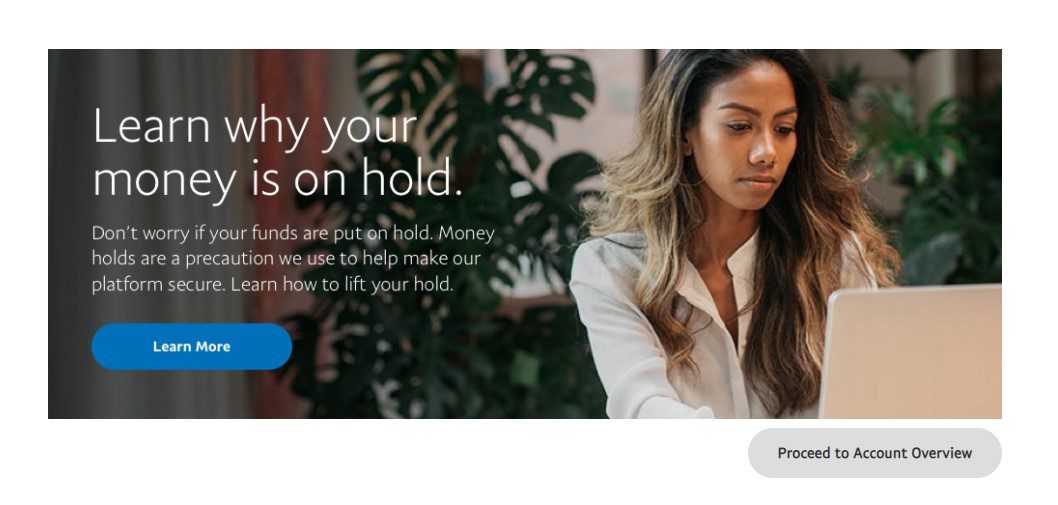

Cody Beard
I was using PayPal for about two months, then one day out of the blue someone asked me 800 dollars and i declined . The account went into the negative stating I owed someone who Ive never met , let alone know their name , or who they are that amount of money. I called Paypal customer service and spoke with a woman who kept demanding that I pay the $800.00 . There were no previous transactions on the account for that amount . The only amount was for rent to my landlord. She continued to tell me that they will need to see all my bsnk statements for the last four months to see if any transaction was conducted in the amount of 800.00. Not even a day adter three more individuals on Paypal sending requrats of me owing them money . One was for $150, another was for 370, and the third wad for 200. I dont know who these guys are but in the comments they say ” you owe me or else” ” you stole from from me” , and you need to pay or else!” I told the customer service that this is badgery and false , but she kept calm saying well you need to pay the money . Blows my mind that even cusyomer service is in on the fraud and they get paid a share of what is collected. Im done with Paypal and have started to warn others that you can be schemed if your debit card is attached to your PayPal. Sadiest part of the wwhole thing is ive been trying to reach someone who will help and to me dealing with this and now more for over a month , I finally standing up for myself snd hopefully others. No one should be schemed snd lied about tractions that never happened and trying to threat and ruin the well beings of hard working people
!
Sandy flynn
I’ve had PayPal for years, since 2001…
Well went to use it the other night, (twice) and it was declined. So I called PayPal the next day and told them my card was declined twice. And she told me yes as of sept 12th all banking and cards have been removed from PayPals accounts. WHAT???
I was so Mad. .
I’m like wait, I have most of my bills tied to my PayPal account and they get auto deducted each month so now there all going to be Declined. I’m done with PayPal. I Willmever use this card again.
soundoftext
I’m glad to see that PayPal is being scrutinized more closely. I’ve had some negative experiences with them in the past.
Gennaro N Luce
PayPal MC Credit Card is bad.
Made early payment, Held funds for 14 days, did not apply to card as payment and froze remaining credit because of my early payment. I filed a formal complaint with my State’s Attorney General.
Had I know PayPal moved their corporate headquarters to Beijing, China and is using/enforcing communism rule to control my freedom to pay my bill early, I would have never opened this credit card account.
Canceling both PayPal Credit Card and payment services. I recommend we all send a message!
Wayne
Yes he is such a confusing site you try to cancel I spent three or four hours trying to figure that out. At times I’ll send a payment three times because she hasnt’ received and you look at your transfer on your phone and it still says pay now so you pay again they don’t tell you if anybody picked it up it just say received but then I’ll check my bank account online and the money has been taken out three times sometimes she received once sometimes nothing at Western Union they send you a message and tell you if the person picked it up I’ve been ripped for thousands and thousands from PayPal and I don’t know how to get the money back the one lady in the states she said if it says complete nothing you can do about it she said you got to talk to the recipient and get them the phone PayPal and put it in there complaint so the recipient couldn’t get through on the phone and sent a message about the money she’s not receiving she never heard from them again I have sent messages and talk to people with no answers all they have to tell me is if the money was picked up they must know that and if the money wasn’t picked up and shouldn’t be taken out of my bank happened hundreds of times last couple years what can I do I can’t afford a lawyer I asked him to investigate it and refund my money never heard back
wayne Darrell smith
I have been using PayPal for a couple years now man have I ever got ripped off. I live in Canada and I help out a poor family out in the Philippines yeah absolutely no money you don’t get nothing free there no medical woman I mostly help has three babies and she has leukemia even when I go to the hospital they won’t let you go go out unless you pay first how do you pay if you got no money they beg on the streets for food so I transferred money to her all the time it’s usually an emergency so when I transfer money and it doesn’t seem to go through there’s no way of knowing you don’t tell you if it was picked up it takes over an hour and she still hasn’t got it from the store where she picks it up I send it again sometimes I’ll do it three or four times the same amount of money. But afterwards I noticed even if she didn’t get the money the money was coming out of my bank account using my Visa debit never got a refund must be tens of thousands of dollars I’ve lost they don’t tell you nothing they just take it and the only way I can tell is I look up my my banking record it’s hard as hell and confusing to try to cancel cancel transfer I’ve tried to get help they don’t tell you nothing seems okay I want to know how I get all that money back tens of thousands of dollars I don’t know what to do and still goes on if the woman doesn’t receive the money they still say receive if she doesn’t get the money it still comes out of my bank I’m getting ripped off and get a lawyer but I can’t afford that right now
Tori
Just received card statement. Over $450 of bogus transactions. Come to find out it was through PayPal. I have no account and never had one. So their solution was for me to give them my card information. Talk about scammers. That’s my two cents. Good luck
Ivette
PayPal should not be in business, this company is a fraud. If you purchase something and pay via PayPal and if you return what you purchased to the merchant, PayPal is keeping your refund, merchant refunds the money to them and in turn they have to return it to you (bad news; they are not giving back your money, they keep it) you cannot speak to a human being, they make it impossible. You chat with an agent in India, he comes back saying they already refunded your money, you don’t have the money in your account, they ask you to send a letter to their offices in Nebraska, asking for a proof that they refunded your money….this is ridiculous, they have access to your account and they can clearly see they have not refunded your money to your account. They are ripping people off, nobody is stopping them.
John
PayPal recently changed their site and all stored banking information was removed. I have tried to link my bank account for the last 2 months but I receive a message saying they are unable to link my bank at this time. I called customer support and the girl answered and said thank you for calling Amazon. So, PayPal and Amazon are both using the same Indian call center for customer service. After being verified thru the automated system, I am asked for my email address and phone number by the foreign service rep. I told them they should have it on their screen since I had already been verified thru the system. They said they do not see the information. I have asked to be transferred to the American customer service and when they do, the line is usually disconnected after sitting on hold for a few minutes. Sometimes, the rep will say they have no way of transferring my call to the American customer service department. I called another customer service number that is listed as the American service center but have been on hold for 10 minutes.
Joshua
I agree with that and hope that the class action lawsuit can be made against them because I am out over a couple thousand dollars now and have just now found that out on another card that I had to H&R Block where I have about 100 different transactions anywhere from 400 to the lowest of $15 about 100 times so I agree and hope we can get a
Mr.DavidDewayneRobinson
Transferring from PayPal Merchert Account to Bank Accounts..How can I Deport to a can Visa NetSpend card account. I have a rounting and account number.
Scot
I have now received two emails from Pay Pal saying that I have bought things and will be charged within 24 hours if not cancel order. The first order was for guns at an armory. I do not own guns and have no license. The 2nd scam email was for a $379.99 gaming system that I did not purchase. I talked to a Rachel who said I would need 15-20 minutes to fix the problem. I was on the phone for 1hr 33minutes and then 1hr 29 minutes and did not get the problem resolved. Instead Rachel talked me into buying a $500 vanilla visa prepaid card. After spending $504.94 on the card, Something else that was weird was she did not want me talking to anyone in the store and I had to go outside if I had any questions. I still did not get the problem resolved and I am out $504.94. I have been scammed twice and I never use PayPal. It is tied into a crypto scam which I believe they are a part of. Oh, and the kicker is, she called me back and said that did not work. This will only take 15-20 minutes. I need you to get another $500 vanilla card so you can get your $16,000 back from Crypto scam another $1272 and the $504.94 you just lost.
Yvonne Rose
I love my PayPal account…The only thing I dont understand is the charitable accounts with other countries, ,I notice alot of people will donate to them. But dont donate to our own PEOPLE IN NEED!!!!
Halle
A while ago me and my boyfriend used paypal to send one another money and that’s how we would pay rent. One of us would send money to the other with paypal and then put our rent payment through one of our bank accounts directly online. I sent him the few hundred I owed for rent and it didn’t send. I tried again and then it sent. However it then sent the payment 2 times without taking both out of my account, so we waited 2 weeks to see the attempt and we’d send them the money or whatever. After that amount of time nothing happened and no communication about it was sent to us so we forgot about it. Well another couple weeks later they then put my paypal account as negative and told us we had to pay it to use the account. They literally waited WELL over the time they should have to contact us. I even tried calling the customer service number a few times to ask about it and nothing. I will never use paypal ever again because of this. You can’t use something connected to your money if you don’t trust it.
BZY63
I ordered on line using PAYPAL. Part of the charge was using my card’s rewards and the rest to the card. This happened in January. Because of an issue with he online order, I called the merchant and they cancelled the entire order the very same day. Within an hour if not less. In fact the order is still “processing” on the PAYPAL website. PAYPAL knows this but has not refunded me my money. The credit card did let the charge to the card drop off but I am still missing my rewards reimbursement from PAYPAL. I learned my lesson. Do not use your rewards on PAYPAL. I have removed any cards associated from my PAYPAL account and will close my account as soon as this gets settled.
Melissa Rauh
Did u ever get your money and rewards? I had the same thing PayPal held my $800 for 21 days, but claimed to not have it. They said the merchant had it. After a lot calls back and forth, a lot of stress and no answers. Finally on the 21st day I was refunded by PayPal. After undue stress and wasted hours and hours trying to locate my “lost” money, I was pissed and refuse to use them anymore!
Rollen trahan
8001 add me to the list you let get taken by lokeeta you knew better. The more I read about these fake web site I know I will lose my money now. Never will see any boots they show on other company web site.
Kathy
Dont even bother to use paypal they are worst company to use for your financial.they are not trustworthy at all.
Danny
PayPal provides no customer service and does not value their customers. I have had my account for over 2 years and deal with the same businesses. The same businesses have sent payments at least every 2 weeks for these two years. All of a sudden they change a policy that says funds from one PayPal account to another takes 7-10 days to process. I’ve had more headaches with PayPal then it’s worth! I would strongly advise anyone considering PayPal for anything to find a different company!
Danny
PayPal provides no customer service and does not value their customers. I’ve had more headaches with PayPal then it’s worth! I would strongly advise anyone considering PayPal for anything to find a different company!
Johnny Rivera
PAyPal did not pay the vendor for my purchase (never shipped) and did not refunded me. They kept the money.
Concerned PayPal user
PayPal is the worst. As a buyer, they already have my name, my address, phone and Social, which I don’t like. Just to Login the site asks personal identity questions or you can receive a text with a Security Code, which I can’t because cell phones don’t work here. Finally when I got someone on the phone (it’s like pulling teeth) they must be taking deep dives into people’s personal info because he asked me about property owned. I got mad and he then told me I must enter all the info the site asks for or I can’t access my account. I have not had to do this before. I asked him if they could send the code to my E-Mail since they send to people’s phones and he says they can’t because someone could be in my house accessing my E-Mail. Ridiculous, since they could also have someone’s phone.
JEFF FLATHAU
Pay Pal is the WORST COMPANY I HAVE EVER SEEN IN MY LIFE. WE USE THEM FOR OUR CREDIT CARD PROCESSING ON OUR WEBSITE AND WE HAVE HAD ABOUT 16 CHARGES THAT THEY LET PROCESS THROUGH THEIR SYSTEM. WE HAVE NO CONTROL OVER VIEWING THE CUSTOMER CREDENTIALS, WELL PEOPLE ARE USING STOLEN CREDIT CARDS TO PURCHASE ON OUR WEBSITE AND PAY PAL IS LETTING THAT ORDER PROCESS. THE ACTUAL PERSON THAT OWNS THE CARD DOES A CHARGE BACK AFTER WE SHIPPED THE ITEM THAT WAS PURCHASED. PAY PAL SAYS THEY FIGHT FOR US BUT COMES BACK AND STATES THAT THE CUSTOMERS FINANCIAL INSTITUTION HAS DECIDED IN THE CARD OWNERS FAVOR SO WE LOST THE MONEY FOR THE PRODUCT THAT WAS SHIPPED TO THE IDIOT THAT STOLE THE CARD AND PAY PAL LET IT PROCESS AND NOW PAYPAL TAKES THE MONEY BACK OUT OF OUR ACCOUNT. PAY PAL SHOULD PAY THIS NOT US AS THEY LET THE CARD PROCESS STATING IT WAS A LEGITIMENT SALE. WHAT A JOKE PAY PAL IS…..
MICHAEL
I have noticed that I was deducted money directly from my account by Paypal. Unfortunately, I have no idea about those payment, because my Paypal account has been permanently limited from April even after I provided all the documents they requested, including the logistics. I tried to call Paypal to find out the reason, but things are not disclosed clearly and the only useful information I got from Paypal was that my account was in violation. And Paypal refused to provide more information and evidence regarding this “violation” when I asked for.
Edward Goforth
Paypal blocked my account for selling gun parts. The only notice I got was Paypal made changes in their rules, They did not spell out the changes. You are suppose to read entire set of rules which I did not. They said they could hold the money in my account for 180 days, shortly before the 180 day were up they took my money $3781, said it was for damages. Well ebay, amazon and craig’s list allow the sale of gun parts and it hasn’t damaged their companies. The amount is to small for an individual law suit. If they did this to a number of dealers perhaps a class action law suit could be made.
Mark Beyder
Beware! PayPal has stolen my money! There are tens of thousands of complaints against PayPal and several class actions suits. What they are doing is wrong and should be punishable by law! Do not use PayPal or they may steal your money too! Demand justice!
Debbie Saint
i paid $50.70 for package from Russia. Package was Hand delivered to me while i was out of the state!!! customs form says package weighed less than an envelope. seller sent an envelope with tracking number…now says delivered…and Paypal won’t do anything because tracking say delivered. customs form was not signed…not accepted by postal clerk. weight was less than 3 ounces. My purchase was WELL over 3 ounces AND she sent as a GIFT. $50.70 and i got NOTHING. I don’t even know who else to complain to. just sending sale of goods as gift is illegal. she won’t send receipt, signed customs form, invoice, or signature of who signed for it. She won’t send anything and now paypal wants me to file a police report – with no information.
Jesse
After 20 years of business and nearly half a million dollars in transactions, I’m DONE with PayPal for ONE reason. GREED. Thankfully I caught this with only about $100 in losses.
“If you refund a payment for goods or services, there are no fees to issue the refund, but the fees you originally paid as the seller are NOT returned to you. The amount of the refunded payment will be deducted from your PayPal account.”
Taken right from their website. Search Help: REFUND FEES
What does that mean to your bottom line? You lose out on TWICE the cost of processing fee. The fee that PayPal keeps + the extra money out of your account to cover the difference of the processing fee that PayPal kept. That’s $10 processing charge will now cost you $20 when you refund it.
Bruce
Paypal for business account created in 2016 to accept credit card payments for engineering services from a couple of industrial customers.
Fees a little high, but acceptable and invoicing and payments worked fine until today.
Logged in, sent an invoice to a customer I have sent invoices to in the past few years with no issues. Sent the invoice, customer received and paid the invoice. I received notification that payment was made, logged in and $1800 of my $2100 payment is on hold for 21 days, because I had not used my account for over a year. Called Paypal and they said it is for my protection. Invoice was for a service trip, so no tracking etc. Minimum of 48 hour hold if I want to ask my customer to acknowledge completion. Them choosing to pay the invoice should be acknowledgement enough.
Will be closing my account as soon as I get my funds released in 3 weeks!
Teresa Allen
PayPal has f***** me for the last time two years ago it was $4,300 now this year so far it’s 1,000….
David M Richard
PayPal is doing nothing to stop fraudulent sellers who leverage the PayPal brand and button to get you to buy. Nothing I bought was delivered to me and when I complained they did nothing to resolve it. Warning to other consumers – find an alternative to PayPal. My credit card would have been a better choice.
Gigi Alexander
PayPal doesn’t care about it’s Fraudulent vendors. More scams have occurred using PayPal than any other payment form online. STEER CLEAR IF PAYPAL. USE ANY OTHER FORM OF PAYMENT
Wayne
We’ve been accepting online payments through PayPal on our website for years now! Barely even think about it any more; it’s pretty much seamless.
Tracey Banta
I have not been able to get onto my account in two months. I keep calling and they say it’s not them. As I ask for more people to talk to it’s then that they say we are having verification code errors. Still not fixed. As soon as it’s paid off I’m closing account. What business let’s this go on for so long!!!!
Matt Terry
Hey guys, I am Matt , I was able to make the sum of 15,000 Dollars plus from Premiumtoolsaid.com. They Provide a safe and legit services, they funded my paypal account when I was stranded and seriously in need of money, a good friend of mine introduced me to their site and they are extremely legit, I was shocked when the transaction turned out successful .
Patricia Spalding
Ive ordered over $200 dollars worth of product paid through you. You obviously support scam and fake websites. Filing a complaint with BBB.
John Balough
Pay Pal should be investigated for dubious business practices! I will never do business again with any company that is affiliated with PayPal. They said that I received my order because the tracking number from UPS said that I indeed receive it . The tracking was from Amazon.My order was not with Amazon. The tracking parcel name or address was was not mine. UPS informed me of this and the tracking message included the weight of the parcel was .70 pounds. The weight of my ordered computer weighs 4.3 pounds. All this information was made available to PayPal. Yet they determined my complaint had no merit and declined my request for money to be refunded.
David Lee
paypal’s service is utter garbage. I say it that way as their increadably bad reputation is well deserved. I recently had my account closed with no warning and no explanation.. There was no suspect activity, excessive claims, { NO claims to be exact} . Multiple emails were ignored as were most phone calls. When I did speak to somone
I recorded the converstaion, advising them that I was doing so { I will post at some point} but basically they said that they were closing my account and would not say why. They reffered me to their terms of service which I went through closely and there was absolutely no trangressions.
River
My identity has been stolen and it has ruined literally the early part of my 30s on and after a lot of digging and contacting credit bureaus and all of that I’m trying to get on track. I say that to say this, I have files of emails that came to my inbox and many who look like they were sent from me, I had nothing to do with those emails they were fraudulent. This has cost me so much money I’m 50 years old disabled he don’t even have a home. So as I was going through thousands of emails that’s how the files came around, I could not keep up with that the credit bureau showed me daily there a hard hits on my credit for stupid credit cards they have given me a ton of different names birthdates addresses name it. When I saw that I had an active PayPal account and that there had been no notifications although every single month they were sending me a statement I have so many photographs. These people all of these people that do this are vile evil individuals because they have harmed myself and my children so terribly.no trust
Billy Shipley
I’m not an expert now you had a lot of practice with a PayPal but I’ve always heard they was good to business with I haven’t got no complaints
Samantha Danes
Just letting everyone know PayPal has wrongfully put “permanent limitation” on my account!!! And they won’t give me money for 180 days!!! All I did was create the account and try to ge my payment from a freaking customer!!!!! I wasn’t able to do ANYTHING so I couldn’t have done anything it was already blocked!! So apparently I can no longer do business with paypal and they will not let me take down my bank information either!!! They tell me it can’t be reversed and will not look into it anymore!! AND NOW THEY BLOCKED ME because I was sharing this information with their Facebook page! And this is for my business I will be making sure nobody I know ever uses PayPal again .
Gary J Dixon
I hate PayPal You will lose a lot of business to Stripe with your sorry ass ratings and numerous customer complaints! Read them PayPal idiots
Misty stephenson
Paypal closed my account on falsely reasons.
I have to withdraw 300 every week to pay rent when they sern that they closed my account the same week of my bday in aug.
I feel they should reopen my account and not accuse there clients on suspisous activity.
Nathaniel M Jones
I purchased a washing machine from Home Depot in February 2021. The company informed me that the purchase didn’t get paid. I reordered the washing machine and this time I used my PayPal account.
Prior to the delivery I became aware that I was being billed for two machines. I called PayPal to have one of the charges reversed. The agent that answered the phone informed me that he was going to relay my call to a specialist. The call was then transferred to the specialist.
The specialist had me hit some keys on my tablet and then had me pull up my bank account. He told me that I needed to go to BestBuy to purchase a $500.00 gift card. I inquired why that was necessary. I was told it was necessary because PayPal wanted to be sure the funds would be credited to the correct account. I told the agent that I was not able to get a $500.00 gift card. I also told him that I was not able to drive all the way to BestBuy. He asked what store was near enough for me to drive to. I told him that there was a Target store nearby. After I purchased the gift card I was told to scratch off the back of the card. Then I was told to take a picture of the the code that had been uncovered. Thereafter I was told that the charges and the gift card would be credited to my account that week.
I never got the gift card money back. I traced the card and was able to determine the card had been used in Texas.
I contacted PayPal to inquire about the money for the gift card. I was told that my story didn’t make sense because PayPal agents would never ask me to buy a gift card. After trying to make the person understand that in fact the reality is that I had been ripped off by an employee of PayPal. I explained that I am a disabled senior citizen and a disabled veteran, Eventually I was offered $100.00 to compensate me for my $300.00 loss.
I feel like PayPal should have taken the necessary steps to rid their company of the thieve . I know that the company could make the determination as to who I spoke with that day. A bad apple can quickly ruin the entire basket.
Shelly
I ordered some Cricut supplies on a website and PayPal just popped up and it was almost required you to use it. I got notice from the seller saying my order was shipped. I tried to emailed the seller, nothing. I filed complaints to both. USPS told me it wasn’t even shipped to the correct address (suggesting it was a scam). She said it had happend to her. After all PayPals reasearch they told me my complaint was denied because it had been delivered. I wrote back and told them I would be leaving this review and never use it agin. I’m out $91.00 and have to spend even more through Amazon knowing their track record is about 99.9% I will recieve the product.
Martin
I find it hard to believe they are still in business, almost every transaction I’ve had with them has been a problem. It’s hard to believe. They don’t want to give me my own money. And when they take the hold off, I can’t send it to anyone. They say I can, but it doesn’t work. Terrible awful place, I try never to do business with them
GREG D>
Paypal locked my account for 180 days for no reason. We need another class action lawsuit. In the early 2000’s they did the same thing and lost.I guess they did not learn. DO NOT USE PAYPAL. THEY ARE LEGAL CROOKS> GOD HAVE MERCY ON THEIR SOUL FOR HURTING CONSUMERS. MAY THE BURN IN THE FLAMES THEY ARE STARTING.
ANDREW
Good day !I am so excited today because, two months ago My bank account details was compromised from the bank data ,about $28,,000.00 was transferred out of my account. Bank fraud was said to be the cause, and the squad in charge of fraud is investigating .I was told it will take some days to trace the money, I might not get it all back. I took it upon myself by doing an underground investigation by hiring GX ,whom I found their email ([email protected]) by accident, while I was searching on Bing for something else.I would just like to say cheers to a marvelous fund retrieval and bring justice by revealing the identity of the bank staff who connived with another hacker to steal customers money through the help of GX in 24hours..The culprit has been handed to the police for further investigation as he claims he has been doing it for 2 years plus.
chris
Paypal says the disputed package was shipped to me simply because they have a tracking number. So what.? If they call fedex they will tell them the package, that is shown by paypal and the ebay sale as mine, was shipped to someone in my city, but not to me and not to my address. The ebay page shows it was delivered to an address with a different postal code. The fedex site says some guy named C.Macandrew signed for the package, not me. Yet paypal wants to say the package is delivered. Time for a round of complaints to the regulators and a trip to the local courthouse to launch a private prosecution against everyone involved for ignoring the obvious and thinking they can move proceeds of crime around without any criminal liability. All you sellers want to complain but when I’m done I will have the legislation changed so disputes are automatically clawed back to the bank until the banks investigation is complete. Paypal can not be trusted, they did not even want to look at the evidence I had. They just hung up on me.
Smitty
PayPal are scammers will lock your account for no reason and keep your money there’s thieves. Now they have started Venmo so beware PayPal owns Venmo
Laurie Beaulieu
Ok how in the world can 1.2 MILLION complaints against PayPal (on just a single website) be ignored by the attorney general, FTC, and the whole government! Why are they still in business! They have been sited in US court cases year after year after year! When will this stop, who is going to do something about this????????? They have complaints all over the internet, just unbelievable, but sadly true, so many people damaged by them. Please stop them……
Latifa
I bought a shoe from “X” company. I was prompt to use paypal. Normally I do not use paypal. Don’t trust them. So, I bought the shoe, paid using paypal. FIVE days later I found out that the company I bought the shoe from, “X”, was just a scam. So, I filed a dispute. That was FIVE DAYS later.
Paypal said that the merchandise was delivered, and they were not responsible for lost merchandise.
Paypal took the money, I don’t know what they did with it, and said that I got the merchandise.
According to “PAYPAL”, and what paypal provided my credit card company with, the merchandise went to another state. The shipping address I provided was in Massachusetts, an the merchandise was “delivered” to Arizona. Paypal new that.
And that’s not all, Paypal came up with a “merchant” that I never bought anything from. I bought the shoe from “X” company and Paypal had a name of a company that does not even sell shoes. That does not sell anything. It was offices based in the USA, and USA only.
It also says that the package was shipped from China, while the company they came up with does not exist in China.
My point here is Paypal, comes up with fake companies, basically with scams, they take the payment, and you NEVER see your merchandise nor your MONEY.
It’s just a way for paypal to make extra money on the side.
DO NOT TRUST PAYPAL, EVER, AND MAKE SURE WHAT YOU’RE BUYING COMES FROM A LEGIT COMPANY.
John
New CANADA scam against USA sellers. Sold item to Canada buyer. 8 months later the money exchange company opens claim not even the buyer. Paypal awards 1,000 to them without returning the items. So I am out 2,000 dollars total.Paypal stated its a financial company they can’t do anything an allows this. So much for protecting USA sellers. Was not a ebay sale. Buyer contacted me an brought items from my site.
John
Paypal is dealing in crypto sales and when I started with crypto I gave them all pertinent info that they required to start buying and selling crypto. I’ve also been with Paypal for over 15 years and updated my info before. All of a sudden they froze my account and said they required more private info. I’ve already given them enough info that they required to begin with. They also screwed me out of money I had in crypto. WHen I went to sell they froze my account and have basically stole my original investment plus profits. They will not change their minds
Rachel Sinnott
They were sued in 2017 for same thing. I would like to sue them also.
Rachel Sinnott
Paypal is the worst service I have ever recieved. They do not protect the interest of their customers and are crooks.
Michelle Ashley Wilson
Paypal allows people to scam small businesses and individuals both. I was scammed multiple times on both my business account and my personal account!
Gabi
Pay pal it’s horrible, don’t ever get it . Some how they ménage they statements and always you owe them money . They stoking from us . I hade a dispute claim , after almost 2 hours on the phone with 4,representatives asking me same questions and the last one some Shawn from investigation team disconnected me , and I call back I start Wright down the names from representatives and they told me they solve the problem in my favor I got my next bill and they charge me again , they never solved . And I closed my accounts . I don’t wanna ever deal with them
Brian
I had my card stole and money spent just wondering where it is now
NATASHA RUFO
No PayPal. sucks horrible customer service I bought a basketball hoop for my son to play basketball during the pandemic in March I waited and waited months and months and months I waited years I try to both contact both parties no one ever reach me give me my money or my basketball hoop I’m upset and I want something I don’t care if it’s a pain a basketball hoop it’s the principle my son never got his who he was so excited it is a PayPal or the center of the product cares during the pandemic go figure he tried telling a young boy he take his basketball hoop or let me back for a new one contact the Better Business Bureau and now I’m just awaiting a lawyer I need something done this is not okay
S Savage
I’ve had several complaints what PayPal but the most recent takes the cake. I use the notes section when making any transaction originating from the PayPal app so that I can see at a glance what the transaction was for. On May 1, I told a roommate I would cash a check from him, Since
His wallet had recently been stolen. It was a friends and family cash transfer from my checking account to another roommates PayPal account. I wrote “cash a check for Charles blank“ in the notes. Well Paypal has been holding nearly $300 of mine since that time. I called them yesterday they claim they had sent me an email on May 2 which they had not, explaining that they needed Charles blanks date of birth. Since Charles blank is not a client of PayPal, I did not feel it was right for me to disclose personal information to a third-party. I explained this to Paypal, and explained that it was just a personal note, but they would not budge. They will not let me cancel the transaction unless I provide this man’s personal information. I don’t want to be a party to A possible fraud,
In the event his information would be leaked from PayPal and used improperly I could be legally responsible. Meanwhile they still have nearly $300 of my money and they will not let it go. I know California has a lot of protections regarding disclosing personal information of clients and this man is not even a PayPal client. So I sit and wait why it looks like it’s going to be 10 days well Paypal has use of my money and will not return it. This to me seems a scandalous abuse of power.
Rob Pashko
I have done tons of transactions on PayPal for more than two decades – no problems.
Today, I did one… They sent me an email to confirm an email address as someone paid me. Everything went through as it always does.
And then, they closed my account forever with no reason, I got an email 2 mins later. My account is locked, permanently. No reason given.
And after an hour on the phone, they said they don’t have to tell me why, and that it’s permanent. The two “helpers” said they can’t see the reason, and also can’t give one, and can’t tell me who could give me one.
The end. I’m barred.
Literally. I bought 2 comic books. Like I have many, many, many times.
All payments went through. I’ve never been late once. Never owed. Never circumvented any process. Never had shipping problems. Never had an unresolved case. Never had a complaint. Never had a warning. Nothing.
Banned. No reason given. None apparently coming.
???
How is it legal to do business like that?
I said I was concerned that someone was using my account, or identity theft, or…. what could it possibly be?
No answer. Our policy is we can shut people down, forever, without a reason.
???????????
An hour. I would have gotten further talking to a tree stump.
lou overman
I have money pending from sales on ebay, and attempted to get this by check. But for over a year a message appears saying transaction cannot be completed now, try later. Either this is total incompetence, or deliberate. I assume the latter. They want you to keep your money in their system or don’t want you to have it at all. After reading complaints about bank transfers being rescinded, I decided it was unsafe to give them my bank account number. They already have my credit card on file and make charges to it. But they won’t credit my card with sales. I hate paypal.
Jesus Salazar
Im trying to get paid. my boss ONLY wants to use PayPal. he can’t seem to figure out why he can’t send me money. everyone else from our company received their money. I called your support team and they looked into my acct and they said everything is good on my end. my boss called as well and he was told the same thing. SO WHY CANT I GET PAID? what do I do?
Ron
I’m one of the so, so many people who had their account locked for no reason by PayPal, and they currently hold my money captive for 180 days.
This is after they promised, twice, that they will fix the issue (it was first partially limited) and then bam! fully limited without explanation.
F*** PayPal.
Linda moore
I am having the same problem. They have had my money for 2 weeks,won’t release it and that there is a security question that they keep asking me that I have no clue what they are talking,so I try to transfer the funds to someone else they put a hold on my account for 72 hours has happen 4 times in a row plz count me in on the lawsuit.
Posmel
Just a couple of days ago I finally received my unemployment benefits after waiting 3 months only for PayPal to limit my account. Now they want to hold my money for 6 month after making me homeless becaise the money was to pay my rent. I don’t know what to do but I wish the thousands of us on this post could come together and file a case against PayPal for their fraud. It is wrong to live on people’s money while the real owner of those money get screwed, depressed and even suicidal.
Rob s.
Absolutely terrible service, I’ve used PayPal twice, both times there was zero communication. I couldn’t track my order, no updates. My first order was was nothing like what I ordered, and PayPal was unwilling to help in any way. Second order never came, having my credit union charge back.
Jason Ewell
These people are lying scam artists
Who don’t take responsibility for their mistakes
Alexander Hale
Despite clearly listing on their website that items purchased from Custom Frame Solutions are covered by the PayPal purchase guarantee, items from Custom Frame Solutions are not covered by their guarantee. If you choose to risk your money with Custom Frame Solutions, which is a complete scam, don’t expect PayPal to help. I just finished going through a dispute with Custom Frame Solutions, where PayPal told me to return the badly made/cut frames to Custom Frame Solutions and after they were delivered, told me that my purchase was not covered by the PayPal Purchase Guarantee. After confronting them on the phone, they eventually issued me a refund, which is the only reason why this is a review and not a formal complaint. However, by advertising that the item was covered by their guarantee while their terms and conditions said that it was not is a clear bait and switch to encourage users to make purchases that are not actually covered by the guarantee in order to drive more sales through their platform. I will be much less likely to use PayPal in the future due to this issue.
Bill Grppme
Never use PayPal. They can destroy your business, seize your accounts, never tell you why….and there is nothing you can do about it. Their User Agreement allows them to skirt the law. They can basically burn your house down, and there is not a damn thing you can do!
Rae
Hi just wanting to let you know that I’ve had a very bad situation with PayPal that out of the blue is holding my payment. They demand item to be received before releasing payment which would possibly still take another 2-3 business days after delivery. This has never happened before & I have never had a bad transaction as seller or buyer. Apparently this is something they do I found out after googling it. I have phoned & apparently it’s in their terms & conditions….. 🧐 The purchaser is very apologetic as neither of us has any mark against us & have never experienced this before. As I said to “Customer Service 🥸” sales work this way, you receive the money then you send. So when you discount an item to receive money sooner than say someone who’ll pay full price next week … umm it just might not work out that way. We will be waiting 21 days! They must be sitting on quite a bit of interest earned every month from other people’s money. I wish there was an alternative 🙁
Anna
Poor service
Tyrez
They are unfair i message them but no answer. I called and they hung up and left me on hold for 2 hours. They don’t want to help me at all. Paypal is unfair and are haters
E clarisa A-Nuzzi
We’re a grieving Hispanic family, my loved ones sent us some money to pay the funeral costs for my child’s funeral and PayPal decided they will not release for at least 72 hrs! My son needed to be put to rest and I had to beg the funeral home for an emergency extension until the money is released! This has put an even additional burden to our family since we have to deal with losing our child and not having the funds to take care of our expenses! This is unfair and inexcusable!
Paula lee
If you have a lawsuit going against them please count me in this isn’t the only issue I have had with them ive had many this is just the most recent.
Paula lee
I am getting very angry with PayPal customer service! I ordered a pool vacuum that I still have not received and because they were provided a tracking number that was wrong as well as the address on it was wrong they denied my dispute without any further inquiry and I have sent them documents from the usps showing them. I have been trying to speak to someone for days now. It is very frustrating and I’m about to lose my politically correct attitude.
Melissa
Don’t use PayPal. They charged my Contracter 2% fees to receive funds I sent to them. Argh! Fees should be listed prior to any transaction. That way I can decide if I want to use PayPal to pay my vendor.
Peg Nolz
I got scammed and PayPal sided with the merchant. Did not receive the product as advertised; dollar store substitute for $46 purchase. Told I had to send it back to China, at a cost of $35, even though it was sent from within US. I am done!
Chris Wank
PayPal does not provide protection against scams. Sadly I was scammed and had no recourse. They need to change their terms and conditions for friends and family transactions as that is how people are being scammed. I would like to be apart of that class action lawsuit.
John Culbertson
PayPal is holding my stimulus money for two pay periods and I need the money today to keep my electric on all they say is so sorry your having this problem. That’s unacceptable!
NICHOL QUIROZ
Paypal worked great for me at first had it for over a year now & then all of a sudden they choise to do an lock on mine for suspicious deposit which was from IRS FOR THE STIMULUS THIS WAS SUPPOSED TO HELP ME PAY MY BILLS & NOW BECAUSE OF THEM I’M PAYING LATE FEES & SUBJECT TO SHUT OFF. WE CALL & CALL & STAY ON THE PHONE WAITING FOR HOURS WITH STILL NO ANSWER OR HELP! I’M BEYOND PISSED OFF!
Miguel
Is the worst company about backing their customers from scamers, even probably they know the company’s who they do the scam and they let them get away with it.
Just plain wrong!!!
Kevin Amsler
Never will I do business with Pay Pal. There so called fraud team was absolutely totally lied to me several times. The third person that placed the order on pay pal should have been questioned when order was placed. The fact that my credit card on file with pay was expired, should have been another red flag. Instead you chose not to contact me on this matter, and instead charge my bank account. That was sham!
Marcia Williams
I have had the same email since2012 and paypal is lieing won’t give me a chance to change password since I haven’t used in a while.
Shelley
I absolutely agree that PayPal is the biggest legal scam going!!
Any chance they get they will take your money, freeze your money, or come up with fraudulent charges on top of the ridiculous fees they’re already charging!! I want to know how to work towards building a better network that will not be corrupt and will take all their business & bury them. What’s going on with a class action suit?
Steve
A corrupt despicable company , worse than the scam companies they support, there is no PayPal protection just a bunch of stupid rules that act in pay pals favour, they have allowed a scam company to take £280 from me
Kahmilia Allen
Hello Paypal has been collecting payments from my bank card unauthorized and now the total is $9000. I would like this refunded immediately, this is unacceptable. Paypal has made over 50 charges back to back, this is fraud and I will report it to the police.
Shacorra Burns
Pay pal is nothing but scammers holding people hard earned money even when you prove who you are…with lots of research and hacking I have broken they firewalls anyone with any money on hold I can hack it for you a release funds.VIDEO COMING SOON
Michael D Brown
I have had my account hacked have had all my federal and state tax refunds stolen then when I call the help center they routed me to some paypal headquarters were I talked to a guy named shawn and shawn and his employees then proceeded to steal another 400$ from me by having me verify my account with another card all I want is my money back I have Bill’s and a family to take care of that’s over 1300$ taken from me
Ian
PayPal is committed to taking you’re money… however if you have a question I can promise you they have no interest in providing the answer. They will not, do not and desire not to provide even the minimum of customer service. But don’t worry there are plenty of scam web sites that will do it for them. Trust in PayPal though not to protect their company or you from these people. Deleting all things related to them and their piss poor service.
J R
Never in my life have I come across a company more crooked then Paypal. How are they allowed to get away with the s#!+ they pull. Ive been selling for almost a year, have about 100 transactions and $75000 in sales. Ive played there verification game 2 or 3 times and they still hold my payments for some fake reasons. First I was a new seller, then a couple customers had some issues but they were resolved and now I am not an established seller. Oh wait, next customer service rep says its not that, after I explained their criteria I met for established seller account, its my uptick in payments into my account that flagged me and put reserve on $24,000. This is the good part. Received payment on Feb 4th and 6th for $8400 and $13350 respectively. Normal 21 day hold for big payments, no problem except out of the kindness of their hearts they release the hold on both payments on the 22nd (early), don’t tell me and it instantly puts reserve on my money for everyone’s protection. How convenient is that for PayPal. They have this hustle down and nothing I can do but bitch on these review sites and stare at my balance on hold. Hey PayPunk, next time you want to do something nice for me, just cash out my account in change and stick everyone of them so fair up your fu#!*%& ass that you start hacking up dollar bills. Careful to choke on them!
Bobbie Johnson
Two times in the last 6 months, someone accessed my PayPal account and transferred money out of my account. The first time, they got $3300. PP paid me back. This time, they transferred $995 the first time before I found out about it; there were 2 more transactions lined up of $499 each! I told them no way – don’t do it but they transferred the money anyway. Now, they are denying my claim – they say there is no way anyone can access my account. And, yet, I don’t have the money! Could it be an inside job??
Samuel Otunga
Aiding and abetting fraud is Paypals main purpose, if you can show them that you delivered something, the cant reason beyod that. can a cherry picker weighing 70Lbs be shipped by USPS in an Enevelope?
Folks companies like these should and must be known to every unsuspecting shopper and merchant.
Kevin
I have had two bad experiences buying products that I found out were sent directly from China. The one, a robot vacuum, did not come anywhere close to what was advertised. I complained through PayPal channels. Supplies supporting videos. Went through return procedure of sending back to hong kong. Expensive but PayPal was going to reimburse portion of sjipping. Bottom line, no support from PayPal , no reimbursement for shipping. And no refund. Oddly after 5 months got useless robovac returned. 2nd product again found out after fact from China. An outdoor nativity set advertised 3 ft tall made of durable plastic. Ordered end of November got end of January. Set 1 ft tall, made of cheap corrugated plastic that arrived bent and damaged.
I refuse to order anything that will only accept payment through PayPal. PayPal is a fraud and scammer enabler for inferior products made in China.
Kevin
Miriam Attias
There are many things wrong with PayPal but like someone else already commented on they are doing business with scamming companies abroad and leave the buyer un-protected. I don’t think there is a person reviewing information it is all automated so their responses and deliberations make no sense. They make decisions, close cases and accounts, keep money and many other unsavory practices and there is no one you can talk to. It is a disgrace and I am hoping soon someone can unveil their corrupt system.
Mustapha Fakir
PayPal is one of the worst money payment company. It is funny that I rather deal with MoneyGram than PayPal. They take your money from the debit card and claim they are using e check to withdraw money and they make you wait 5 to 7 days for the receiver get my payment. When I call customer service they said it’s for my protection. I do not need protection from them. Goodbye PayPal I rather use MoneyGram and pay a small fee to send money in 2 minutes.
stephen r simone
it sucks i have been fraudualent charges i never made told them they threaten to ruin my credit so like a dope i paid 1600 dolaars and told them to shut down the card i never asked for. Then a year later they did it again i paid them and again i told them i sdont want card. and all the purchases wasnt me and also was sent to different address which i dont know. Now im in court for you guessed it 3200 dollars have to pay a lawyer because they sold fictional debt to midland credit services anothewr scam company . When does it end there should be some kind of law this has got to be illigal. i dont know what to do.
H Noori
The worst customer service I’ve ever had. They made an error and took money by mistake, I’m now in an overdraft because of their error, which they don’t care about. They are then telling me I have to wait over ten days while they process a refund (there is no refund as they took the money). Truly awful, not to mention their rude, disdaining staff who just read from scripts and don’t listen to you.
Noah
PayPal froze my first point of sale credit card payment. At first I thought it was because I didn’t have a bank account linked. So I went through that process which can take a couple of days. I confirmed with them I was the account owner. Then every time I tried to transfer my recent payment from my first customer it would say my information was wrong. So after checking all the FAQ I Fahd to submit a report and eventually messages to support. Then they sent me to a resolution checklist. I sent documents about my business for the first two. The third didn’t even apply. I was told it may take 5 days for review. Two days later I got a message asking for more information. All the info they wanted was rediculous. They wanted supplier receipts, more information on how I conduct business and website information and several other things I don’t have. I’m a massage therapist. I don’t have a supplier. I don’t sell items. I sell a service. They wanted my customers information too. I gave them everything that pertains to opening a business bank account and I ended up having to refund my customer and collecting payment through Apple Pay. I will never use PayPal again.
Eva
PAYPAL = SCAM!! Apart from holding money for 2 months so they can accrue interest on funds that do not belong to them, customer services only apply to fake merchants. The non-Existent customer service did not bother to look into my situation and used a fake tracing number not to refund me.
Linda Colbert
I have at least four items that I never received. PayPal sided with the scammers and never received a refund. I don’t see how they continue to scam the public like this . An investigation is needed for this untrustworthy company. So many people have been scammed by PayPal.
Tevin Shearin
The whole company should be false advertisement. I have had multiple issues with this company but I keep giving them a chance. I have purchased a game system online using them. The person never sent the item and when filing a dispute was only able to receive $8 dollars and the agent sound proud when $200 was payed. was told if it was handled directly through paypal account they couldve gotten everything back but since I used a card thru them it would not be possible.
My second issue was with their integration with facebook to make purchases safer. actually saying you get your product before they get their money. Purchased a $600 dollar phone online was given the confirmation, the transaction, and everything the person never sent the device but kept the money and paypal says they are unable to refund even though this time unlike the other transaction the money was added to my paypal account 1st and then the purchase was made. was told this time that i should’ve made the purchase using my card so I couldve disputed thru the bank.
My last issue was actually me sending money to a friend that needed gas, we both have a paypal account and her account is linked to her card. we often do this 1 or 2 times a month but for some reason they put a hold on the transaction and customer service said they did not have a reason for the hold even though this is a basic transaction and told me we would have to wait almost a week for it to process. I asked for them to cancel it so I can just find another way to do it. but low and behold the refund button is gone, the cancel button is gone, and they said that they cant cancel the transaction so my money is just floating there in the system for a week.
Horrible useless company if you cant do what your company purpose is then just shut down. 3rd party prepaid banks/account have more support with money security than this company.
Ted Lee
Wow. Their disputes are B.S. one sided paypal must get kick backs from all this. No longer using paypal. Screw me once thats all u get from me. Horrible customer service. I would definitely not waste ur time. Paypal is Horrible company. They r slowly going down. By paypal.
robyn cichra
I’ve been scammed twice by PayPal. I will NEVER USED THEM AGAIN !!! They support these scammers just because they show a delivery! I never got the merchandize nor would they share what the seller sent them which is rubbish! They won’t speak with you and their people are rude when you actually get a person on the phone! I can’t believe they get away with this crap. Something needs to be done about this!!!! PayPal needs to be held accountable !
JD Bubna
Paypal refuses to send me my money. I have been attempting to get my money out of Paypal for 6 weeks. I tried the transfer to your bank process, the debit card process, the go to Walmart process, I’ve attempted to pay my spouse. None of these have worked. There is a linkage DB issue or just plan bug that results in the “Thanks your all set’ screen popping up anytime I attempt tor transfer money. I have phoned paypal and messaged them no less than 30 times on this issue. The just send me the same instructions that do not work. I’ve repeatedly asked they send me a check. They haven’t. Basically they are stealing my money. What do you do?
Mrs.M.Howarth
Am at my wits end with Paypal. In April 2020 I purchased Samsung A51 but before using I contacted Samsung to ensure it would be guaranteed – their answer was NO. Got onto Paypal and they stupidly informed the supplier that my phone had not been sent. Contacted Paypal immediately – they still kept informing retailer I had not received my phone EVEN AFTER I HAD TOLD PAYPAL THAT UPON RECEIVING PHONE I HAD CONTACTED SAMSUNG BUT IT COULD NOT BE GUARANTEED BY SAMSUNG. How the hell could I report a phone if I hadn’t received it. Paypal told me to go on their customer forum site’which I did. Up to now I am still waiting for my £280 REFUND SINCE LAST APRIL. The other day I received message from Paypal saying my account had been closed due to some queries. I went onto website, tried to get into my account, they did not recognise my details, so I had to go through procedure in waiting for a code .Code arrived, I entered 3 times -nothing happened so I complained – not had a reply (as usual) ON TOP OF ALL THIS a few months ago a query was raised in top right-hand corner of my account page saying somebody was trying to send me money but due to EU regulations Paypal asked me to tick the OK at bottom of message. Ticked the OK – nothing happened. YET AGAIN I AM ON THE LOSING END. How the Hell Paypal operate is a mystery to me as, from my own experience they are totally inefficient when dealing with customers. I have said the same thing to Paypal in my emails to them and also saying that once my account is sorted to my complete satisfaction I will definitely never use Paypal again.
Juliet Wingo
Fraud…… PayPal asked me to send coats back to China…..$6316.30…. it cost me $882…. I sent the coats back they’re in China and PayPal denied my case.
Linda Colbert
The exact same thing happened to me.
Michele G.
PayPal stole my money — twice! My recipient did NOT receive it and PayPal refuses to look into it. They got away with stealing the funds instead.
TOM O'Connell
not usrer friendly- they keep the ball in their court for their purposes
gary woods
pay pal refuses to investigate why I did not receive the item that I paid for, The seller gave a phony tracking number to UPS for a different product and that item was delivered. Pay pal denies my claim because UPS did deliver a parcel to the address with the phony tracking number. PayPal refuses to check with UPS to see if anything was delivered to my address. UPS did not deliver my item that I paid for. I got scammed by the seller and that apparently is ok with PayPal. The item I paid was a specialty product for a wood lathe. A little bit of common sense would dictate the odds of another person wanted the same item.
Jes
PayPal is HORRIBLE at Customer Service. They haven’t replied to 4 of messages sent since December 29, 2020. The also NEVER answer the telephone. It says please continue to hold and they NEVER answer. I’ve waited up to 40 minutes for them to answer.
Robert Latham
Had reservations about using PayPal and my experience proved my fears to be well founded. After payment was made through PayPal the wrong purchase came to my home. Contacting PayPal customer service was clumsy. In the end PayPal denied my request for a return or refund saying my complaint issues time limit expired. I had contacted PayPal on the day the wrong purchase came to my home. After several weeks of waiting on their customer service my complaint was denied. Lesson learned never never use PayPal. My loss was not great but my promise to PayPal is to use every social media platform and customer/consumer service to warn other of this unreliable payment service. If any organization uses only PayPal for payment I will advise that organization that I will not purchase anything through PayPal.
Lisa
I spotted PayPal cheated on my account twice in the last 3 months. First, a merchant refunded back to me but there was no refunded transaction on my account until I called customer service to ask them where my refunded money. Second time, the same thing happened. I check my current balance on my account and saw pending refunded transactions and I checked two days later, I had the same current balance and amount that I paid 120$ was completed and still same current balance. So they didn’t calculate the amount I paid and refunded money I got refunded from stores. Everybody has to be careful because you could be the victims as well. Keep checking their system is a totally thief.
Raquel Rodrigues
I am VERY disappointed in PayPal! I paid for a purchase in July that was intended to be received by mid-August for my brother’s birthday on August 31. Unfortunately I did NOT receive it in time and tried to be patient given the circumstances of Covd-19. I was tracking the purchase and contacted the seller mid-September). They continued promising delivery and finally received a package last week but the contents included was ONLY 1 glass of the 3 items within the product description☹ There was NO decanter or the other glass as per the description of the purchase!
I have been experiencing difficulties with a product order for over 2 months and requested a refund on an order due to not receiving it in its entirety. I had to provide proof, which I did, and after their investigation, the company agreed to refund me. Paypal followed up to assure I would receive a refund after returning the item.
I was required to return the item and provide a tracking number BUT at the post office the charge for a tracking number was substantial and would cost me more than the actual refund! So I decided to simply pay to RETURN the item, which was still an additional cost to me! I provided proof of the costs, as well as the returned shipping receipt BUT the lack of a tracking number had them change their decision and I was denied a refund!☹ I did NOT receive an order I PAID for which was stressful! Then I provided sufficient proof of the issue. I was then required to return 1/3 of the product received! I was also required to provide a tracking number BUT that would cost me substantially more than the actual refund! So I decided to simply pay to RETURN the item which was an additional cost to me! BUT this has caused YOU to deny me my claim ☹
Not only did I lose money for the initial transaction, I have also lost additional funds for the returned shipping costs, all due to a fraudulent order!! How is this supporting their customers??
I also discovered that the item is no longer available on Amazon, and I expect its due to the supplier’s fraudulent business practices!
Joe Mirsky
I had 2 sales with PayPal on my Shopify site where I’m selling all my remaining inventory from my closed jewelry store at a little over cost/wholesale. The first one for $200 I was able to transfer to my personal bank account. But the second one for $750 wouldn’t go no matter what. Message said couldn’t tell who I was.
PayPal support is almost impossible to contact, remaining in artificial stupidity mode until you figure out how to send a message. There’s no live chat and phone says everything too busy right now. Finally got a human to reply after 36 hours and she said she had corrected it but it still failed.
finally tried transferring to my business account which I was the initial account I used set up PayPal, even though I had set up the personal account with PayPal. It sailed right through. I had to keep the business account open long after I closed my store because I am expecting a small tax refund from NJ (been 5 months now) and my bank said I couldn’t deposit it in my personal account (even though they took one for $8.00 after I twisted Big Brother’s arm.)
I cancelled PayPal with Shopify and set up Amazon Pay instead.
Dustin Randall
ok so over a year now they had my account locked over 4 dollars and 90 cents out standing in my account and never emailed me or phoned me to confirm aka tell me that there was outstanding money or that they even locked the account ….they said they emailed me and i havent ever been emailed about it at all and just found out about it on January 15th 2021 ….So now ive asked for legal department to contact me they say there is none and playing run around games they did email me sayiong theres a tgheres a 4.90 cents credit to my paypal acconmt and still my account locked 10 later and they saying waiting for confirmation from my bank that they recieved a transaction from my bank account. so imagine how many sales ive lost and customers i lost in a year not knowing my account was on lock over 4 dollars and 90 cents….i just thought it was cause of covid 19 and nobody ordering because of not working and or not have much money cause nobody is really able to go to work cause of the lockdowns….
April Kapp
They declined my payment for my job and car for a week then all of a sudden they marked my job as risky for my account. Which caused me to lose my car and job!!! Then they tell me I am to wait 10 days for a refund for their screw up… That’s not going to get my job or my car back!!!! They need to be held accountable for this!!!!
Dorothy Rasheed
I closed my paypal account in October 2020. On 7th January 2021 my credit card statement says paypal paid £2-99 to ebay, when I bought or sold nothing. Are they still free to use my credit card whenever they feel like it. Yesterday I closed my ebay account and cancelled my credit card as I don’t know how much they might take next time.
michael miller
I had 60 dollars sent to me via pay pal tried to transfer the funds to my linked debit card wouldn’t do it. Customer support had me try a few things and now my account is locked up for at least 48 hours. Pay pais a scam as far as I am concerned. A bank that will not let u use you r money. SCAM
Shanee Sowell
Pay pal full of it I use my account to send money to my son that’s it we’ll pay pal say I was $ 35 negative which I don’t understand I had the money in my account I had just got paid that day we’ll pay pal took my last $35 out my account and said it was my fault and will not return it how is it my fault when if I didn’t have the money it let me send money two days later they are full of bull after I talk with the man who was really rude he tell me I can close my account because I’m in the negative how when you just took my last $35 out my bank account
Carole Bell
I’ve been scammed twice this year using PayPal, the most recent 11/25/20. I don’t have and do not want a PayPal account because of their practice of enabling these scams to occur. The most recent was to buy my 10 year old grandson a Boss Loop Station for his guitar. He sent me the link “hentons.online/product-loop-station-twin-guitar and paid by credit card, the purchase immediately reverted to PayPal who sent an acknowledgement of the purchase. I immediately realized another scam phoned PayPal waited an hour on the phone to cancel the purchase to be told they’s paid the provider so I logged a dispute. In turn PayPal gave me a USPS tracking number which when arrived was a very small envelope containing a very small plastic green car. More one hour wait phone calls to PayPal, more useless scripted conversations the claim was upgraded to did not receive item ordered. Now I find my claim has been denied, phoned PayPal yet again, spoke to Brad in Disputed Claims to be told they had refunded my monies on 12/16/20, my bank had the money so it was not their problem. I read the letter from PayPal denying my claim which was dated 12/16/20 but he just continued along the same line. I’d like to start a Class Action law suit against PayPal, any takers?
doris kearns
I’m with you, go for it. looks like it is a paypal employee running a scam, tried to same me didn’t get it done, still trying. Paypall should find those employee
Amanda Stephens
Customer service is terrible also they are no help I can’t get anyone on the phone all I get is a recording saying sorry we can’t help you at this time and no help on line either no reply from the message center. And the hold my money I go through hell to get my own money from my account.
Beauty Forever Florida
My 2 PayPal accounts were frozen for 180 days and today I find out the 6K they took for “violation the Use Policy”. It’s bs. We are a licensed small company and don’t have any disputes. I am going to see my business attorney. We need to get together to sue PayPal for stealing money from us!
Mj
same problem that is too long and I can no longer do business with them. With that why do they have to hold it for 5 months long. No one is replying on my case. The agent said they will check my account but up to now, no messages from them. It’s frustrating.
Michael Bisiker
i sold 3 items on ebay last weekend, the seller asked a return as he had ordered the wrong item. i refunded £2.50 he paid thinking it ws good customer service. PayPal immediately put a hold on a £220 sale i made, restricted my account and tells me i have lost seller trust and have to earn it back. we are in the middle of lockdown here struggling to earn a living and they just block my money for no reason, customer service is about as helpful a chocolate fireguard. this is the worst company to deal with, how can you use a merchant you can’t trust to get your money from, they don’t care about there customers and are unwilling to help at all. i give a refund of £2.50 they withhold £220 after taking there fee. i am now looking to cut PAYPAL from any transactions. they have had thousands from me, then they go mental over me issuing a refund to my customer ?????
Mary Kamuck
Paypal wants me to pay for items already returned to seller (have USPS receipt) sent me to collections
Claudies Hardin
PayPal has locked and finally cancelled my account 3 times within the last 45 days and it’s trying to take my money in my account. I’ve broken no rules. I just use it to keep my money safe. When in the end, I was giving it to the crooks all along.
Ruth Mangalwadi
I will never again use PayPal for buying anything … useless customer service …my bank US Bank finally helped me. After 2 months of waiting for a $109 refund – I finally got my bank to help me. Never again PAYPAL
renee kelly
Paypal stole 18k from my business said that I had broken an aup rule that I knew nothing about – I sell fireworks – consumer – which I am legally permitted in the state of Missouri – there is Not one thing that states they will not do business with me – seeing how after 3 years had no problem of it – not one – but i am trying to pay my own bills my account frozen and stole 18k and with no regard nor care say that they acted in good faith – too whom? your self? lying thieves.
Nikita
Hi I’m having the same problem they are currently holding 80k my account is limited and under review for the past 2 weeks every time I call they hang up when I text on the resolution centre they just keep saying it will take 72hrs, have you heard anything back from them ?
Billy
They have 110,000k of my money and I’m scared they will say and take it all for damages what’s going on and how hasn’t PayPal been Sued
lou
Actually, they have been sued, multiple times. So evidently they just see it as the cost of doing business, and do not change anything about their business practices after losing such cases for amounts in the millions. However, class action lawsuits mainly benefit the attorneys, not the customers who are complaining. They are all like that.
Karen Kollmer
Did same to me. In fact, they held it less than 180 days. Dec 29 2 months before release, they transferred my held funds to PayPal. Said it was for damages incurred for being a risk to the user agreement thing. Wtf? Risk, damages???
Billy
Did you ever get your money out of there ?
Leah v. Mealone
PayPal,
Is absolutely the worst company in the world. I transferred $500.00 into an account, a new account I setup for a new business. My money is now gone, PayPal took it claiming “Questionable Use” of the account. ? Transferring money IN to a PayPal account and trying to use the Debit Card they sent me. Wow, PayPal, you have garnered the Worst most Corrupt Company on the Planet Award. Warning, Do NOT use PayPal. They randomly take hold, and keep large sums of money. If you use PayPal after reading this, you will have been warned and there is no pathway to recoup your stolen funds. #PayPalStealsMoney #Thieves #CorruptCompany #CancelPayPal
Noah
I agree 100%
Frances Coyle
Count me in for class action lawsuit
Andi Ellis
I had the exact same situation . I kept records of every phone call ,every lie ,times, screen shots anything and everything to prove my case. When this lawsuit kicks off I have bunches for whoever proves they are on our side. Obviously illegal I have pretty much accepted I won’t see my money for a long time. However I had another company do this 8 yrs ago and they are bigger than PayPal. I kept no info and randomly I started getting checks with interest for yrs. Beyond that every employee who lies on phone knowingly will get there’s one way or another. Carma is very real and they will have to answer for what they did to everyday people struggling during COVID. Weather it’s this year or when they are old and think about we’re they are going. Justify it in there heads but deep down they know they are going to pay.
Danah
They are despicable! I’m having problems with them now. You can’t even talk to anyone who you can understand. Why are we allowing these companies to do this to us? I’m going to report then to the attorney generals office and let everyone I know, know how they are taking money and keeping it for 21 days when I’ve been a customer for 4 years and saying that they are just securing my account but I’ve answered every security question they had. It’s funny how the system will tell you that they’re sorry but try again later when I try to transfer my money out of my account. But when you click on add money, the app generated a code …I hope their stock market crashes. But in the meantime we all should report then to the ftc and bbb
JL Blocker
I’ve just finished reporting them to the FTC for FOIA and arbitrary clause abuse or misrepresentation of said services. This scum company takes payments for goods I’ve paid my hard earned money for and “holds” said payments because of protection of consumer or account. I call BS! They ask for ID verification i give it to them. Passed. Money hits account. Fails. Verification of ID again; verification of bank again; Pass, pass. Try to transfer funds; fail, verification needed. This FinTech piranha is sadly mistaken thinking they can’t be touched. Comptroller of the Treasury says differently! Good luck, PayPal!
lou
It does no good to report it to the BBB. They already have thousands of complaints. I filed one and they sent me this ridiculous long answer from Paypal that didn’t even pertain to the complaint. And they want personal financial information, like a bank account number. Why would I give that to them?
They say you can get your sales amount as a check but when you try it, for over a year there has been a message pop up saying “transaction cannot be completed now, try later.” In other words, getting a check is impossible and they intend that so they can keep the money. They will accept charges I make and use my credit card on file, but they will not credit the card for sales! I hate paypal. They are gyppo artists. No wonder Ebay is phasing them out.
Sheldon Katz
You do not keep any money in paypal. when you have money in your account immediately transfer it out to your bank account. If you purchase items or sell items place a credit card on your paypal account to make payments.
Alex
Bought a factory sealed $800 iPad in May from eBay clone Swappa, I assumed it was a no-risk transaction with the manufacturer’s warranty. When it stopped working, I took it to the Apple store and was told that it was used previously activated item. I naivily assumed that since I’m at no fault here, such a reputable company would figure something out. Instead the showed me the middle finger twice, closed the dispute, and when I tried to report fraud, they refered me the help section.
While other banks defer payments, car dealerships extend leases, these scavengers are riding a Covid wave and picking up crumbs from Amazon. Hopefully not for long, but in the meantime please make sure that you some secondary bank account if you have to use paypal, or use credit cards due to obvious volnurabilites, as they don’t mask your email and personal information.
Helen Horseman
Locked out no way to talk to anyone I am so Frustrated
Dave
A trio of three individuals hacked my PayPal account and used it to transfer funds between themselves and a credit card they took out in my name. I’m not sure what they were up to. The result was the credit card receiving about $5000, and the trio came up short the same amount. The net of the + and – transactions resulted in a +$12.09 balance.
I blocked my paying account from PayPal and lost nothing. I also sold nor purchased anything using PayPal. The related transaction records had no shipping info. I’ve tried to clear this up with PayPal’s resolution process, but got nowhere. Yet PayPal calculated my account owing over $7K, and send a collector after me.
I bundled up my PayPal account records with an Excel summary of the nearly neutral fund movements. The collector said they will send this back to PayPal and I wouldn’t be hearing from them again.
…once PayPal unlocks my account I will cancel it. They can keep the $12.09 and the $40 I paid to block them.
Beware.
Carl
Chris is a manager at PayPal. His employee ID number is 1630577. He is rude, unhelpful, degrading, and only cares about the business aspect of customer service. Don’t be in customer service if you don’t care about the customers.
Homayoun Norouzi
I was a day worker in a takeaway. one day the takeaway’s owner ask me: can you put my old oven in Ebay and I accepted and I did. after a long time a buyer paid for oven and before delivery he change his mind and ask for refund.
Ebay and PayPal charged me.
I speak with ebay and eBay waived the fees but PayPal don’t want to payback my money. PayPal said it’s transaction fee but there was not transactions The money was all the time by paypal not in my account. can you believe that?
What can I do?
I will go to police center tomorrow
Julius Covington, Sr.
Is there someone to contact on illegal business practices that PayPal is doing?
On Dec. 7, 2020, I received a package from Paypal, which was there credit card swipe device for businesses to use to accept credit card payments on the go. I did not request it at all.
On Dec. 10, 2020, I get a letter from Synchrony Bank (who issues PayPal credit accounts) that my request was not approved because “We Were Unable To Verify Your Identity.”
I did not apply for a business credit account from PayPal, and since they have been hounding me with both letters and emails all year to open an account, and sent me the device without my requesting it, I can only assume that someone at PayPal put that credit request in without my consent or knowledge, and I would think that is illegal and definitely unethical.
If they did it to me, I’m certain they are doing it to others, and that would be grounds for a class action lawsuit.
Over the years I have seen (and experienced) PayPal doing some pretty underhanded things, but this is my limit! They are affecting my credit report when doing that kind of crap.
Letmesee toys
PayPal is bad ! I was charged 1ver one hundred bucks on a Bogus RUKU support .. I filed a complain on PayPal and they did not even get to the bottom of it . All PayPal did was close the case … No wonder these guys have so so many complaints …
Charles Pearson
Warning this will be long and I apologize. BUT PLEASE PLEASE PLEASE READ!!! I also apologize because even though it is long it does not totally capture the emotions that surround the situations talked about and neither does it have the exact details as it’s extremely hard to express all of the consequences of what happened so if anyone could please help me figure out how to properly convey exactly what it is I’m trying to get across. Thank you for you time and consideration in reading this.Thank you for sharing your story with me and Im so sorry you have had to go through all that crap. I honestly empathise with you although you lost way more money than us. We (my fiance and I) had a business account with paypal for 6 years and really had no big problems untill the end of the sixth year. When we started we didn’t make all that much but decided to use paypal because we could send invoices allowing us to accept credit and debit cards instead of checks when people didn’t have cash on hand as checks were so unreliable and bounced frequently. At the beginning of our spring season of year 5 we really started to make some decent money and by the following year we were really doing well with many repeat customers and had put a lot of work in order to have a really good name around town and on neighborhood websites causing many people to call needing work done and had great trust due to awesome reviews, it was amazing. We made more money than we ever have made at any previous point in life. Now it might not seem like a lot to most people but with me being a disabled veteran and my fiancee having several health issues with no insurance or income we were living in a very small fixed income from the VA every month. So we were relying on the various odd jobs we could get for extra money and after 5 years of hard work we had really started scratching out a good name and living for ourselves. We cleared over $36,000 in just PayPal invoices that year not including non-paypal payments and the following year after 10 months, at which point what I’m about to tell you happened, we had we had made $86,000 just in PayPal invoices. I mean an insane amount unimaginable to people like us. However even though we had made more money that we had ever seen, my fiance had some serious setbacks with her Crohn’s Disease and required several surgeries and treatments/prescriptions spending it as quick as we got it unfortunately but even so we felt blessed that we had made it as it was needed Thank God! But I digress lol sorry I’ll get back to the point…. Around August or September I took out a $1000 working capital loan from Paypal and within 2 months of paying 15% of each invoice it was less than $150 away from being paid off and since due to early snow in October business had slowed down greatly so we were looking forward to getting another loan in order to get through the slow down. Unfortunately unbeknownst to us and completely out of nowhere PayPal was about to almost destroy our entire life. I know it sounds dramatic and exaggerated but when you live like us (and so many others) where every penny counts and every job we got was dependant upon the good word’s of others. Also the simple truth was and still is that you can have hundreds of positive reviews and yet all it takes is 1 single negative review online to completely break you when you live in a place that never lacks for people needing work. Where Craigslist and Nextdoor are responsible for a large percent of job leeds, in fact those last two years we only had to place one post on “Nextdoor” and we received so many job offers that we ended up being able to pass several opportunities on to other’s that were not yet quite as blessed as we were at the time. So now after all that set-up I’ll try getting to the point with the hope’s that you will not be let down after the very long and extremely dramatic build-up. Well one night in late October we were hired for a job and had given our PayPal information in order to receive our deposit for materials and equipment. After receiving a message from the customer stating that the deposit had been paid we, as we normally would do, logged unto PayPal in order to confirm the payment and send a receipt. To our complete surprise and horror out PayPal account was just over -$3,000 in the negative when in actuality it should have been a little bit over $2500 as we had security deposits and money for materials for 4 contracts we had just signed that day sent to us. Well of course we tried to stay calm and not freak out thinking that of course there must be some mistake as in 6 years we had never had 1 single problem with PayPal and had never had any kind of dispute or refund of any kind besides us personally and manually refunding a deposit for someone unable to have the work done after all. Never once were we asked to return money because we were unable to fulfil a contract or someone was unhappy with our work. In fact up untill that point we had not even had a negative comment amongst over 100 positive comments on “Nextdoor” where like I said earlier was the website/app that we used for networking to get jobs. So the only reason we had ever refunded any money on PayPal was because, even though our contracts specifically stated that all deposits were non-refundable, we totally understood Financial difficulties and couldn’t bring ourselves to keep someone’s hard earned money just because they ran into one issue or another and couldn’t move forward with the work. In our mind’s we figured that if they were in an unfortunate position and couldn’t pay for the contract then it would be more than wrong keeping the money put down in good faith for a job we never even ended up doing. Understand that it was not easy doing that especially knowing how important that money(both the deposit and the balance for completing the job) was to us. Now it was not a common occurrence for that to happen so a small number of those instances we had already purchased materials specific to their job’s and were unable to get back what was spent putting us in a situation where we simply lost that money. On top of that we had a reputation for finding out when a person or family really needed to have the work done and were in no possible position to do it themselves nor were they able to pay for it. In which case we would usually go and complete the job at no expense to them. So we could not figure any possible reason for our account to be missing close to $5000. After calling and waiting on hold for over an hour we were made aware that a customer that we had worked for multiple times over the year’s with no problems, issues, and mistakes, and actually hadn’t even heard from for several months, maybe even closer to a year, had disputed every single payment he had ever sent to us through PayPal. Now PayPal instead of reviewing our perfect account or recognizing what was apparently a mistake or an attempt at obvious fraud decided to remove all of the money he had sent, several times, using several different payment methods, over multiple years, even with positive comments from this person on the receipts when he paid them, immediately from my account. I tried everything I could to get PayPal to explain how they could allow that to happen and all they would tell was that I needed to call the customer to resolve it because there was nothing they could do because he had claimed that he had never authorized the payments. They even admitted to us that based on everything they could see there was no way for the invoices to be paid without his authority since he used several different credit and debit cards, authorized payments directly from his bank accounts, he used payment links, and even opened up a PayPal credit account using that to make payments. Not to mention the period of times the payments had been beeing made because obviously if there was unauthorized payments being made why would he continue to make thousands of dollars more worth of payments over 2 years to someone then wait 2 years before disputing then all with a time span of 5 minutes. When I called he denied being the one that filed the disputes yet PayPal said only he could have but not to worry because its obvious that the charges and payments were made by him from his ip address so the money would be returned to me. Well not only dis that never happen other money continued to be taken from the account by Paypal. They claimed that the disputes he filed would be rejected within 10 days And id have my money back but that also never happened. In the mean time I had lost over $3000 of other peoples money and had no way to purchase the materials needed to complete their jobs. At first there was some understanding due to our positive reputation however as time passed and the the things PayPal assured me would happen never happened the understanding turned into anger and disappointment. We did our best to make things right with the customers however we were not able to make all of them happy and as soon as word got out our reputation was ruined and more and more repeat customers started canceling jobs untill it got to the point that we couldn’t even respond to someone with work needing done without someone, most of which we didn’t even know or had never worked for posting and telling people not to hire us because they heard that we had stolen money from people or that we would take peoples money and not do the work which was total crap since they didn’t even know the situation. It got to the point that now we are lucky to get any jobs period it went from at least one job every day to maybe 1 job every few weeks. All the while Paypal keeps calling trying to collect the negative balance they claim we owe them and them either closing or limiting every paypal account related to us both business and personal so that any money that comes into the accounts they will hold for 180 days then after that time they never return it but take it towards the negative balance. They allowed someone to commit fraud and instead of accepting their mistake of taking our money without proof or justification and giving it back to the person that committed the fraud before they investigated the dispute. This person has even admitted that he was wrong and claims that he filed the disputes while he was under the influence of “bad medication” by mistake. Paypal knows all that information yet since they already returned the money to him and can’t get it back from him are continuing to aggressively harass us even though they themselves have admitted that he obviously filed those disputed claims under fraudulent circumstances yet they just keeping saying to us that there is nothing that they can do. Which makes no sense to me because they are worth billions of dollars. Paypal ruined our life by ruining a business that we worked our a$$es off to build for 6 years and they ruined it in less than 5 minutes by allowing those disputes to go through and refunding that money instantly before investigating. They say that they didn’t refund him the money but instead just took it from us untill it’s investigated yet that was 2 years ago and he has told us that not only did they refund the money to him but they did it as soon as if filed the disputes. He said that after he filed the first one and saw the money in his account he decided to file the rest and got the same results. He also claims that he didn’t think that they took the money from our account but that it came from PayPal. You might wonder why I don’t go after him for it and maybe I should but I don’t see the point because I would never be able to get it from him because now he is living off social security disability and honestly PayPal is the one who allowed it to go through so they should be responsible. Honestly it’s total crap because it was thousands of dollars refunded to him instantly when I once disputed $12.86 and It took me 45 days to get that returned to me. The point is that last year we were doing pretty well, not as good as most other’s but also much better than many other’s. Our bills were payed, my fiance was able to pay for all her doctors appointments, pay for her prescriptions and supplies, we were comfortable and happy, we were able to have all of what we needed and even once in a while some things we wanted, We didn’t have a lot but we finally had what we needed. Now we have next to nothing, our bills are all over due, we are going to food bank’s for food, our car rarely works, we have to beg borrow and “steal” just to make sure we can get all needed medication and to all doctor’s appointments, we live in fear of completely failing at any moment. We understand that everyone has problems and We are all responsible for ourselves however and me complaining about this helps in no way but when I hear how PayPal has done wrong so many people and then think of what they have caused for us I just hope that if enough of us get together then at the very least if nothing else we could stop it from happening to anyone else.
I know this was very long and I’m sorry I appreciate you taking the time to read this. I know it probably didn’t have to go into so much detail but I had hoped that by going into so much detail you could be able to get a good feel for the kind if people we are and know that we are not just people that are blaming paypal for our bad luck or laziness but instead it could be seen that paypal truly has done us more than wrong and their actions have affected both our physical and mental health not to mention our financial health. I don’t know what to do on my own to fight them but can’t stand the feeling of what my life has become and how hard we worked to get where we were just to have it all taken away because a multi-billion dollar company refuses to accept responsibility for making va mistake in handling ours and many others accounts and situations. Sorry again for writing this book. I hope more people step forward so that maybe together we can cause a change.
P.S. I also received a check from a class action lawsuit for a very small amount of approximately $13 a few years ago before the above mentioned situations however when the sent it to me it was expired. So it was a pointless gesture as the refused to reissue it stating that it was my fault for waiting to cash it. How is it my fault when I tried cashing it the day I received it in the mail. TOTALLY DISRESPECTFUL TO THE PEOPLE WHO WITHOUT THERE WOULD BE NO SUCCESSFUL PAYPAL. THEY STEAL OUR MONEY AND RUIN LIVES WITH THERE IRRESPONSIBLE PRACTICES AND THEN BLAME IT ON THE USERS. I FEEL SO HELPLESS KNOWING THAT I (AND SO MANY OTHERS EVEN WORSE THAN ME) HAVE BEEN COMPLETELY SCREWED OVER AND HAVE NO WAY STOP IT FROM HAPPENING. IT’S SICKENING YET CONTINUES TO HAPPEN EVERY SINGLE DAY. IF THIS WAS BEING DONE BY A PERSON OR LOCAL BUSINESSES THEY WOULD BE ARRESTED YET SINCE IT’S A MULTI BILLION DOLLAR COMPANY IT’S OKAY??? AND BECAUSE I AM “POOR” I HAVE NO WAY TO DEFEND NOR PROTECT MYSELF. PLEASE HELP US THAT CAN’T HELP OURSELVES.
Blazeaglory
Find a lawyer. If you can’t afford one keep looking and hopefully one will work pro bono due to your story. Or save for the initial visit but definitely find a GOOD HONEST lawyer who is familiar with PayPal and their dishonest tactics that are borderline THEFT and FRAUD!
I wish you the best of luck but don’t let PayPal get away with this! Continue to fight on until either you’re done or PayPal is bankrupt! God speed my friend
Barb
Sorry to hear what happened! But PayPal is right, only the person sending you money can file a complaint. When your customer wasn’t happy with PayPal’s decision, they probably filed with their credit card company, who in turn took the funds back from PayPal. It happens, however PayPal can’t be expected to give you money your customer’s credit card company took back. That is why the 180 days hold, that is how long someone has to file a charge back with their credit card company.
PayPal fights charge backs for their customers all the time. Sometimes it doesn’t matter what evidence PayPal sends the credit card company, they still side with their customer. Even though your customer said they didn’t file a complaint, they absolutely did.
Beverly Ward
On July 9, 2020 I purchased a king-sized comforter set but only received a small pillowcase. The envelope had a fake tracking number and there was no way to contact the seller because the email address was also fake. This was a merchant in China. I filed a claim with PayPal but to no avail. After waiting many months for the claim to be resolved and after sending PayPal a copy of the products sent and a copy of the envelope which contained the fake tracking number. PayPal sided with the fake company saying I had provided them a wrong tracking number. They did not refund my money and closed the case. I also contacted my bank who refused to help because they said this was an authorized transaction but if this transaction had been on a debit or credit card they could have done something. Just lost my $24.98. PayPal is not an honest company and has no customer service. Seems like PayPal sides with scammers rather than their consumers. This is not right. Something needs to be done to make PayPal helps it customers like their clause indicates they are supposed to. I would like to know who I could report PayPal’s unethical practices to?
Carole Bell
Me too just been scammed for the 2nd time in 2020, in both cases I did not make the purchase through PayPal because of what they are, but in each case it reverted to PayPal. The tracking number given which contained in my case a very small green plastic car was USPS a government agency so I reported the fraud to the FDC and have a complaint number, I also reported to the BBB who had hundreds of complaints about this particular seller and yet PayPal continue to enable them. Now PayPal after of advising me my claim had been denied now claim they refunded my money and my bank has it. I wish I knew how to start a Class Action law suit against PayPal.
LINDA RICHTER
I ordered Lysol spray in 19 oz cans from a company that sold in bulk. National Everything. Might as well post their name here too…what a crooked outfit saying they are run by veterans. Yeah, my foot. They charged my paypal account upon placing the order and then took two months to ship. THEN they sent me some crap they bottled liquid with their name on it and had the nerve to write “Lysol” on the packing slip. I contacted THEM. I contacted PAYPAL. That was back when I received the junk. I heard nothing from the seller. Then I called paypal a few time. The last they said was I would get my refund if they did not hear from the seller by Nov 14th ish. Well, here we on on November 5 and payal is now contacting them YET AGAIN and saying I “might” hear from them by mid December…no more than 90 days. What nerve. Paypal is not standing by me at all. Clearly, I sent them photos of what arrived…bottles of liquid junk not cans of Spray Lysol. What the hell are they waiting for??? This bus stops at ripoff reports next. I have given them fair warning on their dispute chat telling them I will report them. Do a google search and ripoff reports come up on the first page of the search. What dopes. National Everything Wholesale here is an email address for them too [REDACTED] Unsung heroes my eye. They will be named in the ripoff report too. As far as I am concerned, they are co conspirators with payal. Nothing that has happened over the past few months has shown me any different!
Kim T
I have been using paypal to purchase for many years. recently have a dispute due to a product being incorrect. unable to actually talk to a person regarding the case. Using the contact us feature is a joke. no one answers. no one follows through. the company i purchased from states on their website they offer free returns (i have sent the link to the webpage to paypal) i am being told i have to send the item back for a refund but i have not received a shipping label and there is no way to respond to the disputes. i was charged over $60 and there is no sign of me getting my money back. the company i purchased from is telling me to send the items back to china but the return address on the box is in illinois. I am very disappointed with paypal and will be deleting my account. they are not trust worthy and do not follow through like there terms agree they will. They are not investigating this company even though i have given them the site. i sent them an email asking how i can upload picture and video documentation of what i received as to what i offered. i have never received a reply. Very disappointed and i do not recommend anyone use their services EVER!
aaa321
This is the online message posted on Paypal website:
Banned from PayPal, But Each Credit Card Never Used on PayPal Becomes Unusable on eBay
I am wondering if anyone has heard of this as a recent problem on eBay. “Using a different payment method” is ineffectual advice here as I cannot use PayPal anymore, and each credit card I successfully use becomes unusable on eBay a few days after using the card, so there is no point in trying any more cards.
(1) I am entering the credit card information correctly. eBay accepts it as valid when I click “Done.” It is when I click “Confirm and Pay” that the error message occurs. Multiple eBay representatives have confirmed that the failures are not due to incorrect card information or being declined by my bank.
(2) Trying a different credit card does not work as it just becomes unusable on eBay within a few days.
(3) None of my credit cards were ever used or registered on PayPal. I only used my bank checking account on PayPal, although it is true the two cards I have used are from the same bank. But PayPal says the cards are OK to use on eBay.
(4) Clearing cache/cookies does not work.
(5) Using a different device does not work.
(6) Using different browsers, all in private mode, did not work.
(7) Unlinking PayPal from my eBay account did not work.
(8) My bank says there are no blocks or merchant-specific restrictions on my card. In fact, the bank is not seeing eBay attempting to charge my card at all when the failures occur, either at the bank end or the Visa end, so the card is being stopped within eBay—I suspect by PayPal.
(9) I occasionally buy out-of print items on eBay when neither Amazon nor any third-party seller on Amazon has the item available, so saying “just use Amazon” does not solve my problem.
PayPal dropped me as a user with no specific explanation as to what I did wrong on September 24, 2019. I looked through the recent payment history I could see and the only purchases were a recurring Hulu payment (which I have now changed), the purchase of two DC Comics action figures on eBay, and the purchase of a book on eBay. All seemed innocuous. Messages sent within the PayPal system and emails to the aup email address were simply answered with automated boilerplate responses. I called PayPal to ask why I was dropped. All the representative could do was open a ticket. This resulted in an email from someone at PayPal saying “Appeal denied,” even though I had not asked for an appeal. The email could not be replied to. So neither phone calls, messages, or emails were effective in trying to find out what I did wrong. I sent many subsequent emails, worded very politely, to the aup email address apologizing for whatever I did wrong and asking for reconsideration. I did not receive a reply from any of them.
So I switched to using a credit card on eBay. The card was never used or even registered with PayPal.
I successfully bought three Hallmark ornaments on eBay with the card, all within about a fifteen-minute period.
Several days later, I tried to buy something else (credit cards were an accepted payment method) and got the error message:
“We can’t process your payment. Try again, or select a different payment method to check out.”
There is plenty of available credit on the card — over $4000, and I was trying to buy an item costing $8. Afterwards I used the card to order pizza, buy groceries, buy on Amazon, etc. The bank said there were no blocks on my card.
I called eBay customer service. The representative cleared all my saved payment methods and still when I reentered my card, I got the same error message. The representative had me try clearing cookies and cache. It still did not work. She had me try from another device. That did not work either. She recommended having the seller send me an invoice.
The card failed with the same message when trying to pay the invoice. I spoke to an eBay supervisor this time. He had me unlink my PayPal account. That made no difference. He asked me to check with my bank to make sure there was no merchant-specific block on eBay.
So again I called my bank. No merchant-specific block on eBay. Again the bank said the purchases that failed on eBay did not appear in their system as having even been attempted to be charged to the card by eBay.
I called eBay again and spoke with another supervisor who was very friendly and helpful. She had me try another card, which I had been reluctant to do, as if PayPal was blocking the first card, I did not want the second card getting added to their block list. But I agreed to try another card—this time my bank check card, which is also a Visa. The purchase was successful—a board game—and the supervisor said she was glad she could resolve the problem. I said it might not be resolved if that card also started failing. She did acknowledge that she thought she saw some messages in the system that my first card was failing due to PayPal. So she set up a conference call between Paypal, herself, and me for the next day.
During the conference call the next day, the PayPal representative said they were not blocking the first credit card, especially since it was never used or put on my PayPal account—he confirmed that. He said they were not allowed to block my cards. So after he got off the call, the eBay supervisor said there was not much more that she could do, and I agreed to wait and see what happened with the second card I was now using.
Today I tried to buy another Hallmark Christmas ornament, for which credit cards were an accepted payment method, with the second card, and now it is failing too:
“We can’t process your payment. Try again, or select a different payment method to check out.”
I called eBay tonight and spoke to a supervisor and he checked with other agents and said they had been getting lots of calls about problems with credit cards and PayPal since September 20—perhaps not coincidentally, just four days before PayPal dropped me as a user.
I don’t have a lot of confidence that what the PayPal representative told the eBay supervisor and me during the conference call, that PayPal is not doing, is actually what they are not doing. I have successfully used my first credit card on Amazon, at local stores, and on other web sites since it became unusable on eBay. I have also used the second card—the Visa debit card—successfully elsewhere since it became unusable on eBay. The failure of each card on eBay occurred within a few days after successfully using it on eBay.
My eBay account is obviously known to PayPal, and I suspect PayPal algorithms are detecting that within a few days after I use the card successfully on eBay, and PayPal is adding the credit card to some kind of block list. Or they may be using my mailing and billing address to detect me as one of their personae non gratae. During the conference call, the PayPal representative said a guest PayPal account is created when I pay on eBay with a credit card, so it is essentially anonymous. But surely my eBay account name and email address, and my mailing/billing address, is entered in that transaction, so PayPal has access to it. If that is the case, even creating a new eBay account would not help, as I am not going to enter a false mailing address. Even if I were dishonest, I would not do it, as I am disabled and homebound—I am only getting out of the house about once every 10 days. I need to have items delivered to where I live.
I am not expecting anyone in these forums to necessarily have a solution. I am just wondering if someone here has heard of these types of incidents, or if they know if my PayPal suspicions are correct, or if they know if, now that I am persona non grata with PayPal, PayPal is legally allowed not to honor my credit cards on eBay. All the eBay representatives and supervisors I have talked to say my eBay account is in good standing, which is confirmed by the successful purchases I am able to make before each credit card becomes unusable.
My response:
Exactly the same problem, paypal wankers found a way to block you from buying on ebay. Have had to change several credit cards , but it is the same story: even though I have nothing to do with these brain dead morons, and pay by CREDIT CARD (NOTHING TO DO WITH PAYPAL WANKERS), they are blocking the card. So what happens here is that these paypal wankers are deciding who can and can’t use ebay! I have brought it to ebay’s attantion to no avail. Paypal is cancer that needs to be eliminated from this world. How are these pissheads are still in business is beyond me.
Here is a suggestion to all of you, who don’t want anything to do with paypal wankers ,but still want the items for sale to appear in search results: Create/use email address with no paypal account linked to it, and use it as your paypal address on ebay. Then when you sell something and the buyer tries to pay, ask them to pay differently ie bank transfer , revolute etc . Say you have an issue with your paypal account at the moment Might work. Best thing about it is that it riles paypal wankers , they have to refund the payment back to the buyer! Loving it!
The sooner ebay drops these Trumpian paypal wankers from ebay the better! Maybe the paypal wankers will make paypal great again ,but I doubt it!
Greg Ewan
Yes, they did the same thing to me. I got scammed $6000 when a scumbag Chinese company sold me a fake item. It didn’t work and looked nothing like the one advertised on their website. I gave PayPal all the evidence they needed that proved it was a fake (video’s & photo’s) and they still rejected my claim. I’m considering legal action against them for Breach of Contract regarding their Buyer Protection Policy clause for not honouring it. I’ll defiantly win the case. I’m in the right and have all the evidence that proves it. They were negligent in their handling of my case and probably hundreds more like mine. Also PayPal are also using Covid-19 to their advantage by not letting customers contact them by phone or talk when they have an issue. It’s disgusting behaviour. If I settle out of court I’ll have to sign a Non-disclosure agreement with No admission of guilt from PayPal. Personally, I’d rather go to court and expose them but I know that’s not gonna happen. I don’t have to settle but I probably will.
Lindsey
I was negative $3,000 dollars in my PayPal account one day as well as negative in my bank account due to someone hacking my entire life. The bank verified it and everything and PayPal still sent it to collections. ARE YOU KIDDING ME?!
Wendell Smith
A month ago someone committed fraud on my debit card. I caught it and My bank refunded me the money. Paypay got an alert and wouldn’t allow me to send money to my bank or clients. They allowed my clients to pay into my paypay (I mean why not, I can’t access it!) This should be an easy fix. This has gone on for weeks. The website is so user unfriendly it’s incredible! I do not believe all the 5 star ratings. Those are robot hired phone banks to dilute the actual one star ratings. It’s obvious.
Susan Williams
I hate them at this time. I used to like them. Impossible to contact them. They don’t answer phone-they say to use their help center. I have left numerous messages there w no results. They have been holding my money for over 30 days and I can’t get them to release it.
Noah
I refunded my money to the customer and hopefully they get the refund. I contacted the customer and they are willing to repay. But I’m hoping the refund works
Kenny Franklin
My Company had closed due to COVID-19 and upcoming election worries (Company Board and Owner in their 70’s/ 80’s). Part of my severance was salary, inventory, and the full rights to the company retail and Ebay accounts. Called both and they told me what to do to convert/change ownership including integrating PayPal for Credit Card processing and PayPal payments. When interacting with PayPal (Alec Dirks) and others, I was totally upfront for the reasons and the switching of accounts. I was walked through all the steps including setting up the payment center with Yahoo Small Business. Within 27 hours, I received and email from PayPal that I was reported for trying to defraud PayPal and they “limited” my account and that I would have to retrieve my money within 6 months (Thank goodness for zero balance). I emailed back and they said all decisions are final and no recourse. They did not offer reasons or any way to present my testimony to “resolve” the case and have NOT answered any further emails……. I am 60 years old, have an outstanding credit score (786), have no dishonest bone in my body, and have never had this happen to me in my life. I thought I was going to reopen my store today (19 October 2020) and am now wandering around trying to decode/decipher other Merchant Services and losing money. I would not recommend PayPal based on instantly becoming one of the members of the past “Occupy” demonstrations in 2011.
Weston Atlantic
I used PayPal for the last 15 years, I just find out how disgusting is their service and undemocratic fascist way if dealing with dispute. I purchased a new was machine, it turn out to be faulty. I co!planned straight away.Eventualy the seller wrote to me two emails that he would come to recollect the machine.However paypal will only maybe refund my money if I post the washing machine to the seller and I must provide the tracking number otherwise I have no case to peruse.
I find this appalling, rotten and unjust.
steven
Horrible for resolving problems , communications , are the worse with dealing in fraud situations
They don’t want to help , all they want is the money yo owe them even though you have nothing to do with the error , Refunds chargeback are not possible as a seller , I am not a seller and I woke one morning to find my account negative 500.00 and they refuse to help me except for the magic words call the buyer and have them call their bank , problem the buyer doesn’t have a credit card account with the bank that started the charge back , this is a circle that not going anywhere and All I am told from PayPal we can’t help you
Rafael Gonzalez
Online payment systems analysts are warning about PayPal’s lack of security controls and compliance policies regarding the use of the PayPal logo and payment system for purchases online through third party webpages.
Both the Better Business Bureau and the Consumer Financial Protection Bureau are receiving hundreds of complaints from United States users for the use of the PayPal logo and payment system in fraudulent webpages.
The complaints have increased significantly since the onset of the Covid-19 pandemic. The mobility restrictions issued by some states in the US market have forced consumers to go to the internet to purchase basic goods online.
The complaints claim that the PayPal logo and payment system are consistently used in fraudulent websites because the San Jose-based company has not implemented any measures to vet sellers or websites, and often sides with the fraudulent sellers when denying disputes.
PayPal offered users a purchase insurance that protected them from fraudulent purchases. However, the complaints against PayPal claim that PayPal’s insurance places on the buyer the burden of proofing that the seller webpage is fraudulent. The protection that many PayPal users expect when using PayPal to complete transactions online is in fact non-existent when the users are burden with the impossible task of documenting proof of fraud, complaints claim.
Roland
I have 2 bad experience with PayPal.
I wonder how to start a class-action lawsuit for improperly handled disputed transactions.
michael miller
count me in
Emily
Paypal overdraft my account snd now in getting -$218 to my card
Barb
PayPal only takes money from the account YOU tell it to. Go to you account preferences and change your preferred payment method to your credit card and that won’t happen. Before completing your payment, it also shows you exactly what account the money is coming from.
Rachel Sinnott
Bull….paypal are crooks and charged me for something I never recieved.
Latifa
yes, yes, and YES. Paypal STILLS money.
Check with your credit card company if it’s still time to file a dispute.
chris
Don’t forget to go to your local courthouse and file a private prosecution for relevant law violations. Moving the proceeds of crime is usually legislated. Interfering your enjoyment of your property, eg your money for another. For me they would not even look at the evidence and thats why I’m taking them to court, criminal negligence possibly. I also complained to the regulators and wont stop until paypal screams. The squeaky wheel gets the grease so bitch and moan.
Rob
Count me in.
Latifa
that what paypal does. They take the money and you never see your merchandise nor your money. If you paid with a credit card, start the dispute with them.
Paypal still money from customers.
April Kapp
Count me in as well
Raquel Rodrigues
I have also experienced issues with PayPal and posted my experience. I also know other people who have similar stories where PayPal chooses to support fraudulent suppliers over there own customers!!
Luis A. Galaviz-Morales
I had $2,232 deposited to my PayPal and tell me why I can’t withdraw, send, receive, link or unlink any cards or bank accounts, I can’t transfer any money, or EVEN buy anything online! They’ve been giving me the run-around and I was even on the phone for 4.5 hours just so the bitch could pick up the phone and hang up on me! IDK what to do anymore? Any suggestions? I’ve EVEN told them to close my account and to mail me my funds in a check and you know what their response was? “We can’t bypass the system and it won’t allow us to close your account” WTF?
Fernando
The first time I had a big amount of money deposited into my account , they froze it as well. Saying it was unusual for me to have that much money in my account.
What it comes down to is the hold your money as long as they possibly can to collect interest on it . You may think they can’t make much off your money. But when they’re doing to thousands of people at the same time. That adds up to millions in their account. That’s why it’s a slap on the wrist when the paid 4 million to a lawsuit 3 years ago.
Barb
PayPal does not put your funds in an interest baring account. The user agreement states that your funds can be frozen to ensure you don’t have any buyers file complaints against you.
Edgar Helbig
Same thing they did to me! Frigging rip off is what they are!
Screw PayPal
I’m in the same boat you are, we would literally have to make this a 10 Billion dollar or more lawsuit , have to shoot for enough money to dig into everybody’s profit for anybody to take anybody seriously, but everybody fears big companies like PayPal so it’ll never happen , companies like PayPal are above the law and there’s nothing anybody can do … Welcome to America money will always overpower everything…
Lamite
I really want to file a lawsuit against PayPal. They are canning working with the supplier to take your money. Denied my dispute without any reasons.
Leticia Treviño
Awful and incompetent customer service, 2 calls that have resolved nothing on my issue, the last one on hold for 2 hours and 20 minutes that got me nowhere only being passed along to the next incompetent person , and I’m still unable to get into my account. One word NIGHTMARE
m s
samething here,siding with a fraud and wont even try to fix it,want me to do somethign illegal to prove my case,no way.all they have to do is make one phone call and they wont do it,so iam out big money.not right but then what can u do
Kathy Graham
I would join in an instant. 2/5/2021. PayPal has my money but will not release them to me.
Nancy Hudson
My husband and I are in. They will take money out of your account if people lie and say that they sent the money by mistake
Tevin Shearin
add me too
Jason
Please let me know if you do this. They have stolen $75 from me. It has been a year and they simply ignore any and all requests I send to enquire about this.
Rob
Discriminatory business practices are illegal, are they not? How can they be accuser, judge, jury and executioner, before you even know you’re on trial? And it limits your ability to transact commerce as well as damages your reputation – with NO CAUSE.
K Ant
Paypal allowed two unauthorized transactions on my sons account from 2 vendors who do not exist. They stole 1200.00 out of his account. When he called them, they would not answer the phone. He emailed them and they closed his case without investigating anything. He then had to call the bank and they are filing charges. This company is awful!!! One charge was kspellcheck.net and then another Dominic Aragon. That person is deceased! Their system is not secure at all! Their customer service is awful..do not place your money with this company!!!!!
Sherrie Nivens
Today is my lucky day my situation is cleared up, everybody loves everybody, I can sell on ebay and use my paypal, hugs and kisses
Sherrie Nivens
I have been a clientof paypal for 25years but since the employees are located in the orient, I had a seller who waslatein returning an item back to me so ebay approved to cancel the return since it was verylate then I contacted paypal to let them know, they put all the money I had in the paypal account on hold and asking me for more money, paypal contacted the seller who is of oriental decent in canada and let her know to return the item, a day after ebay canceled her return, I have never seen so much prejudice and unethical service in the 25 years I have been with paypal and ebay,now they will not let use there service, since there is a balance due on my paypal, is there anything I can do to save my good standing with these companies,
JB
I’ve had my Paypal account for ages. Somehow, and for no reason I cannot get in my account.
There’s absolutely no help to do so. I have done the 2 step verification with google and gave
my home tel. # so they can’t text me. I asked to be emailed the code. I got it and put it in
and they said it’s the wrong code. I definitely feel that I’m being messed around with.
Fine, if they don’t help me, I can’t pay them what I owe them.
Uhhh, you stated that no one would see my email address!!!!
Paul R.
I am unable to access my Paypal account with a balance of $750. I’ve had this account for over a decade with the same two phone numbers and same two email addresses on file during that entire period. My bank has had the same phone numbers and email addresses also during the past decade and my checking account from that bank is linked to my Paypal account.
Starting earlier this year, I began getting two-step verifications requiring me to respond to an email link or text. I also completed two-step verifications by answering my security questions. I travel often between California and Mexico and accepted there might be some legitimate security triggering. However, next, the option to do two-step verification by email, phone or security questions disappeared and in recent months I now only get a 2nd step prompt requiring that I “Add a mobile number.”
I do not have another phone number to add. Entering either of my two phone numbers – both of which I’ve had for over a decade, both of which Paypal and my bank have verified many times during that period, both of which are linked to my credit card – results in an automated Paypal message, “This number appears not to belong to you.” And, that’s it! I’m locked out “for security reasons.”
Contacting Paypal support on several occasions went nowhere, so I finally filed a complaint with CFPB, the only US federal government agency even theoretically able to hold Paypal to ethical business practices. CFPB forwarded my complaint in which I requested any reasonable method to further prove my identity and-or simply be allowed to access my Paypal account. Paypal replied saying their terms of service allow them to restrict account access for security reasons, ignoring all of the points in my complaint that no legit security-identity issues could reasonably exist nor did they show any interest in my offer to “further prove my identity if needed.”
Despite offering no remedy, CFPB closed my complaint simply because someone at Paypal had bothered to reply. Check out the link below about Paypal suing CFPB to oppose CFPB’s attempt to enforce compliance with honest business practices vis a vis Paypal’s new “digital wallet” offerings and it gives a clue as to why CFPB is fighting an uphill battle. Paypal is arguing that CFPB is attempting to “limit their corporate personhood freedom of speech rights.” However, as the thousand plus complaints here document – others here, – Paypal already has a reputation for unwarranted or fraudulent account seizures and “customer service” practices during the past 5+ years –
https://www.consumerfinancemonitor.com/2020/07/16/cfpb-moves-for-summary-judgment-in-paypal-lawsuit-and-opposes-paypals-summary-judgment-motion/
I think we need to hope for a MAJOR CLEANUP of the US federal court system and the federal regulatory landscape to rebalance things in favor of honest business practices. Things have gone so far in latter-day Rome directions that absurd “corporate personhood” “money is free speech” concepts have been institutionalized, with corporate “limited liability” effectively now translating into “zero liability” and a “license to steal.”
We keep hearing of promises to “Drain the swamp.” Let’s pray it happens. Meanwhile, guess I need to find a way to make $750 to make up for the $750 Paypal just effectively confiscated…y’know, to protect my account security.
Michael Lunney
I ordered a 6 and a half practice putting mat thru a company located in China. After a long wait, I contacted the seller expressing my concern for no shipment and the fact that the web site was no longer active. I told the seller that if I did not hear back from them, I would escalate my complaint to PayPal. I notified PayPal latter that day as a precaution. The seller sent me tracking information the next day. After months of waiting, I received a pair of sunglasses and a case. I contacted the seller, wanting either the correct shipment, or a full refund. I was offered a full refund once I had returned the sunglasses and case and I must send it with a tacking number. The cost of return shipping was expected to be borne by me alone. The cost of this would actually be more than what I paid in the first place. I contacted PayPal and after weeks and weeks of waiting, they just decided that I would need to cover the cost of the return shipping as the seller demanded. The seller purposely sold me an item that they had no intention of sending and instead sent the wrong item. This is fraud, in my opinion, and PayPal is complicate. I have cancelled my PayPal account and will NEVER use them again for anything. I would advise anyone considering using PayPal not to, they are only about making money and do not give 2 craps about the consumers.
Joe Dovalosky
Paypal screwed me out of 29 bucks of my social security check Screw paypal
Larry McKinney
I was charged a foreign transaction fee by paypal for a item manufactured in the US. I file a claim disputing and they never gave me a reason for the fee. I provided them with proof from the seller it was manufactured in California. They closed the claim on me unsatisfactory for me. What can I do when they will not give me a reason for the fee?
Holly Kenny
Hi, I have been trying to close my PayPal account for over a year. They say they need to verify my address and have asked for the following documents:
As a regulated financial institution we’re required to collect and verify certain information about you. At the moment you need to verify your address, by providing us with a proof of address.
What is a valid proof of address?
We accept one of the following:
– Notice of assessment, municipal property tax assessment
– Canada Revenue Agency statement (e.g. requirement to pay, installment notice or benefits statement)
– Financial Statement or Student Record from registered Canadian College or University (post-secondary institution)
– A statement issued by a recognized government agency
– Your most recent document received
We do not accept:
– Partial Documents.
– Bank / Credit card/ loan statement.
Please note: The document must show your full name and address as registered on the PayPal account.
I am in Canada and have contacted almost every government agency that I can think of and none of them require PayPal to collect this information. Also they are not a regulated financial institution in Canada
I am at the end of my rope and my institute legal action against them.
Tony
I was a bit dismayed today when I was forced to sign up with PayPal to complete a federal government transaction. PayPal was unable to process a perfectly valid credit card and insisted it needed a copy of a statement for the credit card and a government issued picture ID. I did submit the statement hoping that would settle things, but they would not remove the limitation placed on my new account without a picture ID. They claimed it was necessary to validate the credit card, though the credit card has no picture. Seemed like a scam of sorts to collect as much personal information as possible. I decided to for go the government transaction and requested PayPal wipe my account along with the credit card info. They will not do that unless the picture ID is submitted. I am really disappointed that a government agency require PayPal accounts. I will not submit a picture ID, so my PayPal account will stay in limbo forever with the valid credit card information they have collected.
kostas inchenko
In or about 2008 I opened a business account for my company to sell dresses online as I was working in the fashion trade. Around 2017 I retired and closed my company and decided to use the account for my hobby of coin collecting selling coins through eBay. I was not aware that I had to change my settings from business to private I carried on using the same account for over 3 years after I ceased trading with no problem until I got a massage that I was a dangers customer and my account was limited with my entire fund frozen from february this year.
Money in my PayPal account has been held for 180 days to protect against the risk of disputes, claims, chargebacks, reversals or other liabilities. I am still waiting for your email to information me how to withdraw my money. it’s now close to 200 days now.
I would like to talk to a human not just standard automated replies
When i go to resolution center i get this massage
You can’t use PayPal anymore
At PayPal, we value a safer community for our customers to do business. We noticed activity in your account that’s inconsistent with our User Agreement, and therefore we can no longer offer you PayPal services.
Reference ID: PP-009-167-544-359
It is certainly a challenging time for all of us with the corvid 19 and frankly large conglomerate companies freezing and holding on to moneys of thousands people trying their best to survive is despicable.
Shame on you PayPal you are a disgrace
Ralpj Duncan
Paypay is trying to get copies of users drivers licenses and passports. They claim it is a banking requirement. My bank does not require this. Seems like they are inviting scamming.
Donna
CLOSING MY PAYPAL ACCOUNT. I received a text from PayPal alerting me that my “$1,472.99 transaction is being processed.” I have not made any PayPal purchases in at least 60 days, and I have NEVER processed anything through PayPal that was more than $100. I immediately logged into my PayPal account and disputed the item. About 2 hours later I received an email from the PayPal dispute resolution team letting me know that my dispute was denied because “based on account history” the transaction was not unauthorized. I escalated my dispute to a claim. A day later I received the same email message. Apparently they believe I authorized this transaction without knowing it. The funds went to someone I’ve never heard of – I emailed both email addresses that appear on the PayPal transaction, no response. This transaction is marked for “services” rather than an item, so there is nothing that will be shipped/received. At this point I have disputed the charge with my credit card company, and I am closing my PayPal account. I have no idea how they determine that the charge was authorized, when I am telling them – in no uncertain terms – that I DID NOT authorize the charge. I’m wondering how often this happens, and for those that link PayPal directly to a bank account (rather than a credit card) how they hope to get their money back.
John Thomas Gavin
What is the deal with requesting that you purchase gift cards to pay the shipper when they come to collect what you have sold them? Why doesn’t a purchaser arrange and pay for their own shipping?
Annabel Cox
I have tried to get negative errors resolved by myself and with another agency but it was a wasted effort and it’s nothing compared to the excellent results i experienced with anonymous credit repairer art (g)m a i(l) • corm. When I first started with him, my credit was in poor shape with a few collection accounts that i was not aware of. I was looking for a home mortgage loan and was sure i would never get approved based on my scores, but with the help of anonymous credit repairer, all of the negative items were removed and i was able to get my loan.
Jerry Barker
PayPal has the worst customer service I have ever dealt with, I made a purchase, the seller used a Tracking Number assigned to a neighbor 2 miles from me, The seller also gave PayPal the same Tracking Number on the items I purchased. They have been given enough information about this scam, but, still, side with the seller…I lost 70.00…I would tell everyone I know not to use PayPal. I’m moving on…P.S. BBB A+ rating, an effing joke
Yvonne V. DeRoos
Same thing happened to me. I used PayPal to buy a bbq online using PayPal to facilitate the purchase but never received it. The seller sent a UPS Proof of Delivery without a specific address to PayPal and my claim was denied
Daniel Robbins
I resently had an issue with Netgear. Resently cut the cord to cable due to their pricing rises, policy change now charging if you leave your contract early you get a penalty like the satellite phone companies do. I worked in cable tv 20 years. They used to pride themselves not charging customers those kinds of fees. I git a netgear modem and router which you control with their knight hawk app. Fir their higher prices equipment. It cones with their armor bitdefender internet security and anti virus. . New customers get a 30 day trial period. It advertised a Christmas special price at a low $29.95, normally $69.95. I thought wth? so instead of using Norton 360 which starting this year after decades being free gir comcast customers. I have internet. . . 3 days later I get a text negear authorized a $39.95 charge. Long story short. Paypal dsud I subscribed. So it’s ok they did that. I said when you pay for 1 year subscription all the companies simular, and like the fine print said on the advertisement, that I have 1 year to cancel otherwise I’ll get another 1 year subscription at full price next year. And even if was my fault and I misunderstood the deal. Their website has 30 day money back guarantee. Ok, I don’t want your product at fill price when I can get my always give Norton 360 at 50 off for conxadt customers this 1 tine. Cost fur 1 year, $15. 00. No one at Paypal 9r netgear will refund me
Michele A Ackley
I sold an item on E-bay and the funds were sent to an old Paypal account. I however used the new paypal account for this transaction with all my current banking info. When I purchase from e-bay it comes out of this account without a problem! Now when I want to receive my funds Paypal is giving me a very hard time asking me to verify the last 4 digits on the card # from over ten years ago! Now I don’t know if I’ll ever see my money!
KC
I bought an item from a seller who sells an item that they couldn’t deliver. I chose PayPal to pay because I thought I could get an easy refund when the seller couldn’t deliver.
But I am so wrong to trust PayPal. They side the seller, who is obviously a scammer. Because after months of dealing with them about one purchase, suddenly all negative review about the sellers pop up on the internet. Many consumers like me had been conned.
But PayPal chose to do nothing and let the seller keep the money. PayPal is disgusting on handling this.
Angel
I don’t know WHO reviews your Paypal financial process. It seem like accountant department has A LOT of improvements needed. Ie.. When a customer refuse a transaction from a FRAUD merchant, and buyer states it’s a FRAUD. The Paypal accountant department should HULT all transaction and investigate then respond to buy and not to say WAIT 15 days, ( I’ve waited but PP continue without any remorse for customer support merchant.) 20 days pass do date and over couple month to received, even when buy wanted to cancel the order. That’s why I say CEO/ FEO must have gone to same schooling as Wells Fargo. Treat customer like your toy.
ROB
on the 14th of may 2020 i escalted a claim with paypal as i could not get any correspondance from the seller. i purchased a dual camera dash cam set up for my car fully branded blackvue cloud 4k uhd. i screen shotted the web page as i always do when i purchase something and low and behold 4 weeks later a single unbranded cheap looking tiny camera turns up absolutley no resemblence to the advertised item. no contact back from the seller so i escalate to paypal. its now the 23rd of july 2020 thats 11 weeks ( 77days ) and still no resolution. i gave all the information to paypal photos of advertised and recieved item all the messages sent to seller which are very detailed and today paypal ask me for more information on the difference between products.
clearly i have been scammed and paypal are not interested in giving me my money back. thay are just dragging it out hoping i give up my $70 PLUS DOLLARS. i have now told paypal i want it back in 7 days or i will start the process of small claims court action.
PEOPLE NEED TO SPREAD THE WORD OVER SOCIAL MEDIA AS I HAVE DONE TO EVERYBODY I CAN .PEOPLE NEED TO KNOW HOW CORUPT PAYPAL ARE. A CLEAR CUT CASE AND THEY CANT EVEN DEAL WITH IT. MY FAMILY AND MYSELF WILL NOT BE USING PAYPAL AGAIN AND I WILL ADVISE EVERYBODY I CAN TO AVOID THIS UNSCRUPULOUS CORPORATION
Jim Forbes
Before I shutdown my PayPal account and moved most of those types of transactions to Square-Up, it was becoming obvious that PayPal may in fact may be a party to the scams. It serves them no purpose to hold out refunding on what is an obvious scam if they truly have the customers best interest in mind. Everyone needs to remember that PayPal is not a financial monster, in fact they are much smaller than you think. I also believe that PayPal is in financial trouble. Since only so much business is out there and the competition has increased five fold it would make sense that things are not going as well as they might have expected.
Sharon Raso
It happened to mr two times! I want to help stop this scam!
jake
i agree paypal is a complete joke, nothing but idiots working there.
Loren Lockman
I run a health retreat and also offer coaching services and have been using paypal for 20 years. We run several hundred thousand dollars/year through paypal and have been growing. With a large project looming as well as income taxes, end of year bonuses, and payments on several real estate contracts (we are working to create a nature preserve to protect land here) paypal recently closed my account with no warning and tells me that they will hold our funds for 6 months. I cannot pay my taxes or meet my obligations on various contracts I signed and am in danger of losing more than a hundred thousand dollars in option fees if I can’t perform on the contracts. I am struggling now to stay afloat and paypal refuses to tell me why they closed my account saying only that we are somehow in violation of their terms of service even though we are doing exactly what we have always done and have changed nothing.
It seems clear that because of the high balance in our account, paypal has shut us down to take our funds and use them for their own benefit.
I would certainly Not recommend paypal to anyone and would suggest finding another provider.
Their behavior is despicable and they should be shut down for defrauding costumers.
CPO
Loren,
Referring to our guide on how to make a payment processor release your funds.
Obstacle Girl
I have been a paypal customer for 10+ years I have an online business that offers returns. It is very upsetting that beginning May 2019 if a buyer returns an item I as a seller don’t get my sellers fees back> Paypal keeps the money they charged me for the original purchase yet when returned and fully refunded they keep money for themselves claiming it is the cost of doing business and Paypal is conducting business as industry standards. I do not know any credit card company that when I return an item they charge the merchant a % of the actual purchase cost which could. I would like to file a lawsuit against paypal as keeling money that doesn’t belong to them and they are entitled to charge the .30 per return transaction as they did before but not many $$$. Does anyone know if a lawsuit has been filed yet?
Jason Pare
PayPal policies are known and used by scammers to help rip off the consumer. The merchant sends anything to get a tracking number from ups. You get the tracking number from ups, but ups won’t give you any information because your not listed on the tracking number. You call PayPal because you didn’t receive your items, PayPal contacts the merchant, the merchant uses the same tracking # to say it was delivered when it wasn’t. PayPal then puts it on the customer to get information from ups to prove it wasn’t delivered, instead of making the merchant give details about the delivery. The merchant can contact ups, but the customer can’t get any information. The scam artists know this and are using it to there advantage. Because of this, my credit card provider said they’re taking the money back from PayPal, instead of the merchant. Maybe if PayPal keeps having to pay, they may start screening their merchants better. I got ripped off my first time using PayPal, and PayPal did nothing but run me through hoops, and still didn’t refund me. Save yourself the headache and aggravation, NEVER USE PAYPAL!
Tenea Oneal
I find PayPal to be a despicable company often. Anyone who pays attention will find that they’re accounts often have issues during weekends and holidays. I believe this is Paypals way of keeping track of how much money it retains whether it be yours or mine. Also when attempting to resolve any issues you will often be ignored or hung up on. The resolution center is a joke. I was told by one of their employees that there is no actual resolution center. I was also told that theres no reason to call because nothing more will happen
CPO
Michael,
This article may help: How to Make a Payment Processor Release Your Funds.
-Phillip
Pamela Brandenberg
I was scammed by an overseas seller before Christmas. They furnished a fake UPS tracking number to Paypal, which generated a fake delivery receipt. Paypal refused to help even though UPS confirmed that the number was false, just because Paypal had the “delivery receipt.” This is a great tool for scammers. Paypal closed my case and refused to even acknowledge that I never received my order. Very poor service.
doris kearns
I think it is a employee working at paypal who doing the scam
PT
I’ve been a long time member of Paypal. Buyers protection is the only reason why I use paypal. Lately, Paypal have s******* me and my money over. They’ve let TWO sellers took my money and I am left empty handed. I’ve never recieved the product that I’ve already canceled, money was taken out, and I was trying to get a refund. Seller claimed refunds but I’ve never recieved my money back. Paypal denied my dispute so seller gets to keep my money and I am left empty handed. I am canceling my Paypal account after I file a dispute with my bank and get my refund. This wasted my time and its a longer process for my bank now.
Rocky J Palmisano
Been a thrift store goer, picker turned eBay seller for 18 years. Up to this point had also been with PayPal for 18 years alongside eBay. I have never had account issues, problems with refunds, customers etc. eBay record 100% feedback for years, very little to almost no complications. In June of this year I began purchasing unpaid storage auctions. Things were picking up, my inventory and eBay sales were booming. The third auction had gun smith items. I checked my state and local laws and although ebay did not allow the sale of ammo, gunbroker.com does. After two sales, maybe $100 combined I get an email from PayPal stating I violated TOS and that there is no recourse. I had no idea I could not accept payment for ammo. I have never sold a firearm in my life to this day. It is my fault for not reading the always changing TOS but it is their fault for not taking my long standing account into account for something when I rely partly on eBay and was planning to rely more heavily on it in the future until the suspension. You don’t want me anymore fine. I had another account that was for beef jerky sales. Did I ever use it for eBay before being suspended? No, never once. Did I after I got suspended. Of course, trying to survive. They closed it. But they took the email associated with it and merged it with my “main” account if you will but they did not merge the balances! I will be calling them. I had $262 in one account and $390 in the other. The one with $390 I can no longer long into it, its email logs into the one with $262 and the $390 is gone!!
Pop Robert
Hello everyone. Before thinking of using PayPal to sell one of your items(even worse if it is a digital product, like art, you MUST know that they will HOLD your money even after you delivered product and confirmed it’s delivery(some complain about holding their money for more than 21 days!!!). This can also help SCAMMERS(you delivered the product – being a virtual item, so you won’t be able to make “proof of delivery”. In the meantime, the buyer(scammer) will ask for a refund to paypal, you will LOSE your money and your SOLD product!!! I will never use this company again.
AVOID THEM IF POSSIBLE!!!
CPO
Pop,
This article may help: How to Make a Payment Processor Release Your Money.
-Phillip
Farhad Mir
Caution!
Don’t ever use PayPal for your transactions. There is a good chance you will lose money as it happened to me when the buyer disputed the purchase after two months, and just based on verbal allegations without any viable evidence, PayPal dishonored the the purchase transaction and refunded the buyer. The buyer alleged the merchandise was not as described whereas he had signed a contract agreement and confirmed the merchandise was sold in an AS-IS condition (I submitted that evidence to PayPal). PayPal’s action was incorrect and unfair. I lost $2000 plus it lowered my credit score by 40 points. At the end the buyer got the money back he paid through PayPal and is still keeping the merchandise. All that was the result of my trust and good will toward PayPal which proved to be absolutely a wrong thought.
Lesson learned: PayPal is not trustworthy to make business with if you do and get into disputes you will be the loser.
Carl Thomas
Please close my pay pal account and I will promise to avoid using pay pal in the future. I recently had a dispute with company (office 365) because pay pal made a payment to them and we never received the ear buds we paid for. Pay Pal gave us contact information for office 365, we contacted them and they gave us a tracking number. After chasing down the tracking number provided by office 365, we learned the tracking number was not our product and was delivered to another address. It was a tracking number for another order from another person. We called pay pal back and filed case. Pay pal contacted office 365 and gave us the same bogus tracking number office 365 gave us. Pay pal closed the case. We were on the phone running in dept to dept before pay pal hung up on us. This occured 4 times. We did not receive our product and we did not get a refund. Pay pal is not interested in making this right.
PayPal Virtual Agent 10:47 AM
It looks like you want to file a dispute for an item that you haven’t received, is that correct?
CT
Carl Thomas 10:49 AM
Yes
PayPal Virtual Agent 10:49 AM
I’m sorry, I couldn’t find any transactions on your account within the last 180 days. If you need further assistance please contact us.
The payment you are looking for may be on a guest account. Please Contact Us by phone to discuss this payment.
Did this help resolve the issue or question you had?
CT
Carl Thomas 10:49 AM
No, I need more help
PayPal Virtual Agent 10:49 AM
I am sorry to hear that.
I can transfer this conversation to an agent. The estimated response time is a few hours.
After I transfer the conversation, you can close the window and come back to it when it’s convenient for you. When we respond, we’ll send you a notification with a link to the Message Center where you can reply.
Would you like to transfer this conversation to an agent?
CT
Carl Thomas 10:50 AM
Yes
PayPal Virtual Agent 10:50 AM
Please send us a detailed message below and an agent will respond as soon as possible.
CT
Carl Thomas 10:50 AM
Close my account.
Kaveh
Pay pal is crook and totally scam company that hold u for days and take some fee of ur money and my u are lucky get remaining back within god knows how long.
I been waiting for $1500 from familly for last 5 days I was on phone 20 or more hours and every time I get different responses and different transactions I’d.
I pay $55 fee and $10 for instant transfer for same day but haven’t revived a money .
My bank usualy temporary credit me for pending trans but they couldn’t find out anything about this transfer and they were corect bc know they saying money send back to wrong sender .
They mixed up reciver and sender and not even one smart person in PayPal can figur it out.
MSNAGER SPOKE TO RICHARD ID :1631166 he promised found will available in a day or tow
1- Sean manager who lied to me instead of transferring a money he send it back to wrong sender.
2-crest he is confused and won’t trust him to walk my doge for a minut bc he can’t even look at system and figure out who is sender or receiver
3-Alex
Also customer service in India 🇮🇳 they have no clue whatsoever about problem we are dealing with
Jason
Alex Is : DALIX
REJI
PUTS ME ON HOLD 2 hours instead transferring to manager.
CPO
Kaveh,
This article may help: How to make a payment processor release your funds.
-Phillip
Claribel
Wow, the worst Debit card company,1rst they card get wrong the second week, Customer Service baaaad! If you speak Spanish don’t get this card they don’t have Spanish customer service for the most they service, if you have problems with your account in holidays you’ll don’t have any way to fixed!!! The last time I call them for help in Spanish the customer service girl was pretty rude!!! Is a nightmare trying talk with them…. I’ll close my account
Kaveh
Never do business if you have an emergency situation with PayPal this is the most corrupted institution to transfer money with.
I have send the $1500 I’ve been waiting five days and every day I called it’s just unprofessional and stuff with no knowledge and they keep promised something it do not exist and haven’t got the right answer after 4 days
CPO
Kaveh,
This article may help: How to make a payment processor release your money.
-Phillip
Craig simpson
I sold samsung galaxy s9+ on ebay not knowing that the funds were going to be held by paypal. And sure enough’s it was. I got s****** two years ago with selling item and they would not release funds becouse of type of debit card I was using and I waited to long to get a different debit card so PayPal pocketed it. NiCE. Now back to present sale the day comes to get my funds for phone and I hit the button to release them to my account and then a prompt pops up saying funds have been refunded to buyer, no second prompt to make sure of my action nothing. Just prompt that buyer has my phone and now has my money. Called ebay no help called paypal of course no help there and called police no help the either. They say buyer and seller are both protected. Bull crap. They are crooks.
CPO
Craig,
This article may help: How to make a payment processor release your funds.
Brian Bauman
Do Not Use This Company!!!
Worthless company who auto filled my shipping address from 5yrs ago even though I changed it twice and can’t resolve the problem so I lost $48.00 in product being sent to the wrong address
Rebekah Morris
I purchased a paypal debit card for my God son, who has Down Syndrome. Trying to make it as easy as possible for him. As I was activating the card, I was informed that there would be a 4.95 charge per month. I had already paid 2.95 for the card. No where on the front package does it reveal this fact. Very sad ploy you use. TOTALLY DISSATISFIED CUSTOMER
Hannah Krause
This company is a bunch of lying
Pieces of crap! If you order a pink shirt customize with I love mommy on it and get a shirt that says I love Pete they can’t prprotect you because, it’s custom made! I ordered a cake from this Sara Porter woman a cake for my Grandma who just had a stroke not to long ago and ordered a cake with lace red corset middle and poinsettia I get a white cak that looks like it. went through a car crash! No corset the flavors I ordered she didn’t do!
Raquel Tirado
I don’t understand how my case was denied after having enough proof of never receiving the package along with the tracking number being nonexistent according to the post office who never delivered it. Another issue is leaving my call back number to avoid a 40 minute wait for customer service, a week passes by and still waiting. So basically believe the merchants who lied and scammed the customer, but not believe the customer to paid with real money? Simply because they said they sent it out, you say you’ve done your part? I have surveillance to prove they never came.
EDWARD T BONG
Suck paypal customer service have no manner to a customer like me. After I share my struggle to get what I deserve which is money after I sold and ship my stuff on Ebay. The representative name is Chris. He is one of the supervisor able to make decision. His employee number is 1630577 shame on PayPal making him one of a supervisor. He doesn’t do his job and he need to get fired because of.he dont have any respect to customer and since hes supervisor perhaps he think hes a PayPal owner. Just an alert to other user. If you called and they send you to supervisor by the name Chris 1630577 ask to talk to someone else. He won’t do his job right. Dont be a customer service if you dont know what is customer service meant. I will make sure others media know about you. You like to ruin other people life. Karma will goes around. Trust me
CPO
Edward,
This article should help: Best Merchant Accounts for Customer Service.
-Phillip
Alafair
Don’t ever use this greedy evil company. I sold an item on ebay and the buyer paid via PayPal and PayPal REFUSED me access to my funds.
So I am out 600 dollars. I spent a day and a half on the phone to PayPal only to be disconnected no less than 10 times. They could not tell me why I could not access my funds. And ALL their customer service people are in India and none of them could not care any less.
Pay pal didn’t use to be like this so now I will never use them along with Google and Amazon. #greedymonopolies
CPO
Alafair,
This article should help: How to Make a Credit Card Processor Release Your Money.
-Phillip
Rod
Been selling on E bay since its inception. Have been a PayPal merchant since early 2000. Both companies are no longer considered reputable companies. Both have gotten very greedy and could care less about their customers. PayPal’s latest scam for them to get free money is to no longer refund the 2.9% merchant fee they charge to the seller for every sale. I listed a exercise machine on E bay for $950. It was listed as a PICKUP ONLY ITEM. Some idiot buyer with only 2 feedback rating decided to click on “Buy It Now” and then sent me a message asking when I was going to ship it to him. I responded by immediately refunding his Pay pal payment or at least I thought I had refunded it. What really ended up happening was Pay pal implemented their new “NO FEE REFUND POLICY” and kept the $29 fee from the sale. Because of this my Pay pal account did not have sufficient funds in it when I issued the refund. It was short by the $29 fee) So Pay pal automatically refunded the idiot buyer using an E-check from my liked bank account. I did not know this at the time because like most people I don’t keep track of their many policy changes. I found out later from my bank that an ” E-Check from Pay pal had bounced for insufficient funds. Pay- pal tried to make this E-Check withdrawal not once but twice, each time costing me an additional $25 in charges. So now this one transaction that I did nothing wrong has cost me $50 in overdraft bank fees plus the $29 PP fee. This new policy is ludicrous. I hope they get sued by a greedy attorney. Its a slam dunk for a lawsuit.
It’s straight out theft! If it were legal than Visa and MasterCard would all be doing the same but they don’t because it isn’t legal.
Alex Ti
Permanent Limited Account !
My PayPal account is since 10 year with perfect record, never did something intentional against theirs policy and rules . Now they Limited my account without any explanation or visible reason . No one want to help me or ether respond to my request !
I have previously requested a review/appeal of my case which was denied. Although i still disagree with the decision to deny my appeal i will abide by it however because i feel that holding my founds for 180 days for a non- fraudulent violation of Paypals Acceptable Use Policy is excessive and perhaps a punitive abuse of power.
That is the worst experience i ever had so far.
Paypal policy and theirs customer service are absolutely not acceptable ! They do discriminating our civil rights !
CPO
Alex,
This article should help: How to Make a Credit Card Processor Release Your Money.
-Phillip
Ricky
I had an account with PayPal but closed it because I wanted to buy a headphone for $89 from Best buy. I decided to go with the credit line paying over 6 months so it wouldn’t hit my account all at once. I thought the interest rate was pretty high but I said maybe it will help my credit score. Well after a few seconds I was denied. I don’t have the best credit score but it’s not real bad either. So I said screw PayPal why do I need them when I can order the headphones using my debit card.and avoid any fees.
Gretchen Gram
They added a limitation to my account on Monday and have yet to fix it or tell me how long it will take. I give them a grade of F overall.
Thomas
Not fair at all holding other people money for some ridiculous excuses.
Remember paypal that’s not your money. You dont have the right to hold anyone hard earn money.
CPO
Thomas,
This article should help: How to Make Credit Card Processors Release Your Money.
-Phillip
Sean Kiernan
I can’t understand why anyone would give a good review to these or how they continue to do business. They waited until there were funds continually going into account then froze me out saying I had to provide details. Although annoying I understood and done it but then they said I had to zero the Ballance of someone else’s account. WTF? I contacted what they call customer service and they just keep send the same email over and over again 😠. I asked what have I ever done in THE YEARS I owned my own account but they refused to answer this. Yes they are great so long as you don’t have large amount of money or transactions going through it’s here they WILL ROB YOU. Don’t say you weren’t warned. Share this to save other people there are plenty of other providers that are better and cost less.
CPO
Sean,
This article should help: How to Make a Credit Card Processor Release Your Money.
-Phillip
Miki
I foolishly trusted PayPal to protect…
I foolishly trusted PayPal to protect my purchases as a loyal customer. Instead they prefer to protect SCAM- fraudulent companies.
I reached out to the Dispute department to handle a purchase made that turned out to be a Scam. They denied it with clear reasons for my dispute. Costumer service is Awful and with No explanation they refused.
I’m a Very disgruntled with the service. I’m canceling my accounts along with my house holds accounts. 5 account holders.
I would persuade you to use your CC for purchases, they will dispute any fraudulent claims. And stay clear of PayPal.
Joey Gutierrez
What a scam use Venmo or zelle
Nicole conner
I’ve been trying to contact customers service for two days now.. they put me on hold never came back to the phone the first day. Which was yesterday. Today they call me back and I couldn’t hear anything. Then they call me back and all I hear is everyone in the back ground. As if the rep just held the phone.
CPO
Nicole,
This article should help: Best Merchant Accounts for Great Customer Service.
-Phillip
Paul
RIP OFF!
started taking credit cards for my flooring business turns out PayPal holds the funds for 21 days! Can’t run my business with PayPal sitting on MY MONEY!! Closings the account.
CPO
Paul,
This article should help: How to Make a Payment Processor Release Your Money.
-Phillip
Rigel
Paypal might as well face another class suit because of their ineptitude and or class act of pretending to safeguard your account by freezing when “they spot an unusual activity”. I received an email indicating that I needed to reset my password because of an unusual activity. Logging in was never a problem for me but they indicated that I have “verify” some information for them to validate if it’s “really me”. Now that was the catch because they had me looping in that page because the PASSWORD RESET SECTION IS LIMITED TO : 1. CONFIRMING THE CREDIT CARD I HAD ENROLLED WHICH I NO LONGER HAVE AND 2. SENDING A TEXT MESSAGE TO MY PHONE NUMBER WHICH I NO LONGER HAVE. THERE ARE SUPPOSED TO BE 3 WAYS TO RESET YOUR PASSWORD, NAMELY: RECEIVING AN EMAIL, ANSWERING THE SECURITY QUESTIONS OR RECEIVING A CODE THROUGH TEXT. They ingenuously removed the first options to that I cant proceed any further. Any attempts to contact them to file a complaint can’t be done because you have to log in to the account in order to send an email. The idiots at Paypal can’t hide from that smokescreen forever. Hear this Paypal: CLASS SUIT
Angelita Ritz
I purchased a dress from a company called SeetheDress which was so poorly made it looked nothing like the picture they showed. PayPal denied my claim against the company despite pictures clearly showing my issue. They say it’s not “materially different”. I wanted to return the dress and have been unable to do so because the company won’t respond to me.
Julie
I had a very disappointing experience with PayPal supporting a company from China who is falsely advertising and using immoral business practices. I made an order with this company from their website, clothing that looked very appealing and seemed of good quality from the photos. It took the package 30 days to arrive. The clothing was the wrong color, size, and looked nothing like the photos.
I emailed the company many times, asking to return the items with no address or offer for me to return the items. They offered me a $6 gift card while I had spent $157 with them. They finally offered for me to return the items but still did not give me an address and claimed that the chance of them actually receiving the return would be very low.
I contacted PayPal for assistance. PayPal gave me an address to return the items. I took the items to USPS to be shipped and discovered it would cost me $60 at the cheapest rate possible. I tried to report this back to PayPal, as I am not sure how it is fair for me to pay more money to return items that may not even arrive, but they had already moved forward with the case where I could not add more information to my case. They closed it quickly after that and will not reopen it.
I attempted to open a chat with them and the person closed the chat also. It is very sad that PayPal would rather support a Chinese company who is scamming people with false advertising than their own customers.
Elizabeth Ann Reagan
I went to my profile on PayPal requested a transfer of $50 to be sent to my daughter it asked me if I wanted to send $50 to my daughter and I said yes PayPal sent the $50 to an unconfirm number. The is an old for my daughter, she had updated her new number but a glitch in the system will not let her delete the old number. so the person they sent the money to will not refund the money and PayPal will not honor the transaction and reimburse it because at some point in time that number had been confirmed in her account which makes no sense to me I have spent hours on the phone with them they have not helped in any way to recover my money they do not understand when I tell them it was an unauthorized transaction because they sent it to someone I did not authorize them to send it to with that being said I’ve had to go to my bank file an unauthorized transaction with them I have filed a complaint with the better business bureau and now I’m filing this report I feel that PayPal is not a secure way to send money and that they are allowing people to steal other people’s money and possibly identification. The sending the information to the cell phone to confirm is not secure phone numbers get changed.
Victoria Barnes
My friend paid me $85 through PayPal as a reimbursement for some theater tickets I purchased for both of us. When I received the email on my iPhone from PayPay notifying me that I had $85 waiting for me, I kept clicking on the “ACCEPT MONEY” link, but nothing would happen. I even used the computer at the library, but the PayPal link wouldn’t work there, either. And of course the $85 was not showing up in my bank account.
I tried to Chat Online with PayPal, but could never get anyone to respond. Likewise, when I called the Customer Service line, the recording stated there would be an hour’s wait time to speak to someone.
Two days later, I called again and reached a person after waiting on hold for 45 minutes. This girl had a thick foreign accent, was chewing gum while she talked, and spoke very rapidly. When I asked her to slow down or at least remove her gum she ignored me. I finally understood that PayPal had not transferred my $85 to my bank at all. Instead, they had used part of the money to pay for a concert ticket I had purchased several days later, which I had charged to PAY PAL CREDIT. The balance, $27.50, was STILL sitting in my PayPal account. The rep said it would take 7-10 days to move that money into my bank account. When I asked to speak to a supervisor, the gum-chewer laid the phone down and forgot all about me. Nowhere on the PayPal website was there anywhere for me to email them or complain. Obviously they don’t care about their customers. I’m through with them.
Teresa Gill
Had an Paypal account since 2015, recently applied Prepaid Visa to account and immediately received email stating I had donate to an organization. Contacted them as well as Paypal. It was refund by organization however Paypal replied saying according to there review that the amount wouldn’t be cover. The amount was not a lot…it was not the issue. My concern was why or how it had happened. Paypal gave me no explanation other then to say it wasn’t there problem. I am just thankful I hadn’t link all my financial info to this site. When researching online I seen many such complaints of Prepaid Gift cards and Paypal and the amounts on these cards disappearing from people’s accounts. I am so wary of Paypal’s security and lack of concern to establish how it happen I have delete my account.
Tony
The worst customer service I have ever been exposed to.
Tried to add a credit card to my account but was getting an error message. The tech support made me call back at least 8 times and after canceling my account then having me open up a new one I still have the same issue. Asked to speak to a supervisor & never received a call. THE WORST!
Rebekah Lawal
Let me tell you about my experience with PayPal December 2019 I received a an E check from my employer on December 10 I was told there was a hold on the check before it can clear Through the bank. When I talk to customer service and one of my 28 calls and messages to them I was told that yes it’s standard just as if the check would go through my bank ((which takes less than two days)).
I was told that it could take up to six business days before the check is clear but more than likely on the third business day the check would be clear. Today is December 17 and today after seven days the check was cleared. Then I decided to transfer all the funds from PayPal to my regular bank account which is what I wanted initially and I was told that I would have to pay a fee of eight dollars or PayPal services which I did.
Let me tell you how archaic and how rude How unthoughtful and how regimented their customer service is there was no compassion no understanding whatsoever….awful system.
To add insult they then sent me a notice saying yes your funds have been sent to your bank but we are putting a two day hold on that and your transfer is pending so 10 days later I mean seriously why is this company even in business.
Business of taking advantage of customers as soon as this money is transferred in my bank account I will delete PayPal and never ever ever ever ever recommend them to anyone this has been so ridiculous and so lame.
The system that they have is broken it needs to be revamped and revised I cannot believe the customers would even recommend them or even do business with them I would never ever recommend them terrible terrible terrible experience.
CPO
Rebekah,
This article should help: Why Credit Card Processors Hold Funds.
-Phillip
Duane Medley
I made many purchases through PayPal some to no avail. All resolutions made through my own banking institutions.. Buyer beware paypal only guarantees sellers payment but not the buyer (YOU)
Christina Southard
STUPID And HORRIBLE!! Been using my account, paid off my special financing charges of $255.30 to save interest, clears my bank same day! Great can use my credit to go BLACK FRIDAY shopping! NOPE! they pur a hold on my account after making every payment on time and then paying off my special finances in full!
I went to buy my daughter a gift for Christmas can’t use it!! Nope they want to review my account and won’t release my available credit till 12/4 5 days after Black Friday and 10 days from the time that money cleared my bank! Stupid! No one can release the hold ! Stupid!
Closing my account and won’t ever use PayPal again too many pay apps available! Stupid! Biggest shopping weekend of the year but can’t use my account!!
Kenneth Nicely
Oct. 12th 2019 I ordered a bedding set on a website called ran by a guy named (Nguyen Ngoc Hung). Their site said they was based in TX. After a week of no emails nor tracking number I emailed this website and got no reply after two days. So I used the email provide by Paypal with again no reply.
Oct. 22nd 2019 Looking at their website under shipping said “How long will it take for the buyer to receive their order? On average, merchandise is produced and shipped from our facility 2-3 business days after purchase. Standard shipping/transit times apply (5-10 days for domestic and 7-15 days for international).” Knowing this I thought I should have got the item by now so I used goggle maps and the address provided by this website (1116 N Pacific St Mineola TX 75773) and found something odd. Goggle maps showed a different company by the name https://StitchinHeaven.com. This different company’s website had a phone number so I called and talked to a woman named Lydia who ran the accounts there and told her the problem. To my surprise she had told me she had other phone calls about the same problem that they told this seller from the website I ordered from to change his address that it wasn’t his business. Hearing this I knew this was a scam and was using this other company’s address as a front, so filed with the FBI, FTC, and Paypal.
Oct 23rd 2019 I get a email from someone named Selena ) saying my order was shipped out of SHANGHAI -CHINA . Looking at this new website I found that this address listed on their website (814 mission street suite 600 San Francisco 94103) belong to a company named ThoughtWorks.Inc on goggle maps. Telling Paypal this was a waste of time as I was told I had to wait to get the item which came from CHINA.
Oct 25th 2019 I noticed I could no longer gain access to the site . Not sure if they blocked me or if it was taken down.
Oct 29 2019 I received the item and wasn’t even close to what I ordered. I could tell something was a miss just by the size of the package so I grabbed my camera and started recording myself opening this package. In this package look to be a yellow sheet set so again I called Paypal and told them about it and even told them I recorded me opening it. They told me I had to wait another 10 days to have the seller respond. I asked this rep to put a supervisor on the phone that I have been waiting 3 hrs. and have been transferred 3 times. A supervisor by the name Jason ID# 47843 told me they have my back that he will look into it personally as I told him I was recording him. He told me not to worry to just wait the 10 days and I would get my money back.
Oct 30th 2019 I get an email from Paypal saying I have to send the item back to the seller only this time it wasn’t the SHANGHAI -CHINA address they gave me, It wasn’t the TX address address where the seller said he was, it was Nguyen Ngoc Hung No 1/305/7 Ngoc Thuy str, Long Bien Dist, Hanoi City, Vietnam Hanoi, Longbien 100000 Vietnam.
Oct. 31st 2019: So after doing a little research with the Vietnam address I called Paypal back and told the rep She was being recorded and told her “you do know this address points to a restaurant called “The Cover” in Vietnam? Don’t take my word for it, Google it.” So she did and gets back on there saying “Your right, but that’s the seller’s email and address he gave us so ship it there.” I then asked her about the shipping cost which she replied that Paypal will refund shipping cost up to $30.00. I took the package to the post office and not only did I have to sit there and fill out a customs form but it cost me $38.75 to ship it. (Tracking number: LH079022800US). (Pictures of the package, post office receipt, and customs form taken)
Nov. 1st 2019, Just received a email from Paypal that they are paying me $30.00 of the shipping which means I’m out of $8.75 that I won’t get to see. So now I have to wait til this seller gets the item and found out what my next hoop is that I have to jump through.
Nov. 7th 2019: I noticed that Paypal changed the Estimated case resolution from the 8th to the 11th. I called Paypal and asked why was the date changed? She told me it was to give me more time for the package to be delivered to the seller.
Nov. 8th 2019: I noticed the tracking number showed the package has not moved from HO CHI MINH CITY, VIETNAM in 3 days now, so I called US Postal services and talked to a Sara. I told her the problem and she told me Vietnam postal service is different there as they don’t need to update the US postal as if the package was delivered or not. Knowing that Paypal won’t give me my money back until it is confirmed delivery I called Paypal to let them know what Sara told me. The Paypal rep told me she will submit a ticket to their post office in vietnam and find out what is going on. She also told me I could track it through https://www.17track.net/en.
Nov. 9th 2019: Again Paypal had changed the Estimated case resolution to the 14th now.
Nov. 11th 2019: Compiling more info and going through all the emails I noticed one of the emails to the seller I sent on Oct. 20th. The email that it was sent to had changed from [email protected] to [email protected]. Going to google I searched the address and find an index with the names QuiltFluffy and a QuiltSilky. Searching the QuiltSilky I found the website had a 404 error but the address of the business still showed on the website so I searched it and found it was a laundromat called Brookside Laundromat at the same address.
Nov. 12th 2019: Paypal changed the Estimated case resolution from the 14th to the 17th. Called Paypal to found out why they change the date for the 4th time. I talked to a Hazel and she told me they will know something with-in 3 more days then asked me if I had contacted the customs to find out why my package was being held even tho I already told her that the last Paypal rep I spook to told me she was going to send them a message to find out that I received no email nor phone call letting me know anything.
Nov. 15th 2019: I notice I received no emails or phone calls from Paypal after the Paypal rep Hazel told me in 3 more days I would get my money. When I logged into Paypal I saw they changed the date yet again from the 17th to the 20th. So I called Paypal and told the Rep what the other Paypal rep told me 3 days ago and she had told me this wasn’t the right information she told you. I asked to speak to a supervisor in which case I put on hold for a good bit of time. When the supervisor Jay ID# 153514 got on I told him what had happened from start to now. He had told me I had to wait til the item has reached it’s destination before they could refund my money.
Nov. 16th 2019: I sent Dan Schulman (CEO of Paypal) ([email protected]) a email telling him he needs to look into his company and why. No reply, Yet again Paypal has changed the Estimated case resolution from the 20th to the 23rd, making this the 5th time Paypal has changed it.
Nov. 18th 2019: I emailed econsumer asking why I haven’t heard back from them. The next day I get a reply Thank you for contacting eConsumer. We do not pursue complaints on behalf of individual consumers.
Nov. 19th 2019: I emailed Vietnam Post ( [email protected]) asking why my item hasn’t moved since the 13th of Nov. So far no reply.
Nov. 21st 2019: Yet again Paypal has changed the Estimated case resolution from the 23rd to the 26th. This is the 6th time they have changed it.
Nov. 25th 2019: Yet again Paypal has changed the Estimated case resolution from the 26th to the 29th. This is the 7th time Paypal had changed it.
Nov. 27th 2019: Yet again Paypal has changed the Estimated case resolution from the 29th to Dec. 2nd. Looking at the tracking number the package hasn’t moved since the 13th.
James King
POWER TO THE PEOPLE
Screw PayPal…
Here is why we at http://www.jokerbrand.org do not use PayPal…
Simple reason. Because they constantly freeze our company’s assets which we as a small company need…and are in fact critical…to the survival of our company. you see, in business a company needs to pay out it’s overhead…compensate the employees that work for it, pay the utillitiy bills incurred by the company, pay for the goods that said company buy at wholesale pricing and resell at retail for a profit, incidental expenses, and any other expense incurred. When you freeze the monies of a small business in such a way without any good cause, justification or merit…what this effectively does to the small business knowing this treatment…forced in essence to use PayPal because the company has an iron grip upon the “Payment Processing Market” it basically having a monopoly on that industry…to starve. A small company or a startup cannot take having its capital held for very long…the employees that work for it start to want to quit because you can’t pay them…because your account is frozen…suddenly the business cannot afford to restock the shelves with product which it buys at wholesale pricing to resell at retail because, even though the company rocked and sold it’s wholesale merchandise for a profit…that company is prevented from getting new merchandise in and restocking the shelves because paypal has it frozen.
The small company dies and paypal lives…
WHY IS PAYPAL F**** WITH ME AND HOLDING MY MONEY?
You ask…
Simple because they are gambling with it and may not have it at all…
The fundamental question seems to be this…
Is there gold in Fort Knox???
Who knows.
Are the “gold bars” that PayPal strip from the small business forced to deal with these unsavory bunch because any big name business online is associated with PayPal and Paypal alone…Ebay for example…really in “Fort Knox” (analogy-PayPal) really even in there at all??
WHo the hell knows.
Paypal User Agreement (in fine print)
“PayPal Invests the capital of those who use the service….”
One of the most common problems encountered by PayPal users is the sudden and inexplicable freezing of their accounts. If your PayPal account is frozen, you can’t add or withdraw any funds from your account, and you’re required to go through a long, complicated process to verify your identity. Some users claim that PayPal has simply seized their funds and never returned them. Other complaints against PayPal include rude customer service representatives, a long and confusing user agreement and loose hiring practices that may have led to account fraud [source: PayPal Community].
intends to implement a controversial new policy that will entail holding payments sent through PayPal for up to 21 days for certain “high-risk transactions.”
Furious at the prospect of waiting to receive funds, sellers have been publicly speculating about how much money PayPal (and its parent company, eBay) makes off the accruing interest on funds under PayPal’s control – and whether a desire to retain those funds for longer spurred eBay’s holding plan.
However, company executives and industry analysts say the money PayPal makes off such payments has a negligible impact on its bottom line.
Any funds PayPal holds for dispersal are automatically deposited in a corporate bank account, which earns interest, according to Paypal representative Amanda Pires. The money is kept there until it’s ready for distribution. PayPal, which processes payments for eBay auctions as well as e-commerce transactions from elsewhere on the Internet, counts interest payments on those funds as one of its revenue streams.
Stephen Ensing
They suck, I sell on ebay, and they force me to use paypal (whom they own) with no other option to accept payment. Buyers can complain about any item bought, up to 45 days after sale, for any reason, even if sold as-is, for parts/repair, with No Guarantees, warranties, refunds or returns, I’ve had buyers get their money AND keep the item, they hold funds on some payments (over 500.00 right now) saying they are “high risk” but won’t say what “high risk” is, you can hardly get someone who understands English, and I feel bad for those people who have to work that job, but their employee turnover rate is higher then the apple turnover’s at McDonald’s, they say money gets transferred to my bank in 1 day, but just had 1000.00 take 3 days, and 5000 take 3 days, their fees are too high, and like I said ebay requires a paypal account, I also have to pay 10% on shipping cost through Ebay (besides sell fees) then the 3% paypal fees on shipping, now making my overall shipping expense go up 13%, I wish ebay would allow me to use another payment option, and wish a David could come along to slay the giant, but who helps the little guys? Our congressman? I hate paypal.
Jim Forbes
I came to this page just to see if I was the only one who thinks PayPal is getting out of control. It appears I am not alone. I have been a PayPal client for many years and have seen the slow creep of political correctness into their policies. As a 32 year old business we opened a Square-Up account just to have an alternative to PayPal and their ridiculous holds on my company’s money and now after several years Square-Up is a formidable competitor to PayPal. We do up to $15,000,00 a month through PayPal (all invoicing) and have recently received a request for more company information. Personal Information even though PayPal has all our corporate federal ID info. It seems strange and I figure it just another way to track everyone. They gave us until January 11, 2020 to provide the info or they will hold all our money. I’m waiting for all of our transactions through PayPal to clear and then we are closing our PayPal account and most likely our Ebay account too. There is nothing on Ebay we can’t buy on Amazon or some other vendor. Best of luck to you and thank you for posting your experiences with PayPal. Word needs to get out.
Vera
I hate Paypal too. They cancelled my money transfer that was sending to my son in another country because it was a “high risk transaction !?! They asked me WHY I was sending money to my son !!! It is too much aggravation. HORRIBLE COMPANY
Tim Ro
Ebay spun-off Pay Pal several years ago. Ebay is going to be using another company in 2020. Paypal will, ostensibly, remain in business.
It’s a service misunderstood by the government, apparently. They get away with all kinds of s***. Enough colaints to choke a horse, but “they are not a bank” so the BBB issues them an A+ rating. (Though Customers calls go unanswered, emails unread, customer confusion, fear and tears are not measured, it seems.
Troy Widgeon
I bought a shed from a website featured on a Google search listed as vansazas.com. The price was good, not much under other places, but a little cheaper nonetheless. They had a PayPal link on their page so I’m thinking “Great! I’ll have PayPal protection with this purchase”. How wrong I was. The “merchant” evidently submitted a fraudulent UPS tracking number to PayPal, who in turn forwarded it to me. I never received correspondence from the the “merchant”, but hey, I had a tracking number and I blissfully waited for me merchandise to arrive, checking the tracking along the way. Then the day came. The package didn’t arrive on the day it showed “Out for delivery”. I rechecked the tracking, and it showed “Delivered” and signed by somebody named Roddy. Well, I’m not Roddy. I don’t even know any Roddy. So off I drive to my local UPS terminal with info in hand to find out where my package was delivered. Come to find out, the package wasn’t even sent to me, but someone across town, and it WASN’T even what I ordered. Me thinks me smells a scam. So now, on a mission, I try and contact the “merchant”( read scammer ) and of course I get no response at all. Frustrated, I filed a claim with PayPal with all of this information including the sender’s address as well as the recipient’s, sure I would prevail as this was obviously a scam. After one week, PayPal sent me an email informing me that my claim has been denied as the package tracked as “Delivered” I attempted to refile, which resulted in errors on their page with an “Oops, there’s something wrong on our end” message. These butt-wipes sided with the scammer! I’m shocked and appalled that they would not honor what they claim. I am finished with them. It’s no financial hardship, but the principle. I get better protection from my credit card companies. I have cancelled my PayPal account ending a 20 year relationship. I’m just glad I found out how untrustworthy they are for a relatively small amount – I suppose it could have been worse.
Pat
I had the exact same thing happen to me. Ordered a grill from vicomes.com. Turns out to be a scammer based in Vietnam. PayPal sided with the scammer. I disputed the charge with my credit card company. So hopefully I’ll get my money back.
After having been a customer since 2000, I’m going to close my PayPal account after this episode.
david smith
My online gaming company afterlifeservers.com have used paypal for two years. i logged in yesterday to pay colocation and control panel bills. To my dismay i find my account locked with no reason. so I checked my email. there was only a link to their terms of service. i have read and reread all of it. we have not broken any rules nor have we since we started. I called them and they will give no information. they have my money on hold for 6 months. they will of course accrue interest as they illegally hold my money. They have effectively ended my company in one fell swoop. They won’t give me any reason why. I think i have figured it out. they just want to keep making interest off of my money. They are a scam company and I wish I would have looked further into their shady practices long ago. They got us for over 2 thousand dollars. My advice is don’t let them get you as well. A bunch of crooks are all they are and they need to be made to answer for themselves in litigation. If i could afford it I would start a class action suit against them.
Paul
PayPal has taken the side of a FRAUDULENT business calls Plusizebras.com. They use STOLEN pictures of Hand Crafted items to Misrepresent the shoddy Chinese merchandise they sell. I sent PayPal copies of the Pictures they used AND photos of the Actual items recieved. PayPal will not issue a refund unless I pay for shipping to send the items back to China and for Insurance and Tracking on the items for the Convenience of the FRAUDULENT Seller… A Cost GREATER than the Refund! They also REFUSE to REMOVE the FRAUDULENT Seller and close their account even After I presented PROOF of the FRAUD! So PayPal is aiding and abetting FRAUDULENT behavior that HARMS their own trusting customers! PayPal is Criminal and guilty of FRAUD themselves!
Lydia Diane Goldman
I agree
They are doing same to me
I purchased a flat iron from this bogus company Woofixy- who you can no longer find ads for- and I’m told the same. Ship the trash back to China. Which will cost more than I paid. It’s fraud and PayPal is aiding and abetting this fraud.
Carol Kimball
I’ve used Paypal for years. I recently bought an item which I paid for with PayPal. The product was supposed to be a sweater and was a thin t-shirt with the picture of a sweater printed on it. The product was shipped to me from California. To receive a refund the Seller is requiring me to ship the product to China by certified mail. Even though I never dealt with China PayPal is enabling the fraudulent company by allowing it to require an expensive and cumbersome return. I have a California address from which it was shipped to me. I’m disgusted with PayPal after 2 months of dealing with customer service. It’s time consuming and uselesd
liela wise
paypal customer service is very rude and horrible. i will not recommend them to anyone ever!!!
Debora Senor
Money held for too long,..Not able to transfer money in..long waits on hold on the phone,..Problems problems problems! Terrible
Cara
I tried disputing a transaction after the item stated it was a cotton turtleneck in the title and it was made of polyester. I was told I had to return the $28.11 to China for $36.00. After doing research, the company was counterfeit and fraud. I filed a dispute with the Federal Trade Commission. Facebook took down their page and the business now is nowhere to be found. Paypal still refused to refund my money.
Jesse Cleveland
SCREW paypal. These friggin morons closed my account and wont tell me why. No explanation. Whatsoever. Apparently i somehow violated their policy and they wont tell me why. Ive tried calling and now the only option i have is to write a physical letter to the headquarters?! Screw them ive been loyal to PayPal for years then I get treated like this. They can go to hell. Hope they burn.
Larry LaMay
Pay Pal refuse to transfer my money to my bank. Money was sent to me from a legitimate longtime Pay Pal account holder. My wallet shows that the money is there and eligible for transfer, but when I try too transfer it I get an error message that says that the transaction can’t be completed at this time, try again later. I have contacted their customer support telephone line and all that they can tell me is that since this is the first time I have received a payment that it is on hold. Originally I was told it would be released after 72 hours, but that has already passed. Now they say they do not know when it will be released.
frank
ordered a office chair from 49 sale the company is fake,
a scam the chair cost 47.00 it never was delivered, yet
I reported it to pay pal and they checked into the matter
and denied my claim because ups showed that it was
delivered the package weighted 1.90 pounds, and I didn’t even get that, what kind of office chair would
weigh only 1.90 pounds the box would weigh more that. I looked on line and others have had the same problem with that company 49 sale and they were also denied Its a shame that pay pal does not
investigate who they let have a pay pal account to
rip people off.
Theo
Paypal really let me down. They sided with a crooked merchant. I purchased 2 ion rechargeable lithium batteries from a seller in the USA as indicated on Ebay and the batteries shipped from chicago. After a couple of months the batteries stopped taking charge. Paypal sent me a return address in Chinese and asked me to shipped the items to China. the cost to ship batteries to China is well over $350. Paypal is insisting on me shipping the stuff to China or they will side with a croocked seller. Shame on you paypal and moreover start having USA employees handling the customer service desk for us customers in the USA. Shame on PAYPAL. I’m canceling my membership with Paypal and Ebay
Theo
Janet Hermann
I paid for 3 airline tickets from United and 1hotel room all using PayPal. I cancelled all within 24 hours and got refunded. Great right? No. PayPal never refunded the $3000.00 on my balance. In my account it says refunded but my balance says otherwise. I called several times being told the balance is correct. So I called about the finance fees still there for those refunded purchases. After a long time was told uh oh..our bad. So they said my balance was right but will not charge these interest fees. (Pay 6 months, no fee deal)
Then I added up my financed purchases and it equaled the amount of what I bought and of what I was refunded which obviously I wasn’t refunded. I called again and added it with person on phone. Lo and behold now I am right and again ‘our bad’.
But I never got an acknowledgement letter so not sure if this was really it for me. She had said I was paying off what I was supposed to be refunded.
Guess a lawyer is in my future
Jerry M
I haven’t used my paypal in several years and I’m trying to re-activate the account. paypal recognizes my email address, but not my password, or security questions. I talked to customer service which did not provide any actual customer service. All the paypal account information resides in the paypal servers but they cannot delete an account even when they know the account is not accessible by the acccount holder. Their best and final answer was “create another email address and a new paypal account”.
Dottie Tighe
I made a purchase of shoes using paypal. The shoes did not fit. The return policy at purchase stated within 30 days of receipt, original package and receipt. I followed policy and company said…we have low profit so please sell to a friend…LOL. I contacted paypal. I again jumped through all paypal’s hoops. Paypal denied my claim stating “We have reviewed this transaction(s) and are denying your case(s). This decision was made because if an item is materially similar to the seller’s description, we do not consider it to be significantly not as described.” So basically not what I wanted, not anything I can use but too bad for me. This is why there are so many scams for online purchases. I will not be using paypal again.
Maryann and Eugene
My Husband has a PayPal account it’s the online banking kind. They say we cash checks in minutes Yet everytime we get a personal check written to him, USUALLY from Family members, PayPal denies us!! And says they need the person who write the checks phone number!!! Ridiculous and EMBARRASSING!!! I AM DISGUSTED WITH PAYPAL. My Husband is a Good man and he was a hard worker up until August 8 2019 when we rushed him to the local ER to find out he has Grade 4 Glioblastoma brain cancer so he can no longer work and we have been STRUGGLING to get by. So Family members write us checks when they can and For PayPal to basically accuse my Sick Husband of being a piece of crap is APPALLING!! From now on I will go to the issueing bank and pay thier fee show his I.D. and then maybe we can put money towards the over due bills because of this Cancer our lives have been turned upside down and For such a Big Well known Company to lure us in with Phony promises and lies that they cash checks in minutes, PayPal u Should bs ashamed of Yourselves!! We have spent a lot and lot of money in the past through your company, never again! It’s Sickening how you treat your Long time Customers makes me sick!
Misty Faucheux
I got scammed out of $70, and I reached out to PayPal to dispute the charge. Without even investigating, they flatly refused to reverse the charge. I paid with PayPal credit thinking this would be safe because no matter what I did, the system would not let me add my credit card. If it had been the latter, the charge would have been reversed. Paypal never keeps my card or bank account info, and now it even supports scammers. Ridiculous.
Richard
They have. Been holding my funds for no reason. Bad business practices one person complained over their mess up an PayPal took their side over mine wont give me a clear explanation of why my I mean MY MONEY is being held for no reason at all
Leonard John Cremer Sr
SYNCHRONY has don me wrong several time, I had an account with Rooms to Go and a health payment card. When SYNCHRONY took over these account they closed my accounts which I paid on time and paid in full. Now SYNCHRONY has taken over PayPal credit.
Sandy Meade
I am extremely frustrated that every credit card transaction/payment I attempt to receive through PayPal is put on a 30 day freeze. PayPal takes their “cut”/fees immediately, but will not allow me access to the monies. A few transactions they have allowed me a small percentage of the deposit but my latest transactions shows that I have complied with all requests to confirm my indentity and have partial funds available to use but when I go to use the funds I am barred from access. PayPal is unethical.
Barbara Courtney-Lau
I placed an order from a wed site on Facebook (I know I shouldn’t have done it) back on Aug 26th 2019. According to them the product takes 7-20 days for delivery. Well 21 days go back, I get PayPal involved. I tell them what is going on, they set up a dialogue with the seller. They say, it now on it’s way (32 days after the purchase). I wait for a tracking #, check up on it, it’s in China for 2 weeks, than calls off the grid. I tell this to PayPal, they continue to cater to the seller, I than file a resolution complaint. That was first week in Oct 2019. They put the date to resolve within 1 week. That was 3 weeks ago and still waiting for the product or PayPal to hold up their agreement with me about my refund. As of today, they said it will be settled Nov 5th, that is the 6 time the resolution date has been pushed back. PayPal has not honored its agreement with me, so I will now turn this over to law enforcement. Was only 40.00, but the principal is that buyer who are not bring them big business are on their own. I will never do business with them again, they are only out to make a profit.
Cynthia A Zamarro
I am a frequent ebay seller and buyer. I had a dispute with a buyer and ebay closed the case in my favor. The buyer opened it up with paypal to try to collect this way. I refunded her money through paypal to avoid the aggravation. Paypal always awards the buyer because that is how they make their money. They ruled in her favor and paid her again. I had spent at least 10 hours on 6 different occasions on the phone with paypal and they indicated my payment was logged. I began to realize their canned response of “I understand how you feel”. No they don’t and management is the same way. They told me the dispute is now with them but they would write to her to try to retrieve the $470 overpayment. They just wanted to appease me and get me off the phone. They never wrote to her. I will never use paypal again. They are fine until any issue arise. These people are like robots and have no conscience and in this case, neither did the buyer to keep all the money.
Jon
Paypal has absolutely insane policies! Somebody that sent me a payment, disputed it a month later because it wasn’t authorized? They had problems with their credit card they said & then they said corporate had issues & dinged me! I have never even paid a dime for CC fees! 2 minutes after I got the email saying my account had a negative balance, I provided funds immediately from checking …. now 4 days later my account is still locked :( I cannot do even CC transactions! PP says they cannot do anything!!! PayPal incites violence with the way they handle transaction problems!!!!! The Absolute worst customer service of any company!!!!!!
Adi begovic
Worst company ever,they hold your money for 21 days .i would never recomend this to anyone.there are much better option to transfer money,pay for stuff or whatever.i have money on hold for days and they can keep it as much as they want.in my case 21 days but when i get it i am never using it again.also they charge a big fee for every transfer and when you finally get your money and want to transfer to your bank it takes another 3-7 days.paypal sucks
Ray Rosa
I believe Paypal has purposely built a scheme to increase the number of new accounts and daily earnings/withholdings. This is done by taking a Paypal customers account like mine and holding the money citing “security review.” After completing all “security tasks,” then saying “internal security review,” for 72 hrs. Then funds still not released, they say internal review 48 hrs, and then 24 hrs, and then 48hrs and so forth. 17 days go by, money is still in there. I open another Paypal account and transfer money just fine. So what happened, I increased Paypals daily withholdings, and I opened a new account. 1 customer like me. Multiply that practice across the US. Now you know how the stock valuation is increasing.
Kim hernandez
I have used payal for 16 years with no issues. It has been recently that a vendor has been charging my paypal account without my authorization. I have requested a refund and cancelation of the recurring payment but they continue to charge me even after I have used paypal’s cancel recurring payment. Paypal has denied my claims and the vendor keeps charging me. so I’ve had to remove all payment method. I will no longer use payal.
Dariush Aboonasry
My experience was negative with pay-pal they are slow and they are not effective about resolving customer issues. I have been calling several times to get my money for the item seller did not sent me.they are not giving my money back like they promised. This was a e-bay purchase non of them responding and not interested to solve it, and the keep you on phone for ever.
Kim Bare
In August I cancelled an auto payment with Cyberlink. I resigned up for the same service for $103.99 a year. On Sept 26 I received a notice from my bank my account was overdrawn because both $103.99 and $129.99 were charged to my account by Asknet (the company who processes charges for Cyberlink). I didn’t have money in my account for both charges because both charges where not supposed to go through. I contacted both my bank and asknet. Asknet said they saw both charges and said the $129.99 should not have been charged to my account. They again cancelled the subscription for $129.99 but left the correct one for $103.99. They then immediately refunded the $129.99 on Sept 27th to PayPal.
However, PayPal continued several times to collect the $129.99, so I called them, wrote to them, and emailed them. They told me I didn’t cancel correctly because I had to cancel with Cyberlink AND PayPal. This is absurd. Then they said the refund was on hold because the charge didn’t go through the charge that should never have been presented in the first place. I contacted Asknet AGAIN and they said if PayPal is still trying to collect the money it is UNAUTHORIZED! However, because I have more important things to worry about, I put money in my bank account so that the charge would go through and PayPal could process the refund. The charge cleared my account and PayPal has had the money since October 4th, which was confirmed by my bank. It was in PayPal’s bank account on October 4th. On October 5th PayPal claimed the money would not clear my account until October 9th and I would get the refund after that. They have had 2 times the refund – from Asknet on September 27th and from me on October 4th. Yet they still refuse to give me my refund – for a charge that should never have been processed in the first place!
I have talked to several managers and even today on October 8, 2019 I keep being told the money has not processed my account (is cleared the clearing house into Paypal’s account on October 4, 2019) and that they cannot refund my money as they already paid asknet. I reminded them that not only have they had my money since October 4th, Asknet refund the money on Sept 27th making Paypal “whole” again, but the manager just keep repeating the script they have been handed instead of actually listening and stating very INCORRECTLY that the money has not processed from my account.
So, to recap: PayPal charges my account even though the subscription was cancelled. They were refunded by the merchant on September 27th. They continue to charge my account with unauthorized charges, causing my account to overdraw as I was not expecting them to charge me 2 times for one service. I finally put money in the account just so they could go through their ridiculous process and refund my money. They were refunded 2 times, once on Sept 27 by the merchant and once on October 4th by me, yet on October 8th they are still refusing to process my refund.
If they hold refunds for days after they receive them on even ¼ of the accounts for which they receive refunds every day, they are earning hundreds of thousands or millions in interest on money that is not theirs. Their practices are shady at best and possibly criminal.
Beth Richardson
Back in August, I used my PayPal business account to send money to a friend. Because it was a personal transaction, I very carefully specified that the money come from my Wells Fargo card instead of the balance of my PayPal account. But PayPal wiped out my balance anyway, only taking the remainder from my personal card instead of the full amount. I spent hours in chat and on the phone complaining and trying to get a resolution. They couldn’t put the money back but assured me it was a technical glitch that had been fixed. They said it would not happen again. Yesterday, I sent more money to the same friend. Same result. My PayPal account is what I use to pay business expenses. To have it used for a personal transaction not only screws up my records, it takes away the money I need for my business. They want me to jump through all the same hoops they put me through last time. Not happening. Fool me once…etc.
Laurie Hamilton
PayPal does not service its online chat service – it is “unavailable “. – if you then try to email- emails are repeatedly responded to with an “automated response “ even when that response says if you reply to it customer service will assist you with your need – that is false – for EVERY reply you will receive the same automated response. There is no service to be found there. Also if you noticed eBay account pages no longer seem to display a “balance “ for those who sell thru eBay and have funds deposited there on PayPal. I noticed recently that my balance just disappeared (I see PayPal complaints by others alleging theft of funds) Tried calling and I was lied to about the balance that was there and when it disappeared- found online statements proving this. I am inclined to believe that PayPal has theft in the system somewhere. Time for a new bigger lawsuit against this company.
E John Rager
1 star: Bad
9 minutes ago
PayPal and Xoom were a terrible experience!
PayPal and Xoom were a terrible experience today when we tried to transfer money to a family member in Europe. Their representative spoke very poor English, very difficult to understand, and there was a lot of background noise, which didn’t help at all. They wanted a lot of personal financial information which we were very suspect of because we didn’t understand why they needed it or what they would do with it. In the end we canceled the attempted transaction and closed our accounts with both companies. We then read Consumer Reports article on transferring money and found the the recommendation for TransferWise. We contacted them and had a very successful money transfer and a very pleasurable and satisfying experience. We would like to alert people who want to transfer money abroad to definitely NOT use PayPal and Xoom, but to look into using TransferWise or a similar company!
Darrell
PayPal is deliberately stealing money when doing international money transfers. They admitted doing this mistake on my last 4 transactions, but won’t respond to give me the refund. Here is my email to the with the details:
This is my last transaction. Based on your conversion rate (1 TWD = 0.0307 USD), you should have charged me NT$17,652 TWD. instead you charged me NT$18,714 TWD. Why is this? I’ve sent 4 email on this and have had no answers from PayPal.
Transaction Details Transaction ID: 7CX175469L606882A September 5, 2019 Payment amount sent $575.00 USD PAID WITH MASTER_CARD 2428
Cheri Cavender
I used PayPal for an Insurance Claim payout bacause I was told it was quicker and safer than a check. Complete nonsense. PayPal is holding my money for 48 hours because “the amount is unusual for my account”. Well of course it is. It doesn’t matter that it comes from an Insurance company not an individual. They are keeping my money. Period. And it took 3 phone calls and about 20 minutes to get to a person, who could not help. Awful Do not use this.
Randy Cash
To date (9-29-2019) my very worst customer service experience was given by PayPal.
We all know PayPal has a policy in place to protect buyers funds. This in itself is a good practice. We all want to be able to purchase items online safely.
My issue is with the ” funds available” not being instantly transferred. PayPal has an option to pay 1% of amount being transferred and have the funds “instantly” moved to your linked debit card.
I have had little success with the option. Most of the time when I attempt to do this, it does not work. I receive a message stating that further review is needed for the transfer. Although it has been significantly longer than the 24hr hold after the product was delivered (and receiving positive feedback from buyer)…my transfer of funds is still being prolonged by PayPal’s system.
What does this mean? After several calls to customer service, I am told that the “instant” transfer is under review. I asked to speak to the person’s or department handling the review. I was told that there is no department in charge of the review. “It is the system” that reviews the transaction.
To this I replied…” So my funds are still being held by PayPal?” “No” says the representative…”your transfer is under review.”
For an additional 24 hours after the “30 minute instant transfer” was initiated, I still have not gotten the funds transferred to my debit card.
Is this an experience unique to me? How is a 24 hour+ review of transfer, any different than a hold? Why does PayPal customer service not have the ability to answer the question of…when I might expect the transfer or “review” to be completed?
This to me is just another way PayPal is holding money that should, by their own guidelines, be released.
Greg Murrow
I used to have a licensed legal stamp dealing business, operating out of Las Vegas, Nv.
PayPal wiped out my company in 2016, by claiming I opened up about 49 charge-backs against my vice president. PayPal made it all up.
I filed a 4,017 separate count lawsuit against PayPal in 6-2017 Case#17cv311767.
I lost the lawsuit in the Superior Court of California in San Jose.
I then defeated PayPal and their attorneys Holland & Knight LLP in the 6th Appellate Court in San Jose on 2-13-2019. Case# H045352
I am still fighting the lawsuit.
I have enclosed the you-tube link which explains this tragic story.
Please watch it.
I have withstood massive police investigations by numerous police agency’s over this lawsuit, as PayPal keeps trying to keep this case swept under the rug and hidden from the public.
PayPal is corrupt and crooked. Do not use them.
Greg Murrow
Jane Dickinson
Do not use Paypal because I couldn’t receive my money back. The worst part, my friend didn’t recieve the money onto her account. I called customer services to get my money and they would not put the money back into my account.
This post will help: Best PayPal Alternatives
-Phillip
Ken Saxe
I lost my money with Paypal, Paypal gave my money back to the buyer, now I’m out my item and my money, and I payed Paypal Fees, I was robbed by Paypal.
This post will help: Best PayPal Alternatives
-Phillip
Tee
PayPal will hold your money for 21 day MINIMUM when you and the consumer confirm satisfaction with the product/service. They hold money to collect their own interest. PayPal has impossible customer service. You have options. Choose another option if you would like to access your money.
This post will help: Best PayPal Alternatives
-Phillip
Kenneth Hudson
Payments to suppliers totally unknown to me have been included in my account. I have been unable to get into PayPals complaints system and have been forced to close my account.
This post will help: Best PayPal Alternatives
-Phillip
Margaret Skoog
I have filed 2 separate disputes with PayPal about substandard items I received from China. Both times I was denied a refund. PayPal does not protect their buyers! I will never use this company again. Beware that this doesn’t happen to you.
Greg Hansen
I continue to be harassed by PayPal. All I tried to do was get a refund from a seller. The seller did instruct PP to give the refund but when I tried the best to figure out how to get it back in my bank the only option was hit a refund button on my account. No other option was on the refund page so I hit the button and they credited the seller? Then they claimed I got my refund. In short, I finally got the money back in my account but now they claim I have had fraud and have amped up my security to get my money to where if feel like the criminal! They made the mistake! That refund button didn’t belong on the refund acknowledgement page. But apparently PP is to big to admit their mistakes an harass the clients instead when they complain.
Month later, just tried to enter the code they had charged my CC for to get my CC security cleared and it said “We can not process your request at this time” but didn’t say why!
Robert W
Tried to add a new debit card to my pal…couldn’t do it on the app…online…or by telephone. Horrible experience…I’ve canceled my.pay pal account and I’m filing a complaint with the Federal Trade Commission….since the process so many credit cards a problem with them makes it all but impossible to buy online….Horrible service…RUN FROM THEM.
STEVE WALTHER
Pay Pall Does Not correct errors by vendors and correspondence that allows for baits and switching products, then telling purchaser not to bother with return or not sending return information to process proper credits for ITEMS NOT ordered, via bait and switch tactics. THEN PAY PAL freezes without notice and stalls or completely eliminates future purchases that require Pay Pal as the ONLY way to purchase, the Ebay notices DO NOT address correctly what PayPal is doing to eliminate the transaction. PayPal ask, but does not update credit card info AND while on the phone with 1 3 way call, my credit card rep and Ebay customer service, at length, Ebay Could NOT do any more than relate to PayPal as the fault.
Sherard
Their customer service on weekends SUCK!!! Been on hold over 2hrs
This post will help: Best Payment Processors for Great Customer Service
-Phillip
John Requard
A merchant from the UK charged my Bank of America VISA through PayPal a small charge of around $20. I did not authorize the charge. I promptly filed a complaint with PayPal that was immediately rejected for the fallacious reason that I had authorized the charge. The transaction was some kind of scam but PP accepted the word of the merchant rather than mine. I closed my PP account and filed a complaint of fraud with the bank. The bank removed the charge. Why PP so callously rejected my dispute of the charge is puzzling and I will NEVER deal with PP again.
Brian Duvall
Started selling items on ebay that i get from yard sales, storage units and estate sales. I found a very ggod buy on some items at a estate sale and sold them on EBay. Paypal requested info from me because of the amounts and I provided everything they asked for except an invoice from a supplier. These were open boxed items from an estate sale. Of course there is know supplier. People sell crap on Ebay all the time and Im sure there is no supplier. Now they are holding my $5600 for 180 days and Ive had to refund over $400 in items due to this issue. HINT to the wise. NEVER USE PAYPAL FOR ANYTHING. I just started a 501c3 and opened a website and the first they i didnt was remove PAYPAL as an option for payment. There are so many other ways now, just ask EBAY who is ditching PAYPAL too!!!!!!!!!!!!!!
This post will help: Best PayPal Alternatives
-Phillip
Pilar
Horrible! This company supports shipping scammers. They help out scammer wozess.com. Do not buy from this site because PayPal will help steal your money without proving a thing. The customer is always wrong. Watch your money with this company because if they help one, they help more scams.
John
In the ten years or so of being a PayPal account holder I have had mostly a positive experience. I occasionally get issues with customers from dodgy countries claiming they never received their goods and demanding a refund. Despite proof of shipping PayPal always sides with the buyer and $100’s are lost.
But just recently PayPal have started to freeze payments from buyers for up to two weeks claiming I am a new account holder and they need to build up a history.
Of course this is nonsense and I eventually got to talk to someone via email (their hotline would cost me $1 a minute). After getting the runaround they eventually said that it was procedure to freeze payments if they believe that an issue could arise from the transaction, that it could be problematic. So far all frozen funds have been for items sent to USA, Australia and UK, countries I’ve never had issues with before.
This practice is unjustified in my opinion. But what can you do. PayPal holds on to you money, gains the interest on it, and when they have waited a predefined amount of time they will release your money.
I have a small online business and use PayPal to accept payments from abroad. So far these freezes have only been an inconvenience. But if they persist and target larger amounts, then this will start to impact my business, something I suspect PayPal don’t even consider.
This post will help: Best PayPal Alternatives
-Phillip
David
Orange ground screws were advertised on Facebook at a great price. I bought 5, paid for via PayPal. When the product arrived they were not Orange Ground screws as advertised and as shown on my receipt (shipped from China).. What i received were much smaller gold tent stakes.. they can be purchased on Amazon .. shipped Amazon Prime for about $1.20 ea. I contacted the vendor they offered a small discount.. I declined since even at that price they were over 3X the cost of Amazon. I contacted PayPal and sent them all the info. Paypan said they would look into it. Paypal contacted the vendor.. The vendor said ship it back and I would get a refund. The cost to return to China was 2 x what I paid for the item. I showed PayPal the info.. PayPal sided with the vendor.. This is a known scam.. PayPal admits it’s a bad deal.. Advertise and scam the customer and make the return so costly it makes no sense to pursue the return and refund.. SCAM vendor makes money.. PayPal gets their cut..
Ronald William Dean
I had a massive headache trying to remove an old bank account and verifying a new one. The website was not helpful, the live chat was not helpful, and the automated phone service I was sent to was not helpful. No resolution. They still have my money and there is no entity at paypal that seems to be able to resolve my account problems. Terrible customer service. Terrible web site.
This post will help: Best PayPal Alternatives
-Phillip
Bryan McNutt
Save yourself the hours of frustration! Paypal is not a good service.
Support is the worst, you will always talk to someone outside the country, you will wait on hold for 30 min +, and the automated phone service to get someone on the line is worthless.
This post will help: Best PayPal Alternatives
-Phillip
Staci Lambert
horrible horrible horrible company and has made me lose all hope in humanity I was basically told that because they think I fraudulently opened multiple accounts even though I found out about the multiple accounts after I disputed a transaction they gave me the provisional credit I provided them with a police report that not only showed my husband’s ex-wife had opened not only PayPal accounts but credit cards and such in his name all.So the last few weeks they would limit my husband’s account asking for a bunch of information and proof of identity so we would send them everything they would ask for that only he would have. then they would release the limitation for about 24-hours hours but during that 24 hours they would limit my account asking for certain things to be uploaded so they could verify identity and such on me so we would do the same thing and send them everything they ask for then they denied all my unauthorized transactions and my husband information was sent to them so we both have sent our photo IDs which was our drivers licenses sent them a copy of the police reports that show we were victims of identity theft and also have notes from the officer about what was found on his ex-wife when she was arrested which included PayPal debit cards one of which my husband had ordered himself that’s how it all started and he never received it but didn’t think much of it because he had other things he was thinking about that was about the time I was diagnosed with pancreatic cancer and we were dealing with doctor’s appointments and such he was not working for a few weeks after we learned of my diagnosis so he didn’t think much of it because the reason he got the PayPal debit card was his employer stopped issuing paper checks and had everyone go direct deposit because they are a trucking company and it was much easier to pay the drivers (who were never in one spot because they were over the road) with a debit card then a paper check and we did not have a bank account at the time and I had been using my account for deposits and enjoyed using my PayPal because I had a good experience and had had no issues with PayPal. So anyways my husband spaced that he had opened the debit card until my PayPal account had unauthorized transactions and we were disputing them and PayPal was denying my claim even with proof which after they denied it they took back the provisional credit which took my entire paycheck. so we were trying to move everything over to the PayPal account my husband opened while we appealed with PayPal on mine. but when trying to log in to his account it said the password was wrong so he did the forgot password and was able to get in by changing the password that’s when we found out that there had been purchases being made on his debit card that he never received 27 to be exact so he explained everything to a customer service person they opened a dispute and issued him his provisional credit and he provided them with the police report that we had gotten the day before and after putting two and two together that’s when we realized that the one of the debit cards that was found with his ex-wife when she was arrested was the one he never received so you would think that with everything we gave to PayPal it was pretty cut-and-dry what had happened to both of our accounts even the police put that together. So we escalated the appeal and wanted both cases really looked at with the 3rd police report. so all this time we’re dealing with unauthorized transactions screwing up the account and then they start limiting our accounts back and forth his than mine his than mine then when we escalate it that’s when they permanently limited our account and say they no longer want to do business with us and they say this on Thanksgiving day which is yesterday so no way to contact are employer to have the direct deposit that was going to go in today stopped so I talked to PayPal they tell me that because it is a limited account it will reject the incoming deposit so I did not bother our payroll person at work with stopping the direct deposit because I was told it wouldn’t go in it would be rejected and I would just need to talk to my employer here we are Payday the day they said that it would get rejected and it did not it went into the account I know PayPal is saying that they have to hold it for a hundred and eighty days I called them crying because my life depends on this if I miss another week of chemo like I missed last week because of PayPal all the chemo treatments that I have had before no are all for nothing you can’t just stop and it’s a 40 mile each way trip for me to go to treatment and I was told by three different customer service reps it didn’t matter so someone’s life dies not matter to them and that makes me sick
Paul
paypal has become a mafia, they have the monopole, blocked accounts and keep the money not for 180 days but for ever, these guys are theifes and they need to be reported to the LUxembourg police asap.
they dont pay taxes, they defraud customers, block account and keep the money,
Paypal is a big mafia and they will loose soon, you will loose all soon Paypal, you ll see.
The police of Luxembourg have a special office just for paypal claim, contact them.
This post will help: How to Make Your Payment Processor Release Your Money
-Phillip
Richard Jeske
PayPal has the absolute worst email support on their web site. I’ve tried to use it 3 times. Each time, the person responding simply copies and pastes some text from their web site (I could have done that myself). When I reply stating that my problem was still not resolved, I never hear back from them. Even after asking for an update on my case, I get no response. PayPal should really consider removing this “feature” from their web site.
This post will help: Best PayPal Alternatives
-Phillip
Elizabeth Mabrey
We have been using Payflow Gateway since 2005. Issues just all the sudden started. My staff worked with the support for 3 hours being bounced back and forth – still no clue how to fix it. Productivity clawed to 10% of what it should have been.
So, the only message I got back from the support – they put my case “on Hold”.
How could they expect us to do .. hand write every customer’s CC everytime and hand key them in?! Even that will take minutes to process one as it kept timing out..
They are aware of this is a production issue. Apparently, our average $30K monthly volume is not big enough for them to pay attention and help.
4 days gone by , no update whatsoever.
I understand that Payflow Gateway is a legacy system. However, if they are not going to support it , or putting such low priority that customer can no longer process payments in a timely fashion, they should at least notify me and ask me to consider to switch.
Instead, they just pretty much ignored this severity of this case.
I have a strong feeling that it is the negligence of this production issue is to force to migrate to another fee structure and gateway system. My current fee structure given to me about 6 months ago is much lower than their common fee structure. So, it almost was clear to me that they wanted to switch to a more up-to-date paypal gateway and a different fee structure. This way, they are not the one breaching the agreement of the low fee structure given to me.
Considering paypal fee structure is really high comparing to a lot of merchant service out there in the market.
This is unethical practice!!! I highly recommend everyone to do a bit more investigation before going to paypal.
This post will help: Best E-Commerce Merchant Account Providers
-Phillip
Gatis
Worst of the worst.
Paypal is like a broken bank that unsuccessfully tries to act big.
They manipulate your funds and hold them for no reasons and write down everything to security reasons. Step up your security policies, PayPal, they absolutely suck and make no sense. You keep holding transfers for 72h and state that 2$ fee won’t be charged but charge it every time anyhow. You simply block one’s account and do not allow to withdraw PayPal credit, charge ridiculous fees for every transaction and fail to provide so much needed customer service.
BAD BAD BAD
This post will help: How to Make Your Payment Processor Release Your Money
-Phillip
Rebecca T Dohm
Once you close paypal..you are out for life
Nice ppl rite?
I was on the phone all morning to change my preferred method of payment of my pay pal acct. of 10yrs
but I became so outraged by waiting.tranferring No results..I have closed paypal…never to return..DONT NEED YOU
NEVER DID
This post will help: Best PayPal Alternatives
-Phillip
Tori
So bad, dont even bother, your disputes is useless, not worth the time and money.
This post will help: Best PayPal Alternatives
-Phillip
George
do not deal with these people because they will treat you like a criminal if you are seller on ebay. Sold an item with no returns to a merchant who decided he didn’t like it he went to ebay to return and ebay closed the case and he went to paypal fabricated a story about the item and they made me give him his money back even though I could prove everything he said was a lie. he open the item as apart and he did 3 deep scratch and i send them the whole information with the pictures I have never been through a more frustrating experience in my life.and this is not the end after return and refund the buyer and they charge me fee twice first when i sell and the second when they refund the buyer , but before that couple days i took screenshot to my paypal account showing the activity and the balance then after refund the buyer i took another screenshot and i call the ” professionals ” on paypal they don’t know where is the different and after transferred me from one to another they found the different and right a way the refund me the fee .it’s not about the fee how many seller they cut from them twice they are stilling money from the buyer and the seller be a ware keep far if you have another option
This post will help: How to Fight Chargebacks and Win
-Phillip
Kay
My account has been permanently banned for no good reason and PayPal will not allow me to have it back. I can’t even do online surveys that only accept PayPal because there is no way for me to get paid . Anything that has to do with blogging, e-commerce, or surveys are nearly impossible because PayPal monopolizes the industry on almost everything online. For this reason I hate PayPal and I cannot earn a living online because of them!
This post will help: Best PayPal Alternatives
-Phillip
Jade
I have 2 bank accounts on Paypal. I put one of them as my main so all my payments should be charged on this one. But, no ! Surprise ! They charged something on my other account and I didn’t have enough money in it so 48$ fee for me. After like 4 emails and answers from 3 different people at customer service, someone FINALLY admitted that they made an error. BUT it’s not their problem ! They won’t refund me. WHAT? It’s YOUR error and I’m the one who has to pay ???? BAD CUSTOMER SERVICE.
This post will help: Best Merchant Accounts for Great Customer Service
-Phillip
SUSAN
A refund payment was credited to my Pay Pal account in full after some discussion. For days the refund was not reflected on my Visa.
I contacted Pay Pal many times. This is not easy to do. They don’t answer some phone calls and try to push you into your discovery by way of links, “resolution centers” , “chats” etc. In fact, Pay Pal was not honest with me. They stalled about having received the refund; prompting me to file a “case” … that could take 14 days to review…. while they held the money.
I harassed the vendor until I had proof of payment to Pay Pal. Finally, after confronting them for three hours with transaction copies, and a group call with my bank, Pay Pal relinquished my money.
It’s frustrating, time consuming, unnessary and disheartening.
This post will help: Best PayPal Alternatives
-Phillip
Ellie papczun
All I can say is I have been trying to set up an account for a couple of months. Every time I think I have, I haven’t .Customer service is absolutly horrible and can’t help with the problem. Every person I speak to tells me something different. I have entered my information over and over but every time I try to log in it tells me nothing is confermedeven though it was supposedly confermed from the time before. Not trying again. Don’t trust this thing with my money.
This post will help: Best PayPal Alternatives
-Phillip
Leana
PayPal Credit customer service is awful! I made several payments pre-paying my account and requested specific allocation of these payments to promotional terms expiring first. All payments have been misapplied! I spent countless hours calling and speaking with what sounded like employees located in India who had no clue how to help and provided conflicting information. The last rep I spoke with assured me that all payments will be posted as I requested but it will take one or two billing cycles. A few months ago, I had the same pre-payment issue and spoke with an American customer service rep who quickly understood what I was asking and applied the funds correctly without a follow-up. If the prepayment doesn’t post as I requested in two billing cycles, I’ll close my PayPal credit account. You cannot trust your money to dangerously incompetent people!
Rena
I did not know that one of the transactions that I made for $44 was paid for using PayPal credit. I have been away and just logged into my Paypal account to discover a balance of $72. When I called, I was told that there was a late fee of $28 attached because the $44 was supposed to have been paid by 7/15/19. Today is July 19, 2019. If the amount would have been higher than $100, there would have been a late fee of $28 plus a very high interest fee.
I cancelled the PayPal Credit because I think these fees are usurious and unconscionable.
I will continue to use the regular PayPal but will never use the PayPal credit. Consumer BEWARE!
Bridgitti Knox
I bought $170.00 worth of clothing from a company name BerryLook that has thousands of complaints regarding ordering merchandise from then that don’t fit. I return the items to BerryLook via UPS with a receipt saying that it received the clothing but they would give me $80.00. I keep calling Paypal and they want to say it’s a company out of China so they can’t refund. I received this email from stating below:
marguerite from Berrylook.com
Thu, Jul 11, 10:37 PM (5 days ago)
to me
Dear customer,
We are sincerely sorry for the inconvenience to you.
For your order E1051134
I have checked with our financial department, your refund has been issued on 2019-07-05.
If there will be any problem, you can just contact with us.
Wish you and your family a blessed day.
Best regards,
marguerite
Customer Service Team
http://www.berrylook.com
Now PayPal is telling me they are lying and they will not refund my money.
Michael Byerly
Do not deal with these people because they will treat you like a criminal if you are seller on ebay. Sold an item with no returns to a merchant who decided he didn’t like it and he went to paypal fabricated a story about the item and they made me give him his money back even though I could prove everything he said was a lie. I have never been through a more frustrating experience in my life. I am cancelling my ebay and paypal accounts and will never deal with them again
This post will help: Best PayPal Alternatives
-Phillip
Rick
I just got conned out of a thousand dollars through paypal/ebay. They seem to allow crooks to “use the system”, and then find in favor of the crooks. Costly lesson for me, so if I can help anyone out, I will.
Steve
Apparently everytime I’ve paid with my Paypal account for the past few months I have been getting signed up for automatic payment renewals. This includes purchases from Microsoft, Petco, and various other online vendors that were one-time purchases, not subscriptions to services. I also noticed that I was recently charged $10 for a service that hasn’t existed for 3 years, but for some reason they’re still paying out to the vendor.
Robert
I purchased an item online and trusted the purchase because it was used with PayPal. I received a tracking number from the seller and looked forward to my purchase being delivered. The purchase was delivered to another address. After doing some basic research, I learned that this company takes your money, steals a real tracking number from UPS or a legitimate company and you never hear from them again and you never get the product you ordered. This experience is well documented on many websites that the same experience happens to every customer. The tracking number that was stolen was from a pool company that sent a filter system to a legitimate customer, because UPS gave me the address and I visited that customer. I ordered furniture shelves that this company has nothing to do with. The pool company has started a fraud investigation. UPS agrees it was fraud and has started a fraud investigation.
PayPal literally says they do not care and that tracking number was provided by the seller (the stolen tracking number from a different company and delivered to another address not mine). I’m out my money and no product and no resolution and PayPal says tough luck. I have contacted them 4 times to give them a chance to rectify their wrong. I will NEVER USE PAYPAL ever again and would never trust them. They stand behind criminal behavior and tell customers who use them tough luck if they don’t get a product that was purchased. If it turns out that UPS is being hacked and this looks like a big scam operation the FBI will get involved, but PayPal stands behind criminal behavior and aides and abet’s them criminal.
This post will help: Best PayPal Alternatives
-Phillip
Mark Mentzer
I am a freelance web and graphic designer. I have been a freelancer since 2007 and have used Paypal to receive payments. I utilize Paypal’s invoicing system. I sent out an invoice for a 50% deposit and once I received the payment I started the work. I have proof of the work I completed which is a website ), logo, letterhead and letter. I have documentation via email and texts stating the work he wanted completed by me. He was always out of the country and the work never got completed because he never got back to me. This was started April 22, 2019, almost 3 months ago. He now goes to Paypal and states that I had no authority to take the money. Literally makes no sense. I have an invoice and he paid it. I have no way of taking someone’s money. Further, I completed a lot of work and he never requested the money back prior to the start of the job nor while I was completing each task. He just stopped communicating and then went to Paypal to get his funds back. I asked the customer service agent at Paypal, “so basically if I need money, I can go to Paypal and tell them I didn’t authorize this payment and get my money back?” The customer service agent said “Basically, yes”. I have no recourse other than to go to small claims court which would cost me the same amount owed to me. Further, I do not know where this person resides.
Paypal’s legal structure leaves people like myself, freelancers who get paid through their system without recourse. So, I want to make everyone aware that, at anytime, within 6 months of you getting paid for a service, your past client can decide they need the money and make a claim and get their money back. I shared with Paypal a link showing my work but they gave me no way to share the texts, emails and the invoice, which is a Paypal invoice anyhow, and yet they tried to take the funds from me. I didn’t have the funds in Paypal and I do not plan on paying them. I can’t close the account but I will no longer use Paypal because of this loophole.
This is being shared so that it doesn’t happen to other freelancer’s and other people who take payments via Paypal for their services.
This post will help: Best Merchant Accounts for Freelancers
-Phillip
Margaret Bajon
The least effective customer service. Their overseas employees are super nice, but have no clue how to help. Paypal’s system is not working. All I wanted was to make a payment and could not do it!!!! They do not let me make my payment but I am sure they will charge me late fee. Their agents cannot put me in contact with ANYBODY accountable, anybody who could help solve the problem. Wasted 3 hours of my time on the phone just to try to make a payment!!!!!!
This post will help: Best PayPal Alternatives
-Phillip
Cindy Arre
On June 28, I was sent 2,200.00 and it has been pending in my account since then. It said it would be released 7/3 but still is not. I have contacted the sender and confirmed it cleared her bank on day 1. I have had numerous transactions with this person and never a problem. I have never had funds held when sent and cannot understand how PayPal can all of a sudden without any warning to either of us decide to tie up these funds without any explanation. both I and the sender have made numerous phone calls to PayPal with extremely poor customer service. the person I spoke with on July 3 was the most antagonistic person I have ever dealt with as a company rep. Despite my repeated requests to be transferred to a manager or supervisor she refused and just kept antagonizing me by asking me to repeat what I said. To be fair after speaking with her fir a few minutes she had me so upset I’m sure I wasnt being nice either but I was having some severe financial issues because of the funds being held for no reason and could not even get anyone to explain why. Seems illegal to me. If I deposit funds into my bank and if they are going to hold them for a period of time they tell me. PayPal did not. We would have handled the transaction differently if they had because the funds were needed urgently. Less than zero help from customer service. Cant even explain to me where the funds are…just floating around in cyberspace? It is unbelievable to me. This is not my last stop on the complaint process either. BBB, Facebook and any government forum I can find that handles financial transactions that I can find because this is not right. Someone should be able to assist customers in a situation like this. we were not even allowed the option of cancelling the transaction to free up the money and handle it differently. Shame on this company for such poor customer service and adding to this frustration with a rude antagonistic rep.
This post will help: How to Make Your Payment Processor Release Your Money
-Phillip
Evelyn
if I could give a lower than one star I would. I made a buy it now purchase on ebay. If you are a Canadian paypal converts you to USD – ok with that. What I am not ok with is when you make a return they convert that USD to Canadian instead of just leaving the US in your paypal account. eg. My buy it now was 19.99. They charged me $27 in exchange. I did not get the item so I put it to resolution to get a refund and they gave me $18 back. Do the math.
This post will help: Best PayPal Alternatives
-Phillip
Patrice
PayPal are a bunch of thieves. I do not even have a account with them and they are stealing my money out of my bank
This post will help: How to Make Your Payment Processor Release Your Money
-Phillip
Lawrence J Smith
people need to pay attention to paypal and not use their credit; they set their minimum payment to about 30% of what they charge you monthly in interest. so if you only make minimum payment it’s like spending money every month; example; My balance is about 2300. limit is 2500;
My last purchase was when my balance was about 600.
over the year they charge me 150/month interest and the minimum automatic payment went from about 40/month to now 80/month with monthly interest now over 200. the last 1800 of debt on my account was due only to the fact that they set this minimum payment to far less then what they charge monthly on interest .. minimum payment should be monthly interest + 2% of your principal balance. Paypal is obscene. I will pay it off now and never use them again. I want to file a complaint with the FTC;
Linda Wyman
HORRIBLE customer support. I have been a customer for a very long time and their customer support is the worst out there now a days. Never used to be like that but every time there’s a problem I am lost in their automated system for ever. Today I have been switched to four different people that could not help me get a credit that was paid by mistake refunded. NOT one person could help me.
This post will help: Best Payment Processors for Great Customer Service
-Phillip
Kathryn Swain
Do not rely on PayPal to address an issue with the vendor/merchant. In my most recent experience with PayPal, I asked for their help due to a vendor shorting my order (paid for 4 but only received 2 of them). When the vendor would not respond or acknowledge my issue, I contacted PayPal for some resolution. PayPal did not resolve the issue after having me wait over a month. Then, they just denied the claim with no assistance. I appealed the decision and wrote a couple of letters to explain the issue, but they denied the appeal after a couple of weeks. My advice is to use your credit card company (I have always had good results) and do not use PayPal. They will not protect the buyers as they advertise.
This post will help: Best PayPal Alternatives
-Phillip
Mark Taylor
Lousy, open first time few week ago for collect charity few day later block me and ask for review my ID but I have sent 5 of my ID include driving license so no respond then I phone them 3 time no helpful from their HQ in 3rd world country now our charity is ruin and some money is lock so you scum can have our charity money. Please do not use PayPal .
This post will help: Best PayPal Alternatives
-Phillip
Chelsea M
I was a loyal customer for 2+ years with paypal credit. I used it for the 6 months financing option and always had it paid off prior to the due date. I recently moved and updated my new address with paypal to make my account current. I had a zero balance due on the account and without a notice, e-mail or alert they closed my account because I updated my address and it did not match a PO address. I am extremely disappointed that now I have to reapply simply because a address change. If this is there way of being “secure” they have my SS, phone number and e-mail. They could have simply reached out to me and let me know they changes don’t match there PO system. What a shame
This post will help: Best PayPal Alternatives
-Phillip
Anne Ellwood-Russell
I bought a diary 2 hours ago using PayPal for £14.40. A page then came up adjustment payment to £18.60. I was furious but there was no way out so I simply closed my browser. If this transaction goes through or there is any abnormal situation allied to this transaction I will complain to the authorities
Tim
Don’t trust Paypal. Bought some items from chinese site banggood.com It arrived broken and they wouldn’t provide a shipping back to them. I called paypal and they were on the side of the seller. Stuck with a broken item. Paypal Buyer Protection means nothing.
Donna Wilson
I totally agree!! I bought what turned out to be JUNK from a site called Berrylook, and PayPal kept me hopping through hoops. Told me first that they found in my favor, to return item. DID, and sent proof, then they just denied me…total runaround!! And the amount was only 27.00. My first case to ever file with them. Won’t be using their service much anymore after 16 years!!
This post will help: Best PayPal Alternatives
-Phillip
Thomas B. Hughes
Today I called PayPal’s main customer service number for help only to be given a “survey” for trying to sell me a vacation package. I could not get through to the customer service people unless I participated. This is beyond annoying. I needed help and could not get it because of this nonsense.
This post will help: Best Merchant Accounts for Great Customer Service
-Phillip
Mary frank
PayPal has kept my money 3 times now and I still haven’t got it the first time was 450.00 dollars the second time was 1900.00 and and this last time is 800.00 dollars and me myself I’m tired of it I want my cash I have every email sent between us and I want justice I want my money. We go to jail for stealing and PayPal is no different.
This post will help: How to Make Your Payment Processor Release Your Money
-Phillip
Scott
Horrible. There is no accountability. They will close your account when you have money in it and never let you take it out. I didn’t think it could happen to me. But after a couple years it did. They find any reason and limit the account so you cant take your funds out. Then they keep the funds. How do you think they grew so big.
This post will help: How to Make Your Payment Processor Release Your Money
-Phillip
Liz
Horrible service. Do not use if you want to be able to pay for something right away. They delay your payment to merchants, which is a total ripoff. You’re better off paying with a credit card.
This post will help: Best PayPal Alternatives
-Phillip
KC
Is everyone @ PayPal liars? After months of sales through eBay and numerous amount of funds being deposited into PayPal, out of the blue, they decided to hold my money hostage.i called them on the 7th and I asked them about it and I was told that as soon as I get a tracking number, they would release my money. So I ship the item and I call them back with my tracking number. Then they tell me it will be released 2 days later on the 9th. So the 9th comes around and now they’re telling me 24 hours after the item is delivered, they will release the funds. PayPal is the worst company I’ve ever dealt with. I hope no-one uses PayPal again. This can happen to this can happen to anyone.
This post will help: How to Make Your Payment Processor Release Your Money
-Phillip
Stone Michael
I placed an order for a software product on 5/19/2019. The company Kudos Interactive Limited (KIL) [email protected] provided it and I thought that everything would be fine. Unfortunately, after paying for the upgrade also, they (Done For You DFY) website is only 70% ready. Ten vendors have yet to approve me being able to sell their products online. According to the vendor (KIL) their business associates usually take between 24-48 for response time.
It has been 19 days since purchase today and 10 of them have not replied to the request to sell their items. From day seven I complained in writing to KIL about the length of time, and they are yet to respond. PayPal sided with them indicating “delivery of the software is enough to deny my refund!” How can that decide the delivery of service to the customer if it cannot be implemented? The website is only 70% ready. Ten products cannot be sold. That is the failure to deliver a quality product to the customer. If I only paid them 70% of the money then I could not expect a 100% fully functional website!
I am a buyer and I find it interesting that the seller and Paypal find it okay to not deliver what they promoted. I am filing a dispute with the Better Business Bureau (BBB) and the State of California Fraud Department against Paypal and the Kudos Interactive Limited.
Stone Michael
This post will help: Best PayPal Alternatives
-Phillip
merry laporta
my recent experience: Horrible customer service. I paid an ebay seller via PP and the seller was given an old, deleted address of mine. As soon s I heard from the seller, I saw the error and tried to stop the shipping but it was already shipped. So I contacted PP, first a robot, then an online chat, then two phone reps. total 50 minutes. absolutely no help. No one could say why or how an old addrrss was used, and
address not even on my profile anymore. they never addressed that, and only said, basically, wait for your credit card bill and dispute the charge. well the problem is that my order was mailed to a stranger, and they are not hearing me say : Why ? How? And what are you , paypal, doing to prevent that happening again ? nothing.
This post will help: Best PayPal Alternatives
-Phillip
Christine Freeman
I’ve had a paypal account since 2012, because they’ve changed so much over the years I don’t use my account much any more.
I made small sale and forgot to turn off the paypay option. The money was deposited in paypal account. They have decied to review my account and have asked for a ton of documents which I have upload to them. Months have go by and I assumed I have the money in my account so I was going to use it to make a small purchase and discovered the money is still on hold.
I contacted them and they claim they never got my documents, so I upload them again. Again months go by and I remember to check. Sill on hold!! I asked them why and they now want and IRS statement. I’m not aware they give statements, so I ask them to be more specific because they don’t give statements.
Bottom line is they won’t release the money and it been over a year, the rules are changing with this company and hold your money forever. The user agreement is too long to read but it gives them the right to keep your money
STAY A WAY, THEY CAN AND WILL AUDIT THE ACCOUNT FOR WHATEVER REASON WHEN EVER THEY WANT AND KEEP YOUR MONEY
This post will help: How to Make Your Payment Processor Release Your Money
-Phillip
Heidi
PayPal is one of the worst merchants I’ve interacted with to transfer money. Ridiculous hold times, the reps have no power to ameliorate issues, and their fees are steep. Choose another merchant!
This post will help: Best PayPal Alternatives
-Phillip
Christy Stetler
PayPal allowed a refund on a no return policy on EBay!! Sellers are NOT protected! Beware!
This post will help: Best PayPal Alternatives
-Phillip
James Mitchell
Worst customer service I’ve ever seen from a financial institution of any sort! This weekend I made se real purchases via PayPal on the Ebay mobile app.All if a sudden it stopped working and I received an error message stating they could not process my transaction and to check payment info or submit another form of payment! (I had $8000 credit available and was making an $11.25 purchase!) I repeatedly contacted Ebay and attempted to contact PayPal to resolve this matter. After talking with Ebay reps, it was determined to be a PayPal issue as all 3 forms of payment I tried were rejected and Ebay advised that all payments they recieve are processed by PayPal as well. In total, I sent 6 messages over the course of the weekend. 1st message was Saturday. The last message was on monday. Today (Wednesday) I finally received a response! Only to have a representative tell me that there was nothing wrong with my account, it’s in good standing, and it was because of their security setup and next time I need to find a different way to pay!? (Mind you, I attempted three different ways and stated that repeatedly in my messages to them!) Only problem is that Ebay doesnt allow payment outside of their system and PayPal processes all their payments as well! Besides, isnt that why Ebay and I have PayPal accounts in the first place? Absolutely ridiculous and the most atrocious customer service response I’ve ever encountered!
This post will help: Best PayPal Alternatives
-Phillip
Roland Chenier
Today May 28/2019 received a message from Paypal that my account is being limited (block) with no explanation, therefor I believe that they at Amazon are doing this because I have been buying more from WISH and TOPHATTER and using Paypal for every purchase I do and for TOPHATTER there policies is that if the seller fails to provide delivery status TOPHATTER refunds you without you even asking, and for WISH as many many people buying on WISH know that it happens very often that you either receive to wrong item or do not receive it at all and WISH refunds you, so these I think caused an issue of me being high risk. But common sense if you buy something on the web and you do receive it but its not the item you purchased or you do not receive it at all what are you suppose to do?? I didn’t ask TOPHATTER or WISH to be refunded they automatically did by them selfs. Just look at my account just today I have been refunded by TOPHATTER to Paypal for a purchase I did 60 + days ago, I didn’t ask for it. So because of this I’m the one being punish for that, plus I can’t close my account either nor withdraw my money that is refunded nor removing my credit card and bank account for 180 days (6 months) and after 180 days my account can’t be close either and I know for a fact and also got proof. Hopefully someone can verify this issue, not that I will re-use Paypal ever and will make every efforts to share this issue to the public/media etc… Thank you
This post will help: Best PayPal Alternatives
-Phillip
SCOTT
So I as a Canadian have all kinds of issues with paypal. the length of time it takes for them to process a payment (3+ days) and their requirement and process of validating my id is a pain.
Ex: I wanted to send money but they needed me to validate my address. I send the required I it takes 6 business days (this is the internet in the 21st century business days should be all days, but they don’t include weekends at Paypal). This in itself is rediculous.
After waiting the 6 weekdays they tell me my id is not good enough for them and I need something issued in the past 12 months. First of all it has an issue date of 2 months ago, 2nd of all nothing about a 12 month issue date was mentioned before hand.
If sending money as a Canadian I would advise the 1000’s of other options online to transfer money (E-transfer, Western Union, Bitcoin, Goldmoney, etc.) over Paypal.
This post will help: Best Canadian Merchant Accounts
-Phillip
Roxanne McClain
Paypal continues to be a troubling and frustrating company to rely on for consistent, transparent payment and refund practices. The frustration is only compounded when one is in need of action on the part of paypal and must try to work with the company’s customer service. Stock answers, an apparent lack of understanding on the part of the customer service representative agents, consistent finger pointing at vendors and/or banks involved in transactions, inaccurate directions given for using or understanding paypal, a definite resistance for hands on assistance by customer service reps and for refusal to allow a customer to escalate an issue to the next level of assistance (i.e., to speak with the next level up) makes it easy to understand why many companies are looking for better solutions and why those required to use paypal because of limited options continue to be dismayed.
This post will help: Best Payment Processors for Great Customer Service
-Phillip
Riaan
Zero help from PayPal after seller scammed me, they have excuses after excuses and I’m the one that lost $1000 with zero service from them. Why do I pay for the service when there’s nothing at all
This post will help: Best PayPal Alternatives
-Phillip
Galen Stolp
On hold for over an hour to open a dispute, horrible customer service, never received my order. Don’t leave reviews usually, but do NOT use paypal
This post will help: Best PayPal Alternatives
-Phillip
Colleen L Pearsall
Paypal can no longer be trusted to come to the aid of their Buyers when they are ripped off by their Sellers.
Paypal is aiding Sellers who hide behind multiple accounts that fake out buyers to believe they are in the USA when really they are not. Charging them 2 day shipping rates yet the products don’t arrive for a month. Paypal won’t make the Seller make the Buyers whole.
This post will help: Best PayPal Alternatives
-Phillip
Amanda G
PayPal is a huge scam and I advise everyone to stay clear of it! Someone sent me funds for a car I was selling. First red flag: anyone that has your email address can send you money! No approval needed!!!! Fraud!!!! Then, PayPal asked me to send a bunch of fees. It was added to my total payment for the car, but they needed me, THE SELLER, to send $2,000 worth of payments!!! FRAUD! Furthermore, they asked me to send to random countries via Western Union, which was flagged and cancelled. Then they asked me to send Amazon gift cards, which was flagged and cancelled as well.
Then, PayPal “accidentally” took too much out of the buyer’s account ($950) and added it to my pay out, so they needed me to send it back to the buyer BEFORE I could get my payment. FRAUD! This was PayPal’s mistake and they MADE ME PAY FOR IT! Lastly, I still haven’t gotten my funds.They will not respond to my emails and are holding mine, and the buyer’s money, which is LITERALLY FRAUD.
This post will help: Best PayPal Alternatives
-Phillip
Jim Alonso
I bought a product from WOOFIXY using PAYPAL. The does not work but to get a refund, they want me to send the product back to China. The product is $40 and the shipping cost to return is $120. Duh who would send it back. WOOFIXY acknowledges product does not work but they won’t refund the money. I escalate to PAYPAL and they side with WOOFIXY. Total scam and fraud all around. I will never buy anything using PAYPAL again.
This post will help: Best PayPal Alternatives
-Phillip
Mark Freitas
We are a small community non-profit who uses PayPal to sell our concert and event tickets to the public. BEWARE – a buyer can ask for a refund from PayPal (even long after the concert date has passed) and they will get it without any protection to the seller since tickets are “intangible”. PayPal will also add an additional charge of $20 when this happens.
For most concerts a refund would be a minor irritation (other than the $20 fee), but in our case it was a dinner dance where we paid the venue $70 for the buyer’s 2 dinners. So a total $90 hit to the bottom line.
So be warned, PayPal is an unsafe platform for a non-profit selling services.
This post will help: Best Merchant Accounts for Non-Profits
-Phillip
Summer Duvall
Paypal is dishonest. I could never get the same answer twice and never received any of the emails they promised to send. They basically ruined my business.
This post will help: Best PayPal Alternatives
-Phillip
Andrea Zeiber
I had used PayPal for years, and they had previously suspended my account for suspicious activity for no reason; however, when there actually was unapproved transactions, they did NOTHING. I had Lyft charges in TX, CO, CA, NY/NJ, FL all within a half hour of each other. I tried to dispute the charges, but was unable to dispute all of them (25 in total), only certain transactions. I spoke to someone who assured me my acct would no longer allow Lyft transactions because I had disputed charges against them; however, a couple of hours later, I had additional charges from Lyft. I called back, and the person I spoke to approved my disputes and suspended my account, so no further transactions could occur. I had to get all new credit cards and close my bank account because of this. I called to close my PayPal account, and the woman told me I owed them, not only the money they gave me for the disputed charges but an additional $100, because they never actually received the money from my bank. This is completely untrue because my bank account was negative, and my deposit from them got me to $0 when I closed my bank account. PayPal told me that nothing would happen to my account, but I wouldn’t be able to make any purchases until my balance was paid. Since I don’t have the money, I was planning to pay it off slowly; however, I then received a debt collection notice from them, so I’m now out $1400 because they’re charging me back for my disputed charges AND sent it to a debt collector. The woman I spoke to about this clearly didn’t care that I’m going to be out $1400 and wanted no part in helping me or trying to figure out what actually happened. I highly recommend using another payment option if available. I will NEVER be using PayPal again.
This post will help: Best PayPal Alternatives
-Phillip
bob
We have been selling items with eBay and using PayPal for many years and this is the first experience with this happening. We had a return open with a buyer on eBay, we offer a 30 day return policy and honor it, 45 or so days after the buyer received the item. We and eBay closed the return, because of the 30 day policy. The buyer opened a claim with PayPal and we did not receive or see notice of the claim. PayPal gives buyer 100+ days to file a claim. We received a few days to review the claim and reply. Well, we did not see it until after the deadline. PayPal refunded the buyer $379.98 and did not have the buyer send us back the item. We did not receive a refund for the PayPal fees associated with this case. There is an “appeal the outcome” of this case within the closed case, but the only options are, “The buyer has already been refunded and I can provide proof of the previous refund” and “The item was returned but was not in the same condition as it was sent”. We have contacted PayPal via phone and they state that we did not respond to the case when it was open so it was closed in their favor. They say that if we had responded the case would have been closed in our favor.
This post will help: Best PayPal Alternatives
-Phillip
E Scott Espenshade
I was baited with one product and received a different one. As if this wasn’t bad enough, the crap they sent didn’t even work.
PayPal’s solution? Mail it back to China. Well, unless the item is $200 or more, it just isn’t worth the $40.00 to ship back. Mind you, your already out the initial purchase, and there is no guarantee that they will refund that once they get their broken item returned.
This post will help: Best PayPal Alternatives
-Phillip
tatiana
very disappointed.!!
pay pal promised to protect my interest as a buyer
from fraud china seller
but totally FAILED to do so
I’M STOPING USING them
SHAME, SHAME on you PAY PAL
This post will help: Best PayPal Alternatives
-Phillip
wahid hage
I will advise not to put your trust into paypal, organization obligations and profit making are paramount to them and feel insensitive to customer needs. Nothing special about them, same money sucking online predators.
This post will help: Best PayPal Alternatives
-Phillip
Doug
PAYPAL IS IN ON THE SCAM!
Beware of using paypal. If you pay with your cash in your account, paypal will not protect you. If you pay someone using your cash, they do not have to send you a product. Paypal will do nothing to help. Paypal is in on the scam. Paypal claims they have buyer protection. Nope they have nothing. If you pay with a credit card, your credit card company has buyer protection. Paypal is lying when they say they protect. The truth is they have no choice but to offer assistance, but only when you pay with a credit card. Again, your protection is from your credit card company, not paypal
I would suggest you close your paypal account asap. Besides ebay is kicking paypal to the curve in 2019. They are already migrating some sellers to ebay payments only. I know because I am one of them. Paypal allows you to pay sellers with your cash and if you get scammed, they will tell you there is nothing they can do. Remove all your cash and bid paypal farewell.
Paypal is in on the scam, otherwise they would investigate the scammer on the other end. They have all of that persons info. They know where they are located and their bank account info. And will do absolutely nothing. Paypal is in on the scam.
This post will help: Best PayPal Alternatives
-Phillip
Bob
1 star is too generous Unfortunately I fell prey to an online “reseller” that just collects money but never sends the products. I thought I was safe because I used Paypal however they don’t back the buyer. I raised a case with Paypal and sent them my emails that I’ve tried to contact the seller. I never received the products however Paypal just backs the fraudulent seller. I’m out the money with no product and Paypal won’t even try to contact the seller to verify anything. They just close the case. I don’t recommend them at all. There is no reason to use them if they do not back the buyer from being ripped off.
This post will help: Best PayPal Alternatives
-Phillip
John
Signed up for PayPal for business reasons and was immediately overwhelmed with spammers. Dozens and dozens have filled my inbox, beginning within 15 minutes of signing up. Immediately cancelled account and it slowed a bit (now down to 10 or so a day rather than 30-40), but still coming. Big mistake signing up for this service.
This post will help: Best PayPal Alternatives
-Phillip
mJafary
PayPal has just about the worst customer service that you can get.. it just can’t get worse than this. Megan (a customer rep) at PayPal would not make any effort to make it right. Avoid using PayPal. It is not a quality company that you can rely on to handle your disputes.. Use American Express directly. You will be happy you did.
This post will help: Best PayPal Alternatives
-Phillip
Nada
A seller is using threats and extortion to force me into dropping a case. Paypal’s response? “We don’t monitor user behavior”.
They are allowing a repeat offender to openly use their platform and repeatedly extort costumers. They don’t care. No mention of even terminating the seller’s account even after I showed them proof.
Not to mention that only after 6-7 emails did I get a human to respond to me and not the usual copy/paste replies, A company with so much resources is treating costumers like this.
Don’t use Paypal. I won’t ever again.
This post will help: Best PayPal Alternatives
-Phillip
Christine reynolds
THE WORST POSSIBLE CUSTOMER SERVICE I HAVE EVER EXPERIENCED IN MY LIFE. Called and was told 90 minute hold time, left my number, no call back. Emailed and received a notice that they no longer man the site [email protected]. How does a company stay in business when they act like this?
This post will help: Best PayPal Alternatives
-Phillip
Cedric Van der meulen
Worst customer support ever!!! I get standard emails to questions i have concerning my blocked account. I already send 8 emails in the last 48 hours and i still have no answer on how to get my account unblocked.
This post will help: Best PayPal Alternatives
-Phillip
Cheryl Dignard
I have used PayPal for many years. It’s great until you have an issue.
Cancelling my PayPal.
This post will help: Best PayPal Alternatives
-Phillip
Mari Cartagenova
I have been a member in good standing of PayPal since 2015 . I do not have any chargebacks nor any complaints. Out of the blue on April 18th 2019 PayPal decided to put a permanent limitation on my account. Essentially freezing all my funds and not allowing me to use their service anymore.
What I would like to know is what do they think I did? I reviewed their “ Acceptable Use Policy” and can find nowhere that I have violated it. They are holding over $XXXX of my funds that I am not able to access for six months. I need this money so that I can continue running my business. I do not think it is fair to banned me from PayPal especially when I have not committed any crimes.
I contacted PayPal and told them I would like to start an appeal. All they did was send me back another form letter saying that I violated their acceptable use policy but did not indicate what specifically I violated. There have been many, many other people that have been terminated under false pretenses all over the world. This is a common complaint about PayPal.
What I’m looking for is:
1) For all of my funds to be immediately sent to my bank account.
2) To reinstate me into PayPal as a member in good standing
3) Explain to me what specifically they are saying I did wrong and apologize.
Again I have no complaints against me, no chargebacks and I’ve had zero issues with PayPal from the beginning.
I am a small business owner and it is unconscionable that PayPal without warning, decides to hold my business and my money hostage.
This post will help: Why Credit Card Processors Hold Funds
-Phillip
David
I set up a paypal account and tried to add a card for making online payments with retail merchants. I received an error message that stated my card number was invalid for both my debit and credit cards. ***They work everywhere else just fine***. After several failed attempts I emailed customer service and quickly received an automated reply with tips on how to link my cards. However, the proceedure was the same one I had previously followed on their website. The message then stated I could reply to the email for a followup response by a real person. Unfortunately, there was no way for me to get back to them as the message wouldn’t accept any addition text. A malfunction maybe or designed that way on purpose? Instant chat of course not available. Toll free number.. yes but rings busy or disconnects after awhile. Way to go PayPal.
Kriss
I was using PayPal for like 50 dollars transactions for about 6 months and everything was flawless until I sold my car and buyer sent the 3000 dollars and PayPal immediately locked my account to verify my identity, and it was 1 month ago, still no money and no car. SCUMBAGS
This post will help: Why Credit Card Processors Hold Funds
-Phillip
Abraham Duarte
I sold one old piece of hardware through ebay but recieved my funds through paypal, I completely regret this decision I had to not only wait 28 days to actually use the funds (which I was okay with because atleast I was notified) but had account issues and still have it currently, I can’t even make a simple one-time ebay payment to keep my sellers account in good status.. I get an error that “can’t be fixed” by paypals support..? If Ebay was my main source of income I would be completely screwed, DO NOT Use paypal, atleast to sell stuff through ebay this is ridiculous.
This post will help: Best PayPal Alternatives
-Phillip
Kyle
This app will hold your funds for over a month before you can use them. Wish I new about this before I made the sale, I would have used cash app!!! Awful business in my opinion
This post will help: How to Make Your Payment Processor Release Your Money
Helga Heinrichs
When i first enrolled with pay pal it was awesome. That was in 2014.. I have some money in there and today I tried to withdraw it and change my bank account because the one I originally had has been closed.
I was not able to change it because the site would not accept it.
I spent two hours on the phone trying to get help. It took a long time to finally talk to a real person. That real person told me that he couldn’t help me and was not able to explain why he couldn’t give me my money. He told me to send it back to the sender. I earned that money and was paid by my network marketing business. When i asked to speak to a supervisor, he hung up on me. Once i am able to get my money out of there (Which I don’t know how right now ),
I recommend to NEVER EVER use PayPal )
This post will help: Best PayPal Alternatives
-Phillip
Greg Bobbitt
Worst experience ever!!!!!
I was paid by a client for services that I provided on their motorhome. PayPal says one thing then asks for another, then another. Says that I can withdraw or transfer into my bank account and then holds the funds telling me its security and bla bla bla. Now wait for the system to do its thing for 48 hours and go through this again. How much are you making off the interest for all the money you hold from all the people you do this to. Id understand if it was for goods sold and you have to wait to make sure that they were delivered and satisfaction of goods from purchaser but this is my money for my work and now i have to wait a week to get it because no one there knows how to do their job much less speak English. No sweat off their backs its not their money. I am extremely aggravated, I have a business to run and now other jobs will be held up because of all this . I highly recommend anyone looking to do business make sure you do small transactions to establish. They are holding $950 of my hard earned money now and I am furious. This is ridiculous.
This post will help: How to Make Your Payment Processor Release Your Money
-Phillip
Shawna Newman
I got a call from PayPal and when I called the number back a foreign sounding chick answers and immediately demanded my date of birth and SSN and when I asked what for she said it was needed to open up a file on me. My account with them has been closed for over a month now so I don’t know why they are calling my landline phone when I don’t have an account with them anymore.
Kent
My wonderful surprise from paypal with zero notice…
Blocked mine because Paypal doesn’t like 1 knife i sell in my third party store and have been selling for 10 years using paypal.
You would think maybe an email first and ask to remove the offending knife (like its their business) before you take my money like a robber with a gun, but no…
they are a pitiful corporation! Closing my both my personal and business accounts after 20 years and moving on!
This post will help: Best Merchant Accounts for High Risk
-Phillip
Bau
I am experiencing issues with my address on pay pal. My address is current on my pay pal account, but somehow it is sending my two recent shipments to my neighbors house (which I did not keyed in during checkout). The neighbors shipping address auto generated and did not tied with the address I have on file. I didn’t realize this was occurring until one of my packages didn’t arrived per a delivered text confirmation from the sender. Paypal hasn’t been helpful and declined my dispute. They’re saying that I keyed in the shipping address, which I nevered keyed in because it never asked me. I’ve made many purchases via paypal in the past and it just always shipped to the address I have on file. I’m still trying to resolve with paypal, but I have a feeling they’re going to point fingers back to me. It’s been frustrating and I’ve lost trust with PayPal. They should look into these glitches and have it corrected.
This post will help: Best PayPal Alternatives
-Phillip
Jonathan Thomas
It is impossible to get in contact with anyone that can actually help me with my situation. I have a charge on my account that went to collections back in 2012 that I have no recollection of and the account was closed in 2013. Since the account is closed they say they can’t provide me any information on it at all which I find extremely difficult to believe. I asked them to investigate it or please remove it and they are saying they can’t do either and to call experian. I called experian and experian said that PayPal most certainly should be able to give me some type of information on it and it’s in their hands not experians and they filed an investigation to PayPal on my behalf. I have still heard nothing back. How does something go on your credit report without anyone having any information on it? Unbelievable. I am most likely getting rid of PayPal since their security and customer service is sub-par unless I can get some answers.
This post will help: Best PayPal Alternatives
-Phillip
ANDREW OGRADY
PayPal would not investigate a probable fraudulent website. Their response to many emails from me staying that after paying via PayPal I did not receive my goods and that the business would not respond to emails, telephone or written letters was to advise me each time to contact the business!
This post will help: Best PayPal Alternatives
-Phillip
Tim Bond
Report function repeatedly and consistently lame, along with the response to address the problem. Specifically, transactions that show on the PayPal screen as processed do not download upon export until some mysterious period of time in the future. To add insult to injury, a click on their Resolution Center to “Report a Problem” takes you to a transaction search screen. Their tech support and resolution of problems couldn’t be more pathetic! I first reported this problem months ago and it has never been resolved!
This post will help: Best PayPal Alternatives
-Phillip
Leo Estevez
Greetings! This is not a review. More like a question. I have an event coming up soon and need a credit card reader. I’m already a member of PayPal and, after reading through these statements, find myself unsure whether or not to request a card reader. I’m only using it once! Is it worth it? I’m on the fence….
This post will help: PayPal Here Review
-Phillip
Niv
DO NOT USE AS A MERCHANT – USE WORLD PAY.
We have been charged tens of thousands of pounds in fees, there is not customer support and they way they deal with complains is really bad.
Will recommend anyone to use Worldpay over them, their rates are better and they actually act like we are a customer rather then paypal that treat us like we are depend on them.
This post will help: Best UK Merchant Accounts
-Phillip
Brad Ouellette
PayPal is a RIP off. We have been in business 26 years. We advertised 3 Panasonic IP conference speaker phones on Ebay. The purchaser contacted us. Gave us a credit card we charged the credit card we shipped the merchandise. The purchaser acknowledged they received the product we received tracking the customer signed for the product. Then the customer disputed the credit card charge never shipped the products back and we were out $2100 PayPal sighted with the customer. WTF. I’ll never ever purchase or buy anything associated with Ebay or Paypal. This is called thief.
This post will help: How to Fight Chargebacks and Win
-Phillip
Claudia E Godoy
Super disappointed in PAYPAL CREDIT CARD. I had been a customer for a few years. Every time I have paid my account in full they hold payment for up to 7 days. They place you on hold on phone for 30 minutes for a simple answer. Limit is small and increases don’t happen. Whether it is Synchrony bank or Pay Pal I am glad I closed the account. VERY DISAPPOINTED!!!
This post will help: Best PayPal Alternatives
-Phillip
Melissa E Newfield
I bought a $25 PayPal card, and I feel as though I have been robbed of that money. Son tried to activate, they said he has to send triple documents (state id, proof of residence) to obtain access to card. Why cant this card just be activated like any other card someone spends their hard-earned money on?
This post will help: Best PayPal Alternatives
-Phillip
Daryl Rebrovich
Sold an item on eBay for over $500.00, the buyer paid through Pay Pal, who I had been a customer with for over 10 years. Pay pal notified me that they put a “limit use” on my account and that they could hold the money unless I supplied them with new information. (Including a photo I D.) They could also continue to hold it, if I did not supply other information that if it didn’t up with their acceptance they could still hold it. (Whatever that gray area is.) Their claim was they were trying to protect me because I had recently changed the password. Once I saw what they were doing I stopped the sale. I wasn’t about to send out the product so PP could pocket the money or hold it indefinitely.
Mind you I had no problems with eBay or the seller. The collapse of the sale was totally do to PP’s new policy, who they later tried to blame on the government.
I became so irate with PP that I wanted to close my account. After waiting about a month or billing cycle, I had a zero balance with all parties. Still my account remained constrained and I could not retract my credit card information, address or close out the account and it remains so.
They insist on getting the information to close out an account. Guess What? I called the credit card company explained what happened and asked for a new card. The old one is useless now. The only proof I had to give the credit card company was doable over the phone. I didn’t have to send them a copy of my photo ID, or other nonsense. No BIG BROTHER with the credit card company.
I will NEVER do business with Pay Pal again. They could NOT give a rational explanation for their actions, they just continued to claim it was policy and beyond their ability to help in anyway.
You might think about doing business with these people. They live in the Big Brother age.
Steve
everyone should send complaints through Consumer Financial Protection Bureau (CFPB) a government website and they are looking at PayPal, more complaints more power for a forced change… When we the people on complain among ourselves, nothing happens. FTC and CFPB is a start and I recommend it to everyone!
This post will help: How to Report Bad Credit Card Processors
-Phillip
Ken Bui
Paypal and Ebay are ripping off sellers with hidden fees and transaction fee. Please stay away from this companies. Ebay owns paypal. BEWARE!
This post will help: Best PayPal Alternatives
-Phillip
Torie
Do not user PayPal each time I try to order something offline and go threw them it will not let me I called over and over again I went threw my bank and even their security team and still nothing I can’t use it on eBay amazon or Rosegal and that site say you have to user PayPal do not waste anymore of your time I am sick of this they are worst not helpful and they wouldn’t give me a manager or tell me why I can’t use it so don’t just don’t
This post will help: Best PayPal Alternatives
-Phillip
B
Had a payment that was returned. PayPal first off notified me by a letter of all things rather than an email or phone call. I tried to put the money back into my account but could not make in the time they had set for taking out the money. They then sent me an email stating that transfer failed and they will try again in three other days. They tried it again and unfortunately, I wasn’t able to put the money in my bank account. Then I get another email saying they would take it out of my PayPal balance and “may” retry my account again. They took the money out of my paypal balance which left me with a negative PayPal balance so I started making payment towards that. Then all of a sudden, they took the money from my bank account. They money they took out was for my rent which left me short. What makes so mad is that they should have chosen a course of action and stuck to it. Because of their actions, I have had to pay almost $100 in return fees and additional fees. I’m over working with PayPal now.
This post will help: Best PayPal Alternatives
-Phillip
William
Paypal helped Chinese scammers take my money after they told me to send back the product I bought to China. They were not helpful at all. I kept calling customer service but they only connect you to a place in India were the reps don’t know what is going on. Also they never refunded me my money and now my only option is to sue them. Worst company.
This post will help: Best PayPal Alternatives
-Phillip
Marianne
used to have a perfect customer service who used to be very friendly and were genuinely and professionally interested to follow up until issue was resolved. recently, service has become extremely poor, especially the customer service covering the Middle East area, representatives are being non knowledgeable and don’t show any interest in fixing issues..
too bad, used to blindly trust this platform, i should switch to something more trustworthy and professional.
This post will help: Best PayPal Alternatives
-Phillip
MadMaxx
Honestly F#@K you PayPal..
After having problems simply using this platform to send rent money to my aunt. I called the “customer service” help line. After being hung up on 2 different time’s I tried once more and was told by automated voice it would be 10-18 minute hold time. After a 25 minute wait time finally though I would be helped. To my shock I was again faced with them ending my call… 😡 please figure your ish out. I’m just trying to bank out airline miles..
Worst scam ever.. beware people..
This post will help: Best Mobile Apps for Sending Money to People
-Phillip
yuanshun
on Jan 23 2019, i sold something to a person named Francis Turner for $250. it was my 1st time using paypal for receving money, i didnt know the person, so i called paypal agents to confirm if the person sended me the money, so they told me he did, and would take up to 21 days because it was send as a gift. underneath is the terms and conditions. on Feb 14, i called to check the status of the money, paypal told me to wait for couple days. so i am like ok. couple days later, i gave them another call. they said they would dispute and try to get the money from that francis turner within 24-72 business hours and would be inside my account, until today, the March 1st, i’ve still havent see any money, so i called paypal again. spoke to the supervisor, she told me theres nothing they can do to get the money that i supose to recieve. sadly, such a big company paypal. i guess i would never use paypal again. it was a mistake.
This is the Terms and Conditions
This is a PayPal Gift. The amount can take up to 21 days to reflect in your PayPal balance. This gift is non-refundable, the buyer won’t be able to cancel this payment. PayPal has you covered.
This post will help: How to Make Your Payment Processor Release Your Money
-Phillip
Andre Williams
Paypal banned me because i bought scam items on ebay and a asked for a refund. So if i ask for a refund on a fake item they will punish you instead of a scammer. One item i bought from a website said some items cause cancer but the website wouldnt tell me if the item i bought was on the list so i canceled. Because of this paypal deleted my account banned all my cards and banks. So paypal wants me to buy and keep scam items and get cancer i guess?
This post will help: Best PayPal Alternatives
-Phillip
Lindsey Downs
PayPal is horrible. I have bee. Trying to verify my account I get verification to my email then it asks to verify text I call and let them know I dont know that number and they try to say they dont have that email. Excuse me but clean your ears I got verification email dummy. So yes that email is correct your system is a hoax. As soon as I am done with speaking to my lawyer about this I will never use PayPal or any associated with it
This post will help: Best PayPal Alternatives
– Phillip
Steve
PayPal has to be the most pointless piece of junk on the internet. I’m forced to use it on Ebay regardless. However, I have an account with hundreds of useless settings. Nothing makes any sense. How do I just add some euros or dollars to my account for example? That would make sense. But you can’t do this as far as I can tell. Nothing makes any sense. I accidentally changed a setting on my account and can’t change it back. Totally gone. WTF? It adds nothing to a normal card transaction, which makes sense. Utter, utter junk.
This post will help: Best PayPal Alternatives
– Phillip
Rob
Do not use for business! I don’t know how it’s a 4 star review?! Probably written by paypal themselves. What paypal does is flat out theft and should be illegal. I think I’ve had a paypal account since 2002-2003. I went in steaks as far as use but didn’t mind it until I started using it for business. I started a business 2 years ago and used it but started noticing a long 30 day deposits times to my bank account. A neighboring business also has the same problem. The customer would have their product a month before I see a penny from it. I called paypal and they said my bank wasn’t accepting it and my bank said they never received it. I originally thought it was my bank since it’s a small bank but I didn’t have that problem with any of my other payment processers. I would see the money in my bank next day sometimes two days with the others. Then when I thought paypal couldn’t get any lower they proved me wrong again. I transferred more money into paypal to purchase more supplies since many of my vendors accept it and when I went to pay it didn’t work. I logged into my paypal account and everything looked accept for a notification that said my account was limited. It Didn’t say why. Of course, I called right away but everyone I talked to didn’t know why and told me the department that does that can only be contacted via email. The email seems to be a dead end because I never got a response. It probably doesn’t even get monitored. I also kept calling with no luck but found one person that said they can create a dispute. I didn’t hear back until about 10-14 days after the dispute was filed but I also sent several more emails and calls so I don’t know what correlated a response. On top of that it was just a generic email that said they reserve the right to be thieves and that they would contact me in 180 days and tell me how to retrieve my money and not to respond to the email because it’s not monitored. I don’t know this is legal? There needs to be laws against this kind of thing. They have almost $10,000 of mine and I still had to fill my orders to stay in good standing with my customers. And when I tried refund close to $3000 worth of my customers orders because I couldn’t get it to them in time because I didn’t receive the funds for materials, they took it out of my bank account instead of my paypal balance. And you can’t delink your bank account from the paypal account. So now they took $13k from me which isn’t a big blow for a business but if you’re like me and just a one-person operator of a new business it can easily put you out of business and almost did. I almost lost everything. I don’t have the resources to fight this at the moment but I won’t forget. Paypal does this all the time so I’m sure they have a good legal team but this shouldn’t be legal. I can’t steal money from someone and tell them I’ll give it back in 180 days without a long prison sentence. Oh, and the lady that filed the dispute laughed when I ask if she’s seen them reverse limitations? I asked if it was 50% or a 1% chance of reversals and she just chuckled and said “I’ve seen it done”. Not very reassuring. The most infuriating thing beside them keeping my money is that they don’t give a pacific reason as to why? I’ve never had a customer complaint and 100% feedback on ebay. Ebay’s getting away from paypal so it should tell you something. When asking it could be for something as small as a larger deposit than normal or even requesting their own debit card? This is probably how they pay their executives bonusses and just draw so many names from a hat. I’m still waiting for my money. I have 4 months to go yet. So now I can’t use paypal and never will. Many friends and family members also closed their paypal accounts in support. Even when I shop online now and see two sites that have something I want I will purchase from the one that doesn’t use paypal. Even if it’s higher price. The sad part is that you probably won’t read this until it happens to you. I’ve always heard paypal horror stories and now know how real they are first hand.
This post will help: How to Make Your Payment Processor Release Your Money
– Phillip
chris
i am not happy with PayPal my account was hacked am it has almost been a month and i am still waiting for them to rectify the problem and credit me my money
This post will help: Best PayPal Alternatives
– Phillip
Jill Campe
I recently had a client dispute 2 transactions that he forgot about last October. When I told him it was to me, he promptly reimbursed me as the money was immediately taken out of my Paypal account. A few days later, after depositing money into my account so that it was no longer negative, Paypal took $20 out of my account for one of the disputes, and a few days ago my account was negative again and I called and they took ANOTHER $20 out of my account! There is NO show of these deductions on my Paypal statement, they just took it. Not only is this wrong, but the fact that I cannot even see these withdrawals seems illegal to me. I have had all of my clients switch from Paypal to Venmo and will VERY rarely be using Paypal any longer. TERRIBLE CUSTOMER SERVICE!!!! THE WORST I HAVE EVER EXPERIENCED WITH ANY COMPANY IN MY LIFE!
This post will help: How to Fight Chargebacks and Win
– Phillip
Paul Baeder
I signed up for pay pal because I had one customer that demanded to pay that way. So, I used it once and 18 months later money in my business account started disappearing.
Pay pal said they would return the funds but never did. I suggest staying far far away from Pay Pal.
This post will help: Best PayPal Alternatives
– Phillip
Morgan
I used to think PayPal was the best in the business and that I could always count on them to keep my money safe.
Yesterday someone paid me $300 for a product through PayPal, and I was assured that the payment was verified.
2 hours later PayPal emailed me saying the person I sold to made a false claim against me, and now PayPal is demanding I pay back the $300, even though I upheld my end of the sale.
PayPal’s customer service was near impossible to get a hold of. After sitting on the phone for 2 hours they informed me it was “under review and someone from their team will contact me if they have any questions.”
I am never using PayPal again, and I recommend no one else relies on them to be ironclad and safe.
This post will help: How to Make PayPal Release Your Money
– Phillip
Linda
Do not use PayPal: for months, I have been trying to get the money on my account back, so that I can close my account, but I still haven’t managed to. Every time, there they find a new hoop I need to jump through. Until recently, I have managed to fulfill all of their made-up solutions (providing documents from myself and my bank etc. even though I have had the account for years). However, a few days back, they came up with something else: my internet connection is not safe. No matter the network I try, or whether I clear my browser cache, PayPal will somehow allow me to log in, but as soon as I want to transfer money, it suddenly cannot verify that it is actually me. In short: we are months into this, and I still don’t have my money back. Your money is very safe with them: they will make sure that no one won’t be able to reach it, including yourself!
Oh, and something else to complain about: if you travel internationally, PayPal is not a default by option, because they won’t let you use your account abroad. Even worse: when I tried to do so 4 years ago, they even blocked my account, and it took me a lot of effort to unblock it again!
This post will help: Best PayPal Alternatives
– Phillip
Unique Vintiques
Paypal unjustly holds payments whenever they want for absolutely no reason. They will NOT give you a reason for the hold or assist you in any way, even if you are a seller with an excellent track record and clearly defined selling history. Customer service is all but useless and their “policies”, especially since eBay’s announcement to split and provide their own in-house payment option, have become horrid for small, individual sellers trying to make an honest living. My recommendation, join a class action lawsuit against this payment giant that is fraudulently holding funds and find another way to accept payments. These problems have been going on for years and are not likely to change, ever.
This post will help: Make PayPal Release Your Money
– Phillip
Sharon
Do not use paypal. It is a scam! Ordered clothing from company that said they were located In Canada it was actually inChina. Never sent me the items ordered and paypal refused to help. So I am now out 93.29 just shop from reputable stores and use a credit card that backs their customers.
Michael
I am very disappointed in paypal.
Sending money is a breeze but receiving money is very difficult. They hold the money 2-3 times before releasing the funds. Venmo and Cash App are both fast and efficient.
Paypal pretends to be “more secure” but they will likely get left behind in the future of cyber cash.
Poor customer Service and lack of care for their cliennts…Since they have so many.
Keep your money out of circulation and in your pocket. Paypal is making millions per day just by holding your money. Think about it.
This post will help: Best Mobile Apps for Sending Money
Steve shelton
Sold a camera 925.00 and shipped USPS. The camera was picked up and signed for. Next thing I know is customers filled dispute with EBay which was denied claimed he didn’t get what he ordered? Then a claim wth PayPal which was denied! Then again with eBay, again denied. After spending many hours with both eBay and PayPal I get notice that he filed with his bank. According to PayPal at that time they would dispute the request, and I was not to worry as I was covered under seller protection. I filed a police report, turned in serial number to camera manufacture as stolen, and tried to file police report in the city buyer was located. Police department would not take report as it was a different state and they required you meet with officer to file report.
Now during all this I made no less than 25 calls to PayPal asking questions and trying to find out the right thing to do. Each call I was told “do not worry you are protected by ou seller protection policy”. Only to find out I was not. PayPal never told me anything I should do for the dispute, in fact I was told several times that they did not know what the chargeback request from the bank was, or what was to happen next. I sent phots and an affidavit showing the packaging and shipping of camera. Went to the trouble of getting varifilable proof of address and name match. Through all of this PayPal never told me what I could or should do,or that they had requested for item to be returned, but insisted that I was protected. The only thing I was told was PayPal was disputing with the bank on the chargeback, and again not to worry I was protected by seller protection. Now the final blow! I received notice that 925.00 was taken from my funds, and I was not protected by seller Protection! In fact no one ever asked the buyer to return item (According to eBay he refused one time, and second time told eBay post office had box and camera). And as for pal pal disputing this chargeback they told bank he signed for package and it was delivered! Nothing about police report or other evidence I worked on. And to top it off bank claimed “not as described” and PayPal does nothing to protect me or request a better investigation. Now later as of this month I find out PayPal legal department has not gotten back with me after two letters ‘certified’ and I find he also turned it and collected from usps a claim all because he used a charge card and PayPal has no power to do anything about it… why am I upset I think PayPal is lying about many things and I don’t know how to prove any of it yet!
This post will help: How to Fight Chargebacks and Win
– Phillip
Steve
I have read the “how to fight chargebacks and win” and in fact did more than the suggestions. Legal department has never replied. I have no proof that a charge card was actually used as I was told. To file a lawsuit You need certain facts and PayPal will not cooperate. Just filed complaint with F.T.C. and with department of Justice. As a Money handler they are not even giving the basic Fiduciary duties owed to me. Even provided letter from manufacture that the buyer tried to register the camera he claims a not being received. He could not as i had turned it in as stolen. To date PayPal legal has not uttered a word. Complaint filed with California Business oversight Department gave then until 26th of February 2019 to reply to their request for reasons. Cant wait to see their answers or lies!
J Smith
I opened a business account and was given the option to access Paypal pro. There is nowhere on the website that states that the credit will be pulled and that it is an application until the necessary information is completed. I was not given a choice and I did not want my credit pulled. I called to report it and the representative reviewed the website to see if he saw anything and advised me to leave feedback because he was unable to find the fine print that states that the credit will be accessed. A resolution was not offered.
This post will help: Best PayPal Alternatives
– Phillip
Nick S.
I have received unknown charges via PayPal, on 2 different credit cards. Somethings wrong with PayPal.
Nathaly
Dont used this website they keep your money and costumer services is really bad
From The Editor
This Post Might Help: How to Make Your Payment Processor Release Your Money
Charles E Ashton
Had money sent to me via PayPal. They would not let me transfer it to my bank that was listed with them. Then spent about twenty minutes on the phone trying to get a person to talk to. That person tried to verify me but asked the street number I lived at with my ex wife,(I assume because he used one of her last names from one of her other marriages). So I can not get my money as they do not believe I am me. Use any other company to transfer money PayPal will take your money.
From The Editor
This Post Might Help: Best Mobile Apps for Sending Money
John Gallagher
Paypal wont protect you from scams
I recently (beginning of December) ordered an item online and paid with Paypal. The item did not arrive on the date stated. I emailed the company who, twice, supplied me with fake tracking numbers. I contacted Paypal who said they would investigate. Time dragged on and Paypal kept saying they were waiting for the company to respond. Nearly four weeks after the package was due a box wrapped in a black garbage liner arrived at my door. The items, from the company, were in opened boxes with parts missing. Simultaneously an email arrive from Paypal saying they were denying the claim as the items had arrive (four weeks late!). A complete scam Paypal doesn’t protect its customers will NEVER use them again.
Craig Phillips
The worst customer service I have ever experienced. On hold for 45 minutes. On hold again after someone did pick up & then transferred me to their fraud dept & no one picked up.
Fraud on account not resolved or even recorded as an incident by them.
My account hacked & they do not respond.
From The Editor
This Post Might Help: Best Merchant Accounts for Great Customer Service
J. Prakash
Problems with refund. I bought ink cartridges for my photo printer, but the printer did not recognize them, so they were returned using an RMA from the seller. since there was no refund for some time, I called the credit card bank and they issued a temporary refund. PayPal asked me to cancel that claim with the bank and that they would deal directly with the merchant and issue me credit. The bank canceled the temporary credit and charged me again. The merchant says that they have been debited the amount by PayPal. PayPal is not issuing me credit. It is impossible to get someone on the phone. Their virtual assistant is useless.
I will think twice before using Paypal again. Either direct credit card or thru Apple Pay.
Jose Santana
I am a owner of a small business. I signed up with Paypal to offer my customers the option to pay with credit card. All experiences have been pretty bad. I received my first payment and because I didn’t pay the extra 10 dollars to get it put into your card instantly I ended up having to wait 10 days to receive my money. This is a problem for small businesses who need to pay employees on time. That took a bunch of calls and nonsense to get resolved. The most recent was a 1000 dollar final payment from a customer. I received the money only to get another email saying there was an investigation being launched. After holding on the line for an hour twice they told me I had to have my client go to his paypal account and that he could fix it on the resolution center. He did not have that option because it was processed already so now he has to wait on hold for an our. Not sure why I am paying for a service that does not serve my needs. Waiting to get this last payment and im going with someone else. They charge you to work for you but don’t want to do the work.
From The Editor
This Post Might Help: Best PayPal Alternatives
Daemon
PayPal has the worse customer service, second only to AT&T. They hold funds that have been released by eBay for 24 hours or more, even after they know the item was delivered. It’s time to stop using Paypal and let them go the way of the dodo. For what they charge to use their service they should not hold funds to collect more interest themselves. Quit PayPal now. Pay with your card/acct instead.
From The Editor
This Post Might Help: Best Merchant Accounts for Great Customer Service
Marcus
Stay away from Paypal ppl I’m telling you now they be scamming..Someone I sent money to sent money back to me and declined the purchase.So now they trying to say I owe $203 with I never owed them anything 🤣😂 scamming
From The Editor
This Post Might Help: Best Mobile Apps for Sending Money to People
Rose Martinez
Paypal is the worst organization I have ever had to deal with. I spent three hours attempting to resolve an issue on a charge which was not mine and which was not even associated to my phone # or my email address. I do not have an account with Paypal and will never get one after the horrible customer service I experienced. I was transferred to 4 departments, spoke to 5 different individuals (Brandy, Sedrick, Orlando, Gary and Tim) had one rep hang up on me and was never able to get a resolution to my issue. Paypal can not be trusted to handle issues in a professional and adequate manner. I would never recommend them to anyone I know. This organization is horrible to deal with!!!!
From The Editor
This Post Might Help: Best PayPal Alternatives
F
Worst customer service from a company ever! I guess cause they are a big company they don’t care about customer service. I have tried all week to get assistance on the phone. Just hours on hold and when you reach someone, no one can help you, and every employee just lies. The manager says no matter what you say, I will not help you. He was very condescending and rude. After waiting another day to hear back from another manager, she just hangs up. Not sure how they hire and train employees that provide no customer service and are so dishonest. Still waiting the call back that I was guaranteed for a week now. No response on email requests. How is such a company even still in business? This company seems like a scam and does not care about their customers. I hope people realize what a horrible company this is and find a better option.
From The Editor
This Post Might Help: Best PayPal Alternatives
W m howe
New paypal account users beware….as a new small business in 2018…we started selling through ebay…which meant we had to sign up to paypal….(big mistake)….first few months of trading went ok..until we hit a certain income limit…where they decide they want proof of who you are….hence restrict your account….where as you can only have incoming payments and do refunds to buyers…….in our case substantial funds were held….forcing us not to be able sell through ebay..as couldn’t afford to…for about 3 months…causing us to lose our business unit with not being able to access funds to cover overheads and basicaly close our newly started business down…..as it took nearly 3 months to sort out certificates etc to send off to dvla for a photocard licence…because they wouldn’t accept a paper licence as proof of I’d. .with other docs ok…..
From The Editor
This Post Might Help: Best PayPal Alternatives
Diana hayse
After giving these people everything down to my shoe size she wants to tell me that they need me to send documents for proof of identity after I just gave her everything no one but me would know hell they even knew more about me then I thought which is crazy to me then you want to turn around and say no ma’am your lying we need proof …..damn just give me the 57.00 dollars on my account so then I can shut it down and delete myself from the PayPal world. Just give me the little 57 and I can go on about my business no hell no PayPal wants to spend another 45 minutes wanting me to prove it jesus christ I promise you don’t have to worry about who I am after the 57 comes out cause that’s my last go around with PayPal wow had no idea it was set up by a bunch of paranoid skitsos …hello it’s 57 .00 not 57 million damn first time on this site and most definitely the last time on this site for me
From The Editor
This Post Might Help: Best PayPal Alternatives
danny wilson
Seven transactions seven problems seven phone calls waiting time 16 minutes to 44 minutes every transaction either withheld my end or on the receivers end when i sent.Their FX rates are dreadful bordering on theft.They are quick at taking their fees but as soon as i can empty my account i will close it.absolutely dire.
From The Editor
This Post Might Help: Best PayPal Alternatives
James C
Sold several items that buyers (fradulently) disputed. Said disputes were actually resolved in my favour, but despite this and having done nothing wrong, PayPal switched my balance to a different currency and back again – losing me around 1.5% of the disputed amount in the process. Apparently this is ‘standard procedure’ even though I don’t even have multiple currencies in my account. This is theft in all but name. I will be aiming to move my business away from PayPal as soon as possible.
From The Editor
This Post Might Help: Best Multi-Currency Merchant Accounts
American Beauty Equipment
I have used Paypal for over 10 years as a payment gateway. In the past 2 years starting in 2017 they tanked in customer service, issues with chargebacks and other out of control credit issues.
Fast forward to 2018 January, FRAUD, FRAUD and more FRAUD from Paypal. Lost Tens of Thousands due to their payment gateway fraud and they DO NOT CARE!
Do not believe their promises about giving money back. They dont give a crap about merchants who get deliberately ripped off by customers.
I had LONG discussions, with PAYPAL retention and other specialists there, they basically told me to not take credit cards or to go somewhere else. Last, Banks are committing fraud at the tune of 10+Billion per year with Friendly Fraud. That is when scumbag customers keep merchandise and charge back their cards. If this is you, you are a loser and Karma will get you, Paypal SUCKS! Do not use them.
MANY WAYS TO SCAM THEM TOO!
From The Editor
This Post Might Help: Best E-Commerce Platforms
Roger B Kimery
I agree stay far away from paypal, they are not honest. MY account was created 10+ years ago with a typo of the email yahooo.com it accepted the typo, it was several years later that this became an issue as a return label was sent to my email address of yahooo.com which was not delivered of course. I tried to have paypal change my account but they said it was unable to be changed as it was used to create my account. Recently after 5+ years of selling on ebay with 100% feedback a payment was sent through ebay to yahoo.com email, long story short paypal updated my email to be correct @yahoo.com but stated as there was a change in my account and funds would be held until items were delivered. I tried to explain it was a correction on my account and not a change but they insisted to be correct and funds were held. I was treated as a dishonest customer when my history shows the complete opposite. I will never sell on ebay again using paypal and will advise everyone to stay away because as many have stated they do not care and are willing to steel your money and hold it until they see fit to release it to you. I wish there was a paypal physical location as I would go into the store and raise hell being sure everyone was aware of the way they are treating me. Absolutely a crooked operation -5 star rating… and yes that is negative 5 star. Very disappointing they can operate in the way that they do 8 – (
From The Editor
This Post Might Help: How to Make Your Payment Processor Release Your Money
Benjamin P. Aumenta
Customer service wait time is horrible!
From The Editor
This Post Might Help: Best Merchant Accounts for Great Customer Service
Matt Oshea
Very unreliable ..
I have used a paypal account for over ten years now through my business unfortunately it was forced upon my by ebay. With a regular annual income of around £60k i constantly have transfers held sometimes for up to a week and occasionally declined by paypal. This makes running a company and using paypal very unreliable, the customer services have no idea why they hold my transfers and even worse seem they have no control over any of my funds and can never resolve it. The excuse is always ‘a security check’ and it can take up to 72 hours to process, i wonder why so many constant security checks are needed when sending money from my own paypal account to my own registered bank account? its just a poor excuse to cover up the interest money generating machine they run I would not recommend anyone to paypal.
From The Editor
This Post Might Help: Best PayPal Alternatives
Martha Lay
Horrible time (2-3 week issue) with customer service and trouble with adding a new bank and phone number. They keep saying wait 48 hours and it will be transitioned. Keep getting stalled online when trying to insert a new bank to transfer money and when sought help by phone they told me to do app withdrawal through local store/ $3 charge or through debit card 10% charge each time rather than helping fix the problem and simply change the bank on my site. Still dealing with this issue so that I can remove old bank and put in new bank rather than being charged these fees! would not recommend paypal. Next stop will be my state’s attorney general for complaint if this is not resolved soon. I’m waiting 48 hours, again, as they told me to…
From The Editor
This Post Might Help: Best PayPal Alternatives
Dianne Stoutenburg
12/18/18. Talked to a female.
Simply trying to upgrade our address, and online system said it didn’t exist. Will be a BIG surprise for the Postal Service.
She repeated our address about 10 times. EVERY time she got it wrong.
Asked her three times for a supervisor. She REFUSED to forward me.
We will try to do as little business through them as is humanly possible.
From The Editor
This Post Might Help: Best Merchant Accounts for Great Customer Service
Yolanda
Unbelievable what I have read about PayPal. A friend has been trying to transfer a large sum of money to his bank account for more than a year and PayPal will not. PayPal will keep your money. They are nothing but a terrible scam. I will definitely delete my PayPal account. I think possibly the only way to get YOUR MONEY is to hire a lawyer. I don’t see any other way. They only rip off the small businesses knowing full well they cannot afford a lawyer. WARNING, DO NOT USE PAYPAL. WORST SERVICE YOU WILL EVER RECIEVE. THEY WILL KEEP YOUR MONEY!
Pedro Herrera
Stay away from paypal. Your credit loan system has the highest fees without any kind of consideration, also applying murky ways to collect interest and above has a poor customer service. Believe me with an average credit, even low, you will be approve for a line of credit very high , yes, but be prepared for when interest is charged especially if you use the famous attractive system to buy over 99 dollars that gives you 6 months to pay. It is a whole relentless system where it does not exist at all, as in other banks, some consideration if you forget to pay once in time, you can never get anything from customer service. Never.
And if you sell any product on ebay they will manipulate your money at will, they will keep it for as long as they consider it, a prepotent and despicable policy. That is the real paypal, be careful people…
From The Editor
This Post Might Help: Best PayPal Alternatives
Hugh
Very poor in resolving a problem. Money has been taken out of my account and I can not get a response. I have been on the phone for more than an hour.
From The Editor
This Post Might Help: Best Merchant Accounts for Great Customer Service
Ovidiu Ionescu
PayPal banns customers if they disagree with their views. I was just banned from PayPal’s community forum for asking about free speech. It’s worst than I thought, this company thinks they can decide what speech we need to use to qualify for using their service.
Cheryl Shay
I placed order with merchant and paid on September 24. 3-4 weeks later no merchandize was received. I sent several emails cancelling the order. The merchant then sent several bogus shipping numbers that could not be traced on the shipper web site. I tried to cancel again. I contacted PayPal who sat on it for several weeks and waited for the merchant to actually send the very poor quality merchandise to me. 6 weeks after the initiaI order I finally receive all the items and they are UNUSABLE!
Then PayPal cancells my dispute and sides with the merchant. No service at all. Don’t use PayPal.
From The Editor
This Post Might Help: Best PayPal Alternatives
Vanessa Rullow
It’s been 2 weeks now that I’ve been trying to remove a limitation. Spoke to 9 different reps and wrote 3 emails, still my situation has not been resolved. I have been using PayPal since February and made numerous purchases without any problems until October when without warning or explanation Paypal changed their policy requiring me to upload an ID, proof of address and a social security number which was not required when I opened the account. I live in Trinidad and use a Sky Box company based in Miami to ship my stuff. This is the address I used to open the account. I do not have a social security nor a utility bill with the address on file because its a shipping company!! I have explained this over and over again to each customer service agent and I uploaded my Trinidad ID and drivers license as per their request as proof of name; All they say is someone will review it and send me an email. Then they send 2 emails on separate occasions telling me that my account has been restored to normal but when I check it’s still limited!!!! What vexes me is that they changed their policy without informing anyone, now they are holding my money hostage ( telling me it’s for my own security, SMH)! I am going to let everyone who will listen know that PayPal cannot be trusted! Very frustrated and disappointed in this sevice:(
From The Editor
This Post Might Help: Best PayPal Alternatives
Erin Pulver
Hey I’m in the Exact same boat… where they are holding my money until I send them I photo ID ( with the address I used to sign up- so I am already screwed because they have my old address on my ID ), some sort of proff of something and now they want receipts that left are six months old for all my sales!!!???!! WHAT!!!! Yea I don’t have that. And they are doing this bc of some “unusual account activity”. Non of which I noticed. And I looked.
Anyways my question is what ended up happening and how long did it take to resolve. Did they ever tell you why you’re account was put on hold?
From The Editor
This Post Might Help: How to Make Your Payment Processor Release Your Money
Cherry
THE WORST ONLINE CASH APP IN THE WORLD. Their country specific terms and policy will give you a headache and makes you feel like going to hell seems like a vacation. Their problem solving is the same level as a 5 years old. Keep doing the same thing and hope it will resolve the issue. Their customer service is a joke, its an equivalent of a collective of idiots who got paid. Avoid at all cost.
I have indonesian paypal but recently moved to united states. So i have US phone number, correct? Why would i keep using my indo number if im in the us. Isnt that a logical thing to do? NOT FOR PAYPAL. According to paypal you have to keep using you indo number 24/7. So when i received money from My us based friend, he put my AMERICAN number on it and guess what? POOF it has become a phantom money. What is phantom money you ask? Its basically the money i have earned that i need to claim. Turns out, paypal was bewildered that the phone number he put when sending out the money its not the same with my paypal account. So what do i have to do? Just change or add a number. Pretty simple right? WRONG. I cant add my us number because my paypal only accept indonesian number. So now, the money TECHNICALLY already in my account but i have no access to it, hence the phantom money. I only need to spend an hour on the internet to figured out the problem but the customer service was only like “err try to refresh it and try again tomorrow”. I mean????!!? I told you the problem is the location????????? Can you confirmed it through your high tech computer or youre still using 98 windows?! I mean what kind of respond is that???
STICK WITH BANK TRANSFER OR VENMO PLEASE PLEASE FOR THE LOVE OF GOD, IF YOU TRAVEL A LOT DELETE YOUR PAYPAL ACCOUNT NOW!
From The Editor
This Post Might Help: Best Mobile Apps for Sending Money
Autumn Bahtishi
I just wanted to write about a rather negative experience I had with paypal. A few months ago a friend of mine scammed me into sending him gift money. He was planning on giving me a dog so I sent the money as gratitude. As you are already assuming, I never got the dog and lost $400. Being a college student, trying to fend her own, this really hit the floor of my bank. I live pay check to pay check. I called paypal customer service and they were very helpful, they told me to file a claim through my bank, and then have my bank send that claim to their bank. I filled out the forms EXACTLY as the customer service staff had instructed, sent it in, and WEEKS later got a response from paypal saying they were not going to return the money. This was terribly frustrating because the customer service lady said this happened to people all the time, and that I would be able to get my money back. So when Paypal said “no, you authorized that charge so we wont give you your money back even though it was stolen” I cried my eyes out. Losing that $400 hurt my credit pretty bad, my friend kept promising he would return the money so until then I was living off my credit card, assuming I could pay it off real fast once he gave the money back. So little by little I got into debt, and it was too late when I realized I was never getting that money back that I had filed the claim (it was past the 60 days). I think paypal is great, it has a lot of benefits. But I am sadly disappointed in the greediness of their bank for simply not returning $400 to a small broke girl, when you know they have billions in that big bank of theirs. I wouldnt recommend using paypal to send gift money, use venmo instead.
From The Editor
This Post Might Help: Best Mobile Apps for Sending Money
Valarie Pacheco
I do not recommend paypal, they pass the buck, they cheat, they lie, they steal, they restrict your account, heres the deal, the excuse they Gave” you have too many complaints, against seller, your a risk, ” what a joke, I had put in claims, because items wasn’t received, those sellers, were reported, and or willingly gave a refund, then they keep your account open, so they still have access your your private bank info, address, ect, they restrict it where you cant receive money or send money, thieves, I reported them to the BBB, they have 3 different repsonses, from 3 different people, a JOKE
Peter Landy
Overall, terrible customer protection service. I lost $161 because Ebay delivered my order to the wrong address by flipping my primary address, without warning, to an old defunct address. Paypal refused to to help because as they claimed the merchandise was “delivered”. Does not matter if it was the moon or the North Pole as long as it was delivered.
Lillie B
Bought a product online, paid thru PayPal. Item came, was not even remotely what was pictured online. Filed a complaint with PayPal. They tell me I need to ship this item to PERU. Nowhere what it ever stated that returns need to go to PERU. The item cost me $36.94 to purchase and to ship back the cheapest way (because it needs tracking) is $42.00!!! PayPal sided with the seller (aka fraudsters) and said if I don’t ship it back I don’t get a refund. I have gone back and forth with them numerous times and they will not budge on their position. I either ship it back or no refund. So basically I’ll lose money to get a refund. How is this even ethical. Needless to say my account with PayPal is now CLOSED. There are way too many other options out there that I don’t need to be dealing with them ever again. You’d think with all the fraud out there they’d step up and help eliminate some of it. Guess not.
Kristalee
Horrible service to customers. The new verification service does not allow you to change old information to verity your instead they will block your account for 24-48 hours not letting you access. What is even worse is the customer service you received once you call in. Waiting over an hour to speak to someone then they can’t even say your name properly keep saying your name incorrectly then give you the run around on how they cannot change anything. This is rediculous and PayPal should be there to help users accessing their account. I have never had such horrible customer service.
Alex, and Millie’s supposed to be managers cannot even help with the issu. Incredibly rude women and again so rude they can’t even say your name properly.
From The Editor
This Post Might Help: Best PayPal Alternatives
Clay
I have never been more disappointed in a service in my life. I thought that Paypal would be a convenient, efficient way to buy items but oh how wrong I was. I bought an item on Reverb (a musical instrument site) with the understanding that the seller could overnight it to me. He later contacted me and said he couldn’t overnight the item and would refund me. That happened the same day. Paypal even e-mailed me to notify me that my refund was complete. But it wasn’t. They meant, “their” refund was complete. They were still going to take the money from my account and then I’d have to request them to send it back to my account. All of which could take well over a week considering a weekend. That’s a lot of nonsense when we’re talking about almost $3k. I asked them to simply cancel the transaction and they wouldn’t. I asked them why I should use them if they’re essentially just getting in the way and making me wait without even trying to help and their only response is, “we can’t help you”. The thing is, they could help. They just don’t want to. Never use them.
From The Editor
This Post Might Help: Best PayPal Alternatives
Jeffrey Steven Golden
Terrible Customer Service. I just logged in, updated my CC information, just to get a message that my account is banned and I can no longer use PayPal. I called customer Service and they would not tell me why I was locked out. There are better, ways to transfer money / pay for things, but I think I should be made aware of suspicious activities, especially when I am accused of them. I asked for a supervisor, and I was put on hold for 30 mins before I hung up. Not that I have a choice now, but I will never use, or endorse this company’s services, as they seem to be completely backward with their policies.
From The Editor
This Post Might Help: Best PayPal Alternatives
Christopher
We have been on the phone with customer service on HOLD for 32 minutes. Prior to that an hour. We can’t transfer money onto our debit card. This problem has happened numerous times before. And we PAY to have the money transferred. Horrid customer service and a horrid service.
From The Editor
This Post Might Help: Best Mobile Apps for Sending Money
Jenny
Straight up devastated by this service. Some trolls reported my account and I was accused of selling “obscene” material. I was permanently banned! No investigation. And when they say you can appeal, you can’t!! They just flat out lie to you and mislead you into having hope that you can reconcile things. It’s already hard enough Paypal. And then they rub salt in the wound, “you can always use another service.” You know for damn sure that places like eBay only use Paypal unless you’re a high quantity merchant.
What gets me the most about Paypal is their hypocrisy! Paypal supports plenty of soft-core porn. I went with the raunchiest edition of Play Boy magazine off their official website and of course they are supported by Paypal. It wouldn’t be shocking to say that a majority of the workers are (white old) men and there are no women on the gender inclusion board. White old men just love to protect other powerful white old men and help them make money regardless of how inappropriate the situation is and then ban women from using their service for any suspicion!
And they’re spiteful! I was pissed and didn’t respect them because they deleted my account with no investigation. I made another account. Yeah, I know it was bad but I did what I had to do. What do they do? THEY BAN MY MOM FROM USING THE SERVICE PERMANENTLY BECAUSE WE LIVE IN THE SAME HOUSE. The lady only orders yarn & paper crafts off eBay! She never once broke any guidelines.
I honestly can’t wait to see them go down the drain.
From The Editor
This Post Might Help: Best Merchant Accounts for Adult-Oriented Materials
Ivan B.
I have used PayPal for over 10 years both as a buyer and seller. Since recently, they began applying security holds for ALL withdrawals. Regardless the amount. Using same IP, same card for withdrawals.
It is clearly a tactic to hold on to our money just a little longer. Especially, because bank transfers in Europe became instant.
Currency exchange rates, seller fees, etc – make this company so irritating. They are very efficient but so greedy too. An eBay seller pays seller fees twice – first to eBay, then to PayPal. Regardless jurisdiction.
Thus, the 1 star. They should be ashamed and put out of business by younger and honest businesses.
From The Editor
This Post Might Help: Best PayPal Alternatives
David
I’m a seller, who sells multiple items on ebay.
I recently sold something to a buyer, who left positive feedback then claimed over a month later that the item i sold them was not working. The buyer said the item was faulty, and needed to be returned. I spoke to the buyer and advised them that the item was sold as a brand new item, and there is no warranty or returns. The buyer then raises a claim with Paypal, claiming the item is a fake, and requested a refund. After trying to defend myself with Paypal, they decided to go in favour of the buyer. The buyer said they sent the item to me, provided a tracking number, which said it was delivered, but it never was. I spoke to Paypal to advise that i never received the return, and they said i should take it up with the buyer directly and they can’t help anymore. Obviously if i speak to the buyer, they are going to claim it was sent and that will be the end of it. I’m absolutely appalled at how Paypal have treated me as a seller who frequently uses their service and pays their fees. I vow to never use Paypal ever again when they clearly don’t care about the Seller and only care about looking after their Buyers. They are no better than the scammers who use their service!
From The Editor
This Post Might Help: Best PayPal Alternatives
Jacqueline Farr
As a small business owner I made the calculated decision to use PayPals services as a payment option on my website. After conducting business for months, accepting orders and receiving a PayPal credit card in the mail, I was sent an email asking for further documentation. After providing a lengthly description of my business plan with thorough documentation, I was notified by PayPal that my account was being permanently limited. Immediately calling the PayPal support team I was transferred to four different departments and not given a single answer as to why my account was under such scrutiny. Finally, a representative set up an appointment for the PayPal risk department to call me back over 24 hours later, since oddly enough the customer isn’t provided a number to reach them. I explained my simplistic business plan once again and reminded them that I sent an email with proof and descriptions. The employee, Jennifer, assured me that once sending in further proof of invoice and documentation that my account with them would be slightly limited and eventually lifted, chalking it up to miscommunication. After once again being put on hold for a lengthly amount of time I was greeted with an “I’m sorry, we’ve decided to shut down the entire account because of its liabilities.” I was asked in an accusatory tone if I was making up orders to collect money because a family member with the same last name placed an order on my website. In the end, the disorganization and disregard for their customers is so evident its shocking and disappointing. For an honest customer who is simply just trying to grow their business it is hard to find an excuse for PayPals brash mistreatment. On a positive note, I have made the decision to use Square instead, which is a leading competitor offering comparable pricing and better customer service.
From The Editor
This Post Might Help: Best E-Commerce Merchant Accounts
Eric bachtell
Paypal is out of there minds there protection policy is horrible they hold your money and account hostage over false claims from buyers.how can you join a class action law suit agsinst them..
From The Editor
This Post Might Help: How to Make Your Payment Processor Release Your Money
Shaun Hall
Stay away. Had my account hacked into and funds drained. The hackers name and info are on my account… as is his bank account. Spent HOURS trying to get the service center in the Philiphines to close my account so I can walk away without further damage. THEY WILL NOT DO IT! They wont even remove my bank or cc info from MY profile.
Now seeking legal council to sue them to protect myself. DO NOT…. I repeat…. DO NOT open an account with PayPal!
From The Editor
This Post Might Help: Best PayPal Alternatives
Mack Montanari
This has got to be the most un real experience I have ever had when it comes to customer service. These guys have no care about your situation, they don’t care about what they do with your money, they flat out do. not. care. I was continuously waiting on hold with no help. Finally I asked to speak to a supervisor and they just put me on hold and forgot about it. Do not use this service!!!!
From The Editor
This Post Might Help: Best PayPal Alternatives
srt
This was yet a third miserable experience with PayPal services, the first being mysterious debits directly dipping into our bank account, the second being mysterious debits from our PayPal funds balance, and this third horrid experience described below.
We purchased an item form a seller who uses a so-called “PayPal Guest Checkout” payment method. The item was defective so we returned the item including tracking number to the proper address as listed on the seller’s website.
We called PayPal for buyer protection and a refund because the seller refused to answer our return inquiries and refused to accept the return shipment for the flawed product. PayPal opened a refund case and then proceeded to send automated emails stating to now send the item to a different address, in China: PayPal’s return address was written as such —
Return address:
陈 宇
金耀南路300弄, 上海市, 上海市 201803 China
I called PayPal customer service to find out what is going on with our buyer-protection rights and the refund, and was greeted by very confrontational representatives who could not find the refund case number or any information whatsoever on our claim. Only after much haggling and frustration on our part to get ourselves out of this messy PayPal refund process and requesting supervisor assistance did the customer service representatives finally find the claim number and our call history on this matter. One representative went so far as to say “Shut up and let me explain!!! You had better shut up!!!” while continuing to ramble on about why PayPal sent us a mis-configured return address and why they could not find the refund case history, and that it “will all be taken care of in the back-end.”
To this day — no refund, horrid memories of a confrontational staff, and a dead-end refund claim. We are ridding ourselves of the burdensome PayPal account and will choose more established, reassuring payment methods.
This has been simply a horrible experience with the PayPal.
From The Editor
This Post Might Help: Best PayPal Alternatives
Justin
Paypal is horrible, i had paypal set up with my business and a customer made a transaction, using paypal payment method, it has been a month and i still haven’t seen the money. I ensure my account was set up correctly and it was. I contacted paypal regarding issue and they said they can’t help me at all. So paypal got all their fees plus the money i was suppose to receive to help run my business. As a new business owner this is very frustrating. I have removed paypal as a paying option for my customer and refuse to use or recommend this company to anyone. Any who is running a business and can’t afford to take a loss, i highly recommend you look at other payment options.
From The Editor
This Post Might Help: Best PayPal Alternatives
Max
Worst company ever. Blocking your payment on EBay. 0 customer service. Purely the worst… would never use them if that was not for eBay pushing them on u
From The Editor
This Post Might Help: Best E-Commerce Platforms
rudy urban
Sold an item for several hundred dollars on ebay today and its not showing up in Paypal so that I can transfer to my bank account. Ebay is showing its ok to ship….yea right , like thats gonna happen! Ive had three Paypal related issues in the last 30 days. They obviously have a problem and Im not the only vendor that is somewhat stressed by it. Ebay and Paypal need to work out these glitches otherwise people like me are going to start looking elsewhere to sell and there are plenty of venues on the internet for just that purpose. Both of these companies are cash rich and need to start spending money on upgrading the system rather than spending money on fancy houses , yachts and round the world vacations.
From The Editor
This Post Might Help: Best E-Commerce Platforms
Tina
Paypal promises to help you get a refund when shipment is not as described! Well that is totally false. I have been trying to get a refund since August 16 2018. The seller and Paypal want me to spend $235 for return shipping when shipment received was only $170. Paypal and Seller rip people off
From The Editor
This Post Might Help: Best PayPal Alternatives
JoAnne L
I requested a simple bank transfer when sending money through PayPal a week ago. They took it upon themselves to change that to an e-check causing a huge delay. The bank sent the money to PayPal 6 days ago and they still have will not forward the money to the intended recipient. I definitely do not recommend PayPal at all.
From The Editor
This Post Might Help: Best PayPal Alternatives
Michael F Lehner
I recently switched my credit card processing to PayPal Here and I regret this decision. Just like most reviews here, PayPal has of course frozen my funds with no idea of any time frame to release my money
From The Editor
This Post Might Help: Best Mobile Card Processing Apps
LUIS ABREU
I ha an experience with Paypal which is a reason that i do not recommend it to anyone anymore.
Paypal receives my money from eBay then I try to transfer the money to my debit card or my checking account and after 2 smooth transactions now it says “YOUR FUNDS WILL BE AVAILABLE IN 72 HOURS” after I sell my item with eBay and wait several days, after eBay releases my funds why do Paypal wants to keep it for 3 more days?
It is just not fair to customers. And the worst is that their staff including supervisors can not resolve any of these issues, unbelievable.
From The Editor
This Post Might Help: Best PayPal Alternatives
Lauren Harrower
I Will Never Use PayPal Again!!! They stole my $40. I transferred $40 into my boyfriends PayPal and they took their fee of course. but held my money and said that i would be able to get it in 21-60 days that is complete Bs!! I have called them 3 times. they said they sent me an email saying they sent me my money and to “check” my email to receive it and the email I received had nothing to go to to get my money back!!! So basically they’re telling me they sent my money back to me but in reality they stole my money from me!! I Will Never Use PayPal Again!!!. And I will never refer this to anyone.
From The Editor
This Post Might Help: How to Make Your Payment Processor Release Your Money
Althea
Called to get some information about a account I have with PayPal… The costumer service was so bad it was very embarrassing to deal.. They were not able to give no information, very rude and disrespectful, my goodness PayPal this behavior is very disgraceful and sad
From The Editor
This Post Might Help: Best PayPal Alternatives
Jules
Seriously! Never again! Nothing but issues and when you call and try to fix them they are either closed or you have to wait forever! Worst part, they tell you they can’t discuss the details of your account with YOU! Then they hang up on you when you ask a question they don’t want to answer. Worst customer service I think I’ve ever encountered! Absolute joke!
From The Editor
This Post Might Help: Best PayPal Alternatives
Anthony McDonald
I have gone to a Paypal reload center to reload my Paypal Business Debit cart. I performed this reload on September 8th at 5:41am. Until today September the 10th, I have not received the funds. I have been on the phone with PayPal on a daily bases at least twice a day. I always connected to the Philippines, and there is always a huge communication barrier which adds to my frustrations. This is after at least a 1 1/2 hour hold time and then being shuffled between departments back and forth for at least another hour. Today I am told I may have to wait another 24 – 48 hours to receive my funds. After uploading the receipt for my reload, and waiting a couple days, I even asked for a provisional credit since there was no error on my side. I was told that this in not possible and I would just have to wait. It seems that PayPal is definitely not the correct decision as this has been a very horrible and taxing experience.
From The Editor
This Post Might Help: Best PayPal Alternatives
Matt
They are terrible. I am on a three hour customer service wait. Never in my life have I even heard of a three hour wait!
From The Editor
This Post Might Help: Best Merchant Accounts for Great Customer Service
Sharpe
Horrible customer service took PayPal 1 hour just to get on the phone. Officialphoneunlock.com is a fraud and using PayPal to do it. Done with paypal
From The Editor
This Post Might Help: Best PayPal Alternatives
Nancy
I wouldn’t recommend to anyone. I’ve used PayPal without trouble for years and I’ve faced two problems. At first, when I created the account it wouldn’t receive nor send any money and when I asked them about it, their answer had absolutely nothing to do with my problem. I let it go and a few months later, the account was working just fine and I’ve used it for years to receive money for my freelance work and make simple purchases online. I had a credit card and a bank account linked and then suddenly they’re asking for proof of identity and proof of address and not accepting anything I sent nor letting me withdraw or transfer my money. I was using an Israeli account but had moved to the US later on and kept using my account but they wouldn’t accept a proof of an american address nor an Israeli P.O.Box. Then the moment they found out I have a Palestinian address, they permanently limited my account with over $900 in it. I’ve contacted them throughout this whole problem at each step to get help but their customer service was crappy as always and they kept answering with the same email over and over which had nothing to do with the questions I actually ask in my emails. I now have an account with $900 that I can’t withdraw for 180 days and then I have no idea how they will let me withdraw it but this whole experience was horrible and I don’t recommend at all. I’ll be moving to payoneer or something else as soon as I figure out how to get my money.
From The Editor
This Post Might Help: Best PayPal Alternatives
M. Randle
Last year when Pay Pal held my money I thought it was an oversight this year when they held on to my refund
they out right lied and said it was my banks fault that it hasn’t posted I spoke with my personal banker and she said none of that is true they can’t credit funds that are not even pending. I would like to be involved in any pending class action law suits this is ridiculous, I am not going to be lazy and say oh well i’m contacting the Federal Reserve and the BBB if enough people will do this then I’m sure they will be investigated again. Don’t use them I just spoke to them again they will not put the money back in your bank you are forced to use pay pal to spend the funds.
From The Editor
This Post Might Help: How to Make Your Payment Processor Release Your Money
Wilson
Paypal is so far the worst way to transfer your money, they send you a email saying that they are transfer your money in one business day but last Wednesday September 5th I transferred to my bank account and I didn’t receive the transfer yet, more them 48 hours no weekend or holly days, the website its horrible it doesn’t let you get help awful, any other app transfer is way better then Paypall
From The Editor
This Post Might Help: Best PayPal Alternatives
Jonathan Carlson
They made a mistake months ago resulted in me having to pay off $300 dollars in 3 months when I thought I would have 18 months to pay off $500. It is their mistake and they are unwilling to work with me to fix it. Pretty much some of the worst customer service I’ve had. I’ve used paypal credit for 4 years and will never use them again. You just lost a customer.
From The Editor
This Post Might Help: Best PayPal Alternatives
Mamie Johnson
I have had a personal account for two years now and all of a sudden my account is shutdown and I was told that I could not activate another one I am banned permanently.
(1. I do not know what I did to deserve this and they want tell you what when wrong. I have been hung up on.
2.Holding money for 180 days is crap.
Is there another alternative to PayPal.
Brandon Wood
I run a medium size ebay business – around $35,000 in sales a month. Paypal found an issue where they said I was non- compliant and my account would be disabled if I did not resolve the issue in about 10 days. I immediately resolved the issue, which takes 72 hours for them to review. 5 business days later, I received the exact same message about non-compliance. I call Paypal and an employee confirms, “it looks like they didn’t review the issue, it looks like they assumed you had not fixed the issue yet, I’ll submit it for review again which can take up to 72 hours”. By the way, nobody will even look at the issue over the long weekend. 5 days later, my Paypal account is turned off. Can’t accept payments, withdraw money, anything. I’m literally losing thousands of dollars a day – I call PayPal and they assure me there is nothing they can do, the department that actually addresses issues does not accept calls. I will just have to wait another 72 hours for them to review the issue AGAIN – And now I know their 72 hours is a standard five business days or more – so I guess I’ll just take the week off work without pay.
Paypal customer service has been some of the slowest and most incompetent I have ever witnessed. I am immediately looking for payment alternatives. Avoid Paypal if at all possible, they can shut down your business at a moments notice.
Carl MOORE
I order a Samsung phone from China through Paypal back in March 2018. The phone was defective so I was told to send it back for a full refund. I sent the phone back on 06/21/18. The post office said it’ll get there in about two weeks, but for some reason, the dealer haven’t received the phone yet so I checked with the post office on a couple of occasions and the phone was last known to be in Florida. Paypal apologize to me and said since I had a tracking number, they’re refund my money as a one time courtesy about a month ago, but I haven’t received anything yet. Now they’re saying they can’t refund it until the phone has been delivered. Now on today 09/02/18 I received a email saying they’re closing my case because they don’t have any proof that my phone has been delivered. I also had to pay extra money to ship this phone back to China. Please, please never use Paypal, they’re definitely will rip you off.
Victoria
You probably won’t have any issues with PayPal is your account currency matches the country of issue. However, if you card is in dollars while the local currency of your country is different, the system will automatically assign local currency to your account. As a result, you lose on double currency conversion. I think a business specializing in financial matters should know these things.
In addition, if you contact customer service about it, they will change the currency of your account, but will NOT refund you the losses that happened due to their buggy system. The worst customer service I’ve ever seen.
From The Editor
This Post Might Help: Best Multi-Currency Merchant Accounts
Paul Bashor
Worse company I’ve ever had to deal with when it comes to complaints. DO NOT USE PAYPAL FOR PURCHASES EVER! They will never refund your money. They will tell you what you want to hear after being on hold for hours and nothing will EVER be refunded. You will pay to have things shipped back and you will lose that money too. BEWARE!!! Use your credit cards and don’t leave money in your paypal account.
From The Editor
This Post Might Help: Best PayPal Alternatives
Robert L
PayPal represents itself as the best way to send and receive money, especially for ebay transactions.
Then , When i had to use them to sell my vehicle, paypal puts restrictions on my account because of “unusual activity”… unusual… I received money…that’s the whole reason paypal exist, how TF is that unusual????
But guess what, PayPal instantly took out “their” portion of the money..no hold on my account when it comes to them taking “their” share. but if I want the rest, i have to jump through hoops.
IF IT WAS SO UNUSUAL FOR ME TO RECEIVE MONEY THROUGH PAYPAL, WHY DID YOU TAKE A FEE ALREADY??!!!!
From The Editor
This Post Might Help: Best PayPal Alternatives
Gregory Alan Coleman
Paypal randomly freezes accounts thereby denying access to the account holder’s funds. They will not tell you why or for how long. I suspect they are using these frozen funds to invest on a daily basis. Paypal needs to have a massive class-action lawsuit sent their way. Really terrible company.
From The Editor
This Post Might Help: Best PayPal Alternatives
Refugio Lopez
This is the worst service ever for business they send you free reader to but hold you funds for 30 day how can someone run a business if they holding your funds my business completely came to stand still have no fu ds to continue paypal single handedly ran me out of business i have lost thousands useing this service and not help was on hold for 11/2 hours to get no resolution and to talk to peole with attitudes i totaly do not recommended this for any business
From The Editor
This Post Might Help: Best Mobile Credit Card Processing Apps
Jon
Tried to call customer service to discuss setting up a business account.
After over 30 min wait for nothing. Decided not to bother.
Appalling quality of customer service
From The Editor
This Post Might Help: Best Merchant Accounts for Great Customer Service
Chelsey
My wife keeps trying to change her name with PayPal because it’s still under her ex husbands name. They won’t let her even though her social security number & bank account are linked to her PayPal account. And even after requiring her to send in her name change documents (i.d., social security card) they still proceeded to say she will not be able to change the name on the account! What kind of company can’t change a simple name? Will NOT be utilizing this company again. I wish I could give it a lesser rating.
From The Editor
This Post Might Help: Best PayPal Alternatives
Syeda Harry
I had been a Paypal Business and personal account carrier since probably 2010-2011. I had one account closed on me when my husband was arrested for a false charge of terrorism, bank account closed and Audit by IRS per the FBI request. My husband was released for not enough evidence per the best Judge in my estimation after only almost 4 years of torture from a racist jail institution Seminole county in Sanford County Florida where George Zimmerman was his next door cellmate. I opened up a personal paypal account and when have maintained good bank standings and transactions without any problems. I get no complaints, I DON’T have criminal record and am an honest working American born citizen. I find out recently yesterday August 6, 2018 that my account is permanently closed as I’m a HIGH RISK, what’s the RISK? the customer service representative tells me she can’t say because the decision was made in another department. This is FULL MISCONDUCT to my rights as a citizen.
Their response
Benjamin13:51 PM
So I reviewed the limitation on your account and unfortunately, there’s not a lot of details that I can provide. If you would like the exact reasoning behind your account closure, you would have to legally subpoena PayPal at our legal address.
You may direct all legal related inquiries to: PayPal Attn: Legal Dept./Civil 2211 North First Street San Jose, CA 95131
This is a terrible response. Which means everyone is guilty until proven otherwise innocent. I don’t know risky I can be when all I do is collect money just like all their other customers to spend on my family needs.
From The Editor
This Post Might Help: Best Merchant Accounts for High Risk
Mor M
DO NOT USE PAYPAL!
I am out $750 dollars with no one to even talk to.
Terrible service!!
I have been on the phone for 45+ minutes without speaking to a single person. I have been trying to deal with an issue for over 2 months now to no help at all from paypal employees.
Each time i call in, all they do is blame my bank. its 2018 and to think such big companies like Paypal to still have such terrible customer service is just sad.
They claim they “transfer” the money to my bank, even took a $8.00 fee off the transaction and the money has never made it into my account. I was given a trace number, an account number and a transaction number and my bank confirmed that they never received anything.
I have no way to escalate it with paypal because their employees hang up on me once I tell them that I already went through all the steps they recommend. for example i was told to file a claim (which i already did a month ago) and got no feedback. DO NO USE PAYPAL.
if you are thinking of using paypal, DONT DO IT! there are much better online payment solutions on there.
From The Editor
This Post Might Help: Best PayPal Alternatives
Camille Jones
So I love Paypal I use it for business purposes nd have never had any issues until today….. I had some money sent to me and I went this morning to transfer to my bank card and it said unable to process try again later…, so I called Paypal and to my surprise they couldn’t do anything for security purposes??!? I have had the same transaction from same person a few times and went straight through..,, I was left stranded with no way from gas station with my kids in a hot raining day…. I was told sorry we can’t help you all we can do is send money back.,,, so they sent money back and never told me it takes 3 to 5 buisness days….. I am handicap and had to sit outside of a BP gas station in wheelchair looking homeless until a nice lady gave me 10 bucks and her email to send her money back and now I am unsure if I should send it due to my daughter not getting her money right back…. Paypal I have never had an issue and I am sure there has to be some department that could have taken care of my situation and now I’m stuck not going to work for 2 days because I have no money thanks to lack of help I am very concerned and do not wish this situation to happen to anyone else like my money is just gone for some days and no exact reasoning except security purposes please explain how a dedicated customer has a security problem from the same person sending me gas money that has sent me money the past few weeks??? I have gotten no answers and no money now and no accommodations just sorry for the inconvenience what in the world???
From The Editor
This Post Might Help: Best Mobile Apps for Sending Money
Yeny pradarits
PayPal is a RIP off ; they will limit your account without warning and you will not be able to use your money for 6 months. Stay away from it.
From The Editor
This Post Might Help: Best PayPal Alternatives
Cezary Zieniuk
Ignorants and burocrats. I cannot get my money back from there. They answer the phone then dont do anything and my money is blocked for weeks!!! DO NOT USE
From The Editor
This Post Might Help: Best PayPal Alternatives
Karin
If you think you’re always safe using PayPal for transactions, think again! I made a booking on Airbnb for a longer period and therefore, a large deposit amount in Euro. Although I had nominated my Euro-denominated credit card for this purchase, the debit went automatically to my A$ bank account, which was not funded for this purchase. After about a week, PayPal debited the credit card with an amount that was 10% greater than the purchase amount.
Upon contacting PayPal, the supervisor claimed that this was a currency conversion charge that I had to pay as the amount had been converted from Euro to A$ and back to Euro. The fact that PayPal system made the conversions without regard to my preferred payment method, made no difference.
I no longer trust PayPal and have closed my account.
From The Editor
This Post Might Help: Best PayPal Alternatives
Mari Ortiz
Horrible service , I am a seller on Ebay they had a problem that they needed Paypal to help me The customer service representative with Ebay said that they had to transfer me to resolve.Needless to say they transferred me to Pay Pal. While I am typing this complaint, I am have been currently on hold with them going on one hour. My customer already paid for their item and I have to hold longer to have the funds moved to my account. Ebay just called in while I was on hold , I answered they told me to click a key if I was the caller. I clicked the 1 key, and Ebay said “sorry we did not get that”,then said “please call again” after I waited twenty minutes for them to call me back. Meanwhile, I am still on hold with Pay Pal . Grand Fiasco, worst customer service I have ever had to deal with .Both Ebay and Pay Pal are garbage in the customer service department .
From The Editor
This Post Might Help: Best Merchant Accounts for Great Customer Service
Julie
I originally signed up for PayPal to hold my sons spot at daycare and never used it again. A year or two went by and I was hacked by someone. I called PayPal within minutes and by then the hacker had changed literally everything on my account. They asked for my card number I used on my last transaction before the hacking took place but by that time I had already received a new card from my bank for the same reason. And like I said the hacker changed everything so they had to use sercurity questions like “Where out of these three places have you not lived?” “Which of these three cars have you not owned?” After that I had finally gained access to my account and changed everything back along with added every security step possible for it to not happen again. I also took off any bank or card information. Days had gone by and I received emails saying the hack was deemed a fruad. Then after awhile I received emails saying I owed the money the hacker stole from someone else’s account. I at first ignored the first warning thinking it was automatic. Then the second came so I called them. PayPal decided, AFTER emailing me saying the account was hacked, that it was in fact not hacked without emailing me. They let the funds someone was trying to steal through and are now asking for me to pay for the money. At first I wondered how the hacker could have taken that money almost a week later. His number was still set in a part of my account that I didn’t see until just a few days ago. You’d think that customer service would have helped wipe the account of any recent changed information, that they would have saw the transaction occur from someplace other than where I’m from, that they would have thought hmmm neither bank account name and card holder is the person on this account, etc. But back to me calling them, they tried collecting the “debt” then transferred me to someone who put me on hold for an hour and a half and then the call just HUNG UP! Then I received a letter from the debt collectors themselves and called them. I told them about the whole situation and they couldn’t believe PayPal would just let that happen. They said they would send the debt collection back to PayPal since this wasn’t my debt nor have I had fraud issues like this before. Just the occasional debt card replacement because someone hacked something and the bank just wanted to protect every possible persons card number who could have got out, but that’s it. So PayPal opened a new case with my account a few days later and in the comments from the person who wrote it, it says “B****” when talking about me. Like seriously?! I have spoken with my lawyer about the whole thing, sent her pictures but I don’t think it’s a big enough issue for a lawsuit (it is over a few $100) so then I looked into small claims court. Something needs to be done and they can’t treat people like this. I will not stop until this is resolved so I can solve my account and never look back.
From The Editor
This Post Might Help: Best PayPal Alternatives
Fatima
worst customer service, the lady’s accent is so bad, she’s confused herself, wouldn’t listen to my question, she repeated 6-7 times every single thing
From The Editor
This Post Might Help: Best PayPal Alternatives
Joe Hintz
I was scammed in a PayPal transaction. I contacted the PayPal fraud department and they were not interested in the fact that a scammer used their site to setup his scheme. Yes, I did pay through the “Friends & Family” option at the request of the scammer. He knew exactly what he was doing. I did not read the fine print that this option would not be a protected transaction. I totally relied on the notion that if it was through PayPal, it must be safe. Beware, it is not. I just don’t understand why PayPal would allow this scamming setup to take place. Absolutely done with PayPal.
From The Editor
This Post Might Help: Best PayPal Alternatives
drm marta wagner
Horrible company ! Do not use PayPal ! They allowing scammers to take advantage of others! Avoid Paypal!
From The Editor
This Post Might Help: Best PayPal Alternatives
Dennis Phillips
4 times I have requested a transfer of $80 from my pay-pal account to my Chase checking account. 4 times they have transferred it and 4 times they have transferred it back to pay-pal. Pay-pal is no longer my pal. They are keeping my money and will not release it to me. Pay pal are a bunch of crooks.
From The Editor
This Post Might Help: Why Credit Card Processors Hold Funds
Alberta
I ordered drapes from empire home fashion from ebay paid for through Paypal on 6-24-18, and returned on 7-5-18, the seller refund me payment back to paypal on 7-15-18. I’very tried several times to contact pay pal to see when my funds will be return to my bank and they have be saying for the last 5 day the system is experiencing difficulty, call back later,ive tried 2 to 3 times a day. Where is my refund?
Luter barret
Wow I’m dealing with I overseas company the supervisor Romeo was terrible and Marie I’m a black man in America I have no problem with people from outside of the country but I’m doing business with a foreign company they don’t understand me or what I’m going through this is terrible PayPal you guys got to do better I don’t trust you guys anymore or that your looking out for my best interests only PayPal best interest matters while you guys sell people dreams terrible customer services not actually helping hindering my business buy hold my funds for days at a time worst in the world
From The Editor
This Post Might Help: Best Multi-Currency Merchant Account Providers
Andre's torres
Horrible just horrible pay pal Is unreliable they can take you money In 2 seconds but cant refund money until forever .every time I call them there is nothing they can do .they always give me the run around got to wait 3-5 business days I call day 5 and they tell me the same bs dont di business with them they are a joke and good luck trying to get in touch with them take about 25 min on hold to take to them.
From The Editor
This Post Might Help: Best PayPal Alternatives
Jeannine
My first experience with PayPal was horrible. I sold a ite
On eBay for 1000 dollars PayPal had my money pending .
My transaction was completed and they still kept my 1000 dollars on hold they said my
Money was stuck and they don’t know when I will get it
Still waiting for it that’s just crazy. My money is stuck but they were a letter to get their 35dollar fee customer service is just terrible
From The Editor
This Post Might Help: Best PayPal Alternatives
Juana Garcia-Brown
PayPal does a horrible job at keeping a ledger accurate. This past March they had a glitch which approved your purchases but PayPal claims they never deducted them from my account. Well they realized they made a mistake and in July! A whole 4 months later; they decided to charge me for these “unclaimed funds” all at once causing my account to be -1300 dollars! I tried to reason with them but this was not my fault but yet I’m the one being punished.
From The Editor
This Post Might Help: Best PayPal Alternatives
M
We were affected as well and PayPal’s inability to uphold their obligation to keep financial records straight has put our account -2500 in the red! There was no heads up letter or notification in the paypal message center. Most importantly, The daily ledger balance was scrubbed of the original transactions and we are being referred to “another, different” report sheet. Is this legal? The “balance adjustments” that occurred in the middle of the night on June 13 in one fell cannot be validated. They are not even the actual debit card transactions. We’ve been wrongly double charged. The deductions from our balance were actually made in March/April. I wish this was an isolated case but with each passing day there are more people reporting on this issue. It places severe hardship on all of us. Their ability to inflict financial hardship with impunity needs to be stopped. We reported to the Consumer Financial Protection Bureau.
From The Editor
This Post Might Help: Best PayPal Alternatives
Melisa
PayPal is not business friendly! First they put a 21 day hold on a payment one of my clients sent. We finally got it off hold, but my client spent HOURS working on it! Unacceptable! Then when I went to transfer the funds I was told it would take another 3-5 business days to complete. What is the point of PayPal? A check in the mail would be A LOT faster! I thought technology was moving forward, not backwards! NEVER USING PAYPAL AGAIN!
From The Editor
This Post Might Help: Best PayPal Alternatives
Amelia Cartier Bucher
Purchased a dress from China, totally poorly made, this was May; order returned, company refused to accept the package so Paypal is holding up my refund. Since then the package has been destroyed per UPS. And Paypal still refuse to release my refund.
marc mcgeachie
Horrible customer service. Ive tried to get help last month from them about a transaction, but 12 hours of phone calls, hours of emails, and I’ve gotten nowhere. The worst customer service I have experienced with any company so far. Now in the past 7 days I’ve been trying to close my account, and it seems I can’t even do that. The company ignores my pleas to close my account, and offers assistance in others things I haven’t asked for. I want to close my account and they won’t let me.
From The Editor
This Post Might Help: Best PayPal Alternatives
allison
This was my second time using PayPal, money gone and no answers to where it went. Continue to dispute online seems like with myself. No response. Call, on wait for more than 30 minutes to continue to get the run around with a voice machine. I’m finally convinced they are a scam. And need to refund people there money back. I wish I read these reviews before purchasing. Will not do anymore shopping online with businesses using PayPal.
From The Editor
This Post Might Help: Best PayPal Alternatives
Redleg Pet Services
PayPal withholding funds for no apparent reason Recently charged a customer $2000.00 USD for services rendered using PayPal Here software and card swiping hardware. Upon logging in to PayPal business account to transfer money to connected business banking account discovered that all but $500.00 USD of the funds were being held for a period of 30 days. This protocol was never explained when I registered for a PayPal business account. Received an error message that indicated a limit had been set on this account. No explanation was offered as to why this limit was set. We are a licensed, bonded and insured business, registered LLC by the Secretary of State of Ohio to conduct business. We have been in business for 10+ years. We never would have used PayPal had we known there would be a 30 day hold on all funds in excess of $500. No legitimate business with accounts receivable and accounts payable could possibly conduct business on this timeline. We are now having to scramble to find a way to move funds to cover the costs we will incur because of this absurd policy that was never communicated. Additionally, of the $500.00 in funds that was permitted to be transferred to the business account, there was a 72 hour hold placed on the transfer. The 72 hour window has now elapsed and those funds have not been released either. This failure to release funds will cost carry repercussions for our business as we will undoubtedly be forced to cover fees and associated charges for transactions that will be returned for insufficient funds.
From The Editor
This Post Might Help: Why Credit Card Processors Hold Funds
Jossh Carmen
You are best advised to stay away from PayPal. They have promotions advertising no interest if paid by a specific date. The problem with that is that when you want to make a payment, their website is NOT user-friendly. It’s a scam. When you call customer service, they will reject your argument even if you are able to prove that you attempted to within the promotional period. STAY AWAY.
From The Editor
This Post Might Help: Best PayPal Alternatives
Kimberly
I believe that PayPal puts my money on hold for way too long for no grounded reason and when you call them not only do you wait on hold forever but they give you lies and a run around actually acting like it’s their money it’s what my customers are used to but I’m seriously considering finding another way and so are many of my friends
From The Editor
This Post Might Help: Best PayPal Alternatives
Dennis Ambruso
I sold an item on eBay and they put a hold on my payment stating it was a random hold. I have 100% feedback since 2001. They think your money is theirs to do what they want with YOUR money. I have sued them in the past for their aggressive behavior regarding holding money that’s not there’s and have won. I will NEVER use them again! Alternatives are Google pay, Apple Pay and eBay now accepts credit cards. NO need for Paypal and their exorbitant fees and poor customer service. One star is too much for them.
From The Editor
This Post Might Help: Best PayPal Alternatives
viva store
i paid about $180 for a phone
and received it with icloud lock
so i can not use it
i can not pass to the main screen
i open a case on paypal
i was told you are not going to get a refund
because you ordered the phone used
really ? if it’s used paypal allow them to scam people under the name used ?
wake up
From The Editor
This Post Might Help: Best PayPal Alternatives
Melisa McKenzie
I have a cleaning business and use PayPal a lot for customers who don’t live in this Army town but still own homes.. I recently sent a invoice to a client and he paid now PayPal is wanting a tracking number for a service I completed and are holding my money for 21 days!!!!!! I will NEVER EVER USE PAYPAL AGAIN!!! $140 is a lot of money to someone like me who needs to pay bills!!! Thanks PayPal you truly are a horrible company.. I will tell everyone that you do not release funds in a timely manner and YOU WILL NOT GET ANYMORE OF MY MONEY IN ANY KIND OF WAY!
From The Editor
This Post Might Help: Best Merchant Accounts for Cleaning Services
Miguel
Paypal is switching over to Synchrony Bank, pay it off and let it go…..Fareaaaaaaallllzzz Let it go…After years of doing buisness with ebay & paypal , i will cut the cord…i dont have the time or patience for synchrony Bank..Goodbye.
From The Editor
This Post Might Help: Best PayPal Alternatives
Miles MacDonald
I have not used this account since 2005. Now i know why. To make a long story short, I have never had a more awful experience in my life. I spoke with 5 different reps including one manager. . After wasting 4 hours of my life on the phone i realized what the issues were from another 4 hours of research/googling. The agents were completely clueless and i enjoyed hearing them use the same troubleshooting steps over and over again even though i Told them the result would probobly be the same as the lat 27 times For everyone With a CIBC account and TD account, stay away from paypal. better yet just stay away from paypal. There are far better options with trained employees that may actually listen to you concerns and address them without having to train them on their own policy in the process. They didn’t even know what the home page of paypal.ca site said on it. All i needed was a solution and finally the manager recommended one that I actually didn’t think of . “Send money back to sender and find a different way to send the money” . now i fight tomorrow to get the fees they charged me for a service they clearly don’t provide or at least don’t know how it works…..#paypalsinkingship
From The Editor
This Post Might Help: Best PayPal Alternatives
John Bond
Terrible Experience!
1) Surprise holds on transferring money to your bank make it difficult to plan and budget for a small business.
2) Customer service is poor to terrible. They never addressed my questions directly, and instead sent a bunch of automated crap explaining why they can screw you over on issues that didn’t even relate to my inquiries.
I have used authorize.net and Stripe in the past with great experiences. I will be cancelling PayPal accounts. I’ve never received surprise holds or such poor service from any other payment provider.
I clearly understand why PayPal does not allow user reviews on Facebook, GooglePlus/myBusiness, Yelp etc…
Based on my experience, I’d encourage everyone to stay away from PayPal unless you happen to enjoy not knowing what is going on with your money.
From The Editor
This Post Might Help: Best E-Commerce Merchant Accounts
Eric Murphy
We started to sell legal CBD oil and Paypal notified us that they do not want to process those sales.. I was not happy about this but fair enough so we took those products down that day, completed a re-review of their terms and conditions which was verified using a link they provided, and we called to discuss CBD and if this was something they would change stance on… in other words we immediately took care of taking the products down. Fast forward to the morning of July 4th (about 8 days later) and we start receiving emails from ebay buyers stating they cannot check out… I drop everything I’m doing and get to a computer to see whats up and low and behold Paypal has put my account on suspension and is holding my funds! Outraged I began making calls to them stating there was no warning, no resolution offered, etc. and asking why was it shut down and what needs to be done to fix it… well this global payment services higher up employees were all off enjoying their July 4th so I was told it could be 24-48 hours before anything but was assured someone would reach out to me… well 3 days later nothing has changed and no one at Paypal can even explain why this is happening. We have lost major revenue as July 4th is a good day. Having your business get shut down from accepting payments without any rhyme or reason and no clear way to fix any issue is a really scary experience and I could never recommend anyone use this company and if you do your due diligence you will find story after story similar to mine. Luckily eBay is in the process of implementing their own payment processor and currently you can use Auth dot net over Paypal so there are solutions. I would be very careful using paypal especially if you value your cash’s liquidity and customer service that wants you to succeed rather then keeping you in the dark.
From The Editor
This Post Might Help: Best Merchant Accounts for CBD
Janice R Redmond
Worst service ever, hold funds and won’t release them, they blame eBay and claim they are holding up the funds. Won’t answer the phone on hold for 45 to 50 minutes. I would never do business with these guys again.
From The Editor
This Post Might Help: Best PayPal Alternatives
Jason Thompson
Got ripped off for $200 by a seller who sent me light sabres that were not as advertised. Advertised was solid blade high quality light sabres with motion sound etc.
I received $2 children’s flick out toy sabres that I paid nearly $250 for.
Both paypal and the seller agreed I was ripped off.
So i sent the items back to the return address on the package i received.
Then I received a message to send the package to somewhere in Norway and not even the same country I received the items from, after the fact.
I then told them that I sent the items to the return address. At which point I was told that the depute was closed and I had no further options in the dispute.
Leaving me holding $6 worth of toys that I pad $250 for.
Cindy
Paypal does not protect you regarding merchandise purchases as they state. If you buy an oversized item (such as a memory foam mattress that is shipped small but inflates when opened), be prepared to get the shaft if the seller sends you something else entirely. Paypal says you are responsible for paying for packing to ship it back because they will not hold the seller responsible for that (even though the seller douped you). Package for items over 4′ long (round) and 3′ high is almost as much as the item. This is how these sellers off of ebay get away with fraud/bait & switch in their auctions for larger items. You are not protected at all.
Crystal
Scammers don’t just exist for buyers, but there are also deceitful Sellers that lurk among those who are honest Sellers. It was my second Funko Pop figure/toy purchase online, I read through each listing carefully before coming across the Scammer’s listing. What I thought was an official San Diego Comic Con label, turned out to be the Summer release. (Will hit stores in Aug and retails for $10-$20) Not only did the Scammer receive $38.99, but inform me that I would be getting the retail sticker. They included the official picture with the convention box label in their listing photos, as well included SDCC (San Diego Comic Con) Exclusive. No where did she state about the item being the red label (Retail) when photos where available to provide honest details. They knew that by using the Summer label in their listing, it wouldn’t be as desired among collectors. Instead they chose to hide this, using the official box label, including SDCC in their descriptions and attempted to lock the buyer by using one word, “shared..” They had 5 people watching their listing, when there were other Summer labeled figures for less. The reason they had so many watches, was due to fooling collectors into believing it was the official label Pop box. She made two threats against me on Ebay, after a rep opened a case saying “You opened a item not received case? Now you will never get your money back! haha, see what this does to you? Now I will have this Pop haha!” I immediately contacted Paypal, as the first rep didn’t inform me about what type of case he opened. I expressed my concerns through 5 different people in their department, “Its okay, everything looks good, you will get your money back no worries” Next day the case was closed due to it being a pre-order and the Seller having till the 19th (day of the convention) to send the false item. Now I am out $38.99, cannot re-purchase the official figure she lied about in her listing (that I wanted in the first place) due the convention being over by the time it gets sent.
To break this down..
1) Scammer lists cheaper toy/figure, that will be released in stores for $12, charges $38.99 and uses collector photos of the official convention label. (Collectors photo of the figure with a label only found at this convention, that is being sold by those attending) Includes Exclusive SDCC (San Diego Comic Con) in her listing, no where including the photo of the red label box that she is actually selling. (Cheap retail figure)
2) Gets 5 watchers, knowing she is being dishonest and snags a buyer fooled by her listing..
3) Hopes that the buyer won’t ask any questions, just expecting the official item and getting away with a scam. By that time the convention will be over, obtaining the official convention figure will be rare and the buyer will decide to keep it. (perfect plot)
4) Send threats when buyer finds out that it was a false listing, when attempting to protect themselves or request a cancellation.
5) Scammer taunts the buyer, after a Paypal rep suggests in opening a case that likely will fall on the scammer’s side. (I’ve had to stop these reps from opening cases, because they don’t ask and most times will just start doing so with a quick mention, as well placing you on hold.) Recently saying “No stop stop, don’t open another case!!” The recent rep paused and said “Why?” when I responded they closed the first one due to this happening and I do not have the item in hand. You will destroy what little protection I have. Rep: “Oh…..” *Facepalm*
Here I am, waiting for this Scammer to send me a $10 toy in a box, where I will have to open it up, take a picture of it next to the listing and re-open the case. I will never again use Paypal for future purchase, neither run my business through them.
Jack Taylor
Hands down the worst customer service I have ever experienced. Took 35 minutes to get connected and they still couldn’t solve my problem. I was referred to another branch only to wait another hour. At that point I was very frustrated and it only frustrated me more when the customer service agent couldn’t solve a basic problem as to why I couldn’t transfer money from my papal account to a savings account. This is a terrible business and would not recommend it to anyone. Buyer beware!
From The Editor
This Post Might Help: Best PayPal Alternatives
kim marks
I own a small business, I have been sitting on hold with them for over 29 min. which is motivating me to write reviews.
Here is the deal, they cost you money, they are suppose to work for you/ with you. but they do not. They pull money out of your account, and do not make it easy to follow up with why and where things are at. they are very disorganized and when you ask to be transferred to a manager nicely they hang up on you every time. or like this time i have been on hold for 32 mins.
Charnay
Hello. One of your merchants Reice Raw stole my money. I ordered a wig from him and he said he could not send it after I paid the money. He is refusing to pay me back. I will tell everyone never to use pay pal again and sue pay pal if you continue to allow merchants like him to scam customers.
A. Vancuran
Sadly, I had continued to use Paypal despite several bad experiences, and now I have paid for it. Their dispute/resolution process is horrendeous, and I have been stuck twice with broken or no merchandise and no refund. This last instance has cost me $650 in goods unreceived. I opened a case; they closed it unresolved and refused to address the issue. It would have been better to use my credit card apart from Paypal, instead of my bank card with them.
Gemma
Paypal are a terrible company and have the worse customer service ever!! Four times I tried to call yesterday and was hung up on left on hold for over 20mins and nothing is sorted and they have not give my money rather give it bk to the person even tho I provided evidence and no I’m calling to sort it out nothing ridiculous this site should be looked into ASAP and I don’t think it should be running anymore with this kinda attitude and service we trust PayPal with our money and making sure everything runs smoothly but they can’t even be bothered to pick up the phone or deal with customers when they do!!!! Worse company ever!! I’ll be forwarding this experinace onto the sun so they can warn the worldmof this terrible PayPal.
Miranda
PayPal Customers,
Please beware of PayPal they will close your account just like they did with me with no explanation, sending me a email stating
“For the safety and security of the PayPal network, we often review accounts for potential risks. After reviewing your account, we have decided to close it because of security issues.
We are making every effort to minimize any disruption to your business.
If your PayPal account balance is zero, and you have no unresolved buyer complaints or chargebacks, your account will remain limited.
Clayton Napier
This company is really bad. They dont care about people and will do anything to make extra money off of you by holding your funds.
Sara
Started a case with PayPal after I made a purchase never received. The case process requires you to contact the seller. However, the seller removed their website and email so there was no one to contact. PayPal never responded to me at all. Following this, I started a new complaint and used a different type (it won’t let you lodge the same type of complaint for the same case, or ask any one anything – and again, I received NO updates or response from PayPal.) I said it was a falsified payment (it was fraudulently taking my money using PayPal as the go-between.) Again, PayPay did not respond, and when I went to review the status of the case, they had cleared it out. I was not allowed to start any new cases related to this date. So was quite upset. Horrible service.
Brianna Rappa
I will never in my life suggest paypal to anyone. They are absolutely the worst company to deal with. DONT USE THEM AND DONT TRUST THEM.
REBECCA
this business is a joke—constant trouble with them for weeks—-and when I FINALLY do get to customer service. I keep getting this fool who giggles constantly and really does not give you concrete answers FOR ANY THING—-IF THERE WAS ANOTHER SERVICE TO USE WITH EBAY, I WOULD GO IN A FLASH—-F FOR SERVICE
Arthur Sommer
I sold a $3000.00 coin to a buyer in Italy through eBay auctions. When it arrived the buyer claimed the package was damaged and the coin missing. I filed an insurance claimed and informed him USPS would contact him, he claimed he reported it to the Italian post but he didn’t respond to confirm the damage to the insurance carrier but started a dispute with PayPal for package not recieved. PayPal had no interest in the facts from me only proof of delivery which was provided but requesting it several times over the course of a week. Then after more then a week the buyer was permitted to change his claim to not as described and closed in his favor within 24hours removing the 3K from my account. The buyer never confirmed with the insurance carrier and USPS did an investigation and found he never reported any issues and did not respond to an inquiry. PayPal has only one thing to say”the buyer showed sufficient evidence the item wasn’t as described. I started a suit against them and sent the paperwork to the litigation dept. but tracking just shows the papers are at the P.O ready to be picked up in CA but now I’m finding out they moved to Singapore? This hole thing is getting ridiculous.
Debby Fitzgerald
Paypal is BS. I have sent several documents stating where my package is and they do nothing but refund buyer and laugh at me. Don’t use paypal for any business and don’t give them your bank account they think they own you and your bank account and do NOTHING for the seller they only look out for buyers who get the merchandise and the refund. THEY ARE CROOKS! There is NO seller protection. Done with Paypal!! Been with them for 15 years and this is how I get treated.
ROB J YELTON
have used Paypal for many, many purchases. One warning to ALL. Know exactly what you are buying and from whom. I purchased $500 worth of Chinese crap batteries from a fraudulent NYC company. Paypal denied all claims as they obviously make a mint off these crooks and could care less about the purchaser. Buyer protection is a joke!!!
Maria H
AVOID at all cost – PayPal doesn’t care about you at all!. They freeze your transactions and have no interest in helping you solve the issue; the customer service numbers either don’t work or are not answered. They didn’t care I was left stranded at an airport and missed my flight.
Sara
PayPal is GARBAGE! My husbands identity was stolen when he was 18 years old and he tried to use PayPal and they told him he could not because there was a $300 hold on the account. He attempted to dispute it and spent countless hours on the phone with customer service to file the dispute. They never did get back to him, so he called again. They told him his dispute was basically for nothing and he would have to pay the outstanding balance to use their services again. Frustrated and tired, he finally gave in and paid the remaining balance. However, they told him even though he paid off the balance he STILL could not use their services! You can imagine how upset he was after paying that amount of money for a service THEY WILL NOT PROVIDE. He relies heavily on money transfer apps for work and this was just beyond a HORRIBLE experience. My suggestion? There are plenty of other applications that provide the same type of support and I, along with my husband, will be using any other service besides PayPal.
MARINOS IOANNOU
I bought a phone from a known site, seller send me a tracking number, and one day i see that my package was held in Germany, and delivered somewhere in Germany. The problem is I live in a different country. I open a dispute in paypal, i sent them the links to see by themselves. But they said to me that there is nothing wrong and that seller delivered the package succesfully. By the way i manage to spoke with shipping company and they acknowledged that there was a mistake. But paypal didn’t pay attention to my info. They say “we investigate”. Lies. They prefer to side with big selling sites because they earn money from them. I lost 260dollars. Thanks Paypal
Ron Jean
Scam agency, needs IMF intervention, as well FBI and other interntional agencies that seek to combat international monetary fraud. They are trying to collect multiple balances from me, my accounts are an open book to you ALL with no warrant nor permission. I’ve already reviewed the bank statements to see the charges successfully removed from my bank account. This won’t stop until our well equipped agents forcefully stop illegal activities of this nature by all means necessary once and for all
Wenyue Scano
They hired people who don’t speak good English well. I wasted 40 minutes on the call with the customer service person!
Benjamin E Nixon
So, I had a complaint with PayPal:
Seller sent me an email with a UPS tracking number (1Z2180040364535111) that shows a 36 pound package being left at a “dock”, signed for by Gibson, and weighing 36 pounds as proof of delivery. My address is a house, so there is no dock, boating, loading, or otherwise. There is no Gibson at this address, and I don’t know how a Google Home Max would weigh 36 pounds. I tried emailing the seller at the address on their site, [email protected], but the email was kicked back stating the mailbox was full. I also tried calling the number provided on their site (949-569-4371), but it always rings busy. So then, I did some research on the internet and confirmed this site is indeed a scam. Eg. https://www.trustpilot.com/review/50flashsale.com. Please help!
In about 20 minutes they sided with the merchant who had shipped me nothing.
Leonard Salvatore
I order a set of rims and tires for my sons new cars ,I was , told I had to open a pay pal account to have them deliverd to my job , they needed to be signed for , so I did open a pay pal account BIG MISTAKE. Seller sent different pair apartly they did not have the pair I orderbut still advertise a clearance price on line for the 4 weeks instock ,they were similar . so I tried them and they didn’t fit his new car , they guarantee that they will fit but didn’t .and they knew this ahead of time the cost was $2250 I paid. Pay pal agreed with me told me I had to send them back and it was going to cost me $600 to ship back and I have to loss $600 for the seller purposely sending rims and tires that I didn’t order and didn’t fit but will still cost me $600 to,send back and have nothing , if you think this is fair stick with Pay Pal if not please cancel your Pay Pal account befor it happen to you
LINA DUNLAP
I have a very bad experience after all these years with PayPal. I had a open dispute since the end of April with a company called Chic Me. I was told to send merchandise back to China and used the info provided by PayPal to send back. The merchandise was 173.05 and the shipping was 56.00+ to send back. PayPal refunded me 30.00 on shipping and refused refund on return because they could not track package once it was in China. I sent pictures of the label from the info the sent me and I feel it is unfair for people to take your money through PayPal and if you are unsatisfied and send back and package is lost through NO fault of yours you are just out of luck. I am really disappointed in how the turned out and will be reporting to BBB
Steven Jackson
I will never use PayPal again one of their reps told me wrong information and made me lose my money after I filed a dispute they have horrible coustomer service and their reps don’t seem to know how to instruct coustomers according to the situation. It’s been since March 2018 and now the end of may and still haven’t got my money back I called them and told them the situation and they basically said there’s nothing they can do so I lost my money smh very poor service
Xeryn Aktekin
They basically helped people commit buyer fraud by allowing someone weeks after the transaction to refund their transaction- I’ve given what was asked and ended up in the negative and PayPal basically said ,”we aren’t a bank so too bad”. So now I owe 915$ from a scam they helped commit .
Dani O
PayPal’s very inefficient and dishonest system has cost me almost $500 this year in NSF charges because of the way they take payments. I did all of the transactions on the same day, when the account had in money, they were all confirmed as being paid, so of course after I did my deductions yet 5 payments out of 20 did not make attempts to pull the money from my account until the 22nd which was NOT agreed to by me. I thought the paypal balance would show a negative balance, like the last time and I just used my credit card to pay off the paypal account since I had removed the link between my bank account and paypal since Feb 1 2018 as a direct result of this same event happening the last time. I just LOST a bunch of money thanks to paypal so now I wont be able to eat for 2-3 weeks as a result of these NSF charges. I want my account to be closed permanently and I want nothing else to do with paypal. To which they replied they cant do that which is exactly what their reps say about every single issue, that they cant do anything. I cant remove my bank account because PayPal wont let me, it is my account not theirs. I asked them to remove all of my information and for it to be destroyed and I want the pending transactions to be cancelled. I even reiterated that they do not have my permission to pull from my bank account I removed that link myself since Feb 1 and yet on their end it was denied ( but no email was sent making it appear like it never happened) they do not even send emails when you request to removed ur cards or accounts, they only send an email when it has been confirmed which is very dishonest and is not right since when I requested it, it should have gone through without an issue. S I did not have any pending transactions either since I stopped using for this entire time until now, this will be my last time, and I have been a member since 2011 but they cost me so much money in NSF charges in the last 1.5 years.
Rdc
Worst company. Tells you deposit will be made. Immediately. Then goes into. Review for 2 days.. Can’t wait for blockchain tech to put them out if business
Renae
I sold an item on EBay, and after receiving payment to my Paypal account they failed to transfer my money in a timely manner. I was told I could transfer it within minutes using a debit card, and it took a week! Upon calling and speaking to several representatives, I was unable to receive any help! They were rude and I will not be using PayPal anymore for any of my financials needs!
Samantha
I wish there were more options besides Paypal. Their customer service department is incompetent. If you have issues with your account or obtaining your funds, they are little to no help. They admit to having little idea how their own services work so are not in a position to assist. They don’t try to help the customer at all, despite the issues caused by the delays created by their own system. They are not customer focused and will not regulate any time to searching for real answers or attempting real assistance. As soon as I can, I am transferring all my business to different programs and services.
Rebecca Clarke
I would never recommend Paypal to anyone unless I wanted them financially destroyed. You forgot to mention in the Cons about how Paypal randomly select accounts on any given day to freeze your money and then withhold it for up to 6 months. Paypal have a list of 300 excuses that they use to steal your money and they get away with it all the time. Literally nearly every cent that goes in to your Paypal its at best a wait to access any of it and at worst you have to fight to get your money. The latter happens more often than the former. If its not withholding your money for 21 days for whatever excuse they choose for it, its them not sending through the withdrawal to bank account for 3-5 days, or its them holding your own money to ransom demanding that you do steps that are impossible to complete before you get your money. All of it is of course designed for them to hold your money and invest it as long as they can. It even says in the user agreement that they will invest your money as they please. I personally have been sickened to my stomach more times than I want to remember when logging in to my paypal to get money out that had just been paid to me and finding that Paypal are “holding it” and have had to really fight to get it back. The higher the amount the more likely they are to do it. And if you get paid anything over $1,000 its a guarantee that it will be immediately frozen until you provide your family tree nearly and ID that nobody has on hand ever. Once again its all to stop you getting your money as long as they can. So you follow all the steps, running around stressed getting your birth certificate, and applying for passports etc etc, which of course takes time and then if you manage to actually complete them all you still have only a 50% chance of getting your money released. They often just find another excuse to hold it longer.
Use Paypal at your own peril. They make their own laws and get away with legal theft when they should be shut down for it.
William Herbert
I rarely ever use Pay Pal, but I get frequent emails from them with various offers. I wanted to unsubsribe/stop my account, and it was extremely difficult to do so. Kept going around in circles. Instructions couldn’t be followed (eg go to Notifications, but there was no such option on the page I was viewing). I think I’ve finally cancelled my account, but I’m not sure. Very poor experience
Hardevsinh Jadeja
PayPal is big mess. I have bad experience as one of the agency charged my credit card through paypal and while asking about fraudanllant charge, PayPal took a long time to settle.
I will never use such company in furniture.
They are commission agent and nothing more.
RSF
Something seriously wrong with PayPal Credit. I was having a problem with my PayPal account switching to PayPal Credit when making a purchase. This would happen even though I had changed the settings. I made a small $7.99 purchase in February and after the fact noticed that the charge had been applied to PayPal Credit rather than my checking account. I called PayPal and spoke to a rep who advised me to just pay off the $7.99. I did that and it appears on my account. Suddenly this month I received notice that I had an overdue payment of $14.99. Did not make any sense because there was no record of a purchase for $7.99. Called customer service at PayPal and after some back and forth was told I was charged a late fee and interest on the $7.99. This did go to a supervisor who told the agent to tell me that the problem occurred because I paid the account too EARLY. The refused to remove the extra fees even though they could plainly see that the original charge had been paid. Instead, they refunded my original $7.99 payment leaving me to pay a charge of $14.99. I guess this is how PayPal chooses to take advantage of unsuspecting customers.
Gabriel Strom
PayPal is a mess, just trying to get the money to transfer into a bank account has taken hours of phone time, no one in customer service seems to know the answer and we still haven’t been able to figure out why it won’t go through, as a small business owner that does multiple transactions of thousands of dollars a day, to have no way to transfer funds from PayPal to our bank account is ridiculous. I’m shocked at how bad the customer service is and have decided to go strictly Venmo and will no longer use PayPal.
Last mango
After 20 years of being a customer, today I learned that they do not back you up. I sold a $600 product on eBay over four months ago. It was clear in the listing that if there was a problem in the brand new still sealed box product, to contact the company Directly. First he tried to get my personal information because he falsified where The product was to be sent. I filed a complaint with eBay they said that I handled my incorrectly and that they would assist. Four months later he contact PayPal unbeknownst to me and talked them into returning $600 from my account. It was not investigated nor was I contacted despite their claims to of tried to contact me. Turns out they used an old email that I had changed and also scolded me for not logging in regularly to check my message center. They stole my money. People should know of the unethical for my business that PayPal is running.
Eric Walker
This is very sad actually. Something like this happened to a fellow seller. He had received a dispute and Paypal had frozen his account. Turns out the user is actually new to Paypal and doesn’t know how to use it so instead of asking for a refund he thought opening up a dispute would be easier!
Toni Lingo
The lack of knowledge of how a person is to retrieve their monies from a PayPal card is Ridiculous, I have NEVER spoken to some many individuals in one day just to simply retrieve my monies and yet still have NO SUCCESS. I will never USE PAYPAL EVER AGAIN. I dont recommend anyone to, if you have an issue their team of reps havent a clue how to freakin assist you. BUNCH of effin idiots I will not stop until I get MY MONEY!
KEITH
PAYPAL sucks!!! VERY hard to get a LIVE customer service agent. They can freeze or decline perfectly valid transactions for any reason, and there’s nothing you can do about it! Trying DWOLLA and PAYSIMPLE as an alternative right now. Hopefully, they can’t be any WORSE than PAYSCAM!!! PAYSCAM says their security is there to “PROTECT YOU”!!! ha ha ha!
Cristian
PayPal do double charge to your custumers and there is no custumer support that helps you on that.It is way better to use a bank instead than PayPal.
Jeff
PayPal is the worst. I had a fraud transaction box came anyway. Was returned sealed unopened and eBay notified. 3 days of phishing fact mails after. A month later bank dropped claim as PayPal said tracking to me was good even though security at PayPal see fraud on actual guest. Seller has sold the returned item that I have been charge 1,5 months and has forwarded many emails telling him he can’t return the money as it’s under investigation?? How can neither the bank,myself or the seller be right. They also will not except documentation or care they just hold money interest free forever. Have no idea why people use them.
Mike Barba
Worst company I know for transferring money customers pay them to the companies owed in a timely manner!!!
Get a merchant services company from any bank to do same thing overnight that takes pay pal a week or longer so they can collect interest on your money!!! Should be illegal.
Barry Brasuell
I ordered sheets from luxury bamboo bedding. I did not get the order, when I called seller, he became irate and slammed the phone down on me, He stated “we have NEVER had a order that was lost” I call Paypal to dispute and it was decided against me because the seller had a “tracking” number. I did not sign for the order, and Paypal said if it is under $750 you do not have to sign. I requested proff that I got the order and all Paypal would say was seller had a tracking number. I will never use Paypal again, DSO not believe the “we are here to help you” They saure didn’t help
Sam G
PayPal is only good for buying goods from online websites. I can receive money onto my Paypal account, but I am not able to transfer into my bank. It asks for phone verification, but does not let me add my phone number because it says it is not registered under my name. I already have a phone number linked to my account, and I already verified through a code that it is indeed my phone, but this does not pop up as an option to use to verify the money transfer. I spent hours on the phone with their incompetent staff who were telling me the same script over and over. They weren’t able to explain anything. Eventually when I got to one of the 3 supervisors I spoke to, they weren’t able to help me and told me the phone verification process is a loop that is designed so you have to call them to verify. They said if it is a large amount, they couldn’t tell me what amount was defined as “large”, it is flagged and won’t let me transfer. My account was put on hold for about a week, I lost money for the down payment on a car, and lost a car that I was supposed to buy with the PayPal money. I had to hire someone to move me because I did not have a car and again lost hundreds of dollars. The money is still in my account but is not accessible, so I will have to send it back to the person who gave it to me and lose that money as well. So as far as I am concerned, PayPal is one of the most poorly designed and implemented companies I have ever put in trust of my money and I will let everyone I care about know of their deception. They will hold YOUR money and not let you access YOUR money. I am looking into using Google Pay instead, because Google is known for actually programming things that work.
Elis
Trouble, trouble and trouble! This doesn’t work! I just want to delete my account as soon as I can. Terrible service!
James Norris
sad day after following the advice of paypal employees with ebay selling and connecting the moneys to my paypal account (paypal has recorded the many times I have called for help) They have locked my account with not even give me the time of day when I ask for help. I guess being a senior citizen has a special place with paypal.
Joshua Scott
F paypal tried using to receive money and money was held got told it was random security selection which I believed till I got a message that it happen again B.S. random security selection worst part is just because the same person is sending money to same account for last 6 weeks I must be a criminal trying to commit fraud even though it cleared 3 weeks before hope the next shooter hits paypal instead of the schools
A Fletcher
GREAT ON MARKETING, LOUSY ON FOLLOW-THRU!!! I could not get return information from merchant (I AM SUPERHERO) after several emails. I contacted Paypal after 5-6 emails and no response from the merchant. Paypal REFUSED to give me a return address for the merchant and said I should file a claim with my credit card company. WARNING…WARNING…Stay away from Paypal. It is a scam. There is absolutely no benefit in using Paypal when in claim resolution they are not meeting the main claim in their marketing and advertising. That makes them seem like the fraud in my opinion.
Vicki M.
Paypal did not help me get a (small) refund for merchandise I did not receive. I provided PP with information to show that tracking for the package ‘fell off’ after it allegedly left the vendor (Designer Trends/Walmart.) I contacted both vendors along with PP. I am more than disappointed with Paypal’s customer service and I will use it as seldom as I can in the future.
Mark
I have always had problems with paypal. This last time was the last time I will ever use them. I wasn’t able to make a payment for a floral arrangement for my classmates who lost their mother to cancer, and my class was pitching in to purchase it. I talked to the customer service rep,after “confirming” my card by withdrawing a $1.95 fee, when I went back in to make the payment, It said to contact paypal because it could not be processed. I did and they said my bank declined the payment. I called my bank….of course they haven’t received it. Oh did I mention I spent 20 inconvenient minutes on the phone with the paypal rep? Please NEVER use paypal.
KATE PRENDERGAST
Bought goods through PP last Feb. Only received half of my order. Paypal wouldn’t entertain my case.
Had to open and re-open my case 4 times. My money was taken and i only received half of my order.
No come back. Lots of heart ache and frustration.
Very poor service. Would not recommend.
renee odo
worst customer service ever, they mess up my address causing the package to be returned, then they tell you your refund will be there within a day or 2 well its now a week later still no money. I dont know why vendors still use paypal with so many better options out there. from now on if paypal is the only way to pay then i don’t shop at your site.
Victoria Bingham
I will never use Pay Pal again for anything except modest transactions. Using the service to sell my car has been a nightmare. Who does PP think they are to decide to hold up the delivery of the payment amount between the buyer and myself for TWENTY ONE DAYS!? It’s MY money from a transaction between adults, in which the buyer has already received the title and transferred it to himself, and I was charged a small ransome to use their money transfer services.. and now Paypal is delaying delivery to him of the car while they hold onto the funds the buyer paid.. And every time I call PP, I get a different answer to the questions of how to get the funds released. I’m going to cancel and never use PP again for anything but a few dollars…
Channing Holmes
I signed up for PayPal on the recommendation of a friend. At first receiving and transferring money was easy. Now it takes at least 24 hours to receive your hard earned money. When I contacted customer service they were no help. I’m not sure if they aren’t trained properly, if they are incompetent or they just don’t care. I will never use them again . You would be better off using any other online money transfer company but steer far far way from PayPal.
mike
I signed up here just because I saw that Paypal got a grade of B. Sure, they may process a lot of easy transactions, but if there is ever a need to do anything out of the ordinary or need customer service of any kind, PAYPAL IS AN F. F stands for fail and at least one other four-letter f word. They are sooo terrible. And it is not just my experience, there are literally tens of thousands of people who have taken the time to post about their horrible experiences with Paypal. There is a website and a Facebook page called ‘paypal sucks.’ A lifehacker.com poll put them as the 5th place for the worst ever customer service, not far behind Comcast, AT&T, TimeWarner Cable and Verizon (who are truly horrible as well).
Shawnna
I ordered items almost $100 worth from a company off of Facebook. A month goes by and I have not received my items. I received a bogus tracking number but did not receive my items. So I open a claim with paypal. The seller quit communicating so I escalated the claim. At this point the seller was given until March 26th to respond. They did not respond and now Paypal is refusing to give me back my money. They claim the items were delivered, which they were not. It has been two months and still not items, and still no money. I have emails from the company where they are saying they are not sending the items and would refund my money which neither have happened. Paypal is a damn joke. They don’t give a crap about you as a customer. I told them it would be a shame if they lost me because I use them for EVERYTHING! I absolutely hate liars, and they claim I have received something that I have not. I ordered maternity items from a company called Calladream. The items should have been received over a month and a half ago, but were not. All I want is my money back and the order canceled. Calladream said they have done that, but they have not. Paypal refuses to do anything. They claim the items have been received even though Calladream says they were not sent out.
Sharon
How Pay Pal Stands Behind Thieves
We’ve all had our ups and downs with pay pal beginning with when I joined the first time years ago. After I had joined, I was visiting many different sites , as usual when I received and email notification that Pay Pal had taken over $70.00 from my checking account for an item I didn’t purchase. I emailed them and called. They realized I had not made the purchase and refunded my money , 3 months later. …… That’s a long time for a mistake on their part. I soon deleted my pay pal account and felt lots better. Fast forward 10-15 years and an item I really wanted to purchase was only available through pay pal payments. I joined Pay Pal again. Things have gone smooth with most of my transaction except this last one and I have learned a little more about Pay Pal than I knew before.
I purchased an item from Hobbiesforus.com out of Sterling Heights, Michigan. Well, I thought I purchased an item from Hobbies for us via Jay Wardwell.. Oh yes, I looked him up on Facebook. Had I actually glimpsed his profile before ordering, I never would have ordered from him. That’s another story. Some lessons are learned the hard way. So I am having all of these problems getting my order shipped from this Jay Wardwell. I had ordered from him 2 years prior without any problems. This however, was going to prove to be a challenge.
Times change , people change…. not always for the better.
The website states that all items are shipped within 4-7 business days. Those business days came and went for me ( Lie #1) and I emailed him and asked about my item. He replied it would be shipped in two days. Lie number 2 . It never came. I called him. He told me yes, he had the item and was checking it out and it was in the back and he was waiting on a packing slip from Fed Ex. He would let me know as soon as he received the tracking number. Lie number 3. I was emailing him and sending account statements to him via Pay Pal twice per week. I left messages. His answering machine said he would return my calls. Lie number 4. Now he is avoiding me. To date. He has heard from me at least 50 times. :) . I called his answering machine and decided to just burn up the tape on his machine with silence. After burning the limited time of answering machine usage, I was told time was up and to press 1 to send the message. He got tired of that and after a few more times, he picked up the phone and surprise, It was me again. I told him how I was calling about my Jan 10th order. He stuttered and stammered around and said he had been in the hospital with the flu and when he got out he broke his wrist. And another excuse about a guy that was supposed to be helping him wasn’t, and he would ship it out the next day. He didn’t Lie number 5. A few days later, I started burning up his answering machine with silence and tricked him into answering the phone again, for what has been next to the last time I would communicate with the thief. Once again, he told me he would be getting back with me that day with a tracking number from Fed Ex…. Lie number 6.
I contact him once again and tell him I will be contacting Pay Pal. He asks me not to do it and says the package was at Fed Ex and he didn’t know why they would not verify this for me when I called to see if he was telling the truth. That was enough for me.
The following day I contacted PayPal and told them what he had done. They too contacted Fed Ex and then they removed the $269.00 he stole from me from his account. Oh wow, ……talk about somebody getting in touch. All of a sudden I am receiving urgent emails from him telling me he does not have my contact phone number (even though it was provided on the order form) and he needs to talk to me right away.
The very day that they removed his money, he shipped the item. He wanted his money back. He sent pics to me via his phone showing me the item inside Fed Ex facility with packing slip on it. (That he received 3 days prior)
The next day he is emailing to see if I contacted Pay Pal because he wanted his money back. Unknowingly, I called Pay Pal and told them the item was received and in working order so I could go ahead and cancel the transaction claim I had against him.
PayPal told me that I had would have to contact them again to open another claim against him . I said I could do that. Well, lo and behold, the defective item lasted for 5 days. Jay Wardwell answered the phone when I called and of course lo, and behold, he was shipping another unit with a one year warranty of the same or equal value within 2 days. Losing track now of how many lies he told so rather than re-count, I have decided from here on out to just refer to him as a lying thief and scam artist that prays on the victims that he can scam.
I called PayPal…. Oh geez, guess what- The computer was locked and would not allow them to open another claim because the claim had been cancelled…. What? This is what they told me to do if I found the item was defective . You see, Pay Pal gets no money for returning my money to me, because I have been victim of a lying stealing cheating scam artist from Sterling Michigan. Pay Pal advised me to contact my bank which I have done and am presently filing fraud charges via the bank. So buyer beware. Just because somebody is verified through PayPal and they say your money is safe- Bottom line- No it isn’t. The lying cheating scam artist Jay Wardwell from Sterling Michigan at Hobbiesforus.com has been drinking (and God knows what else) my money away and Pay Pal is okay with that. I can only hope that some day someone can start a petition to delete Jay Wardwell , Hobbiesforus.com and PayPal from the internet. I would sign it in a heartbeat. Beware of Scam Artists like Jay Wardwell. Pay Pal backs him and he will rob you blind.
Magpie
Terrible email customer service!!! Very indignant in their email when you are upset over a transaction you did not authorize!
Selma Bayram
Terrible service!!! They held my money for 3 days after I sold a van. The Cust Srvc Rep Peggy badge #44957 spoke broken English said she’s from Philippines!!! Unbelievable how they are outsourcing our jobs!!! They charged me $385 for the transaction!!! I had the buyer here who was on the phone with paypal and said I have the item I’m satisfied give him his money I don’t want him to wait 3 days!!! Turns out had we selected FRIENDS AND FAMILY TRANSACTION it would’ve been paid asap. So now I wait 3 days. This is u acceptable and we shouldn’t have to wait 3 days when buyer and seller confirmed item is received!!!
James Gerth
I have been a customer of theirs for 15 years and while they have no problem accepting payments from me and taking their fees, I have never once had a payment received that they didn’t put a hold on from 2 weeks up to 1.5 months. I cannot wait for ebay to transition away from them and hope to be one of the first to go. Their customer service is horrendous as well as their treatment of their customers. If you can avoid dealing with them at any cost, do so and save yourself many headaches!
trs
Why does pay pal only stand up for the crooks who sell you junk???
Sharon
Pay pal stands behind crooks stealing your money and selling junk because they get no commission on your returns.
Tom
Actually I suppose PayPal usually gets most transactions right — but when they make a mistake they absolutely refuse to admit anything can be their fault and are in absolutely no hurry to correct the mistake even after they agree that there is a mistake to be corrected.
Last night I made a purchase on eBay, and of course paid by PayPal. This morning I got an email from the merchant saying I had cancelled the payment and asking what I wanted to do. I had never cancelled the payment.
I checked PayPal and they showed that I had made the payment and that the merchant had refunded it. I waded through all the PayPal crap to be able to call them, and they assured me that it was a refund and that only the merchant could have initiated the refund.
I contacted the merchant, who knew he didn’t refund the payment, so he called PayPal. First they told him I cancelled the payment. When he wouldn’t accept that story, they checked some more and decided that it must have been a mistake by eBay’s computers because I must have had several transactions being processed simultaneously (wrong because that was my only transaction last night). PayPal had credited the merchant then THREE SECONDS LATER PayPal took the money back.
The merchant contacted me again. Now, I still want my item, and the merchant still wants the money — but PayPal still has my money. Their webpage says the money was refunded but my bank says it has not been refunded yet.
Checking back and forth with PayPal and the bank, I find that PayPal says they already refunded the money BUT that it “may take up to 30 days to show up on your statement” which might be true for the monthly statement, but is NOT even slightly true for the bank’s online system where transactions are posted in very near real time – transactions are posted in minutes, not days. All my transactions from this afternoon are already posted but still no refund – I called the bank and they say there are no outstanding transactions that have not been posted – certainly no transaction from last night.
Filios
Paypal are proper thieves when it comes to protecting sellers, especially with their stupid policy for intangible items! People robe sellers off because of this policy. They send their account details to a friend that buys something from a cafeteria ip that is under this category digital books, digital currency etc.
Once the “buyer” receives the intangible items, the buyer opens a case for unauthorised transaction.
Then paypal, ebay play sitting ducks, say they do not cover this category which in my opinion it should not be an option using paypal for particular categories on ebay.
The “buyer” gets the intangible good, their money back and the sellers are ripped off.
After using paypal or 13 years, they do not offer security for their sellers!
Edit
william
i been doing business with paypal since 2010 and in the past three month I been victim of over 10,000 on merchant fraud and paypal keepng the money from all cases in ebay as credit to buyer regardles of case decided in our favor. paypal refuses to acknowledge or correct the fraud. in multiple ocassion paypal deposited less than amount tranfered with out reason and stole credit card disputes regardless of the outcome… enven in cases patpal supervisor credits us, cases are reversed and mony stolen from our account buy paypal. We need legal help urgently.
Kenneth Nicely
First 3 reps tell me 3 different things when it can to putting my payment on hold. Then I see how the take fee for this and fee for that and lets charge a fee for that too. I have never had this problem before so this new system they put in has stopped me from selling again.
Steven
I was a Pay Pal victim of unfair, immoral, and illegal in the United States actions that would disgust anyone. They even reversed a decision in my favor by eBay where the transaction took place. Pay Pal had no access to the record on eBay, and seemed to even have it in for eBay since eBay is replacing Pay Pal with “Adyen”. I followed up with complaints to the Consumer Protection Commission in the US, which can fine and regulate Pay Pal. If you can avoid Pay Pal, do it at all costs, I closed my account with them.
Brooke
Very disappointed in their dispute resolution. I asked for a refund of a transaction done of damaged good, which they say the protect according to policy. The resolution was I pay $95 in shipping for return and they give me a refund of $25…. Saddened by they lack of a fair resolution and support of unjust commerce.
[email protected]
Your company is unethical and your commercials are false advertisement. I was paid for a service I provided and because the sender clicked goods and service instead of friends and family Paypal took their $9.00 fee and held my funds for 21 days. Paypal is a scam and they do not pay the recipients interest on your money they are holding. I will never use Paypal again and I will not recommend anyone wanting to use them in any other transaction I am involved with. Their system is designed to make their comppany wealthy and is not designed to provide a seamless process for the recipients of the funds.
Art
PayPal customer service is very unprofessional and rude..
mauricio albornoz
Horrible waited for almost 2 hours on the phone keep me in hold forever couldn’t get through,. ending hanging up (I do close to a million with paypal every year).
Jakob Aðils
This company is the most dishonest I have ever dealt with in my life. Their business modell is basically one that uses all means necessary to screw both the one making a payment and the receiver. This ís evident tí the users, especially when one tries to use their webpage.
Scott Hansen
I am so glad to see some new competition out there. Hopefully some of the changes with EBay will wake PayPal up that they need to do better. I just spent the last month in a dispute process from a purchase made. When I finally speak to someone that was difficult to understand I had no option but to agree with an option this representative offered to just get it over with, only to find out later she miscommunicated what she was offering and settled in Canadian dollars when I live in the US and was discussing US dollars. Never felt so cheated/misrepresented with a large company before.
When I email them now I received a canned email response apologizing with my dissatisfaction but do not address my question of having a manager review and contact me.
I understand why their stock has been up and down(more down) recently.
Steven Cycler
An extremely poor, slow and pathetic service.
On the 21st Feb’ 2018, I phoned PayPal and got transferred to the `Technical Support`. I then waited on their line for 54 minutes (with annoying music) then the call went dead.
I then phoned back and was transferred again. This time I waited for 1 hour and 18 minutes on their line (with the same music), but couldn’t hang on anymore.
This isn’t the first time I’ve experienced this with PayPal. I would expect a better and faster service from such a huge (& very wealthy) company, but I can truly say I’ve had REALLY bad experiences and will certainly be looking elsewhere for a better merchant.
Terrible !!!
Tim Ford
The PayPal Experience
My poor experience with PayPal is as much my fault as it is theirs.
I created a PayPal account in order to give customers an alternate form of purchasing products from my website. Unfortunately, using PayPal as an additional payment provider cost me alot of money and resulted in poor customer service on my part.
I am a distributor. I do not have a mom and pop shop selling cheap odds and ends. I have to pay for the products that I distribute to my customers…and they are not cheap. It turns out that PayPal holds all new sales (over $100) for 21 days from purchase. Then once the funds are released, the bank transfer takes an additional 5-7 business days. I received numerous purchases from customers that using PayPal on my website. These orders quickly added up to approximately $2400. I quickly realized that PayPal was going to keep my customers funds, therefore I struggled to purchase the products from the manufacturers to ship to my customers, but I stopped using PayPal once I realized they were keeping my customers funds. However I was able to shipp all of my orders, for the exception of three. I simply could not afford these products until PayPal released my funds. I waited for PayPal to release my funds. However just one day before my customers funds were to be released to me, a customer filed a Dispute with PayPal (as opposed to contacting me directly). PayPal instantly closed my account due to the Dispute and seized the approx $2400 in my account. Now I am unable to collect my customers’ funds and I am out the cost of all of the products that I shipped to them. PayPal will hold my customers funds for 6 months before they are finally released to me. I am also unable to ship the last two orders that I couldn’t ship until PayPal released my funds. This looks very bad on my company. I have unhappy customers and now fear a bad reputation.
As I stated above, this is as much my fault as it is PayPal’s. I should have researched how PayPal operates before trusting them to be the liaison between my customers and my company.
In hindsight I will never use PayPal again. It is financially impossible for a small company like mine to operate with the way PayPal does business. After my experience with PayPal I found thousands of complaints against PayPal, many like my own experience. How PayPal continues to operate this is solely due to lack of regulation. No one really regulates businesses like PayPal. Anyone and everyone can complain about PayPal but nothing will ever be done about it. It is wrong the way PayPal operates, there is no doubt about it. But as long as PayPal has no regulation, they will continue to make millions of dollars off of unsuspecting people like me.
Note: Here is the shady side of PayPal. The illegal stuff…
When you open a PayPal account, you have two balances – 1) Pending Balance 2) Available Balance
All sales over $100 go straight to the Pending Balance. Example: If you have a sale for $250 and for some reason the customer files a Dispute for that sale, that $250 is subtracted from your Available Balance. Note that this balance was already in the Pending Balance. It is not available to you until about 30 days after the purchase date. Now your Available Balance is negative $250. When PayPal finally releases the $250 (when the Dispute is settled), it brings your Available Balance back up to $0. You lost $250! And you still have to ship the product to the customer. It is very tough to keep up with these particular transactions. PayPal does this on purpose. When they finally release the funds for Disputed purchases, you already lost that amount twice. It’s very confusing but that is how PayPal operates. It is illegal and PayPal makes allllot of money from these shady transactions. Keep an eye on any Disputes and watch where the money goes.
In summary: If you are not selling something that you already own…Do Not Use PayPal.
If there are any currently class action lawsuits against PayPal, please contact me for inclusion.
HDriggs
They are trying to make me pay $70 in fees for a $10 balance that I was unaware of. They never notified me by email or phone that I had a balance. Most importantly I didn’t know that there was a difference between PayPal and PayPal CREDIT. Apparently I opened a PayPal Credit account unbeknownst to me which is the cause of all of this! They will not work with me. I just want to pay off the $10 balance but they said I had to pay the minimum due which is over $70.00!
Sean rainier
Terrible service!!! I BEEN ON THE PHONE FOR A HOUR TO SOLVE A CASE
Sam Meftah
can’t trust these websit..easily people can steal money …isnot a secure site for pay money at all
jasmine
I created a paypal account for the sole purpose of sending a friend $2200. my transaction was getting stuck on the security screen. I called PayPal and he assured me that once I added my bank account and verified my credit card that I could send the money. I verified my account and I can still not send money. I called into support and the representative told me “it should be working and its not, you can’t use PayPal I would suggest sending money a different way”
what kind of support is this ? all I want to do I send money to a friend which is what PayPal was designed for … I just want help sending her the money.
Josie M Landa
I bought 2 CDs from a seller but the discs did not play when I put them in computer or player. I contacted the seller & she refused to believe me. I sent her a video with the proof & she still wouldn’t help. I filed a PayPal claim for my money back & AGAINST their policies they refused a refund to me. They sided with the seller. I lost $50 on fake illegal bootlegs that didn’t even play. I would like to report this. Where can I take action about this injustice?
Justin
Like having trouble getting your money?
Want to wait on the phone on hold for almost 2 hours?
Want NO SOLUTION to your problem — only way to get my money is to use paypal to pay for other things I want to buy…
Use paypal and their horrible service.
Tonya
I have had one of the most horrible experiences with paypal. Ethics are just down right rude and I have been waiting a month to get a refund for something I had shipped back, then I’m told by paypal that they won’t refund the money back. FED up with their so called buyer protection and services all together.
Alice
Here is my review on PayPal! Overall it’s ok but what I find ridiculous and frustrating is I transferred $1.50 into my account and it has to be reviewed! Ok I get it first transfer but it’s $1.50 not like it’s $150 I’m transferring! So I call customer service because I learned my card I have for my bank is dormant since I haven’t used it for awhile and I’d have to make a withdrawal to bring the card out which no money on the card. My $1.50 will still go into the account but if I can use it to sign up with what I wanted to is up in the air as o could possibly use my account and routing numbers and that may work. So I called to cancel the transfer and they can’t do it cz I wanted to put it into a different account. So im upset even tho it’s not that much but of it goes into this account I may not be able to touch it! That is what I find frustrating! There should be a option to cancel this transfer but there isn’t and customer service couldn’t help me..it could take 24-72 hours for a review on $1.50! Come on now!!! I will be sending PayPal an email about how ridiculous this really is!
R. C.
Paypal automatically sided with a buyer who purposely damaged an item to get a refund. Now I have a defective item that will go for way less.
Robert Biales
Do not purchase anything through Paypal. Any legitimate business will offer credit card purchases. If you are scammed or receive defective products or service Paypal will not stand behind you. They will always support the merchants who pay them to use the service. Paypal is good for some things and, overall, reputable, except when it comes to customer disputes regarding Paypal purchase. Paypal will not issue a credit to a purchaser for even legitimate disputes. Do not buy anything using Paypal.
Tony
I never write reviews but paypal’s service is so BEYOND TERRIBLE that I was forced to share my opinion, never has it been so complicated to setup a freaking kiddie a** prepaid card.. they wanna be an official bank company so f*cking bad it’s ridiculous..
Brandica
Paypal is ridiculous. I sold an item on ebay and the buyer paid with paypal very fast and I shipped it the next day but since I don’t use one of the more expensive shipping company paypal recommend you to use. They put a hold on the money. My buyer has had the item since January 23, and I’m still waiting for the hold to be removed from my account a week later. And to make matter worse I have been told different days the hold will be removed every time I email or call paypal to find out when the hold is coming off. I don’t think it is right that paypal can verify that the buyer has the item, the buyer has also left positive feedback but paypal can hold my money for over a week. I will be thinking twice if I ever use paypal again. I have emailed them many times and called them to try and get the hold off. They said “release button has not appeared on my account yet so there is no way for anyone to release the hold today” currently they say it will be tomorrow. I’m not holding my breathe.
Sean
I have the paypal app which I use frequently well over this past few months I started to work more with the app while using it with ebay well I sold an item from ebay through paypal which I got a notification to ship item while the buyer cancelled as I shipped item and now paypal nor ebay will guarantee my sell. I have been dealing with this for about 2 months now, got a new phone and they want me to submit proof that the app said okay to ship like how?!? worthless company they draw you in and eat you up. I don’t recommend on using a lot of business with this type of company.
onesy henriquez
I have an issue with a refund , pay pal did not want to give back the money back too much round arounds. Don not use pay pal. no good customer services. they took my $47.50
Stephanie
PAYPAL IS THE ABSOLUTE WORST. It never ever works and makes everything excessively complicated. I have received mail from them that I owe them money, which is RIDICULOUS. This company is absolutely, positively, terrible.
Jillian Von Ohlen
I started to use PayPal for my merchant services and when I signed up they never told me I’d have to wait 30 days to receive my money if I don’t use the Chip Reader. If you choose to use their services, make sure and get their Chip Reader otherwise you won’t get your money for 30 days….CRAZY! Personally I’d recommend going elsewhere as I’m sure they’ll figure out another way to keep your money.
tom
I had a completely unsatisfactory response from Paypal when I reported a fraudulent use of my paypal account. I was not given a chance to respond to the merchants false assertion that I had authorized the payment. I will never trust paypal again
Warren Rogers
I have spent over 13 hours on hold and/or on the phone with your overseas customer support team trying to resolve an issue with a seller. I have now made 6 calls in an effort to get assistance about a problem which is clearly documented in the transaction details and subsequent emails. I have been lied to repeatedly by both the Seller and your agents. I called Paypal again tonight and was on hold for 2 hours and 20 minutes before reaching anyone. I asked to speak to a supervisor when my call was finally answered and waited another 1 hour and 14 minutes for him (Ben) to answer. While he was supposedly in the process of helping me, he asked me to hold and while doing so another agent picked up the call and disconnected me from the Supervisor. After having spent nearly 5 HOURS ON THIS CALL ALONE, I gave up as neither ‘Ben’ nor anyone else ever returned to the line.
THERE IS NO EXCUSE FOR THIS ABYSMAL CUSTOMER SERVICE. This is not an isolated incident. During this entire process, I have never waited less than 1 hour and 20 minutes for a representative. That is a PROBLEM! Secondly, Paypal’s overseas agents either don’t know what they are doing or are incredibly inept. I can’t begin to tell you how frustrating it is to deal with them. You are now ranked with ebay and Comcast at the bottom of the barrel regarding your customer service and something needs to be done. I have my own websites and I am deleting the Paypal option and moving exclusively to Square. I have never had a problem with a buyer but I certainly would not want them to experience what I have experienced so I discontinued the Papal option and indicated why in my website. I will also publicly encourage others to do the same until and unless the problems are conclusively resolved.
LARRY MCCRACKEN
I agree. They are the worst. They do not accept responsibility for their mistakes.
John Solomon
I am lost in PayPal world. Cannot close my account. Cannot speak with anyone. Cannot email. Cannot phone. PayPal has effectively isolated itself from the consuming public. The only way to get a response from PayPal is to have a negative impact on its bottom line. Lots of luck with that.
Lynne
I used to sell on eBay years ago and never had a problem. PayPal was never a problem back then; now, it has become a nightmare. Sellers can sell a horrible product, act inappropriately, and PayPal will not stand behind you. They seem to stand on the side of the seller, not the buyer. Once they outsourced PayPal, the whole system has become a buyer’s nightmare. PayPal customer service agents cannot keep their stories straight in terms of what you need to do in order to get your money back. One agent tells you one thing; another one tells you another thing to do. None of this makes sense. There should be a standard way of both reporting a problem and receiving a standard response from them.
Elivera
paypal money.
On January 18, 2017, Paypal spoofed us from GB £ 783.61 and £ 44.98 GBP on January 22, 2017. Initially, Paypal promised to return the money for 6 months, but without it, it began to ignore calls and e-mails. We’ve read in forums that there are more people affected by Paypal’s dishonesty. Please let us know, we will look for ways to make this information public and recover your debt from Paypal.
Stephanie Boyd
very poor service.
They sold me a card reader, it broke within a few months, the second has broken just over a year later. they wont replace it. I still needed to take payments from my customers and so ran the payments manually via the app. Now paypal are holding a lot of MY money in the account, they are not going to let me access MY funds until 4 weeks from today, This has caused me a massive cashflow problem and will probably mean my business has to close. they wont replace the machine, they wont release my funds even though it is THEIR fault I had to run the payments manually. They are unwilling to help. This company is shocking. I have never had any bad sales or reason for them to hold funds, I run hundreds of pounds through my paypal business account everyday. I am face to face with my customers, I can see their names on the card and know it is their card being used so their is no security risk even though it is a manual input payment, the clients identity has been verified. I would NOT recommend this company for card machine or business purposes.
KB
DONT USE PAYPAL- They Don’t Refund your money immediately-PayPal Takes their time and drags you along while giving/placing YOUR Money ON HOLD or worse, giving it to the seller who Never Sent You the Item in the first place!!!!
DONT USE PAYPAL IF YOU VALUE YOUR MONEY!!!
bobbi
Worse place to deal with in the history of online purchasing. No communication..no comprehension of your issues..took my money..I never received item..Im in Canada seller ASBELL WOOL in the U.S refused to cooperate even though I payed extra for insurance. Paypal is of no help but to offer employment to foreigners.
Greg Herman
Zepeda v. Paypal U.S District Court 10-CV-02500 SBA awarded 4 milliondollars to class members based on complaints of improper holda on funds, account closures and failure to properly notice these events.
I chose to file an itemized claim. I had hard evidence in a paper trail, printouts of emails and faxx correspondence from the time 2007. Class participants who did not itemize received an $11.00 check. I was motivated having the evidence.
Septemmber 2017 I hadn’t received anything and by December correspondence with the claims administrator, EPIQ Systems tel. 503 350-5800 http://www.accountholdsettlement.com , resulted in their conclusion that the e-mail addresses on my account did not match their records. (After 7 years in good standing PayPal summarily closed my account with no real explanation). I asked them if that was their criteria for denying my claim, and they said this info was received from an independent 3rd party,, “Cornerstone”. How would that informatiin stop a valid claim regardless of a e-mail address? I had Paypal’s incident report number regarding the situation on their multiple requests for my personal and banking informarion back in ’07; I mean everything short of a blood sample. They closed the account anyway. I believe they never intended to release the funds held from E-Bay sales. They even closed my E Bay account that I’d had since the 1990 s.
i read on other forums that 4 million is not a big reward and questiin whether the funds were snatched up by the numerous litigation teams and they ignored all the itemized claims because a) lawyers will steal money from clients under the auspices of the law and the only way to recover is to sue them back and
b) they have this dubious reason for denying that seems fabricted because a class member gives up their individual right to sue.
PayPal will continue to defraud clients in spite of Federal lawsuits awarding plaintiffs their just due. I wonder if they even disclosed the icourt ordered nformation.
Chi Orgbu
PayPal is a mess. Someone bought Wig from me and turned around and filed fraudulent charge and PayPal paid her back after I provided the receipt and tracking number. DON’T BELIEVE WHATEVER THEY SAY ABOUT SELLER PROTECTION. They put me on hold for almost 2 hours.
Braun
It surprises me that a company worth as much as Paypal is run the way it is. Customer service, in my experience, is the worst of any U.S.-based company I have dealt with, and that includes Verizon and Comcast. I’ve used Paypal for nearly two decades, and I simply hope I don’t run into an experience where I need them to handle anything. The convenience of using them to send and receive money is tremendous, but thankfully there are finally competitors in the market.
I’ve had two issues where I needed Paypal “buyer protection”. Both were from issues where the product was substantially not as described and I was not able to get the seller to refund. Paypal closed both cases without a reason and decided against me. Fortunately one of these times I used a credit card and was able to file a complaint with the card company which they upheld. Had I used funds stored in Paypal I would have been out of luck.
In addition, someone recently requested payment through Paypal. The person accidentally misspelled their email address by one letter. I forwarded the funds and the person stated they had not received them. I forwarded the gentleman a copy of the Paypal email. He forwarded it to Paypal and the representative said I was a scammer attempting to phish him, which indicates they did not bother to look up the transaction number or email to verify them, they just simply responded. We eventually worked everything out without Paypal’s help.
Also recently I needed to set up my phone to receive dual-authentication to access my account. After many tries, and five or so attempts reaching out to Paypal customer service via phone and email without luck, I eventually had to pay a service to forward another cell phone number to my phone to get it to work.
I’ve also used Paypal at my place of business for clients who wanted ease-of-payment. Initially it worked out okay, but Paypal began requiring all of our clients to sign up for accounts rather than simply using their card which clients did not want to do. In addition, they simply did not accept some payments. We called Paypal and American Express, American Express would say they were allowing the transaction, however Paypal representatives were clueless as to why the transactions weren’t working and could not provide any assistance. All of this made us look foolish in front of clients and I had to change providers to Stripe (which has been seamless).
I’ve made PayPal many thousands of dollars over the years, but based on these experiences (all have happened in the past year-or-so timeframe), I now refuse to use them whenever possible and encourage others to do the same.
Had Paypal adequately trained their staff or offered adequate protections from fraud, I would not be writing this review. Unfortunately, it seems, Paypal cares far more about their shareholders than their customers.
Myob Myob
paypal is an awful company, overcharging. We had a dispute with Ebay, due to an Ebay mistake, and paypal would no longer let us use their system.
I strongly recommend not using paypal
Doug Kegerreis
I am extremely disappointed in Paypal. They withheld and still are withholding over $300 in services purchased. It has now been 78 days and the case still hasn’t been solved. The customer involved told me that they have released the hold on the funds, and their financial institution has released the funds to Paypal.
I am VERY frustrated with their customer service. They encourage you to contact them. I email them andi I get an automated response. I email again and declare NO MORE AUTOMATED RESPONSES!!! And…I get another automated response! On the phone, all I get are canned responses. I ask someone more knowledgeable to contact me: And no response!!
Sherry
Says “buyer protection,” means nothing. Sellers can lie, send items without major parts included, be rude, mocking, disrespectful and refuse to refund. PayPal is okay with that. They do not care.
Kavitha Blewett
Completely unreliable and no protection for buyers or sellers.
No fraud protection. Customer service useless
Jason J.
PayPal are thiefs and cons. They backcharge my company $2100 and it was awarded back to the customer after being held 60 days. I do mobile services on location with paper invoices with my own disclosure agreement on the form releasing liability signed by me and every customer I deal with. Submitted all paperwork signed and still lost the money after spending an entire weekend working on their equipment. California resident by the way.
J Jude
I had been happy with PayPal until I ordered a product, which when delivered was a knockoff version of the item. I was required to send the items back to China in order to get a refund so I spent a lot more money to do so. After I sent PayPal the tracking information I was supposed to wait for confirmation that the seller received it. Today I got a message that the claim was settled and not in my favor because they didn’t get confirmation that the items were returned. Wtf!? The seller sent fake products, wouldn’t return my emails, I spent more money to return their crap and I still can’t get a refund? What kind of service is this? I won’t be buying through PayPal any longer!
Nick
I used Pay Pal for over 10 years. And everything I had any problems they used to take care of the issue. But that is not the case anymore. I was recently attacked by a hacked that got into my pay-pal and purchased things on my pay-pal. When I made a claim with pay-pal they refused to help me and accusing me of being a liar, and that If I was unhappy with my purchase that I should contact the company this item was purchased from. I was under the understanding that pay-pal is meant to be a safe way to spend money online. That is no longer the case. This is been the 3erd time someone has gained accesses to my pay-pal. I will never use pay-pal again. In my books they still own me but they don’t seem to think so. Don’t trust pay-pal with you info!
Will
Honestly the worst company around… they do not answer any messages and the block your money for several months. Nobody from this company can give you a reason. Wouldn’t recommand to deal with them
jessica lyon
Very bad customer service, both by phone and online. If you don’t run in to any problems this service is fine. If you do, don’t expect help!
Suzanne
Can not contact on the phone, worst automation!
Does not recognise me!!!!!!!!!!!!!!!!!!!!!
Key
Dumest set of people I’ve ever encountered working with over the phone. Doesn’t listen to anything and has a very bad attitude. Closed account and don’t really plan on making a new one. Worst experience ever!
Lawrence hoover
3 different people sold on eBay that I know and they were all scammed through paypal. PayPal was in favor with the buyers and they never got their merchandise back and they are out the money also
I lost 400.00 and a doll I will never sell through paypal again
Scamster!!!
This company is the biggest fraudster, don’t use in any circumstance. I received a payment on 6th of October – paypal obviosly never messaged me or even showed on my account that a payment was received. I call the custer service team on 8th of November, they tell me they can see a payment at the back end but my account has limitations and I need to fill a form. I should get the fund in 3-7 days from filling the form. Month goes by no money or communication. I finally call them today just to be told there is nothing in the account, they have no clue how their colleague said there was a receipt and all the their customer agents are faffing around like headless chickens passing my call from one department to another. So basically these scamsters have stollen my £223, no wonder paypal’s going to be extinct in the next few year – never ever going to use this crap company…..ffs
Debra Kay
Paypal is the worst. On a scale of 1-10, they would be a -100. They cancel my orders all the time, even when I use the Guest feature of websites like Ebay. My bank initially rejected the payment to an international nonprofit. I called them and told them in no uncertain terms to allow the payment. A couple of months later, my debit card was stolen, and one…..just one payment to a nonprofit, did not go through (I forgot to inform them of the loss), then, when I got my new card, I erroneously entered the wrong expiration date by one character (typo), so that month, the same nonprofit payment did not go through. Which, when I figured it out by their second try, I went to their website and corrected the problem. Paypal emailed me that they would try again, but apparently, any changes to a person’s financial info is considered before trying another attempt.
Because of these 2 issues, Paypal has now black listed my card. I cannot use it anywhere. They will not even try to run it, as it works fine. I called them and the person I spoke to said there was nothing they could do. They cannot fix the problem. So, basically, I either get a new debit card and relive the nightmare of changing all my accounts again, or I cannot purchase from any site, even as a guest, if Paypal is involved in the transaction. I have been blackballed by a corporation, and they do not seem to give a rat’s ass. Screw them.
Farhana Miah
PayPal Synchrony is the worst credit card to have.
Customer service aren’t helpful. Mess up the recurring payment and top of that they charge late fee which is very lame. They do not give resolution to any issues. They take forever resolving issues.
Julie
I have a transaction to dispute. After holding for 40 minutes, I finally got through to a CSR. She told me that she needed to escalate me to someone in their escalation department. I have now been on hold for 4 hours and 45 minutes waiting for the escalation department. Apparently their escalation department is 1 person in India somewhere.
Michael Chaco
PayPal does not care about the buyer as they lead you to believe. They are nothing more than money handlers that will not make any attempt to satisfy buyer disputes. They do not screen vendors or do any due diligence in confirming legitimacy of vendors.
They rely on the false impression of protecting the buyer when in actuality they do not care.
Buyers cannot check the rating of vendors nor confirm they are not being investigated.
Dien
This is the reason why you and me should stop using Paypal right away! Worst customer service ever!
My Paypal account it at: is permantly limited because of very unfair reason. Because of duplicate account? Because of multiple accounts from my IP address? I can’t imagine the true reason and it’s really causing me some other issues with my customers.
I want to tell my own story! My account is permantly limited because of a very stupid supporter team (maybe the supporter team from Singapore?)
I am a iOS Developer (my iOS app on the AppStore could be reached here: https://learningenglish.mobi)
In the past, I haved used my Paypal to sometimes receive some Advertising Payment from some Ad Service like Mobfox, Mopub, StartApp which are integrated inside my iOS applications.
Everything was going fine when I receiving it monthly until the recent months.
I accidently create another Paypal with the duplicate personal information (at ). And then later few month, both of my account was under limited.
The point is that the Customer Services was not permantly limiting my account in the beginning. The was trying to cost me so much time to provide a lots of my private personal information and business.
While I was waiting the customer reviewing my accounts (at ), I was using my wife account as a temporary replacement (my wife account at ) and it causes the problem more serious. The have decided to close all Paypal account (mine and my wife). Is that the reason they close all of those accounts? I have received lots of email from the customer support, something like this: “For the safety and security of the PayPal network, we often review accounts for potential risks. After reviewing your account, we have decided to close it because of security issues.”
I have tried to contact them and provide things that I could but the game seems over. They are thinking me as a scammer? a fraud? or a hacker?
This is a worst experience of my life.
I am surely telling this story to my friends and people to avoid this bad and stupid reviewer team. If I am a real man, real person, legitimate person, you Paypal should try your best for us to register a real account. You should not close accidently our accounts with some doubts or some suspicious activities which may cause use very damaging on our business. Because we are legitimate citizen, nice person who could privide you any thing you request. If you ignore us because of your lazy team, you are not only lose us, you lose all the customers. Please understand that. I am a developer and of course this story will come to Youtube, Facebook and all of social network. You are losing us very badly. Poor your support team!
Keshia
I literally was scammed out of 154…. and contacted PayPal to help. They let the seller get away woth it! And this is a week after my mom diying .. .. I’m so done with this site, I was told and guaranteed my money back by a rep……..and I’m left with out nothing now because of lies told by PayPal. Hey disappointed my advice do not trust PayPal to gave your back with buyer protection. They do NOT have your best intentions.
Debbie
PayPal is a big scam! They do nothing to help you get your money when someone rips you off. Don’t believe them when they say you are protected. I don’t know why they are not sued for false advertising. The better business bureau better get them shut down.
Le Nguyen Phan
I just made a payment for my rent of $1000 to my housemate yesterday (12/01/2017). My account was somehow charged four times (that’s 4 payments of $1000, for a total of $4000), but my friend never received anything. Thus, $4,000 of my money has been lost in transition (I have documentation to prove this in my bank statements and those of my housemate). I’ve called customer service over 30 times and I’m starting to get really upset that I can’t get through to anyone. This is the worst!
Logan
On the surface they look great, but soon as a problem arises you find out that they don’t even follow there own terms and conditions, mishandle cases and do everything even beyond what reasonable to protect buyers while leave sellers out in the cold. Even when you have followed the guidelines for seller protection. In fact the irony is that they look most attractive to small to medium businesses. However it is those same businesses that cannot afford to loose out to the river abuse and unfair practices PayPal employ. Do yourself a favour and steer clear wherever possible.
EranH
Paypal is one big fraud
They allow themselves to draw money from your account even after the goods has been delivered to your customers without any investigation even though they claim they did an investigation.
JUST FRAUD!
Rida S.
I agree with many of the comments about PayPal – if you do not have an account, DO NOT open one! They are useless and provide misinformation. I had to get my name updated, I provided them with all of the required documents to do so about 1 month ago. After calls and emails, they still have not updated the name change (because of marriage). I was first told that my name would be updated by the end of the day (11/17)– one week later it still was not done. Then I called today (11/28) and was told that their back office is back logged and I would need to close my account, then create a new one with the new name. I inquired about my personal documents that I uploaded – the rep. says that they will destroy it… I hope so! I don’t understand why they requested the legal documents if they cannot provide the service requested.
Hazel Callender
Paypal holds your money even if it is swiped in the field. I have over I have a business I have been running for years. I set up a paypal here acct. as a back up for merchant services and now I know why I stopped using paypal as my first choice..
Malvina
Paypall is very touchy-feely /fastidious regarding any visa or master card payment without any reason. Many people avoiding paying trough the paypal. Why? Because Paypall will make their problems – your problem : “The card you entered cannot be used for this payment. Please enter a different credit or debit card number.” Guess what – merchants are loosing money because of that. Paypall just don’t care as usual.
Hien
Hello, Paypal is a horrible customer service company to deal with. They shut people account down and don’t even want people to use their services and i know eventually they will go out of people with all the horrible service they give to people
Bill Gilbert
Paypal does not honor their unauthorized purchase policy. Apparently, a purchase that is said to be made from my computer in the middle of the night while I was sleeping, and no other persons had access other than a hacker for a total of $34.90 is not an unauthorized purchase. I have had a paypal account for approx. 15 years and today I had no choice but to close my account. While I understand $34.90 is not a lot of money to me it’s just a test to see if a hacker can get more. I had 2 bank accounts, 2 credit cards attached to my account and a paypal credit card with $2500.00 available credit at all times. I cannot believe that they would choose for me to close my account and take my business elsewhere for $34.90. #screwpaypal
Samuel Quinn
Ridiculous. I will no longer be selling on Ebay. £20 paypal fee for selling an item. Then they put my funds on hold for over two weeks as they say I do not have a good enough ebay rating to pay me straight away despite the fact the buyer paid straight away. I have been an ebay member for over 8 years with 200 transaction at selling and buying with a full 100% rating. This is just another way for them to fleece us. I am now waiting on ebay telling me I owe them £20 aswell for my most recent sale. Greed like this will only drive people to other more user friendly sites !
Mica Pinder
The ID verification with PayPal sucks. I have been locked out of my account for 2 months. I have verified my email address and called PayPal several times but the customer service representatives can’t assist with getting me access to the account. They require the last 4 digits to the credit card I used; however, I used a gift card to make my most recent purchase and no longer have the card. The other option is to send a text to a phone I also no longer have. Come on people there is gotta be a better way.
Carol Kelly
They have the resolution center designed so no one can really use it. You start with a claim ..and then want to escalate it..they instruct to just simple press a link.. Turns out the link is hidden in different language and it is the smallest text I have ever seen on a website. It really is shady. Also they put in Bold letters..if you want to cancel please press this link.
i no longer trust them especially since they have all my financial information ..closed my account today after 10 years.
Ian
the last i called the “professional tech guy” said i wont unlock your account stupid baby no matter how much you want it and i ll also keep your money too! then he banned me while saying the whole time “im trying to help you idiot” the first guy also doesn’t know what temporary emails are which was my email.
plus the wait time was 2 hours to be called back
Gina Madon
I recently made a purchase with Fashion Nova using Paypal. Fashion Nova didn’t send all of my items. I called and emailed Fashion Nova and they said the post office stole the items. Which is impossible my package had no signs of someone opening and resealing my package. Fashion Nova refused to send the items which was only about $50 worth of items nevertheless it was my money! I contacted my bank forgetting I used Paypal to make the purchase. I then contacted Paypal and they sent an email with the tracking number of an old shipment that wasn’t even related to the case in question then denied my claim. I wish I used my bank card this would have been rectified right away. How can Paypal have such a disregard for their customers? No follow up but an email denying the claim? Is this something that happens frequently? I will never use Paypal again.
Ron Bart
PayPal is a business like any other. They make their money no matter what the customer thinks.
Disputes are not really handled in any logically matter.
Someone takes a wrongful payment, even by mistake, and paypal waits a period of time, and says that the matter has been settled. Guess who always loses?
No matter what proof, there is no common sense involved.
It is a money machine, nothing more, nothing less!
Justin
It’s frustrating to deal with their “support”
Jessica
Horrible way of paying someone. They do not let you know that some transactions can take up to 72 hrs to get processed. So if that person needs the money right away, this is not the best way to send it. My birthday is now ruined because of this. I will be using another way to send money from now on.
Tina Carlund
Spent 2 weeks trying to upgrade to Premium seller on Teachers Pay Teachers- unsuccessfully. The money is in my bank, I have tried a dozen times or more to add my card on there, but they make you pay with PayPal, and I can’t get PayPal to load money on my card…? Don’t know why I need to load money on my card it’s my own debit card and the money is already in the bank…? Spent the entire month of October writing an 80 page Pilgrim unit which should have sold great and been our Christmas this year. Except for the fact that no one will see it, because PayPal is not letting my bank card go through. Half a dozen emails. 2 phone calls. 3 runs to 7- 11 to load through the clerk with a ‘barcode’. and still no success. If you have ANY other option to pay, TAKE it. If I am ever able to get PayPal to let me use my own money to upgrade, I’ll have people pay me through DWOLLA. This has been a terrible waste of time.
Ruth Jones Moneke
Paypal does not respond to customers whose money they hold for bad customer service…..bought a dress from Lightinthebox..they sent smallest size when I asked for and paid for Extra large….now they have my money, their dresses too small to wear and their form of contact seems to be designed NOT to help consumers…..I say we all stop using PAY PAL going forward.
William Worthen
I tried PayPal for the first time today. I am a handyman and it seemed a simpler method for my customers to pay for materials and labor than writing a check that frequently takes days to clear my bank.
Well instead of a day or two wait so I can pick up materials they were going to hold the funds for 21 days. That’s almost a months wait just to get the material to do the work. I’m just beginning my own business and don’t yet have the capital to carry material costs for three days let alone three weeks. If preventing small businesses from growing is their objective they nailed it.
As far as providing a convienince to make it easier to run. A small business of any sort,
EPPIC FAILURE. THEY ARENT WORTH THE
SWEAT FROM MY A** CRACK.
Glen
I have read all these and it is a wounder that Paypal is allowed to remain open they are ripping and scamming there own customers. How dare anyone and i mean any company tell me or any one how they can spend there money. If you have money on your account they put it on hold deny you the purchase. When i called in they said no matter what this purchase will not go through. So again who the hell are they to say what i can and can not buy ?
Preeti Kapasi
I stay in US and we bought a painting online from Singapore. The product was defective and according to the sellers website if the product is defective they will give full refund and even the shipping label will be provided by them. We inform paypal about it and a dispute case if opened. We shared pics and videos with PayPal to show the product is defective. They agree it to but the seller says the product is not defective. PayPal supports the seller and says you will get a full refund if the but we have to bear the shipping cost. Shipping from US to singapore is very expensive. It is more then the product itself. We contacted PayPal and asked for partial refund or return shipping label. Every single time the representative gives a different reply. The first time they said we will send email to seller and we will call you back. When we did not receive the call we called again and then the person at PayPal says no that is wrong we can never call back our customer it was wrong information given to me earlier. He says I am sending email to seller now and if they dont reply within 3 days the case will be in your favor and you will get full refund back. We did not get any response in 5 days so we call again and this time they again say we were informed wrong we can never give away the case in your favor with a full refund and we are sending email again to seller. After two days today i see the case is close and in favor of the seller without even informing us what happened. Everyone is pathetic at PayPal. No one knows what they are doing. They give all wrong responses. I would rate them negative if possible.
Walter Floris
Although paid in USD pay-pal charges a currency conversion charge when they are the agent used by the merchant to Canadian customers even when you opt not to use pay-pal but your credit card.
The credit card company pays the merchant in USD and then they charge a currency conversion to the card holder.
When contacted about this practice there customer service department unapologetic regarding this devious practice.
Larry weber
They took $127.00 from my bank account . I tried to get it back, but to no avail they gave me the run around . So I’m out of that money for good . Also after that I closed my account . Their Crooks 1
Karen Hart
wrongful charge/ Pandora charged my bank account $10.59 10/3/2017 through a pay pal account. I do not have a pay pal account. I request this charge be removed. Thank you. Attn: spoof
Conrad Aamodt
I used PayPal to send money to a company in Canada. The fees for sending $1700 was $130. That is quite high, but the main issue was that I was sent a confirmation by PayPal saying the 1700 went through, yet the company I sent it to was also charged on their end, and they complained that I had not sent the full amount. Now I need to send and additional amount. My total charge for the 1700 has now climbed to almost $200. Unacceptable. CurrencyFair seems a better bet, I will have to check them out. PayPal has a grip on the market, I only hope that enough people can use alternate means to send money and force PayPal to conform to more acceptable fee percentages.
Tyesha peterson
I have been using PayPal for about a week now and I am already having problems I have had two checks deposited into PayPal prior to the 14th on the 14th I had my third check deposited into PayPal they took it out because they said it needed to go through the system to make sure that it was safe why they didn’t do that for the first one it is now three days later and I still have not received my money but they still keep on sending me reviews so here it is to anybody especially young people that make and work hard for their money and does not want to be taken away do not I repeat do not use PayPal you can use zelle they are free of charge they don’t take any money from your account and they do not hold it I have recently moved over to this new Zelle and it is so much better it’s so much not the hassle to deal with PayPal and them taking your money and them saying they can’t do nothing they already take out 3%and and then they went to hold your money like they haven’t got their percentage yet please please please whatever you do do not use PayPal they are full of it
Nathan Blackburn
Paypal will keep your money stating they don’t “know you from Adam or eve” of you haven’t had a Paypal account over a year. They govern who they will allow you to buy from with your own money. Finally you will want to close the account and get refunded a check. Where they will explain that they can’t send you a check for six months. It was definitely a terrible experience and I will never use Paypal again
Natalia
Paypal is disaster. They want fee to transfer money to own bank account!!!!
jessica
I received many fake emails from PayPal after someone purchased one of my items on eBay. These emails were very convincing for they went straight to my inbox and weren’t flagged in any way. What was upsetting were these scams informed me that I had to mail out my package before I received my money from the buyer. Well I did not know you’re NOT suppose to do that and my product was stolen and I spent ridiculous money to send my item. The problem I found with going over the details was PayPal’s security was not very high, and according to other customer’s reviews I was not the only one this happened to.
jim
This has become one of the worst company’s
to deal with phone answer over sea people don’t under stand American English have to go over things two three time to make them under stand. Waste of time when you make a payment they want to take from your bank account when get refund want to put it on credit card and charge you to do the refund
Adam P Alberson
Oh my god! I am reading these reviews for just the past couple of months and am wondering how paypal is even still in business? What good does it do them to hold my money while they are reviewing paper work that is to prove I am a brick and mortar store? The first chance there is another reasonable solution to getting paid on eBay i am going to switch. nothing but problems all year from PayPal!!
willem burgers
I stopped using Paypal for a long time because it was always more trouble than it was worth. Recently I signed up again and it worked. Today I wanted to use it but they want me to add a card. Ok, I add a card. The card has already been added to too may accounts??? Must be some disgruntled employee sabotaging the company.
Shelly Moore
I received a payment from a friend through PayPal as a donation. My complaint is this:
First, they tell me that, yes, the payment received HAS CLEARED my friend’s bank. Second, you take for yourself $15 from the $500 that was sent. Third, and most disturbing, you hold the funds for 21 days because you said it was “suspicious”???? WAIT! It’s cleared their bank, you have seen all my transactions from the time I started with PayPal and now this seems “suspicious”???? Are you serious right now?! Never again! It’s time to move from PayPal to another form such as CashApp, Venmo, etc. As soon as I finally get my money after waiting the 21 days of course, I’m shutting PayPal down! You are not the only way to do business and you will not be getting my business. Thank God I found this out before adding my business to PayPal!
sue montgomery
I don’t know how PayPal is getting away with this! I am having a very hard time believing that they can hold money like this? I don’t know what other options they are but they are holding my money that has cleared the bank and giving me the same line of suspicious activity when nothing suspicious has occurred. They are dishonest and told me my money has been sent to the bank when the bank says no money has been transferred. I am going to never do business again with Pay Pal after this experience!
Jean Jones
Ive just wasted 2 hours of my life trying to figure out my Paypal account on the phone with them. The accounts system is inadequate. It doesn’t give a running balance or tell you if a payment has been topped up via your bank account. Absolutely ridiculous! And they cannot verify me as there is nowhere to insert my long card details on their system which, you guessed it, is what they always ask for to verify you. What an absolute pain!
Will
PayPal is a dishonest business. Recently my wife was scammed by Emily Vinson Rivera, Tanairy Rivera and Selena Vinson. They buy merchandise using PayPal for transactions and wait a few months and do fraudulent chargebacks. One police department was able to find out they have many banking accounts which allows them to do the chargebacks. This has been reported to PayPal and they don’t care because of the transaction type called “Friends and Family.” Never sign up for this. If you do not do what PayPal wants, they harass you to no end even though you have proof of a crime. Some banks will not even work with PayPal because they mess up transactions all the time and hurt customers. Don’t use them.
Pincus Granat
I can’t get my money from a cancellation since 9/8/17 and all I get is the runaround. Hours on the phone and still no results. I’ll never use this service again!! Today is 9/18/17
Irma
I got swindled for the first time on ebay/paypal after almost 10 years.
someone bidded an item I was selling, we agreed on price. they deposited the cash, I shipped item and as soon as item was delivered they quickly cancelled payment.
when I called to camplain to ebay, they sent me to paypal and when I complain to paypal the send me to ebay. finally got a Ludacris explanation from someone at paypal that said, the monies came from an unknown banking establishment they couldn’t verify, well why in the hell would you allow it to appear monies were deposited if you even thought things were suspicious and you couldn’t verify. so needless to say i’m out of $350 and no one at ebay or paypal can help me. I am so pissed because I feel they shouulddhave better control over the transactions that occur esp. in 2017, there just are all sorts of scams, and they certainly got me!
Chris
This company is a bunch of crap. Won’t use their service again. Was told it was a fast and easy service but none of that is true. Don’t get fooled by the ads. They regulate your accounts for less than 1000 dollars (freezing it) . They wouldn’t let me send to my sister money from Canada to USA. Deleted my account and won’t ever use this service. The rep was also very rude and unhelpful. They tried to tell me to use it more then I would get better results. NEVER!!!
Ann-Marie
What has happened to Paypal???
I have been with Paypal from the start. Now they take payment as direct debit and once this is done your bank can’t help you. I have tried to cancel it and they are saying they can’t take the money and cancel my account.
The problem started when I purchased a mattress on ebay for £294.95. The advert said “Satisfaction guaranteed or 30 day return for a refund. It took 2 weeks to arrive and 7 days to rise because it came flat packed. When I tried to sleep on it it was lopsided and every since I have had the most unbelievable pain in my leg.
I contacted the seller who was polite at first and then closed the case on the 30th day. I called ebay and forced them to re-open the case. The seller wanted the mattress back by the 9/09/2017, in exactly the same flat packed condition I got it in or I wouldn’t get a refund.
I contacted Paypal who said don’t worry you are covered by the 180 refund policy & the seller was being unreasonable. On 5/09/17 Paypal closed the case – No explanation. I called Paypal who said they closed the case because I said the mattress was uncomfortable. I told them what the advert said and they told me they don’t read the advert………
HOW CAN YOU MAKE A DECISION ON SOMETHING YOU KNOW NOTHING ABOUT? I am disappointed but will fight this all the way. I am now going through the financial services Ombudsman and suggest that if you are facing a problem – fight it. Challenge creates change and things don’t get any easier for the next person when we just walk away.
Devonte
Paypal is the worst wen it comes to purchase u have to wait 5 days for money to clear unbelievable this should be illegal I’m closeing my account this is my las transaction with these ppl fr
Matt Heyn
Sub-par Customer Service and below average ability to make adjustments to my profile. I would like to have my current cell number and have the ability to manage my personal information.
Disgusting to have to tolerate the lack of functionality on MY account.
Ashwin Mandha
Very senseless resolution center, my item price was 8.99 and i want to return it as it was damaged but they want reship with shipping cost same as product price .
why the hell should i pay the return shipping if the product is damaged. Paypal is always against buyers it supports only sellers.
Good bye Paypal i will never use this paypal in near future.
Benjamin Elmaliach
My brother transfered me some urgent money and I needed it immediately but for some reason paypal blocked my account and only verification is through my old mobile phone which I no longer have. I called customer service and they told me it would take up to 72 hours to fix it!! Now I have money just stuck in my paypal account! On top of that the put me on hold for more than 30 mins and you could hardly understand accent of there workers and they could hardly understand you.
ram
PayPal accused me of selling Fake products and are holding my money and have limited my account. I have proof to prove that my products are genuine. I received an eMail from PayPal stating that my account has been permanently limited and that I can have access to my funds only after 180 days. The reason behind the limitation is, PayPal is accusing me of selling counterfeit branded product. However, the item in question was listed on eBay on my selling profile, but never sold. SO how could they possibly know that I’m selling fake product? They presumed guilt on my behalf and limited my account and are currently holding my money (as off 8th September 2017) and wont release it for the next 180 days. I have proof to prove the product I had listed is genuine and that I have procured it through the right channels, directly from the owners of the Brand. When I sent them the proof, they still turned me down and refused to release my money. eBay better get a new alternative if they want to stay in business. Partnering with PayPal is turning out to be a nightmare.
peter
they cant legally hold your money for more than 10 days in 48 states. Yes they are a massive monopoly but you can likely force them to release your money by sending them an email stating your intentions to contact your states attorney generals office & other regulatory agencies that regulate business like paypal if they dont release your money
Michael Flude
Now i like useing paypal but sometimes its unessarely complicated , today an attempt was made to scam me and steal money from me,but these idiots are tok thick to con me . I had great difficulty in getting to speak to paypal about this problem. The absurd rubbish automated vouce was so incompetent it just did not work and did not understand.
Paypal you must sort this out this automated system is rubbish, its almost like you do not want to help paypal customers with serious problems, you must sort this out.
After teying to speak to paypal for an hour with this stupid automated vouce i did get to speak to a human and they confirmed it was a scam.
PAYPAL SORT YOURSELF GET A SYSTEM IN PLACE THAT WORKS AND. HELPS. YOUR CUSTOMERS.
George wood
Very poor experience with Paypal. After deciding to close my account, I was told it has to remain open for 180 days, despite the ability of very other company to close accounts immediately. I would never use this service again.
Stephanie Thompson
I have had nothing but fraudulent charges to my military credit card. I charge using Pay Pal 20 – 30 charges a month. There on the account I see every month charges that receipts do not match. I attempt to contact Pay Pal and receive nothing but error messages. I can not even supply suitable evidence tracking numbers to get ahold of PAYPAL to credit my account. My account locks up in the middle of transactions. Biggest complaint receipts do not match monthly charges on my military credit card and PAYPAL will not resolve in my favor when I have not received the products for months.
CAROLYN MILLER
The PP website is a horrible mess. Icons that they tell you to use don’t exist on the site; the layout/format is very difficult to navigate; there is no real menu just a bunch of useless icons that don’t correspond to anything useful. Who’s the ‘genius’ that designed this disaster? Common, useful, helpful, standard website navigation is nowhere to be found.
Ivano
PayPal is not a good option. They start chargeback in behalf of customers and grabbing money everywhere.
The funny is that they wrote about my customer that denied the transaction, but customer is my friends and he give a lot of proofs that never he or his bank requested chargeback.
They ate playing with our money.
Tim
I can’t begin to describe the hate I have for Paypal. They have screwed me over multiple times. Paypal uses circular logic to justify their existence: You are forced to use them by some eBay sellers and therefore they claim that the fact that they are used means that people are supporting them. NO!! People use them because they are offered no choice. There is no greater way to get people to hate your product or service than force them to use features they don’t want. Paypal are meddling middleman but their days are numbered. New financial blockchaining protocols will completely change how we do business online. In less than a decade these guys will be as relevant as Blockbuster
Brenda
Used paypal to protect my purchase. I did not receive merchandise and reviewed my paypal account to make sure refund was given. Account was confusing listing seller and Payment-Refund as explanation. Called paypal and was assured that the account was correct, that I did receive the refund and was owed no money. Months later I find out paypal was wrong– they did not post the return. Now they say the claim is over 180 days-nothing they can do. If they had given me correct info when I called the dispute would have been within the 180 days. It is their fault and now I am out over $300.00.
DO NOT COUNT ON PAYPAL!!!!!!!!!!!!
Stephanie Thompson
I am going through a similar claim that they will not entertain. I supplied Pay Pal proof via Fed Ex Tracking and they stated that the item was received. I never received the item and I am out $56.99. I am thinking of using this site to file a lawsuit blanket and possibly take them down.
Mike Viola
PayPal is the worst I have ever maybe dealt with. Bought software from Wondershare using PayPal. It didn’t work. Impossible to get your money back. This will be the last use of PayPal for me!
Calvin
They act like they know what doing and put other companies down. It took them a month to receive my money back on something I didn’t authorize and accuse the bankers.i will never deal with PayPal nor ebay.
Nancy Thompsoni di
Not happy with the way they handle dispute charges because they told me when i return an item with tracking number i would be reimburse for my item, the item was $57.00 plus it cost me $33.00 to sent item back to china, also they told me they would reimburse me up to $30.00 for postage, because once item leaves usa it cannot be tracked, i told them that, if they would checked tracking right away, tracking would have been found, now i lost $57.00 plus my shipping cost , had i known i would have count my losses on the item and threw it away the item didn’t work, and saved mysellf the shipping cost, china refuse to refund or exchange
Dont trust china or paypal to do What they said they would do
Nancy Thompson
Sarah Anderson
This is the absolute worst, most shotty application out there. Do NOT send your money through this app. It will say you can immediately receive your first $1000 funds in an email but then not allow you access to your funds. I spoke to two VERY unhelpful managers, Mike and Neil, one of which (Neil) stated that he was going to “give me a warning” if I kept getting upset with him over the phone. I LAUGHED OUT LOUD as I will never use this app again and had already told him this but he thought still that he should assert his dominance like my he can tell me what to do. Sorry Neil, you’re certainly NOT my daddy and your warning is why I am writing this review. Not to mention I STILL don’t have my funds that I worked for. Neil and Mike both directed me to go back and forth between my mobile and my phone browser over and over, WHY IS THEIR WEBSITE NOT FULLY RESPONSIVE???, and both directed me to different tabs that were incorrect. Mike told me to go to a certain place to refund something and there was no option due to a bug (figures). Then Neil told me he would close down my account as I asked him to do so and he said it would “take a long time” since there was a measly $1.50 that I said they could donate and he refused to keep my on hold on the line when he was doing this. I’m sorry… this is my bank information and my money… PayPal, you need better managers, better training and a better system in general. I will never use this crap application again.
And people, if you value your CASH MONEY, don’t use this crap system either.
Neil – thanks for the warning. I hope it made you feel better ;)
Margaret lisciandrello
I am completely frustrated by PayPal and EBay. I sold quite a few items these last years, especially the past 6 months. My rating is 100% satisfaction.
I was moving in July and had quite a few items to sell. I received two threatening messages from eBay. One said I had made transactions outside EBay (false) and one stating I needed a company account. I called and was told don’t worry about the message. I recently had to change my email and address after I moved. I tried updating PayPal and was unable. After frustrating call to PayPal I was told I had to change it with EBay. I sold two items before I moved and had money pending. I waited a few days and money not released. I called P.P. Said call EBay. They said call PayPal and gave me transaction numbers. One call said it would be 3 1/2 hr wait to speak with someone at P.P. The return call was after I fell asleep. Next day started over and was told that everything fine. I should get my money in an hour…if not call the buyer. I contacted the buyer and kept checking…money still pending. This started over 3 weeks ago. I called EBay back..told the story for the tenth time and was told they would do a 3 way call with P.P. Got transferred and had to tell the story again. I asked about the other person and was told we don’t do that…she suggested I contact the buyer. I said that they had the money and it was pending….terrible terrible customer service. Don’t know what my options are at this point
Emily
I would absolutely NOT recommend Paypal. I set up a business account and requested to set up Paypal Here as I need to run credit cards physically. I called a customer service representative who informed me I needed to submit further verification of my identity (which I did). The next day I called back again after I received an email saying my verification had been approved and Paypal informed me that they permanently will never allow me to use Paypal Here. They would not give me an explanation or tell me why this was the case and was told “you will never be able to swipe credit cards with Paypal.”
I do business with Paypal because they offer services to process payments – both online and physically. To permanently prohibit me from using their service with no explanation is ridiculous.
All I can say is there are dozens of other credit card processors and I recommend you find someone else who will treat you appropriately.
Antonio Baptista
I’ve been a customer of Paypal for more than 10 years and now suddenly they discovered that I’ve change my country of residence and blocked my account withholding all of my data. I’m not able to cancel my account or remove my data.
The strange part is that I’ve updated my address more than 9months ago and they didn’t realized it or informed me that I should closed that account and create another one.
I’m now incapable of open a new account (as they suggest) because my email and credit card are already in use.
I’ve made a complaint but they just stopped answering me and left me talking alone.
Worst service I’ve ever experienced.
Teja Evans
Do not recommend this company. Not only is their online site not accurate and informative but neither did their customer sefvice. I have had a total of 3 transactions go south with PayPal and all they said was “sorry the most we can do is refund in 7 to 10 business days”. My electricity is currently off because PayPal has funds sitting in thin air and I wait on hold for 2 hours to get incorrect information on how to fix the problem then when I try to call back “system experiencing difficulties.” No one is taking initiative and for that I will no longer do business with this company and will tell everyone I know to take business elsewhere
Aleks
Have been using PayPal for years with generally no big issues. At this point am extremely disappointed with the problem resolution service. Over the years PayPal became as useless as tits on the bull. Buyer’s protection my a$$!
Scott Summers
Applied for PayPal credit card on line. Once completed, was prompted to call posted number within 48 hrs. and provide a code. The posted call-in number on their web site was “not in service”. Went through 5 service agents to point out THEIR issue. First 3 had difficulty with English! If this is what you have to look forward to in the future, NO THANKS! PayPal management needs to Directly handle Their issues.
Yassen Kantchev
While most of my colleagues in the 501.c.10 org were hesitant or openly against opening a donation account managed by PayPal, i’ve managed to convince them to give them a chance. I personally have an account since 2001 and with minor hiccups i would say my experience wasn’t that nightmarish. However, i understood through empirical experience what they’ve reservations were provoked by.
So i created the account and used a generic name for the account instead of some real person. The person responsible for the account may change at any time and i didn’t want to go through the painful process of name change (i realized the pain afterwords) every time we make a change. Anything else was just fine, provided my SSN (being currently the account administrator), business name, business bank account, address, were approved for a 501.c.10 non profit org which adjusts the fees, etc. All went well and we started operating. We received few donations, moved funds between accounts, one would say – wow, it is so easy, i can’t imagine why everyone is so negative about the experience with PayPal.
Well, until one day I decided to place a request for they PayPal Here, and then and there all hell broke loose.
Firstly, my account immediately rendered inoperable. Suddenly all the information we provided when opening the account was deemed unsatisfying some requirements. I was asked to provide additional 5 documents, plus changing the name on the account. That was on June 27th.
I thought, well these are their requirements, i will comply. Provided most of the required documents, in random order, then the last document i submitted was the formal letter for name change, on a corporate letterhead, etc. Then waited. 10 days later, this past friday, i made a call and was connected with a gentleman (i call him now gentleman simply because i didn’t got his name), told him the reason of my call and asked for assistance.
Well, no chance of getting one. He was utterly unprofessional, his passive-aggressive demeanour drove me to the point of asking for his manager. He responded that there is one available and he will put me through then he came back and said – there is no one working that day, so in the next 24-48 hours i will receive a call. At the time of writing this is past 48 hours.
Anyhow, i few hours later i called back and spoke with someone else. In fact, very nice lady who listed to my story, restored all previously uploaded document, which her colleague removed/deleted from the history of the case and promised to follow up as soon as i upload the last required document – my SS card.
Later that day i asked myself, why are you so masochistically continue dealing with them, while you can call WF and get the same service, discount, discount and most importantly – customer service. The answer, because i can’t even close the account now, until i go through all nine circles of hell. Once i change the name i will close the account and never think twice again opening another one with PayPal. I called WB and arranged all i needed in a less than 15 phone conversation – DONE, PERIOD.
Jeanne
I purchased a mattress topper using PayPal to pay for the product. The product was not as described, lacked pieces, and had a defective zipper. PayPal refused to honor my request for a refund.
Jacob Kleinsasser
I don’t know what it is, but it never works when I try to use it. It won’t register for my card or bank so there is no way I can use it.
Brandon Conley
PayPal decided now that any amount I run for over $500 in a week will be held for 30 days. I have had my account for nearly four years, I had a card reader 3 years ago and did not have a hold. Now they say my account is new and that is why there is a hold. I told them to release the money or I would cancel my account and go with a different Payment processing company. Now there is a hold on my account and I have no access at all. Hold my money for 30 days is bad enough but now holding my account hostage has to be illegal but they say it was in my agreement.
Mels Antique Jewelry .com
I have had my paypal business account since 1997 as a powerseller on ebay will 100% positive feedback. I do legitimate business. Now paypal has frozen my account and the funds. They ‘limited’ the account in Dec 2016 which they have continually asked me more questions and proof of suppliers, which I have provided and promptly responded to every time. THIS SHOULD BE ILLEGAL AND WHY ISN’T THERE A CLASS ACTION LAWSUIT AGAIN?? Especially since you can not communicate with them over the phone about whatever their issue with you is. You can only speak through a middle man paypal rep who promises to pass the info along. THIS CAN’T BE LEGAL.
Sabrina Little
PayPal is the worst. Do not use them for your business. I used PayPal for business and when transferring my money to my bank account, it is taking forever. Each time I call, I get wrong information on the length of time it takes to transfer. It is the worst.
YBR
Lately I found that about 50 payments valued about USD8K for clients buying from website failed.
Not sure what happen but the sure thing I lost some business.
CAROLYN MILLER
PayPal’s new website format is absolutely terrible. Badly configured, useless icons, the whole layout makes no sense. Whoever the ‘genius’ is that created this mess should consider taking some web design classes.
Alex
While I have been dealing with PayPal for many years, in the last few years they adamantly refuse to make a payment through my credit card. I had a valid credit card on record, and chose the make payments through my credit card, but they change my request and take money out of my bank account. Not once, but again, and again. On my last transaction, they did so a day before my pension cheque was deposited. Net result – a cheque to a utility bounced. Not only did I have to scramble to rectify the situation, but I had to pay a penalty for a bounced cheque. For all I know, this will also affect my credit rating. The last time I had a bounced cheque was over 30 years ago.
PayPal refused to take any responsibility to changing my request to charge the purchase to my credit card – in fact they sent me a letter stating that I was fully to blame.
After PayPal refused to address the problem, I cancelled my account with them. I cannot afford to deal with a financial institution which I cannot trust.
My wife was quite upset about this as well, and wanted to cancel her account. She had a small balance in her account, but PayPal refused to credit her with her own funds prior to closing her account. They basically stole her money. BTW, she, as I, are retirees in our 70’s on fixed pension incomes. Every dollar is important.
I do hope that PayPay executives choke on the money they stole from my wife when they get their multi-million bonuses this year. Earning money by stealing customers own money from retired people on fixed incomes must make them sleep very soundly at night!
Alex
Kellie
I had a similar experience and I too am a pensioner. I realised one of my online purchases was a scam so I immediately withdrew the money from my bank account and rang PayPal the next day to inform them and to request the transaction be canceled. I was assured the transaction had been cancelled and I would not be charged. PayPal went ahead and processed the transaction anyway. This resulted in my bank charging me a $30 insufficient funds fee. I rang the bank and they advised me to contact PayPal and asked for a refund since it was their unauthorised access to my account which caused the problem. In a two hour conversation with 2 PayPal representatives I was accused of never notifying them about the cancellation, I in fact have proof on my call log that I called them twice to cancel the transaction.I was told I could not have a recording or transcript of that conversation as they do not record calls, this is not true. I asked for s record of the dispute to be emailed to me, it never came. I was told my only option was to contact my bank and ask them to waive the fee. I rang the bank and they agreed without hesitation to waive the fee… unfortunately though, I’m still waiting for it to be processed. I will not rest until this is resolved. I am worried PayPal will try and access my account so I removed my credit card and bank account details from the account. I have not closed the account at this stage because (if I have the energy) I intend to take this further. I too want to close my account but what’s the alternative?
IMTIAZ HUSSAIN
I am a trader of Pakistan. Pay pal facility is not available in my country. I have US
Pay pal account with 40 Million US Dollars .
Pay pal has sold out my account and money
has been looted/frozen/confiscated. HINDU
Sherma(shamless) is a customer care specialist and declared my account as limited for 180 days/. The limitation expired on 06 Jun 2017 and he again declared limited for 180 days without any reason. A Sikh Pay Pal Officer joined him
and he says me your account is limited.
This is indiscreminately action and not acceptable to me because Hindu Sherma is using my money for his personal business. Lady Pay pal officer Madam SARAH says that she has not seen any reason for limitation of my account. Pay Pal authorities are requested to come forward and detail a n officer other than Sherma and Sikh to find out the facts
fay
Paypal has an Extremely poor fraud prevention plan in place. One that penalizes vendors while profiting their company. Beware
Radoslaw Konder
In July, my paypal problems started. After selling one watch to the US one to Taiwan my money in the amount of over 2100 dollars was blocked for 21 days without any reason. I made a phone call to Paypal and received a reply that happened so incidentally and my payments will not be held anymore. I was waiting for the watches to be delivered. I was informed that after the delivery of the watch if the buyer would deposit in e-feedback my money would be released on the second day. The watch was delivered to Taiwan, the buyer wrote the feedback as well as called on my request to paypal in taiwan and informed them that he received a watch and is very happy I called paypal to give feedback. I talked to Ryan 549368, refused to release my money, was very impertinent. Money was still blocked without any basis. In the meantime, the occasion was offered and my wife and I sent them using their credit cards and the option to send money to family money for the purchase of two watches that we bought in Thailand second in the UK using the paypal system. My family used this option in connection with the fact that paypal blocked my money despite the delivery of items.
The next day I rented a patron Joanne Michalec to represent me and we called Paypal. After this conversation my account was subject to restrictions. They were frozen and a $ 11500 deposit was assigned for possible complaints about my items for 90 days. For no reason, I did not have any open affairs or affair. I considered it a proba to be depopulated by Paypal money and therefore dishonest practice. After my deposit was made, my account was frozen. Attorney Joanna Michalec wrote a letter with the task of releasing my money. Upon receipt of the letter, paypal opened 11 cases against me, my wife and me. He abolished the card transaction and suspended all accounts. He returned the money he kept at that moment and seized it as a return transaction, which caused a negative balance. All of these transactions were legally carried out because of the fact that Paypal did not allow for any reason whatsoever using my own money, which was illegally blocked. After multiple phone calls (all recorded) and my lawyer’s involvement, my account was closed indefinitely. My longstanding reputation was in ruins. I can not use paypal or e bay which is especially painful. I was not ragged and for the highest penalty because I can not use my account without doing anything bad. Paypal carries an uneasy practice. I will reinstate my account or indicate the way of arbitration. Do not go back to suing Paypal to court for discrimination and dishonest practices. Of course, he will cover all the costs of arbitration with the greatest pleasure. I would like to add that I was cheated repeatedly by the consultants and would be happy to hand over the recordings of conversations. I hope somebody from Paypal has bent over my complaint and reinstated me wrongly taken away. I want to sell and buy as before. Neither Paypal nor e bay never had any trouble with me nor with my transactions and the issues that opened up to make credible account closures. Both the wife and the victim immediately confirmed the veracity of all the transactions on which the documentation exists. I mention that I recently underwent a heart attack and the situation with paypal storms my convalescence. In case of refusal to settle your case, please indicate the arbitration or court order. Joanna Michalec will present me if possible, if you do not ask the lawyer in your state to rent. All costs will be covered. I do not expect much just to restore my rights and to reverse the absurd restrictions.
Kim Martinez
Absolutely frustrated with this company. One of our customers answered a hacked email for paypal and they got into their account and ours and they not only told me their was nothing they could do, they restricted our account, and then froze our funds for 180 days!! unbelievable!
Deb C
Horrible Horrible Horrible! Do not use paypal. In fact, don’t use a merchant who uses paypal because you are stuck with dealing with paypal. Either paypal is dishonest or their employees are incompetent!
William Neville
I use PayPal on ebay, I sell health care items such as dental floss threader. These are inexpensive items that people by regularly. What is killing me is this stupid .30 flat fee that they charge on every transaction. On a larger purchase, say $25.00 it is pretty insignificant, but on a $4.00 item, it amounts to an additional nearly 8% And when you add that to the 10% that ebay gouges you on, and the time you spend packing and shipping the item, you are basically selling for free. Elon Musk made gazillions on papal, and so did ebay when they owned it, and now in it’s new incarnation they are making gazillions. Why do they have to gouge people who sell small items? It only discourages us from selling them, which means buyers have less choices on ebay. What kind of business model is this?
Sincerely, out of business on ebay.
J L
This is now my 8th attempt to contact PayPal, Not only do i expect a return reply/refund/ bud also a call directly from PayPal with a live supervisor.
Timeline:
July 11: Purchased travel
July 11: Called hotels.com to cancel due to medical emergency; They agreed it was a timely/justified reason and attempted to call hotel but no response.
July 12: called hotels.com again; same as above
July 13: called and emailed hotels.com again…they attempted to cancel but could bot reach hotel. was informed they would call me back but that never happened
July 13: spoke w PayPal and opened a case
July 28: called PayPal 5 times today! Was hung up on 2 times and connected to a supervisor who never picked up. I waited fro over 1 hour and 20 minutes.
Demand my money back for a service that was not issued. I will escalate this until i have to take this publicly – and I will!
Sergey
I guess they are OK for buying things from e-bay, but if you are taking your business seriously, DO NOT EVER USE PayPal for receiving payments. I was with them for 8 years, and every day I felt that my account can be blocked tomorrow out of blue, and there will be nobody to talk to. Their support is useless because everything is governed by some mysterious almighty Compliance and Reserve departments, that the support staff have no access to. And whatever you do, they never tell you what adverse consequences that will have for your account. I was just lazy and irresponsible keeping using them. And, no surprise, despite my knowing the system and doing everything in my power to avoid any disruption to the business, they placed a 100% reserve on the account without any warning. They would not remove the reserve even if I cancelled the additional service that caused the reserve in the first place. As result, I had to urgently complete a switch to a different provider on the day when I was going to an overseas family holiday and fix the consequences of the unplanned transition in the airport on the arrival. The other thing is that many of my corporate clients have a policy not to use PayPal in any way.
David
May I asked who you switched to? We are having the same issues with them and they already have a 30 day hold of thousands of dollars and have blocked me from my account twice because I haven’t switched over to the virtual terminal for more money even though that wasn’t what I signed up for and have not had any issues with them until recently when out of the blue they “limited” my account which meant I can add more but have no access to my funds.
David ogburn
I signed up and have been a Paypal here user since early 2012. Even though the rate was high due to our business model while researching we chose PayPal. In all the years using PayPal and the for the large amount of transactions we do we have had only two stop payments and even with a signed contract, photo documentation and emails from the consumer that the job was done to their satisfaction Paypal wouldn’t fight for our case even though they told us upon signing up that was included in the almost 4% rate we are paying. In addition they hold our transactions above $2500 a week for 30 days which is every week and just recently started suspending our account and not allowing access to our funds because they stated we needed to sign up for virtual terminal and pay the same almost 4% transaction plus .30 per transaction and a $30 monthly fee. I wouldn’t recommend them for small businesses at all unless you don’t like to have access to your money because they decided to change their terms and want to charge more. I just saw the class action against them, I wish I knew about it because that is exactly what they are doing to us. It would be understandable if we had a complaint against our business, were a new customer or had numerous stop payments but with a less than 1% issue rate and the amount of volume we process through them it makes no sense whatsoever. There response was even though you have an excellent rating you still have to change over to the virtual terminal for a monthly fee even though that wasn’t what you signed up for and never had any issues in all the years a a client.
Janet Miracle
The “Paypal guarantee” is a scam. Read many other online complaints similar to mine. My husband purchased a wedding band on Ebay and paid via Paypal. The item wasnt as described and the seller agreed to a refund. We never heard from her again. She not only did NOT issue a refund, but she refused to accept delivery of the package. We started a dispute with Paypal that evolved into a claim. Now several months of Paypal run around later and repeatedly faxing receipts and tracking labels, the item is in limbo in India and Paypal expects us to get our hands back on it…then call them so they can issue an “official return authorization”. from them, then send it back to India AGAIN. Seriously?!
Bottom line. Their “Buyer guarantee” is bogus.
Raicine Askew
I brought a PayPal prepaid card June 14th and put $240 on the card and was told I couldn’t activate the card and have been waiting on a refund ever since I would NEVER recommend ANYONE to use their prepaid card thus was my first and last time wasting my time and money with this company
Steve Murray
Frozen funds
Has anyone heard of a computer generated security check that no-one in the same company has access to?
Me neither – A Paypal senior account manager advised me today that there was zero she could do to stop her company holding my money until said random computer generated security check had been completed despite my last withdrawal undergoing the exact security check despite me having been a good customer since 2005, kinda obvious I’m not a con artist by now.
On advising the senior accounts manager I would be closing my account because of this situation I was astounded that no attempt was made to appease the problem proving I am just another digit despite my loyalty over the past 12 years.
Well done Paypal – Your loss.
Steve Murray
London
Rebecca
Worst customer service and can’t understand half of what they are trying to say!! Further more, they will run your card 3 different times at different amounts, even though they got the money the first time!! Causing you to lose more money. This was setup for my son to use. He had the money in the account. But by them running the transaction multiple times, it put my son’s account in the negative and getting NSF fees 4 times!! Thank goodness, ISAAC was already aware of how PayPay does this and refunding all of my son’s money!!
A smith
PayPal is about the sorriest company as for his customer service goes and they are a pack of lying moneygrubbing pieces of crap.
Daniel Shannon
I ordered a window air conditioner from Build.com. It was supposed to be delivered within a week. When it didn’t arrive, I contacted Build, who first provided non-sensical tracking information, then, when pushed, gave me tracking information for On Trac, their shipper. On Trac first claimed that the product had been delivered to my business, which is tiny, and said that “no one had signed for it” and “nobody needed to sign for it”, then they claimed that they had located the product, which had been “misdelivered” and promised that they would deliver it to me within a day. Of course, they never delivered it! They cannot provide proof of delivery because the product was never delivered. I filed a claim with Pay Pal, and you would think this would be an easy one for them to figure out. Wrong! Pay Pal took the position that providing me with bogus tracking information constituted “delivery”! If every internet bank and internet retailer acted like these jokers, NO ONE would be using e commerce today! I closed my account this morning.
Austin jolley
Total PITA. I will no longer be using the services when they cant resolve simmple isseus. Im trying to send 20$ to a friend and over and over it say contact paypal, so i do.
I get a lady i can hardly umdrrstand say she can make the problem with my card. My card is not what i use. I ise the paypal balance and she tells me im blocked and cant send the money. The lady was not helpfal and just kept saying “i recommend you try something else.” My response is like what? Her:” i recommend you try something else”. Terrible customer service for a former nee member
mitchell buckley
resolution case # PP-005-911-353-535 from PayPal, where ordered some scarfs, that came from China, 4 months + went buy, did not receive item, or any kind of response from the store.
Opened up a case with PayPal for $25.90
Here is what they said to my by E-Mail
“After careful review , this claim has been decided in your favor, and $.092 Cents USD has been credited to your account……What the %$%&&$@#&
So since my PayPal account is with my discover card, they are taking care of it, my advice, Don’t use PayPal ever !!!!!
Shae
In all my years of dealing with people on this planet, I have never encountered worse customer service than I did today with PayPal. As if the first rep’s apologies that sounded more like middle fingers to my existence wasn’t bad enough, his so-called supervisor who was more concerned with getting me off his phone than with actually dealing with my call should have been the worst. But then there was the claims and disputes agent who assured me my account was “in good standing” and then transferred me to another unsuspecting agent in a different department without notification or at least explaining why she was transferring me. Then the next guy put me on hold for over 30 minutes and disconnected the call without ever checking back. There was a lady in debit accounts who decided that asking questions and cutting me off before I could answer her (she was probably in the same training class as that “supervisor”) was the best way to figure out how to help me. And the last person might have qualified as an o.k. human being if not for the fact that when I asked her to transfer me to the complaint department, she claimed that she couldn’t transfer out.
It’s like you scraped the bottom of the barrel for customer service people, then hired them to train the people under the muck that feeds the scum under the barrel to serve your customers.
This is unacceptable.
[email protected]
Yelp I know very well just wanted you all to no this is why I stay away from eBay Mobile and PayPal account it’s because everything me an wife had bought together and this happen when my wife bad just away everything I owned was stole from my home an sold on eBay and guess what the money was deposited to a PayPal account. What’s even worse I happen to be at the person house and there phone was going off like mad sold over an over my stuff that I had work my but off for was being sold right in front of me as I was trying to get over the death of my wife and this is 100% true and my name is Jeffrey Beckham
Steve Springer
During the first part of May, I ordered a part from WL Toys, who immediately charge my card but did not have the advertised parts. They never shipped. I disputed the charge with PayPal, who did nothing. I escalated and PayPal did ABSOLUTELY NOTHING. It wasn’t until I disputed the charge with my underlying credit card that I was finally able to get a full refund.
2 days after the first order, I found another part from HobbyWow, different seller, that I needed. It was an assembly. I emailed the seller asking if it included the part I actually needed. They confirmed that it did. I placed the order upon that confirmation. When I received the package, of course it did not contain the part. I disputed with PayPal, then escalated again. Even after sending them a copy of the email exchange that showed the seller clearly lied, they ruled against me.
Still in the first part of May I ordered a part from a different seller using my PayPal account. The seller sent me a defective part. It is the flight control board of a nearly 2 pound drone, best described as a flying food processor with blades just as dangerous. The board controls the stability of the drone. Again I filed a dispute , sent them pictures of the defects, and PayPal does nothing to help me get a correct part or full refund. I will absolutely NEVER do business with PayPal.
I have been purchasing on line for over 5 years and PayPal is the worst payment method I have found. Even their instructions to upload documents, appeal disputes, and general communication seems to be designed to make customers drop complaints because it is too much bother.
Moysey Meytin
I was in a rush and mistakenly pay with checking account instead of credit card. Next minute I have called customer service and ask to change method of payment or cancel payment, I new I did not have enough money on my checking account. It was impossible, and even more, customer service rep told me that if bank will not pay them they will try one more time to charge my bank account and only after 2nd attempt my credit card will be charged. I call supervisor and try to explain again that there is no enough money on the account it does not make any sense to charge my checking account bank will not pay. I end up paying to my bank total $60.00 for insufficient fund fees $30.00 for each PayPal attempt.
Very bad company, I could not imagine that in now time after transaction (btw it was Sunday)they refuse to make changes or cancel transaction
AKRAMMALIK
that way they are taking your money .where ever you pay befre mking a final clic they ask you to to confarm every thing and then submith .this paypal staff is a dam fool unskill staff stupid people working in this company.isent money it has not reached yet my party is asking me to sed $230.00 again .that mea i lost the money i allready sent ……..i will be losing my 5 years amunity due to this pay pal company . iam very up set now .i do not have more money .i feel that we all should get together and sue them for a a bilion dolaars ……how about that ……….good idea …let us start…….
Ayla
Paypal on may 30 mishandled the fraud on my account my identify was stolen and group in india acting like linkedin support it stole my information and paypal account details and phone number. When I saw someone place $658 money transfer order in my account. I called PayPal within 10 minutes and informed my credit card company as the money transfer was paced against the credit card on the PayPal account. PayPal customer services told me not to worry yet after 5 days they sent the money and charged my credit card. They later send me an e-maild and denied that it was unauthorized as it look like me when the transaction was placed as they could not tell?. I said I called you and asked you to stop payment and it is not me and they had 5 days. Yet they ignored. Now they are demanding me to pay them back . This is awful system and actually helping organized criminals use their system victimized the account holders and as paypal will not stop any payment even they are told it is froudetelt and even they have 5 days windows to send the payment. They will help the criminals
josh
paypal dose not care about there users
i have lost my money
this is not right there job is to help
not shut every one down
i will never use paypal again or as any one to.
Lena
I’ve never had a real issue with PayPal until my grandmother signed up for PayPal Credit for the sole purpose of buying a new laptop for me. YOU WOULD THINK SHE WAS TRYING TO FUND ISIS. For whatever reason, every time she tried to use PayPal Credit to pay for this laptop (which, to be fair, was over $1,000, so I expected her to have to jump through some security hoops) the transaction got declined. At two different merchants. We spent hours on the phone with first the merchants and then PayPal to figure out what was going on. The merchants were clueless, but PP customer service made it WORSE. They repeatedly told us they didn’t know why the transactions were declining but that there were several security flags popping up. They could not tell us WHY the security flags kept popping up — even after we confirmed her identity in several different methods and even added my address as a “gift,” address, added myself as an authorized user on her credit line, and made sure the email addresses we signed up for merchant accounts with matched her PayPal email. They said, “Maybe try to use it somewhere else on a smaller purchase?” SO we did, and it worked fine. Okay. So we tried the laptop transaction several more times at both the request of the merchants (HP and BestBuy, for craps sake, not even some strange overseas entity) AND of PayPal themselves, and after about the twelfth time of declining, PayPal told us the credit line “was like a car that was overheating” and suggested we wait SEVEN DAYS before trying to use the credit line again. WHAT. EVEN. The whole reason she applied for the credit line in the first place was SPECIFICALLY TO BUY THIS LAPTOP. I asked, if you checkout with a merchant, they ADVERTISE applying for PayPal credit to pay for your current purchase; what if we had done THAT when trying to purchase this laptop, would it still have declined?? But they have no way to answer that. They literally don’t know. So don’t apply for PayPal Credit thinking you can use it for that large purchase you’ve been eyeing — APPARENTLY you have to use the credit line a hundred times with “small purchases” before PayPal TRUSTS YOU to make large purchases with the credit line THEY GAVE YOU. Awful.
Chris Jones
I was charged 53.61 for a renewal of avast . I had canceled this well before the renewal because right away I didn’t like it . I am waiting to see if Paypal refunds the money to my account . I am highly upset , never use paypal for something like this because companies aren’t always honest about u canceling
Stephanie
I have a paypal ebay mastercard and cannot find the reward points anywhere. Their customer service chat is supposed to be open till 10pm and its 4:30pm and they are not. They work with synchrony bank however their interface is awful at best!
Matt Roeske
Well first off, i’ve probably put well over 200k through paypal. After dealing with people getting their money back, and all the b.s. of paypal’s dispute tactics… I attempted to a dispute something I purchased in which I haven’t received. I pay the monthly cost for being a business, and they clearly do not choose to be in favor of my business. They are quick to take their %’s every month off my company, but in no way, shape, or form do they give a rats @rse about your business, or your issues.
If you can, please choose a different company. They get you because it’s simple.
susan delledonne
horrible customer service outsourced employees talk down to me refuse to give my money back in a timely manner never again
Default
We had many unexpected problems from PayPal.
This is like a time bomb. You never know when it is going to fire. It happens unexpectedly without any warning.
And then suddenly – voilà, your PayPal merchant account is blocked without any obvious reason. All the money is blocked.
The PayPal supervisory team in China is very bad.
This PayPal branch is responsible for all South East Asia including China, Vietnam, Laos, Cambodia, Thailand, Mynamar, Malaysia, Indonesia, etc.
We have had very much negative experience with PayPal during the last 10 years.
Unfortunately there is no alternative to PayPal.
melissa
terrible service.
I had an issue with a buyer that send me fraudulent money, to which i gave back a refund to the card that was charged. Paypal then closed my account and made the balance of what i had in there -that was mine!- unreachable. That is stealing!
Clarry Moffitt
I purchased one item through Ebay and was forced to pay on my Visa account through Paypal. I would much rather have charged Visa direct _ One negative for Ebay.
Some months later fraudulent charges appeared on my Visa from Paypal. Clearly, someone hacked my details from Paypal and used them. Paypal acknowledged that they were fraudulent and agreed to refund -within 3 to 4 days. 3 Weeks later, nothing has happened.
Paypal clearly have weak security and service is abysmal.
I would not recommend them to anyone and will not deal with any organisation that demands that I use them. Also EBay – will not be dealing with you again until you deal direct with Visa.
Cheryl dagos
I have a sandwich shoppe – zero chargebacks, zero issues- 6 years. The only issue I have is with PAYPAL. When their card readers stop working and we are forced to enter credit cards manually these crooks hold my small business money for over 30 days – can’t pay my lease or employees!!!!! Actively looking into switching companies and getting legal involved. Repulsive.
Marcelo
It’s great! Until you have a problem. Then it’s just headache.
If it were a physical object I would have broken it out of frustration long ago!!!
Robin
Horrible customer service someone hacked my account and they are refusing to give me my money I made a police report and everything … I will be canceling my PayPal after my credit card company gets my money back … I will make sure to report this to every place I can … I’ve gilded so long and called so many times and nothing has been done… buyers protection is a joke these people don’t help you at all… I wouldn’t be surprised if they do this to help them get more money
naredra sharma
Paypal must help saller’s as well, Such a poor response from paypal to saller, Only buyer can not be genuine always, there are multiple buyer have cheated on me through paypal, please help saller as well paypal is runing because of both of them, but you have more buyer’s protections,then saller’s, change it a litile and make it more flexible.
Paul Lewis
Paypal has become an enabler of crooked activity and crooks themselves. They will take money but almost NEVER honor the supposed free protection on purchases. I have been ripped off on eBay, from Google Play Store, and other purchases where the seller has gotten smart enough to learn what they can and cannot do to run a scam and get away with it. They know now that Paypal is a deceptive and enabling company that helps crooks and will rarely return money. It’s gotten despicable and this company needs to close. They are doing a disservice to the community, cheating people and allowing them to be cheated. Their protection is a scam, a fraud! Where are the STARS to give a review???
docbobbyk
Unfortunate experiences with Pay Pal. Unable to log in, transactions not completed after going through process, customer notified that “transaction not completed,” then paying a second time, only to be notified that both transactions went through, resulting in double payment. Customer thinking business is “scamming” them.
Steve M
Awful! They suggest that you take CC’s then hold your cash. They want you to use PayPal invoices then put holds on your account! They did get me to open a processing account with my “real” back and I will thank them for that. PayPal is dead to us!
Karen
I sold on ebay. Beautiful D&B handbag. The buyer claimed the bottom of the bag was destroyed. I provided photos of the listing and the bag showing accurate current condition which is absolutely not as claimed by buyer and her claim was upheld. I was advised that my photos meant nothing and that the buyer didn’t even provide a photo. This isn’t resolution. There was not proof from the buyer. I say… let’s just all start disputing our purchases we do with Paypal! Even if nothing is wrong!
Bill larson
Warning: they don’t make good on bad cards.
I purchased a $500 PayPal cash card in February which would not work. It is now May 4th . Dozens of calls, emails are of no help. Please protect yourself
joey
I have quit this terrible company! The people are very rude and don’t want to talk to you! i paid my bill over phone with credit card but still got a bill from them! closed my account after all the crap involved1 NEVER do any business with this crappy place1 they will try to get you even after you have paid1
James
Beware of PayPal’s deceptive and hidden foreign exchange fees. If you live in Canada avoid PayPal like the plague. Even if you have a USD Credit Card attached to your account the gangsters at PayPal will still try to charge you foreign exchange fees!
Samuel Rivera
PayPal the service that you have been providing recently is garbage. It seems that you are having issues with protecting consumers. Unfortunately the consumer is the one has to suffer these issues instead of you guys. I try to use both personal and business cards and unfortunately was not able to. This is not the first time but I I had to go through this. Realize this PayPal the money inside of these accounts do not belong to you it belongs to me. The service and sympathy on behalf of your personnel it’s at a All Time Low. I want to be very clear I will let go of PayPal if this happens again my business does not need PayPal , PayPal needs my business.
Carole
Paypal allowed a person that lives in Florida to link MY checking account to their Paypal account without alerting me. Then that person withdrew $1000.00 from my checking account and put it in her Paypal account. I don’t know why that was allowed since the name and the state did not match. I found the charge on my checking account and when I called them, they said they had already flagged her account for fraud and I wasn’t the only bank account she linked to her account and used. I had to close my bank account and I am still worried that Paypal somehow has my bank account information. Interestingly, I NEVER linked my bank account to MY Paypal account, so she couldn’t have gotten it from my account information, and I don’t and never have owned a debit card. I only had a credit card linked. I think I should have been notified as soon as Paypal flagged her account, and found my information there. They waited until I called over a week later when I saw the charge on my statement.
Maggie Wright
Wouldn’t Help Me With My Limitation – Had To Hire Auction Essistance
My PayPal was limited for unknown reasons and PayPal has yet to explain to me what the true cause is. Tried getting in contact with them several times, but each time they would cut me off or they would give me the runaround.
Waste many months of trying to get it lifted only to find out that it is a permanent limitation. I have customers I need to accept payments from, but they don’t care.
I came to grips and decided to abandon the account and hire Auction Essistance to help me set up a new account.
Loretta
paypal has froze my VISA gift cards; customer service says it a security issue. i can’t use them execpt for one time on Sundays; apparently the security trigger gets reset on Sundays. i cannot spend money on any site that uses paypal.
i bought the gift cards at the grocery store and paid cash for them. i have 300 dollars in gift cards.
First time, LAST TIME
I had never used PayPal before to receive money and now that I have used the services I NEVER WILL AGAIN. PayPal SUCKS! Not only were my funds held, they were held longer than the timeframe specified on the website. Also, when trying to transfer funds to my bank account, the site says the funds are available in 1 business day but it took 2-3 days for my funds to be released. I received another $100.00 payment and the system refused to allow me to transfer the funds to my account. I called customer service and they READ a script saying that the system must be down but while on the phone with the representative I tried transferring $99.00(just to see if it would go through, and it did). This shows that they tell you whatever they can to get you off the phone no matter how false the statement is. I will NEVER do business through PayPal again. It’s incredibly inconvenient, the representatives might as well be robots because all they do is read a script. I think I will opt to use the square cash app which is user friendly and simple, as it should be.
Jonathan
I have nothing good to say about Paypal whatsoever. They freeze accounts without notice or reason, and they took the decision to close our account (again no reason provided), holding our funds for 180 days before being released back to us. Their support is none existent. If your business can survive with a frozen merchant account and your money being withheld from you for 180 days then go ahead and use them, but I’m advising people to stay well away.
Kim B
When an error is made with your account PayPal does not assist their customer at all. We accidentally refunded a buyer when a partial refund was intended. PayPal would not reverse or modify. We cannot reach the buyer to resolve and so placed a stop payment at our bank; it’s been more that 10 days and PayPal refuses to acknowledge that Bank of the West stopped their attempts to withdraw funds from our account. In addition, PayPal customer reps and managers provide contradictory information on which we attempt to make business decisions. Bottomline, PayPal is not transparent, not service oriented, not well trained to handle issues and I would not recommend them for credit card transactions and DO NOT provide them with a back up funding alternative!
Denise Strohl
This company is ridiculous and useless. I have a PayPal account and a PayPal prepaid card. I attempted to transfer $57.96 from my PayPal account to my card. It gave me an error and said to try again which I did several times and then said to call customer service. They says for my security… It wasn’t going to be processed and there’s nothing they can do. So Easter its tomorrow and I can’t use there money to buy my girls easter baskets as I had planned and I’m completely broke. They said to transfer it to a bank account, tried that.. Same error, they said sends it to dinnertime else’s PayPal account so they can transfer it to my card. ARE YOU SERIOUS??? SO FOR MY SECURITY YOU CAN’T TRANSFER IT FROM MYSELF TO MYSELF BUY WILL TRANSFER IT TO AN ACCOUNT NOT CONNECTED TO MINE???? THIS COMPANY IS A JOKE.
Tony Delcavo
I used Paypal to make a purchase and the items were never delivered. Paypal says the merchant has a tracking number showing that they were delivered to me, but they refuse to provide either the date of delivery or the tracking information. This is fraud and petty theft. The items were not delivered and I am out the purchase price
Max C.
Please DON’T Use. I just wanted to put twenty dollars in and i bought 2 cards Both Denied one of them had money taken out of it and now is at zero dollars.I was hopeful with the staff when i came around but sadly its the second day and i yet to see a PENNY. I hope you read this and Avoid this Site And Stress,Panic attacks worrying about my Information being Stolen and most of all my money I yet to see.Please Don’t upload Personal Information to this Site is can be Stolen as easy as my twenty bucks… Save yourself the stress cause this truly makes angry,depressed.
Pay Pal is owned by Crooks
I cancelled a transaction because the receiving person did not have a paypal account and because they hate
one of the founders for supporting Trump, I just asked for the transaction to be cancelled. It never reached the FED. Nothing there was no account to go into. Now Paypal is holding my money making interest off of it and millions others calling it a refund. It is NOT a refund. It is a cancelled transaction. This is crooked and Paypal are liars. DON’T use them . I will never use them again .As soon as I get my money back they are history and my new mission to add them to the list. Hope they go out of business. Had no idea the slime at the top was a Trump supporter. I would have never used them to begin with. They SUCK!
Leslie Gray
Hate paypal’s lack of ability to stop transaction when the wrong bank is clicked. Paypal has more clicks on the phone to reach a person than it does in verifying the correct account. Happened once in 2009 and now in 2017. HATE they take no assistance in fixing their website problem
dhoward
Fine print on the 30 day hold on monies is almost a scam. Then you are told if you purchase an $80 chip card reader funds imediately available?
Literally hours on the phone with this mess. Hate these people
Justin E
Someone has stolen my information and PAYPAL has told me that there is nothing they can really do about it. I was on the phone for over an hour and they just sent me from department to department. Other representatives even picked up and started the entire process over until I told them I was waiting for a response back from a different department. I definitely will never have my business use their service.
Milen Ivanov
Sorry about my bad english.I am from Bulgaria.PayPal is the best payment method.Fast ,easy and secure.
Tony
Sold item thru paypal, customer paid paypal in full. Customer received the item sold, Now paypal wants to hold my money for 21 days. They will make interest on my money as well as charge me for their service. Well they pay me interest for holding my money. NO!!!.
Will never use or recommend them again.
Markus
I ordered from geekbuying.com and payed with Paypal. Big mistake! Geekbuying never shipped and never repaid.
Paypal closed the dispute without any repayment. I actually thought there was some kind of security with Paypal, but it is not. So be careful!
Richard Santos
After 14 years of being with PayPal. Also after always having fund available with no issue, we where having trouble with them and being declined for a $16.00 purchase at IKEA. With some theory they mentioned out of nowhere that all charges have to be ending for a while which means the debit card of PayPal cannot be used. Unless we transfer our money to them. Until then they would decline every charge that we would want to put in place no matter where. Even if you have emergency. Its a real sad shame but we ended up telling them to shut the accounts after 14 YEARS!
carlos jimenez
customer has a contract with Jimenez construction
your making a customer violate a signed contract
legal action will follow against pay pal ,
our company dosen t do delivery items
our company delivery services and if the wheather is too cold
we dont work and is raining we wont work
customer signed a contract and we dont have a deadline
when we should finish work depends on the wheather
we just started back on january and we wont finish it until they not done paying us $78.000.00
witch is the amount they own us they have pay $10,000.00
Brian Fleming
Online and phone support terrible. Phone Auto attendant does not sense 50% of the input. Do not opt for the call back. No one calls back.
Nancy Benincasa
I spoke with a nice man at paypal this morning, 3/18/17, he was very kind & helpful. :) Nancy
CPO
Hi Nancy,
Please reply to this comment with your business name and location in order to authenticate your testimonial. Thanks!
Noble and Rustic
worst customer service ever
tess
Yes they did the same to me, I am making good money and with them for years and years. I don’t even use them for a the main processor I use my bank for that. But they have $2200 on hold and I can refund so I will refund and charge though my other processor before they steal it.
tess
Yes they love to freeze accounts. Even if you have been with them for years and years with no charge backs they still do it. THey have done this twice to me in the past 15 years and I’m done with them. Good thing my major processor is a bank and they like when I give them alot of business. They don’t start freaking out like paypal. If you have alot of transaction with no disputes they will still freeze it. I have funds in my account $2200 and they can hold for 6 months. Well I found a way to end that stick to a bank paypal will give you a headache even if you have a good history.
Melissa gill
I hate PayPal. They have $871.71of my hard earned money. We ordered phones from ZTE on 3-2-17 and then we canceled because PayPal said the transaction is pending. When we found out why we moved on. Now PayPal wanted us to send emails from ZTE to them and we did. CALLED BACK TODAY TO FIND OUT ITS NOT COMPLEAT. WTF!!!! Now they tell us 3-5 days and the money will be back on the card. I sure hope so cause BBB and my lawyer will be contacted. WORST COMPANY EVER!!!
Joe Smoe
Company makes credit card account changes without informing their customers. Which is against federal law. What an amazing fail for a supposedly good company. Any other company would inform you via email, website, or phone call in system. They all said one thing while their reps said something different and claimed they did not have to inform their clients which is in correct.
Alfredo Santino
Paypal the worst service, I spend taking the time to register for leave a review of this company so people do not have the bad experience I had, I do not recommend at all this company destroyed my business, start with paypal to send and receive Payments and business transactions, I made some compromises with some providers and I was never able to make the transfers because there were always some new inconvenience, I had to register 4 types of cards and different accounts confirmed my phone, my address my accounts etc. And even I could not complete any of my operations, additionally my clients also tried to send me the payments, which was also not possible, a total loss of time hours and hours in different calls to customer service area. In conclusion it is a disaster.
Suzanne winter
I ordered a dress and a blouse the size I normally wear.When I received it it didn’t even come close to fitting me.So I mailed it back on1/19 /2017.They said they never received it .I went to the post office and had it tracked they said that it was delivered.The company offered.me $15.00 instead of my $48.87.I declined the $15.00.
Mack.
Until recently i have had no issues with paypal but that has now changed!. It seems that a refunded payment made to me has stayed in the pending stage. The company who made the payment confirm the monies have been sent and will provide proof.
I have contacted paypal on three occasions so far to enquire as to why the payment is still sitting in pending. And each time i receive basically a negative response/excuse. Being assured the matter is being looked into but nothing is happening. I am at a stage where i do not know what more i can do to get paypal to sort out the problem.
Simon Fell
Whatever you do just never use them again. Ripped me off for over $300. Thieves and charlatans. Simon Fjell
Leila Chrobok
Horrible experience; I had a refund Feb 10th and my money 14 days later still is pending in paypal and they said its due to my bank which it isnt.
Mack.
Hi i am in a similar position and they keep on telling me that my name has been added to the list?. But will not give an explanation other than technical services are looking into it!.
Tracey N Stephens
PayPal has to the most inept company on the planet. In the past few days I’ve called no less than 8 times. When you first call you are put on hold for about 30 minutes only to be mysteriously disconnected then you have to call back and start the process over again. I’m guessing this is to deter you from following through. After finally getting through you are then given the run around and you NEVER get anything resolved. Trust me when I say that if my only option to purchase anything is PayPal then I won’t be purchasing!!! Worst company ever!!!!!!!!!!!!!!!!!! AWFUL!!!!!!!!
Trina
PayPal will LITERALLY STEAL YOUR MONEY!!!!! They sent me an email limiting my account for No reason at all then proceed to tell me the are holding onto my money for 6 months!!! And can’t tell me why and won’t fix it!!!! DO NOT TRUST PAYPAL THEY ARE THIEVES IN SHEEPS CLOTHES THEY SAY TRUST US WITH YOUR MONEY THEN THEY STEAL IT!!!!!
Zakyi Abraham
Paypal is having issues with transferring money to my accounts. This happened last year which took more than three months to resolve. This year it is happening again. The bank cannot trace the money and the transaction. Yet, paypal supervisor insists that he cannot help me.
the bank people say the best thing is to cancel the transaction and redo it. But Paypal insist they cannot do anything. This is terrible service. When they advertise, they insist that they have excellent service, but in actuality, they don’t care about clients, as long as they got your service.
I need the money in my accounts to pay bills. Due to their terrible experience, I will be late. I wished I have a better service of sending money, I would have never thought of dealing with PayPal at all.
L
Pay Pal’s new “virtual terminal” is a dream come true for the crooks who steal you card numbers. My card must have been read/stolen at the gas station and Pay Pal makes it so so so easy to take the card number and buy the world. Moreover, they have no explanation for allowing a transaction without all the information and it is so unlikely that “Broward Scooters” an alleged business that just took $700 dollars from my bank account….did not know it was a crook. A corporate entity named Perri Enterprises is the account set up with Pay Pal. So the crooks have a hay day using all their stolen credit cards on Pay Pals virtual terminal cuz Pay Pall DOES NOT insure protection, DOES NOT provide support, DOES NOT do anything but take any money they can possibly get. They don’t even check out the vendors they are extending this ability to. I am so disgusted. They are paying this money to someone but do you think they check out who, or help the authorities get to these folks….heck NO.
Nancy
PAYPAL is the most useless company ever. My PayPal account has been hacked various times and of course to get a hold of someone is nearly impossible! My account showed over 5 unauthorized transactions so I tried calling PayPal yesterday only to find out their offices are closed?!?! I tried to research online for hours to find a way to pause and maybe cancel my card online, but it was nearly impossible!!! Basically, all the money in my account could have been gone and there would be nothing I could do until they open the following day! I am in awe how ridiculously useless this company is, you’d think since they are a huge corporation they would be better with customer service and have an easier, smoother process!
Currently on hold for the 3rd time, you can’t even get a hold of the correct department without having to go through the dumb automatic voice message system. Absolutely am disappointed, and frustrated.
Jaelin Musick
Lately I’ve been very upset with PayPal. They are usually pretty good about taking care of my online payments for me, but recently a company has stolen money from me and when I filed for dispute PayPal let them get away with it by deciding in their favor. Not very impressed
Vanessa
I wish I would of known PayPal is bs! I put a deposit down for a puppy to whom the sellers are keeping my deposit without refunding and also not giving me a puppy! I sent PayPal all the information and honestly I don’t think anyone reviews anything. It’s a generic “we looked into this but unfortunately cannot side with you.” Screw PayPal!
matthew oshea
AWFUL USELESS BANKING SYSTEM! Never use paypal, they hold your funds for days or weeks, a complete let down for small business users like myself.The complaints procedure takes 4 weeks!! and customer services have no control or can fix anything, how they ever get any decent reviews is beyond me, the web is full of complaints how are they still trading??!
Nadiya Khan
Recently i found out that PayPal temporarily freezes my account and wanting more information about few of my payments. So after giving all the details related to my work they make it active within 3 days. During these days i sent several mails but they never failed to reply on time, great customer service.
So as per my experience i am giving 5 star, their service their customer support, everything is fabulous.
CPO
Hi Nadiya,
Please reply to this comment with your business name and location in order to authenticate your testimonial. Thanks!
Alicia Burrus
BEWARE PALPAl SUCKS!!!!!! Bought something from china that I returned. After fighting company in china I finally got refund issued. Only for PayPal to now tell me my money will be in hold for 21 DAYS! That’s longer than any bank hold I have ever seen. It’s a scam to keep your money. They even took a transfer fee out, but I have to wait almost a month. People beware!!!!!!!!!
Robert Holmes
This name looks familiar as a scam seller i seen its no wonder why hes saying good things about paypal they helped him scam ppl with his fake items and fake product links lol
Ashley Greer
TERRIBLE!!! PayPal system completely shut me out, leaving me without access to tracking number; or when merchandise was delivered, access to MY money. Now dealing with “customer service” for 3 weeks attempting to get again MY money transferred to my bank account (which was attatched yo the PayPal account) and still have nothing. Every time I call I get the same story “I’m sorry for the inconvenience, let me get this handled for you.” And I guarantee I have called at least a dozen times. Hopefully it’s resolved soon. Just wondering if anyone else has had to deal with such a problem?!
Peter Larson
Ripped off and lied to. Had a fraudulent transaction made on my eBay/PayPal account and although they found in my favor concerning the disputed charge they have dragged their feet getting the money back in my account including lying about the timing of funds availability. Still don’t have my money.
Whatever you do don’t use either PayPal or eBay. As soon as I have my cash I’m closing both accounts.
Nalee
Worst customer service ever. Had to contact PayPal credit multiply time and all they did was gave me a reply on how to pay for my account. That wasn’t even my question to begin or no where in my email did I ask for that. I told them that was not what I was asking for and I just got the same respond again! They advise me to contact customer service which I did. They were not helpful one bit as all they did was transfer me back and forth. As they were unable to answer any of my questions. I do not recommend PayPal for anyone. As when you run into any error or problems they’ll be unable to help. I have never been so frustrated with any customer service or company before.
Denise Rosney
I had recently posted a negative review of PayPal. Everything I said in the first review was completely honest.
After obsessively researching PayPal online I stumbled across the personal email addresses to the CEO and the executive escalation office of PayPal. I immediately emailed them with my complaint, and within moments of sending the email and executive of PayPal personally called me.
I can’t tell you how lovely it was to finally get to speak to someone in Authority who possessed Common Sense, empathy and prudent judgement. It shouldn’t have taken investigative journalist skills to track down the right person to speak with.
There is still so much room for improvement with PayPal’s customer service department. But for now I am a happy camper.
Ashley Greer
Can you give me that email addresses
Tracey N Stephens
May I get that email please?
terry
Had a paypal account, used it regularly for a while and then it went unused for 6 years. Paypal had no problem keeping the account open. Used it again in July of 2016 and left the money in the account for future purchases. After 5 months paypal sent me a unclaimed funds email. I called them and was told it was a fake email. After 6 months they closed the account. Called them back and they said open an account with the same email and the money would be credited to the account. Did this and still no money. Called them again and they told me they sent the money to the state unclaimed fund office. Gave me a number to call. Problem was they gave me my own number. Finally got the correct number and called the state. They don’t have the money. Called paypal again and they said that there is nothing they can do to help me. Closed my account for good.
HJ
A customer ordered products for around $350 on 2 separate orders, 230 and 120. After receiving the goods, she realized she didn’t need all them, and sent me an email, but before I had time (after 4 hours) to read the email, got an email also from Paypal about a dispute of the same issue. I contacted the buyer and she told what she wanted to return, and that was ok for me. I should refund her 190, but Paypal decided to refund her 230 + 120, only because paypal adviced the buyer to return everything. On the PP Resolution Center I attached screenshots of the emails between me and the buyer. On those screenshots can very clearly see we agreed the refund amount, $190, with the buyer. Even though PP insisted to refund now “only” 230. PP adviced me to send them a Police report if not all goods were returned. I replied to Paypal they can ask the buyer what she will return, but sure they didn’t. After that we agreed with the buyer I will send her a PP invoice 230-190= $40, to cover the remainder of the refund, and she paid that immediately. But 2 days after that, PP emailed about the $120 claim. Suddenly it was active again. I emailed the buyer I have to contact the police if this claim is not decided on my favor. Lucky me, the buyer was honest and withdraw it, and I got my money, just losing some PP fees. The final conclusion is: As a seller you are the bastard, outlaw, on the eyes of Paypal. What ever evidence you attach on the Resolution Center, it seems not helpful. I’m not sure are they even check them.
Brian Ghilliotti
These guys are just a bunch of incompetent aholes. I tried to make a payment, pay pal gave me an error message to confirm my credit card by going onto PayPal.com. I log onto my PayPal account, and there is nowhere on my account a link enabling me to confirm the credit card. I talked to a customer service rep who asked me to type in a PayPal web dress and my URL search field. It just took me back to my homepage. There was no new link or a different page that presented itself enabling me to confirm the credit card. As I was talking the operator just hung up on me. This was just one part of the nightmare that lasted a few hours. This is how they treat their preferred customers. They are not about helping customers find solutions to their problems but rather just resolving a call with some answer even if it doesn’t fix the problem.
kalli
Paypal forces you to first use the balance in your account before allowing any other form of payment. This is not right. I wanted to pay my vendor and I had a balance through some personal transactions.
It kept forcing me to use my personal balance in my PP account. There is NO option to pay my vendor only through my business credit card.
I hope the developers at PP make this change where we are allowed to pay how ever is appropriate. This is a basic flaw in the system and needs to be fixed.
LeRoichelle Bell
LeRoichelle Bell
a few seconds ago
Worst service ever..Froze my card saying someone attempted to use my card for a transaction of $2.25. Then I called and spoke to a young man who told me he would expedite me a new card because I was on my way to a funeral from a death in the family. Well six days later no card showed up. Call PayPal again and was told by Janine the card never got mailed Nor a request submitted and that there was not a service to expedite a card. Meaning I would have to wait an additional 7 to 10 days to access my money. PayPal debit card is a rip off. DO NOT USE THEM!!!
Edit Reply
G. Smith
Working with paypal has been a waking nightmare.
I have talked to them over a dozen times to fix a transaction and got a different answer everytime I talked to someone on the phone. No one had any idea what they were talking about, there was zero way to cancel a payment, when there should have been, leaving zero protection if something went wrong, which it did. I will never use PayPal ever again. When I finally filed a dispute paypal never even contacted me, they only contacted the “seller” and then closed my case with zero resolution. This whole experience has been a complete and utter nightmare, only made worse everytime I’ve had to deal with someone at paypal. I’ve been left in the hands of idiots and liars with little options for recourse. This person stole $350 from me and paypal has done nothing but make it worse. Salt in the wound.
Alexander Blair
PayPal is one the most crooked companies i’ve ever encountered. I just had an hour or so long phone call with them and my bank today, about PayPal lying about holding funds. They took over $500 out of my account for a payment but claim it won’t clear for 9 days. So I made a three way call between my bank and PayPal and even my bank told them that sounds illegal. This company lies about so much it’s not even funny. One of their biggest lies is about holding funds. They’ve created this lie to be able to hold on to customer’s money so they can profit from gaining interested, before charging 3.9%. Rarely does their customer service dept. even assist anyone, they usually transfer you around for hours until you give up, or just ramble and repeat generic responses because they don’t know the answer. Also the answers change with every phone call. You can literally hang up and callback and get a different response every time. If you’re wondering who to fight PayPal contact your State Regulator. Here’s a link to PayPals website showing the licenses for every state in the US. Contact these departments if you feel PayPal is doing something crooked.
https://www.paypal.com/us/webapps/mpp/licenses
ELLA AROLOVICH
Since Paypal apparently supports fraudulent websites, do not use it as a check out method unless you completley trust the merchant. Otherwise, say goodbye to your money
Denise Rosney
That is excellent advice! I’m fighting with PayPal right now to recover $548 for an unfulfilled order.
Unfortunately for me, I did not see all the complaints against the online Merchants I purchased the $548 product from but assumed that my purchase was protected under the PayPal protection plan.
PayPal sided with the merchants and refuses to help me get my refund. They say the situation is not covered by the PayPal protection plan.
Really?! The merchant admits they were unable to fulfill my order and that I am entitled to a refund of $548 and promised to give it to me, and then failed to do so within the 10 business days they promised.
PayPal says that’s okay keep the money Merchant our decision is final! Screw the customer!
Kristina
So is there Not a phone number for corporate ? I am extremely disappointed with the service that’s being rendered. In all the time this company has been in business, has No one ever made a mistake ? I have stated time and time again, i made a mistake. I have no knowledge of the recipient. 1 rep. Told me he reversed the payment and expect funds back in 48 hrs. Another one said that the last one did’nt do his job properly, and basicly nothing had been done but “not to freight, he would take care of it right away”. And then today i speak with the so called only person that could handle my call by the name Travis(supervisor). He said they can not reverse my payment nor could he provide me with a number for corporate. I will definitely be closing this account.
W. Shou
Extremely incompetent agents when reviewing disputes.
John Ellis
Failed to refund my money even though tracking information showed my parcel was delivered to another county.I feel like i have been mugged by paypal
Jennifer J Maust
I WILL NEVER use Paypal again!! As soon as my payment is posted bringing my balance to $0, I’m closing it!!
I’ve been going back and forth with a guy about money I sent him about 1 month ago through Paypal. Well they reversed the transaction, without even speaking with me!! WTH!!! So now I have to fight with Paypal, this guy and my bank AGAIN!!
Robert
ACCOUNT ON HOLD, then still more BS
In October of 2016 a hold was put on my PayPal account. The standard verbiage for their explanation was that possibly illegal transactions originated from my account. The Resolution Center asked for some information I needed to upload to resolve the hold. I uploaded the documents they needed (I.D. and a utility bill showing my address). After I waited over a month, I finally called them, and the reply I got was that because my account was established so long ago, they are reviewing all the older accounts very closely. Another excuse was that I had the same name(?) as another person they were investigating who was “an international criminal!” Ridiculous!
When I FINALLY had the hold taken off my account, I’m now having a 72 hr. hold on every transaction so PayPal can investigate the transaction more carefully.
I’m not going to stay with them much longer. I don’t think customers would take kindly to their payments being on hold. I want smooth transactions.
Too bad. They said my account was 16 yr. old, but they’re losing an old customer.
Robert
Paypal is HORRIBLE. Phoney pretend customer service, decietful, each rep blaming the one before him or her for “mistake”. If after reading ALL these reviews on this site and many other sites you still elect to open acct with paypuss, then you two deserve each other. They’re looking for more naive people just like that
Claire Whitaker
Be very careful of Paypal and its problem with a company called Safecart. They are not on your side. They said I had an agreement with them but when I looked it said it was started on 2003 and this was the first time on 2016 that they had even taken any money from me so you know it had to be a scam. Look constantly at your profile and make sure your auto payments have not been hacked. Paypal deserves a F rating in this department.
Ruth Easley
Do not use Paypal to accept payments. Sold an item and Paypal refunded the money back to our customer. Although we had proof of delivery and the customer’s name and shipping addressed matched they refunded the purchase. We are left with a loss for no reason. Paypal is reckless with money and does not take charge backs or customer service seriously. There are other payment processors. I recommend you stay clear of Paypal
Melissa
So I ended up with a negative PayPal balance of $580 after a buyer scammed and disputed months after a transaction. I wasn’t able to pay this off but before they told me to start making payments, they sent me right into collections. What the actual hell? No warnings of ‘pay this amount per month’… it wouldn’t even let me add less than the entire amount to my PayPal account before I went to collections.
Viangel Romero
PayPal = money hogger it takes for ever for the seller to get its money if you don’t belief me try it your self :)
Robert
I agree! We just had the WORST online experience we’ve ever had. 5 differant reps and ALL differant stories. I can accept rules and procedures, but we were misled on every fkg occasion. One lie after another. Took forever to finally get our money. Lady said “oh I verdy verdy sordy “. Lol. These people SUCK. even the mgr doesnt even know their own policies. Decietful practices.
Tray Hicks
Major Flaw
I received an email from my PayPal that my son was requesting $250 for a computer. I clicked on the link and was taken to my PayPal account. As soon as I was logged in I closed the bank account that was on file, and opened an account that I needed the money to come out of. I was never asked how to pay the $250.
I received confirmation that the account was closed. I received an email saying the new account was open. Two days later I received notification that PayPal had attempted to take the money out of the account I had closed. I was charged by the bank $30 for overdraft and $25 for returning the electronic check. I called PayPal. The lady on the phone apologized, said all she could do was write a letter to my bank asking for the fees to be dropped. I took this to the bank and am waiting to see if they will remove the fees.
The $250 was taken out of my new account. I didn’t know if the bank would remove the fees but was glad my son had been paid.
Today, three days later PayPal attempted to take the $250 from the account I canceled again. The bank charged another $30 and $25 fees. I called PayPal back and am now being told PayPal will try one more time after this attempt and there is nothing they can do about it. After 15 minutes talking to the representative that answered the phone and being told there was nothing he could do I asked to speak to a manager. That was 65 minutes ago and I am still on hold while I type this.
So by the time this transaction is completed I will be charged $165 in bank fees and over 3 hours of my work time because PayPal has no system to not take from an account that was clearly canceled. This is all happening the week of Christmas and has put me in a bad way. I will be rethinking who I use for my online business.
Ginny
I am so aggravated with Pay Pal I cannot even see straight. I have been trying for almost 2 months to get my deceased sister’s account closed and a refund of $9.99 from the cancellation of my sister’s Netflix service. I have faxed over the required documents, then I scanned them into their resolution center and had many, many phone calls with them. Finally get an email this morning that said that the Pay Pal account was closed but, guess what, it’s my personal account. Seriously?? Can you guys be an stupider than what you are!! Once I get this resolved, and I will, I will never use their service again. Have not work with a more frustrating company than this one!!
Danny B
paypal is a joke I opened account for my limousine business and collected $2,600 in payments from clients before I found it takes 30 days to clear transactions and now funds are held in paypal for 23 more days LOL what a joke if you are a retailer do not use this means of payment collection. Also found customer banks rejected the transaction just because it was paypal customer had to call bank and authorize transaction all so I can wait 3o days to collect.
P Holmes
PayPal Users, BEWARE. PayPal is not as safe as they claimed to be. Many of your purchases will not be covered under their shoddy user policies, and they will cite this to get out of helping you even if you are the victim. For years I have been using PayPal for my personal transactions where the heavy merchandise have to be arranged pick up by me. I always thought that these purchases of mine are protected until a recent purchase on Dec 5th 2016 with a dishonest seller. Even though I have documentation proving the seller lied and broke the purchase agreement, PayPal sided with seller. Both PayPal and the seller shared my $800 and I am left with nothing. When I went into their Facebook Page to share my experience with others who were also shafted by PayPal, they quickly commented pretending they want to help look further into my case and then they blocked me! I even had the blessings from their customer service agents that I am within my rights to terminate my purchase with the seller and they will help me get my $800 from the seller. PayPal is only too happy to take their fees from all of our transactions whilst they offer us no buyer protection what so ever. Why are we paying PayPal for? What PayPal is doing is wrong. I will never buy from any vendor who uses PayPal and I will make sure I let them know why. I will ensure I let all my friends know too. Now, I will not even send cash payment from my bank account using PayPal even though there is no fees involved. I simply do not trust them as I have heard they can go into your personal bank account you have linked to your PayPal account. I can understand why many complaints have said that PayPal is a scam. It is a scam, because they collect their transaction fees even though your purchases may not covered. So if you are thinking of using them, I urge you to think again. I have been with them for years and was horrified to see that many purchases are not protected. If you choose them and you get shafted, don’t say I didn’t warn you!
Garry Moorhouse
If your running a business or even just a private individual avoid using Paypal, they at will lock your account when they require any information and it can take up to 21 Days to resolve the issue
you have been warned
Kavita
If your running a business or even just a private individual avoid using Paypal, they at will lock your account when they require any information and it can take up to 21 Days to resolve the issue
you have been warned
dario jelacic
Paypal is useless. After receiving a balance into my paypal account from a friend i tried to make a purchase on a limited time offer. I was not able to do so and missed out on the item i wanted. I am very disappointed in paypal and its services as nobody was able to help me in customer service or see my transaction attempt. I would not recommend paypal to anyone trying to make an instant purchase.
Angelina
Paypal debited 1 amount from my account twice. I have called them several times regarding this issue, but they refuse to refund my money. And furthermore, to prevent from doing so, they are put a hold on my account stating that it’s linked with another account with a negative balance. Bulls*t! THEY ARE CROOKS! DO NOT USE THEM.
Javad Hamzeh Neisiany
I bought the bitedefender antivirus, but I canceled the order immediately. Then I asked Paypal to refund and document was sent as well, but they didn’t want to return my money and send me some non sense answers. When I did not use the antivirus why do I must pay for it?
There is nobody responsible in their department. I sent too many emails and their answers are not reasonable.
I don’t know where can I complain when the company that did the transaction aren’t responsible.
john
Paypal is a fraudulant compnay , in a transaction from China ( buyer buying goods) Paypal “suddenly” charged 6% !
Though previously ( 2 month earlier) they charged the normal 3.X % .
They refunded me the difference BUT
I saw it , what if I didn’t there is no check or automatic correction .
THEY WILL TRY IT & IF YOU NOT PAYING ATTENTION …. they rob you even more than 3.9% for doing NOTHING
Nina PIken
So many times on the phone, no resolution to problem.
All of a sudden it doesn’t recognize my credit card. Spent 30 minutes while in between flights at an airport trying to resolve the issue. Supposedly it was, but obviously not. It keeps saying no credit card and won’t let me add one even though all the information is correct. so frustrating.
Jack Bronson
Please,for your own good,do NOT, do anything through “PayPal”. They will consistently lie to you.I can tell you about the trouble I’ve had with them, but I’ll just say $34.85 WILL turn into $172.85, because they screwed up.Again ,please DO NOT use them
Jenny Evans
I just had the most frustrating experience trying to transfer $1750 into my bank account. I requested an unlimited amount to transfer ($1000 limit) and had to call to get that set up. The representative asked to speak to my husband for permission to talk to me since the account is in his name. My husband has hearing loss and the representative was somewhat hard to understand, a perfect storm for what followed. He started asking my husband off the wall questions as if this was some sort of fraud, questions like “do you live on the beach” and many more things obviously read from a script – it took forever before he put us on hold and transferred us to someone who quickly determined I was not a thief trying to take money from my husband. This was a horrible experience!
Catherine L James
Well, my story sounds like yours except for the fact that it’s been 3 months since I’ve been trying to transfer money into my account. The money they are holding hostage, or as I call it, collecting interest on it, never did get transferred. This is the 3rd month and I requested PayPal to just mail it. They told me it was mailed November 17th. Now it’s December 9th, and no check. I find it hard to believe it was mailed at all. After all, I told them, it’s not coming from China. Today I called again. Don’t you just love the 6 digit code you have to put in, in order to speak to someone? I’ve heard so many stories about my money that I don’t know what to believe. So today they are putting a trace on a check that was mailed.. We’ll see….if they really do it.
Jos Schaars
Buyer submitted a claim: “Not received”.
Payment was then blocked, buyer didn’t respond to PayPal anymore since.
I submitted proof of delivery, also an email of buyer confirming the receipt, and even excusing for the inconvenience that claim caused me.
After almost a month of complete silence of PayPal, they sent an email stating they ruled in favor of the buyer and made a refund!
Despite all the efforts I did towards the buyer and PayPal, the money is now gone, and I even still have to pay for the costs of the payment.
Karen Scherer
My company had similar problem.
We had 3 large purchases from Montreal CA
When customer received product they put a claim in that stated unauthorized payment.
We tried contacting customers to no avail and PayPal wasn’t very helpful at all. we have lost over $3000 dollars in product.
we will see how the other claims turn out.
Sharon Hampton
I have had similar experiences with the resolution dept. and trying to get a live person is difficult through their automated phone service. They made a mistake and double charged a large sum to a buyer, this overdrew the account of the buyer at the bank. It was reversed within about 24 hours with their bank and paypal. Then, the charge back which corrected the double billing, was duplicated! This second charge back put our account in the negative almost 2000.00. After much phone time and hold time, they claim they cannot do anything to fix it. I know that is not true, they broke it they can fix it. They just don’t want to inconvenience their money machine. I do not recommend using paypal until they clean up their act. There seems to be a lack of resolution in the resolution department, at least for now. Regardless, whether they get this corrected in the future or not, closing our account. It has not been worth the frustration.
Ramel Hill
0 out of 5
I sold an item on online and the seller received it but filed a claim stating they did not.
paypal deducted their payment from my paypal balance and won’t listen or view my proof of shipping.
Not happy at all with how they handled my case costing me 335.00 U.S.D.
Ramel Hill
I have been a customer since 2004 and they treated me like garbage.
Michael Apker
Paypal has held my money past the release date with no explanation. I provided all the tracking information. The buyer posted that he received the item and was very satisfied with my service giving me the highest rating. Upon calling payal I wasn’t given an explanation as to why and was treated rudely. Customer service person talking over me while i was trying to explain my frustration.
Kay Mae
I spoke with a rep in the dispute department. My only question was about when funds would be released to me as eBay had ruled in my favor. The rep treated me like someone who did not know how to count or read. This was because I simply confused my calculation of 48 hours. Once we discovered what my mistake was, his tone changed to that of what would be one teaching 5 year olds; plus mockery.
Sam
On October 6th I purchased 8 tickets from Vivit Seat for a basketball game to my surprise when We got to the game all 8 tickets where not any good so I had to buy 8 new tickets at the games boot window, wail at the game I was chatting with the people of vivit seat and they told me to enjoy the game and that we will talk the following day, I failed a claim with PayPal and they told me not to communicate with them any more that if some one calls me from Vivit seat to referred them to e-bay, Well the e-bay people ask me for some type of documents as prove so I send them a copy of all the 8 bad tickets and copy of the new one I had to purchase there to my surprise again they answer in favor of the seller, I had to dispute the decision they made in the seller favor( supporting a fraudulent sale) and they answer in favor of the seller again saying the seller had furnished prove that those tickets were good. Well I went and called vivit seat and spoke with a manager/supervisor and told her my hole story and after reviewing all the note in her system she told me That I was right and that the person who listed those tickets for sale on vivit seat had told they that yes there was a problem with those tickets and they where willing to refund me the money, she also said that e-bay had answer in my favor on 11/15/2016 (a month and 10 days after) but e-bay told me I had lost the dispute, I had to make a three way calling with vivit seat and PayPal to see who was pulling my leg and guess what vivit seat did refund my money because those tickets were but. So the point here is that PayPal never got prove from vivit seat and that they are going to support fraudulent sales from some one that give them a lot of sale. DO NOT believe 100% in PayPal dispute, my suggestion use your credit card company or even you bank card, I think they will cover your back more than PayPal will.
Drew
RIDICULOUS!!! I purchased a prepaid card from paypal just so they could refuse me my own money after they rejected my personal info such as I.D. and my social security number as un eligible for confirmation which infuriated me. I will never use PayPal again after I get this thing figured out. I have done everything they’very asked me to do but they have yet to meet me halfway. DO NOT USE PAYPAL!!!!!!!
suzette
Same BS for me. Purchased 3 prepay cards for my employees to use and can’t activate any of them. They need a SS CARD (not number) and my employees don’t have them. They are legal citizens they just no longer have the paper “card” that they want. So I had to go to SS and request a new one for me and hopefully I can activate them, take the $ out and close them immediately. What BS. I’ve used prepay cards before from Amex with ZERO problems. I thought paypal would be convenient because I can transfer $ fast but I guess not. Screw these guys, seriously.
Arlene Sheppard
Purchased item, Vendor E-Mailed and stated dimensions were written wrong and will not fit my need. Could not Cancel my buy. had to return ( really a buy, 1 hour old) Had to buy new item of course more expensive. Pay Pal would not allow the difference. Had to get total refund and take second amount out of bank. Takes 7 Business days for refund of original purchase. It sits in Pay Pal and they will not put it back in my bank account. What it it with this Company, Ho Yea they get the interest I don’t get and it sits there till I make another purchase. NOT FAIR
Neal Reynolds
I’ve been a customer since paypal was started and when you need their help with resolution of a purchase they really turn their back on you. In the end I got my item from a scam-artist company called Boardwalkbuy but paypal drug this out a long time. Terrible resolution process in my opinion!
Steve E
I had a transaction that went thru on Nov 13th 2016, that was issued a refund on Nov 14th 2016 because of an issue with the product that the seller let me know about before shipping. The funds cleared my bank on the 15th of November 2016, and my refund was placed on hold. After calling 3 times the 18th, 22nd and today the 23rd. I was initially told on the previous 2 calls that there was an issue with my bank not issuing the payment to Paypal. Yet finally today I was told there was an issue, sounded like they did some system maintenance which caused transaction errors, and that my account information would be to the technical team that I was one of the accounts effected by the change or system maintenance issue they had. That is disrespectful to lie to your customers that it was a bank issue when it was clearly an issue with PayPal’s system. I have filed a complaint with the BBB as well as I will be cancelling my account that I have had with them for over 12 years. I don’t deal with liars or people who steal from me, and the money was stolen because they had no right to it, the week of black Friday at that.
Maureen Smith
I was successful with an auction on Ebay. It was an absolute bargain. I immediately made the required payment via Paypal. At the end of the process “Payment Successful” came up. I was going o a holiday the next day, so was not checking my email etc. After getting back from my Holiday I find that the payment actually never went through. I contacted Paypal to get an explanation and all I could find out was that their security filter did not allow the payment to proceed. The payment was made using the same credit card I have been using for the past 3 years, and a delivery address I has used before. It was not even for a very large amount of money. How could there possible be an issue with the payment not been secure when all details are exactly the same as a previous payment made only a month earlier which was for almost 3 times this amount. PaypaL would not even admit there had been an error. Now to purchase this same item is more than an extra $200. Why am I finacially penalized when Paypal failed to make a legitimate payment as per their terms and conditions.
Upmanu Lall
I have been a paypal user for 10+ years, and have usually used it for a few, small transactions every year. In the last 2 months 6 transactions of $500 each appeared suddenly on my account, and luckily all were cancelled. All of them occurred on the same day. Subsequently, a month later, there were additional attempts and this time the perp managed to charge $497 to my credit card through Paypal. It looked like paypal caught this and reversed the charge. So this is also good, but the sequence of events was alarming, so I submitted a message documenting what was going on through their online message center and got a form letter back explaining what an unauthorized transaction is and how I can file a complaint — exactly the procedure I had already followed.
Since an option for calling was provided, I called them. The representative told me that there was nothing they could do since these transactions were cancelled. I explained that the refund for the charge had still not been sent to my credit card, and was told it would take 7-10 days. I asked if they could monitor my account for further attempts and her response was no. If I have a problem, I can fill out their form for each such transaction and they would process a refund to my credit card in 7-10 days each time.
It does not seem that paypal is particularly interested in following up, and I will not put credit card information for any card with a large limit, or stop using them altogether.
Steve
Transferred money on November 16 and it won’t be in my account till November 25 that is a lot more than 3-5 business days even with a weekend and holiday. If you own your own business go to square they have a mobile card reader and aren’t con artists like PayPal.
Every time I transfer money it always takes over 7 days to get used. I can’t make purchases from bank account directly because I don’t have a credit card added.
Worst company ever and staff don’t know how to help either. maybe they should list their actual policy instead of the propaganda they tell you to get you to sign up and take your money.
James Mansfield
I made a payment to paypal, and they are quick to withdraw the $$ from my account…but almost 2 months later, they have not applied it to my account, and I have tried phoning, email to no avail….b the way, their format of complaint handling simply does not include my situation
William Fauquier
very poor customer service.
cannot get a transaction to go thru after 30 attempts
will never do business with them after all is done.
Josh
Do not use this service especially if you plan taking more than 500.00 in payments. They will put random 30day holds on the money without notice and you are stuck without those funds. When you call customer service not one of them have a good explination as to why it’s put on there and just transfer you around until you finally give up. That’s their standard practice. You are better off using Apple or another service provider. The only time they seem to care is when you leave them a bad review.
Nadya Crouch
I have paypal account since 2013 for my handmade clothing business. For the first time I order their card reader for my holiday market, received the device in October 2016 just to found out I can’t use the device because I’m not eligible? Why they sending in the first place anyway? Called the customer service and they said, is nothing they can’t do. Wow thanks Paypal.
Arthur Sexton
Beware. Interest rates are sky high and their “arbitration clause” seeks to take any remedies in court away from you.
Brooke
I opened a claim about a company that took my money and did not provide me the product. After 10 days they closed the claim and now I am without the money and the product. They are as bad as the fraudulent company.
richard
i had an awful experience with pay pal. I created just account with them and made purchase but because a double item I exceeded my limit so they contacted me after days by email advising that I had to pay because they paid on my behalf . I called and paid by credit card and i was surprised the next day to find they went UNDER MY NAME AS PAY PAL PTL LTD was blocked by my bank and had had a very displeasing bank attack. I got charged $54.45 on my bank account that I did not authorize. I was even more displeased when I saw it was only charged to my bank, and not my PayPal account to I could claim to get refunded that way. But after a few calls to my bank to shut down further purchases to my card, and a call to PayPal, everything *seems* to be resolved at the moment, and I have to wait for business days . Paypal, you need to protect your user’s information better, otherwise you will just keep on losing people that are willing to deal with this kind of ** and unfair seller/buyer claims. MY ADVISE: NEVER PROVID PAY PAL WITH YOUR BANKING INFORMATIONS
Sullivan
What a load of sh*t. Paid with paypal credit – went straight off my debit card. Changed the preferred payment method to ‘paypal credit’ and it changed right back to debit card. Phoned them and they can’t do anything to accounts (what are they there for?). Checked online for how to complain and it says “email us”. That section is either not there or that well hidden I’ve not found it in over half an hour. So now I’ve got a dress on its way but I’ll be eating beans till Christmas. And I’m going to end up buying my own clothes back from the charity shop because I have nothing to wear to work. Absolutely don’t do it.
Melissa Mills
I booked a vacation rental through Craigslist through PayPal. Paypal is supposedly one of the most secure ways to pay, I was so glad to go through PayPal. Turned out it was a scam, and PayPal said the scammer legally stole my money and there’s absolutely nothing they can do about it. And the criminals PayPal account is still open!!!! So he’s still free to keep on robbing people legally, thanks PayPal!!!
Steve E
OMG that is the worst story I ever heard about, yeah I am done with PayPal after 12 years of using them.
Neal Reynolds
I had a similar experience with a company named Boardwalkbuy. They ripped me off and Paypal still let’s them use Paypal and keep ripping people off.
Michal Sirucek
Stay away from Paypal! They are robbers! Paypal advertising the option of making a payment for/from your friend, I decided to try it. For the first time and for the last time as well. I needed my landlord to send back my rent deposit. I sent him the request and he paid. Afterwards I found out the fee is 3% and I was like F*ck, the most expensive way of sending a payment. Whatever. Problems started once (couple months later) he forgot about it, thought it is some fraud as he rarely uses Paypal so he asked his credit card company to cancel the Payment. Card company asked Paypal to cancel the transaction, Paypal took money from my account and sent them back and then let me know about it. So before I had a chance to explain that it was a regular payment and not a fraud the money was already returned to the sender. The final result is: Although the payment did not happened I had to pay the 3% of the payment plus $20 for canceling the payment. What a scam! They have never acknowledged my complains about it and don’t let me use my account until paying those fees for nothing. Paypal never more!
Pamela Crosson
I had an un-authorized charge on my account with ITUNES…their verification process is ridiculous..I did more checking than they did…said it was a “re-occuring” payment I sent up with ITUNES in 2009…Hmm…called I tunes, they have no record of any payment or order from me…and if it’s re-occuring since 2009…why have a never been billed before…they did NOTHING…and will not refund my money
ATTA
i dont have a paypal account i use the guest checkout and i use prepaid credit cards. i have been doing this for 2 years. alot more in the recent months due to buying alot more for Christmas . well last night i used this new prepaid card and it worked for one payment but then next transaction it didnt. the msg at the top of the screen said. “you might already have an account, please log in”. i was shocked! who opened an account under my email??? so i go to try to log in but no password that i ever used would work so i had to reset. they did send the reset link to my email and i followed the instructions and then they made me go through another security step for confirming the last 4 digits of a card. i had to go through all the prepaid cards i used and finally i found the last 4 digits on a card i used a few months ago, well it worked and i set a new password. after it prompted me to log in and guess what i am limited!!!! they want id and other verification stuff LMAO!!! this is why i never wanted to open an account with them in the first place! i have heard and read so many horror stories! who opened this account? can paypal seriously do this? that is fraud! i never agreed to this! if anyone is a lawyer please help me can i sue them? now im going to have to call them and wait and who knows if they will even let me pay for an item on ebay now! if i dont pay for some items soon ill get a case opened against me for unpaid item and then my account will close if i cant pay for all my items. what do i do?
Macy Jameson
PayPal is great in the beginning until they started going south. PayPal literally offers you no protection on the seller side. I had clearly outlined in the description that I accepted no returns or refunds. Item was as is condition. Item was described to the T in the listing. Yet, somehow, PayPal refuses to even adhere to it. Not only did the buyer open a dispute and won even though evidence was clearly presented, I had my account in the negative and it was permanently limited the next day. I was out of a PayPal account and out of my money and item.
I had to take desperate measures and hire Auction Essistance to get me back on PayPal using stealth techniques. It isn’t a great way to get back, but when you are stuck, it may be your only option.
Merchant
The way PayPal operates is that they only think about themselves and only themselves. Reality is that using PayPal you have ZERO Seller protection. The main reason is because a seller has to get their money from PayPal from a buyer, so the only course of a action for a seller is PayPal. A buyer on the other hand, if they used their credit card, can call their credit card company and file a dispute/chargeback. Immediately, PayPal gets the funds taken away from them, thats the law. So PayPal will do anything and everything to void any funds being taken away from them. So they will kiss the buyer’s asx. and screw over the seller. Thats why you should never ship an item out until the funds are in your bank account. Thats the only way a seller is legally paid for an item. Your not paid until those funds are in your bank account, once there PayPal will never go into your bank account. PayPal allows the buyer to get away with crap and they turn a blind eye to it. Buyers will abuse the resolution system to ask dumb questions, threaten a seller, commit fraud, etc. You call PayPal and every 3 minutes on hold you hear PayPal telling buyers to open disputes left and right. They get sued every single year and jump up and down when they settle.
Taylor Diggs
paypal is a horrible customer service company. they only intervene with customers when there is a a claim or dispute involved. i feel very ignored with this company. not to mention that my account was limited holding a lot of money that i need for transactions. i was limited for a very small reason being that paypal wanted more info on my recent spending/makings which was no big deal but then they refuse to check my files i have submitted paypal is unhelpful to say the least
roger
worst customer service and security I have ever seen in 20 years with them…PayPal is getting ready to shut down!
Rehana
Looks like there are more disgruntled people than I had expected! Between PayPal and Indianroots clothing who have been sitting on my refund for over 3 months and who received my order over 6 months ago I have been shunted from one to other claiming the other is responsible for the delay in releasing funds. What a bunch of crooks. I think this is just another way of making extra money by collecting interest on refunds owed. That is, if it is released at all. I hope it does not come to that as I plan to report BBB and some investigative shows on TV.
Mr Barnes
Liars, extortionists, thieves and cretins – not much else is needed to explain this bunch of rich cowboys. I’m fed up of them freezing my money for 7-10 days at a time, each time the items are delivered, positive feedback last, tracking all showing as delivered – but Paypal continue to unfairly hold money, basically making interest, total bunch of low-quality good for nothing parasites.
Joseph
I just had that happened with a Buyer. I make it clear that I do not do any international shipping, then I ship an item to a US address the Buyer requested me to do. Buyer received the item then made demands for taxes and international shipping and contacts Pay Pal putting a hold on the payment and its removed from my account. First, the Buyer stated did not receive but knows how much taxes and shipping would cost him. Its shady and its extortion but Pay Pal and Ebay ignore your complaints. I have filed 5 total with no contact so Monday I will call them. I feel your pain.
Nelson Rodriguez
Got ripped off by a guy from eBay, PayPal customer service did not help at all.
GeorgeF
Well, it appears that I am not only one victimized by double charges/billing from PayPal. Paid the item September 17, item successfully delivered.. then boom! another charge was sucked out of my account a month later, October 27, 2016, to be precise. I called the vendor and they have not asked for another payment (true, because the invoice number in BOTH cases is the same). I called and emailed PayPal, and sent me a form letter response, saying that “no unauthorized transaction” transpired. Really? Am I stupid enough to authorize them to pay for the same item twice? So as of now I lost $3,000, and reading people’s comments here, PayPal will do nothing about it. Such amount of money is nothing to the $millions that PayPal earns. I tried to remove my bank from my account but PayPal system will not allow me. It means that they can suck money out of my bank account AGAIN and there is nothing I can do about it. Yes, you say close my PayPal account. But it means that I will give up my lost money, an amount that I cannot afford to lose. If you can give me insights on what to do, I thank you. If none, at least I have expressed sentiments.
Janet Lyman
The worst customer service in the world. They have no support online of any value at all. I have never searched for a problem and had any response that even relates to what I am searching for. Yesterday I sent a question in on webform about a current transaction appearing twice on my account. I got an automated response breaking down my statement. Looking to move to another pay service. Also amount of time they hold returns before you can transfer back your back is ridiculous. Electronic banking clears money from across the country in a day now.
PayPal Sucks
After making sales my paypal was credited, which was what I expected. When I tried to transfer that credit to my bank account, which was active and good standing, it didn’t do anything….at all.
It said it will transfer in a few business days so I thought it was easy and fast. The week after I checked my bank account and nothing from paypal, so I went to my paypal account and the credit was still there (good thing paypal didn’t loose it).
So I tried to make the transfer again…..again it says in a few business days. Next week the credit was still in the paypal account. So I did it again……many times and still the credit for some reason would not want to go to my bank account.
I tried to email paypal and off course they send an automated reply. Never heard back ever since.
A decade ago the transfer was no problem but solving a problem with paypal by email was always a headache back then… and it’s still sh!t today. You wouldn’t get anywhere with them.
Paypal is still a piece of sh!t. I would rate 0.5/5.
Eadov137
After several incidents with PAYPAL going into my checking account for backup charges I am totally frustrated. They are highly unprofessional and do not put their customer first; neither do they defend their actions. PAYPAL has misused my checking account by going into my account as many as 4-6 times on a transaction instead of using my PayPal debit card account when funds are available in my PayPal account. This has caused me several overdraft fees from my bank. The worse part about it is that when you call them you are on the phone for hours, they switch you from department to department and they tell you they are going to do one thing and they don’t. I was charged over $400 in overdraft fees from my bank. They said they removed the back up account but three months later they use my account again. The worse part of it all, funds were available in my PAYPAL account. I understand that several individuals have had the same experience. They monopolize the market because they won’t allow Ebay customers to pay any other way. So far they have provide a refund of less than half the fees they incurred at my bank. Since it was not the bank’s or my fault, they should have refunded all. The fact is they would not have refunded any amount if they thought the were not at fault. This is a Better Business Bureau complaint and there should be a class action suit.
Ryan Anderson
Just recently I had purchased an online code for a game on ebay. I used Paypal thinking they would help protect me just in case I got scammed. Well, I was wrong. After countless mixed messages I was getting back from them, faxing over information that I never got a chance to prove my side of the story, they finally opened an appeal for me. Less than 24 hours later, they closed the appeal in the sellers favor. I had prove that what I paid 350$ was never even working! Even from the games customer service emailing me back stating that! I am in total disbelief. Hard lesson learned.
jim merli
I used PayPal in the past for immediate payment for things I wanted and was the preferred way to do it by the seller and buyer because it was instant.
The other day I tried to ,purchase something and sent the seller the funds. He informed me that he wouldn’t be shipping right away as PayPal was not sending payment for three days ! I use a bank account , one that I always had used with PayPal in the past. The was hacking is running rampant these days, I immediately checked that account and it was fine .
I called PayPal the next day and the customer service was a kid about 16 years old reading from a form – couldn’t tell me why the money was being held back from the seller … just kept reading from the form. He told me Pay Pal is not immediate payment and I should alwqsy infortm the b=seller that payment could take as long as five days to receive !!!
This is the last F**** time I use PayPal …, if it’ll take five days I’ll use a money order . I’m lucky the seller is understanding and not selling to someone else.
Olga
Hi guys! PayPal is VERY vulnarable for fraud! My story: I posted an ad on Kijiji that I am selling a wedding dress. I got contacted by a buyer who offered to pay via PayPal. I received an email from [email protected] with transaction ID, that the buyer sent the money but (now I copy/paste):
Important Note: This PayPal® payment has been deducted from the buyer’s account and has been “APPROVED”but will not be credited to your account until the shipment reference/tracking number is sent to us for verification in order to secure both the buyer and the seller.
Below are the necessary information requested before your account will be credited. You are required to ship the item and email We at PayPal the tracking number through this mail
[email protected] and our customer care service will attend to you instantly. As soon as you email us the shipment’s tracking number for security purpose and the safety of the both the buyer and the seller, the money will be credited to your account immediately.
**PLEASE NOTE**
Once the item has been shipped and the tracking number is sent to us for verification, you will receive a “CONFIRMATION EMAIL” from PayPal® Team informing you that the Fund has been credited to your account.
Thank you for using PayPal!
The PayPal Team
VisaMasterCardDiscover
PayPal customer service advised to call Canada Post and stop the shippment. Canada Post said, once it’s out, they can’t stop it. So now I am left without the dress and without money.
Where is my fault here?!
Victor S
Horrible, unprofessional customer service. I called and thought I had resolved the issue only to find out it wasn’t. So an account I do not fund was hit twice for a charge and with that non sufficient charges. I call after speaking to my bank to try and have this sorted out only to be on the phone for over an hour and am offered a very unprofessional email that I was supposed to walk to my bank to correct their error.
Andrew Smith
I am fed up with using Paypal. I have been using them for 5 years as a business account and too often do fraudulent buyers open a chargeback case that Paypal decides in their favor. It is unacceptable that I have to pay for the cost of goods and shipping only to send it to a seller and have Paypal reverse the funds from my account. Then they also charge an additional $20 hidden chargeback fee when they email they sent me actually stated that I was debited a $0.00 chargeback fee. They flat out lied and I am sick that this has happened many times throughout the years. It’s a large greedy company that doesn’t care about buyers protection. Do not waste your money or time using Paypal
alex
I bought a $100 Paypal prepaid card from a local mart which is intended for my online purchase just for little stuff but didn’t buy any for the last 4 months coz I didn’t find anything I really like . I checked my balance for my prepaid card and to my dismay the balance went down to $80.20 and again I would like to tell everyone that I didn’t purchase anything. I decided to call the prepaid toll free number and found out that Paypal apparently is charging my prepaid card $4.95 per month .
It is so frustrating to know that Paypal stole $20 from my account for a service fee sort of. Imagine the frustration that I got hearing from their representative that they’re charging my card $4.95 /month. I would understand a one time charge of service fee but imagine every month . If I didn’t check my balance I will end up losing my entire $100 for nothing. Paypal stole my money and they don’t give a damn because it is not their hard earned money.
I ended up closing my account with them and I finally got the balance through mail. This is not the business that I expect from Paypal. I felt so cheated and lose my money for nothing. My advise to all of you who can read this is NEVER buy a Paypal prepaid card or better yet DON’T entrust your hard earned money to Paypal. I learned my lesson the hard way and I just hope that no one will ever experience what I have gone through.
me
This company is a rip off. The minute you have a problem with something you buy they freeze your account then tell you its limited and can not be removed
Dez
eBay\Paypal sell many fake\fraudulent Chinese imitation crap. Be very careful with iT\computer products as I have found there mostly corrupt chips\electronics that are capable of hijacking you computer.
Juan
PayPal has saved me tons of $ today it saved me from a frodulent individual on a sale of 500$ thaks to paypal still have the item to sell and will get my $ worth. thanks PayPal for saving my $ for the 3rd time
Strve
PayPal credit card services is a complete scam. I have had minimal payments go from $50 monthly to $300 even asking them if I could pay $50 monthly due to losing my job. Do not allow PayPal to ruin your life by agreeing to their credit card line of fraud.
aurel d
October rip off.
PayPal just started converting currencies automatically, instead of leaving them the way I get them. On top of that, they also suggest I convert it BACK TO THE CURRENCY THEY CONVERTED IT FROM, therefore double-charging me on conversion – for which they have **** rates.
I’m not great at math, but with their fees and the huge conversion rate difference, they’re getting close to 10% fees?!?!?!?!?
rip off!!!!!! I am going to stop using PayPal after almost 10 years
b
Dear Paypal,
I’m not sure how to say this professionally, but i think you have the worst customer service ever. Not only is your service inept and most often not user friendly, but when it comes to any customer loyalty, your rules become strict and unflexible.
Here’s the history. In march of this year, long before the mlb season starts, i was billed for a full season without my annual consent. Somewhere in the fine print that noby prints years ago, you found a clause that hold me liable until it is specifically removed from my account by me. So, my resolution claim was denied. Ok. no biggie, i did exactly what you instructed. I went onto my paypal account and deleted all of my memberships/accounts/whatever showed up as an annual renewal. Well two weeks ago, i was charged for NHL which was not in my account in march and must’ve popped up the day that they wanted to bill my account.
So i protested and lost again. Mind you the season does not start for another three weeks, you found this again binding and there’s nothing that can be done.
THIS IS DOWNRIGHT FRAUD!!!!!!!!!!
You suck as a company and i will be closing my account.
There is absolutely no reason to invest my time and money in a company run in this way. Terrible.
Here’s the best part. I just checked my email, and there was a survey that you asked i fill out last week about the resolution center. i was going to input my disappointment there but apparently, one week is tooo much time to wait for paypal. my survey has already expired! how do you suppose life works for people? Like all events are time critcal and nothing can have borders or boundaries?
We have nothing but time here so try not to run the company into the side of your house like a 13 year old who doesn’t have a license.
Good luck to you.
You are not going to make it on these terms. not with me.
Sincerely,
Benjamin Maniere
Aaron Burnes
Worst experience ever, there policies and procedures are very questionable, I had bought an item online and it was not the size it was suppose to be so contacted the seller for awhile with no avail then i lodged a case with Paypal and the seller dragged it out, finally agreeing to refund if i returned the goods, that I did but the next day got a message from Paypal telling me the case was due to close, so i made the mistake of escalating to Paypal to cover myself, big mistake, even though they could see the messages between myself and the seller the fact the goods had been returned with the seller agreeing to cancel the order and refund, apparently offer no buyer protection for items that are not the correct size to what you may have ordered took my money, seller has the goods what an experience,now I’m out the money and the goods, stay away from them !!!
Robert Davis
Paypal has asked for personal identification information that I am not willing to provide, i.e, copy of passport and copy of a document verifying my address such as a utility bill. It is forcing me to forego any further dealing with Paypal. They act like the gestapo or SS and will not talk to you on the phone or provide any explanation.
Charles Hollowell
I was a new user to PayPal, I loaded my account per their instructions of going to CVS, use the barcode and paid cash. Easy to add friends to pay, first transaction, not so easy. I was called later by my friend that it was out on a 24 to 48 hour hold. I called PayPal spoke to the entry level customer service, they could not help. Transferred me to the supervisor, they didn’t know why, transferred me to the next level supervisor and was told they will push it through. 3 more transfers and all on hold. Did finally go through. Tried again a week later and it wont go through. Called, same 3 step process and a hour later and they cannot do anything. There is no higher supervisor other than Dan Schulman and no way to contact him. So my money is stuck in PayPal. I cannot get the cash back out. And guess what, no word from the CEO Dan Schulman. STRONGLY recommend another service because this one will take your money and make it a nightmare to use.
Asher Barrett
I need help. I hired a web developer and he wanted me to use paypal to pay for a project. I paid for the custom website plugin and the web developer didn’t deliver the plugin. The web developer said to take it up with paypal so I did. I opened 3 cases against the web developer and paypal closed the case and said it wasn’t covered under their buyer protection policy. I payed $600 and didn’t get any thing and paypal won’t help.
Christopher
Seller Protection is only available under certain strict guidelines.. if a client initiates a chargeback they instantly take the funds from you and close the case…. disputing a legitimate charge according to their policy could take up to 80 Days even with clear-cut evidence that the charge was made in the first place and disputing it only happens after submitting evidence and multiple phone calls.
Adam
PayPal is the best! EXCELLENT SERVICE! Returned my money right away when I had my bank file a dispute on a transaction I subjectively felt was not authorized!
On a related note, DO NOT TRUST Fiverr.com! They are deceptive and have HORRIBLE SERVICE!
Jim Taylor
We’ve used Square in our business but was forced to you PayPay with our nonprofit software. PayPal has been an excruciating experience. They’ve tied up donated funds for more than 3 months now. Customer service is nonexistent. With no one to talk to or communication avenue, we are powerless to resolve it. Not a surprise to see that PayPal is in a ClassAction suit over putting “holds” on it’s customer’s funds.
Ann Wingender
I ordered shoes, returned them because they did not fit. Now they won’t give my money back to my bank. I will never order anything online again. They are not to be trusted.
Julia Moore
Everyone who runs a small business of any kind, needs to know that Paypal will not support you, defend you, or look at facts and logic when a buy/user of Paypal files a chargeback. I had a person who stayed for one week in one of my vacation rentals, file a claim for “unauthorized use” of their credit card. They were upset because I didn’t refund their damage deposit because they smoked in my unit. It states in the rental agreement they signed, they will not get a refund if they smoke. So they just filed a claim for the entire amount of the week’s rent, and they give you your money back!!!??? As a small business owner who has supplied them with all the proof they needed to LOGICALLY see this was fraudulent, Paypal just said they are the “middle man” between the credit card and the seller (me) and they couldn’t do anything about it… WOW!!! All my friends who sell services/vacation rentals, anything intangible, and accept Paypal, need to understand what risk you are taking, all the while you pay Paypal a nice percentage of the total and have NO protection against these type of claims…. SPREAD THE WORD! PAYPAL DOES NOT CARE AND KNOWS THIS IS UNFAIR AND ILLOGICAL….AS THEY LAUGH ALL THE WAY TO THE BANK.
LILLIE WATKINS
Good to know! Thank you…
D.H.
DO NOT believe their “buyer protection” it’s a scam for larger purchases..PERIOD. They claimed they emailed me when they didn’t. I checked my account which didn’t show anything, my email, my spam and trash (which never get deleted)…NOTHING but AFTER the claim was closed suddenly I got all the emails. Bottom line they offered me 126.05 on a $1500 purchase “as a courtesy” even though I confirmed BEFORE I made the purchase that I would be protected from the very Fraud that occurred. Do yourself a favor and just use your bank!!! At least if you use your bank then you absolutely have ALOT more protection from Fraud and such than you EVER will from Paypal!! Or use a different service period. Paypal acts the way it does because they think their untouchable and have a corner on the market thanks to Ebay. Let’s all take our business elsewhere!
tim johnson
dont use this company if selling uless you dont want to recieve your money for 1 month or more!!!
Ann
Paypal will not allow me to remove a bank account. I have a back up bank account that should be used but the old bank account, which has zero funds, is getting charged for my purchases. I am up to over $200 in bank fees for insufficient funds for the old account thanks to Paypal. When you go online, you cannot remove your account – it says there are purchases pending, which I know there are not. There is no way to get your bank account removed. Somebody needs to file a class action suit against Paypal because this is a known issue affecting many users. Damages could be in the millions.
faithy
i have this same problem and im gonna just have to close my bank account and open another since they dont let me close my old one. thats so they stop using my account w/out authorization
Shawn
Paypal may be a necessary evil, but this company has extremely poor service. Paypal pulles money from my account quickly, but issues a hold on the funds. Then it takes 3-5 business days to get my money from them. Not happy.
Whenever i have a problem with my account, the customer service person does not even speak english in a manner for the average American to understand, yet the phone number is a Nebraska area code.
If you can avoid using Paypal, do so.
Eileen LaPenna
I had my account hacked into by these people. Stupid illiterates who just say “I can’t find it”. Well paypal pro you have stolen money from my account and I will see this thru the legal system!!!
Claudia Gerber
Paypal does not honor their guarantee. I was sold a 100% fake piece of jewelry. I provided documentation from certified gemologist, appraiser and jeweler (with photos of the ring in question). The document stated that the ring was stamped 14k but contained no gold and the gem (listed as genuine, natural) was fake. I had corresponded with the seller before I purchased the ring and was assured that the listing of solid 14 k with genuine, natural tanzanite (not lab created or treated) was accurate.
Then paypal asked me to return the item and submit the tracking information, which I did, as well. Every week I called paypal and they stated they were waiting for the seller to confirm receipt of the item.
I spoke with paypal on Monday of last week and they repeated this. Today I received an email saying the case was closed, no refund because I gave them invalid tracking information! I gave them a scanned receipt directly from the post office!!!
Fck Paypal
Paypal sucks
They almost always side with a buyer even if you are an honest seller
and it sucks because you end up being penalized by a false complaint of a dishonest buyer.. and after you send proof of legitimate business, they still side with the buyer.
I hate paypal. We need these selling hosting sites to create alliances with new e commerce sites.
Shawn
I received this email…
“We declined your transaction for your safety.
As you know, your transaction was recently declined. What you may not know is that it was because your payment card wasn’t confirmed. Let’s make sure it doesn’t happen again. For your safety, we must confirm you are indeed the cardholder to prevent fraud.”
I do not have one on file and after a scammy email like this I will most likely take my business elsewhere. YOU DO NOT EVER SEND AN EMAIL like this to me again! I will finish my set up when I AM ready to. Very cheap, tasteless and unclassy of you to send such a thing.
Lawrence Sequeira
Paypal is not a truly global organisation. I used Paypal for many years whilst in Australia. I had linked a few recurring payments through Paypal which in turn was linked to my bank account to facilitate all payments. I have travelled on assignment to another country. Paypal security has blocked access to my account as it sees a login attempt from a country other than Australia and will only allow me to login with a code sent to my old Australian mobile number which I no longer maintain. Paypal is unable to update my mobile contact number to my new country of residence, nor can they transfer the account to the new country of residence.
The only option is to open a new Paypal account in the current country of residence and reset my recurring payments.
I truly doubt I will use Paypal as I will have the very same issue when I move on
I am on the lookout for a truly global transactional system to service all my recurring payments which is not bound to a telephone number.
Brian Chan
Paypal has held my company’s funds for more than 365 days with no real solid reason. Every call made has been answered differently by different people. They are not helpful and they are messing with the livelyhoods of those who rely on this money.
33k USD is no small amount. It’s appalling and unfair and they deserve to be sued for holding money for that long and causing business to collapse and stakeholders to be affected.
Danmanne
I have a student acct for my 15 year old son. He has a debit card . If he doesnt have money he cant buy anything, the card just declines. Except for paypal somehow paypal works it as a check and gets the money. I dont like this
ND
used paypal for several years, usually to purchase on ebay, sold an item for the first time, then everything went wrong! they let ebay take their fee, and put the balance in pending mode for a month, like the others, message center and the phone contact met with useless automation, then i found out that a fixme stick purchase a week before resulted in two different charges to my paypal account and the next day and additional charge to my bank account which i had refused to link!!! as soon as i get my money, unless of course paypal are now thieves, i am closing my account. if i have to involve my bank on the internet, what do i need paypal for! paypal now sucks!!!
DD
Paypal is by far the worst site in the world. They withhold funds for no reason, contacting support is impossible, and if you do, they never reply. Phone support non existent. Random fees and charges on transactions. I had a refund, they held it for 2 months for no reason. Insane that anyone trusts this company with their credit/banking info.
Ad to that the massive password leak that occurred not too long ago.
I would like nothing more than a competitor to spring up and knock this company out of existence. You’d have to try pretty hard to deliver worse service.
Mervyn
I dont know whats happened to PayPal but they can NO LONGER BE trusted.
Paypal is holding funds
refusing to issue a refund from the ‘held funds’ in my Paypal account
Customer support and help just send the same ‘autoresponder’ email
Paypal wants direct access to your bank account to withdraw money without your explicit permission even if you have funds in the paypal account.
Paypal used to be good is now Very VERY BAD
Sorry, but its my truth with first hand knowledge
Jennifer
I have just started using paypal as a way to know that I am getting my money and not have to rely on checks that can bounce or money grams. I have sold 2 things using paypal as a payment source and I couldn’t be more happy with the outcome. The first transaction didn’t go all that good as the buyer was trying to scam me. They made false claims and I was able to prove that the claims were false. I won the dispute and it happened very quickly. I know if I have any questions or concerns I can always call them and get very good costumer service. They always answer my questions and are always very nice and polite.
Chris
Tell me your secret!?!? We have the worst luck with their support and our rep at merchant services is awful.
jim
tried my first transaction with PAYPAL and its a nightmare. no goods or services were swapped, but they are holding the funds owed to me “because”. they instantly took the money from the other person, pocketed it, hit it with a bunch of fees, and continue to sit on it increasing their return on the money instead of funding it to me as they are supposed to. one customer service rep says one thing and another says something else. to the point of saying “that guy was completely wrong”. doesn’t matter, your rep said it in the recorded conversation then your company needs to live up to it. never will use this company again!!!!
Zachary L.
I have been an Ebay and Paypal user for the last 14 years and never had a big problem with them. This all changed when I made an ebay purchase a month ago worth $36 but I got $140 overdraft fees in return. Paypal charged my empty savings account instead of the payment I specified Paypal to use for the purchases. Paypal without my permission charged my savings account twice resulting in the outrageous overdraft fees for the two purchases from Ebay. Paypal then successfully charged the $36 on the payment I initially asked them to. I contacted Paypal via online and phone but they refuse to be responsible for what happened. They even tried to blame me for what happened when I had evidence they messed up on their end. They told me they will send me a letter via email to explain to my bank to waive the overdraft fees, weeks later nothing happened. I ended up contacting my bank to open a fraud claim case, since I did not allow Paypal to make these charges to the savings account but they went ahead and did it anyways. DO NOT USE PAYPAL!!! They will scam you if you’re not careful. They are a fraudulent company.
Very displeased
I purchased dresses from a China based company, Rosewe.com. They were made of VERY poor quality. I tried to work it out with Rosewe directly to send them back and receive full credit. They refused so I used the PayPal resolution center, ignorantly believing that they actually stood behind their customers. I paid $23 to return the dresses via USPS and followed the instructions that the Postmaster gave. PayPal received my information, including the information proving shipment to return address. Rosewe claimed that they did not receive the dresses back, PayPal accepted this as final answer and closed the claim. PayPal’s claim was that I did not provide shipment proof, which I did. When I asked to resend them the information to prove that they items were returned, they said, “Case Closed, sorry”. Very poor customer service, adding insult to injury since I paid additionally to send the package back.
Stanley
I was just burned by PayPal. Do not trust them with your money. You will only experience disappointment and disgust. In my opinion, based on my own experience, they are a dishonest company. They waste your time and tie up your money. I recommend you DO NOT EVER OPEN AN ACCOUNT WITH THEM. You will regret it.
Pili
TOO LATE FOR ME. :(
I regret using the PayPal account for my business. I had NO IDEA they will put a hold on my money for 21 days and then, it will take up to 5 more days to transfer the money to my business bank account.
TERRIBLE EXPERIENCE. I would have cancelled the transaction, but this is a new customer and I do no want him disappointed as I am.
IF YOU DECIDE TO USE THEM, make sure you ask every question, before you process any transaction. BUT first, look for ANY OTHER OPTION TO RECEIVE PAYMENTS.
Georgina
I made a call to papal about an item I did not receive about a 2 months ago and they were so helpful , super polite and patient. I find with many call centres the workers are rude , unhelpful and cheeky but the person I spoke to who’s name I can’t remember (I think it may have been will) was very helpful , he sorted my problem out straight away with amazing manners and great patients. I will defiantly be doing thing through PayPal more often. Thank you ever so much.
kcraig
I lost my apartment because of Paypal. I am a new account, and simply needed to make a 550 security deposit to hold an apartment. Paypal would not let it go through because it is a new account. I verified everything I could – phone, account, card, security questions, etc. Bottom line, the security measures in place will not let me make any more payments at all regardless of what I have done to prove who I am and my credit worthiness, and regardless of how small a transaction I try to put through. I now have no place to live and will not have one for another month, because nothing else is currently available. Thank you, Paypal for stranding me in a foreign country. I will never use you again!! Beware of using this service for important situations!
MARZENA CURTIN
Bad experience on eBay, where they just take money from your account without approval and you not allowed to complain about it. There is not help desk, only automated online replay.
Will not use them again
Michael Nared
Not sure where this PayPal My Cash employee is stationed but I do know his name is John Cubicle# 2179 and Extension# is 5496.
This gentleman is by FAR the most professional and respectful individuals employed by the entire PayPal franchise. After being hang up on by numerous other affiliates of Both PayPal and PayPalMyCash he was the ONLY person to be of any sort of assistance concerning my matter.
He deserves a better position then where hes currently at in the company, due to the fact that he can manage it better than individuals currently in undeserved positions.
please consider moving him up the totem pole of this business.
Thank you, John.
Rory
Big fat Zero. You work hard to earn your money, and then Paypal rewrites the rules on how much of it you get. They hit you with a cap right way, but don’t tell you that they are going to cap your account until after you have signed up and the money starts coming in. Try Squareup.com. Way better.
Judy T
Paypal is now helping shady seller steal buyers money. I purchased an online software Pindrill from Simon Harries with a money back guarantee. The program did not work and I requested my refund. However they cut me off of the program and said they refunded my money but they did not. They would not respond to any of my support tickets. I sent all kinds of proof including their money back guarantee, the screen shots of them saying they refunded me twice and still paypal ruled for them. Really?!?!?
Paypal is now stealing from the little guy – watch out.
Barbara
I used paypal only a few times to buy things on ebay over the last few years. One day, I got an email stating my paypal account has changed to limited use only and to sign in to ask for someone to look into it. I signed in and it said it was limited permanently and gave me reasons to why it MIGHT have happened. I sent emails asking what was going on but they said to reread the unhelpful emails. They wouldn’t even let me give me a proper reason to why I lost access to my paypal account or let me fight for it. So glad I didn’t lose any money through them. If there is another way to transfer money to or from someone, use it. What a scam.
Elysia
I was due to receive a refund from a previous order yet never received it. It has been almost three weeks and PayPal claims they already deposited the money to my account yet I never seen a dime. I called several times with no recovery at all. During the latest call I was told it could take a month, prior to that I was told 3-5 days then two weeks at most, was also told to ask my bank. I did call my bank with an ID number PayPal had given me and the bank said they have no idea what it is and they can’t track their ID number. I have faced the fact that PayPal is a thief and I will never recomnd anyone use this site ever, you are sure to have your money stolen.
IAN MACDONALD
I went to send my friend/land lord my rent check through PayPal, this was on the 5th of the month. PayPal said he wouldn’t receive it until the 23rd of the month. I walked away to call my landlord and see what he wanted to do. Came back and went back, entered his email, entered the amount and clicked continue to go back to the page where it said how long before he would receive it and BOOM it put the transaction through. I called my landlord and he IMMEDIATELY canceled the payment request. Low and behold PayPal waited 3 days to take the money out of my account, now they need 5 days to “verify the request” and 5 days to return the money, which can take up to 21 days according to their customer service recording. I called in and they said there was nothing to be done, the request was automatic, even though it was cancelled literally immediately. There is no need for 15 days minimum for a transaction that was cancelled to resolve, there is no company in the world that takes that long to get money worked around and it’s not for security reasons I can tell you that. Once it leaves my account there is no security needed, that opening has already been guarded or exploited. Seriously, PayPal has gone down hill since Elon Musk sold, USE DWOLLA INSTEAD. Way better!
Shannon Howrey
Worst experience ever. Trying to even get a person on the customer service line is nearly impossible. I’ve been working over a month to get a very simple issue resolved. Finally, after speaking to at least 6 representatives and their supervisor, I spoke to the third person up the customer service chain and the issue is still in dispute and I have to wait another 5 days to even see if it’s been resolved or not. The runaround is crazy. Also, nobody is getting any interest on this account. Why do you have paypal? If there is another option for getting paid go elsewhere.
Shannon Howrey
update: Finally reached Tina at customer service, who was an angel and fixed everything.
Mila
I have paypal account and my usual activity is paying for some online services or shopping. I also sometimes sell staff on ebay (once in a couple month), and sometimes I receive money from my friends or family. I would say I was very disappointed in their service lately (July 2016). I just received the small amount of $480 from my mom and Paypal decided to put hold on this money!!! They blocked my paypal debt card and send me an email about some investigation, and required proof of address, phone number, Id, etc. I have all this info on my account already!!! Now I need to upload it again? That is unbelievable!!! And I can’t use money my mom sent me???? I would never use paypal again! I would not recommend it to anyone else!
Mike
Their terms for transferring money are contradictory from one section the the other! THEY CHARGE!!! When it clearly states that they do not in the first section!
Melissa Glidewell
I opened a new account and linked my debit card. It wouldn’t let me send a payment. It gave a weird error code and said that if I continued receiving this error I should contact Paypal. I continued to receive the error, so I went to their “Message Center” and sent them a message about the error code. They sent me a general email about how to send money. Thinking my account was just too new, I waited a week, tried again, received the error code again. I called. The answering system walked me through several layers of menus, then told me, “We are experiencing technical difficulties” and hung up on me. I called back and spoke to a guy who seemed competent but had no idea why my payment wasn’t sending. He said that if I linked and confirmed my bank account, I would definitely be able to send money (even though nothing on the website said that linking and confirming a bank account was required). Paypal “offered” to let me sign into my bank account through their website, or there was a small link that allowed me to confirm through tiny deposits/withdrawals instead. I opted for the latter. The website says sending money is free when you use a bank account, so all the hassle seemed somewhat validated. Then, IT WOULD NOT LET ME SEND MONEY THROUGH MY BANK. I’m not saying it denied my account, or stated insufficient funds. It showed that my bank was linked and confirmed, but it was not an option for sending money. So, I called again. They said that they did not know why my payment wouldn’t send, but they were sure that if I linked a credit card I would be able to send money for free through my bank account.
It was all just too much. Google has spoiled me and now I expect everything to be easy, awesome, and free, like Google Wallet. PayPal is not easy, awesome, or free.
Carol
Do not trust paypal. They limited my account saying that I was doing something fraud. I called them, and the customer service said, they cannot disclosed the fraud to me.
Mark
My company has used PayPal credit services (via Master Card Extras program) for a few years and they are by FAR the worst run credit card organization I have ever experienced or even heard of. They are difficult to work with 95% of the time regarding account questions, their fraud program or account payments! My latest problem sounds illegal to me, but is probably hidden somewhere in my invisible contract in font size -50, BUT I did not know that they do NOT permit making credit card payments (to them) greater than $2,500 lest you will initiate a 21-day hold on the funds you just submitted.
I made a $7,000 payment this month but noticed that although the funds were withdrawn from our checking account, we were not being credited on the PayPal Extras card. PayPal is ALWAYS snail slow at crediting the account, often taking 1 & sometimes 2 weeks after funds are accepted from our checking account. They get to use our company money for their own nefarious purposes while it is in limbo. This time our $7k is working for them, but I don’t have access to it nor did it pay down the credit debt.
I called and asked an Agent, then a Supervisor then a Manger to try to expedite the process. He said he would ask his boss for permission and that he WOULD call me back. He never did. Calling them involves a mandatory phone tree system in India and always takes at least 5 minutes to get to a human being, so I gave up this time, (just as they want us to do).
There is only ONE reason I have kept them: They extended us a large credit limit. I am always stressed out every time I have to deal with their “service department”.
nikki Skinner
an awful company! after 90 days they allowed a buyers to make a charge back and not only keep the items but I had to refund the buyer. there was no seller protection they said.. what a worthless company..
Oscar
I haven’t been happy with PayPal at all lately. I made my account a week ago, and after I made my first purchase, my account was placed under limitations. This wouldn’t be so bad if it weren’t for the fact that they don’t let me remove credit cards or banks that have been linked and they don’t even let me remove my account. The account is basically useless as I can’t add money because I have been limited and I can’t even make purchases. Extremely disappointed as the case is not resolved an entire week later.
Cortney Lee
6/13/16 I requested a debit card. 6/22/16 I was told the card was mailed out. Today i spoke with a manager and he said it was sent today. THE PAGE CLEARLY SAYS 7-10 BUSINESS DAYS!!! The manager and every agent I’ve spoke with are horribly rude. I don’t suggest any one dealing with them.
norbert
It seems they lie. Said free return shipping, got defective item and now they want me to pay to send it back!
I am going to drop them, they lie and cheated me out of $45.
Fatima P Calles
They are asking me for my social security number and don’t see why they need to know that
tinus sonsma
DO not depend on Pay Pal to handle your deposits on an e bay account. They will send the money back to the buyers with out your permission. They actually sent back the deposit to the buyer without my permission And the buyer got the product!!!!!
Ash
I will never use PayPal again. I tried making payments for 6 months and none went through. They could offer no reason and sent me to collections. When I asked if the could get rid of the late fees or something to reimburse me they said it was out of their hands because it was in collections. I called several times to fix the problem but no one could help me.
Arkene
Was subject to a Craig list scam dealing with a high end purchase. I called PayPal and they identified it as a possible scam. Thank you PayPal
Wallaa El Daramlly
My experience with Paypal for business was the worest experience I have ever had. I live in Canada and I have a small business which offers virtual business services, I set up a business acount with Paypal to receive payments from my clients from the states. for the first payment that has been processed for me it was an amount of 750 US dollars first they took 30$ fee and they calculated the exchange rate 3 cents less than the announced market rate at this time. They also hold my payment for 21 days I communicated with them that this fee is for services that I have already delivered to my client and it’s not a product that I am shipping and they have to wait from a feedback from the client to release my payment but unfortunately I couldn’t get the payment to be released earlier. Finally after they released my payment I transfered to my bank account andthey send me a notice that it takes 3-5 days to get the money into my account now it’s over a week and the money is not in yet. REALLY!!!
Very bad experience, I have to wait over a month to get my money. PayPal is Money and time waste tool. Will find another alternative and never use PayPal again.
Basil
I will never use pay pal again in my life they refund the seller after I ship the item back so I lost the item plus $30 for the shipping and they say that they never received the tracking number when I show them proof that I shipped the item so I lost money and they don’t want to give it to me back they suck
Consumer
I am a little perplexed about the unusually threatening email below this message. I have had a PayPal account for well over a decade, have sold and purchased thousands through PayPal, and have never had a claim against my sales. I have only made claims against sellers who did not ship my merchandise. It seems as though I am being threatened for other sellers’ unscrupulous behavior–I am being blamed for them not shipping items to me.
ORIGINAL MESSAGE
————————————————————————
ear Christopher Beasley,
We’ve noticed that you’ve had a higher than average rate of issues with your PayPal transactions. Such problems may include claims you have initiated with PayPal or through your financial institution or bank.
We want you to be happy with your purchases, but we may find it necessary to suspend your PayPal account privileges if we continue to notice a high number of problems with your PayPal transactions. Pending further review, we may also suspend any outstanding and future buyer protection claims, and we reserve the right to deny these claims.
We simply wanted to give you a chance to reassess your account activity for the future. You don’t need to take any action, and we don’t require a response to this message.
You can find additional information and tips about buying and selling safely on our Business Resource Center. After you log in to your PayPal account, click Tools, and then clickBusiness Resource Center under “Grow your business.”
Thanks,
PayPal
Jeffrey Haines
As a longtime (well over a decade) customer of Paypal, I’m so disappointed with the direction they’ve gone over the last year. First off the new format they are trying cram down their customers throat is a complete failure. It’s clumsy and way harder to navigate then the original. It used to run problem free, now it’s a toss of the dice on wether you will get your orders shipped in a timely manor. The shipping is at best barely fuctional most of the time. Customer care and service has gone out the window. Why they felt they had to change a good working format is beyond me and they are unwilling to disclose the reasons to their customers. As much as I hate to say this, I’m sort of stuck with them for now as we have some 2000 pay here buttons on our web store. But I’m definitly exploring other options. I would not recomend this service to anyone just starting a web store. What a shame.
dylan
incredibly slow at transferring money from paypal to bank account. Ridiculous that if i transfer money on a Friday i wont get it till the following Thursday.
B love
PayPal Shut us down never a charge back or complaint. We used it to process sale at our store even leased some equipment.
We been with them over 15 years you can get anyone to help. The fraud dept says no fraud it’s the back office you can’t call or talk to them even there call center.
Don’t Use PayPal we went to square should have done that years ago
Stephanie
Your credit sucks ! My account was compromised, my account balances were messed up then while trying to pay it off in 3 months so I have no interest yall denied my payment and never told me . No phone calls because it was no interest? Sooooo you planned to call me when I hit interest and had issues with paying you
. You all suck and will loose my buisness after I pay . Again you suck !
robert perry
i prosessed a payment and thay held 700.00 dollars of it for a month thay do not care about the bissness all thay wont is the intrest
Melissa Ledesma
I called pay pal 4 times only to get the run around …I tried to purchases on eBay it says use ur pay pal I can’t cuz don’t have password then call over again for pay pal to tell me I don’t have active account create new one when I try it says can’t cuz the email has been used call back to pay pal and get same run around over and over…tired of not getting answers or help so I don’t recommend pay pal to anyone… ridiculous they can’t even help you or want to help just send you to more automated systems to avoid you.
countsd
PayPal is going down hill fast…. Bye Bye Baby… say hello to Square. LOL
Your customer service sucks balls. You had me on hold for over an hour just trying to close a defunct account from 10yrs ago that you won’t stop sending me BS emails about.
You hold our money as if we stole it and you have to verify we aren’t criminals. It’s very difficult to do business with a company that doesn’t trust in you.
DC
KristAlSeman
My eBay account was hacked into and I am missing a lot of money. eBay said I had to speak with PayPal since the charges were through it. I called their customer service twice and was on hold for 40 minutes both times. Each time I heard someone pick up the line and then immediately hang up on me. Im not giving up until I get my refund though.
Kimberly Harvey
I went to. Nine 7 -11 stores in colorado springs tonight trying to buy a reload card for my son and every damn store was out #!eho is responsible for inventory the store or pay pal this is bs i will never recomend a card for pay pal because. They say theu are sold everywhere but not in stock so they are not only WAISTING PEOPLE TIME BUT PISSING PEOPLE OFF ONE OF THE BUISNESSES NEEDS TO FIX THEIR ISSUES BEFORE THEY LOOSE. THEIR ASSES! UPDATED A WEBSITE THATS ACCURATE!!!!
Anthony Harris
PayPal for Business is by far the WORST!!!!!! My account with them is impeccable. ZERO, charge backs, disputes, nor questionable transactions. Yet, I found myself spending a couple hours every other day debating “holds” on my account. I have a business to run and clients to take care of. Chasing and debating about my money isn’t productive. Closed all 4 accounts. “2 Business” and “2 Personal” Thanks but no thanks. Also, quick note. Their Customer Service is unbelievably horrible.
Your worst enemy
Appalling. They keep your money on ‘hold’ for long periods to gain the interest. AVOID!
Nathan Jones
I recently tried to purchase 2 Ipads via ebay.. Although I have a Paypal account, it would not accept any of several Debit or Credit Cards I tried. Then waited on Hold for over 3 hours with pay pal to resolve issue. This is by far the WORST online purchase experience I have EVER had and I feel is completely Unacceptable. Paypal does not update and save billing info. It will always default to shipping address and now I am forced to close my Paypal and file a complaint because this service is just not worth it. It is uncomfortable and feels dangerous due to no explanation other than “try a different credit card” so if there is any viral threat it will have all of your different card information? unbelievable and completely ridiculous. Thanks For Nothing Paypal/Ebay. Bad business, Unhappy Customers and clearly do not want to sell merchandise that bad. You are one of the Many many problems with spending money in this economy for making impossible to conveniently purchase and wasting many hours of many different peoples times to complete a single $300 order. HORRRRIBLE!!!!!
frank
Beward don’t use them. I have a credit coming back of $180 and I can’t get them to post it. They tell me a different amount of time each time I call.
Dianne Ige
I will never use PayPal again. They sent me a statement that said my balance was 0 but elsewhere on the statement it said I owed money. I tried going to the transactions online to make sense of the contradictory information, but the details are hard to penetrate and there is NO record of the payment I made the month before so how was I supposed to know what (if anything) I owed?? They said that because I made the payment from my bank to PayPal (as opposed to directly from their site) they do not record that transaction. WHAT???? It’s the funckiest accounting system I’ve ever heard of. I called to get my current balance so I could pay it off then close my account. I sent the exact amount they told me I owed but because it was not received THE NEXT DAY, they charged me a late fee (which I didn’t know about because I thought I closed my account when I paid off the balance). Then because I did not know I owed them money, the charged me ANTOHER late fee now doubling what I owed them! I called to dispute the charges and they made it sound like it was my fault that I couldn’t make heads or tails of their invoicing system and that I should have known there would be a late fee assessed the next day after I called to get my balance due. Really?? “F+” (colossal failure!) for customer service but A+ for aggravating and alienating customers! I have closed my account (I hope!) and told them never to bother me again!
Re
Terrible holds money on eBay payments and does not work with seller. Worst customer service I have ever dealt with.
Tina e
I never received payment, emailed them 4 times with no response. Also same crap on the phone, only give reasons why you don’t get your money.
Ashten ward
Did u ever get your money?
James
Pay Pal has zero customer service. I was on the phone for 20 minutes waiting for some one, than got hung up on.
Chris Quoyeser
Do not use PayPal to conduct business. I had two payments from last month disappear from my account. Their customer service dept acknowledged receiving the payments and said I could go online and get them. Guess what? The payments still are not there. I have been waiting on the phone for 25 minutes so far but can’t get connected with anyone. I did 3 more billings in May and they seem to want to sit on your money even though they charge a 3% fee. This company really sucks. You do not want them handling your money.
KM
Paypal sucks. Worst company, terrible customer service.
Marty kolwyck
PayPal is fine for small transactions with individuals but do not use with companies such as Walmart or other companies. Any issue with returns and cancellations will not be supported by PayPal and you won’t get your refund until the company you attempted to purchase from decides to refund which will take 10 days. Don’t use paypal as they are as useless as ebay with regards to complaint support
Eric Lawrence
I am a buyer. I have found the illusion of purchase protection is well and thriving in the cyber marketplace as PayPal is concerned. Please do not make the presumption that PayPal has this plan in place to actually help the consumer. If your dispute has overwhelming proof and evidence that you have performed diligently to be honest and sincere with the seller and you’ve been wronged by no fault of your own, you will find that there is some obscure policy that negates your right to a refund through their purchase protection plan. We all need a better mousetrap.
darren young
Received refund for item. Paypal holds your money for 3-5 days until money is returned to your PayPal account then it’s another 3-5 days to return it to your bank. Money’s in limbo for 10+ days. Now I either have to wait to repurchase item or accrue overdraft fees. Awful service holding someones money for that long. Never using PayPal again
Whitney Clark
Paypal Mycash card is a HUGE joke…. Several people having the same issue for over a year and with little help….
manikandan vairamani
Delaying funds:
My friend send me 3000 us dollars to me through paypal to paypal transaction,
For this transaction its charged me 111 us dollars but it this is not informed to the sender,
And also its taking 22 days to reach me, and this is also not informed.
I don’t know why they are charging this much money for paypal to paypal transaction and making this much delay.
For this i can transfer money through any other ways, which will be less charge and quick transaction.
Freelancer looking for better option
I pay too much amount to you for my freelance work that are not based in odesk or other platforms. I only get charge one dollar in odesk and nothing in guru. Too sad for those living in the 3rd world country, your charges is too much for us. The last invoice i sent to my employer is 356.45 and i only received 340.47. I hope to receive a cheaper service than this. 15 dollars means hours of labor for us.
Stephanie Calabrese
The customer service is a disgrace. The managers are even worse to talk to. If you want to change your name after getting married, be prepared to give them multiple documents, including a photo ID, because to them a marriage certificate means nothing. Why they need a photo of you is beyond me, but they will bully you into making you give it to them or they will threaten/use a condescending tone if you try and tell them how unnecessary and uncomfortable that may make you. If there is any problems with your account be prepared to wait 3 or more days while they give you the run around and roll their eyes at you.
Jennifer
PayPal Credit is a JOKE! I am trying to purchase a rare drum set off of Ebay. The drums are 1 of the only 50 that will be released in the US. I applied for credit through PayPal Credit and was allowed $2750. That was prefect the drums I was trying to purchase was $2650. So I go through the process of proving my identity. Sending in proof of address, ID and linking my bank account. This process took a hour and half by it’s self. So I get it all done and go to the invoice sent to me and click to pay with PayPal Credit. It goes through fine and then all of a sudden I get a alert from the bank that they tried to take the $2650 out of my BANK account twice leaving me with two NSF charges. I call PayPal Credit they send a letter to give to bank so that the charges can be reversed. Okay, I was good it was a mistake and it was fixed. No big deal. And then the nightmare really begins. PayPal Credit instructs me to make a small purchase first, so I do. It was for $8 and it still won’t go through. I call back and she says wait till tomorrow and try again. I do and still nothing. And then they take the purchase out of my bank account. They explain they are sorry. And I let it go because it was only $8. Then I am instructed to try to send the funds in smaller amounts directly to the merchant instead of through the invoice. I explain to them that I didn’t feel comfortable with that because I didn’t want that amount drafted out of my BANK account. So I go through the process of removing the Bank account from the PayPal Credit account. I am instructed to wait 24 hours so the system can reset. I do that. I tried to pay $20 on the $2650 invoice and still wont work. Try a few more times, a few different ways and still not working. Call back and I am told they have changed something and I should be fixed in a hour. Try then and then call back if there is a problem. So of course I try three hours later and it still doesn’t work so I call back again. This time I am told they reset the system and I need to wait a few days for it to work. So I do so. And nothing. Today I am told that I need to make a history with PayPal Credit before I can make a large purchase. I explained that PayPal Credit wouldn’t even let me use $8, so how can I make a history. So I am closing the credit account. PayPal Credit gives you credit that you can’t use, blame their customers for a poor system, and will feed you BS just to get you to call back and talk to another person so they don’t have to deal with it. Sadly the purchase I was trying to make was very important to me or I would have never applied for the credit through PayPal. So beware PayPal credit is not for a purchase of a item “YOU” want. They give you credit and tell you that you have establish credit with PayPal Credit in order to use the credit they give you. If that is the case they should start a credit limit at a lower amount and up it as you establish the history they want. The worst experience I have ever had with a company. To anyone thinking about getting PayPal Credit and are reading reviews first, “DON”T DO IT”
Hughie Stocks, Jr.
Started a consulting and business development business last year. Worked with a client who was based on our contract and agreement paying our agreed upon fees through paypal. The total of fees being paid to me was less than $5000.00. Paypal, decides that they are going to put a hold on the account. According to them being it was a new business they were concerned money was being laundered…are you freaking kidding me. They froze all funds and requested that I send a copy of my clients business license along with our agreement and contract. I did comply and they still decided that was not good enough and they were putting a hold on the account for 180 days. I requested that the funds be sent back to the client and to close the account. Several frustrating attempts to have the funds sent back to the client but eventually after hours on the phone it was done, pretty much to shut me up., nevertheless done. I requested the account be closed and we move onto other options. I find out that they reversed a payment made to my client and put it back in the account for $115.00 which was paid to the client before any business transactions. It was like they do what they want to do. Of course I called them, and I get these young arrogant customer service reps in their resolutions department who thrive on the power of doing whatever they feel like they want to do and use the so called terms and agreement policy with paypal as an excuse to hold funds for 180 days. The funds in the account now is not my funds but funds I sent to the client 4 months ago and they tell me they are still holding it for 180 days. First of all I realize this is being done to many customers and I know the interest of all of the funds being held for suspicious reasons builds interest for the advantage of paypal. I know they have had class actions suits in the past and I am dedicating my time and energy in this movement again because it is the principle. I am still appalled at the insinuation of monies being laundered comment. Nevertheless, after research there are several options other than paypal to get your business off the ground and have the capability to handle invoices, etc.
Laz Tenreiro
I was on Paypal Since 2003. NEVER had a problem. All of a sudden, they closed my accounts PERMANENTLY and are holding $14,000.00 of MY OWN money for 180 days… They told me it was my credit score, which is BS. Then, they closed my wife’s account cause it was linked to my account. DOESN’t MAKE ANY SENSE….
dennis
very very unhappy
i have spent more than 5-10k using paypal and whenever there is a dispute, the back the sellers and not the buyers.
better to use them.
There are cheaper alternatives in today’s world
Charlotte
We have been a long time customer of PayPal and have a business account where we have successfully sold and properly shipped over 100 items in the past year and today we learned that we were “randomly selected” to have the 21 day hold on our funds for the latest purchase. First, this is not your money and you are now making me use money out of my own pocket for shipping that I would have tapped from the funds from the purchase. Second, we have received our funds immediately since our initial trial period of 10 sales and or 30 days and have not had a single issue from buyers on our account. Finally, since this is the only option a buyer has on ebay to use for payment, we are refunding the money to the person and having to explain that we are no longer using eBay or Paypal going forward because of this ridiculous act lunacy when it comes to business transactions.
And after speaking to someone on the phone about this (after waiting for 20 minutes to even reach someone that was Indian) we were told sorry for the inconvenience. Well, we are not sorry for cancelling our account and never doing business with you or ebay again. There are plenty of other avenues to sell things nowadays and I am glad to not be a part of this scam that is PayPal going forward.
Dean
I totally agree, just today I refunded my customer back because I was suddenly put on a 21 day hold. I told the customer that I wasn’t happy with this sudden policy on my account.
Hieu(Huey) Le
I sell sneakers on Ebay. Most are brand new and never been worn. I had sold a pair of Nike Air Jordans that were made in 1999 and they were in pristine condition. I CLEARLY stated in the description of the listing that since these sneakers were so old that they were to be treated as a collectors item only and if the buyer was to wear them they would be wearing them at their own risk. They buyer who bought these from we wrote me and told me how much he loved the sneakers and he even left a positive comment on my Ebay page. However, a month and a half later he writes me stating that I sold him fake sneakers and that they were defective because the heals blew out after only wearing them one time. He also stated that he knew he wasn’t suppose to wear them but wore them anyway and that he should get a refund. I wrote him back and told him that I clearly stated if you to wear these sneakers wear them at your own risk because they were so old. He then filed a complaint with Ebay and tried to get a refund through them and they denied his request because the description clearly stated not to wear them. He then contacted PayPal and they granted him a refund and took the money right from my account and that put me in the negative zone. No matter how much evidence I had that proved my case. I now have to pay the crooked buyer back money and on top of that I have these sneakers that are pretty much worthless now because he ruined them by wearing and tearing them up. I have to honestly say that this experience had made me really afraid to use PayPal anymore. Seeing how they just ignore all proofs of evidence and how they just automatically side with the buyer makes me not trust this service anymore because this could most likely happen again. This is complete and utter neglect on their part and they need to be more considerate of the seller as much as they are with the buyer. There should also be “Seller Protection” too to keep this from happening to other people. People work hard for their money and shouldn’t be penalized for ignorant people who don’t read and understand what they are buying.
brian
worst payment processing out there. don’t use paypal. fees are outrageous and customer service is poor.
Tammy Elaine Bartrug
I’ve been a loyal patron for over 90 days. I was doing fine but for some reason PayPal decides to start collecting interest off MY MONEY by holding all of it till the last moment. I cannot run my home based business without my funds being released, it’s now putting me in debt and unable to purchase goods to sell to the public. And the thing is; I have a 100% outstanding track record, no complaints, no returns, nothing! Their customer service department also needs to have people that speak better English; it’s insane how fast, muddled, and broken her English was. I am 100% dissatisfied with their services. PayPal is a joke, if you’re that desperate, they make you pay over a 100.00 a month for “better customer service”, over 400.00 a month if you want quality service, nothing but a shame to line their pockets.
vicki chang
as a buyer, customer service is deplorable. Just because the seller has a tracking number does NOT mean the merchandise was sent to the buyer. Paypal is NOT interested in complaints of non-delivery if there is a tracking number. Admittedly SOMETHING was delivered SOMEWHERE, but not the paid for merchandise and not to MY house. They closed the claim as soon as I gave them the tracking number and they saw that something was delivered somewhere in my city, NOT to my address. Pathetic! This is the FIRST time that ANY seller, eBay or otherwise has NOT delivered on a sale and I have bought at least 100 things a year for 10 years or more. This seller failed to deliver this same item 2 months ago and CLAIMED it was mis-delivered to someone else who contacted HER by EMAIL??? How would he get her email? This good samaritan sends this item back to her in Kansas instead of delivering it to me in the same city. Now, same item mis-delivered a SECOND TIME. How likely is THAT??? Paypal does NOT care, just wants to close the case. I will NEVER use paypal again, since it offers NO PROTECTION WHATSOEVER to the buyer.
Shelly
It’s a big deal to withdrawal money from your PayPal account into your bank account. It takes way too long to receive your money. Customer receives item before you even receive your money. PAYPAL 0 stars!!!!
Ka ren
I agree with you. The most ridiculous service I have EVER used. 1 1/2 hours on hold to get money released and still wont be released for another 7 days, which means 11 days from date money was originally sent. I will NEVER use this service again to send money. Use Moneygram or Western Union, faster and more reliable by far.
Shawn
They are holding $63 Million Dollars in our business and has totally crippled it! There was no refunds requesting. No fraud, no nothing. Business was incredible. Their excuse was we grew too quickly. We have dropped from top 1,000 Alexa rating to 1500 and still dropping. It is ridiculous what power a pay source has over a business. Over 90% of the people came into our business with PayPal and now they are holding the funds for a 180 days for $63 million dollars. I went from $13,000 a month income to almost nothing. 2.8 million people in our business that can not get paid. The only weird to describe this is CRIMINAL…
I had even read where they had Christmas fund raises for kids in major cities. PayPal said the money was collected too quickly. Froze the account for 6 months and the kids did not get the toys that the fund raiser was being used for.!
I think that says everything that needs to be said about PayPal.
There are things that other pay sources need to implement that PayPal can do well and give us a real business to go to away from PayPal. I know of 2.8 million personally that would sign up there tomorrow! What they have done to us is criminal, and life changing. No pay source should have this much control!
Taylor
Set up an account to use for security purposes in purchasing stuff online. Little did I know they set me up in a credit account, and after buying $450 worth of merchandise and two months later I received a statement saying I had to send in a check or money order for the credit I received from PayPal. I never wanted the credit and here I am two months later paying for merchandise I thought came out of my account two months ago. I will never use PayPal again…
Jen
I had a scam site take out many payments without authorization. Paypal did nothing to get my money back!! Don’t use!
—
Are you with PayPal? Learn how to resolve this complaint.
Stephen L. Phillis
I have been using PayPal for business, personal, and non-profit transactions for nearly 20 years, now, and have had an excellent rapport with them: In my experience, their customer service has been second only to that of Apple, Inc.
Despite occasional eBay issues (with unscrupulous buyers and sellers), PayPal has never failed to act expediently and decisively to resolve issues in my favor.
Perhaps this is due to my longevity as a stellar customer, and the fact that – realizing that challenges arise in day-to-day business transactions – I do not initiate my requests for assistance or clarification with profanity and abusive tone.posturing?
I highly recommend PayPal for their favorable international exchange rates and near-universal acceptance.
We have used their services for our corporate payment collections and financial transactions (transferring directly to our bank accounts on a daily basis) with eminent success for over ten years now, integrating our shopping carts and inter-account financial movements seamlessly… finding their structure and charges substantially more favorable that prior merchant account service organizations.
While I can sympathize with those here who’ve not had similar positive experiences I can only share that in my personal and professional experience, PayPal and it’s representatives have never failed to step in an assist with problem resolutions in an empathetic, expedient and decisive manner…, and for that “usual and customary” level of customer service and support, I remain most grateful.
And no – I am not affiliated with nor employed by PayPal in any capacity, nor am I related to anyone remotely connected to their firm.
CPO
Hi Stephen,
Please reply to this comment with your business name and location in order to authenticate your testimonial. Thanks!
Stephen L. Phillips
ResqDogz – 501(c)(3) affiliate of the Lake Superior Humane Society
Two Harbors/Duluth Minnesota
RT
I seldom use paypal but someone needed to pay me $500 and wanted to do it by pay pal.
So , since I did have a paypal account, I said OK, to go ahead use paypal. And I received the $500 into my paypal account. So far so good.
Then I tried to withdraw the money and transfered the $500 into my bank account.
My paypal account said: “transfer completed.”
I checked the bank account – there is no sign of transfer- no deposit no money. I called the bank- they had no sign of any transfer either.
I recieved an email from Paypal asking for my bank account number. The email looked very real so I entered the last 4 digits of my bank account.
I called paypal and said: “my account on your website says that the transfer is completed but fmy account at the bank has not received any money.”
I went through two representatives ( both were vert rude and acted as if I am disturbing them. )
I asked the first representative if this could be fraud or a fisching scam email.
She asked me if I clicked on any links in an email that paypal appeared to have sent me. I said that , yes, I did click on a link.
She then started yelling in my ear: NO! NO! NO! NO!. in a thick accent. (She was obviously venting herself at my expense.)
I dont know who trains these representatives.
I rechecked the ballances at paypal and the bank. Paypal said :”transfer completed” the bank says:”nope, no money”
I called paypal again.
The second rep was a a guy who said that the delay is because the bank has to “accept the transfer” and this was the delay.
This is the first time I have heard of the bank having ot accept the transfer like individuals do.
I said to him that I just spoke with the bank and they have no record of a pending transfer.
He said it would take 3-6 business days. At least 3.
I said to him: ” I thought you said the delay was because the bank had to accept the transfer.
The line went dead. He hung up on me.
I think paypal is holding on the money that they are supposed to be transferring to the bank so they can get a few more days of interest on it.
And instructing their reps to lie and say that its the fault of the bank for not “accepting” the transfer.
The reps are out of control.
I will think twice about using this service again for any amounts more than $25 to $50 for buying at ebay.
—
Are you with PayPal? Learn how to resolve this complaint.
Peter Sold
RT I think that you have had exactly the same $500.00 experience as I have had.With no input from myself out of the blue apparently I Instructed to transfer $500.00 from my debit card to my paypal account . The worrying thing is that the E Mail that was sent to me has my correct name and last 2 digits of my debit card. This transaction DID happen but knowing that this is a scam I withdrew all funds from my debit card. My bank charged me $5.00 for a declined transaction. And now I have a $500.00 transaction fail showing in account activity in paypal. I have sent an extremely detailed E Mail to paypal and now waiting on a reply. I have instructed my bank to decline any inbound or outbound transactions from paypal. And just to be absolutely sure,I formatted my hard drive and reinstalled the OS, because I am unsure if my OS was infected.Only then I changed my password on PayPal. RT If you can you should do the same as I have.
Natasha
Currently on hold with PayPal.com and the level of respect at thus point is as low as it can be. My brother who has the same last name as mine sent me money electronically. Since the way he sent it to me was not the standard method of transfer, they are keeping me on hold, for what has now been an hour. They are on speaker phone so I can’t see just how long they will be keeping me on hold for. They want to hoLd my Money and My Time.
Worst Experience Ever
—
Are you with PayPal? Learn how to resolve this complaint.
PBScott
I am a seller who uses PayPal on my website.
They have been good most of the time, but when you need help, their service is really atrocious, I had a scammer buy two products from me and then claim undelivered 4 days after I shipped, PayPay refunded them before the product arrived, and then when it arrived will not open up the case again, even though I have proof it arrived.
This scammer got to rip me off and PayPal seems totally OK with that…
—
Are you with PayPal? Learn how to resolve this complaint.
Elizabeth Monroy
I used to love PayPal until I recently had some issues both as a buyer and as a merchant. Then I realized PayPal is all about PayPal. They keep your money at both ends. Very greedy company and difficult to contact and dispute things! So adios PayPal I am sure there are better ways to pay and get paid out there.
—
Are you with PayPal? Learn how to resolve this complaint.
Sue
I had paypal for years and was very happy with it until the bank notified me that I needed to add funds to cover a paypal event. I looked at paypal profile and they had someone I never heard of as the “Primary” and they were trying to get $500 from the bank (backup funds). Luckily for a change it was a GOOD thing I didn’t have any money in the bank. I had to cancel my account and put a hold on my credit and it has really been a neusense!!!!!! I don’t know how someone changed my primary unless they worked there.
I would advise anyone that has a paypal account to keep an eye on their profile for any changes.
—
Are you with PayPal? Learn how to resolve this complaint.
Melodie Janin
If you have a problem, forget FORGET getting help from PayPal. I ordered an item and the website gave me a total. I paid through PayPal which also gave me a total. I pressed pay and it gave me a NEW total adding shipping which was on none of the other views. I told the company immediately to cancel the order and opened a dispute on PayPal. Five days later, I emailed the company again and they told me that they had not received the payment from Paypal.
I checked my checking account and Paypal account and the money WAS taken out of my account. I tried to call Paypal but the phone number was not available. So I typed an email, on their site, but “something went wrong” and it would not send.
So I then googled and got the phone number. I called and had to give all of this information before I got a human. Once I got a human, I had to give all the information AGAIN.
They then informed me it would be another 10 days, or more before I got a refund.
Bottom line, if it is not an ebay purchase, do not pay with paypal.
—
Are you with PayPal? Learn how to resolve this complaint.
John L
FYI…… For your reading pleasure!.
John Abraham
PayPal offers the worst service ever!!!
Pending balance means I have to wait 7 flipping days for my money!!
What the hell is the point in selling if there is no money!!!???
**** you PayPal.
—
Are you with PayPal? Learn how to resolve this complaint.
David Hines
paypal stole my money.. Netspend said i owed them money so paypal decided to take my new card i bought and the money i loaded on it and paid Netspend.. I never had a choice to pay Netspend.. I dont owe Netspend and paypal never disclosed they are affliated with Netspend.. paypal stoled all my money that i needed to pay my rent with.. My family and friends are very upset and have reported this theft and deception to Better Business Bureau, Consumer Protection agency and am im filing a law suit.. I was not given the a choice what todowith my own money and Paypal never disclosed they are affliated with Netspend.. They robbed me of my money and will do the sane to you.. Dont trust them.. I never owed Paypal and i didnt consent to paying Netspend.. Netspebd should have filed a law suit if i owed them anything.. I dont do business with Netspend because they practice stealing money from consumers with fees.. Now after i closed my account with them they created that i owe them money when i dont.. Paypal should ne er have given them my money… This Paypal is a cover for Netspend..
—
Are you with PayPal? Learn how to resolve this complaint.
Nosratollah sheyda
I was 4 years with PayPal if. You want last your money you use pay pal never trust PayPal they hold my money for 180 days for noting reason
—
Are you with PayPal? Learn how to resolve this complaint.
Misty Griffin Starts with a Mouse Travel
They are holding all my funds for a runDisney event. I am merely the middle man for the Disney corp. I cannot pay my Disney bill. I’ve gone as far as I can. They won’t release any funds until after the event, over 6 months away.
—
Are you with PayPal? Learn how to resolve this complaint.
Amanda Green
I am very disappointed in paypal, I have been using this service for 4 years without a hitch. a couple of months ago I decided to make use of the pay pal credit portion, much to my dismay when it was time to pay the bill there was not possible way for me to do this online. I know that I probably should have called customer service sooner than what I did, but I diligently tried to pay this bill online for almost 3 months. I accrued more than $90 in late fees. I spoke with a pleasant customer service rep today, her service was adequate but there was nothing to be done for the late fees and no explanation why I could not even get the credit portion to link to my existing account. I am very disappointed and out almost $100! Very upset about this and will be spreading the word that paypal, although their normal services are a nice feature to have, I would not recommend opening a credit account unless you want to be screwed out of your own hard earned money.
—
Are you with PayPal? Learn how to resolve this complaint.
Reza
I am not sure why there is no competitor to Paypal that we can switch to it? They give hard time to every person, they Hold my money for more than 3 month for no reason, and system was showing paid. And they just tell me appology and wait for another 3 days, you can imagine how many days are in over 3 months? Their customer service looks like very cheap and non professional who just start working hours ago, from Zero. lots of mistakes. I just read complain and complain about Paypal every where. Really not sure why a big organization like government do not shut them down? holding money for no reason for 3 month is Fraud, and they still in bussiness!!!!! We really need a good replacement for this Junk which is acceptable by Ebay too. If my customers in Ebay could pay by any other method other than Paypal, I would not stay with them for a second. unfortunately, the main means of transaction on Ebay is through Paypal.
—
Are you with PayPal? Learn how to resolve this complaint.
Maurice
New Sales Team support is very unprofessional!!
I just call to see how can I use their service to charge my client’s credit card; I was asking questions and the person there ( a man) was answering the same information over and over, I ask a different question and the answer was the same, I ask again a different question and all of a sudden I hear a “click” HE JUST HUNG UP ON ME.
I’m a new customer trying to get their service and the rep. Just hung up!!
Well, well … If this happens to a new customer, I just can’t imaging how it will be if I call customer service support!
I’ll will say…. Run away!!
—
Are you with PayPal? Learn how to resolve this complaint.
John L
Come on CPO. I have faith in the fact the you score’s and rating are calculated with proper due diligence. However, with PayPal I find it hard to believe that you score’s are as high as they are. The reviews clearly speak for customer service, as you note in that particular category, but clearly shows much worse issues.
The fact that PayPal is not a bank, and does not have to follow FDIC policies, does not mean they can commit which essentially is not far from fraud and theft. No company, or person for that matter, can withhold and literally “take” money without any legitimate authority or explanations. Clearly, the 100+ comments on your site show this illegal activity. many other sites do as well.
PayPal has recently lost “settled” a class action suit resulting in the reimbursement of money lost by it’s customers for the same reasons that the 100+ reviews have complained abut for the past few years.
I believe your scores should be based on reviews for PayPal and adjusted accordingly to all classes. The action suit is a huge indicator of much worse business practices than customer service and does not warrant A or B ratings of any kind. As far as the BBB is concerned, we know it is an independently owned franchisee company. The BBB offers to it’s as service where subscribers are offered financial and marketing services. Therefore, I do not hold much stock in believing the BBB with its ratings, especially with PayPal who is most likely a huge “contributor” to the BBB
I think it’s time that you either become a “Yelp” (who should be the least trusted) review service or maintain a completely non bias service that can be trusted by your readers and reviewers.
Phillip CPO
Hi John,
Thank you for the comment, and we do appreciate your concerns. You are correct that many people have had issues with PayPal; however, their service does meet the needs of millions of other users without issue. Is PayPal perfect? No. Is PayPal the right solution for any type of business? Definitely not. Yet, they do fill a need for those businesses of which a traditional merchant wouldn’t be the right fit. Users that have issues with PayPal typically fall outside of the type of businesses that should be using PayPal in the first place. Either because they are selling items prohibited under PayPal’s terms of use, taking large transaction, or a high volume of payments. Though, of course, there are exceptions to this where seemingly innocent sellers get caught up in the collateral damage of overzealous fraud prevention policies.
Unlike the BBB, we have an expertise on this industry and look at the big picture. We also do not have membership or “accreditation” fees that very often seem to influence BBB ratings. You are free to disagree with our rating, but we are confident that our rating truly reflects the company as a whole.
John L
Thank you for you feedback. The link provided below is from the class action suit. It supports what customers have been reporting for years. I do understand your comment about the number of comments vs the number of customers however, there are many that have no choice to date. Thousands of eCommerce stores, ebay sales, etc are simply too small to pay the high fees that the full service processors charge. I have had a customer back charge issued by PayPal without allowing me the opportunity to prove by signed contract the customer’s failure to honor his reservation for an event. I lost money as I had to pay in advance. With that said, what other choice do I have but to contimue to use this horrible company. I’m simply too small for the gateway fees , processors and bank fees. And keep in mind, based on what larger merchants pay their processors, PayPal is extremely high. We are not only forced to use them but we are paying out the ying yang for it. So, there are more small merchants than you think that are being screwed each and every day by PayPal but just dealing with it.
Please read and ask yourself if this is a B rated company! I also believe this is only the beginning of lawsuits against PayPal.
Robbie Roth
I was employed with PayPal for 13 years We as employees made this company great until about 5 years ago Started going down hill PayPal no longer cares about their employees or their customers I have just closed my PP account after all these years after loosing 19.95 to a scam merchant that is using PayPal PayPal protected the crook not the consumer Will use our credit card from now on PayPal can not be trusted and hold time is horrible They have been firing long term employees and hiring in another country to take calls Just a matter of time they will be going down HORRIBLE COMPANY
—
Are you with PayPal? Learn how to resolve this complaint.
Ivo lindner
Cancelled a transaction on ebay. Got the refund right away. Refund is on “pending” for the last 5 days.
PayPal rep. Told me basically : This is our policy, take it or leave it.
Got it paypal!
—
Are you with PayPal? Learn how to resolve this complaint.
Ivo Lindner
Just a quick update!
got the $$ back, but it went to my Paypal balance(why?? it came out of my checking??) Just transferred it back to my bank and Paypal says it takes 3-5 days: “depending on your bank” which is not right either. Just got an international transfer to my bank in 22hrs….
So at this point i will file a complaint with the BBB. I would have left one with at Yelp as well, but VERY surprisingly: PAYPAL is not even listed at Yelp!!!!
Try to remove your business from Yelp……
I know you (Paypal &Yelp) don’t care and i’m really sorry i’m bothering you with this.
—
Are you with PayPal? Learn how to resolve this complaint.
Ras
Their customer service is a joke. PayPal, Inc. has the worst customer service I have ever encountered. The have been holding over $1600 of my money for goods sold online for no reason.
—
Are you with PayPal? Learn how to resolve this complaint.
Naomi Lansdell
I this “PAYPAL” is an absolute easy way for fraud. Ive been notified on numerous occasions that my account had been logged on to over seas. PayPal asked me to make my profile more Secure but that had not changed anything. I do NOT trust it! What a scam.
—
Are you with PayPal? Learn how to resolve this complaint.
Roger
DO NOT USE PAYPAL
Held my money for months for no good reason. Evil company that’s affiliated with the imf.
—
Are you with PayPal? Learn how to resolve this complaint.
Shaw
Assume paypal & paypal credit are linked? NOOOO! Therefore, when you update your personal information would you assume everything is updated for both? NOOOO! Especially when you only have one login for both. Conclusion: DO NOT sign up for Paypal Credit!
My account is now closed.
—
Are you with PayPal? Learn how to resolve this complaint.
Aggie
It’s so hard to contact them, if you try to do anything on their website (open a dispute, complain etc) it’s usually impossible as they have basic errors on their website and it doesn’t allow you to proceed.
—
Are you with PayPal? Learn how to resolve this complaint.
Robin Noel-Cardini
Paypal is completely unregulated. They will hold your money. For days, weeks, even months. Often for as long as 6 months. Why? Because they can. Because credit card chargebacks are valid for 180 days. So if they hold your money for 180 days, there absolutely is no risk to them. PayPal people with say, if you are legit, you don’t have to worry. But when it is PayPal that determines if your are legit, and there is no one that can regulate them, it makes them more apt to abuse the system and do whatever they want. So close your PayPal Account now. Don’t risk having your hard earned dollars held in limbo. Credit Card companies will at least work with you, and are federally regulated if they don’t…
—
Are you with PayPal? Learn how to resolve this complaint.
Nicholas Benedict
Paypal Credit signed me up without authorization and refused to acknowledge my letter asking the account to be closed. I have paid for all legitimate purchases, but they are hounding me for $500 in interest in penalties due to the delays on THEIR SIDE acknowledging and processing the cancellation.
Their customer service is a joke. I spoke to a supervisor who sounded positively gleeful as she informed me that Paypal “will never stop collecting every penny that we feel is owed”.
Another joke – I have a corporate account that did $1-$2MM of business with Paypal (not paypal credit) this year. Now that I’ve seen how Paypal handles issues where Paypal itself as at fault, we’ve transferred that business to another provider.
—
Are you with PayPal? Learn how to resolve this complaint.
Nick D
Hey all,
Came across this article on the Business Consumer Alliance website and it looks like any of us who have basically been victimized by PayPal may be able to recoup some of the money lost. I know i had my account put on hold for a while and no one could really give me a good reason why. The class action law suit went in favor of the consumers and we may be able to claim some of the $4 million dollars they are forced to now pay.
Amy C.
PayPal is a JOKE!! I have waited for over a month and COMPLAINED over 4 times about not Recieving a check request! They owe me money and have ” no idea why you have not received your funds yet. It will take another 2-5 days to research and we will contact you.” SERIOUSLY!! I just want my money!!! I will NEVER use PayPal for ANY OF MY BUSINESS AGAIN!!
—
Are you with PayPal? Learn how to resolve this complaint.
Robert J. Turner
Don’t do business with PayPal. I had credit card deposits into my account and then when I tried to use the funds they froze my account and required “resolution”. I have to supply all kinds of documents and I still don’t have access to my money. I recommend staying away from them.
—
Are you with PayPal? Learn how to resolve this complaint.
Miles Tobin
Not a secure platform. My account was hacked and my paypal credit has been being abused by unknown/unauthorized parties. I called paypal many times and they said they would try to resolve this issue and they really didn’t do much. They at least could have shut down my account since I initially called them when my credit balance was around $400, and now it is over $1,000. I now have to file a detailed police report. I would be extremely careful using paypal and doing transactions through this avenue.
—
Are you with PayPal? Learn how to resolve this complaint.
HRM
I widthraw manoey from my Paypal to Bank account in Canada, requested Nov.16.2015, Still not received my money, Paypal showing completed, Bank saying not received it. at least 20 phone calls and Messages, they created a Ticket for me to track it. end of Dec.2015 one of the Paypal attendants told me on Phone, SORRY.. the Ticket was not issued propelry so it did not sent out in deed. He said I will creat another one…. Long story short, my money is not received, I just received rsponses that appology and wait and wait…. soon it is 2 months I am waiting for my money…… This is really not acceptable. The attendent who answer the phones look like too green and not trained, they are lost….. What can I do ? talk to my lawer?
—
Are you with PayPal? Learn how to resolve this complaint.
Ayush
I am novice seller. Sold 2 items on ebay and they both have been charged back by the buyer. Now, Paypal has asked for proofs and after reading so many reviews am convinced, however convincing I am paypal will favour the buyer. I have -ve balance on the paypal since I already transferred all the amount to my bank from Paypal. Question is worst case, they would freeze my account? Am anyhow not gonna want to deal with them again. Will they file a lawsuite or something to claim the money about $750? I am gonna close my linked bank account(Anyhow I was planing to) and change credit card numbers that are linked with paypal. Whats the right way for me ? Please guide.
—
Are you with PayPal? Learn how to resolve this complaint.
Jonathan Kauth
I recently had miney stolen thru Paypal. When I reported it, they said yhey were already aware of the fraudulent charges and that I would be reimbursed within 10 days. They then proceeded to allow the same person to charge another $400 on my account and now, 17 days layer, not only have not reimbursed me anything, they won’t tell me what is going on. Sucks for them that I recorded all phone conversations with them – my lawyer is salivating. Save yourself the trouble and avoid Paypal.
—
Are you with PayPal? Learn how to resolve this complaint.
A & B
I am definitely a dissatisfied customer….Paypal hold your money if you make more then a balance of 500.00 for 30 days…I own a rental business and if anyone knows there is bills to be paid…the week of this Christmas they decided to hold alot of my income money that i needed to pay bills to make sure my tenants are well taken care off in my weekly rental. They explain because some transactions were done over the phone its security risk…first time i heard about it….but yet its ok to swipe card and it will go through fine….and its okey if you are there where tenant …who’s to say i was or wasn’t…so while they hold money a person can leave town and dispute charges and leave you stranded ….with weeks of pay….and they also will hold money if you make more then a substantial amount for 30 days until they feel fit to give while telling you we have another program you can do payments over the phone and its 30 a month….sounds like this is a scam to get more money out of people….holding money to make you have to purchase their program….very bad business indeed…as soon as they release my money i will no longer use their service…you can not run a business that way…waiting to get your money every time your paid if you go over a 500.00 limit……they should be shut down…a business runs on cash in cash out…not holds…i worked in a bank for five years and never seen such nonsense….no one should dictate how much money your business brings in…but the fee they are to receive from it….i will dedicate my life to making them shut down…
—
Are you with PayPal? Learn how to resolve this complaint.
Susan
I have had an account for many years but recently Paypal has changed their policy in that even thought you have selected how you want to pay for your purchase thru their services ( say you want to pay with your CC on file), Paypal will completely ignore that and charge you however they see fit.
NOTE to consumers RUN RUN RUN. I will never use there services again to pay for purchases. They depleted an account that had few funds instead of using the account I requested. NEVER AGAIN.
And when I called to inquiry why this happened the representative hung up on me……………..
—
Are you with PayPal? Learn how to resolve this complaint.
Nosratollah sheyda
Dont use paypal they keep my money 180 days and nobody answer me
—
Are you with PayPal? Learn how to resolve this complaint.
Polly
A charge of $1,200.+ appeared on my credit card, bill after paying for a product through PayPal. Visa refunded the amount, and I finally was told by my credit card company that other complaints had surfaced about fraudulent charges after using PayPal . Then PayPal refunded the amount, so I notified both PayPal and my credit card company that I had been doubly reimbursed. They settled it between the two, and I have never since used PayPal.
—
Are you with PayPal? Learn how to resolve this complaint.
Harry Styles
I signed up, logged in, went to confirm bank and entered all the necessary information with %100 accuracy. 2 days later I receive an email saying that my account was disabled and that I was required to send a photo of my SSN, my license, and proof of my address through PayPal’s resolution center upload to prove that I am the true owner of the account.
Rating: 2/10 – Even though I provide all the necessary bank info, I don’t understand why they would want more from me. I also wish they would be more honest about when they’re going to give me my account back as well as access to my available balance.
Customer Service: 5/10 – The customer service I had was nice, but even though they said everything was resolved… I’m still locked out my account. It’s been 2 weeks.
So, if you use PayPal.. I wish you the best of luck and I hope you don’t have to go through this!
—
Are you with PayPal? Learn how to resolve this complaint.
John L
Be very careful about sending photo copies. You may have been on a “look alike” site. There are many out there that you would swear it was them. However, if it was Paypal, don’t send them anything like that anyway. Remember, they are not a bank and do not have to follow any FDIC or other banking laws or rules!
Vince
Which country are you referring to?
“Be very careful about sending photo copies. You may have been on a “look alike” site. There are many out there that you would swear it was them. However, if it was Paypal, don’t send them anything like that anyway. Remember, they are not a bank and do not have to follow any FDIC or other banking laws or rules!”
In the European Union, Russia and many other countries Paypal is bound to the same laws and legalization as any bank. I doubt paypal has the right to make their system prone to corruption, tax fraud, terrorism, and other illegal activities and thus is by law forced to put everything in place to prevent their service from being misused for this.
John L
Excuse me? I don’t believe I said anything about corruption, tax fraud, terrorism. Where did you read that? Nothing like making things up in your head! And I am referring to USA. I could care less where you are from but if you look up the ownership of PayPal, you will find they are not a bank. Therefore, Paypal does not have to abide by the FDIC laws. Meaning, you are not protected by the FDIC. It’s as simple as that.
Erik Kooij
THE BIGGEST CRIMINAL ASSOCIATION EVER. THEY JUST FREEZE MY ACCOUNT FOR NO CLEAR REASON. THEY CAN HOLD MY MONEY FOR 180 DAYS. I CANNOT DELIVER MY CLIENTS BECAUSE I NEED THE MONEY TO BUY THE MERCHANTS AND I LOOSE ALL MY CLIENTS. IT IS MY MONEY AND THEY DECIDED TO KEEP IT FOR NOW. UNBELIEVABLE HOW THIS IS LEGAL
—
Are you with PayPal? Learn how to resolve this complaint.
John
Paypal is not like a credit account or bank account. I was frustrated with paypal and removed my funding source to prevent future transaction but now they won’t let me close my account with setting my account up again (I don’t owe money and have a zero balance). This process seems fraudulent to me and they seem to go out of their way to make it extremely difficult to close the account. After this experience I have sworn off paypal for good and would highly recommend others find another form of electronic payment.
Melanie
I feel it is not right that someone make a purchase from my on ebay and pays for that item to be shipped that if I do not have the money to pay for the shipping I cannot use the money the customer paid me to ship the item. If they paid ME to ship the item then I should be allowed to use the money the customer paid to ship the item. This is not right. I feel this is a rip off. I pay ebay fees, paypal fees and still cant even ship my item with the customers money they paid to ship it.
Frustrating
Michelle
PayPal Merchant Services has been the worst experience I have ever had. Their customer service is a joke and I would never recommend them to anyone. Go with the bank that you have your business account. The fees are cheaper and they care that you get service.
Susan robinson
Pay Pal has made a very simple return transaction impossible. Their representatives were insensitive and unyielding as I requested an extension for time needed to return an item. I was away due to a serious family medical emergency. I will never use them again.
Jeanette Eyler
Obviously, PayPal is there to protect the seller…screw the buyer. I bought a tablet…it was never delivered…the post office admits this. The I paid $139.99 for the tablet and the seller only insured it for $50 dollars like a dumbass. Who does that? Now PayPal says since they mailed it…I am out the money and the post office is responsible. WTF? I will never recommend PayPal for anyone…they are f’d and I am sick of these sellers getting the best of the buyers and having these m’f’ers cover for them and protect them! GTH PAYPAL!
Agata Zakrzewski
Their customer “service” department has been condescending and unhelpful. I have called PayPal over many times. I never talked to the same person to discuss my progress. Each person has provided me with different direction from the previous person. this was very frustrating. Their eBay Money Back Guarantee process is handled unprofessionally. I would not recommend to do business with PayPal and my bank agrees. Their handling of cases is horrible. The company vision is very poorly implemented. I used to be one of their first customers.
Lakshminarayanan
very very worst service and worst reply from the customer care., initially they release the amount then they block my account and ask for some details i added many .Then they had restored my account then when i receive the $1300 to my account next day they blocked my account like ., your account has been permanantly blocked and money also u can withdraw after 180 days tat too nt true . simply they need money so doing this method from the account holder for this u can F*** paypal S**** . They had thefted my work time and everything has been wasted .,To many persons they doing like this only in india
Monte
Don’t get involved with Pay Pal they are a scam !!!!!!! When you call them in India they play the phone game and direct you to another idiot down the line without a clue. They hold your money for unknown reasons . They make millions off of your money in interest .I don’t have a bank account . I used there system to buy and sell on ebay it was ok . I used there system to sell from another buyer and could not get my money added to my account without a bank account even though I gave my CC # to them. They charge too much when it should be free . You ask why it should be free ? If you had billions in holding could imagine the interest generated ! I have gotten a temporary checking account for now and will be closing there account as sone as I clear this up.Use a money order to sell and your CC to buy the are more secure .
Jarred H
Terrible web service. Wish it was never involved with ebay. Makes selling and buying a pain in my rear end. I can not believe they are allowed still to be up with the amount of problems they have. If I had to say what is the worst thing on this earth, I would say PayPal.
Crystal Gibson
I placed a order that simply said the purchase price is $70.00. After placing the order I realized that the order was in China, which I don’t feel comfortable with ordering across seas. They charged me $80.08 instead of the detail price on their website of $70.00 & free shipping. I called Paypal to cancel the order while it was still pending. PayPal was not helpful at all they would not cancel the order. So now my hard earned money may go to waste. Who knows I may not even receive the item. And if I do I will be returning it because I’m sure the item isn’t authentic. And who knows how long I’ll have to wait to receive a refund. I am very dissatisfied with PayPal and will not be recommending them to anyone. In the coming week I will be canceling my account.
David Thomas
They worse customer service ever. I called six times, got six different answers and not results. I will never use paypal again. Works great if you don’t have a refund or return, bought 60 items no problems. But when things got messed up it was ring around the rosey. Still waiting on a end result and it’s be a week.
Carol Coleman
I called 877-658-5919 thinking it was pay pal. He said he was pay pal. Told me that my computer, bank account had been hacked. Insisted that he fix it for me over the phone. I finally hung up on him. He was very foreign and hard to understand. Took my computer to staples and they said I had no problems with my computer. Went to my bank and they saw nothing had been hacked. He said it was my carrier, which is Charter. When I called discover card they found nothing that was wrong. Just letting you know I do believe this no. to be bogus and saying they work for pay pal. He did not give a name.
Teran
PayPal debit card is really hard to get. I want to be able to use the money people send me at restaurants and not just online transactions. The wait for asking for the card is like an hour or more when they tell you that it will about 5 mins. Is the card only for certain people or class of people. Why is it so hard? Maybe others have an easier time but as for now with my situation, I’ve called twice and no answer (I waited at least an hour the second time.
Arthur
Horrible service. PayPal used to be helpful with handling the money transactions, now it is withholding money and charges enormous transaction fees. I couldn’t send money to my family without any fees (within PayPal accounts!), and the customer service could not help me to resolve the matter.
Use other services, but don’t trust PayPal your money.
Bec
Paypal is a scam. Not only do they allow unauthorized debits on your account (resulting in a negative balance) but its the biggest pain to use as a seller on ebay. I usually only sell items when I really need the money. Once a customer pays through paypal, the funds are withheld from availability for up to 21 days due to “transaction integrity” which is total BS. They state your funds can be available earlier if you add tracking on the posted item. This is also false, as I always add tracking on my posted items and have never had my funds available before 21 days. Best advice for sellers: Get customers to pay on pickup.
Mike
Hello
Please be advise that PayPal does not provide any protection for sellers who sells the service; if you are selling service which is intangible you will easiliy lose your money as the buyers can open a chargeback with their card issuer and they will be refunded after a week and PayPal has no way of protecting you and it will charge you an extra 20$ for the fees beside the money you lost for giving the service!
I strongly recommend people to not to open paypal account as a merchant or if they have to close it!
Chris
I provide in-home repair services. Most customers want to pay with a credit/debit card. I take their card and process it through paypal. If the card belongs to a paypal account or the customer’s email address belongs to a paypal account then paypal declines the transaction with a message saying the customer should log in to complete the transaction. Alot of my customers do not use paypal on a regular basis so they don’t remember their passwords. The most recent example is that I diagnose and repair a customers appliance. I process their credit card through paypal as usual, thank the customer and leave. A few minutes later I receive an email saying that the transaction has been blocked. WTF paypal! The service is done! I was paid! I have a signed work order from the card holder!! Stop meddling in my business affairs! I have had too many problems using paypal. Who conducts business in this manner? I’m currently looking for a service to replace paypal. I will celebrate the day paypal goes out of business.
—
Are you with PayPal? Learn how to resolve this complaint.
Keegan Soles
Incredibly disappointed and appalled with Paypal’s systemic flaws, bureaucracy and hypocrisy. Paypal doesn’t let you change countries on your account, so when I moved abroad to the UK for two years I needed to open a second account. Now that I am back in Canada, I wished to transfer my money back to my Canadian account – good luck.
First of all, Paypal limited my account for ‘unusual activity’ – apparently logging into my UK account from Canada was flagged as unusual activity. This alone took 30 minutes and three representatives to clear up. After that was sorted, when I went to transfer the money I was asked to verify my account first. To do this, the only method was to receive a text message, and the only phone number available was my UK cell number. As I am back in Canada, I no longer have access to that phone and the number no longer exists. This is where things went from frustrating to incomprehensible.
After I was incorrectly transferred twice, I was told by a Paypal representative the best way to get my money was to ‘find someone I trust’ in the UK to transfer my money to, who could then proceed to send it to me. I was flabbergasted that a site that prides itself on security was recommending that the best way for me to send my money – to myself – was to find a third party in a foreign country to send it to and just cross my fingers, hoping they don’t decide to screw me over and keep the money for themselves.
I asked the representative to override the verification – after all, they were speaking to me on the phone and I had already verified who I was. They said this was not possible, as there was no way to override the security checks. I asked to speak to a manager. After another five minutes on hold, I spoke to a manager who told me that there was likely nothing I could do for at least 24 hours, at which point there were a couple other options I could ‘try’, but she wasn’t sure if they would work. Really? You work for Paypal, have managed to obtain the position of manager, and you don’t know the system well enough to tell me what will and won’t work? She also couldn’t guarantee that logging back into my UK account from Canada wouldn’t flag the system and limit my account again.
I don’t know how, or even if, I will be able to access my own funds – from an account that was only created because of the original Paypal flaw of not allowing someone to change countries on their account. People move, Paypal – you need to be more accommodating. Furthermore, every time I was transferred or put on hold, the next person I spoke to needed to re-verify all of my information, resulting in an incredibly tedious process of reading out my name, email, account information and security checks each time I spoke to someone new. The fact that two phone calls speaking to seven different representatives was unable to resolve a query so simple as transferring funds from one of my Paypal accounts to the other has left me frustrated and cost me the better part of my morning.
I have never written a negative online review before, but the service I received this morning incensed me into doing so, so others can think twice before trusting their funds with this bloated and unreliable system. I will be closing my account immediately after this is resolved, and recommend others either try using a competitor or rely on an old-fashioned money order instead. Goodbye, Paypal – you have failed me for the last time.
anil sodhi
Sir,
I hereby want to inform paypal that after providing all the necessary documents and even the buyer confirming by sending email to paypal that we have already delivered the products to the agent company, paypal review department is coming up with unnecessary excuses.
I have already taken these laptops stock on credit from our supplier and they are now harassing me daily for the payments.
I have waited for long trying to provide all the necessary information asked by paypal.
Paypal asked me to get a confirmation email from the buyer which he has already sent to paypal at [email protected]
Now the review department says that they will close my account and hold the payment for 180 days. This is going to cause huge depression to me as my supplier will not wait until then.
THIS IS GOING TO MAKE ME TAKE A DRASTIC STEP WITH MY LIFE AS THE BUYER AGENT SAYS THAT THE BUYER CANNOT MAKE A WIRE TRANSFER DUE TO SOME RULES OF THE COUNTY.
BEFORE I DO THAT WILL DEFINITELY EXPOSE PAYPAL IN INDIA AND TO THE WORLD
Joe Sims
Paypal and Ebay are connected. I was told they are two separate entity. This is not true. I sent a package to a buyer, when he received the package he called Ebay and said that he wants his money back because he has not received the package. So Ebay went into my Paypal account and removed the money. Now I do not have my Item and I do not have any money for it. I sucks when ebay helps a thief and my money is not safe in Paypal.
Mark
They have been sister companies for years. It was recently announced that Ebay is splitting off from PayPal. USA Today reported that he split as the result of PayPal’s declining reputation.
Mark
Oh BTW, keep in mind that PayPal is not a bank. Therefore, they do not have to follow FDIC guidelines. They can do what ever they want withing the law of any business. And, yes, they will hold and delay transferring your money, as one of the many games they do play, and there isn’t much you can do about it. The problem is, a majority of customers, and potential customers, do not understand they are not a bank. Read the fine print….it basically says they can do what ever they want within the laws, as I said earlier, but, they do stretch that as well!
What has to happen is, people have to post this information clearly throughout the internet communities. Once PayPal feels the pressure, or hopefully the financial loss, maybe they will be forced into offering a “more” legit” banking type business. Or, better yet, go out of business!
Chuck Porter
I have a PayPal MasterCard with a $5,000.00 limit.
Two weeks ago, I made a $1,000.00 payment. (check) PayPal put a hold on the check for three weeks.
Two days ago, I made a 1,000.00 payment (cash, using funds in my PayPal account) PayPal put a HOLD on my account.
Never again. I am done with PayPal. DONE! Shameful and disgusting practices. I just read that the Better Business has had almost 6000 complaints. (not surprised.)
Shameful, truly shameful way to run a business.
Victoria
I JUST had this start with me. I decided to pay off all of my credit cards by way of a personal loan. The only one that I had an issue with is PayPal. They said that the payment was too large and now I have to PROVE to them that the money cleared my bank. A week ago.
Because they won’t even acknowledge my payments my available credit has gone DOWN. There’s ‘nothing that they can do’. How is that even possible?
Virginia Galliart
As of today I am closing Pay Pal. I have NOTHING but problems, agravations. They supposedly credit your account for the full payment and then you receive a bill the following month showing late charges and whatever other charges they want to tack on to your account. I AM SHUTTING IT DOWN. I HATE THEM. Seemingly good customer service then you get erronious bills with yet again late charges and more fees. CRAP! DO NOT USE PAY PAL! I WILL NOT USE THEM EVER AGAIN !!!!! NOT WORTH THE IRRITATION!
Martin Robling
I have held a PayPal account for several years. I use it for purchases and sales of miscellaneous items on Ebay and for other payments from time to time.
Recently I attempted to register online for a conference using a credit card. Because the conference organizer is using PayPal for processing, and my credit card was somehow linked to PayPal, PayPal insists that I complete the transaction through my PayPal account.
In essence, they have hijacked my credit card and dictated that I MUST use it through PayPal if they have any involvement in the transaction. That should be MY choice. What a scam!
Patrick Zucker
I would not recommend PayPal to a friend because, as a seller, there are policies and rules that are put in place that does not protect me.
Recently, I shipped an item to the address that was supplied to me and added a tracking number to confirm this process. My purchaser did not give an updated address, so the package was not successfully delivered. Paypal then penalized me and deducted the amount of the purchase from my account, threatened to take me to collections, and did nothing to remedy the situation. I was treated like a criminal and asked to prove everything, which I did, and then I was told that there was nothing that could be done.
At this point, you are a biased monopoly connected with Ebay, so your faithful customers with a good track record are left helpless. To date, I am out $275 and the part that I shipped with documentation to the customer. You own the market and we are your pawns. Thanks for taking care of your loyal customers. Paypal, you suck!
Andrew
Don’t trust Paypal with large sums of money. They have strict risk management policies that allow them to freeze accounts and block withdrawals at any time. They can simply declare your transaction risky and limit your account. They have many other triggers that allow them to freeze accounts. They wait until you accumulate large funds then freeze the account and demand more ID. They can close your account “at any time, for any reason” according to the user agreement. They can freeze your account if you receive near $800 according to “counter-terrorism and anti-money laundering” laws in my country. If you don’t have a Paypal account but use the Paypal credit card gateway, they block credit cards and put limits on how many transactions you can make while pushing you to sign up for a paypal account. They freeze paypal accounts of ebay sellers causing buyers to leave negative feedbacks. Paypal enforce 180 money back on transactions. Paypal take 3 to 5 days to withdraw funds. Paypal treat you as guilty until proven innocent. Paypal makes it too easy for buyers to open disputes for a refund, abusing the system and scam. Having said that, if you only deal in cheap low value items you might not have any problems. Otherwise AVOID PAYPAL.
Fabian Noggle
was robbed of $500 back in 97/98 when paypal bought out and merged with x.com, have been fighting for 16 years now to get funds back and am always met with resistance. paypal says i started my pp account in 06 ( whicih is incorrect i started an x.com account in 97 and when the merger happened my x.com login worked as paypal login. then ebay claims i didnt start an account till 07 ( again incorrect as i was selling items on ebay in 97/98 and i have a witness to back that up). every time paypal puts up payments to refund people they have ripped off it is only for the paypal credit and bill me later people leaving the rest of us bent over, and to be honest anyone that was smart would NEVER sign up for paypal credit or bill me later in the first place. so let me just say paypal is the WORSTE and should change their names to payTHIEF because that is exactly what they are thieves. do yourselves a favor if oyu havent signed up for “paypal” DON’T, you will be better off using credit card for you online purchases and if you do sign up for paythief just put in the amount you need for your purchase and NOTHING else, leaving money sitting in paypal is an accident waiting to happen becuase if you dont watch it daily or are gone for a few months you will come back to find your account with a zero balance ( or like in my case account changed to another online pay company AND a zero balance.
claire
Frozen account after minor problem with a buyer – I gave a refund even through they bidded on a well described and photographed item, but they were not happy so I gave a 50% refund (£60) and this started a paypal limitation. The amount of information I now have to give in order to get it unfrozen and access to the £315 in my account is vastly disproportionate to the initial complaint – which was resolved. Also it’s been linked to an unrelated account?? Why? Just another reason for them to keep my money. While this goes on I cannot use ebay to earn a living so they are actually losing many transactions worth of fees.
britney
I would not use paypal, they will lock and take your money at the drop of a dime. Hold it for 6 months and tell you that you cant do anything about it. Even if you can verify that payments are 100% legally sent they will still hold your money. I asked if I could have the people who sent me the money verify the payment and they said no theres nothing you can do. Your money is held for 6 months. This was supposed to be the easy way for family and friends to send money, especially for someone who doesn’t have a bank account. please do not trust them with your money.
Lauren
PayPal has hands down the worst customer service system I have had to deal with. Expect to set aside 30 minutes of your time and prepare for a frustrating mood change.
Jim
Called in to get simple support for setting up Digital Download Goods. Got a sales guy who didnt want to offer any suggestions or solutions. offered only one word responses, and dead silence. Did not want to transfer me to someone one else, did not seem to care at all that I was having problems. The ONE time I need technical support they didnt even care or want to help. So fed up with Paypal. Hope Google kicks their butts.
Paul
Paypal has got to be the worst company on Earth. They are like the mafia. They force you to use their business at high interest on ebay. It is a total racket. Their website is terrible. They take your money as fast as lightning but take their sweet time crediting payments you make. My bank shows my payment to paypal has cleared. Two, three, four, five days later, paypal is sitting on my money before deducting the amount from my bill. They are cashing in on their high interest rate and creating the possibility of $35 late fees. Their website makes it very frustrating to track your payments and see them. I can take it any longer. Even if it means no more purchases or sales on ebay. I will never do business with or through Paypal again. They are anti-American by putting restrictions on purchases of firearms and firearm related equipment. I will do business elsewhere. In short, Paypal sucks…it sucks very badly.
Deborah Catlett
I have had nothing but problems with Paypal. Monies not accounted for and terrible, rude customer service
Jenn
so why am i paying 4% fees on transactions in paypal in my business account ??? all your material here suggests nothing close to this rate. It is outrageous.
Kat
I haven’t been able to use my Paypal account in 2 years because someone hacked and used my Paypal account. I had to pay what the hacker took off with my own money every paycheck. NOW, my account is limited until I here from them by Friday. I’m upset because I’ve been going with out a few important things (Dr. check ups, car fixes, etc.) for these last few years. It has been awful. The worst and most awful feeling in the world is that I possibly can’t open my Etsy shop and may have to close my Red Bubble shop.
LG
Paypal has AWFUL customer service. I placed a transfer, through paypal, FROM MY bank TO paypal. Within 2 hours of the submission, went online to cancel but was unable to do so. Called paypal and was connected to one of the stupidest reps on the planet. Told him I needed to cancel the transaction and was informed that he couldn’t do it because the cancel button was no longer visible on his screen. What??? So for a 3-5 day transaction, within a 2 hr timespan, the submission cannot be cancelled? Ridiculous. Can I cancel the account? No, because there’s a pending transaction. Right but it’s pending TO ME!! After I was finally able to be transferred to a supervisor (after asking at least 3 times because he kept saying that no one above him could help me), that person explained that the transaction cannot be cancelled because it was more that 5-10 minutes after the submission. Really? Where’s the shovel because that reeks. Needless to say, I should have read reviews prior to signing on to it and I will inform everyone to NEVER use this service. Use AMEX prepaid instead.
California Merchant
We switched to PayPal Pro after using Heartland. Much lower rates for us that were clear-cut and easy to understand. We’re using mainly Virtual Terminal for our phone orders, with a few online orders through their payment gateway, and are very happy with our current rates and set-up. Merchant support has been good, and we haven’t experienced many problems.
There is however one drawback that we experienced today with receiving credit card payments through our website. I’m not sure what it’s like with other companies as this is the first time we’ve encountered this situation. We received an order that came with an invalid shipping address, different than the billing address. When we called the one number provided for both billing and shipping, it went straight to voicemail. No response through email. The IP address was from a different state than the billing and shipping addresses. So naturally, we suspected credit card fraud.
We called Visa, and they told us that the best thing to do is to call the card issuer and have them contact their customer to verify the purchase. But since we didn’t have the credit card number as it was an online order through PayPal, Visa couldn’t help us. We had to call PayPal so that they could give us the card issuer since all the information went through them.
We ended up calling PayPal 3 times and talking to 3 different departments, including Merchant Services and Disputes & Claims. They told us that they did not have the credit card number on file, and therefore could not give us the card issuer. They said they could do nothing about this issue.
However, if the card was stolen, we got no protection from PayPal since this kind of online transaction was not protected. It would be our fault as the seller for accepting this stolen credit card, even though we tried to verify the validity of the card. The chargeback fee would be $20 from paypal if the card turned out to be stolen. Therefore, our best option was to refund the order (I believe seller still pays the small $0.30 transaction fee, and either the seller or buyer pays an additional fee reversal fee, in our case about $6).
We still don’t know if the card was stolen or not. If it was, we had no way of notifying the card issuer or the cardholder that there was a suspicious charge. PayPal said it couldn’t do anything more than we could.
It just seems like we should allow merchants to quickly verify an online purchase if they’re suspicious, and to easily report any fraud to save everyone involved any wasted time and/or money if the fraud continues after the current purchase. The earlier it’s reported, the better, right? Maybe the industry standards need to change. But I wasn’t very satisfied as a PayPal customer today.
Knower
PAYPAL is simply a Gorilla that can afford to bully its customers.
HERE is why we left:
Paypal does not want you using your credit card. Rather they’d prefer you use your paypal credit. This is why they have not developed a default payment option. If you notice, your payment always defaults to paypal credit. Numerous complaints have been filed about why paypal refuses to allow people to have a default payment method that YOU, the user can chose. It is afterall your money right? Paypal always wants you to pay with paypal money so it saves them on fees. Every time we purchase something, we have to move the funds out of our paypal account to our bank in order to pay the full amount with our credit card. This is several clicks done numerous times a day, it adds up. If we do a $4000 purchase and our CC gives us 3% back, thats $120 gone in rebates. We have made the error when very busy of forgetting that we always have to transfer the money out before we make a purchase because paypal ALWAYS makes the PP money default. We made the error 2 times and the 3rd we said SCREW PAYPAL.
We have over 32 domains and only one we still use paypal with. Paypal do what they can to screw you and not allowing you to choose a default payment that stays default is one perfect example.
Jason
Sounds like this report was made by one of PayPal customer service team, I had used many different payment gateway and PayPal is the worst.
PayPal took money out of my bank account even after I had done paid their fees.
Travis
I have been a PayPal customer for many many years. I was very surprised to see that someone was able to steal my account information and use in store purchasing to buy $480 worth of stuff. Here I am over a month later and I still don’t have my money back. PayPal says they guarantee a refund and I even got an email from them saying it would happen in 5 days. Well it’s been 30 and I have been patiently waiting for my money. Called them today and they forgot to do “an important step”. Does that instill confidence in someone who has all my financial information? Too bad they’re a monopoly.
Alex
People, if you need your money, stop using paypal, we live in a time where there are hundreds and thousands of other GOOD companies on web that do the same thing as paypal, but are doing their work a lot better and faster, and you can trust them more nowadays than paypal. I got a stupid copy-paste email form them saying they are sorry and they are starting to close my account… with absolutely no reasons, I’m a normal person and have done nothing wrong to them or somebody else.. I don’t use ebay I just received some money from some friends of mine… and here you go, I have my money blocked at paypal for HALF A YEAR (180 days), they don’t reply to emails, calling them make no sense as nobody will help you etc etc…. People, STOP using papal!!!!!! Stay AWAY from paypal if you want your money to be safe!!!
Helen
Name these good alternatives to PayPal, please. I cound’t find any. So-called alternatives have sign-up requirements similar to mechant account, are merchant accounts, or have a lot of negative comments below reviews.
I would like to leave PayPal, but there is nowhere to go on similar terms (easy to get and use account, service that works without glitches).
Amanda
Pay pal is terrible!!!!!!! They do nothing to help the seller. They blocked my account forever for no reason they said my account was linked to another account that was blocked I don’t even know what they are talking about. They blocked my friends account because he left bad feedback for them and now blocked mine because they say we linked some how this is the most rediculous thing I have ever heard. I had 100 percent feed back and 2 stars with my eBay account and done a lot of business with them. When I called customer support to find out what was going on the lady was very rude with me and said I am high risk like WTF was did I even do wrong they never could give me a reason just blocked me. If I was a seller I would stay away from paypal they have no security for u
jim cantrell
biggest thieves I have ever dealt with.I will contact bbb/attorney general and do my best to keep anyone from using the pay pal site.I tried to activate a new card and put money on the card and they immediately took the money and blocked my account! DO NOT USE PAY PAL IF YOU WANT ANY OF YOUR MONEY!
Joe Mitchell
Paypal allows dishonest eBay memebers to scam you out of your goods with hold on payments. There is NO process for sellers to file a dispute about dishonest eBay members. Paypal allows them to tie up your money for 30 days and, you are left without YOUR merchandise or payment! Paypal is a very risky payment method. BEWARE and know the pitfalls before using paypal as a payment service!
LESSON LEARNED (the hard way)
JW
I have done a little research and found out that several of the reviews were written by PayPal!!! WoW. What a surprise.. Due to their non-responsive and no recourse rules!!!. I am still locked out of using their system. They will not release cards attached to my business no will they allow any transactions. I am forced to tell my bank that the cards were stolen, guess who by. :* Since E-Bay purchased PayPal and refuses to utilize any other form of payments, I no longer sell on E-Bay. Was a top seller for years. Now I utilize a “Real” Card Processing company at a much lower rate. No more transaction fee. no Monthly Fee. Just a percentage. I only have to put up with the 2 day delay, but I get my funds with no extra “B.S” All sales go directly to my bank and I no longer have that Merchant Fee. Lets say the folks that I now utilize are larger than the PayPal want to be. They are used around the world, with many of their software products: QB. Turbo Tax, even a full line store program that does everything for you. Bar codes, inventory control, Tax input. A real 1099 and much more.
Linda Sale
I was just informed that Pay Pal is holding 25% of a customer visa payment we just received today because we had to key it in and it was more than $2500. I accept that we must pay the 3.5% fee instead of the 2.7% fee normally charged. But they said they are holding my $880 for 30 days! The CSR was snippy and condescending in her attitude. She was lovin the power trip. Time for a new method.
jw
Sad to see others with this problem. They locked my business account because they felt that the transactions were in their view “Fraudulent”. After explaining the transactions to them, they still held to their ideas and so I could not longer us the account. They will allow people to pay me, BUT I can’t take the funds out. Nor will they close the account. I have notified my bank. They said it is the business of PayPal and there is nothing I can do.
They even locked my C/C used to make purchases. The only action I can take against them is to report my card stolen and provide the bank with the info that “PayPal” stole them!!! Sad to see that E-bay will only do transactions with their PayPal company. I have lost $1000’s of dollars in potential sales on E-bay as well as my website
sara
I have used paypal for many years and thought that they would be perfect to use for my business.
How I was wrong….
The do everything possible to get your business and process your transactions but yet when something goes wrong they dont care.
Terry
I just started using paypal as part of my business. BIG MISTAKE! I have no other financing institution that has so any limits on amounts and timing of transactions. Why does it take a week to get access to my own money. Also, why, after confirming all information, do I have a limit on how much money I can move from paypal to bank? I cannot operate a business when my money is limbo for 5 days at a time. I need the funds much faster.
PJ
I have been using my online PayPal account since 1997 and have seldom had a problem and none of the issues have been significant. I now need to be able to process credit cards on the fly. I was going to install the PayPal Here app on my phone. Has anyone read the Permissions you must allow to use the app? Access to your: Contacts, Call Logs, Bluetooth, Camera, Allow app to directly call phone numbers, Sensitive Log Data and Running Applications. Wow!!! I looked at other processors such as Square and their app does not require access to these items. I emailed PayPal and asked why they need to access these personal items. The response they sent me the link to the page showing all the things it needs to access. Very helpful! Here is the link – https://play.google.com/store/apps/details?id=com.paypal.here
Lee
Don’t ever use paypal! I canceled my paypal account after receiving a bike that was not as described. I tried working it out with seller. After seller mentioning he bought insurance for the bike, I contacted ups to have bike pickup to be reviewed for insurance claim. I don’t know what their outcome was but bike was sent back to the seller without my knowledge. I tried contacting seller about it but he has stopped all contact. I tried talking to paypal about how the seller has my money and the bike in his possession now and to see if they can refund me my money since seller has stopped all communications. Paypal’s reply was, that I sent it back out of my own will. I explained the whole situation about how bike was picked up by UPS for insurance claim and they sent it back to the seller. I even showed them tracking number which showed it was received back by the seller. Paypal still refuses to refund me my money so I just took it as a lost and canceled my account. This has been the most frustrating transaction ever, I will never ever use paypal ever again.
Jack
I wanted to set up a pay section on my website, and so I called Paypal, because I couldn’t uncover info I needed from their website…As I am writing this, I have been on hold for over two hours and still counting.
What frustrating and horrible customer service!! Ironically, as I am waiting, I get to listen to some recording, cycling over and over, extolling Paypal customer service, how important my call is to them, and assuring me that they will “be right back” with me.
I guess I should find humor in the irony.
Kevin Quail
First of all, as far as donations to charities, Paypal sets capricious and arbitrary limits per credit card that have nothing to do with your credit limit, credit rating or anything else. Once this limit is reached, which has been anywhere from $1500-$4000 per card, they tell you you have to join Paypal in order to donate any more money. My understanding is that there is also a $10000 limit for buyers of merchandise. Paypal does this as an attempt to gain a monopoly in the online purchasing business, since they collect about 2% of each transaction. Their security is crap and they and Ebay don’t respond to consumer complaints. As far as a BBB rating, the Better Business Bureau is a joke, just like Angie’s List. You pay either one a fee and you will get a good rating.
Daniel McGonigle
After my PayPal account was hacked I removed the connection to my bank account but kept the link to my credit card. No sense in being ruined financially because of their poor security but I understand they need some line of credit. In return, they froze my account from sending ANY money. Did I have deposited funds to cover the payment? Doesn’t matter. There are two options: 1) reopen my bank account to their poor security or 2) apply for their branded credit card to back up the account. My Visa or MasterCard isn’t sufficient, it has to be one of theirs. To use their service I have to risk my finances or risk my credit rating so they can issue me a credit card I don’t want. No thanks PayPal.
Visa Vice & EPay
We have had lots of problems with Paypal. Paypal, without notice perform network tracking & permanently disable processing credit cards ONCE Tor, or a similar proxy routers are used. Paypal also refuse processing payments when new/replacement cards are used – clashes with old/expired card data. To remedy it they want more personal information than a passport! They have no right to demand, or retain such information, but do, & refuse to delete it!
So, even for a minor purchase they extort information, and also determine (as with Visa) if they will process the transaction at their whim, as they did with Wikileaks..
You may lose business if imposing Paypal’s non-service upon customers..
Carol Harris
I think this must be what has been happening to me. I had problems with my PayPal account (in fact I seemed to have more than one account) — they wanted me to validate my account and the only option they offered was an automated phone call, which didn’t work for me (I have a rotary phone). I think this originated in a card replacement and change of expiry date. I thought maybe it would be possible to validate my account by phone, but in the course of two long calls to customer service, I decided to close anything I had resembling a PayPal account! and I believe I succeeded (never been entirely sure, because as soon as you close an account you get a Welcome to PayPal message thanking you for opening an account!). But in this long and confusing process, I must’ve failed to validate once too often — to make a long story short, PayPal declared that my credit card could no longer be linked to a PayPal account unless I sent a scan of my ID to them, which I refused to do for security reasons and generally not seeing why they needed that. Anyway, I figured I’d just operate without a PayPal account.
Wrong. Since then, I have been unable to pay on sites that use PayPal to process their credit card payments. They may claim you don’t need a PayPal account, but when I tell them I don’t want to open one and press Continue, NOTHING happens. No error message, nothing. I think PayPal has blacklisted my credit card. Of course, the sites where this has happened to me have simply had to do without my business.
—
Are you with PayPal? Learn how to resolve this complaint.
Phill
I am going to buck the trend here but my company has been using Paypal pro payments or whatever it is called for about 4 years. We pay $30/month for use of the service on our ecommerce site. For reference we do approx $1M in sales a year. Every so often something may happen not to our liking (like once a year mess up some payment or randomly decide not to accept a standing customers Amex card) overall we have been very happy. People talking about holds are probably small time vendors(no offense, everyone needs to start at some place) and those are the sellers that scare PayPal. Yes, 95% of the time the buyer is right, but that is how business should be “customer is always right.” And to top it off their merchant rates(which you can negotiate as you grow) are pretty low compared to industry standards. Our biggest complaint is they only allow a 60 day window for refunds.
Andrew O. Newton M.D
Please be very careful when using paypal services. Prefererably use other credit cards. I recently had one of my worst experience with Paypal. I ordered for 6 used laptops through a company out of OHIO call Laptop advantage (steer clear of these folks). The computers arrived terribly malfunctional/nonfunctional/damaged and not as described. I immediately call the company to return the items. The first guy i spoke with said I should call back in 30 minutes since the manager in charge went to lunch. I called back in half an hour no one would pick the phone. Itried several times aND THE STORY REMAINS SAME. The next day they left a message to call me on another line. I started calling the line and the memory was full. I packaged the defective computers and sent them back through UPS.
I put in dispute through the PAYPAL dispute center. It took them forever for the review. 2 weeks later the items were shipped back to me stating that “the receiver refused. So I called paypal. That was when they told me to get a computer expert to verify that the computers are bad before I can send them back. I was libvid and called again to talk to the supervisor who uttered the same nonsense. So I called the PAYPAL extra mastercard and they recredited my account. PLEASE DO NOT USE PAYPAL..Perhaps for transactions less than $30. The dispute department is a HUGE JOKE.
baines
I am not happy with the security it offers to its clients and i will not use paypal in future. someone send me an invoice and click pay for it as my intentions were to pay for it. Paypal did not gave me an option to choose the payment method or confirm anything with me and use my checking account. i realized their mistake and call them within few second to chage this payment method to credit card. Paypal representative said it is too late they cannot do anything about it. i should call the receiver and ask him to cancel my payment. WOW i am shocked they made a mistake nad it is my problem……
zannoah Chodosh
I used paypal to pay for a class earlier this year. Unfortunately the first time I tried to pay, for some reason the payment didn’t go thru. I am not sure whose fault that was. However, time was running out to attend this class. So I called the school myself and paid over the phone. A few weeks later I get a call and several emails from paypal saying that I owe them the exact amount I paid for the class. I explained to the customer service rep that I had already paid for the class directly and that I didn’t need to pay for something that I already paid for. The customer service rep became rude and said that when I tried to make the first payment I entered an agreement which meant that I MUST pay with Paypal. I was told that I needed to pay paypal, then wait for them to reimburse me the same money that I was about to pay. huh? That didn’t make any sense, but that is what I was told. Also, if I didn’t pay them they would report me to a collection agency. I am definitely cancelling my paypal acct. I don’t need to be harassed into paying a “middle man” for a service that I already paid.
Joan Nering
I have been in busines over 22 years and when my 2 year old verifone processing machine died I learned that it was out of warranty through my Bank of America processing company. Rather than invest in another machine to the tune of $300.00+
I explored other options. Since I now do business exclusively on-line after closing my physical store (after 9 years), I decided on the Paypal Pro Virtual terminal that does not require any equipment. We already had a regular Paypal account as a choice for customers…and never had any problems…so this seemed like a good fit especially since I thought I would cancel my landline that I used for my other processor. Boy! Was I wrong. While the transaction process for each customer is fairly easy, getting my money for those transactions borders on USURY! The difference is that instead of them loaning ME money, they are simply TAKING mine, and NOT paying me any interest for 90 DAYS! PLUS they are charging me fees on top of that. Their customer service person was not at all helpful and said that she could not change anything OR even talk to someone higher up. I am curious if VISA & MC & AMEX approve this practice. Unless you are a business owner with VERY deep pockets and can afford to have Paypal lock up your $$ for 90 days, STAY AWAY from their virtual terminal.
I already ordered a new processing terminal and will be happy to continue processing with Bank of America.
Lois Becker
We signed up to take paypal for our business and it took over 40 minutes to contact them by phone and we finally hung up and cancelled our pay pal account. No business person should have to wait for help that long and lose business in the process. I contacted them by email and they never responded.
Milina
My comment is actually a carbon copy of Alen’s comment: I wish I did not invest “many thousands $$ on developing a system to accept payments via PayPal.” The system is slow beyond description and is full of bugs; you can send information about those bugs to PayPal’s IT department, but they don’t pay attention to it anyway. Could somebody recommend a system to replace PayPal?
Alen
I run a business and invested many thousands $$ on developing a system to accept payments via PayPal. I am sure sorry I am caught in that trap, As a business owner you need to be able to have access to every and each transaction made by your customers. Meanwhile, it may take more than 30 min to have a transaction view on PayPal system; one cannot even imagine that a system can be that slow nowadays. So if you need to take a look at more than one transaction a day, your business day is basically stalled by PayPal. In addition, PayPal system has bugs which they never fix. If you are considering PayPal for your business you would reccoment to stay awy from it.
Irene
I used pay pal for the 1st time, when I bought an item on ebay (also the 1st use). When the item arrived, & was defective, I could not return it to vendor as there was no packing slip. I then attempted to call pay pay & found out how difficult it was to reach this co. After finally getting to a human, who was condescending & annoyed, I was told it would be investigated. One wk. later got email saying vendor denyed my complaints & it would take until July 27 to resolve (that was another 3 wks. later. Finally, July 25 got email saying I would get full refund on my PayPal account. Since I never intended to use Paypal again, this was unsatisfactory . Again attempted to reach a human by phone & told her I wanted credit to my credit card because i was cancelling PayPal. She put me on hold for 25 minutes, but I got good news when she finally got back to me — credit was going to Visa acct. I then asked for a confirmation, but she could not send me one so now I have to wait til end of Aug., for my next Visa bill, to see if they really did credit it there. If not, I have no proof.
I would tell everyone I know not to use paypal. Also, EBay & Bill me Later are also owned by this co. , so beware of them too.
Byron watanabe
I successfully opened a paypal acct. And made 2 successful transactions. Then my acct was put in an account limitation status. I was told to fax my i.d. Which i did, AND confirm my c/c. I kept getting error msg when following prompts. Called a person,.,was told to do what i had done, and told that should not be happening. DUH! I give up and wish my info was never put out there. Being told only a computer can resolve this is asinine! Bye pay pal.,.no pal of mine!
John
You may want to consider contacting your cc company and put a security check on future charges. Alsp, check you credit report. I am concerned that PayPal would actually ask you to fax that info. That could have gone anywhere!
And if it did actually go to them, why would they want a hard copy of that? What are they going to do with it now that they have it? I have been with paypal for 5 years (and still hate them, finally switching to google checkout) and have never been asked for that!
Just my opinion but I would never have faxed copies of that information!
Carol Harris
They DO ask for that. I was asked by a PayPal customer service representative over the phone — it was the only way I could rehabilitate my credit card, which I had been told would no longer be linkable to a PayPal account. I refused to send the information and figured I would just do without a PayPal account. Since then, I have been unable to pay by credit card on sites that process cards via PayPal — even though they claim you don’t need to open an account. I don’t get an error message or anything, but when I press Continue or whatever, NOTHING happens. The process simply goes nowhere. Byron, I’d be interested to know whether you have had problems of this kind with the credit card that was linked to your PayPal account, since closing the account.
—
Are you with PayPal? Learn how to resolve this complaint.
julie
my name is julie shopen
paypal charge my credit card by unknown persone who use my credit -card
Someone has hacked my password and use my code
How did that happen?
I turned to the company and they do not reply at all
King_Shopper
they never award a seller when a buyer disputes no matter what your proof is. my buyer said he did not receive his product so i uploaded a file from USPS to proof that he did, guess what nothing happened the buyer was awarded the payment, somehow because the case turned from him not receiving to he is returning the product and i have no reason given to me why the seller is doing that, seller has NO POWER when a buyer disputes and i email them i get a auto reply telling me to go into the most asked questions i really hate this guys i just hope i can find someone better than Paypal anyone has any idea please let me know my sales are doing good and i dont want these guys to make money off me anymore if they have no respect for me
Calvin
I’m a small business owner and I used to use Website Payments Standard on my site but then PayPal decided to hold all incoming funds for 21 days because my monthly sales were 5%-10% higher than my previous months’. Since then I’ve switched to Flagship Merchant Services and so far so good. They have monthly fees and such but their transaction fees aren’t nearly as high as PayPal’s were so it more than makes up for it. Here’s a copy of my last email to PayPal:
Hi, I’m emailing PayPal in regards to the recent Payment Holds status that your “system” has put onto my account. Apparently this hold was placed on me because my most recent month’s sales was 5%-10% more than the trend of my previous months’. I run a small business that has only recently began selling products and I need access to every dollar that my business makes but I can’t now. Because we just introduced a new product and received a spike in sales, your wonderful “system” has put a red flag on us and locked us out of them. I understand that this is there primarily to guard against eBay fraud but this PayPal account is a BUSINESS ACCOUNT, not a personal one. Your “system” should be amended to reflect this. It should also be amended so that your own sales representatives have the power take the hold off the account–I called them to ask all this and they told me they had no control over this. All of this coupled with your company’s notorious tendency to favor buyers over sellers even when all evidence suggests that the situation is BUYER fraud, not seller fraud, and your ridiculously high transaction fees have led me to seek an alternative payment gateway solution. I chose PayPal because I thought it was the most headache-free solution for me. Man, was I ever wrong.
Kenneth
I based a purchase I made from a Chinese vendor on the fact that I could, and did, use PayPal to pay for the transaction. Bad mistake. The item was not shipped for 12 days after the order. I did cancel the order but the vendor did not honor the cancelation. The item shipped was not the item I had ordered. I contacted the vendor and received a return merchandise authorization. According to their return policy, they were suppose to pay for the return shipping. After many emails back and forth, I applied for my money back from PayPal. PayPal initiated a request to the vendor in order for me to get my money back. Bottom line, PayPal was not able to get me my money back. I would warn everyone using PayPal to be very careful.
Jon Jambor
I used them for a while. Not long after I started with them, they put a hold on my account for some reason or another. I never heard why. At the time there was no phone support. They requested shipping information with tracking numbers… not a problem. But then they asked for something called “proof of inventory levels” or something like that. I had no idea what they wanted and there was NO further information to be gathered from their FAQ or documents section. Once the funds were released (two weeks?), I transfered the funds out and closed my account. NEVER AGAIN!
William Beecher
PayPal, Inc. has the worst customer service I have ever encountered. The have been holding over $500 of my money for goods sold on ebay for no good reason. this should be illegal and must be stopped. They need to follow all regulations that any other bank would follow.
I think they are also violating Anti-trust by forcing PayPal as the primary source to Pay and get paid. then they do not pay the seller.
Something must be done.
Maggie
Think their cheap rates sound good now? Wait until they decide to shut down your account after being with them for 8 YEARS and they freeze your money for 180 days…..THAT’S 6 FRACKIN MONTHS!!!! And if that isn’t enough, they don’t even have the courtesy to give you a REASON !!!!!!!!!!!!!!
They are a scam company and the government needs to step in and start regulating them. They take our money like banks and play with the interest like banks but they have NONE of the regulations that banks have. Regulations that are meant to protect us as consumers. The whole thing is a bad joke. ON US!
If you’re a seller or business owner, stay the hell away. Use a REAL merchant and save yourself the despair and trouble.
Nick Curry
Ebay and Paypal are a scam. They hold on to your money for 21 days if you have had any complaints about shipping even though the customer received the merchandise and gave you a positive feedback. Im a verified seller with 100% postive feedback with over 2,200 transactions. I wish I could get away with holding peoples money for 21 days just the interest earned on that would make me millions. This should be looked into by the better business bureau. Thank God Whitman didn’t make Govenor of California.
JohnL
On January 18, 2012, a customer registered for an event on our website and paid through PayPal. We confirmed her registration via email. The event is to be held this weekend, Feb. 3-5, 2012.
On Sunday Jan. 29, 2012, we recieved a notice from PayPal telling us the customer did not know who charged her card and that PayPal was opening an investigation.
I immediately responded to PayPal that I had no idea about this and that I would contact the customer right away. As I was typing the email to the customer, within 4 minutes of the PayPal email, I received a email from PayPal saying the investigation was complete and the charges were reversed back to the customer. I completed the email to the customer as well as made 5 attampts to contact her by phone. No answers from either.
Later that day I researched PayPal’s site to see if I can respond to this and to submit the proof of registration and a copy of the registration stating a cancellation fee of $35 would apply if cancelled prior to 30 of the event. I found that once the case is closed, there is no means for the merchant to appeal. I then wrote a email to their cistomer service with the information hoping they would direct me as to how I can appeal. No reply what-so-ever.
Last night, Jan 31, the customer’s husband called via phone. He told us he had received the emails and that his wife was out of town but was returning for the weekend event. He said that there must be a problem on PayPal’s part and that he would take care of it. One hour later, he called again saying that his wife was out of town on family business ans that she will not make it to the event and that she woud hopefully make an event at another time. He did not want to discuss a cancellation charge.
It is now clear that she (the customer) found that if she used PayPal to reverse the charges, she would not have to pay the cancellation fee with us.
Today, Feb 1, I called and talk with a PayPal representative. She explained that the reversal was correct and when asked about our cancellation fee, she said they do not get involved wit that! She said that any time a customer did not know who cahrged their card, they take that very serious and normally reverse the charges. I asked why i did not get the chance to submit any proof that she registered for this event, and proof that she was coming with a friend with her name clearly on the email to us. Te rep told me that they have closed the case and there was nothing more she could do about it.
The one interesting comment the representative said was, “If the merchant is selling a service, the seller does not have the same guarantee or protection as if they were selling merchandise” I find that vey interesting!! I understand that selling merchandise normally includes shipping and proof of shipping is a factor of proof for the merchant however, This goes far beyond that.
Wheather it be proof of shipping or proof of registration including the customer’s email, what is the difference? Why was I not allowed to submit the proof?
All I was requesting was the $35 cancellation fee. Now I am out the entire amount. I believe PayPal is wrong on their handling of this transaction and I have completely lost trust in PayPal.
Theresa Conti
i called PayPal at least five times to get information on how to link my credit card to my account. i was told PayPal would charge my credit card $1.95, which would be reimbursed once my card was authorized. I attempted to pay for an item using my credit card once the card was authorized, but was unable to do. I called PayPal and was told I was unable to use my credit card because I had cash sitting in my PayPal account and could not use my credit card until I either withdrew the cash or used it to pay for the item. I was also told the $1.95 PayPal charged me would not be reimbursed until I made a payment using my PayPal account. I have been waiting two weeks to purchase this item, because I wanted to use my credit card. I was never told I had either eliminate the cash in my PayPal account or use it before being allowed to use my credit card or that I would not be reimbursed the $1.95 charge until I made a purchase.
Stephen Utermahlen
Copy of my last letter to PayPal regarding approval for a Debit card.
PayPal,
In your last letter you mention that this process may be frustrating. Yes it is. I have faxed information to PayPal twice. Twice when I called PayPal to confirm PayPal says they have not received the faxes. They have, but somewhere in PayPal someone has not posted them on my account or there is some other reason.
PayPal requests information from my bank displaying my address. I have faxed that information. PayPal says they have not received it. I am now waiting to get my next bank statement . When this arrives I will scan it and email it to you. PayPal says this is the best way to transmit my information. So I will do this and see what happens. I expect my statement soon.
I have called PayPal over ten times. I never talk to the same person to discuss my progress. Each person has provided me with different direction from the previous person. this is very frustrating.
Could you please send me the PayPal area where I can submit a complaint. If you check my account I have been attempting to obtain a PayPal debit card for nearly a year.
Would you be frustrated.? So would you please do me a favor and DO NOT apologize. This is a automated response from PayPal for I feel it has no meaning coming from PayPal. It is merely a formality and very shallow.
At PayPal’s convenience please send a survey asking my opinion of the PayPal service.
Stephen Utermahlen
Sara
Paypal has now joined my list of worst companies in the world. Not only did Paypal repeatedly ship to the wrong address and use the wrong payment method after I specifically told them which one to use but now they refuse to close my account. I had the account for many years to use occasionally on eBay and they have caused nothing but trouble when I actually use it. They won’t even let you change your name or delete your old bank account or credit card information. Now they are basically holding my account and financial information hostage to use whenever and however they want against my wishes. What they are doing is illegal and I am in the process of reporting them to the authorities. I have tried calling customer service multiple times but each time they are nothing but rude to me and flat out refuse to help me. All I want to do is close my account with this fraudulent company. I would never had joined had I known how horrible they are to their customers and I can’t believe eBay makes you use them. eBay has now lost my business and I will do my best to warn others about this scam before Paypal takes advantage of them. I am just glad I didn’t enter my new bank account information because they probably would be taking unauthorized money out of there too.
Bacon Nivison
Paypal was magnificent for many years, but now they’ve begun mismanaging the funds with which they’ve been entrusted. After 8 years of trouble free business via Paypal they began withholding customer’s monies. Their customer “service” department has been condescending and unhelpful. Paypal definitely played a role in my building of more than one internet businesses as well as transacting thousands of exchanges for me but now they are putting me out of business. There are much better alternatives out there.
Cheryl White
Paypal mis-manage funds and are very un-fair to seller. they also give buyer 180 days WHO DOES THAT to return or dispute charge and the seller only 10 days to respond when seller information is no longer available readily. Post Office does not even have tracking that readily after so long
—
Are you with PayPal? Learn how to resolve this complaint.
Rose Miranda
I placed an order and seller said towels were not in stock, inquired about the status of towels and they never answered any of my emails. I got nervous and canceled my order. Paypal took 65.00 from my 130.00 refund without any explanation. I have emailed them seven times in order to find out what happened to the 65.00 they owe me and I get automated emails that are very long winded that amounts to nothing and all they have to do is answer one simple question. I am a buyer. I feel very sorry for the sellers but now paypal are digging deeper into their pockets and going after buyers now. I find it interesting that the seller didnt answer my emails and now I know that the whole thing was orchas… buy paypal to make an extra buck. Its kind of what wall street did when they started to target the poor for their corrupted real estate scam. I have contacted my state senator and I will let you know how it goes.
—
Are you with PayPal? Learn how to resolve this complaint.
Tina Krause
Personally if you are a seller on eBay STAY FAR AWAY From paypal.
I am a seller on eBay. Have done so on an off for yrs now. Sold an item the 18th of last month. Informed them the 21st of last month I could not deliver on that order. Did they want a refund or have me see if I can find something else for them comparable. They wanted me to cancel
So I did and eBay sent me the link to refund. I tried and tried and told the customer their was an issue on their end. They replied their can’t be.
eBay closed it due to no response back from the customer on the 30th. The morning of the 5th the customer messages me oh I need to go in and change my information on paypal.
Then they tried to open a case against me. After I talked with eBay they closed it in my favor so this morning about 2 am 20 mins after eBay decision they open one with Paypal
Paypal don’t care what happened on eBay and don’t want to believe or listen to me, so I am now switching everything to where I accept CC only on eBay now and trying to stay away from Paypal permanently now.
George
and I had bad experience from the byer end. Paypal is the worst thing you can go with. seller sold me stolen phone and paypal said it is ok you should have know that. While seller said it is bran new phone, so I got to claim my bank and get refund.
Dieu
I’ve been using paypal for about a year and i had no problem with it, but once promblems with my account started to hit me. I called 3-4 times and LITERALLY NOBODYYYY answered my calls nor called me back. Especially after having to sit there on the phone nearly an hour each time. So thanks to paypal i lost my business and my trust with my customers who thought I tried to steal their money! I WILL NOT BE USING PAYPAL EVER AGAIN.
From The Editor
This Post Might Help: Best PayPal Alternatives
Kendra Gordon
Biggest scam of all time! Holding my money hostage. Horrible customer service. Anything but fast or secure.
This post will help: How to Make Your Payment Processor Release Your Funds
– Phillip