
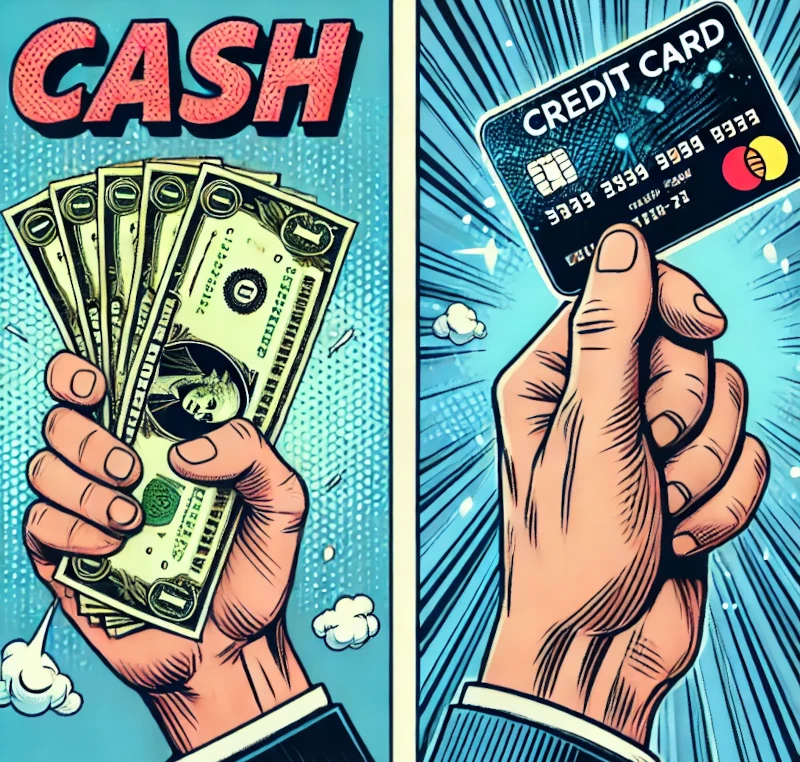
The Rise of Dual Pricing
Recently, a new pricing model often called “Cash Discount,” “Dual Pricing” and “Zero Fee” has been gaining attention in the world of merchant services. For the purposes of this article we will use these terms interchangeably. This system offers business owners the ability to charge two different prices through their point-of-sale based upon how a customer chooses to pay, either card or cash. While this might sound like a small change, it has big implications for both businesses and customers.
Cash Discount: How It Works
Cash Discount is a system where a business offers two different prices for the same product or service, depending on how the customer pays: one lower price is for cash payments, and the other at a higher price for those paying with a credit card. The difference in price covers the cost of credit card processing fees, which can add up quickly.
Examples of Dual Pricing in Action
A common example of Dual Pricing can be found at gas and petrol stations. For instance, the station’s sign might display an attractive cost per gallon/liter but on closer inspection, the price is for customers who pay cash with a higher cost per gallon/liter for customers who choose to pay by credit card.
Restaurants are also beginning to adopt Cash Discount and an increasing rate. For example a menu may offer two prices per dish: one for cash-paying customers and another with a slight increase for card payments. However, in practice, many restaurants forgo displaying two prices and, instead, simply add a card surcharge fee to the final bill; a risky policy that we will discuss later in this article.
Credit Card Surcharging vs. Cash Discount
Adding a surcharge to customers’ bills who pay with a credit card is another method used by some businesses to recover processing fees, but it works differently from Cash Discount. With surcharging, businesses add a fee (typically 3% to 4% of the final total) specifically for card payments at the register. For example, if a total sale costs $10, the business might add a 3% fee at checkout, making the total $10.30 if paid by card. This model clearly separates the surcharge as a fee for paying with a credit card, which can come with some risks that we will discuss later in this article.
In contrast, Cash Discount presents the two prices before checkout: one for cash and one for card, making the difference transparent and part of the initial decision for the customer. As in our earlier example, a gas station might list gas at $3.00 per gallon for cash and $3.10 for card payments, giving the customer a choice before they pay.
Implementation and Similarities
Cash Discount requires that businesses update their customer-facing prices to reflect a percentage markup. This adjustment is required to be displayed upfront on shelves, tags, or menus to show the cash price and the higher card price. On the surface, this might seem different from a surcharge, which is added at the point of sale. However, from the processor’s perspective, the payment hardware essentially handles it in the same way.
Different Name, Same Thing
In most cases, the point-of-sale (POS) system only stores the cash price, and then card surcharge fee is automatically added during the transaction to match the percentage markup used for Cash Discount pricing on the shelves. This means that, operationally, Cash Discount functions much like surcharging from the processor’s side, with the card fee being tacked on after the final price is calculated. The only difference is that the surcharge is built into the displayed prices before the transaction occurs.
In effect, dual pricing is still a form of surcharging, only with a different presentation to the customer.
Why Processors Are Suddenly Pushing Cash Discount
Payment processors seem to have started promoting Cash Discount aggressively and our experience tells us that such a shift from processors is often a red flag worth digging into. While Cash Discount can help merchants offset card processing fees, it actually also provides a significant revenue boost for the processors themselves when compared to traditional merchant account pricing options.
How Processors Profit from Cash Discount Pricing
In industries like retail and restaurants, the average interchange rate is about 1.7% +$0.10 per transaction. “Interchange” rates are non-negotiable transaction fees that businesses pay to the banks that issue customers credit cards. Interchange rates are set by the card brands, like Visa and Mastercard.
Despite the actual Interchange rates a business may experience on average, many processors encourage merchants to set a card payment surcharge as high as possible, often between 3%-5%. This gap, between the 1.7% interchange rate and the 3% to 5% surcharge is often not passed to the business but instead kept by the processor.
For example, if a restaurant charges a 4% surcharge on card transactions but experiences an average Interchange cost of just 2%, the processor will reimburse the business the 2% Interchange average and pocket the other remaining 2% as profit. This is practice of pocketing the difference remaining between Interchange and surcharge is often not discussed with the business owner or disclosed by the processor in any form.
Additionally, Cash Discount merchant account statements often only show processing fees being credited back without showing the remaining difference collected going to the processor. This arbitrage model by processors provides them a veiled and highly lucrative revenue stream as compared to the fractions of a percentage they typically earn per transaction. For instance, processors are likely earning 5-10X in profit with a Cash Discount merchant as compared to traditional pricing models like Interchange-plus. Some might argue at processors are quietly reaping substantial profits at the expense of consumers without providing any value in return.
Interchange Rates Example
Below are is an example of actual Interchange rates imposed by Visa. As you might notice, most of them are well under the 3% to 5% surcharge rate that most processors recommend to business owners.

Given this substantial profit opportunity for processors, it’s no surprise that they are pushing Cash Discount more than ever before; they can market to it businesses as a way to eliminate processing fees, while simultaneously exploding their own earnings. For most businesses, the appeal of Cash Discount is clear: they can rid themselves of an annoying expense and a little boost to their profits. However, what’s nearly invisible is the shortsighted greed behind it all.
Risks of Cash Discount Pricing
Cash Discount and Dual Pricing come with some serious and often undisclosed risks that can not only cost a business significant sums, but also result in the in permanent damage to their revenue.
Affects On Consumer Behavior
To put it plainly, Cash Discount and card surcharges have been shown to negatively impact consumer behavior and loyalty. For many customers, seeing two different prices for cash and card can be off-putting. Shoppers have grown accustomed to paying the same price regardless of payment method, and any added fees, even if framed as a “cash discount,” can create the perception of being penalized for using a card. This may lead some customers to feel that the business is or unfair or attempting to hide income by trying to force the use of cash.
A study on consumer behavior in payment methods shows that consumers are sensitive to price increases related to card usage, particularly when the fee is visible at the point of sale. Many customers prefer the convenience of card payments, and if they feel penalized, studies have shown that they are less likely to return. Cash Discount can lead to a decline in customer loyalty and repeat business in competitive industries where other businesses do not penalize card usage.
Substantial Revenue Risks
The long-term impact of Cash Discount on repeat business can be significant. Businesses that adopt this model risk alienating a portion of their customer base, particularly those who prefer card payments and see the extra charge as an inconvenience or an unfair cost. Studies show that businesses with strong customer loyalty programs and transparent pricing structures often see higher retention rates, whereas a recent report showed that businesses that implemented surcharge models saw 10% decline in overall revenue, far exceeding the cost they would have incurred in card processing fees. After a decade of allowing card surcharging, the Australian Central Bank is pushing to ban card surcharging, including Cash Discount, stating the data clearly shows that it does not benefit businesses or consumers.
For businesses considering dual pricing, the potential loss in customer satisfaction should be carefully weighed against the savings from processing fees. A customer frustrated by paying more for card transactions might choose to shop elsewhere or even leave negative reviews, damaging the business’s reputation.
Card Brand Policies and Compliance
Staying compliant with card brand rules is a key challenge for businesses using Cash Discount. Each card brand (Visa, MasterCard, American Express, and Discover) has specific guidelines that merchants must follow when implementing dual pricing. These guidelines vary, but they generally require merchants to clearly disclose the two prices and ensure that any surcharge or price difference does not exceed the cost of processing the card. For instance, Visa’s policy allows merchants to add a surcharge but caps it at the actual cost of processing up to 3%. MasterCard has similar policies allowing a maximum of 4%.
Distinguishing Debit Cards and PrePaid Cards
Both Visa and MasterCard explicitly prohibit the use of Cash Discount and surcharging on debit and prepaid card transactions. However, numerous consumers have taken to the internet to complain that they are experiencing charges on these types of transactions, showing that many processors are improperly collecting surcharge profits. Businesses that fail to comply with card brand guidelines can face serious consequences, including fines starting at $25,000, penalties, or even losing the ability to accept card payments altogether.
Regulatory Risks
In addition to card brand policies, merchants must also navigate varying state laws that regulate Cash Discount and surcharges. While the practice is legal in most states, surcharges are outright banned or heavily restricted in others. Some states have strict rules regarding the application of surcharges, and businesses operating in these states must carefully structure their pricing to avoid legal issues.
For example, in New York, surcharges were banned for years with laws only recently relaxing. In contrast, California allowed surcharges and then outlawed them in July of 2024. The state now prohibits surcharges but allow cash discounts, under strict signage and disclosure requirements. California businesses now face a $1,000 penalty per non-compliance violation, plus consumers can seek restitution and punitive damages through a lawsuit.
Who is Liable for Non-Compliance? The Business or The Processor?
Businesses may believe that payment processors have their best interests in mind when setting up Cash Discounting and surcharging. But if you look closely at the processing agreements, you’ll find that most contracts make the business responsible for any compliance issues, fines, lawsuits, etc. These agreements explicitly release the processor from liability and often include a waiver of the right to sue them for any losses over the practice. This means the full responsibility for compliance falls on the business. This is especially alarming considering that some unethical processors encourage risky practices that boost their profits while putting business owners at serious risk.
Cash Discounting Works For These Industries
Although dual pricing is risky for most consumer-facing businesses. There are some industries where customers expect a credit card surcharge. In many cases the alternative available to avoid card surcharge fees include direct bank transfers, bank wires, and ACH payments.
High-Ticket, Low-Margin Businesses
Dual pricing is particularly beneficial for businesses with high-ticket transactions and low margins, where credit card processing fees significantly impact profitability. For industries such as auto dealerships, construction, or heavy equipment sales, the processing fees on high-dollar transactions can erode thin profit margins. Customers of these types of transaction either expect such fees or the final bill is paid by their employer.
Business-to-Business
Similarly, B2B businesses handling bulk orders or high-value transactions can also benefit. In these relationships, customers are typically less sensitive to price changes, as they often value credit terms or account stability more than small surcharges. Often, the person making the purchase isn’t directly affected by the fees, or they understand the costs of accepting credit card payments as business owners themselves.
Essential Services and Utility Companies
Businesses providing essential services, such as utilities, may also find dual pricing effective. These companies often have low competition and serve customers who need their services regardless of price variations. For example, utility companies or municipal service providers can adopt dual pricing without facing significant backlash, as customers have fewer options for switching providers. Since the customers rely on these essential services, they are more likely to absorb the added costs, especially if paying with a card is more convenient for them.
Businesses With Little or No Competition
Businesses that operate in areas where there is little or no competition are prime candidates for dual pricing. For example, businesses in rural areas, specialty shops, or niche industries often have a captive customer base, meaning their customers have limited alternatives. In these cases, the risk of losing customers to competitors is much lower, and dual pricing can be a strategic way to manage operational costs while still providing a convenient payment option for customers who prefer to use cards.
Tourist Focused Businesses
Dual pricing can benefit businesses in tourist areas since they often don’t rely on customer loyalty or repeat business. Tourists are usually one-time visitors, so the business doesn’t need to worry about losing future sales. By offering two prices, these businesses can cover the cost of processing fees. However, restaurants should carefully consider the potential downsides. While tourists may not return, negative online reviews from unhappy customers could affect future visitors.
Bottom Line
For consumer-facing businesses, the decision to implement Cash Discounting and Dual Pricing should be carefully considered. It’s important to assess customer expectations, competitive dynamics, and the potential long-term impact on loyalty and repeat business.
However, for businesses with high-ticket sales, low margins, or those that provide essential services, dual pricing can be a powerful tool to manage costs without cutting into profits. The key is to ensure compliance with all relevant laws and card network policies and to communicate clearly with customers to avoid any surprises at checkout.
Dual Pricing Payment Processing Options
If you believe that your business can benefit from dual pricing without significant risks, below are processors that offer the service and have consistently achieved the best scores over years of monitoring.
Dual Pricing Processor Picks:
Related Articles:
- Tiered, Bucket, and Bundled Pricing Explained
- Subscription & Membership Rate Pricing in Credit Card Processing Explained
- Flat Rate Pricing In Credit Card Processing Explained
- How Interchange-Plus Pricing Works in Credit Card Processing
- Understanding Volume Discounted Interchange-Plus Pricing in Merchant Services
