
Clover Overview
Clover is a well-known player in the payment technology sector, offering credit card processing hardware and point-of-sale (POS) systems. This investigative article will cover the company’s background, its products, and an analysis of the experiences reported by current and former clients that utilized the company’s merchant services. We will detail Clover’s corporate lineage and leadership, its range of POS solutions, the company’s fee structure and contract terms, and any legal or ethical issues that have surfaced. The goal is to provide a balanced view of Clover from the perspective of a small business to help you decide if the company is right for your own payment processing needs.
Listen To a Podcast About This Article
About Clover
From Silicon Valley Startup to Fiserv Subsidiary
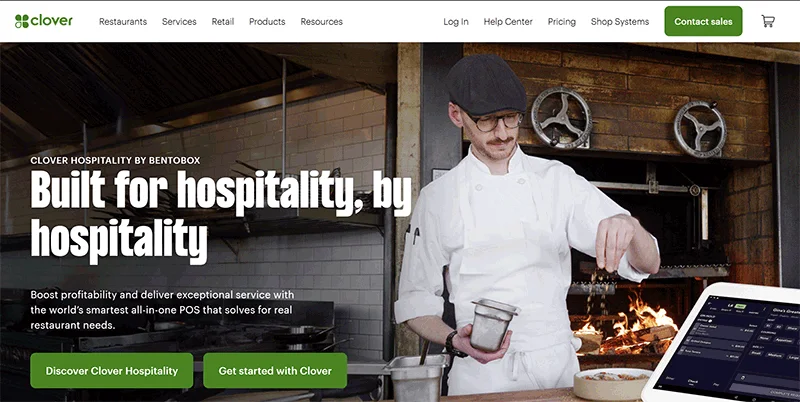
Clover Network, Inc. is a California-based firm that launched its cloud-based Android POS platform in 2012. The company was founded in 2010 by Silicon Valley entrepreneurs Leonard Speiser, John Beatty, and Kelvin Zheng. Early on, Clover caught the attention of bigger industry players and was acquired by First Data Corporation in late 2012, just months after its product launch. First Data, a major payment processing company, later became part of Fiserv, meaning Clover is now a subsidiary of Fiserv. In practical terms, Clover operates as a brand within Fiserv’s extensive merchant services portfolio. The company’s headquarters remain in Sunnyvale, California, and it has grown to serve merchants worldwide, claiming to process over a hundred billion dollars in card transactions annually.
Clover’s Distribution and Strategic Partnerships Under Fiserv
Under Fiserv’s ownership, Clover benefits from the reach of a large financial technology conglomerate. Clover’s products are often distributed through a network of partner banks and independent sales organizations. For instance, Bank of America Merchant Services was one of the first to roll out Clover’s POS systems to its business clients before transitioning to it’s own in-house merchant services operations.
Extensive Reseller Network and Role in Fiserv’s Strategy
Today, Clover is sold by thousands of resellers and financial institutions, including major banks like Citi, PNC, and Wells Fargo’s merchant services division as part of their own merchant service offerings. This reseller network means that while Clover is the underlying technology, the sales, pricing, and customer support might be handled by whichever bank or ISO (independent sales organization) provided the system. Notably, Frank Bisignano, the CEO and Chairman of Fiserv, oversees Clover as a key product line in Fiserv’s strategy.
Merchant Services & Product Offerings
Clover’s core offerings are its point-of-sale hardware devices and the software ecosystem that runs on them. The flagship Clover Station is a full-sized POS terminal with a touchscreen interface; the latest “Station Duo” model includes a second screen facing the customer for PIN entry and signatures. For smaller countertops or simpler setups, there is the Clover Mini, a compact tablet-like terminal that can accept payments and run apps. Mobile businesses or those needing handheld flexibility can use Clover Flex, a wireless device with a built-in receipt printer and barcode scanner, allowing on-the-go payments. Clover also offers Clover Go, a small card reader that pairs with a smartphone or tablet for mobile payment acceptance. All of these devices are designed to be plug-and-play POS systems that connect to the internet and sync with Clover’s cloud platform. Notably, when a business purchases a Clover device (whether directly or through a bank), it typically comes bundled with the necessary Fiserv merchant account for processing credit and debit card payments. In other words, Clover’s hardware and payment processing go hand-in-hand, which differentiates it from purely software-based POS solutions.
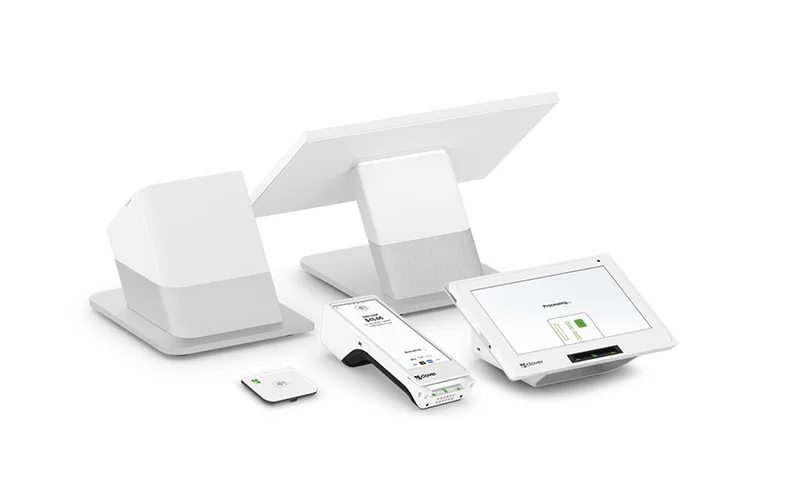
Beyond the physical devices, Clover’s services encompass a wide array of business management tools. The Clover software allows merchants to handle transactions and also to track sales, manage inventory, and monitor employee shifts in real time. Clover also has an App Marketplace where third-party and Clover-developed apps can be installed to extend functionality. For example, a restaurant can add an app for table reservations or a retailer can add one for advanced inventory analytics. The platform supports customer engagement features like loyalty programs and digital receipts as well. Clover also offers e-commerce functionalities: businesses can integrate online ordering or set up a virtual terminal to accept payments on a computer for phone orders.
Customer Reviews & Sentiment
"We opened a bar and restaurant in September of 2015. We chose clover POS system and our bank PNC handled the processing...the pricing was reasonable and I only used the free clover apps. My 3 systems were hard wired with ether connections. The rates varied and I wasn't happy I had to keep calling..."
Feedback from Clover’s customers presents a mixed, and often critical, picture of the company’s performance. On consumer review platforms, the majority of recent reviews skew negative, citing serious pain points in Clover’s service. A summary of online feedback indicates that most reviewers were unhappy overall, especially with Clover’s customer service responsiveness. Common complaints include long hold times on support calls, difficulty getting issues escalated, and being transferred repeatedly without resolution. Business owners describe frustration in simply trying to reach help after hours when a terminal malfunctions. These service woes are compounded by reports of unexpected fees and charges. Multiple users have said they felt caught off guard by charges that weren’t clearly disclosed upfront. For example, monthly terminal fees or higher processing rates than promised. One reviewer flatly stated that the sales representative “lied from the start about rates and charges”, reflecting a sense of betrayal that appears in several customer reviews. These kind of comments raise red flags about honesty and transparency in how Clover (or its resellers) pitch their contracts to busy merchants.
Beyond customer support and surprise fees, Clover’s clients often criticize the platform’s reliability and the company’s handling of technical problems. It’s not unusual to find reviews calling the Clover system “buggy” or describing instances where the POS hardware failed during peak business hours. Particularly in restaurants and retail stores, owners have voiced alarm at glitches, from software crashes to card readers freezing, that interrupt their ability to take payments. What exacerbates these issues, according to reviews, is that Clover’s support team sometimes struggles to fix the problems quickly. In aggregate, the commentary suggests that while Clover’s technology is innovative, its execution can fall short in high-pressure environments.
Some dissatisfied users even label Clover a “scam” or “ripoff,” not necessarily to imply literal fraud, but to express anger over high costs and unmet expectations. Many of these harsher complaints revolve around the contractual side of using Clover: business owners talk about high processing rates, funds being held or deposits delayed, costly early termination fees, and expensive equipment leases. It’s important to note that experiences vary and there are also positive reviews praising Clover’s ease of use and stating that the system “works seamlessly” for their needs. However, the positive feedback is overshadowed by the volume of negative posts. The recurring themes of poor support, fee disputes, and technical hiccups signal that prospective Clover users should approach with caution and eyes open.
Client Satisfaction Ratings
| PaymentPop | 1 |
|---|---|
| BBB Rating | 1.01 |
| Trustpilot Rating | 3.0 |
| Google Maps | 3.7 |
| GetApp Rating | 3.9 |
| Our Rating | 3 |
| Average Rating | 2.92 |
Ratings across various online platforms reinforce the narrative that Clover receives very polarized feedback from its user base. Below are a few of the customer review forums we reviewed and how Clover scored.
PaymentPop Rating for Clover POS
Positive Feedback
There are no positive reviews published about Clover POS on the PaymentPop website.
BBB Rating Analysis
Clover does not have a BBB profile itself, but Fiserv has an average customer review rating of 1 star and a rating of “A+” on the BBB site based on 389 customer reviews. While these reviews deal with the company’s business at large, they do give a good idea of working with Fiserv and its subsidiaries. Clover POS (as Fiserv on BBB) has a 1.01 out of 5 star rating based on 28 user reviews on the BBB website.
Positive Feedback
There are no positive reviews about Clover on the BBB website.
Trustpilot Rating Analysis
Clover has an average customer review rating of 3 stars on the Trustpilot site based on 1,688 customer reviews. Common themes in the reviews include held funds, unexpected fees, and issues with the equipment.
Google Maps Rating for Clover POS
Clover POS has a 3.7 out of 5 star based on 3 user reviews on Google Maps.
GetApp Rating Analysis
Clover has a 3.9 rating on the GetApp site based on 461 customer reviews. Common themes in reviews include issues with customer service and the technology used by the devices.
Our Take On The Ratings
The disparity in ratings between dedicated complaint forums and general app review sites is telling. It implies that Clover’s functionality is competitive, but the overall customer experience, especially regarding service and cost, drags down its reputation. For prospective customers, this mixed report card means they should interpret Clover’s positive testimonials in context. Many happy-seeming ratings might be focusing on the convenience of the product, whereas the harsh critiques spotlight what happens if something goes wrong. In essence, Clover scores well for capabilities but poorly for customer care. New clients might take this as a cue that if they opt for Clover, they need to ensure they have a reliable reseller or support plan in place as it could make the difference between a 5-star experience and a 1-star nightmare.
Card Processing Rates & Fees
One challenge in assessing Clover is that its pricing and contract terms are not one-size-fits-all. The company’s official website provides only broad guidance on costs, noting that Clover offers Starter, Standard, and Advanced service plans and that fees will vary by business type (and reseller). In practice, if a merchant signs up for Clover directly via Clover.com (Fiserv), there are some published baseline prices. For example, Clover’s own materials indicate that a small business can pay 2.3% + $0.10 per swipe on the most expensive plan (which is geared to higher-volume operations). More typically, a new merchant might start on a plan around 2.7% + $0.10 per in-person transaction, plus a monthly software subscription fee. Clover has in the past advertised a “Register Lite” plan at about $14 per month (intended for businesses processing under $50k annually) and a full “Register” plan at $29 per month for larger businesses. Under those tiers, the per-transaction fee for the Lite plan was ~2.7% (card-present) and the higher plan offered a lower ~2.3% rate as mentioned. These numbers give a ballpark cost, but actual processing rates can differ, especially if you obtain Clover through a third-party provider.
Hardware costs are another factor: buying a Clover Station outright can cost on the order of $1,000+ for the bundle with tablet, cash drawer, printer, etc., although Clover (Fiserv) also offers financing or subscription plans that roll hardware and software into one monthly payment. Some resellers might alternatively set up merchants on lease agreements for the equipment.
Crucially, Clover’s fees and contractual commitments can depend on the reseller or bank that provides the system. When you get a Clover device from your local bank or an independent sales agent, the seller marketing Clover might carry its own contractual terms. That means things like the transaction rate markup, monthly minimum fees, PCI compliance fees, and any early termination fee may be determined by the marketer, not by Clover’s published standards. Clover’s official FAQ advises that “contract terms and any termination fees can vary based on your service provider” whether it’s Clover directly or one of their 3,000+ partners.
Such variability in service terms is evident in customer reports: many complaints about Clover involve merchants feeling stuck in long-term contracts or being hit with a hefty cancellation fee when they tried to switch processors. Some users also mention being locked into equipment leases that are hard to break. Because Clover itself doesn’t impose these terms uniformly (they are imposed by the agent or ISO selling the service), businesses need to read all agreements carefully. If the Clover website or salesperson does not volunteer clear information about contract length and all fees, it is wise for potential customers to proactively ask and get everything in writing. In the absence of a posted price list, one should assume that credit card processing with Clover involves a monthly service fee plus transaction fees, and possibly ancillary fees, and thus due diligence is required.
The cost of Clover can be reasonable if you work a reputable reseller, but it can also be higher than expected if, for example, a reseller pads the rates or includes other undisclosed fees. We recommend comparing offers and choosing a well-reviewed Clover reseller to ensure you get fair pricing. Always double-check the contract for cancellation terms before signing, and don’t hesitate to negotiate or seek clarification on any fee that isn’t clearly explained.
Lawsuits & Legal History
In terms of legal and regulatory issues, Clover as a brand has largely avoided high-profile lawsuits over its business practices. A review of public records and industry analyses shows no significant class-action lawsuits or Federal Trade Commission enforcement actions directly accusing Clover of fraud or malfeasance in its merchant services. However, Clover has not been entirely free of legal entanglements. One notable case emerged in recent years involving unsolicited text message marketing. In 2024, Clover Network LLC agreed to settle a TCPA (Telephone Consumer Protection Act) class-action lawsuit alleging that Clover (or its business clients using Clover’s system) sent promotional text messages to consumers without proper consent. The class action claimed that people on the national Do Not Call registry received marketing texts about Clover’s products or merchants, even though they had no prior business relationship, in violation of telemarketing laws. Without admitting wrongdoing, Clover settled the case by establishing a fund of up to $15 million, which was enough to pay around $60 in cash to each affected individual who filed a valid claim.
Aside from the texting lawsuit, there is little documentation of other major legal actions specifically against Clover. Industry observers note that no major class-action suits for issues like fraud, misrepresentation, or antitrust have been publicly recorded against the company to date. It appears that many grievances (such as those about fees or service) are handled via customer complaints to agencies, rather than through lawsuits.
Clover’s parent, Fiserv, being a large financial entity, does attract occasional legal scrutiny, but nothing in the past few years suggests a direct legal threat to the Clover product line’s continuity. The lack of lawsuits could indicate that Clover has largely operated within the bounds of the law, or simply that dissatisfied customers find it more practical to switch providers and move on, rather than litigate. In any case, prospective Clover users should still be vigilant.
Employee Reviews & Sales Practices
Clover’s marketing and sales practices are heavily influenced by its distribution model. Unlike companies that sell directly to end users, Clover relies primarily on a multifaceted sales network of resellers. Fiserv deploys Clover through its own salesforce in some cases, but significantly through independent agents and partner companies that integrate Clover into their offerings. A small business owner might encounter Clover when talking to their bank about opening a merchant account, or via a third-party merchant services broker. This setup means Clover’s sales experience can vary widely. A merchant who gets Clover from a top-tier bank might experience a very professional sales and onboarding process, whereas one who buys from an aggressive independent sales office could face high-pressure tactics. Indeed, Clover is so ubiquitous in the payments industry now that if you already process credit cards, there is a good chance that your merchant account provider can sell you a Clover product.
The marketing message around Clover typically emphasizes its modern, user-friendly design and the backing of Fiserv (a reassuring point for some, given Fiserv’s size). Clover is often pitched as a way for merchants to upgrade from outdated cash registers or simple terminals to a full POS system that can “help your business thrive,” with claims of being secure and easy to use (24/7 support is a selling point touted in Clover’s materials). However, because independent resellers have leeway in how they sell Clover, there have been reports of inconsistent transparency. For instance, some sales agents may not volunteer information about contract cancellation fees or may promise savings that don’t materialize. The company’s profile indicates that while outright deceptive marketing (“bait-and-switch” tactics) isn’t Clover’s official policy, important terms are not always disclosed upfront by all resellers. Clover’s own documentation urges customers to review terms, implicitly acknowledging that the experience depends on the honesty of the sales partner.
What Employees Say
Insights from employees and insiders echo the idea that Clover’s marketing machine is powerful but not flawless. An employee review from a Fiserv regional sales director candidly noted that Clover is a greatplatform with strong brand recognition, but also pointed out cons such as “the same internal and external client support issues” and “increasingly poor client reviews due to more transactional selling.” This suggests that even within the company, there is awareness of a shift toward a sales-driven culture that might be prioritizing quick deals over customer care. The mention of “transactional selling” implies some sales reps focus on pushing terminals out the door without ensuring the solution truly fits the client’s needs, which can lead to unhappy customers down the road. Additionally, the employee highlighted disparities in how leads are distributed and how some sales leaders “choose winners and losers,” hinting at internal competition and possibly uneven support for clients.
From a marketing standpoint, Clover benefits from Fiserv’s massive reach and credibility (for example, Clover devices are displayed at Sam’s Club and Restaurant Depot, showing how deeply the product has penetrated the small business market). But the flip side is that Clover’s reputation is at the mercy of third parties. One reseller using overly aggressive cold-calling or failing to support their merchants can tarnish the Clover brand’s image. Indeed, several of the customer complaints about feeling “lied to” likely trace back to the independent agents who sold them the system.
Bottom Line
Clover emerges as a double-edged sword in the payments industry. On one side, it is a feature-rich, innovative POS platform backed by one of the world’s largest payment companies. It offers merchants a seamless blend of hardware and software, which can greatly simplify running a small business. Many users appreciate the all-in-one convenience Clover provides, replacing clunky cash registers and separate card readers with a modern integrated system. The company’s broad presence (thanks to Fiserv’s network) means that obtaining a Clover system is relatively easy. In both the U.S. and Canada, Clover has become a familiar name at coffee shops, retail boutiques, and restaurants, symbolizing the modernization of checkout counters.
On the other side of the sword is Clover’s challenging reputation around service and cost. Our research found a consistent thread of merchant frustrations: customer service that can be slow or unhelpful, fees that end up higher than expected, and occasional technology hiccups that can disrupt business operations. Importantly, because of Clover’s sales structure, a merchant’s experience can hinge on which reseller or bank is involved. Clover is not a uniform experience; a fact both its champions and critics agree on. A savvy business owner who secures Clover through a reputable provider might enjoy reliable equipment, straightforward rates, and solid support. Another business, unfortunately tied to an aggressive sales agent or a less scrupulous ISO, might end up overpaying for that same equipment and struggling with subpar customer support. Thus, Clover can be transformative in a positive way for some, and a source of regret for others.
Clover Rating


Pros and Cons of Clover
Pros
Cons
Contact Clover
| CEO and Chairman | Frank Bisignano |
|---|---|
| Headquarters | 15 N Mathilda Ave, Sunnyvale, California 94085 |
| Sales Inquiries | (855) 608-4305 |
| U.S. Customer Support | (855) 853-8340 |
| Additional Support Channels | Live Chat |
| Website | clover.com |